Exposing the Big Game

Forget Hunters' Feeble Rationalizations and Trust Your Gut Feelings: Making Sport of Killing Is Not Healthy Human Behavior

Exposing the Big Game

THE IMPOSSIBLE BURGER DEBATE WAS A TEST FOR VEGANS, AND WE FAILED

impossible burger

Vegans, we have a problem. We’re insulting each other, we’re alienating each other, we’re destroying each other’s businesses and reputations, and we’re playing right into the hands of the animal exploitation industry. To paraphrase a line from one of my favorite television Presidents (Jed Bartlett of The West Wing), we’re eating our young. And if we don’t get our act together soon, this movement we’re all passionately fighting for will never make the impact we crave or the change the animals need.

For those of you who were lucky enough to miss out on 2018’s burger-induced vegan community meltdown, here’s the basic story. Impossible Foods debuted their plant-based burger patty that many consumers consider to be the closest imitation of a cow-based patty. The smell, the texture, the juiciness…it’s so beef-like, many vegans are too creeped out to even try it. According to Impossible Foods, the Impossible Burger uses 1/20 the land, requires 1/4 the water, and produces 1/8 the greenhouse gas emissions compared to its cow-based counterpart. For those of us who like plant-based meats, it was a dream come true, right?

But then came the news that Impossible Foods’ proprietary “heme”, the groundbreaking ingredient that gives the burgers their beefy flavor, was tested on animals. Rats, to be specific. Because this newly developed ingredient hadn’t previously been used in food, Impossible Foods agreed to participate in animal testing in hopes of earning official approval from the Food and Drug Administration (FDA). From what I understand, the testing wasn’t legally mandated, but had the potential to make a big difference in terms of distribution approvals.

Cue the internet outrage. Not one day of outrage, this was months of battles taking place in comments sections across the vegan cyber world. The Chicago Vegans Facebook group damn near collapsed into itself like a dying star. I watched vegan icons be smeared for daring to post a photo of themselves eating the Impossible Burger. I saw people defriend one another for coming to a different conclusion on the issue than they did. I personally lost quite a few followers (some of whom left very unkind farewell messages) after mentioning the burger on my Instagram story.

vegans fighting about impossible burger
   Just a sampling of vegans fighting with vegans about the Impossible Burger 

And these are the people who are supposed to be on the SAME TEAM. The people getting sucked into these rage fests didn’t seem to respect or even acknowledge that they all felt as passionately as they did because of a shared love of animals. The pro-burger side was outraged that the anti-burger side couldn’t seem to appreciate the end goal of potentially saving billions of cows with a revolutionary plant-based patty. The anti-burger side was outraged that people who typically boycott products tested on animals were bending their ethics for this one item.

Meanwhile, as vegans spent weeks hurling insults at other vegans (making sure to end every conversation with, “don’t you dare call yourself a vegan!”), cattle transport trucks continued to transport victims to the slaughterhouse. Dairy cows had their newborn babies ripped away. Millions of dogs, cats, rats, and other animals were injected with chemicals and tested on in excruciating ways. The industrial animal exploitation machine didn’t just turn off because we happened to be distracted. In fact, it’s my very strong assumption that our infighting was exactly what cattle farmers dream of.

Personally, I have eaten and will continue to eat the Impossible Burger. I often lean more towards the “ends justify the means” side of the philosophical spectrum, and for me, this falls into that category. Pat Brown, Impossible Foods’ founder and CEO, has been vegetarian for four decades and vegan (if the vegan police are still letting him call himself that) for 14 years. I’ve read his statement on the issue, and while I still have no idea what I would have done in his situation, I fully understand how he arrived at the difficult conclusion that he needed to allow the testing. Just like I understand how my friends who run other big name plant-based food companies repeatedly paid for and consumed animal products for comparison’s sake while developing their plant-based alternatives. Yes, these vegan entrepreneurs and chefs take bites of real chicken flesh and real chicken eggs in the process of perfecting their vegan counterparts. And no, I won’t tell you who those people or companies are, because I don’t want to send the vegan army after them.

I also understand and empathize with the animal advocates who don’t want to support Impossible Foods. I know their reasoning comes from an opposition to animal cruelty, and I of course share that opposition. I actually welcome people who disagree with me yet want to discuss the issue civilly, in the way that people working towards the same end goal are supposed to do.

Unfortunately, it seems I’m in the minority on this. Vocal vegans seem willing and sometimes even happy to tear one another apart in a never-ending game of “who’s the most vegan?” While I guess this makes our egos feel better, I’m not sure how it helps the animals. My strong fear is that unless we tackle this insidious in-fighting now, we won’t be prepared for the inevitable dilemmas ahead.


I imagine the next battle will be over lab-grown “clean meats”, once they actually come to market. There are numerous companies working on this technology, and as I understand it, some animal cells may still be required to initiate the growth process. Just For All (previously known as Hampton Creek Foods), claims their lab-grown meat can be harvested from feathers that naturally fall off of healthy, happy chickens. Mosa Meats, a pioneer in the industry, has struggled to move past the use of fetal bovine serum. Fetal bovine serum has to be harvested from an unborn calf; obviously, this would require animal slaughter. In any case, the technology as it stands seems to still rely on the use of animals, either dead or alive.

1524683552603
Just For All claims they’ll release their lab-grown “clean meat” by the end of 2018

Leaders in the vegan community are already starting to develop varying opinions on the subject. Most are supportive, but skeptical– which is basically how I’d describe my stance. I often say that any industry that exploits animals for profit will eventually abuse them (hence, why I don’t eat or wear any animal products), but is that true if the industry is run by genuine animal advocates?

If we find ourselves in a situation where “clean” chicken meat can be produced from fallen feathers collected from chickens roaming freely on a sanctuary-like plot of land, I’m totally behind it. However, if we’re forcibly impregnating cows to slaughter and collect serum from their fetuses, I’m not really on board. Earlier I said I tend to fall on the “ends justify the means” side of the spectrum, but it’s never that black and white. If cells from one slaughtered cow were able to feed one billion humans, would I support it? Maybe. If cells from one slaughtered cow were able to feed 100 humans? Probably not.

Ethics are tricky, and these issues are going to become increasingly more complex. In addition to the lab-grown meat controversy, we’re inevitably going to face other debates. McDonalds, a corporation most vegans despise, will undoubtedly eventually release vegan burgers in the United States (they’ve already launched the McVegan burger in Europe). Vegans who purchase it in order to support the distribution of affordable cruelty-free food will certainly be chastised for supporting an evil empire. Vegans who boycott it will be insulted and degraded for failing to understand economics. Friendships will end, fights will go on, and we’ll lose focus all over again.

impossible burger vegans mcvegan
                                        McDonalds’ McVegan Burger has already launched in some European countries!


That is, unless we get a grip on ourselves.
 Unless we remind ourselves during every one of these new ethical dilemmas that regardless of our tactics, we are all on the same side. We’re all fighting this fight because we abhor suffering and needless violence, and we’re trying to create a world without those things. As the vegan community continues to expand, we’ll hear new voices and new perspectives; we should welcome this rather than cast it out.

According to the Top Trends In Prepared Foods Report (2017), the number of self identified vegans in the United States has risen 600% in the past three years! That’s incredible news, but it means our demographics are changing rapidly. This movement is attracting people across all age groups, professions, political parties, ethnicities, education levels, and personality types. Things are only going to get more complicated going forward, and we need to be ready.

If you were hoping to stumble upon a magical solution in this post, I’m sorry to disappoint you. This is simply an invitation for some self-reflection. I don’t have the answers. Instead, I have some questions. Questions I recommend that we all ask before publicly commenting on The Next Great Vegan Battle, whatever it may be:

Ask yourself: Is my comment offering a unique, constructive insight? Am I using insulting or sarcastic language to offend, embarrass, or upset other animal advocates? Would I want someone who just went vegan this week to read this comment? Would I want people who still eat animals to read this? Would my comment please those who are still profiting from animal exploitation? Is this comment pleasing to my ego, and if so, why?

If we remember to ask ourselves these questions before we engage, we have a much better shot at productive, healthy, respectful discussions. We all have egos and strong opinions, and I certainly don’t claim to be immune to any of this drama. I’m sure I’ve played a negative role numerous times over the years, but I’m becoming more and more aware of how harmful that attitude is to animals. It’s only when we work together and resolve our differences respectfully that we actually create meaningful change.

Suffering animals are counting on us. We need to do better.
The Amazon is burning because the world eats so much meat

(CNN)While the wildfires raging in the Amazon rainforest may constitute an “international crisis,” they are hardly an accident.

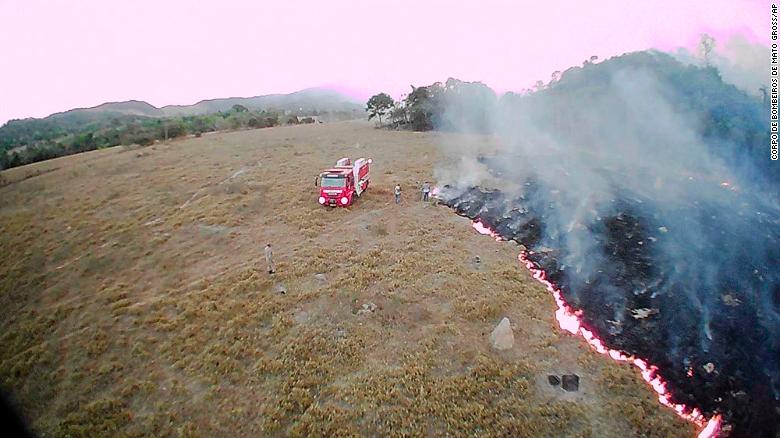
The vast majority of the fires have been set by loggers and ranchers to clear land for cattle. The practice is on the rise, encouraged by Jair Bolsonaro, Brazil’s populist pro-business president, who is backed by the country’s so-called “beef caucus.”
While this may be business as usual for Brazil’s beef farmers, the rest of the world is looking on in horror.
So, for those wondering how they could help save the rainforest, known as “the planet’s lungs” for producing about 20% of the world’s oxygen, the answer may be simple. Eat less meat.
It’s an idea that Finland has already floated. On Friday, the Nordic country’s finance minister called for the European Union to “urgently review the possibility of banning Brazilian beef imports” over the Amazon fires.
Brazil is the world’s largest exporter of beef, providing close to 20% of the total global exports, according the United States Department of Agriculture (USDA) — a figure that could rise in the coming years.
Last year the country shipped 1.64 million tonnes of beef — the highest volume in history — generating $6.57 billion in revenue, according to the Brazilian Beef Exporters Association (Abiec), an association of more than 30 Brazilian meat-packing companies.
The growth of Brazil’s beef industry has been driven in part by strong demand from Asia — mostly China and Hong Kong. These two markets alone accounted for nearly 44% of all beef exports from Brazil in 2018, according to the USDA.
And a trade deal struck in June between South America’s Mercosur bloc of countries and the European Union could open up even more markets for Brazil’s beef-packing industry.
Speaking after the agreement as announced, the head of Abiec, Antônio Camardelli, said the pact could help Brazil gain access to prospective new markets, like Indonesia and Thailand, while boosting sales with existing partners, like the EU. “A deal of this magnitude is like an invitation card for speaking with other countries and trade blocs,” Camardelli told Reuters in July.
Once implemented, the deal will lift a 20% levy on beef imports into the EU.
But, on Friday, Ireland said it was ready to block the deal unless Brazil took action on the Amazon.
In a statement Irish Prime Minister Leo Varadkar described as “Orewellian” Bolsonaro’s attempt to blame the fires on environmental groups. Varadkar said that Ireland will monitor Brazil’s environmental actions to determine whether to block the Mercosur deal, which is two years away.
He added Irish and European farmers could not be told to use fewer pesticides and respect biodiversity when trade deals were being made with countries not subjected to “decent environmental, labor and product standards.”
In June, before the furor over the rainforest began, the Irish Farmers Association called on Ireland not to ratify the deal, arguing its terms would disadvantage European beef farmers.
Deal or no deal, Brazil’s beef industry is projected to continue expanding, buoyed by natural resources, grassland availability and global demand, according to the Organisation for Economic Co-operation and Development (OECD).
And, with that growth, comes steep environmental costs.
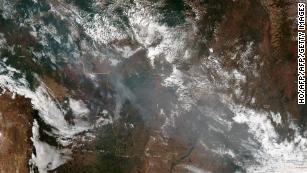
Brazil’s space research center (INPE) said this week that the number of fires in Brazil is 80% higher than last year. More than half are in the Amazon region, spelling disaster for the local environment and ecology.
Alberto Setzer, a senior scientist at INPE, told CNN that the burning can range from a small-scale agricultural practice, to new deforestation for mechanized and modern agribusiness projects.
Farmers wait until the dry season to start burning and clearing areas so their cattle can graze, but this year’s destruction has been described as unprecedented. Environmental campaigners blame this uptick on Bolsonaro, who they say has encouraged ranchers, farmers, and loggers to exploit and burn the rainforest like never before with a sense of impunity.

Brush fires burn in the Brazilian state of Mato Grosso on August 20.

Bolsonaro has dismissed accusations of responsibility for the fires, but a clear shift seems to be underway.
And if saving the rainforest isn’t enough to convince carnivores to stop eating Brazilian beef — the greenhouse gas emissions the cattle create may be.
Beef is responsible for 41% of livestock greenhouse gas emissions, and that livestock accounts for 14.5% of total global emissions. And methane — the greenhouse gas cattle produce from both ends — is 25 times more potent that carbon dioxide.
An alarming report released last year by the UN Intergovernmental Panel on Climate Change (IPCC) report, said changing our diets could contribute 20% of the effort needed to keep global temperatures from rising 2°C above pre-industrial levels. Namely, eating less meat.
Still, global consumption of beef and veal is set to rise in the next decade according to projections from the Organisation for Economic Co-operation and Development (OECD) and the Food and Agricultural Organization of the United Nations (FAO).
A joint report predicted global production would increase 16% between 2017 and 2027 to meet demand.
The majority of that expansion will be in developing countries, like Brazil.

The consequences if the world decided to go meat-free

If the world went meat-free, the consequences would be mixed (Credit: Getty Images)

[Disclaimer: Views expressed here by outside entities do not necessarily reflect reality or the views of this blog. Some are shared purely for entertainment purposes or to help in getting to know the animals’ and thy planet’s enemies.]


It’s World Meat Free Day – but what would actually happen if the whole world suddenly went vegetarian permanently? Here’s a briefing about the potential pros and cons for the climate, environment, our health, economy and more.

  • If vegetarianism was adopted by everyone by 2050, the world would have about seven million fewer deaths every year – and veganism would bring that up to eight million.
  • Food-related emissions would drop by around 60%, according to Marco Springmann, a research fellow at the Oxford Martin School’s Future of Food programme. This would be down to getting rid of red meat – which come from methane-producing livestock – from people’s diets.
  • However, farmers in the developing world could really suffer. Arid and semi-arid rangeland can only be used to raise animals, such as the Sahel land strip in Africa next to the Sahara; nomadic groups that keep livestock there would be forced to settle permanently and lose their cultural identities if there was no more meat.
  • Repurposing former pastures into native habitats and forests would alleviate climate change and bring back lost biodiversity, including larger herbivores such as buffalo, and predators such as wolves, all of which were previously pushed out or killed in order to keep cattle.
What if the world went vegetarian? (Credit: iStock)

What if the world went vegetarian? (Credit: iStock)

End of meat

For an in-depth analysis of a meat-free world and more detail about the sources for these figures and predictions, read BBC Future’s original article by Rachel Nuwer: What would happen if the world suddenly went vegetarian?

  • Everybody currently engaged in the livestock industry would need to be retrained for a new career – this could be in agriculture, reforestation or producing bioenergy. Failing to provide career alternatives could lead to mass unemployment and social upheaval, particularly in traditionally rural communities.
  • Taking livestock like sheep away could actually have a negative impact on biodiversity, as their grazing has helped to shape the land for centuries – so some farmers could be paid to keep animals for environmental purposes.
  • No more Christmas turkey – losing meat means that we would also lose traditions. Many communities around the world offer gifts of livestock at weddings and celebrations. For Ben Phalan at the University of Cambridge, this is “why efforts to reduce meat consumption have often faltered”.
  • No meat would lower the chances of coronary heart disease, diabetes, stroke and some cancers – and so save the world 2-3% global gross domestic product in medical bills.
  • But we would need to replace meat with nutritional substitutes, in particular for the world’s estimated two billion-plus undernourished people. Animal products contain more nutrients per calorie than staples like grains and rice.

So, have you been tempted to convert to vegetarianism? Why? Let us know on Twitter or Facebook where you can join the conversation with 800,000 Future fans. 

And if you like this, you may also like…

Chocolate vs vegetables: the true environment costs

The past, present and future of food

Vegans are wary of Burger King’s Impossible Whopper after controversy over cooking process

https://www.cnbc.com/2019/08/08/vegetarians-torn-over-trying-burger-kings-impossible-whopper.html?__source=sharebar|facebook&par=sharebar&fbclid=IwAR23z_KIPE1ko2zdgOVN3ZGu6x4dfTCCv4tP-7ELbC76-XnIJoxLdqd_S5Q
KEY POINTS
  • Burger King’s plant-based Impossible Whopper is launching nationwide Thursday.
  • Some vegans and vegetarians are saying on social media they will not eat the meat-free burger because it is cooked on the same grill as chicken and beef.
  • Customers can request that their Impossible Whopper is cooked separately.
GP: Impossible Whopper Burger King Offers Meatless Whopper In Its St. Louis Locations
In this photo illustration, an ‘Impossible Whopper’ sits on a table at a Burger King restaurant on April 1, 2019 in Richmond Heights, Missouri.
Michael Thomas | Getty Images

Vegans and vegetarians have cheered as more and more restaurants, from Subway to White Castle, add plant-based protein options from Beyond Meatand its rival Impossible Foods.

But as Burger King launches its meat-free Impossible Whopper nationwide Thursday, some vegans and vegetarians are hesitant to try it.

The controversy started last week when the chain’s U.S. head, Chris Finazzo, told Bloomberg the vegan burger would be cooked on the same broilers as chicken and beef. Some people who do not eat meat do not want their food to come into contact with meat at all during the cooking process.

VIDEO01:12
Burger King taking plant-based Impossible Whopper national

A representative for Burger King, which is owned by Restaurant Brands International, said Thursday the chain has not changed how it plans to cook the burger.

Customers can request their Impossible Whopper be grilled on a different broiler than the meat. But vegans and vegetarians unaware of the option are now deciding if they want to try the Impossible Whopper.

Legacy!@heartbreakid_1

For anyone looking to eat the impossible whopper from Burger King, if you are Vegan do not eat that burger they cook it on the same grill as the regular dead cow burger! Is not vegan @BurgerKing

See Legacy!’s other Tweets

One Twitter user warned that the burger is being cooked on the same grill as “the regular dead cow burger.”

𝖆𝖑𝖑𝖎𝖊 Ⓥ@thatlilvegan

some vegans really wanna gate keep other vegans who get the Impossible Whopper from Burger King talking about “cross contamination” but those same peopl still go to coffee shops, grocery stores, & restaurants that serve non-vegan items too. 🤧

218 people are talking about this

Another pointed out that vegans still go to coffee shops, restaurants and grocery stores that serve nonvegan items.

Those who abstain from eating meat for religious reasons may follow more strict guidelines when it comes to cross-contamination with meat.

Cooking the Impossible Foods’ burgers, beef patties and chicken on the same grill makes it easier and more efficient for Burger King to offer the Impossible Whopper. The added complexity of a plant-based option is one reason keeping Burger King’s arch rival McDonald’s from offering a vegetarian-friendly burger. The Golden Arches has been trimming its menu to speed up service times — and customer satisfaction scores.

It is unlikely that the majority of customers buying the Impossible Whopper will even care that it is being cooked on the same grill. The growth in meat substitutes like the Impossible Burger is coming from flexitarians, a group of omnivores looking to cut down on their meat consumption. According to data from the NPD Group, 95% of plant-based burger buyers have also bought a beef burger within the last year.

VIDEO08:38
The rise of fake meat

Research shows that 18 percent of American adults say they’re trying to incorporate more plant-based foods into their diets.

McDonald’s May Be Getting Ready to Make a Brilliant Move That Will Change Everything

 McDonald’s and other fast-food giants want to help.

Meatless, plant-based burgers are currently all the rage. With Burger King rolling out a meat-free Impossible Whopper nationwide on August 8, White Castle offering Impossible sliders, and TGI Fridays offering Beyond Burgers, an increasing number of restaurants are adding meat-free burgers to their menus.

Actually, it appears McDonald’s is working on its own version of a meatless burger to keep up with its American competitors. A few days ago, Crain’s Chicago Business reported that Impossible Foods–one of the leading manufacturers of plant-based burgers–“is teaming up with a local food manufacturer that is a key supplier for McDonald’s.”

This would seem to indicate that McDonald’s is making plans to introduce its own meatless burger in the company’s U.S.-based restaurants–likely within the next year or so.

It’s no secret that McDonald’s has been selling meat-free burgers for some time…in Europe. After testing in Sweden during fall 2017, the McVegan burger–featuring a soy-based patty was created by McDonald’s with Swedish vegan food company Anamma–the item was permanently added to the menu of McDonald’s restaurants in Finland and Sweden in December 2017.

According to news reports, 150,000 of the vegan burgers were sold in just one month. And in January 2019, McDonald’s introduced a vegan McFalafel in Sweden, meatless “chicken” nuggets in Norway, and a vegan Spicy Veggie Wrap in the UK.

Now, it appears that it won’t be long before McDonald’s starts testing its own meat-free burger in the United States. Referring to McDonald’s, Morningstar analyst R.J. Hottovy said, “By early next year, you will likely see a plant-based burger test in the U.S.”

There certainly seems to be plenty of demand in this country for a meatless McDonald’s burger. According to healthy living advocate Kathy Freston, whose Change.org petition to McDonald’s has more than 225,000 signatures,

In June, I personally delivered the signatures of over 200,000 customers who want a plant-based option on McDonald’s U.S. menu. McDonald’s has not responded, but their competitors are embracing the opportunity. Burger King’s Impossible Whopper will be available nationwide on Thursday. Last week, Hardee’s announced its upcoming plans to test a Beyond Thickburger. And just a few weeks ago, Dunkin’ started selling a Beyond Meat breakfast sandwich at 163 locations. McDonald’s we’re waiting for you to come on board!

So, we’ll see how long it is until McDonald’s offers a meatless burger in the United States. I’ll be first in line the moment they do.

Slutty Vegan restaurant a plant-based burger sensation

Lisa Respers France, CNN • Updated 6th August 2019
in a long line for hours on end
just to enjoy this experience,

PauseMuteMute

Current Time1:34
/
Duration Time1:44
Loaded: 0%

Progress: 0%

Fullscreen

Atlanta (CNN) — One scorching hot day in southwest Atlanta, Houston native Tamara Edwards stood in a line that stretched a full block for a chance to get “sluttified.”
“I found out about it on social media and the line has just been crazy and it’s nonstop,” Edwards said. “The food looks really, really good. Anything worth the people standing out for, I want to try it.”
Welcome to the world of Slutty Vegan, a 100% plant-based burger restaurant that has become such a food sensation in less than a year that owner Pinky Cole is already working on opening two more locations.
On a typical day, people wait for hours for a chance to sample Cole’s chefed-up versions of Impossible Burgers.
There’s the “One Night Stand,” which features a patty loaded with vegan bacon, vegan cheese, caramelized onions, lettuce, tomato and slutty sauce on a vegan Hawaiian bun.
The “Ménage à Trois” comes with all that and adds some vegan shrimp.
Cole gives a nod to her Jamaican heritage with menu items such as the “Dancehall Queen,” which adds sweet jerk plantains to the mix.
Pinky Cole's Slutty Vegan restaurant has lines down the block.

Pinky Cole’s Slutty Vegan restaurant has lines down the block.
Cameron Mitchell
No one is more surprised by the success of Slutty Vegan than the Baltimore native who dreamed it all up in her two-bedroom apartment.
“It literally was only supposed to be a ghost restaurant where people only order food online and they pick up through a delivery service,” said Cole, who graduated from Clark Atlanta University in Atlanta. “But I wasn’t thinking big enough because what I felt was only going to be a ghost restaurant turned out to be one of the biggest concepts and brands in America.”
She’s not blowing smoke with that.
Using her background as a former television producer (she’s worked on such hits as “The Maury Show” and “Iyanla: Fix My Life”) and her social media savvy, Cole has taken Slutty Vegan from a vision to a food truck and then a restaurant.

Growing black vegan community

She’s also at the forefront of a growing veganism movement among black people.
Spurred in part by the epidemic of diabetes and hypertension in the African American community, the plant-based lifestyle is starting to become so popular that in February PETA celebrated Black History Month with a feature on “29 Black Vegans Saving Animals.”
And while Cole’s burgers and fries aren’t exactly what one would think of as health food, Dymetra Pernell sees it as helping spread the word — especially in the black community — that eating a plant-based diet can be delicious.
Pernell is known as “The Plant Based Princess” and is owner of First Batch Artisan Foods, an Atlanta vegan ice cream and pastry company.
Cole credits Pernell as one of her biggest champions. Pernell was the first to use her thriving social media presence to plug Slutty Vegan, Cole said.
The restaurant features distinctive, chefed-up takes on Impossible Burgers.

The restaurant features distinctive, chefed-up takes on Impossible Burgers.
Cameron Mitchell
The pair met in a shared commercial kitchen space where Pernell was surprised to learn that the delicious-looking and smelling burgers coming from Cole’s area were vegan.
“She gave me the burger to try, and I got upset instantly,” Pernell said, laughing. “Like, wait, who are you and why didn’t I know who you were and why haven’t I heard of you?”
As a naturopath, Pernell has long been trying to help people understand the impact diet has on their health.
“I was one of the people who would always try and to raise awareness about that and how and why heart disease and type 2 diabetes are so prevalent in the [black] community,” she said. “People of color die and suffer at a disproportionately higher rate than any other race or community from chronic diseases and lifestyle diseases.”
Cole jokes that “vegan is the new black,” even as she says it transcends race.
“Veganism is a universal thing and as long as it’s universal, people can come together in the name of food and that’s the most beautiful part about it,” she said. “But black people coming together, especially standing in a long line for hours on end just to enjoy this experience and enjoy the food, it’s really history making.”

Worth the wait

On a typical day, crowds line up several hours in advance to await the small shop’s opening.
Cole’s team greets newbies with cries of “We’ve got a virgin,” while returning guests are “sluts.” It’s take-out only, so virgins and sluts alike are on their own for a dining spot.
She said she came up with the Slutty Vegan name while looking for something sexy that would hook potential customers.
“What I did was I connected a provocative way of putting food and sex together, but it’s positive manipulation because I knew that it wouldn’t have anything to do with sex,” Cole said. “It was really about food and how to connect people to eating healthier.”
It’s worked because stars such as Snoop Dogg, Usher, Tiffany Haddish and others have been featured on the restaurant’s Instagram account raving about being “sluttified.”
Cole said all of her marketing has been via word of mouth and she has never paid a celeb for an endorsement.
“This entire business was just created out of pure intentions and love,” said Cole, who added that many of the celebrities have reached out to her.
“[Celebrities] wanted to try the food because they heard so much great things about it and it wasn’t forced. It was so organic, it was so authentic. And that’s the beauty of Slutty Vegan.”

I Tried Tim Hortons’ New Beyond Meat Burger And This Is My Honest Opinion

The burgers are available at stores across Canada.

In case you haven’t already heard, Tim Hortons has expanded their menu Wednesday morning by adding a ‘burger’ section to their always-growing selection. However, instead of introducing normal burgers to their menu, Tim Hortons has decided to take it a step further and add two ‘Beyond Meat’ burgers. These two new Tim Hortons Beyond Meat Burgers have been a popular topic this morning, so I decided to head down to my nearest Tim Hortons and give one a try.

Guests can choose from the two different burgers on the menu at locations across Canada. The Beyond Burger is like a regular cheeseburger, containing a plant-based patty, cheese, lettuce, tomato, ketchup, mustard, and mayonnaise, sandwiched between two sesame seed buns. They also offer a BBQ version of the burger, which includes the same ingredients with the addition of BBQ sauce.

These plant-based patties are perfect for vegetarians or anyone just looking to try a meatless twist on a normal burger.

These famous Beyond Meat patties are designed to taste just like real beef burgers and have already been incorporated at other fast-food joints across Canada.

As a meat-eater myself, I headed to Tim Hortons to see just how much these burgers tasted like the real thing.

Being a more traditional burger eater, I opted for the normal Beyond Burger. The first thing I noticed is the low price.

You can get either burger for $5.69, which matches the prices of similar fast food burgers. This means you can also grab a coffee and some Timbits on the side without hurting your wallet.

The second thing I noticed is how in demand the burger actually is across Canada.

Even though the burger was only announced today, it seems like everyone is flocking to their nearest store to give it a try.

While waiting in line, both customers in front of me also ordered the burger. When I finally reached the counter, the employee informed me that I had snagged the second last burger they had and that customers had cleared out their stock before dinner time had even hit.

After making it home and unwrapping the burger, I wasn’t surprised to see that it looked like any other regular fast-food burger.

Of course, it doesn’t quite look like the amazing photos that Tim Hortons has released, but burgers never look like they are promised to.

As for the taste, I was surprised to find that it actually did taste like meat. Sadly, the taste wasn’t anything that jumps out you, but I was surprised in that it resembles any other fast-food burger that you would pick up around the city.

It’s definitely something that I would grab again if I was craving a quick burger on the go. Yet, it didn’t stand out as anything special compared to other burgers I have tried in the past.

One disappointing factor I have to mention is that the Beyond Meat patty isn’t nearly as amazing as the Beyond Meat sausage Tim Hortons offers in their breakfast sandwiches.

Earlier this year, I tested the Beyond Meat Breakfast Sandwiches and fell in love with the farmer’s wrap they offered. The plant-based sausage tasted even better than their real meat.

Overall, the Beyond Meat patty tastes just like any othr normal burger, but it doesn’t stand out as the breakfast sandwiches did.

If you’re a vegetarian, this is a really great option for you. Considering, Tim Hortons didn’t have any burgers on their menu before, if you’re looking for a filling lunch that’s also vegetarian, this is a great option.

The BBQ Beyond Burger and the regular Beyond Burger are both available at all locations across Canada.

If you’re interested in trying more Beyond Meat menu items, their Beyond Meat breakfast options are really delicious. In collaboration with Beyond Meat, Tim Hortons was able to create a new Beyond Meat sausage patty that completely unique and totally tasty. If you’re vegan, you can get a vegan option of the breakfast sandwich as well.

Disclaimer: The opinions expressed in this article are the author’s own and do not necessarily reflect the views of Narcity Media.

VEGAN MEAT IS ABOUT TO BE WAY CHEAPER THAN ANIMAL MEAT

Vegan Meat Is About to Be Way Cheaper Than Animal Meat

Liz Specht Ph.D. — a senior scientist at the Good Food Institute (GFI) — says vegan meat products are about to come down in price.

Vegan Meat Is About to Be Way Cheaper Than Animal Meat
Vegan meat products are set to come down in price | Lightlife Foods
Senior Editor, UK | Contactable via charlotte@livekindly.com
 

The vegan meat market is booming. As consumer attitudes change, supermarkets, fast-food chains, pubs, restaurants, and even fish and chip shops are jumping on the vegan wagon. But there seems to be a catch that comes with eating vegan meat products — especially if you buy them straight from the store — in many instances, they’re more expensive.

It’s a fact that cannot (and should not) be ignored, but is it one that is going to change anytime soon? Many think it is. According to Liz Specht Ph.D., a senior scientist at the Good Food Institute (GFI), price parity with vegan meat and its animal-based counterpart is just around the corner.

“Industrial animal agriculture has been operating and optimizing at a global scale for decades,” she explained in a post on GFI’s website. “Yet it is still inherently more efficient to make meat directly from plants rather than feeding our crops to animals and then eating a part of the animal.” She added, “It’s all but inevitable that the plant-based meat industry will eventually be cost-competitive with conventional meat.”

Why Is Vegan Meat Currently More Expensive?

GFI’s Liz Specht says Beyond Meat need to charge more so it can meet demand | Beyond Meat

According to Specht, vegan meat is currently more expensive for a number of reasons. It’s partly due to the fact that brands are operating in a “free market.” They must maximize their profit, and this means charging consumers more.

“Companies like Beyond Meat and Impossible Foods are currently producing as much as they can and are still unable to meet demand,” writes Specht. “There is no reason for them to charge less than consumers will pay at this time — moving down the supply/demand curve would not allow them to sell more products.”

She continues, “Lowering prices would just lower their revenue, which would, in turn, hurt their ability to scale and meet demand.”

Another reason is that while the vegan meat market is growing at a rapid rate, currently, it remains small. This means that brands have a harder time negotiating prices for their ingredients — such as soybeans or peas. The market is also currently at a place where it lacks the same infrastructure as animal agriculture. “The current scale of plant-based meat companies also limits their manufacturing facility design, equipment, and other technologies,” notes Specht.

“Even the largest plant-based meat production facilities look like boutique operations compared to the scale of manufacturing facilities for conventional meat products and other common food products,” she adds.

When vegan meat brands have a bigger share of the overall meat market, production methods will evolve, explains Specht, increasing efficiency and inevitably reducing cost.

One of the other factors to consider when looking at the price of vegan meat products is the cost of research and development. UK veggie and vegan meat brand Quorn, for example, recently invested £7 million into researching and developing its own “bleeding” plant-based burger.

As smaller brands find their feet and “secure their market position,” less money will be poured into this research and development, says Specht.

How Long Until Vegan Meat Falls In Price?

Impossible Foods partnered with Burger King earlier this year | Impossible Foods

Vegan meat could fall in price pretty soon.

The market is consistently growing. It’s currently worth around $1 billion, but this is expected to increase by 4,000 percent in the next decade, potentially reaching a worth of more than $40 billion.

The growth could be partly due to Beyond Meat’s recent IPO. The California-based brand — responsible for the “bleeding” Beyond Burger — went public in May. It was the first-ever company of its kind to do so. Initially, the IPO was priced at $25 a share, but this rose to $65 at the end of the first day. Stocks are now valued at around $99.

Primary competitor Impossible Foods has also seen huge success in recent months. It partnered with fast-food giant Burger King to launch the Impossible Whopper — a vegan meat version of the chain’s signature beef-filled Whopper sandwich. The vegan trial — conducted in 59 locations in Missouri — went “exceedingly well,” and the burger is now being rolled out across the U.S.

“[The] tipping point may hit relatively soon,” notes Specht. “Given the recent flurry of activity reflecting new production capacity among the existing plant-based meat companies and the involvement of new entrants with massive resources.”

The market is growing so quickly that existing major companies want in, like meat giant Tyson Foods and multinational corporation Nestlé. The latter has already rolled out the plant-based Incredible Burger across Europe, which features on McDonald’s menus in Germany and Israel. It also intends to roll out the similar Awesome Burger in the U.S. in the fall, under its Sweet Earth brand.

Tyson Foods — the world’s second largest processor and marketer of chicken, beef, and pork — announced earlier this year it will be joining the vegan meat market this summer.

Specht adds, “once plant-based achieves sufficient market penetration to tap into these emerging opportunities to optimize raw materials and make production more efficient, the industry will enter a bright new era of accessibility and affordability that will benefit both consumers and producers.”

Could Anything Stifle The Growth Of The Vegan Meat Market?

Upton’s Natural is suing Mississippi over the “meat label” ban | Upton’s Natural

Some have criticized the vegan meat market. In Mississipi, plant-based foods that emulate meat cannot be labeled as meat or a meat-based product on the packaging. So, brands cannot market soy or pea protein-based products, for example, as “meatless meatballs” or “vegetarian bacon.” The reason for the law is that some members of the meat industry believe that consumers will be misled by this use of terminology.

But many vegan organizations and brands — such as the Plant Based Foods Association (PBFA) and Upton’s Naturals, which are suing the state of Mississipi over the law — maintain that using this sort of language helps consumers understand what the product will taste like.

“People are not confused by terms like ‘veggie burger’ or ‘vegan hot dog,’” said Justin Pearson, a managing attorney at the Institute of Justice, in a statement. The institute is backing the PBFA and Upton’s Naturals lawsuit. He continued, “To the contrary, those terms tell consumers that they are buying exactly what they want: a plant-based alternative to animal meat.”

Daniel Staackmaan — the founder of Upton’s Naturals — added, “Mississippi’s law is not about clearing up consumer confusion, it’s about stifling competition and putting plant-based companies at a disadvantage in the marketplace.”

The Future Is Innovation

Beyond Meat and Impossible Foods were awarded “Champion of the Earth” by the United Nations | Beyond Meat

Despite challenges from the meat industry, it’s unlikely the vegan meat market will slow down anytime soon. The food industry is innovating, just like the tech industry has and continues to do, says GFI on its website.

“Unlike at any other moment in history, we now have the ability to blend imagination with design to improve the world around us,” notes the organization. “An array of inventions has improved lives for billions of people across the globe. Smartphones allow farmers and textile workers in the developing world to start small businesses and move out of desperate poverty.”

“Modern air travel and the internet have made travel and information more accessible than previous generations could have even imagined,”
 it continues. “Now, that same spirit of innovation is coming to our dinner plates. Just as modern automobiles replaced the horse and buggy, better alternatives will replace conventional animal agriculture.”

As it stands, animal agriculture brings with it a wealth of environmental problems. Last year, the United Nations labeled tackling meat consumption as one of the world’s biggest problems. It also jointly honored Beyond Meat and Impossible Foods with the Champion of the Earth award.

“Our use of animals as a food-production technology has brought us to the verge of catastrophe,” said the UN Environment in a press release at the time. “The destructive impact of animal agriculture on our environment far exceeds that of any other technology on Earth.”

“The global community can eliminate the need for animals in the food system by shifting the protein at the center of the plate to plant-based meat,” it continued. “For their pioneering work towards reducing our dependence on animal-based foods, Ethan Brown [CEO of Beyond Meat] and O’Reilly Brown [CEO of Impossible Foods] have been selected 2018 Champions of the Earth in the category or science and innovation.”