Exposing the Big Game

Forget Hunters' Feeble Rationalizations and Trust Your Gut Feelings: Making Sport of Killing Is Not Healthy Human Behavior

Exposing the Big Game

Plant-based eating goes mainstream as Beyond Meat targets Canadian grocery shelves

Beyond Meat’s signature burger will soon be available on Canadian grocery store shelves (Beyond Meat)

1563
comments

A California company that was overwhelmed by demand for its meatless fast food burger is hoping to capitalize on the rising trend of vegetarianism and sell directly to Canadian grocery stores starting now.

Founded a decade ago in California, Beyond Meat first captured the attention of Canadians when the company signed a deal with burger chain A&W last year for a plant-based burger — one they claim looks and tastes like traditional patties, but is made entirely from vegetable-based proteins.

A&W was flooded by so much demand for the product that most locations sold out almost instantly, and has had trouble maintaining supply ever since. But Beyond Meat is pushing ahead with more expansion, confident those supply issues have been handled.

After focusing on getting its products into some 27,000 restaurants around the world, Beyond Meat has now turned its attention to selling directly to consumers. It has struck deals with major food chains like Loblaws, Sobeys, Metro and Longo’s that will see the company’s plant-based burger patties sold in thousands of Canadian grocery stores.

“On the heels of our successful launch with A&W … retail is the natural next step for our brand,” CEO Ethan Brown said in a release announcing the move.

Billions worth of burgers

Robert Carter, a Toronto-based consumer analyst with NPD group, said Beyond Meat tapped into what was a slowly growing movement toward plant-based eating, and became a leader almost overnight.

“I had seen the underpinnings, but even I didn’t expect it to be as popular as it is,” Carter said in an interview.

Carter said burgers comprise a $20-billion piece of Canada’s fast food industry, a figure that doesn’t include the ones that Canadians buy at the grocery store to take home and cook themselves. “We’re talking about a tens of billions of dollars market opportunity in North America,” he said. “To take a share of that from meat is massive.”

Embedded video

Beyond Meat

@BeyondMeat

Canada, the wait is almost over. The is coming to the meat case!

Learn more here ➡️ https://bit.ly/2DuaEcO 

84 people are talking about this

While fast growing, Beyond Meat is far from the only company in the space.

Market research firm Mintel estimates that the market for meat alternatives has almost doubled between 2013 and today, and restaurant chains have been trying to tap into that trend.

Burger King partnered with Impossible Foods to create the Impossible Whopper, a meatless alternative to the chain’s iconic offering. So far, it is only available in select markets, but it too has seen strong sales and is expected to become a permanent offering.

And earlier this month, Canada’s Maple Leaf Foods announced plans to spend $310 million to build a huge plant-based protein food processing facility in Shelbyville, Ind., which will produce the company’s Lightlife products, a line of plant-based food items. “We own the leading brands in the North American refrigerated plant-based protein market,” CEO Michael McCain said of the venture.

All of these companies are hoping to cash in on the growing trend towards plant-based eating, which has hit something of a tipping point because of consumers millennial-aged and younger. While they may be ahead for now, Beyond Meat “needs to capture as much as they can,” Carter said, “because the big players are going to get in on this game very quickly.”

He said it’s a market opportunity because younger consumers are much more aware of the food they eat, and want to consider the environmental and social impacts — on top of the taste and price.

“These guys have got a product that is so on trend right now,” he said, referring to the company’s eponymous burger. He said partnering with a fast food chain was a savvy opening move because it gets the product into the hands of potential testers who likely wouldn’t ordinarily consider buying it uncooked on a shelf.

Even calling it “plant-based,” as opposed to the outdated term “vegetarian,” has helped Beyond Meat win over consumers who’d never consider themselves to be the latter. “The messaging has been very well done,” Carter said.

So far Beyond Meat has focused on working with restaurants to sell its products, but it will soon go direct to consumers in the grocery aisle. (Pete Evans/CBC)

Calls for Canadian food innovation

Vegetarians aren’t the company’s target market.

“Whether you’re a hardcore carnivore or a strict vegan, you should be able to have our burgers, enjoy what you’re eating and feel great afterward,” said Brown, Beyond Meat’s CEO.

Nova Scotia-based chain Sobeys is first out of the gate on the grocery side in Canada, with the burger available in every region where the company operates as of Friday. Other chains will follow next month, Beyond Meat said.

Sylvain Charlebois, a professor in food distribution and policy at Dalhousie University, said the move away from meat is very much a trend — and Beyond Meat has jumped to the head of the pack — for now.

“Rarely in Canada have we seen a supplier orchestrate such a well-coordinated, timely invasion of a market through careful management and marketing,” he said. “Now grocers are drinking the proverbial plant-based Kool-Aid, all at once.”

His only beef is that he’d like to see a Canadian-made product growing so rapidly on Canadian shelves.

“It’s an American product, fostered and propelled by American entrepreneurial spirits,” he said. “Our way of thinking regarding food innovation suppresses any chance for a company to come up with a project like this. There are glimmers of hope, however, as startups are erupting all over the place and will bring a proper dosage of innovation, in due course.”
Beyond Meat Should Be Cheap Enough – If You Believe In The Product

Meat-alternative startup Beyond Meat is going public soon, with a current range of $19-21 per share.

Sales are small, but skyrocketing, and there seems to be a large market opportunity here.

BYND won’t be cheap, with the midpoint of the range suggesting a 10x EV/revenue multiple – and it’s not profitable, either.

But the valuation, while seemingly high, is reasonable enough for investors who trust the product and the category.

I was turned on to Beyond Meat (BYND) – both the stock and the actual product – by a relative recently. Truthfully, neither BYND nor the Beyond Burger fit my usual profile. I’m a happy and common red-meat eater, and my investing tastes lean more strongly toward value plays than growth stocks – and particularly recent IPOs.

But I’m intrigued on both fronts. I tried the Beyond Burger at the Epic Burger restaurant chain in Chicago – and was quite impressed. And as for BYND stock, there’s an interesting growth case here, at least at the midpoint of the planned pricing range of $19-21.

There are risks, to be sure. The stock isn’t cheap, at roughly 10x EV/revenue (on a trailing twelve-month basis). We’ve seen more than a few ‘better for you’ stocks tumble in categories like gluten-free and organic food. Beyond Meat will have plenty of competition. Post-IPO trading is likely to be volatile, to say the least, given the limited financial history and the “garbage in, garbage out” problem of modeling future results.

That said, there’s an intriguing case here at a reasonable price. Beyond Meat has an enormous opportunity, and if it can capitalize, BYND stock could have a similarly enormous upside.

The Beyond Meat Business

Beyond Meat’s business model essentially is to create plant-based meats. The company is developing alternatives for beef, chicken, and pork, but for the time being its Beyond Burger is the real driver here. 70% of gross revenue in 2018, per the S-1/A, came from the Beyond Burger, up from 48% the year before. Yellow peas are the primary protein source for the Burger, Beyond Sausage, and frozen Beyond Beef Crumbles. A newer product, Beyond Beef (a ground beef substitute), uses a blend of peas, rice proteins, and mung (a type of bean).

US vegan food-maker Beyond Meat eyes $1bn valuation

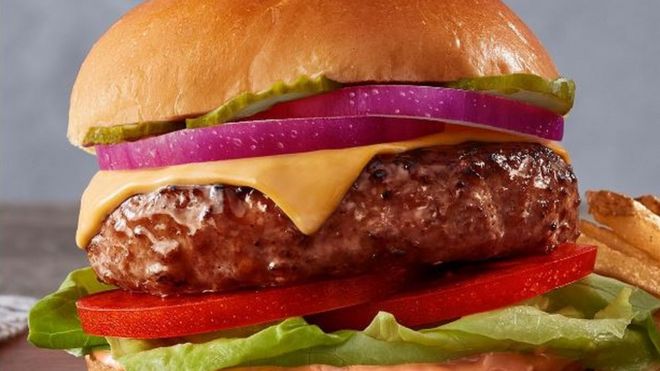
A Beyond Meat burgerImage copyrightBEYOND MEAT

US plant-based meat-maker Beyond Meat is raising money by issuing shares which will value the firm at over $1bn in its stock market debut.

The firm, which made its UK launch in November, expects to offer 8.75 million shares priced between $19 and $21 each.

At the upper price range, the flotation would value the company at $1.2bn.

Beyond Meat says it wants to tap into the growing popularity of veganism and hopes to boost research and development and expand manufacturing facilities.

The company, which is backed by investors including US meat producer Tyson and Microsoft founder Bill gates, expects to receive gross proceeds of about $175m from the offering.

Its valuation makes it a so-called “unicorn firm”.

The term, coined by venture capital investor Aileen Lee, refers to privately owned tech start-ups valued at $1bn (£686m) or higher.

Originally named after the mythical creatures, because they were so rare, the number of such firms has rapidly increased and includes taxi-hailing app Uber, ride-sharing start-up Lyft and online scrapbook company Pinterest.

Beyond Meat’s Beyond Burger was originally due to be introduced into 350 Tesco stores last August, but was delayed by three months because of supply issues.

It has entered a crowded UK market with more suppliers moving into supermarkets, some of whom are producing their own-label vegan foods.

On its website, Beyond Meat says: “Why do you need an animal to create meat? Why can’t you build meat directly from plants? It turns out that you can. So we did.”

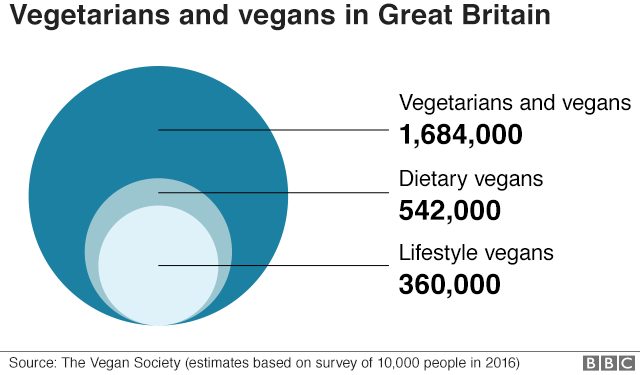
Chart showing the number of vegetarians and vegans in Great Britain in 2016.

Veganism is becoming more popular in Great Britain. Research conducted by the Vegan Society in 2016 estimated there were around 540,000 vegans across the country, compared with around 150,000 in 2006.

Supermarket chains in the UK are stocking more vegan options, with Waitrose starting a dedicated vegan section in more than 130 shops last year and Iceland reporting sales of its plant-based foods rising by 10% in a year.

Meghan Markle ‘Wants To Raise Baby Vegan But Queen Says No’ Say Reports

According to an unnamed ‘royal insider’, the Duchess of Sussex wants her child to eschew animal products. But reports say the move has created tension between her and her husband’s grandmother
Meghan Markle and Prince Harry (Photo: Instagram/Kensington Palace)

Meghan Markle wants to raise the baby she is expecting with Prince Harryas a veganaccording to reports.

But media outlets have claimed that the Queen has put her foot down – saying she will not allow it.

Vegan baby?

“Meghan wants her baby to be raised a vegan,” an unnamed ‘palace insider’ reportedly told Woman’s Day.

But another source reportedly revealed to the publication: “It’s created tense discussions between Meghan and Harry, who doesn’t want to upset his grandmother.

“He’s hoping Meghan will settle once the baby comes and he’s putting this latest polarising idea down to heightened emotions while being pregnant.”

Is Meghan vegan?

The Royal Family famously engages in multiple behaviors that cause animal suffering – including hunting and shooting. According to media reports, Prince Harry has ditched some hunts in a bid to appease Markle.

But there is no evidence to suggest that Markle is herself is actually vegan. Instead, it appears she is flexitarian – she revealed in a 2016 interview that she eats a ‘part-time plant-based diet’. She said: “When I’m filming, I’m conscious of what I eat.

“I try to eat vegan during the week and then have a little bit more flexibility with what I dig into on the weekends. But at the same time, it’s all about balance.”

Vegan fashion

She refuses to wear fur and often opts for vegan fashion choices – last year Markle spotted wearing a pair of animal-free Adidas Stan Smith trainersmade by Stella McCartney.

Another fashion choice she opts for is vegan leather trousers. In an interview the former Suits actor did with Good Housekeeping magazine, the star spoke about her penchant for the fabric.

She said: “My wardrobe for my part in Suits isn’t like Working Girl – dressing for work doesn’t have to be so on-the-nose these days…personally, I love cropped pants in vegan leather, a great fitted blazer and a button-down [shirt].”

Kensington Palace has so far declined to comment.

https://www.plantbasednews.org/post/meghan-prince-harry-wantraise-baby-vegan-queen-says-no

“Clean Meat” Hoax Website Now Posted

Clean Meat Hoax

A banana on the floor with title: Clean Meat Hoax (Don't fall for it)

http://upc-online.org/diet/190401_clean_meat-hoax_website_now_posted-check_it_out.html

Dear Friends,

Philosophy professor and animal rights advocate, John Sanbonmatsu, has launched a new website where concerns about “clean meat” are being aired. Proponents of clean meat technology, also called “cell-based meat” and “cellular agriculture,” are predicting, in the words of Paul Shapiro’s 2018 book Clean Meat, that “growing meat without animals will revolutionize dinner and the world.”

Clean meat is still in the research & development phase. It is not available in stores or restaurants. Eventually, however, it will be, though on what scale, in what variety, and at what price remains to be seen.

Technical and regulatory hurdles aside, questions are being asked, including: will people who eat animals buy clean meat? If so, will they like it well enough to choose it over slaughterhouse flesh? Will the commercialization of clean meat actually reduce the numbers of chickens, fish and other animals currently suffering and dying for meateaters? Or will clean meat end up as nothing more than just another food choice for the human omnivore, with little or no effect on the numbers of animals suffering and dying for cuisine, and with little or no effect on how humanity views and treats our fellow creatures?

Of concern to many of us is that clean meat is being promoted by the Good Food Institute and its allies as a response to the “fact” that human “nature” is incapable of not eating meat; therefore, the only choice is to grow cellular meat to satisfy the growing human population and reduce the destructive environmental effects of industrialized animal farming.

Many of us are pushing back against the claim that plant-powered foods will never satisfy most people. Current growth of the vegan food market suggests otherwise. Contrary to some assertions that vegan advocacy has already failed, within the mere 40 or so years of vegan advocacy, incredible progress has been made and encouragingly continues. Plant-powered foods are not just a fad – they’re a growing trend. One reason for this is the increasingly sophisticated taste, texture, and variety of products that resemble, but are free from, animal bodies.

I am pleased to present Clean Meat Hoax to our readers and to contribute to the conversation. At this point, I am neither radically for nor against clean meat, except to say that if it could significantly eliminate animals from being born into the misery and murder of meat, this, in my view, would be 100 percent better than the daily global holocaust of animals.

At the same time, as contributors to Clean Meat Hoax point out, and I am one of them, the issue is ethically complicated. If this potentially animal-free technology could help liberate animals from the plate and from the belittling attitudes most people hold about the individuals they carelessly consume, then I would welcome it. But if all it does is add one more option to the smorgasbord of omnivorous “food” choices, then it is just another tedium that sows depression and despair, particularly when (former) animal advocates insist that ethical advocacy for animals “doesn’t work.” – Karen Davis

In what is apparently not an April Fools’ joke, Impossible Foods and Burger King are launching an Impossible Whopper

Impossible Foods

The meat substitute manufacturer Impossible Foods  and fast food giantBurger King are launching an Impossible Whopper.

According to a report in The New York Times, Burger King is launching the Impossible Whopper in stores in the St. Louis area with plans for a broader rollout later — and not as part of some elaborate April Fools’ Day prank.

Burger King isn’t the first fast food chain to bring an Impossible burger to market. That’d be White Castle, which is selling Impossible sliders at stores in the Northeast.

But Burger King would certainly be the biggest slinger of ground beef to go with a meatless patty maker.

Impossible’s largest competition in the meat-substitute market, the publicly traded purveyor of purely beef-free patties, Beyond Meat,  has a similar deal with Carl’s Jr. for its own version of a beef-less burger.

The Silicon Valley-based Impossible Foods has been on a roll. They introduced a new version of their burger to much fanfare at the Consumer Electronics Show earlier this year, and have been locking in deals with higher-end fast casual restaurants and now large international fast food chains.

In the eight years since the company raised its first $7 million investment from Khosla Ventures, Impossible Foods has managed to amass more than $389 million in financing — including a convertible note last year from the Singaporean global investment powerhouse Temasek (which is backed by the Singaporean government) and the Chinese investment fund Sailing Capital (a state-owned investment fund backed by the Communist Party-owned Chinese financial services firm, Shanghai International Group).

It remains to be seen if this is a harbinger of things to come for Burger King and whether the fast food giant will embrace other alternative meat companies like the providers of fake chicken or cellular-based meat substitutes like Memphis Meats.

Red Robin Gives Impossible Burger Its Largest Rollout Yet

The plant-based “meat” brand is also available at White Castle and other select restaurants.

Play Video

YOU MIGHT LIKE
QUESTLOVE LAUNCHES VEGETARIAN CHEESESTEAK WITH IMPOSSIBLE FOODS
WHEN WAS THE LAST TIME YOU BOUGHT MILK?
PEOPLE REVEAL THEIR FOOD-RELATED DATING DEAL-BREAKERS

The plant-based “meat” brand is also available at White Castle and other select restaurants.

BRIDGET HALLINAN 

Updated March 25, 2019

So far, 2019 has been a pretty big year for plant-based food—in January alone, Impossible Foods debuted a revamped formula with the “Impossible Burger 2.0” at CES in Las Vegas, Carl’s Jr. put the Beyond Burger on its menu (for a limited time), and Impossible’s founder and CEO, Pat Brown, even teased out the idea of a plant-based beef steak. Today, that trend continues with the announcement that Red Robin has officially inked a deal with Impossible Foods. Starting next month, the restaurant chain will add an Impossible Cheeseburger to the menu at all 570 of its locations across the U.S, according to a statement.

“Our fans expect variety, creativity and culinary innovation at Red Robin, so it was important for us to offer a plant-based option that appeals to traditional burger lovers, flexitarians and everyone craving a delicious burger,” Jonathan Muhtar, executive vice president and chief concept officer at Red Robin, said in the statement.

Impossible Burger
ROBYN BECK/Getty Images

The partnership makes Red Robin the largest restaurant group worldwide to carry Impossible’s plant-based meat, and diners can order the burgers starting April 1 (no, it’s not an April Fools’ prank). As for the burger’s preparation? Think standard cheeseburger: topped with your choice of cheese, as well as pickle relish, red onions, pickles, lettuce, tomatoes, and mayo (you can customize it to your liking). You also have the option to substitute the Impossible patty for any other Red Robin burger on the menu—an Impossible Sautéed ‘Shroom burger (Swiss cheese, garlic-and-Parmesan sautéed mushrooms) sounds pretty good by us. And of course, burgers are served with Red Robin’s signature bottomless steak fries. If there isn’t a Red Robin near you, you can find Impossible burgers at Umami Burger, White Castle (in slider form), and Muscle Maker Grill, among other restaurants — in total, over 5,000 across the U.S., Hong Kong, and Macau serve the plant-based patty, according to the Impossible site.

Impossible Foods Lands Another Restaurant Chain Partner

Red Robin has bought into the vegan burger craze. The casual dining chain, known for its menu featuring dozens of gourmet burger iterations, has partnered with Impossible Foods to launch the Impossible Cheeseburger, its first foray into plant-based protein burgers. The new menu item will be available across all of Red Robin’s 570 locations in the U.S. starting on April 1.

The deal with Red Robin marks the largest restaurant chain partnership that Impossible Foods has locked in to date. The company also signed on to produce its signature plant-based protein for all 377 White Castle locations in the U.S. last fall.

“Red Robin takes meat seriously — and it’s a major endorsement that the Impossible Cheeseburger is now part of Red Robin’s justifiably famous menu,” Lisa Will, Impossible Foods’ vice president of sales, said in a statement.

A WELCOME SALES BOOST

From Red Robin’s perspective, the chain could use the attention that a popular new menu item launch could bring. Red Robin has been struggling to pull its sales up for multiple quarters, feeling the pressure from operational inefficiencies and being slow to adapt to new digital sales channels, including online ordering and delivery.

In the fourth quarter of 2018, Red Robin reported a 4.5 percent decline in comparable store sales and a 4.4 percent decline in comparable guest count at its restaurants, compared to the same period in the prior year. Total revenue was down 10.8 percent in the quarter.

“2018 was, in sum, a very disappointing year for us,” Red Robin CEO Denny Marie Post told investors on the company’s most recent earnings call. “It brought a lot of hard-earned learning, which we are using to urgently set new plans to turn our performance around.”

A SUCCESSFUL NEW RECIPE

Impossible Foods debuted Impossible Burger 2.0, a revamped version of the original faux meat burger, at the Consumer Electronics Show in Las Vegas earlier this year. The new recipe was cited as the reason that Red Robin’s culinary team chose to work with Impossible Foods to develop a vegan burger offering.

The Impossible Burger is now on the menu at over 5,000 restaurant locations in the U.S., due in part to a distribution partnership with DOT Foods. Impossible Foods is planning to launch a packaged version of the burger in grocery stores later this year.

The company has also hit its fair share of obstacles as it has grown. Impossible Foods announced its first voluntary recall last week over a piece of plastic found in a shipment of its Impossible Burger mix, and the U.S. Food and Drug Administration has repeatedly investigated the faux meat company over its central recipe ingredient, the “heme” compound.

The suspicious attention has been enough to turn some restaurant chains to Impossible Foods’ direct competitor, Beyond Meat. The plant-based protein purveyor has signed large restaurant chains including Carl’s Jr. and A&W as its partners, already has a grocery distribution deal in place, and has put its Beyond Burger on the menu at upwards of 11,000 restaurants in the U.S. due to an exclusive distribution deal with foodservice giant Sysco. Beyond Meat filed to go public late last year.

Here’s how the footprint of the plant-based Impossible Burger compares to beef

A new analysis finds that the environmental cost of raising cattle is very, very high.

Here’s how the footprint of the plant-based Impossible Burger compares to beef
[Photos: Impossible Foods, Robert Bye/Unsplash]

The newest version of the Impossible Burger–the plant-based meat that uses food science to replicate the taste and feel of beef–has a carbon footprint 89% smaller than a burger made from a cow.

A new  analysis found that the burger also uses 87% less water than beef, uses 96% less land, and cuts water contamination by 92%. Those numbers are improvements on the last iteration of the burger, in part because the company has become more efficient as it grows and because it switched from wheat to soy as a key ingredient, because soy also yields more acres on a farm. But the majority of the impact simply comes from the fact that the product isn’t made from an animal.

“The best, fastest, easiest way to make meat more sustainable is to avoid the cow,” says Rebekah Moses, senior manager of impact strategy at Impossible Foods. “By making the Impossible Burger directly from plants, we have the luxury of bypassing the most inefficient stage in the entire food system.” Cows are known for their greenhouse gas-producing burps–the largest source of methane emissions in agriculture–but also require cattle feed that takes large amounts of land, water, fertilizer to grow, and often leads to deforestation. The cow’s manure is also another major of source of pollution.

The life-cycle analysis, which was verified by the sustainability consulting group Quantis, looked at each part of the plant-based burger’s production, from the water and energy used to produce heme, the ingredient that gives the flavor a blood-like taste, to the resources used to grow other ingredients like soy and potatoes, and produce the packaging. The product uses 4% of the land needed to produce beef. “That’s a very, very conservative estimate on our part–most cattle globally require far more land than that estimate,”Moses says. “It’s completely inefficient, and it’s why beef is the leading cause of deforestation in the Amazon. If most of the land that’s used for cattle feed were to be left alone, without the gassy animals, to re-vegetate and actually store carbon in trees and grasslands, it’s not an exaggeration to say that we could set the clock back on climate change through food choice alone.”

For an individual, the company calculated, swapping Impossible “meat” for a pound of ground beef saves seven pounds of greenhouse gas emissions, 90 gallons of water, and 290 square feet of land. Still, while some consumers might be choosing plant-based meat for environmental reasons, the startup isn’t relying on sustainability to sell the product. “What we really wanted was to create a delicious product that can compete with beef on taste and craveability,” she says. “That’s the primary motivator for most people, and that’s who we want to empower by providing a more planet-friendly option. Sustainability attributes are, for most consumers, a ‘nice to have’ in food choice, rather than the driving force of purchasing.”

ABOUT THE AUTHOR

Adele Peters is a staff writer at Fast Company who focuses on solutions to some of the world’s largest problems, from climate change to homelessness. Previously, she worked with GOOD, BioLite, and the Sustainable Products and Solutions program at UC Berkeley.

 More

Butterball recalls 78,000 pounds of raw ground turkey due to salmonella concerns

LINKEDINCOMMENTMORE

Butterball is recalling more than 78,000 pounds of raw ground turkey that may contaminated with salmonella.

Investigators discovered the problem during an outbreak of Salmonella Schwarzengrund, that sickened five people from two states, according to the U.S. Department of Agriculture’s Food Safety and Inspection Service.

Wisconsin officials took three samples of Butterball ground turkey from a home where four of the patients live. The samples were “closely related genetically” to those taken from the sick people.

The nationwide recall is for:

  • 48-ounce plastic wrapped tray containing Butterball everyday Fresh Ground Turkey with Natural Flavoring (85% lean/15% fat), with sell- or freeze-by date 7/26/18, lot code 8188, and UPC codes 22655-71555 or 22655-71557
  • 48-ounce plastic wrapped tray containing Butterball everyday Fresh Ground Turkey with Natural Flavoring (93% lean/7% fat), with sell- or freeze-by date 7/26/18, lot code 8188 and UPC code 22655-71556
  • 16-ounce plastic wrapped tray containing Butterball everyday Fresh Ground Turkey with Natural Flavoring (85% lean/15% fat), with sell- or freeze-by date 7/26/18, lot code 8188 and UPC code 22655-71546
  • 16-ounce plastic wrapped tray containing Butterball everyday Fresh Ground Turkey with Natural Flavoring (93% lean/7% fat), with sell- or freeze-by date 7/26/18, lot code 8188 and UPC codes 22655-71547 or 22655-71561
  • 48-ounce plastic wrapped tray containing Kroger Ground Turkey Fresh (85% lean/15% fat), with sell- or freeze-by date 7/26/18, lot code 8188, and UPC code 111141097993
  • 48-ounce plastic wrapped tray containing Food Lion 15% fat ground turkey with natural flavorings, with sell- or freeze-by date 7/26/18, lot code 8188 and UPC code 3582609294

Chick-fil-A’s latest: The chain is welcoming spring Monday with new Frosted Key Lime treat

Don’t say goodbye yet: These 4 tax breaks expired, but they could return and boost your refund

The 78,164 pounds of prepackaged poultry was produced on July 7, 2018, and have establishment number EST. P-7345 inside the USDA mark of inspection.

“Because these products were packaged nine months ago, it’s pretty unlikely any of this product is still in retail stores,” said Butterball spokeswoman Christa Leupen. “Obviously, we’re concerned consumers have this product in their freezers.”

People who have packages of the recalled turkey should throw them or return them to where they were bought, the FSIS said.

Customers with questions may call Butterball at 800-288-8372.