Exposing the Big Game

Forget Hunters' Feeble Rationalizations and Trust Your Gut Feelings: Making Sport of Killing Is Not Healthy Human Behavior

Exposing the Big Game

MORNINGSTAR FARMS GOES VEGAN, SPARING 300 MILLION EGGS ANNUALLY 

The Kellogg’s-owned veggie brand debuts a vegan “Cheezeburger” to kick off its journey to becoming 100-percent vegan in the next three years.


24942 Shares    
VegNews.BabyChick

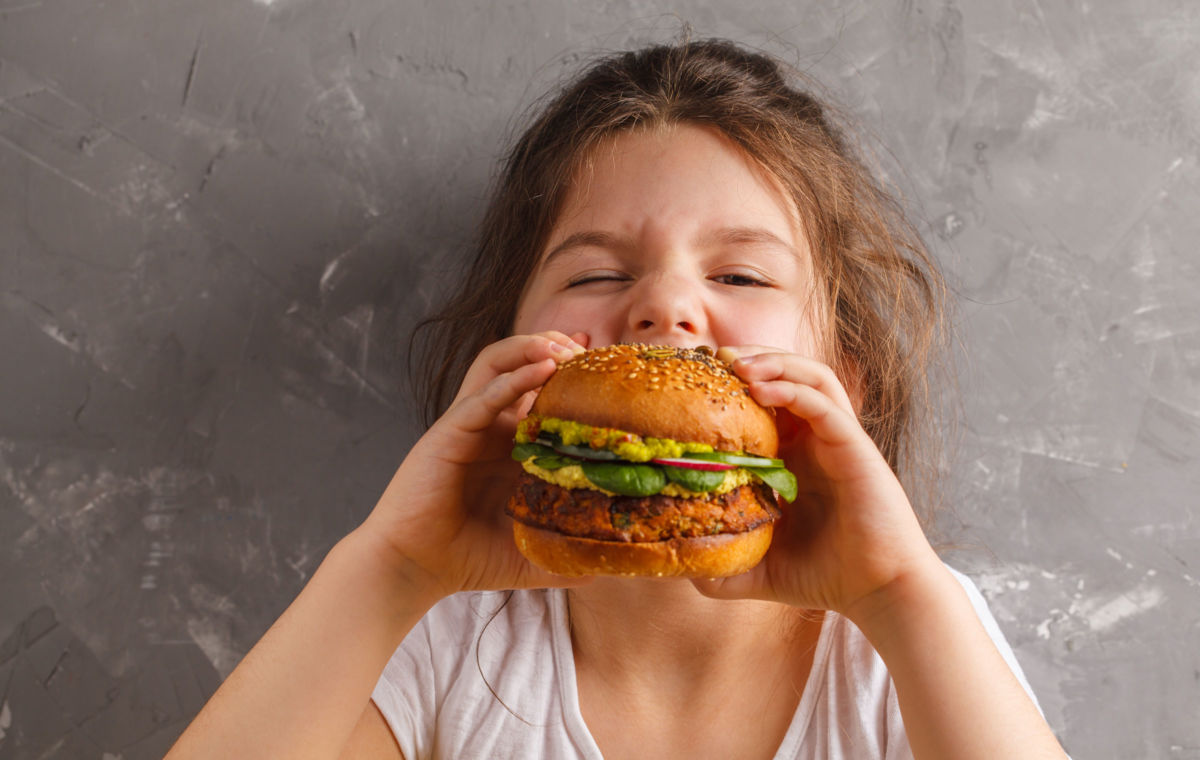
Vegetarian brand MorningStar Farms—a subsidiary of the Kellogg Company—will transition to becoming a fully vegan company by 2021. According to the brand, the move will spare 300 million egg whites annually and its fully vegan line will be available to 25,000 restaurants and eating establishments within K-12 schools, universities, and hospitals nationwide. To celebrate its transformation, the brand will unveil a vegan Cheezeburger (its vegan Meat Lovers quarter-pound burger topped with plant-based cheddar cheese) during the upcoming trade show Natural Products Expo West. “This is a very exciting opportunity for us. By making this change, MorningStar Farms favorites can be enjoyed by even more people at home and on-the-go who strive to add plant-based proteins to their plate,” Mel Cash, Head of Global Marketing, Plant Based Protein at Kellogg Company, said. “This will also help us further our commitment to a greener world by helping to reduce the water waste, land usage, and carbon emissions associated with egg production.” Last year, MorningStar Farms removed all animal products from its “Chik’N” line—which includes Buffalo Wings, Chik’N Nuggets, Buffalo Chik Patties, and Original Chik Patties. Currently, the brand’s portfolio is 50-percent vegan with plans to increase its vegan offerings to comprise 65 percent of its product line by the end of 2019.

Why I’m Still Vegan and Wish You Were Too


As people are deciding daily, there are countless good reasons to go vegan, but the core motive for me hasn’t changed since I finally saw the light 20+ years ago. I don’t eat animals because of the mindless atrocities and injustices that so many millions and billions of non-humans are subjected to each and every day of the year.

It’s true, going vegan is healthier for us and the planet, and we wouldn’t be in this runaway climate change predicament if humans weren’t such a successful, over-crowded carnivore. But even as things seem dire for the future of humans’ survival, thoughts of eating the flesh of others is as repugnant and repulsive as ever for this thinking, feeling human being.

It may not save the planet or end all suffering if I bow out of hedonistic carnivism, but it makes my conscience that much clearer each time my hunger is assuaged without resorting to causing unnecessary suffering.

Hope of saving the planet aside, part of the reason I wish our species would wake up from their self-inflicted universal nightmare and decide to stop killing and eating animals is simply the respect I could have for my fellow humans if they could collectively realize there was no future in this race to prove we are the worst blight the Earth has ever seen. No plague of locusts or termites has ever been so destructive as to cause their own ultimate demise; and no team of Tyrannosaurus could ever match runaway humans’ impact on all other life.

Whether we want to keep living or just be able to live with ourselves, it’s time for humans to lay down their arms and proclaim their love for Mother Earth and all her inhabitants. The time for proving we can be the worst tyrant is over—now we should try to prove we deserve to live yet another glorious day.

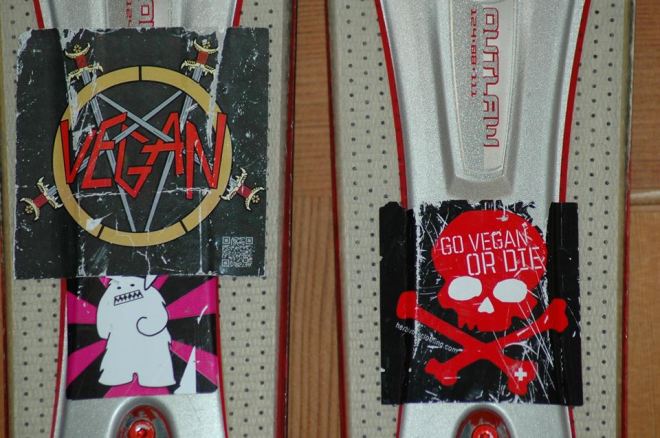
To be brutally honest with you, I don’t really care what you do to yourselves. That’s not the point. On my skis is a sticker modeled after an anti-smoking slogan that reads: “Go Vegan or Die.” It’s not so much of a warning to spoil your fun as a plea for the sake of others…

Eating meat has ‘dire’ consequences for the planet, says report

Using hand tools and draft animals, a family harvests wheat in Ethiopia’s famine-prone highlands.
PHOTOGRAPH BY ROBIN HAMMOND, NAT GEO IMAGE COLLECTION

To feed a growing global population and curtail climate change, scientists say we need to radically change our food systems.

THERE’S AN ENTIRE industry built around dieting. Most of its products are intended to help people lose weight, gain muscle, or live longer.

But as the global human population steadily climbs, scientists are scrambling to devise a diet plan that can feed 10 billion people by 2050.

A new report, published in the British medical journal The Lancet, claims to do just that. It recommends a largely plant-based diet, with small, occasional allowances for meat, dairy, and sugar. The report was compiled by a group of 30 scientists from around the world who study nutrition or food policy. For three years, they deliberated with the intent of creating recommendations that could be adopted by governments to meet the challenge of feeding a growing world population.

“Even small increases in the consumption of red meat or dairy foods would make this goal difficult or impossible to achieve,” a summary of the report states.

The report’s authors reached their conclusions by weighing different side-effects of food production. They included greenhouse gases, water and crop use, nitrogen or phosphorous from fertilizers, and the potential for biodiversity to take a hit should a region be converted into farmland. By managing all these factors, the report’s authors say climate change-inducing gases could be reduced and enough land could be reserved to feed the world’s growing population.

Under the report’s conclusions, meat and sugar consumption around the world should drop by 50 percent. Who eats less meat and where will vary, says Jessica Fanzo, a report author and professor of food policy and ethics at Johns Hopkins University. Meat consumption in the U.S., for instance, would have to go down and be replaced by fruits and vegetables. But other countries already facing poor nutrition could incorporate meat into roughly three percent of their diet.

“We’ll be in dire straits,” if no action is taken, says Fanzo.

Following a vegan trend

Recommendations to scale back meat consumption aren’t new. Just this past October, a study published in the journal Nature set similar guidelines for reducing meat and sugar consumption.

What’s different about this new report, says Fanzo, are the steps outlined to put such a change into place.

Branded what the authors call a “Great Food Transformation,” it outlines strategies that range from the least active, simply sharing information, to the most aggressive, eliminating consumer choice.

“I think it’s hard for people on a daily basis because the incentives and political structures that are in place don’t make it so easy,” says Fanzo. Shifting what sort of agricultural practices receive subsidies is one tactic for overhauling the food system, the report outlines. That would change the relative prices of foods, and thus build in consumer incentives.

Whether a plan like this could actually grow legs around the world is a different story, says Fanzo.

“With the current [presidential] administration, I just don’t think anything is going to move,” she notes.

Greg Miller is the chief science officer for the U.S. National Dairy Council. In addition to citing health benefits of milk like calcium and vitamin D, he cautions against transforming America’s food landscape.

“You have a million people whose lives depend on dairy,” Miller says of those who work on farms or are otherwise employed by the dairy industry.

“We could get there with the right incentives and the right policies,” Miller says of making dairy farming more sustainable. “Subsidies are needed for better technology right now. [Small-scale farmers] don’t have additional income to do some of the things that could be done.”

Better breeding has created cows that are capable of producing more milk for instance, and better tracking systems can monitor an animal’s food intake and activity.

Lingering emissions debates

Not all experts are convinced that plant-based diets are a food security panacea. Frank Mitloehner, an animal scientist from the University of California, Davis has been vocal about his view that meat has been disproportionately linked to climate change emissions.

A Texas butcher chops a side of beef into various cuts.

PHOTOGRAPH BY BRIAN FINKE, NAT GEO IMAGE COLLECTION

“What concerns me the most is that, while livestock has an impact, the report makes it sound as if it was the leading source of the impacts. By far the use of fossil fuels are the leading source of carbon emissions,” says Mitloehner.

According to the EPA, burning fossil fuels for industry, electricity, and transportation comprises the bulk of greenhouse gas emissions. Agriculture is nine percent of emissions and livestock roughly four percent of that.

Mitloehner also disagrees with the method used by the council to determine the amount of greenhouse gases produced by livestock, saying too much weight was given to methane during calculations. Compared to carbon, methane stays in the atmosphere for a relatively short amount of time. Scientists debate how long exactly, but studies have shown methane plays a large roll in warming oceans.

Reducing food waste 

Though the report’s dietary guidelines are receiving criticism, its push to reduce food wasteis being more widely received. In the U.S. alone, nearly30 percentof all food is wasted.

Strategies to reduce waste are outlined for both consumers and producers in the report. Better storage technology and contamination spotting could help businesses reduce the amount of food that’s thrown out, but educating consumers is also touted as an effective strategy.

It’s a daunting prospect for many—changing eating habits and reducing food waste. But Kathryn Kellogg, author of the book 101 Ways to Go Zero Waste, says she gets by with just $250 a month.

“There’s so many creative ways to use our food to prevent waste, and I feel like most people just don’t know about them,” she says. She cites knowing how to cook each part of a vegetable and being constantly aware of the food in her fridge as some of her most effective habits. (Learn more about so-called zero-waste families.)

Kellogg, however, lives in California near neighborhoods with accessible farmers markets. For other communities living in so-called food deserts—regions where grocery stores or markets aren’t readily available—accessing fresh fruits and vegetables can be more difficult.

“All the actions we recommend are available now,” says Fanzo. “They’re not ‘pie in the sky’ future technologies. They’re just not done at a large scale.”

The report’s commissioners will hold launch events in more than 30 countries around the world starting Thursday. They plan to appeal to international organizations like the U.N. as potential enforcers of their new guidelines.

Less beef, more beans. Experts say world needs a new diet

Plant-based diet has enough flexibility to accommodate food cultures around the world, report’s authors say

The diet encourages cooking with ingredients such as whole grains and beans. (Matthew Mead/Associated Press)

A hamburger a week, but no more — that’s about as much red meat people should eat to do what’s best for their health and the planet, according to a report seeking to overhaul the world’s diet.

Eggs should be limited to fewer than about four a week, the report says. Dairy foods should be about a serving a day, or less.

The report from a panel of nutrition, agriculture and environmental experts recommends a plant-based diet, based on previously published studies that have linked red meat to increased risk of health problems. It also comes amid recent studies of how eating habits affect the environment. Producing red meat takes up land and feed to raise cattle, which also emit the greenhouse gas methane.

John Ioannidis, chair of disease prevention at Stanford University, said he welcomed the growing attention to how diets affect the environment, but that the report’s recommendations do not reflect the level of scientific uncertainties around nutrition and health.

“The evidence is not as strong as it seems to be,” Ioannidis said.

The report was organized by EAT, a Stockholm-based non-profit seeking to improve the food system, and published Wednesday by the medical journal Lancet. The panel of experts who wrote it says a “Great Food Transformation” is urgently needed by 2050, and that the optimal diet they outline is flexible enough to accommodate food cultures around the world.

Overall, the diet encourages whole grains, beans, fruits and most vegetables, and says to limit added sugars, refined grains such as white rice and starches like potatoes and cassava. It says red meat consumption on average needs to be slashed by half globally, though the necessary changes vary by region and reductions would need to be more dramatic in richer countries like the United States.

Convincing people to limit meat, cheese and eggs won’t be easy, however, particularly in places where those foods are a notable part of culture.

Think of it [meat] like lobster — something that I really like, but have a few times a year.– Walter Willett

In Sao Paulo, Brazil, systems analyst Cleberson Bernardes said as he was leaving a barbecue restaurant that letting himself eat just one serving of red meat a week would be “ridiculous.”

In Berlin, Germany, craftsman Erik Langguth said there are better ways to reduce greenhouse gas emissions, and dismissed the suggestion that the world needs to cut back on meat.

“If it hasn’t got meat, it’s not a proper meal,” said Langguth, who is from a region known for its bratwurst sausages.

Before even factoring in the environmental implications, the report sought to sketch out what the healthiest diet for people would look like, said Walter Willett, one of its authors and a nutrition researcher at Harvard University. While eggs are no longer thought to increase risk of heart disease, Willett said the report recommends limiting them because studies indicate a breakfast of whole grains, nuts and fruit would be healthier.

He said everybody doesn’t need to become a vegan, and that many are already limiting how much meat they eat.

“Think of it like lobster — something that I really like, but have a few times a year,” Willett said.

Advice to limit red meat is not new, and is tied to its saturated fat content, which is also found in cheese, milk, nuts and packaged foods with coconut and palm kernel oils. The report notes most evidence on diet and health is from Europe and the United States. In Asian countries, a large analysis found eating poultry and red meat (mostly pork) was associated with improved lifespans. That might be in part because people might eat smaller amounts of meat in those
countries, the report says.

Reduce red meat for optimal health

Ioannidis of Stanford noted nutrition research is often based on observational links between diet and health, and that some past associations have not been validated. Dietary cholesterol, for example, is no longer believed to be strongly linked to blood cholesterol.

Under the new recommendations, consumption of fruits and vegetables would need to more than double compared with current diets. (Ted Dillon/CBC)

The meat and dairy industries also dispute the report’s recommendations, saying their products deliver important nutrients and can be part of healthy diets.

Andrew Mente, a nutrition epidemiology researcher at McMaster University, urged caution before making widespread dietary recommendations, which he said could have unintended consequences.

Still, the EAT-Lancet report’s authors say the overall body of evidence strongly supports reducing red meat for optimal health and shifting toward plant-based diets. They note the recommendations are compatible with the U.S. dietary guidelines, which say to limit saturated fat to 10 per cent of calories.

While people in some poorer counties may benefit from getting more of the nutrients in meat and dairy products, the report says they shouldn’t follow the path of richer countries in how much of those foods they eat in coming years.

Environmental benefits

Though estimates vary, a report by the United Nations said livestock is responsible for about 15 per cent of the world’s gas emissions that warm the climate.

Robbie Andrew, a senior researcher at CICERO Center for International Climate Research in Norway, said farming practices that make animals grow faster and bigger may help limit emissions.

But he said cows and other ruminant animals nevertheless produce a lot of methane, a powerful greenhouse gas.

“It’s very difficult to get down these natural emissions that are part of their biology,” Andrew said.

The environmental benefits of giving up red meat depend on what people eat in its place. Chicken and pork produce far fewer emissions than beef, Andrew said, adding that plants in general have among the smallest carbon footprints.

Brent Loken, an author of the EAT-Lancet report, said the report lays out the parameters of an optimal diet, but acknowledged the challenge in figuring out how to work with policy makers, food companies and others in tailoring and implementing it in different regions.

Should Plant-Based Proteins Be Called “Meat”?

Should Plant-Based Proteins Be Called “Meat”?

Fried chicken, bacon cheeseburgers and pepperoni pizza aren’t uncommon to see on vegan menus — or even the meat-free freezer section of your local supermarket — but should we be calling these mock meat dishes the same names? A new Missouri law doesn’t think so. The state’s law, which forbids “misrepresenting a product as meat that is not derived from harvested production livestock or poultry,” has led to a contentious ethical, legal and linguistic debate. Four organizations — Tofurky, The Good Food Institute, the American Civil Liberties Union of Missouri and the Animal Legal Defense Fund — are now suing the state on the basis that not only is the law against the United States Constitution, but it favors meat producers for unfair market competition.

While some newly formulated meat-free products, like the plant-based Beyond Burger or its rival the Impossible Burger (the veggie burger that “bleeds”), may be deceptively meat-like, it’s hard to understand how consumers could actually be duped into thinking non-meat products are legitimately meat.

“The law violates constitutional right to free speech,” explains Animal Legal Defense Fund attorney Amanda Howell. “It’s wide in scope, vague, broad and problematic. An ordinary person can’t tell you what this law is about.” Although legal jargon is often hard for the typical non-attorney to understand, Howell explains that one thing is easy for the everyday American: distinguishing plant-based meat-like products from actual meat. To date, there are zero consumer complaints on file in Missouri of shoppers confusing meat-like products with actual meat, according to Howell and the Animal Legal Defense Fund.

Missouri currently produces the third-highest amount of beef cattle in the US (preceded by Oklahoma, and Texas at the top spot), and the beef industry is threatened by imitation meat products, proven to be better for the environment (though Beef Magazine attempts to negate climate science) and sometimes healthier than animal-derived red meat. As food science disrupts what people think of as “meat,” the future of the livestock industry may be endangered, and that’s a threat to ranchers.

Legally, there’s no reason why fake sausage or imitation turkey can’t be labeled as such. Under the Consumer Protection Law, as long as a product’s statement of identity is “truthful and not misleading, it’s legal,” says Howell. This statement of identity informs consumers of what’s inside a package and can help inform them of how to use and eat a product. “Consumers would be more confused if they were not able to use meat-related terminology,” Howell says. “It’s pretty obvious that they’re taking away the terminology so consumers won’t know what the products are, and they’ll sound less appealing.” Vegan sausage is understandable; seasoned soy patties, not so much. “Consumers should have access to truthful information, clearly labeled [foods], instead of taking away naming conventions just because an industry is scared,” Howell says.

People for the Ethical Treatment of Animals (PETA), which takes a staunchly anti-meat stance, also stands behind using meat terms and “letting the terms ‘steak’ and ‘sausage’ evolve with the times,” according to Ben Williamson, PETA’s senior international media director.

“The meat industry is going up against a public that is learning that eating meat is responsible for tremendous animal abuse, linked to diabetes, strokes, heart disease and cancer, and is an environmental nightmare,” Williamson said. “Healthy, ethical and 100-percent humane, vegan products are a booming market, and lawmakers’ time and efforts would be better served helping transition meat producers into vegan companies.”

Linguistically, calling plant-based meat “meat” is not necessarily an issue in English. “If we go back to what meat used to mean, it referred to food in general,” says linguist Carrie Gillon. “In about 1300, the definition changed to mean animal flesh food.” But even though the definition of “meat” narrowed centuries ago, that doesn’t mean it can’t also be used more generally as language evolves. Gillon uses prototype theory to explain this — that is, the theory that each noun we use has a prototype. If you think of a bird, you may think of a wren, but a penguin is also very much a bird — it just doesn’t share all the characteristics of a stereotypical bird, like flying. This theory could also apply to meat, or non-meat meat: When we think of meat, we think animal flesh, but why not expand the definition to foods that share characteristics with meat, like the meat of a peach, perhaps, or ground tofu that mimics ground beef?

“As long as the food has something in common with meat, like texture or taste, it makes total sense to extend the word meat to plant-based proteins,” Gillon says, noting that this wouldn’t work, say, with just a block of tofu, but anything that has something in common with our prototype of meat.

For vegetarians like food blogger Lori Nelson, meat-free foods named after their animal counterparts are preferred, for clarity. “Labels like ‘vegan chicken’ save me time because I don’t eat meat. If it’s labeled ‘vegan chicken,’ I don’t have to worry about it being actual chicken,” she explains. Plus, for vegetarians who have previously eaten meat, or at least seen meat in media, these mock products’ names provide a clearer idea of what they will taste like.

“We’re just trying to ensure a level playing field for plant-based meats,” says Howell. “People want cruelty-free sausage.”

This article was produced by Earth | Food | Life, a project of the Independent Media Institute.

‘Planet of the chickens’: How the bird took over the world

  • 12 December 2018
HenImage copyrightGETTY IMAGES

A study of chicken bones dug up at London archaeological sites shows how the bird we know today has altered beyond recognition from its ancestors.

With around 23 billion chickens on the planet at any one time, the bird is a symbol of the way we are shaping the environment, say scientists.

Evolution usually takes place over a timescale of millions of years, but the chicken has changed much more rapidly.

The rise of the supermarket chicken mirrors the decline in wild birds.

“The sheer number of chickens is an order of magnitude higher than any other bird species that’s alive today,” said Dr Carys Bennett, a geologist at the University of Leicester, who led the study.

“You could say we are living in the planet of the chickens.”

Fried chickenImage copyrightGETTY IMAGES
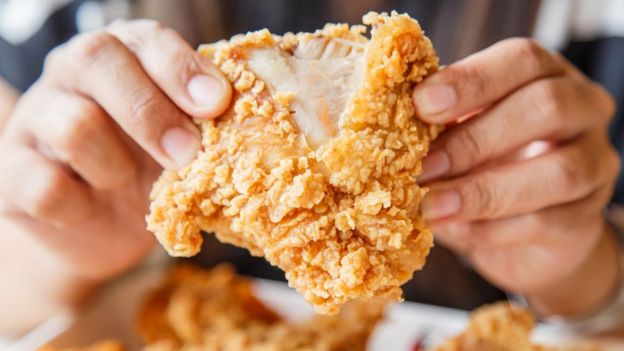
Image captionChicken meat is consumed across the world

Chickens in numbers

  • 65.8 billion – the number slaughtered in 2014, compared to 1.5 billion pigs and 0.3 billion cattle
  • 25,500 – the number of stores in the world selling a popular brand of fried chicken
  • 70% – the number of broiler chickens that are intensively reared (figures from 2006)
  • Five to seven weeks – the lifespan of a broiler chicken
  • 3- 5bn – the population of the passenger pigeon in the 1800s, now extinct, which is thought to be the most common wild bird in human history.
Chickens bred for meatImage copyrightGETTY IMAGES
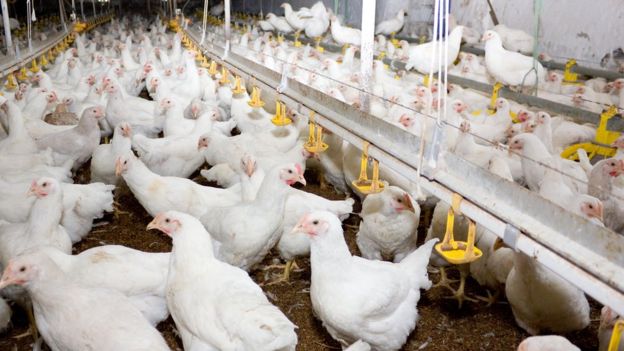
Image captionChickens bred for meat

The researchers used the archaeological record to look at how chickens have changed over the years – and say they are a symbol of this geological era.

We are entering the Anthropocene, the period during which human activity has been the dominant influence on climate and the environment.

“Human activities have altered the Earth’s landscapes, the oceans, atmosphere and land surface,” said Dr Bennett.

“As the most numerous terrestrial vertebrate species on the planet, with a biology shaped by humans, modern chickens are a symbol of our changed biosphere.”

She said when future generations examine rocks from our time, they will probably see “tin cans, glass bottles, and bits of material that were once plastic, and amongst that will be bones of chickens”.

Domesticated animals now make up the majority of animal species on land, shaping the natural world.

Stories you might also like to read:

Rats and pigeons ‘replace iconic species’

The vast scale of life beneath our feet

Hidden fossils enter ‘digital museum’

The domestic chicken is descended from the red jungle fowl, which is native to tropical South East Asia. The bird was first domesticated around 8,000 years ago, and rapidly spread around the world, to be used for meat and eggs.

In the 1950s the “chicken-of-tomorrow programme” was launched to produce bigger birds. Since then, the bird has undergone extraordinary changes.

It has been selectively bred to put on weight fast, which is evident from its body and the chemistry and genetics of its bones.

Meanwhile, roast chicken has gone from being an occasional treat to a global food enterprise.

The research is reported in the journal Royal Society Open Science.

VEGAN CELEB MILEY CYRUS LOSES HOME, BUT RESCUES ANIMALS FROM CALIFORNIA WILDFIRES

Vegan Celeb Miley Cyrus Loses Home But Rescues Animals From California Wildfires
News Editor, LIVEKINDLY | New York City | Contactable via: kat@livekindly.co
 

Vegan celebrity Miley Cyrus was just one of many to lose her home this past week in the California Woolsey Fire. Despite this, the star says that she is grateful that she was able to rescue her pets and make it out alive with her fiance, actor Liam Hemsworth.

“Completely [devastated] by the fires affecting my community. I am one of the lucky ones,” Cyrus wrote on Twitter yesterday. “My animals and LOVE OF MY LIFE made it out safely & that’s all that matters right now.”

She continued, “My house no longer stands but the memories shared with family & friends stand strong. I am grateful for all I have left. Sending so much love and gratitude to the firefighters and LA country Sheriff’s department! If you are interested in getting involved see next tweet…. Donate $ , Time , Supplies. I love you more than ever, Miley.”

Cyrus then followed up with a list of organizations, charities, and companies that are providing relief to those affected by the wildfire, including the California Fire FoundationDirect Relief, and the California Community Foundation.

The award-winning Cyrus isn’t shy about the love she has for all animals – she even dedicated her 2015 album, “Miley Cyrus and Her Dead Petz,” to her deceased companions. That same year, the singer toldthe New York Times that spending time at home with her pets is one of her favorite activities.

According to People Magazine, Cyrus’s extended four-legged family includes Barbie, a former lab beagle rescued by the Rescue + Freedom Project, Emu the dog, who the singer immortalized in a tattoo in 2017, and former shelter pups Happy, Mary Jane, Bean, Milky, Dora, and Tani.

The award-winning artist is also mom to four rescue cats – Kiki, Lilo, Shanti Om BB, Harlem – and a pig named Pig Pig (formerly known as Bubba Sue), who Cyrus posed with on the cover of Paper magazine in 2015. Last October, the singer-songwriter even took a break from touring to help care for her beloved pigs. “Literally the only reason I’m not touring is because of those [censored] pigs. That’s how much I love those pigs,” she said.

Cyrus’s compassion isn’t just limited to her companion animals. The star has been a vegan since 2013 and has used her 40.4 million strong social media following to stand up for animal rights and to promote cruelty-free fashion. Last December, Cyrus and her sister Noah received a Libby Award, an annual awards ceremony hosted by peta2, for “Best Voice for the Animals” for their work in promoting compassion towards animals.

How to lower your environmental footprint when preparing your Thanksgiving meal

An estimated 46 million turkeys are killed each year for Thanksgiving alone, but more people are switching to a plant-based Thanksgiving meal not only for the animals, but for their health and the environment.

Transitioning to a plant-based meal doesn’t mean you have miss out on any Thanksgiving treats; you can easily make a few simple tweaks to your favorite recipes.

A plant-based diet is the best for the environment and it is extremely healthy as it is linked with the lowest risks of chronic diseases, compared to diets rich in meats, according to research from the World Health Organization and studies published in Environmental Research Letters.

An outbreak of salmonella linked to raw turkey has left one person dead, 63 people hospitalized and sickened 164, the Centers for Disease Control and Prevention said Thursday, Nov. 8.

“The outbreak strain of Salmonella Reading has been identified in various raw turkey products, including ground turkey and turkey patties,” the CDC said.

Starting this eating style at Thanksgiving is a wonderful time to do so, as it is a time of reflection, kindness and gratitude. Plus, all of the leftovers won’t go bad as quickly.

Tofurky_HolidayRoast_Square_Branded.jpg

Eating plant-based foods also contributes less to the livestock sector of global greenhouse gas emissions.

“Vegan alternatives are widely available these days so it’s easy to ‘veganise’ dishes by replacing non-vegan ingredients with cruelty-free counterparts, such as meat substitutes, vegan cream and butter, or egg-free desserts,” Dominika Piasecka, spokesperson for The Vegan Society, said.

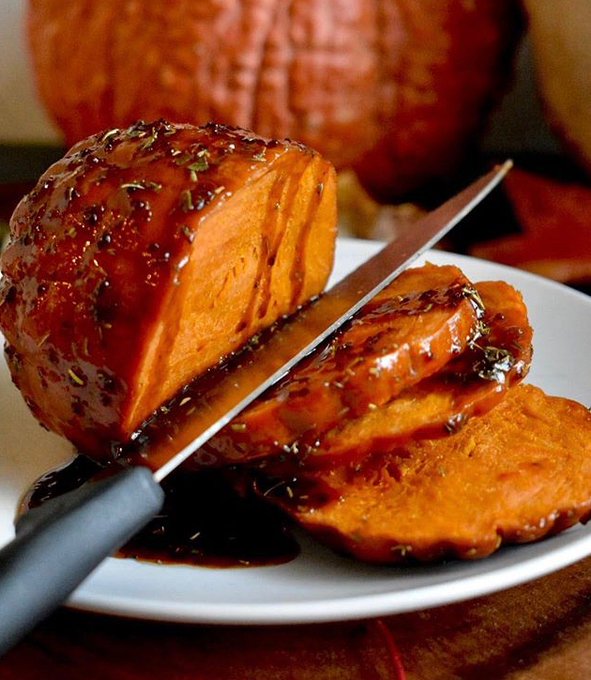
Tofurky offers a turkey roast, ham and a feast with gravy and stuffing. It is made from ingredients such as wheat, water, organic tofu, onion, carrot, celery, garlic, leek and more. This alternative is healthy, doesn’t add grease or fat, doesn’t go bad as quickly and is a smaller portion.

Tofurky

@Tofurky

Thanks to our beer buddies @HopworksBeer our Plant-Based Ham Style Roast is smothered by a Velvety Beer Glaze… we YUM IT UP. @theveganchalboard 👌https://bit.ly/2qub5Nu 

See Tofurky’s other Tweets

Erin Ransom, director of marketing for Tofurky said the Tofurky Roast is healthier for the planet because it uses less water and has less energy requirements. Animal welfare is also a plus and human health is a big component because there is less saturated fat and cholesterol with great protein and fiber content, Ransom said.

“When compared to animal protein, the Tofurky roast is cholesterol free, a good source of fiber and an excellent source of protein,” Ransom said.

Plant-based protein requires much less energy to produce.

“For example, a Tofurky roast requires 5.5 lbs less grains than it takes to feed a live turkey, who produces the equivalent 26 oz of animal protein, for one’s dinner table,” Ransom said.

RELATED: 
5 tips to reduce food waste during Thanksgiving and other holiday meals
The best and worst times to travel for Thanksgiving
4 weather conditions that can throw a wrench in iconic parades
10 notorious Thanksgiving storms that wreaked havoc

Field Roast also offers plant-based holiday roasts for the ultimate grain-and-veggie main course.

“The World Resources Institute predicts that by 2025 at least 3.5 billion people will experience water shortages. It takes 815 gallons to make one pound of turkey, while one pound of soy beans, which are used to make a Tofurky roasts, uses just 242 gallons,” Ransom said.

It’s easy to switch since sides are typically vegetarian and vegan, such as baked stuffing, green bean casserole, sweet potatoes, mashed potatoes, brussels sprouts, cranberries and pumpkin pie, Sharon Palmer, award-winning registered dietitian nutritionist, plant-based food and nutrition expert, author and blogger, said.

“If you are going vegan, you can make sure to make vegan versions of these recipes, which is super simple. Often the main problem is butter and dairy, but you can sub vegan margarine or olive oil for butter, and plant-based milk for milk in recipes. You can even use vegan cheese in many recipes, such as broccoli au gratin,” Palmer said.

Then, all you have to do is perhaps add one entree to the mix, such as veggie “meat” balls, nut loaf or lentil patties, according to Palmer.

VegNews Magazine@VegNews

Don’t want to cook this ? You don’t have to! Check out these 5 vegan meal options we’ll be trying out this holiday season. >> http://bit.ly/2PKBkO1 

See VegNews Magazine’s other Tweets

Research consistently shows that vegetarians and especially vegans have the lowest environmental footprint, compared to other diets. That’s because animal foods have a greater environmental impact, because we grow plants to feed the animals, so it’s much greener to just eat the plants directly,” Palmer said.

Animals produce methane and concentrated sources of manure, and farms contribute to deforestation and require more water than plants.

“Heart disease is far and away the leading cause of death and disability is the U.S. A recent study shows vegetarian dietary patterns reduce cardiovascular disease mortality and the risk of coronary heart disease by a whopping 40 percent,” doctor and nutrition expert Janet Brill said.

Even if you don’t want to go completely plant-based, making a significant cut of animal foods in your diet and eating more whole plant foods makes a big difference, according to experts.

Vegan Director James Cameron Says Women Will Save The World

The filmmaker praised his wife for being a ‘powerful warrior’
Vegan film director James Cameron
James Cameron says women can save the world (Photo: Gage Skidmore)

Vegan director James Cameron says he believes women will save the world.

The filmmaker – best known for epic movies including Titanic and Avatar, as well as upcoming documentary The Game Changers – made the comments during an interview on CNN.

Cameron and wife Suzy Amis Cameron appeared on the show to talk about how a global shift towards a plant-based diet could have a positive impact on climate change.

Cameron spoke about climate change on CNN. Subscribe to PBN’s YouTube Channel here

‘Female energy’

Speaking about his admiration for ‘strong women’, Cameron said: “I put my faith in women to change the world. I think men approach the world in a certain way that tends to be dominative and aggressive – it’s just how men have been wired since the dawn of time and it’s expressed through our entire Western colonialization culture, that we expand through the world and we dominate nature.

“We’re going to have to change that worldview and I think we need a more female, Goddess-based perspective that we have to nurture life, we have to care for it.

“I think the great conflict of the future is going to be between the takers and the caretakers.  The takers are a male energy, and the caretakers are a female energy, so I’ve always respected that and I’ve celebrated women in the films I’ve made and I’m very lucky to be married to a very powerful, strong, caretaker warrior.”