Exposing the Big Game

Forget Hunters' Feeble Rationalizations and Trust Your Gut Feelings: Making Sport of Killing Is Not Healthy Human Behavior

Exposing the Big Game

The Ugly Side of Wildlife Tourism

https://thewire.in/the-arts/the-ugly-side-of-wildlife-tourism

Kirsten Luce’s photographs focus on the problems with ‘selfie tourism’.
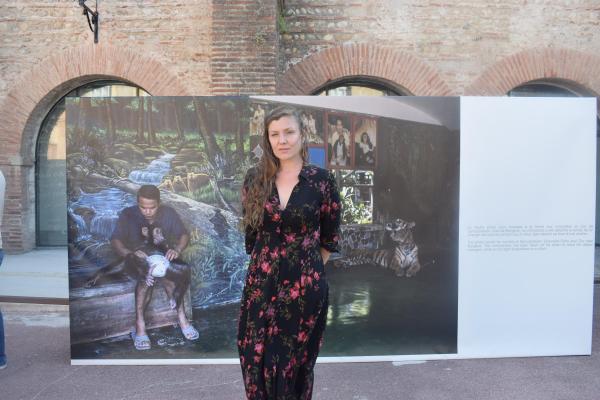
With the growing popularity of Instagram and the “selfie” has come the search for the ultimate photo.

Now a growing industry offering access to animals in wildlife sanctuaries is emerging as the latest trend on social media.

“Without a doubt, the demand for this type of photo, to sit down next to a wild animal and have your photo taken, has grown exponentially because of social media,” says Kirsten Luce, an American photographer whose work previously concentrated on Latin American migrants in the state of Texas.

Thailand and Russia

While working on a project in Brazil, Peru and Colombia on the rise of selfie tourism, Luce realised just how big a problem it was.

She felt more research was needed and decided, along with her reporter, to focus on Thailand and Russia.

Chinese tourists at a crocodile centre in Thailand, taken by Kirsen Luce. Photo: RFI/Anne-Marie Bissada

“We were looking at where native species were exploited for the entertainment of tourists,” Luce explains on the sidelines of her exhibition at the Visa pour l’image photojournalism festival in Perpignan, France.

“In Thailand, everybody goes looking for an experience with the Asian elephants. They also have a lot of tiger experiences, so that was an obvious choice.

“Since we had already looked at a lot of tropical places, we wanted something tonally and texturally different. In Russia we found that travelling marine mammals are exploited at a large number as are bears and even polar bears.”

Image of bears performing for the ice circus in Russia from Kirsten Luce’s exposition. Photo: RFI/Anne-Marie Bissada

It’s a topic that hits hard through its raw imagery.

Many people at the expo took the time to talk to Luce about what she saw and how they can help.

“With a project like wildlife tourism, I think because people have never really seen the topic tackled, they are universally responding by condemning it,” she says.

“I’ve never produced a body of work that has gotten such an emotional response from virtually everybody. Everybody wants to do something to stop it and I’ve even had people say to me, how are you able to sleep at night, it must be the hardest thing to witness?”

Images and access

Photo from Kirsten Luce’s photo exposition. Photo: RFI/Anne-Marie Bissada

But prior to visiting the sanctuaries, Luce and her reporter met former trainers, veterinarians and animal rights activists. They would explain how the animals were often mistreated or prepared before an audience to look healthy, especially if tourists were visiting an “ethical” venue such as those offering bathing with elephants.

“The animal rights activists and trainers that had turned away from the field would give us tips and clues as to what to look out for in behaviour, and also whether or not teeth or claws had been removed,” explains the photographer.

Image of a chained tiger seated on a platform in Kirsten Luce’s exposition. Photo: RFI/Anne-Marie Bissada

Impact

The beauty of photography is in capturing a moment in time – and how that moment can make an instantaneous connection with viewers.

In an elephant sanctuary in Thailand, one such photo brought about change.

“It was clear he needed vet care,” says Luce about the young elephant that was kept away from the public because he had a broken leg. “They claimed they were treating him.

Also read: The Story of How the Orphaned Tigress of Bandhavgarh Was Rehabilitated

“We had a fixer go back a couple of times to check on him – he would be in the exact same position. We knew that the elephant was not getting the care he needed.

“That photo got a lot of movement. There was a lot of pressure, and he was finally purchased and moved to a sanctuary,” Luce says, adding that it was a rare occurrence of a happy ending.

But the owner of the wildlife centre has many more elephants there, and the wider industry continues to thrive, catering for wildlife consumers.

Wildlife ‘likes’

In Russia, a burgeoning industry has kept photographer Olga Barantseva busy, fulfilling people’s desire to pose with a big bear.

Barantseva has nearly a hundred thousand followers on Instagram.

Stepan, the bear used in Barantseva’s photos, was a former circus bear, likely abused into submission, says Luce, which would explain his apparent docile nature that allows him to pose with humans.

Also read: What Happened to the Women in Photography?

Another phenomenon Luce experienced in Russia was the travelling dolphin shows.

“These marine mammals are living and performing in inflatable tents, almost like a circus would come to town for six weeks,” she says. “These belugas and dolphins would be living in tanks for six months.”

The travelling shows do not provide proper water filtering or medical attention, which almost certainly leads to premature death, and to keep up numbers, fresh stock is replaced illegally through poaching in the Black sea, according to Luce.

More than 80 tigers die after being removed from Thailand tourist trap

https://nypost.com/2019/09/16/more-than-80-tigers-die-after-being-removed-from-thailand-tourist-trap/

More then 80 tigers have died after they were rescued from a Thailand tourist attraction dubbed Tiger Temple, a report said.

A total of about 87 felines died from a virus they had contracted after being held at the The Wat Pha Luang Ta Bua Yanasampanno temple west of Bangkok, according to London’s Independent newspaper.

“When we took the tigers in, we noted that they had no immune system due to inbreeding,” said a senior official from Thailand’s department of national parks, wildlife and plant conservation.

The official said the animals were susceptible to the canine distemper virus.

While the tigers were living at the temple, monks charged admission for people to take photos with them and bottle feed their cubs.

But the tigers needed to be removed from amid allegations that they were being drugged and illegally bred.

Local media reports claim that as many as 87 of the 147 creatures taken from the temple have died.

During a raid of the temple, Thai officials found 40 dead tiger cubs in a freezer along with 20 glass jars containing baby tigers and tiger organs.

Also, a monk tried to flee with 700 vials of tiger skin and a suitcase full of tiger teeth.

Ancient animal species: Fossils dating back 550 million years among first animal trails


Date:
September 4, 2019
Source:
Virginia Tech
Summary:
A geoscientist calls the unearthed fossils, including the bodies and trails left by an ancient animal species, the most convincing sign of ancient animal mobility, dating back about 550 million years.

Three Gorges, Yantze River, China (stock image). | Credit: © Mark / stock.adobe.com
Three Gorges, Yantze River, China (stock image).
Credit: © Mark / Adobe Stock

In a remarkable evolutionary discovery, a team of scientists co-led by a Virginia Tech geoscientist has discovered what could be among the first trails made by animals on the surface of the Earth roughly a half-billion years ago.

Shuhai Xiao, a professor of geosciences with the Virginia Tech College of Science, calls the unearthed fossils, including the bodies and trails left by an ancient animal species, the most convincing sign of ancient animal mobility, dating back about 550 million years. Named Yilingia spiciformis — that translates to spiky Yiling bug, Yiling being the Chinese city near the discovery site — the animal was found in multiple layers of rock by Xiao and Zhe Chen, Chuanming Zhou, and Xunlai Yuan from the Chinese Academy of Sciences’ Nanjing Institute of Geology and Palaeontology.

The findings are published in the latest issue of Nature. The trails are from the same rock unit and are roughly the same age as bug-like footprints found by Xiao and his team in a series of digs from 2013 to 2018 in the Yangtze Gorges area of southern China, and date back to the Ediacaran Period, well before the age of dinosaurs or even the Pangea supercontinent. What sets this find apart: The preserved fossil of the animal that made the trail versus the unknowable guesswork where the body has not been preserved.

“This discovery shows that segmented and mobile animals evolved by 550 million years ago,” Xiao said. “Mobility made it possible for animals to make an unmistakable footprint on Earth, both literally and metaphorically. Those are the kind of features you find in a group of animals called bilaterans. This group includes us humans and most animals. Animals and particularly humans are movers and shakers on Earth. Their ability to shape the face of the planet is ultimately tied to the origin of animal motility.”

The animal was a millipede-like creature a quarter-inch to an inch wide and up to 4 inches long that alternately dragged its body across the muddy ocean floor and rested along the way, leaving trails as loing as 23 inches. The animal was an elongated narrow creature, with 50 or so body segments, a left and right side, a back and belly, and a head and a tail.

The origin of bilaterally symmetric animals — known as bilaterians — with segmented bodies and directional mobility is a monumental event in early animal evolution, and is estimated to have occurred the Ediacaran Period, between 635 and 539 million years ago. But until this finding by Xiao and his team, there was no convincing fossil evidence to substantiate those estimates. One of the recovered specimens is particularly vital because the animal and the trail it produced just before its death are preserved together.

Remarkably, the find also marks what may be the first sign of decision making among animals — the trails suggest an effort to move toward or away from something, perhaps under the direction of a sophisticated central nerve system, Xiao said. The mobility of animals led to environmental and ecological impacts on the Earth surface system and ultimately led to the Cambrian substrate and agronomic revolutions, he said.

“We are the most impactful animal on Earth,” added Xiao, also an affiliated member of the Global Change Center at Virginia Tech. “We make a huge footprint, not only from locomotion, but in many other and more impactful activities related to our ability to move. When and how animal locomotion evolved defines an important geological and evolutionary context of anthropogenic impact on the surface of the Earth.”

Rachel Wood, a professor in the School of GeoSciences at University of Edinburgh in Scotland, who was not involved with the study, said, “This is a remarkable finding of highly significant fossils. We now have evidence that segmented animals were present and had gained an ability to move across the sea floor before the Cambrian, and more notably we can tie the actual trace-maker to the trace. Such preservation is unusual and provides considerable insight into a major step in the evolution of animals.”

The study was supported by the Chinese Academy of Sciences, the National Natural Science Foundation of China, the U.S. National Science Foundation, and the National Geographic Society.

Male grizzly bear killed on Trans-Canada Highway

https://www.cochranetoday.ca/local-news/male-grizzly-bear-killed-on-trans-canada-highway-1674171

A 275-kg male grizzly bear was struck on killed on the Trans-Canada Highway.

A large male grizzly bear was struck and killed on the Trans-Canada Highway on provincial lands last week.

Provincial wildlife officials say a large 275-kg male grizzly was reported dead in the highway ditch on Wednesday evening (Aug. 28) near Jumpingpound Creek – the third large male grizzly to be killed in that area in the past five years.

“It’s a real drag because we’re trying to reduce mortality, and highway mortality is problematic,” said Jay Honeyman, human-wildlife conflict specialist with Alberta Environment and Parks.

“The volume of traffic these days on the Trans-Canada is quite heavy, even during the week and in the evenings,” he added.

“It’s really challenging for bears to cross that highway without having some kind of an incident. I guess it’s not a surprise that we’re having these incidents with all the traffic.”

Historically, Alberta is estimated to have had between 6,000 and 9,000 grizzly bears. Grizzlies once ranged across the whole of Alberta, across Saskatchewan and into Manitoba.

When extensive DNA research determined Alberta’s population had dipped to about 700 individuals, the grizzly bear was declared a threatened species in Alberta in 2010. The count is being updated.

Most grizzly bear deaths are caused by humans, including poaching, being mistaken for a black bear during the black bear hunting season, self-defense and accidents such as being struck on roads.

In those years, more than half of the human-caused grizzly bear deaths were due to poaching and accidental deaths on roads and railway. There have been 57 known poaching cases and 63 accidental in the past 10 years.

The Alberta Wilderness Association has concerns about the ongoing high numbers of human-caused grizzly bear deaths.

“Human-caused mortality continues to be a problem,” said Joanna Skrajny, a conservation specialist with AWA.

“Human contact and human incursion into grizzly bear wildlife habitat is the main reason why they are dying.”

Skrajny said the fact that three large make grizzlies have died in that area of the Trans-Canada Highway in the last few years suggests an obvious start is a study to determine if a crossing structure may be warranted.

“In situations where we keep coming into contact with grizzlies and they keep dying, we have to reassess what we’re doing,” she said.

AWA is waiting on an update of the status of the grizzly bear population in Alberta, as well as updated grizzly bear mortality numbers for 2018 and 2019.

Skrajny said high numbers of human-caused mortality could mean it’s hard for a grizzly bear population to regulate itself.

“It means we’re not doing a good job of keeping their habitat safe,” she said.

“Even if grizzly bears are coming in from B.C. where some of the numbers are higher, they’re coming here to die in the end and that means we’re not doing our job properly.”

In addition to bears dying on provincial lands, two grizzly bears have died in Banff National Park this summer.

A male grizzly was struck and killed by a semi-trailer on Highway 93 South just after midnight on June 4, about one kilometre south of the Trans-Canada Highway heading up the hill towards Storm Mountain.

On June 22, Parks Canada was forced to kill an injured and emaciated young female grizzly bear. It’s believed a vehicle struck the bear on the highway 10 days earlier. The yearling, its sibling and mother were on the wrong side of the fence meant to keep wildlife off the highway.

“We’ve also had a couple of confirmed strikes where we don’t know if the bear survived or not,” he said.

Florida panthers suffering from mysterious disorder affecting their ability to walk, officials say

An inexplicable crippling disorder appears to be affecting some Florida panthers, puzzling wildlife officials who are working to determine what is ailing the endangered animals.

The Florida Wildlife and Conservation Commission (FWC) this week announced some of the state’s big cats — namely kittens —  have “exhibited some degree of walking abnormally or difficulty coordinating their back legs.”

Sponsored Video

Watch to learn more

RHINO SAVED? SOUTHERN WHITE RHINO GIVES BIRTH AIDED BY ARTIFICIAL INSEMINATION

So far, FWC officials said they have confirmed neurological damage in one panther and one bobcat, but noted at least eight other panthers and one adult bobcat are also “displaying varying degrees of this condition.”

Trail footage from three counties — Collier, Lee, and Sarasota — shows some cats exhibiting the disorder. In one clip, a kitten loses its balance; its hind legs seem to simply give out. It manages to get up, albeit slowly, before trotting off after its mother.

Officials said the disorder, as of now, seems to be limited to those counties.

While officials have ruled out a number of diseases and possible causes, an exact cause for the cats’ “abnormal gait” has not yet been discovered, Michelle Kerr, a spokeswoman for the state agency, told Fox News.

That said, there are suspicions, which include “a variety of toxins and infectious disease,” she said.

“One of these potential causes is bromethalin, a rat pesticide, commonly used in the United States to control rats,” Kerr added, noting the FWC “does not currently have information on any poisoning efforts.”

Florida panthers, the state’s official animal, are a subspecies of pumas, which once had the “largest range of any land mammal in the Americas,” the wildlife agency says. The Florida panther is the only puma subspecies that exists east of the Mississippi River.

There are just 120 to 230 adult Florida panthers — one of the two wild cats found, the other being the bobcat  — in the state, according to the FWC, which makes the condition currently affecting some of the cats more of a concern.

SUDAN, THE WORLD’S LAST MALE NORTHERN WHITE RHINO, DIES FROM ‘AGE-RELATED COMPLICATIONS’

Conservation efforts beginning in the 1970s and 1980s helped save the cats from extinction. At that time, there were an estimated 20 to 30 panthers in the state, the U.S. Fish and Wildlife Service says.

Today, Florida panthers are primarily threatened by habitat loss and cars and highways, among other challenges, according to officials.

Illicit wildlife products for sale at the Myoma Market in Mongla

, June 2019.
Illicit wildlife products for sale at the Myoma Market in Mongla, June 2019.
RFA

Weak implementation of the law and strong demand in neighboring China are fueling the illicit trade of endangered wildlife in Myanmar’s Shan State, according to shop owners in the regional town of Mongla, despite claims by local authorities that the practice has been stamped out.

Shan State’s Special Region 4, where the border town of Mongla is located, is under the administration of the National Democratic Alliance Army (NDAA)—an ethnic army chaired by former Chinese national Sai Lin, who migrated to the area in the 1960s after being sent to China’s Yunnan province during the Cultural Revolution.

The NDAA was formed in 1989 after splitting with the Communist Party of Burma and on June 30 that same year marked the 30th anniversary of the group’s truce with Myanmar’s government with a ceremony at which Sai Lin pledged to preserve “eternal peace” in the region.

But peace has come at a cost. In exchange for a ceasefire with the NDAA, Myanmar’s government in essence granted Sai Lin a free hand and allowed him to build an empire of lawlessness propped up initially on the cultivation and sale of opium, and later on gambling revenues when the region became “opium free” in 1997.

Gambling is illegal in China, and casinos and other forms of entertainment in Mongla have drawn patrons from across the border who also seek out endangered wildlife products for their purported medicinal properties in local markets that operate largely unregulated, as authorities look the other way in exchange for bribes, despite claims by officials that the illegal trade has been eradicated.

During a press conference held at the conclusion of the June 30 anniversary event, Khan Maung, a spokesperson for the Information Office in Mongla, said that local residents have long hunted wild animals—including muntjac or “barking deer,” sambar, and Indian boar for food, and acknowledged that they had learned they could profit by selling their meat at area markets.

“At some point, the hill people wanted to earn money, so they brought [the animals] to the market,” he said.

“However, the global community objected to the practice, so we prohibited it and no one does it anymore.”

While muntjacs and the Indian boar are not considered endangered, sambar—a large deer with three-tined antlers—are categorized as “vulnerable” by the Switzerland-based International Union for Conservation of Nature (IUCN).

Trade ongoing

But vendors at the Myoma Market in Mongla told RFA’s Myanmar Service that not only does the sale of muntjacs, Indian boar, and sambar continue, but a large variety of other, mostly endangered animals are also on offer to customers at the right price.

The vendors, who spoke to RFA on condition of anonymity, said authorities had declared a ban on the sale of wild animals 10 days prior to the June 30 anniversary event, which hosted dignitaries from across Myanmar, but that the trade had flourished prior to the decree.

“They won’t let us sell them until the end of the ceremony,” one vendor said ahead of the event.

“We have many to display, but they have stopped us [from doing so] for the moment … I have [ivory] tusks, as well as traditional medicines and other things, if you want them. I even have live animals.”

The vendor said he also had access to tiger parts and various reptiles, including tortoises with their shells.

“Everything is fine here—we have all kinds of animals, it’s just that we’re currently closed [due to the temporary ban],” he said.

In another market in the Nampan region of Mongla, an RFA reporter saw skins, claws, and horns from various endangered animals for sale, including from the critically endangered pangolin, all with prices listed in Chinese yuan.

A hunter from Magway region said he used to be able to kill various animals in the jungle around Special Region 4 to sell to vendors in the area, but that quarry had become scarce due to high demand.

“For internal organs from smaller animals, vendors will pay 200-300 yuan (U.S. $28-42),” he said.

“We sell them to [intermediaries], who might sell them to China, or distribute them to restaurants in Mongla.”

When asked about the claims made by vendors, Jay Gaung, a representative of Mongla’s Department of Justice, told RFA that the hunting and sale of endangered animals is not tolerated in the region.

“We don’t allow people to shoot wild animals—we confiscate their arms and give them prison terms,” he said.

But when pressed to provide details of relevant legal action against wildlife traders, he acknowledged that authorities “haven’t put anyone in jail,” adding that “we are currently educating [offenders].”

And when asked whether the illegal trade of endangered wildlife persists in the region, Jay Gaung answered, “not lately—this kind of thing took place in the past.”

Wildlife legislation

RFA’s investigation of the endangered wildlife trade in Mongla came after Myanmar’s National Hluttaw, or parliament, approved a motion in December last year calling on the government to take “serious action”
against wildlife trafficking.

Myanmar’s Wildlife Protection and Protected Areas Law of 1994 was revised and enacted in May 2018, and the unlawful killing of animals is now punishable by up to seven years in prison and a 50,000 kyat (U.S.
$33) fine.

But Mongla’s distance from the central government means that local authorities are less inclined to ensure those laws are implemented, particularly given how lucrative the illicit animal trade is because of Chinese demand.

On Dec. 31, 2017, China, the world’s largest ivory market, banned all domestic ivory sales.

But in October last year, conservation group Save the Elephants said the ban had done little to stop the “prolific growth” in trade in Mongla, where it said there had been a 60 percent growth in new ivory items seen for sale over the previous three years.

Reported and translated by RFA’s Myanmar Service. Written in English by Joshua Lipes.

https://www.rfa.org/english/news/myanmar/wildlife-08082019150839.html

Mountain goat eradication is a high-flying balancing act in Olympic National Park

In an effort to protect visitors and rare plants, the park is relocating the hoofed invaders.

Derrick Halsey, clutches a mountain goat kid as they land at the staging area for goat relocation. Halsey is one of the helicopter team members known as a “mugger” who is dropped off as close as possible to animals who are netted or sedated from the air, and prepares them for flight.

In early July, the loud whirring of a helicopter punctured the quiet of Washington’s Olympic National Park as wildlife specialists scoured meadows, forests, ridgelines and mountaintops for flashes of white fuzz: mountain goats. The cherry-red aircraft kicked up dirt and debris as it lowered two goats, dangling in slings, toward a waiting truck, their feet bound and their vision obscured by blue blindfolds. During a brief landing, one of the specialists — commonly known as “muggers” — stepped out, with a kid no more than 6 weeks old calmly cradled in his arms.

It sounds like a dramatic scene from a wilderness reality show, but it’s not: It was just another day in an extensive effort to eliminate mountain goats from the Olympics — where they are not native, damage endemic plants and even killed a person — and hand some over to Washington state to boost populations in the North Cascades Range, where mountain goats have declined after decades of overhunting. The project — which cost more than half a million dollars just this year — illustrates the lengths to which national and state agencies are willing to go to restore a single strand in the complex web of these human-altered ecosystems.

Outdoor recreationists are generally excited to see mountain goats in the Olympics. They’re more majestic than marmots and pikas and other alpine creatures, and less terrifying than bears. A few days before the start of this year’s relocation effort, a man posted on a Facebook group for hikers, saying he wanted to see the mountain goats before they got moved. When I asked why, he replied, “The goats represent the wild in Mother Nature.”

But mountain goats are not native to Olympic National Park: Hunters from Alaska introduced about a dozen of them in the 1920s. At one point, the population ballooned to over 1,000, causing “ecological mayhem,” as they grazed on rare alpine plants and eroded the landscape, said Patti Happe, the wildlife branch chief for the park. Before the translocations began, there were about 725 goats on the Olympic Peninsula.

Not only have they destroyed native plants, but mountain goats have also become aggressive after growing too accustomed to humans: In 2010, a male goat mauled and killed a 63-year-old man hiking near Hurricane Ridge. The goats have become habituated to people and are drawn to them partly because humans provide something the animals need — salt. Olympic National Park lacks the natural salt deposits that would otherwise sustain the goats, leaving them dependent on the makeshift saltlicks that hikers produce when they pee on the trails.

To keep humans safe and restore balance in mountain goat populations, wildlife biologists decided to physically relocate the Olympic Peninsula goats, starting with 115 translocations last year. The animals were all radio-collared and ear-tagged so they can be identified and tracked in their new environs. Approximately 70% of adults and half the children survived the first year — which is within the natural range of survival, said Jace Taylor, a wildlife biologist not involved in the Olympic project who has overseen mountain goat translocations in Utah.

It’s still too early to say whether the project is achieving wildlife managers’ larger goals, in part because scientists don’t yet know if the relocated goats are breeding in their new home. Happe said the project will be a success if those moved to the North Cascades help boost populations there, and if goats in the Olympics are completely eradicated. Unfortunately, many mountain goats evade capture; one woman involved in the project described them as “escape artists.” That means the majority of the Olympic goats will be killed after the translocations are over. In addition, some animals have died during capture or in transit.

And some of the relocated goats may already be accustomed to humans, which could endanger hikers in the North Cascades. I recently saw a sign there warning people of the dangers of salt-craving mountain goats. It’s not easy to reverse habituated behaviors, says Richard Harris, a wildlife manager at Washington’s Department of Fish and Wildlife overseeing the translocations. Perhaps over time, if human visitors leave them alone and urinate in locations the goats can’t reach, their degree of habituation might decay, ultimately benefiting both species. Still, “all wild animals are potentially dangerous to people,” Harris said. “People need to use their heads.”

But despite the expense — and the trauma for the goats — “rectifying the balance is something we should be doing when we have an opportunity to improve upon mistakes made by our predecessors,” says Harris. “To the degree that we can capture an animal and move it to a place where it’s native, give it a home, and allow it to return to its natural state within the North Cascades — I think that is worth spending money on.”

Wudan Yan is an independent journalist based in Seattle. Email High Country News at editor@hcn.org or submit a letter to the editor.

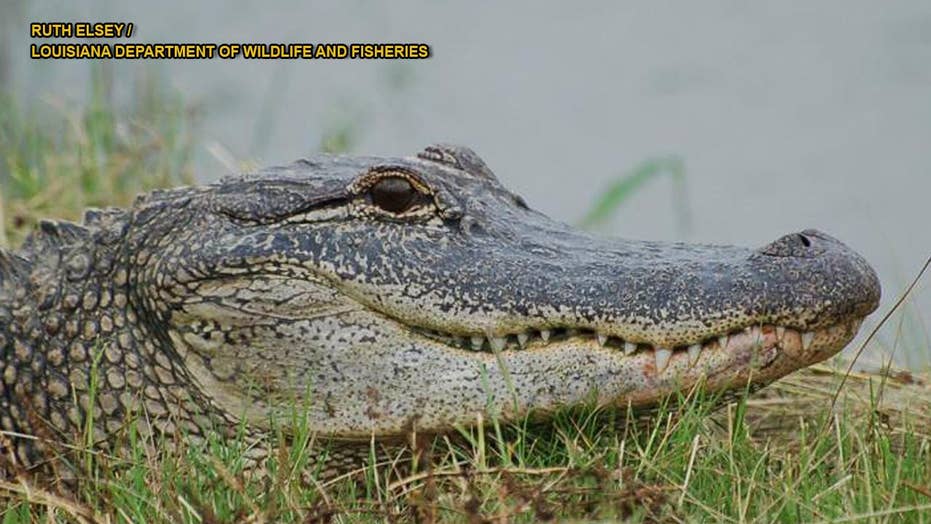
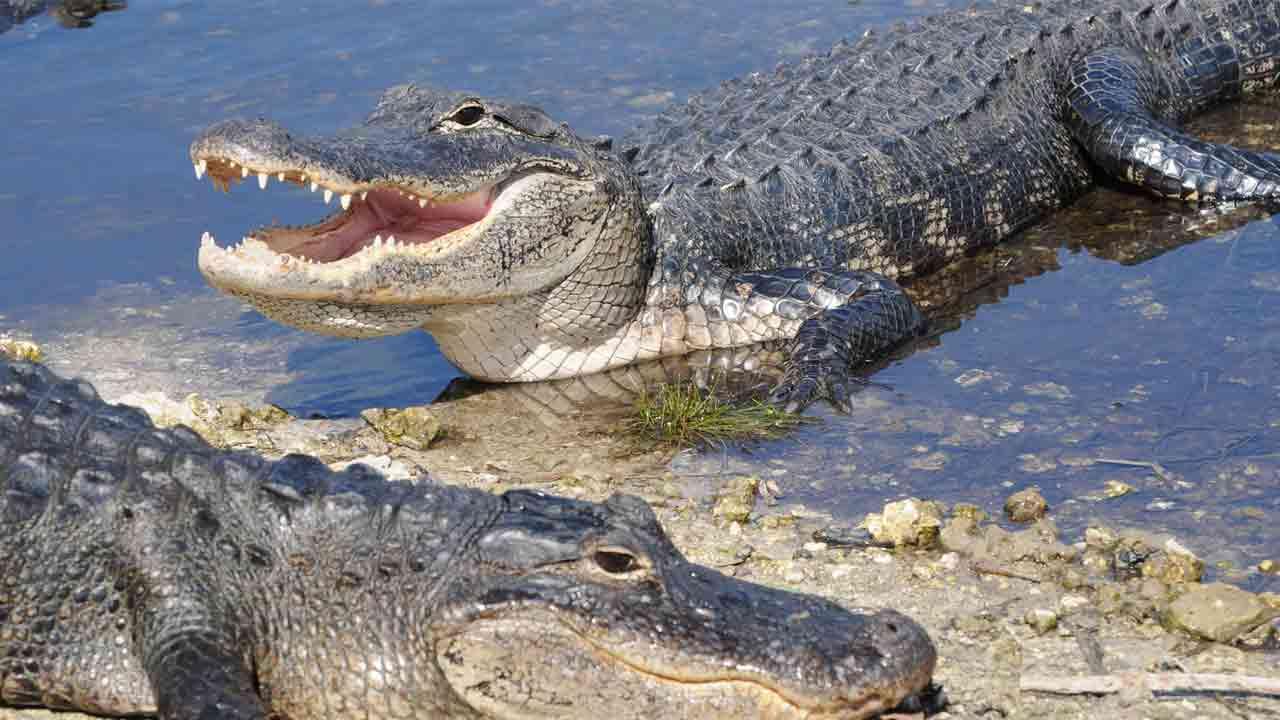
Tennessee police say viral ‘meth-gators’ warning was a joke

Drug-addled alligators were a myth all along.

Tennessee police department on Friday clarified that its viral post from earlier this month asking citizens not to flush their drugs down the toilet for fear of creating “meth-gators” was just a joke.

CHICAGO ALLIGATOR REPORTEDLY MOVING TO FLORIDA: ‘CHANCE THE SNAPPER’ WILL ‘BE LIVING IN LUXURY’

“Let us be perfectly clear: the meth gator was a humorous illustration used to highlight the dangers of flushing drugs and other substances down your toilet,” the Loretto Police wrote on Facebook. “Alas, the meth-gator is not real. Let’s say that again: THE METH GATOR IS NOT (at this time) REAL.”

The department’s dry humor caught the attention of news media around the world and even prompted calls from “professionals fearing we actually had a meth influenced gator in our custody,” the department added.

ALLIGATOR SPOTTED IN CONNECTICUT LAKE PROMPTS SAFETY WARNING

The “meth-gator” tale hatched after Loretto police wrote about the arrest of a man on drug-related charges and his alleged attempt to flush methamphetamine and drug paraphernalia down the toilet of his home.

CLICK HERE TO GET THE FOX NEWS APP

Police wrote they are trying to direct the humorous confusion into a positive ending for the community by creating apparel featuring the “meth-gator” and other department jokes to raise money for local charities that help children affected by drug use.

The department previously advised that citizens getting rid of drugs, including prescription medication, should avoid flushing them and instead call police so they can be disposed of properly.

Pushy bonobo mothers help sons find sexual partners, scientists find

 This article is more than 2 months old

High-ranking mothers lead sons to groups of females and keep guard while they mate

Female bonobo with crossed arms
 Male bonobos living with their mothers are three times more likely to father offspring, research suggests. Photograph: Getty Images/iStockphoto

Their mothers are so keen for them to father children that they usher them in front of promising partners, shield them from violent competitors and dash the chances of other males by charging them while they are at it.

For a bonobo mother, it is all part of the parenting day, and analysis finds the hard work pays off. Males of the species that live with their mothers are three times more likely to father offspring than those whose mothers are absent.

Martin Surbeck, a primatologist at the Max Planck Institute for Evolutionary Anthropology in Leipzig, said: “We wanted to see if the mothers’ behaviour changes the odds of their sons’ success, and it does. The mothers have a strong influence on the number of grandchildren they get.”

Bonobo mothers seize every opportunity to give their sons a leg-up. In bonobo society, the lower ranks tend to be gender balanced, but females dominate the top ranks. Many mothers have social clout and chaperone their sons to huddles with fertile females, ensuring them better chances to mate. “The mothers tend to be a social passport for their sons,” said Surbeck.

But in the free-for-all that underpins bonobo sex, vigilance is the watchword. When their sons are finally copulating, bonobo mothers keep a wary eye on nearby males. Should any make a move to rush the busy couple – a tactic that is well-known – she can bound in and block the attack.

Such dirty tricks abound. When mothers spot other males on the job, they have been known to detach the hapless apes with a well-timed charge. On rare occasions, the mothers literally drag unrelated males off their sexual partners. “Once I saw a mother pulling a male away by the leg,” said Surbeck. “It doesn’t necessarily increase their son’s mating success, but it shows that they really get involved in the whole business.”

To assess the impact of mothers’ interventions, Surbeck and his colleagues observed several wild bonobo populations in the Democratic Republic of the Congo and wild chimpanzees in Tanzania, Uganda and Ivory Coast. Mothers from both species, which share the title of our closest living relative, helped their sons in fights, but only the bonobos boosted their sons’ mating success. In chimpanzee society, males are dominant, so the mothers have less influence.

With a high-ranking mother on hand, the odds were particularly stacked in the male bonobos’ favour. For example, the young male of a high-ranking female might be allowed to lunch in the best feeding tree rather than being kicked out with the rest. “You see a lot of copulation while they go into these trees,” noted Surbeck. A report on the work appears in Current Biology.

In contrast to bonobo mothers, chimpanzee mothers had little impact on their sons’ reproductive success. If anything, based on the mating records the scientists analysed, chimp mothers had a slight negative impact on the chances of their sons having offspring.

While bonobo mothers looked out for their sons, the researchers found no evidence they helped their daughters in the mating game or in raising their offspring. But unlike the males, who hang around, the females usually leave the group to have their own families elsewhere.

Surbeck suspects bonobo mothers have hit on a winning strategy. In going the extra mile to get their sons mating, the mothers get to spread their genes without having to have more children themselves.

WDFW Director Susewind to take online questions from Eastern Washington

(PRESS RELEASE/WDFW)

Washington Department of Fish and Wildlife (WDFW) Director Kelly Susewind and his Eastern Region Director Steve Pozzanghera will take questions from the public in an online broadcast from 6 to 7 p.m. on Monday, July 8, 2019.

“Our Eastern Region is a large area with a wide variety of terrain, habitat and species,” said Susewind. “I understand and care that the concerns of people living and recreating in this area may be different from those in other parts of the state. It’s a chance for me to hear what is on the minds of the public and our customers here.”

This is the second digital open house held by the Director on a regional level. The Department’s Eastern Region spans Asotin, Columbia, Ferry, Garfield, Lincoln, Pend Orielle, Spokane, Stevens, Walla Walla, and Whitman counties. Members of the public can watch and ask questions from links on the department’s website, wdfw.wa.gov<http://www.wdfw.wa.gov>, or at https://player.invintus.com/?clientID=2836755451&eventID=2019071000.

Susewind and Pozzanghera will share updates on a few local issues, such as concerns about encounters with bears, wolves and cougars; prescribed burn efforts;
the change to anterless deer hunting in northern counties; the current white sturgeon fishing season, and results of the joint northern pike suppression effort on Lake Roosevelt.

Last fall, Susewind, who has been in the role for approaching a year, held a series of in-person open houses across the state in Spokane, Ephrata, Selah, Montesano, Ridgefield, and Issaquah. Since then, he’s also held three digital opens houses that allow public to ask questions and get updates from the convenience of their own home.

The Washington Department of Fish and Wildlife is the state agency tasked with preserving, protecting and perpetuating fish, wildlife and ecosystems, while providing sustainable fishing and hunting opportunities.

Persons with disabilities who need to receive this information in an alternative format or who need reasonable accommodations to participate in WDFW-sponsored public meetings or other activities may contact Dolores Noyes by phone (360-902-2349), TTY (360-902-2207), or email (dolores.noyes@dfw.wa.gov<mailto:dolores.noyes@dfw.wa.gov>). For more information, see https://wdfw.wa.gov/accessibility/reasonable_request.html.