Award-winning film exposing America’s secret war on wildlife coming to Idaho, the biggest wolf-killing state

Oct. 5, 2015

MEDIA CONTACT:
Brooks Fahy
Executive Director
(541) 520-6003
 
Jane Goodall wants millions to hear government agents blow the whistle in “EXPOSED: USDA’s Secret War on Wildlife.” Idaho is Ground Zero for wildlife-killing in America, especially wolves.
– Screenings Oct. 12-16 in Coeur d’Alene, Moscow, Boise and Pocatello | See schedule
EUGENE, OR – An award-winning wildlife documentary that Jane Goodall wants millions to see is coming to Idaho, the biggest wolf-killing state in the nation. Idaho also has a reputation as a veritable playground for hunters, trappers and federal agents, who slaughter hundreds of thousands of wild animals unnecessarily there each year.

The film, EXPOSED: USDA’s Secret War on Wildlife, features three former federal agents and a prominent Congressman blowing the whistle on a barbaric and wasteful wildlife management program within the USDA called “Wildlife Services.” Every year agents from this program kill millions of animals across the nation. They are highly active in Idaho, and their methods-which are taxpayer funded-ignore science, harm humans, and kill pets and endangered species.

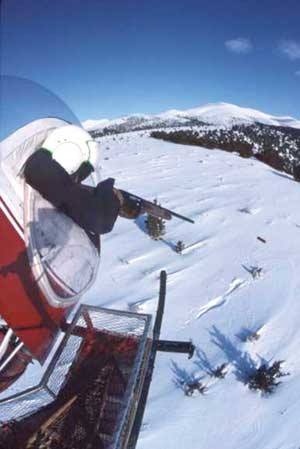
Idaho earned its reputation as the country’s biggest wolf-killing state by slaughtering close to 2,000 gray wolves since 2011, when they lost federal endangered species protection and management was turned over to state wildlife agencies. Idaho has even allowed Wildlife Services agents to gun down wolves from helicopters over the “Lolo Zone,” a prime wolf habitat in the North-Central part of the state. The Lolo Zone features some of the most rugged and beautiful public wildlands in the Lower 48. Idaho’s stated goal is to reduce their wolf population to 150, a scientifically disastrous objective that destroys the positive effect apex predators have on ecosystems and the biodiversity they foster.

Wildlife Services is charged with taking out any threat to livestock-real or alleged. This killing is done largely for the benefit of private individuals who don’t take responsibility for protecting their animals.
The whistle-blowers in the film “EXPOSED” reveal deeply entrenched problems within this federal agency, not the least of which is lack of accountability with federal funds. Another problem is Wildlife Services’ obstinacy in ignoring science, which clearly shows the exponentially accelerating ecological damage caused by killing off predator species.

But the biggest outcry is about the inhumane and indiscriminate methods the agents use-traps, snares, aerial gunning and poisons. Ironically, these devices often pose a greater risk than the very wild animals they purport to control. Many proven nonlethal alternatives that minimize conflicts with wild animals are available, but Wildlife Services does not require landowners to use them before their trappers apply lethal force.

To date, countless people and pets have suffered injury and death due to negligent use of traps and poisons. And while Wildlife Services’ own directives require agents to post warnings to alert the public, they often don’t post them. When they do, the signs are only marginally effective, as animals and young children don’t understand them.

Wildlife Services has been publicly condemned by Jane Goodall, PH.D., DBE, who said “I hope EXPOSED will be watched by millions, so Americans will learn of the unforgivable actions of those who have exercised their power to cause untold agony to thousands of innocent fellow creatures on our planet.” The agency has also been excoriated by The Humane Society of the United States, the American Society of Mammalogists, and many other credible organizations and individuals.
“EXPOSED” won Best Short Film at the 2015 Animal Film Festival and Best Wildlife Activism at the 2014 Wildlife Conservation Film Festival.

Screenings will be held in four cities and will be followed by an audience question and answer session with film co-producer/director Brooks Fahy. The events are being sponsored by Predator Defense, Friends of the Clearwater, Advocates for the West, Western Watersheds Project, and the Kootenai Environmental Alliance.

schedule“EXPOSED” Screening Schedule

COEUR D’ALENE
Monday, October 12, 6 p.m.
Coeur d’Alene Library Community Room
702 E. Front Ave.
FREE
MOSCOW
Tuesday, October 13, 7 p.m.
1912 Center, Great Room
412 E. Third St.
FREE
BOISE
Thursday, October 15, 4 p.m.
4:00 p.m., Boise State University
Student Union Building, Lookout Room
FREE
Thursday, October 15, 7:30 p.m.
The Flicks, 646 W. Fulton St, Boise
$5 at door
POCATELLO
Friday, October 16, 7 p.m.
Idaho State University
Student Union Building, POND Wood River Room
$5 at door
#  #  #

 
About Predator Defense
Founded in 1990, Predator Defense is a national nonprofit working to protect native predators and create alternatives for people to coexist with wildlife. Our efforts take us into the field, onto America’s public lands, to Congress, and into courtrooms.  Visit us at

D.C. screening of “EXPOSED” a huge success

x


I’m thrilled to report that we had a standing-room-only crowd in D.C. on Monday at the Congressional screening and briefing of our whistle-blowing film, “EXPOSED: USDA’s Secret War on Wildlife.” According to lobbyists who know, this kind of turnout for a briefing of this sort is unprecedented.

At least 80 of the people in the room were staffers for members of Congress. And we got significant interest from a well-connected Senate staffer who wants to bring “EXPOSED” to the administration’s attention.

When introducing the film we made sure to frame it as not being a Democrat or Republican issue. We let them know it is actually a public safety issue, a financial transparency issue, a legal issue, a ecological issue, and an animal cruelty issue. They seemed to get it. We are optimistic that Representative Peter DeFazio (D-Oregon) will be introducing a bill in the next several weeks.

Thank you to those of you who contacted your Congresspeople and asked that they attend this event. It worked. Now we move forward with more screenings of “EXPOSED” around the country and, we hope, legislation to reform Wildlife Services will be introduced very soon.  We will keep you posted.

We extend a special thanks to our event co-sponsors, without which it would not have happened: Representative Peter DeFazio, the Congressional Animal Protection Caucus, the Animal Welfare Institute, Born Free USA, The Humane Society of the United States, Natural Resources Defense Council, and the International Fund for Animal Welfare.

If you’re interested in having a screening of “EXPOSED” in your area please contact me. And if you’d like to see photos from the D.C. screening, visit our Facebook page by clicking on the icon below.

Brooks Fahy
Executive Director
brooks@predatordefense.org
(541) 937-4261 Office
(541) 520-6003 Cell

PREDATOR DEFENSE
Helping people & wildlife coexist since 1990
www.predatordefense.org copyrighted Hayden wolf walking

Ranchers mourn wildlife employees killed in plane crash

3 hours ago  • 

ALBUQUERQUE, N.M. (AP) — The single-engine plane came in low as the seasoned pilot maneuvered to give his gunner a clear shot at a coyote on the ground below. They were on a mission to hunt down predators that had been killing livestock in northeastern New Mexico.

A spotter less than a mile away had his binoculars trained on the coyote. He heard two or three gunshots as the plane passed over its target and through his field of view. Moments later, he heard a crash and looked up to see the plane planted in the ground.

Pilot Kelly Hobbs and his gunner, Shannon “Bubba” Tunnell, were killed. A preliminary report by the National Transportation Safety Board released late Wednesday says the impact pushed the engine into the cockpit.

No strangers to the risks of aerial gunning missions, the men left the Raton airport just after dawn on June 5. After passing over the edge of a mesa and spotting the coyote, the pilot began to descend. At one point, the plane was flying just 42 feet above the prairie, according to GPS data.

After Tunnell took his shots, Hobbs began to climb to the left. The last reading showed the plane was nearly 100 feet off the ground and its speed had dropped to 62 mph through the turn.

Ranchers across New Mexico are mourning the two men, who were working for the U.S. Department of Agriculture’s Wildlife Services branch at the time of the crash. Ranchers say they would often turn to Hobbs and Tunnell for help in protecting their cattle and sheep from predators.

“It hit me pretty hard when I heard about it. It was just like a punch in the stomach,” said Candy Ezzell, a state lawmaker who worked with Tunnell just weeks earlier to address coyote problems on her ranch in southern New Mexico.

Funeral services for both men were planned Friday.

Their deaths bring to 12 the number of public employees killed during Wildlife Services1920332_613143138754489_331154733_n aerial gunning operations in the U.S. since 1979. Many of the aerial missions happen in the West, where sheep and cattle ranchers regularly report problems with predators.

Hundreds of thousands of hours have been logged by Wildlife Services pilots over the decades. Agency officials stand behind their safety record, but environmentalists argue that the costs are too great and the federal government should end aerial gunning. They pointed to the fatalities along with more than 100 crashes and dozens of injuries.

“In no uncertain terms, putting agents into the air so they can gun wildlife from low-flying aircraft is so inherently dangerous and reckless,” said Wendy Keefover of The Humane Society of the United States.

A review of accident investigations shows pilots have flown into power lines, trees and land formations, Keefover said. Some also have flown back into their air turbulence and in several instances, gunners have shot their own aircraft or bullet casings have become lodged in mechanical workings.

The call to halt the practice stretches back to the last deadly crash in 2007 in Utah. At the time, Wildlife Services responded by launching a safety review.

As for the potential of another review, agency spokeswoman Lyndsay Cole said the focus now is on helping investigators determine what caused the latest crash in New Mexico.

The preliminary report states the weather was calm and there was no apparent evidence of any mechanical malfunctions or failures that would have caused engine problems.

Flying low and at relatively slow speed is risky, but Ezzell and other ranchers say aerial gunning operations are invaluable since controlling predators across such large swaths of land can be difficult. Trapping and coyote-calling contests have also come under fire, leaving ranchers with fewer options.

“With folks in the city wanting to end trapping and calling, it has become a real issue for the ag community and has affected the state’s ability to manage wildlife,” said David Sanchez of the Northern New Mexico Stockmen’s Association.

Aerial operations were used by Wildlife Services last year to kill more than 35,000 animals in two dozen states. That included more than 21,000 coyotes.

The agency targets animals that prey on livestock and other wildlife as well as nonnative species that damage crops or cause problems at airports. A total of 2.7 million animals, the majority of them birds, were killed last year.

Help Make Wildlife Services’ Worst Nightmare Come True

It’s finally happening–the last thing in the world USDA’s Wildlife Services wants!
Members of Congress and their staff have been invited to see our award-winning, whistle-blowing film, “EXPOSED: USDA’s Secret War on Wildlife,” at a special screening and panel discussion in D.C. It will be held:
Monday, June 15, 3:00-4:00 p.m.
2168 Rayburn Building (the Gold Room)
U.S. Capitol, Washington, D.C.
The panel discussion after the film will enable folks in D.C. to hear directly from a Wildlife Services’ whistle-blower, a victim, and proponents of reform.  It is our hope that legislation to reform this barbaric, unaccountable, and utterly misnamed predator control program will be introduced by Representative Peter DeFazio (D-OR) in the coming weeks.
I’ve attached the invitation we sent to the Hill.  Please forward this email to your members, friends, and anyone you think would be interested.  Let them know that this is the film Jane Goodall wants millions to see and urge them to ask their Representative to attend this important event.
I’d like to extend a special thanks to our event co-sponsors, without which it would not have happened:  Representative Peter DeFazio, the Congressional Animal Protection Caucus, the Animal Welfare Institute, Born Free USA, The Humane Society of the United States, Natural Resources Defense Council, and the International Fund for Animal Welfare.
Working together, we can expose the secret war against wildlife being waged on the taxpayer’s dime and hold Wildlife Services accountable at last.
Best,
Brooks

Brooks Fahy
Executive Director
brooks@predatordefense.org
(541) 937-4261 Office
(541) 520-6003 Cell

PREDATOR DEFENSE
Helping people & wildlife coexist since 1990
www.predatordefense.org

WS Killls Thousands of Protected Birds Killed Annually

Excerpts from:

Shot and Gassed: Thousands of Protected Birds Killed Annually

Sunday, 24 May 2015 00:00
Written by 
Rachael Bale and Tom Knudson By Rachael Bale and Tom Knudson, Reveal from The Center for Investigative Reporting

http://www.truth-out.org/news/item/30956-shot-and-gassed-thousands-of-protected-birds-killed-annually

-Even in the best of times, migratory birds lead perilous lives. Today, with climate change and habitat loss adding to the danger, wildlife advocates say the government-sanctioned killing is a taxpayer-funded threat that the birds should not have to face, one that is hidden from the public and often puts the needs of commerce ahead of conservation.

-The total body count for a recent three-year period came to 1.6 million, including more than 4,600 sandhill cranes. Four populous species – brown-headed cowbirds, red-winged blackbirds, common grackles and Canada geese – accounted for two-thirds of the mortalities.

But many less common birds were killed, too, including 875 upland sandpipers, 479 barn owls, 79 wood ducks, 55 lesser yellowlegs, 46 snowy owls, 12 roseate spoonbills, three curlew sandpipers, two red-throated loons and one western bluebird.

-California, where American coots were killed by the thousands to protect golf courseimagesQB1DEJIT greens and fairways. Usually the birds are shot, but sometimes they’re fed bait laced with a chemical that makes them fall asleep. Then they’re rounded up and killed in portable carbon dioxide chambers in the backs of pickup trucks. In California, some robins also were killed to protect vineyards.

No. 3 was Arkansas, where more than 22,000 double-breasted cormorants and thousands of other fish-eating birds were killed at fish hatcheries and aquaculture facilities.

Most of the killing is carried out without public notice. Even many conservationists are unaware of it. But those who are familiar with the permit program mostly don’t like it. They say that nonlethal options – such as scaring birds away or making the landscape less bird-friendly – are not given enough consideration and that lethal action is too often the default option.

“Nonlethal methods should always be given preference in these kinds of situations,” said Mike Daulton, vice president of government relations for the National Audubon Society, one of the nation’s oldest and most powerful conservation organizations. “The Migratory Bird Treaty Act is one of America’s most important wildlife conservation laws, and it should be strongly and reasonably enforced to maintain healthy wild populations of America’s native birds.”

Allen at the Fish and Wildlife Service said allowing the killing of nuisance birds protected by the Migratory Bird Treaty Act isn’t antithetical to the service’s mission of conserving wildlife populations.

See the data: Birds killed under depredation permits in the United States

Birds and humans have clashed for generations, of course. That’s why farmers put out scarecrows. But as cities and agriculture have grown, the scope of the conflicts has expanded. Today, even green industries sometimes kill birds. The government estimates that wind farms will take the lives of 1 million birds every year by 2030. To make that legal, the Fish and Wildlife Service is considering a new permit system for the “incidental” killing of birds protected by the Migratory Bird Treaty Act.

That act, a cornerstone of U.S. conservation history, grew out of an era of excess and slaughter at the turn of the 20th century. Many of North America’s migratory birds were being decimated, not for food but for feathers and other body parts that were used to make ladies’ hats, which had become signs of luxury and sophistication. In 1916, the United States and Great Britain, on behalf of Canada, signed the Migratory Bird Treaty Act. It became illegal to kill or capture migratory birds, as well as to buy or sell them.

The U.S. government, however, later made an exception. If a migratory bird is causing economic damage (such as destroying crops), posing a risk to humans (airports) or doing some other type of damage, a landowner can ask the Fish and Wildlife Service to approve the “lethal take,” or killing, of the problem birds.

For generations, Wildlife Services has long specialized in killing wildlife – including migratory birds – that are considered a threat to agriculture, commerce and the public. In recent years, the agency’s practices have drawn volleys of criticism from wildlife advocates and some members of Congress, who say they are scientifically unsound, heavy-handed and inhumane.

The agency relies on traps, snares and poison that kill indiscriminately. In 2012, the Sacramento Bee reported that Wildlife Services had killed more than 50,000 animals by mistake since 2000, including federally protected bald and golden eagles; more than 1,100 dogs, including family pets; and several species considered rare or imperiled. The investigation also noted that a growing body of science has found the agency’s killing of predators “is altering ecosystems in ways that diminish biodiversity, degrade habitat and invite disease.”

The U.S. Department of Agriculture’s Office of Inspector General now is conducting an audit to determine if the agency’s lethal control is justified and effective.

“Wildlife Services depends on killing predators and depredating migratory birds for its existence. When that’s what you do for a living, you tend to encourage people to adopt that solution,” said Daniel Rohlf, an environmental lawyer and professor at Lewis and Clark Law School in Oregon.

When landowners do get a permit to kill birds, Wildlife Services often is contracted to do the work. That contributes to a tendency to look to lethal control, rather than find more creative, nonlethal solutions, Rohlf said.

More: http://www.truth-out.org/news/item/30956-shot-and-gassed-thousands-of-protected-birds-killed-annually

Wildlife Photography ©Jim Robertson

Wildlife Photography ©Jim Robertson

Ex-Wildlife Services worker set for animal cruelty trial

…Russell Files, 44, was arrested Jan. 8, 2013, after police found his neighbor’s dog caught in a trap Files said he set it to keep the animal out of his yard, authorities said.

But a Maricopa County Superior Court judge granted the state’s request to dismiss without prejudice the case against Russell Files.

That prompted the Animal Defense League of Arizona to request the USDA to investigate Files….
Read more: http://www.kpho.com/story/23591817/ex-wildlife-services-worker-set-for-animal-cruelty-trial#ixzz3JM44IUWS

http://www.kpho.com/story/23591817/ex-wildlife-services-worker-set-for-animal-cruelty-trial


EXPOSED selected as Award Winner for Best Wildlife Activism Film


The 2014 Wildlife Conservation Film Festival (WCFF) announced yesterday that EXPOSED: USDA’s Secret War on Wildlife has been selected as the Award Winner for Best Wildlife Activism Film.
http://wcff.org/festival-schedule-2014/
Attachments area
Preview attachment Exposed Documentary – WCFF.jpg

Exposed Documentary – WCFF.jpg
1.2 MB

Preview YouTube video EXPOSED – USDA’s Secret War on Wildlife

EXPOSED – USDA’s Secret War on Wildlife

Huckleberry pack alpha female shot aerially by WDFW contract sharpshooter

by Anonymous for Wolves

On September 4th, WDFW posted a News Release under the Latest News link on their website (wdfw.wa.gov) with this heading, Sheep moved from scene of wolf attacks. The release reads that rancher Dave Dashiell worked over the Labor Day weekend collecting his flock of 1800 sheep to eventually truck them, somewhat prematurely, to their winter pasture area.

This is good news for Stevens County Huckleberry wolf pack as it acts as a stay of execution after a WDFW contract sharpshooter from USDA Wildlife Services, shot dead the breeding female from a helicopter on August 23rd. The pack had been preying on Dashiell’s sheep with WDFW determining the need for lethal action. “If non-lethal tools fail, lethal actions can be taken. It is a process,” WDFW’s Wildlife Conflict Manager Stephanie Simek said.

Wolves are on Washington’s landscape and ranchers now need to put in place the new best practices for ranging livestock. These practices include quickly removing injured, sick or dead livestock, all of which help attract wolves and other large carnivores. Consistent human presence in non-fenced range situations to “babysit” herds is imperative. Such models are being taken from Western Idaho and Montana ranchers: range-riders go out on foot, 4-wheeler or horseback, attending to the herds.

“This may not be accomplished 24/7,” said Donny Martorello, WDFW’s Carnivore Manager, “but they go out as much as they can.” Wolves can also be hazed by shooting overhead and with rubber bullets, as well as by being chased off. Spotlights, flashing lights and fladry may also be employed.

Was Stevens County rancher Dashiell timely and diligent in his non-lethal tactics? Reports have been mixed. WDFW had claimed that Dashiell was out every day and night, along with four guard dogs, a range rider, and eventually with the department adding a second rider and a greater human presence during the night. West Coast Wolf Organizer for the Center for Biological Diversity, Amaroq Weiss, believes otherwise.

Weiss spoke with David Ware, WDFW’s game division manager who also oversees wolf management for the department. While WDFW had released statements that on August 15th Dashiell’s range rider was on task and the sheep were being moved, “Ware confirmed that these actions were not happening and that (Dashiell’s) range rider had quit a month ago. The following week the sheep still had not been moved and a range rider did not show up until August 20th,” said Weiss.

WDFW observed prey switching within the Huckleberry pack: the switch from preying on wild to domestic animals. This switch can be determined by energetics, ease in taking, and by abundance, what is most often being seen.

“Sheep are such easy prey and so abundant, it’s hard to get wolves to stop preying on them,” said Marearello. Dashiell’s range allotment is also rugged, brushy and sprawling; it can be difficult to protect livestock on this type of landscape.

The GPS collar on the Huckleberry pack’s alpha male collects data every 6 hours. It was observed that by the 3rd or 4th depredation, with the wolf traveling back and forth from the rendezvous site to the sheep, the animal had begun solely preying on the domestic sheep. This behavioral pattern can also be passed on to pups.

WDFW’s original goal was to remove four animals from the Huckleberry pack as a means to reduce their numbers on the landscape. This reduction would lower the food requirements and nutritional needs of the pack. In this case, the removal of the breeding female may have broken the Huckleberry pack’s pattern of sheep depredation. Said Martorello, “Removal of a single animal may have been enough to break the pack’s cycle. The animal was removed on August 23rd and the collared male has not been back to the vicinity of the sheep since the 27th. The sheep were not moved until September 1st or 2nd.”

WDFW claims that killing the breeding female was not the department’s intention. Their goal was to not take the breeding pair, but to remove yearlings and two year olds from the pack. The litter had a mix of colors with the pack’s collared adult male being black. The sharpshooter was to look for color (the breeding or alpha female’s color has yet to be released at the time of this writing), look for smaller–younger– wolves to shoot, and to only shoot when multiple wolves were under the helicopter to use for size comparison.

When the breeding female was shot by Wildlife Services, she was the sole animal under the under helicopter and weighed only 66lbs; small but not uncommon for an adult female wolf. “We were certainly disappointed in this outcome but, there was no way to sort from the air in this circumstance,” said Martorello .

When asked why take the risk of shooting the wrong wolf if there is no means of comparison, Marearello explained that the department was trying to achieve an objective and the only instructions were that if the opportunity to sort existed, to try and not remove the collared male. “You know going into it you get what you get. We did not have the opportunity to sort in this case,” said Martorello.

The helicopter had been up on multiple occasions and had been unable to spot animals due to weather conditions and visibility limits. And as we learned from the aerial shooting of the Wedge pack in 2012, time in the air translates to tens of thousands of dollars ($76,500 in 2012 to kill the Wedge). Per Martorello, at some point a wolf, or wolves, must simply be killed.

The Huckleberry pack is a relatively young pack, having only been formed in the last 3 years and with a young breeding female. It would not be uncommon then, for another female next in the hierarchy to step in and care for the pups, pups approaching full grown and traveling with the pack. She may also become the new breeding female. With the Huckleberry pack WDFW finds science, in these early stages, that pack cohesiveness remains and that there may not be a loss in pack structure.

Hope for the Huckleberry pack.

1920332_613143138754489_331154733_n

Please Sign Petition to Stop Wildlife “Services” From Killing Canada Geese

Photo copyright Jim Robertson

Photo copyright Jim Robertson

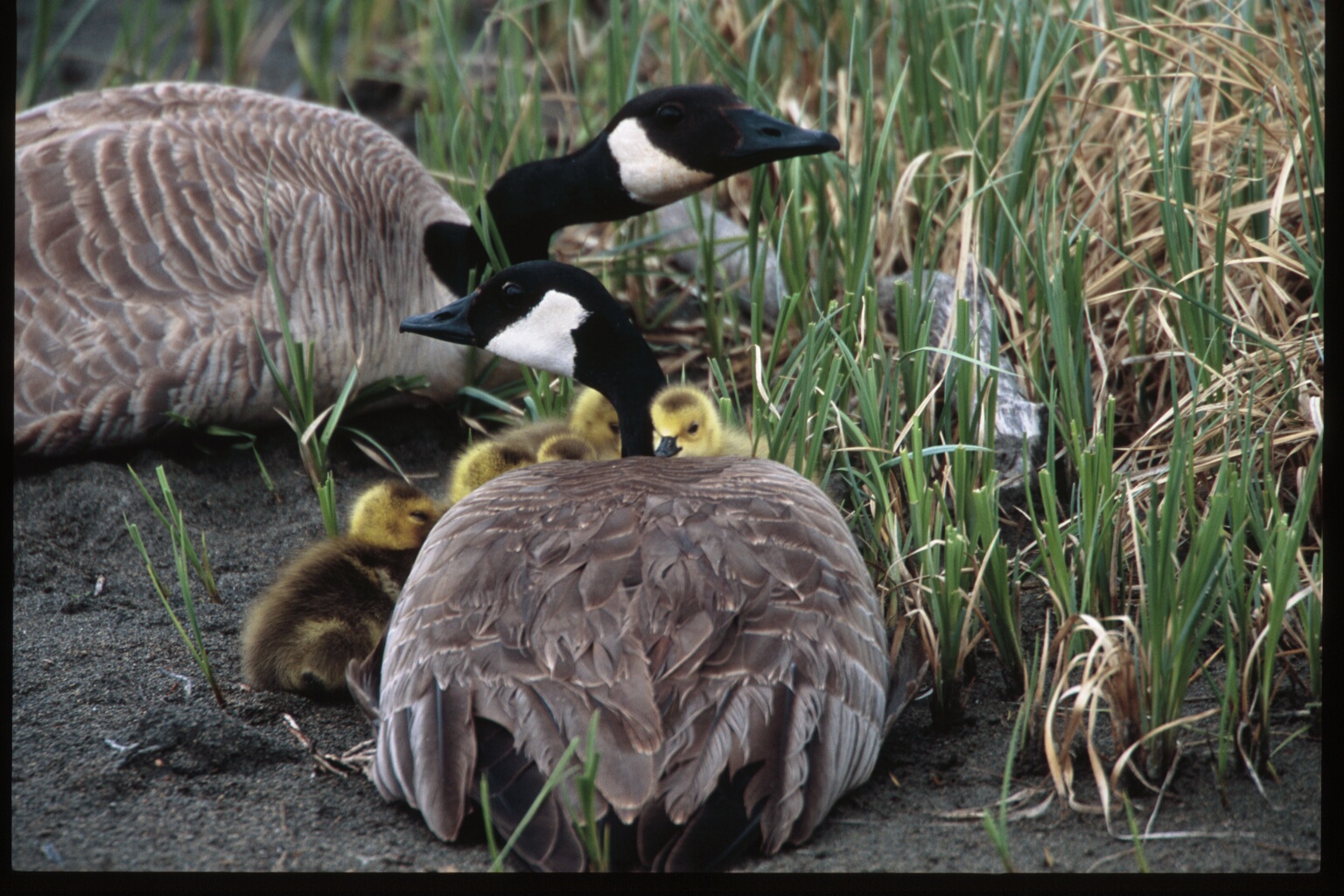
USDA Wildlife Services has been lethally removing Canada Geese from the Puget Sound area for 13 years under an interlocal agreement between several cities and entities within the region.  The geese are being rounded up in our parks and gassed to death or shot on Lake Washington, as well as elsewhere.  In 2013, nearly 1200 were killed by Wildlife Services in just King County alone.
Many humane solutions can be utilized to mitigate conflicts with geese in urban areas.  These include reduction of populations through egg addling, use of OvoControl-G (a proven oral birth control method for geese), and sterilization.  Various other measures to reduce conflicts include: landscape modifications, goose deterrent products and control techniques, automated devices to clean up goose droppings, and education and public outreach on the need to stop feeding waterfowl in our parks.

The members of the 2014 interlocal agreement to kill geese include Bellevue, Kent, Kirkland, Mountlake Terrace, Port of Seattle – Seattle-Tacoma International Airport, Renton, Seattle Parks and Recreation, SeaTac, Tacoma Metro Parks, Tukwila, Woodinville, and the University of Washington.

Please sign the Change.org petition “Puget Sound Area Officials: Stop Killing Canada Geese” at
Also, please share the petition and like us on Facebook at
We must learn to share the earth with wildlife.