Documentary Spotlights Wildlife Services’ Lethal Mass Killings

Activist discovered an “agency running amok and totally out of control” with no authority to answer to.
By   |      January 6, 2014

(Photo/Tom Ryburn via Flickr)

(Photo/Tom Ryburn via Flickr)


 Since its inception in 1931, the U.S. Department of Agriculture’s Wildlife Services has taken its mission “to improve the coexistence of people and wildlife” to heart, killing an estimated 3 million animals per year, which often includes endangered species such as eagles and household pets.

Though the agency does kill some species that are overpopulated and prey on livestock such as wolves, coyotes, mountain lions, and other wild carnivores, a new documentary from the Oregon-based nonprofit Predator Defense spotlights a darker side of the agency, hoping to spark public-demanded reform.

Brooks Fahy is the executive director of Predator Defense, the group behind Exposed: USDA’s Secret War on Wildlife. He says he heard stories about Wildlife Services officials brutally killing thousands of animals each year with poisons and aerial guttings for years, but never thought the agency actually was capable of such behavior until he launched his own investigation.

Fahy says what he discovered was an “agency running amok and totally out of control” with no authority to answer to. He believes the American public needs to know how their tax dollars are being inhumanely spent.

Lethal killings

Dubbed “criter assassins” by those opposed to the agency’s work, makers of the expose hope the documentary brings animal rights activists, environmentalists, politicians and the public together in order to stop the agency from continuing to use steel traps, wire snares, poisons, and snipers to kill wild animals in mass, unnecessarily.

Although calls for the agency’s reform may have started out as a concern about changes in the ecosystem, Democratic Rep. Peter DeFazio of Oregon says “Wildlife Services is one of the most opaque and obstinate departments” he has ever dealt with, including the Pentagon, which is why he is pushing for the agency’s reform.

“We’re really not sure what they’re doing,” DeFazio said. “I’ve asked the agency to give me breakdowns on what lethal methods they’re using. They can’t or won’t do that. We’ve asked them to tell us what goes into their poisons. They won’t say.”

DeFazio and John Campbell, a Republican from California, have teamed up and have tried to press for Congressional hearings regarding the agency’s work, as well as for the Agriculture Department’s inspector general to investigate Wildlife Services, but so far their efforts have been largely unsuccessful thanks to Wildlife Services corporate agriculture allies.

In response to the video, Carol Bannerman, public affairs specialist for Wildlife Services, told MintPress that some of the information provided is outdated, as the agency has changed in the last 20 to 40 years. And while Bannerman acknowledges that the agency largely uses lethal means to remove predator species, she says that the agency also does a lot of good work that is being overlooked.

Talking to the Sacramento Bee, William Clay, deputy administrator of Wildlife Services, said the agency attempts to use non-lethal control methods first, but “The problem is, generally when we get a call, it’s because farmers and ranchers are having livestock killed immediately. They are being killed daily. Our first response is to try to stop the killing and then implement non-lethal methods.”

However, Carter Niemeyer, a former Wildlife Services district manager who worked for the agency for 26 years, told the Sacramento Bee much of the agency’s work is excessive, scientifically unsound, and a waste of tax dollars.

“If you read the brochures, go on their website, they play down the lethal control, which they are heavily involved in, and show you this benign side,” Niemeyer said. “It’s smoke and mirrors. It’s a killing business. And it ain’t pretty.

“If the public knows this and they don’t care, I’m not going to lose any sleep over it. But they are entitled to know.”

Nuclear wildlife management

Though many lawmakers and activists including Andrew Wetzler, director of the land and wildlife program at the Natural Resources Defense Council, recognizes the agency does good work as well, Wetzler says the agency needs to be held responsible for its inhumane actions.

“We asked them about data,” he said, “How much do they use poison, where. How much do they spend renting helicopters to gun down coyotes and wolves,” but “The consistent answer we’ve gotten back … is: ‘We don’t know.’ There’s a severe lack of transparency.”

In the Predator Defense documentary, Rex Shaddox, a former special investigator for the Wyoming Sting Operation and a former Wildlife Services Trapper, explained that the USDA sells illegal pesticides to state Agriculture Department’s, who in turn sell the poisons to farmers and ranchers to kill coyotes.

Shaddox said poisons he worked with were all banned in the 1970s, such as Compound 1080 and DDT, and were not supposed to be in existence any longer, but the government was selling the pesticides “like a big huge drug operation.”

Although Bannerman says Compound 1080 has been largely replaced by sodium cyanide M-44 containers, Fahy says it is absurd to use a device that kills anything that investigates it, including people, and called Wildlife Services’ killing techniques a “nuclear approach to wildlife management.”

News of Wildlife Services lethal work may be shocking to the public, and largely absent from the mainstream media, but calls for the agency’s reform date back to the early 1960s, when scientists reported that eradicating certain species of animals was not leading to a balanced ecosystem.

In 1971 President Richard Nixon signed an executive order banning the use of poison for federal predator control, saying the public needed to learn to coexist with wildlife, but President Gerald Ford later amended the order to allow for the use of sodium cyanide.

As Fahy and others in the documentary pointed out, it’s not that the agency needs to incorporate more rules and legislation that dictates what trappers can and can’t do, they have to actually follow those laws.

Failure to follow federal law

Gary Strader is a former wildlife services trapper who currently works as a private trapper. He shared that on one occasion two mountain lions were shot from the air, which is a felony. A retired law enforcement officer, Strader said that government employees are not supposed to be committing any sort of crime, especially on taxpayer dollars, so he went to his supervisor.

Strader says he didn’t want to get anyone in trouble, but he wanted abuse of the law to stop. But after talking to his supervisor, Strader says he was treated poorly and within a few months, his job was eliminated.

“I’m not an animal rights activist,” Strader said, but Wildlife Services should have to abide by state laws, including checking traps every 24-hours so animals don’t languish in pain. “If the American public saw this and understood the brutality of this,” Strader says the practice would be ended almost immediately.

“I learned the hard way they lie from the top to the bottom,” Strader said. Shaddox agreed and added that while there are about 26 restrictions regarding the use of M-44, including a complete ban on using the poison on domestic animals, he said his supervisor often tested the poisons on dogs at city dumps.

“Most of top supervisors have total disregard for their own policy,” he said, adding that the goal is to keep the customer — the farmers and ranchers — happy above anything else.

Though Bannerman says the agency has improved in recent years, Fahy says the documentary was made not because there is just one individual who has an axe to grind. He said these employees have done things and witnessed things that are hard for them to live with.

“It isn’t he said, she said,” Fahy said. “There’s a tremendous amount of information out there. We have evidence … Wildlife Services doesn’t dispute our cases.”

Congressmen question costs, mission of Wildlife Services agency

http://www.latimes.com/nation/la-me-wildlife-killing-20140105,0,2146578.story#axzz2pXmR2tyM

By Julie Cart
January 4, 2014, 7:41 p.m.la-me-wildlife-killing-g

The U.S. Department of Agriculture’s inspector general will investigate a federal agency whose mission is to exterminate birds, coyotes, mountain lions and other animals that threaten the livelihoods of farmers and ranchers.

The investigation of U.S. Wildlife Services is to determine, among other things, “whether wildlife damage management activities were justified and effective.” Biologists have questioned the agency’s effectiveness, arguing that indiscriminately killing more than 3 million birds and other wild animals every year is often counterproductive.

Reps. Peter A. DeFazio (D-Ore.) and John Campbell (R-Irvine) requested the review, calling for a complete audit of the culture within Wildlife Services. The agency has been accused of abuses, including animal cruelty and occasional accidental killing of endangered species, family pets and other animals that weren’t targeted.

DeFazio says the time has come to revisit the agency’s mission and determine whether it makes economic and biological sense for taxpayers to underwrite a service, however necessary, that he argues should be paid for by private businesses.

“Why should taxpayers, particularly in tough times, pay to subsidize private interests?” said DeFazio, ranking Democrat on the House Committee on Natural Resources. “I have come to the conclusion that this is an agency whose time has passed.”

Wildlife Services was created in 1931 as part of the USDA’s Animal and Plant Health Inspection Service. It has wide-ranging responsibilities, including rabies testing and bird control at airport runways. But the bulk of its work is exterminating nuisance wildlife by methods that include poisoning, gassing, trapping and aerial gunning.

The agency acts as a pest management service not only for agribusiness and ranches, but also for other federal agencies, counties and homeowners who might have such problems as raccoons in an attic. Other services include protecting endangered species and maintaining game herds for hunters.

The services are free or substantially subsidized, which many private predator- and pest-control companies say unfairly undercuts their business. States and counties complain that they are responsible for an increasing share of the costs.

DeFazio and Campbell are also calling for congressional oversight hearings. DeFazio says he has spent years asking for but not receiving information from Wildlife Services, which he calls “the least accountable federal agency” he has ever seen.

He said he had to learn from the Los Angeles Times about an internal audit the agency conducted last year. The audit found the agency’s accounting practices were “unreconcilable,” lacked transparency and violated state and federal laws. Further, the audit revealed that $12 million in a special account could not be found.

“The last time I tried to get more specific financial information, they just blew me off and said they couldn’t provide that,” DeFazio said in an interview. “Yet, at the same time, they were undertaking this audit. So, the managers were, at best, disingenuous, and at worst, undertaking a coverup.”

A Wildlife Services spokeswoman said the agency had already begun to carry out changes recommended in the audit.

In response to allegations of improper behavior by agents, the spokeswoman said the department does not condone animal cruelty and that employees are trained to strictly follow state and federal wildlife laws.

Information that DeFazio’s office says Wildlife Services has refused to disclose includes the identities of its clients. DeFazio’s office has determined that the agency acts as an exterminator for golf clubs and resorts, hunting clubs, homeowners associations, paving companies and timber giants International Paper and Weyerhaeuser.

The agency’s supporters argue that the cost is appropriately borne by consumers, who value local food production. In California, many ranchers and farmers would go broke if they had to pay private companies to do the work provided free of charge by Wildlife Service agents, said Noelle G. Cremers, a lobbyist for the California Farm Bureau.

Members of Congress have heard allegations for years of improper — and in some cases, illegal — practices within Wildlife Services. Attempts at congressional investigations have been stalled by what DeFazio calls the agency’s “powerful friends” in agriculture and ranching lobbies.

Among the allegations legislators want to review are those by Gary Strader, a Wildlife Services hunter in Nevada until 2009. He alleges he was fired for reporting to superiors that colleagues had killed five mountain lions from airplanes, which is a felony. He said his supervisor told him to “mind his own business.”

Strader said the same supervisor gave similar advice when the hunter discovered that a snare he set had unintentionally killed a golden eagle. Knowing that the bird was protected under federal law, Strader called his supervisor for guidance. “He said, ‘If you think no one saw it, take a shovel and bury it,'” Strader said.

Agents are required to maintain records of their kills, but critics say those records are opaque and probably inaccurate. The official count, for instance, does not include offspring that will die after adult mountain lions or bears are killed, or coyote pups inside a den that has been gassed.

“The numbers are absolutely manipulated — gravely underestimated,” said Brooks Fahy, executive director of Predator Defense, a wildlife conservation group.

Part of the difficulty of wildlife control work is making sure the lethal methods reach only the intended targets. Cyanide traps set for coyotes can kill other animals. Many domestic dogs — thousands, by the accounting of watchdog groups — have been inadvertently poisoned by capsules meant for coyotes.

Rex Shaddox, a former Wildlife Services agent in Wyoming, said agents “were told to doctor our reports — we were not allowed to show we killed household pets.” Shaddox said he knew a rancher who kept a grisly souvenir of the agency’s collateral damage: a 10-foot chain of interconnected dog collars.

Shaddox says the agency rarely handles federally controlled poisons legally. Agents are required to post signs where pesticides and poisons are placed and maintain detailed logs. But supervisors tell them not to, Shaddox and other former agents said.

Wildlife Services agents have also been accused of animal cruelty, particularly in the use of dogs to control and kill coyotes. Last year, a Wyoming-based trapper posted photographs to his Facebook page showing his dogs savaging a coyote caught in a leg-hold trap. Other pictures showed the agent’s animals mauling bobcats and raccoons.

The agency said it was investigating.

Wildlife biologists also criticize the agency’s work, which they say ignores science. Bradley J. Bergstrom, a conservation biologist at Valdosta State University in Georgia, and other biologists at the American Society of Mammalogists say they have been frustrated by the agency’s unwillingness to share scientific data tracking the effectiveness of its approach.

For instance, Bergstrom said, eradicating coyotes from a landscape creates unintended consequences. He said a Texas study found that killing coyotes that preyed on cattle led to an increase in rodents, which prey on crops. The pest problem shifted from those who raise cattle to farmers who grow crops.

“Preemptive lethal control … makes no sense,” Bergstrom said. “It’s known as the ‘mowing the lawn’ model — you just have to keep mowing them down.” .

http://www.latimes.com/nation/la-me-wildlife-killing-20140105,0,2146578.story#ixzz2pZziBW5a

BREAKING: USDA Inspector General to Audit Wildlife Services

http://switchboard.nrdc.org/blogs/awetzler/breaking_usda_inspector_genera.html#.Up_WZK6fC54.twitter

Andrew Wetzler
December 4, 2013

Responding to Congressional requests and well over a hundred thousand letters from the public, the Department of Agriculture’s Inspector General confirmed today that it plans to conduct an audit of the USDA’s controversial Wildlife Services predator control program. Every year, at a cost of tens of millions of taxpayer dollars, Wildlife Services uses traps, poisons and guns to kill over 100,000 native carnivores such as bears, wolves, coyotes, and mountain lions. The audit, which is planned for 2014, will examine the following topics:

determine whether wildlife damage management activities were justified and effective;
assess the controls over cooperative agreements;
assess Wildlife Services’ information system for reliability and integrity; and
follow-up on the implementation of prior audit recommendations, such as the accountability over hazardous materials and equipment.

This audit is a much-needed development, one that will hopefully shed light on the long-documented problems with Wildlife Services’ behavior. The first two items listed above are particularly noteworthy.

First, as NRDC documented in our report, Fuzzy Math, much of Wildlife Services’ activities are justified by flawed cost-benefit reports that are inconsistent with economic analysis guidelines used by most federal agencies and omit the economic values to society of native wildlife. Having the USDA’s Inspector General take a careful and independent look at the program’s self-justifications is therefore crucial to making smart decisions about how the federal government spends its limited resources.

Second, Wildlife Services’ “cooperator” agreements (arrangements through which local governments and private associations cover about half of the agency’s expenses) can’t help but distort Wildlife Services’ behavior. Indeed, it creates a vicious circle all around: local governments and private ranchers have little incentive to try nonlethal methods of predator control when they can buy federal lethal control at a fifty-percent discount; as for Wildlife Services’, its budget and staffing quickly becomes captive to securing cooperator agreements. Thus, an agency which should be serving the public interest gets transformed into a private pest control business, operating on the public dole and often unnecessarily killing native, ecologically valuable, wildlife. An audit that takes a fresh look at these arrangements could provide an important check on the distorting effects of cooperator agreements.

As the Inspector General’s audit moves forward, NRDC and our allies – including the Humane Society of the United States, which has led the call for an audit by the Inspector General’s office – looks forward to providing all the information we can to the USDA.

1467435_604185116284575_37873442_n

“EXPOSED: USDA’s Secret War on Wildlife”

http://www.predatordefense.org/exposed/

In our newest film you’ll see three former federal agents and a Congressman blow the whistle on the USDA’s barbaric and wasteful Wildlife Services program and expose the government’s secret war on wildlife.

Dec. 1, 2013 – An agency within the USDA called Wildlife Services—a misnamed entity if there ever was one—has been having their way for almost a century, killing over 100,000 native predators and millions of birds each year, as well as maiming, poisoning, and brutalizing countless pets. They have also seriously harmed more than a few humans. And they apparently think they are going to continue getting away with it.

But in our new documentary, EXPOSED: USDA’s Secret War on Wildlife, whistle-blowers go on the record showing Wildlife Services for what it really is—an unaccountable, out-of-control, wildlife killing machine that acts at the bidding of corporate agriculture and the hunting lobby, all with taxpayer dollars.

Our call for reforming this rogue agency is getting serious attention. A teaser of EXPOSED was just featured on CNN Headline News and is slated for an upcoming special segment. We’re also working to get a CBS “60 Minutes” exposé.

In January 2014 we’ll kick off a nationwide film screening tour. Whistleblower Rex Shaddox will attend some of our screenings, including one planned for members of Congress at the Capital building in D.C. We hope to have other speakers tour with us if we can raise enough funds.

Watch EXPOSED online and donate here: http://www.predatordefense.org/exposed/

http://www.youtube.com/watch?feature=player_embedded&v=qSV8pRLkdKI

Coyote photo Copyright Jim Robertson

Coyote photo Copyright Jim Robertson

A Tale of Two Species

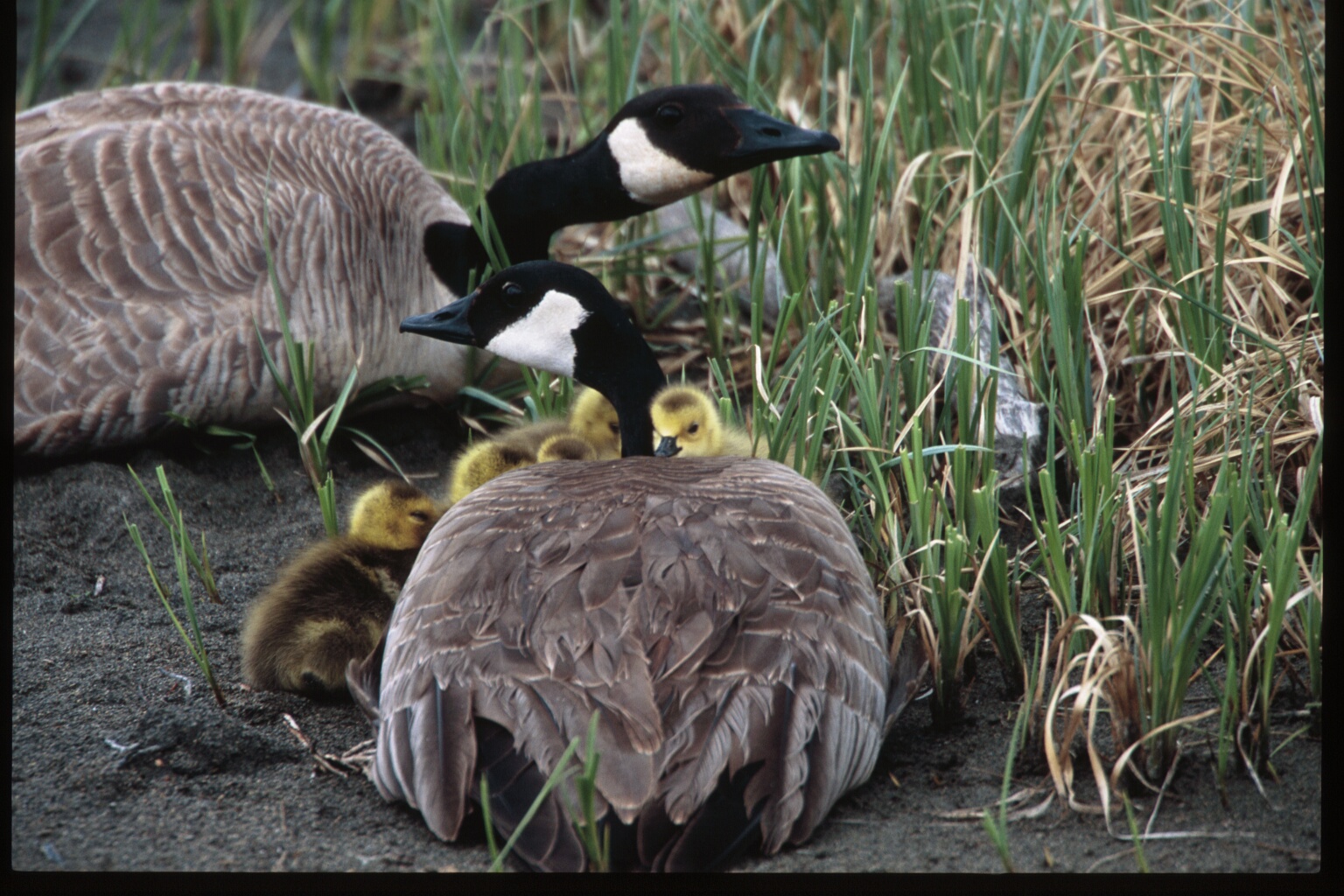
First, here’s a mini guest-rant by a friend from Seattle in reference to the round up and lethal gassing of geese by Wildlife Services (that warped, wretched little wildlife-killing agency formally “Animal Damage Control”) at a nearby lake there:

“Wtf is wrong with people!!?? Will we not be happy until we are the only species on the planet? How dare the geese leave droppings that might be picked up by some diaper-filling toddler [DFT] while visiting the park for one hour. Those beaches should be animal and bug free, and sanitized because for heaven’s sake, kids go there sometimes. Wtf!”

In just a few short, satirical sentences this rant summed up my feelings on the goose situation (and their subsequent extermination) as well as my views on the grandiose, narcissistic and intolerant species responsible for this whole mess. (Note to self: add “goose-stomping Nazi war criminals” to the list of Top 10 New Names for Wildlife “Services.”)

I do have to admit though, whenever I see poop-filled human baby diapers thrown out along the road, discarded on ocean beaches or dumped in the woods at public trailheads, I wish there was some kind of “Service” you could call to round up and do away with the people who stoop to that kind of thing. But we live in a civilized society and don’t treat others so unforgivingly—that is, unless said “other” is a goose.

If people knew geese as personally as I do (I’ve watched them go through their courtship and nest-building routines, seen a gander loyally guarding his mate while she dutifully incubated her eggs, day and night, throughout windstorms and heavy snowfalls during the fickle Montana spring, and witnessed with joy the hatching and rearing of their precious chicks), they would surely think of geese as a species every bit as worthy as their own.

This issue is all the more maddening because it’s a situation humans have brought on themselves (as with so many other wildlife “problems”).

To the casual observer, lakes in western Washington may seem relatively pristine; the water is still so clear and blue it makes you want to dip your cup in and take a long drink. But if you’ve watched the changes over the years, you’d know it’s a habitat that has seen better days.

Not only were the old growth trees that grew to the water’s edge cut down and floated off, the lakeshores themselves were sliced up and sold off as recreation lots or multimillion dollar home sites. Naturally, land owners didn’t want their tiny strip of shoreline to be just a tangle of cedar and spruce trees or shrubs, like salmonberry, thimbleberry or huckleberry, so they tore out the native vegetation, built concrete bulkheads and brought in backfill and lawn grass. Of course they would need a place to tie up their power boat or jet-ski, so pilings were pounded into the sandy shallows where periwinkles and crawdads once thrived, and docks were built, at the expense of any lily pads or riparian vegetation that used to house bullfrogs and provide cover for fish.

The result of all this rampant manipulation is a strange new world, inhospitable for all but the most grass-loving of creatures. And it just so happens that geese, like humans, love mowed lawns. But if there’s one thing in the natural world human beings have a real problem with, it’s a species who dares to do well in the world after people have done their darndest to denude the landscape, claim it all for themselves and instill a sense of “order” that only they can relate to—complete with fences, fire pits and plastic patio furniture with a half-life of roughly 100,000 years.

Disposable diapers and plastic lawn chairs are a lasting scar on the planet. Goose poop, on the other hand, adds fertilizer to the depleted, lifeless soil.

Text and Wildlife Photography ©Jim Robertson, 2013. All Rights Reserved

Text and Wildlife Photography ©Jim Robertson, 2013. All Rights Reserved