Exposing the Big Game

Forget Hunters' Feeble Rationalizations and Trust Your Gut Feelings: Making Sport of Killing Is Not Healthy Human Behavior

Exposing the Big Game

Interagency talks continue on wildlife encounter protocols

County follows up on controversial wolf incident response

By Ann McCreary

Since they first made their presence in Washington known 10 years ago, gray wolves have been a source of controversy. When multiple agencies became involved in a recent encounter between wolves and a human, the result was confusion, frustration and mistrust.

Last month, a U.S. Forest Service employee who was working in a remote area of the Okanogan-Wenatchee National Forest encountered wolves. When the animals would not leave after she yelled and sprayed pepper spray at them, she climbed a tree and used a satellite phone to contact her supervisor. She was taken from the area by a helicopter that was dispatched to retrieve her.

By the time the incident was over — a period of about an hour — it involved the Okanogan County Sheriff’s Department, U.S. Fish and Wildlife Service (FWS), Washington Department of Fish and Wildlife (WDFW), the Forest Service Tonasket Ranger District, the state Department of Natural Resources (DNR), and Okanogan County commissioners.

The way the situation was handled didn’t sit well with Okanogan County Sheriff Frank Rogers, who said he felt wildlife agencies involved in the incident interfered with the sheriff’s responsibility to protect human safety. Representatives of several agencies involved met with Okanogan County commissioners recently to review the incident. The session lasted almost two hours and Commissioner Andy Hover said he plans another meeting on Sept. 10 with a goal of developing a policy to guide future responses to wildlife encounters.

Everyone involved in the incident acknowledged that the event was extremely rare. This is the first reported human/wolf interaction in Washington since the discovery 10 years ago of the Methow Valley’s Lookout Pack — the first pack confirmed in the state since the 1930s.

The Forest Service employee, who has not been identified at her request, was a seasonal worker conducting salmon research about 30 miles north of Winthrop, in an area that is part of the Loup Loup wolf pack territory. Wildlife officials who visited the area after the incident determined that she had approached a rendezvous site, where wolves keep pups until they are old enough to hunt.

Initial responses

The woman called her Forest Service supervisor at shortly after 12:30 p.m. on July 12 and said she had encountered wolves that had refused to leave despite her efforts to scare them away. She reported seeing wolf tracks and heard barking and yipping for some time before the wolves approached.

Her supervisor advised her to find a place where she felt safe, so she climbed a tree, according to FWS officials. The Forest Service contacted the Northeast Washington Interagency Communications Center, a dispatch facility for emergencies on public lands. The center located a DNR helicopter, which was ultimately dispatched to assist the woman.

Okanogan County dispatch also was notified, and Rogers said his office considered it a search and rescue mission. However, he said, in conversations about how to proceed before the helicopter was sent, wildlife agency officials told his office to “stand down” because it was a wildlife issue.

During the meeting with commissioners, Steve Brown, chief deputy for the sheriff’s office, said officials with WDFW told him “absolutely no rotors” because the helicopter could disturb the wolves, which are listed as an endangered species through Washington under state law, and under federal law in that portion of the state.

Donny Martorello, wolf policy lead for WDFW, said state and federal wildlife officials were initially trying to explain to the sheriff’s office that the wolves’ behavior was not aggressive, but defensive, and the woman’s best action would be to back away from the area. However, “when we realized it was a woman calling for help from a satellite phone” they “gave a green light to send a helicopter,” Martorello said.

Rogers said the debate over jurisdiction and appropriate response meant that the response to the woman’s call was delayed by at least 20 minutes. He said he was also frustrated that his deputies didn’t get to interview the woman after she was flown to Omak. “We’re trying to build a working relationship with everybody, and it creates issues when a situation like this happens,” he said.

Good outcome, bad process

“The outcome [of the incident] was good,” said Hover. “It was the initial process that was bad. I’ve seen transcripts of communications and the left hand doesn’t know what the right hand is doing.”

Brad Thompson, deputy state supervisor for FWS, apologized “on behalf of our program” and said “there is room for improvement on how Fish and Wildlife worked with the sheriff in the field. And there is room for improvement on educating people about the ‘newcomer’ [wolves] on the landscape,” Thompson said. “We don’t have enough experience with incidences of public safety and wolves.”

Hover said last week that he has been in touch with Thompson about developing policies and protocols to guide any future incidents involving wildlife, especially those protected under state law or under the federal Endangered Species Act (ESA).

“I think the federal ESA listings, when you get people on the ground, they get nervous when they try to make a decision,” Hover said. “The people on the ground have to have a clear policy from up above that says human life is more important than a federally listed species.”

Hover said wolves are relatively new to Washington and many people, even those experienced in the outdoors, don’t expect to encounter them and don’t know how to respond. “Now we have a species that is a pack animal and very territorial when it has pups,” he said. “People are not familiar with wolves. We need more information.”

Matt Reidy, ranger of the Tonasket Ranger District, where the incident occurred, said his district is in contact with WDFW and FWS about wolves and other wildlife on Forest Service lands. Two wolves in the Loup Loup pack are collared, and WDFW is able to collect data on their locations, which it shares with the district, Reidy said.

He said the district would have informed the woman conducting research that “there may be wolves in that location where you are working” if she had checked at the ranger district before heading into the field, but she did not. “Not that it’s a danger, just for general awareness,” Reidy said.

Normally people heading into the field for work, research or volunteer activities like trail maintenance check in to ask about hazards like washouts or blowdowns, Reidy said. “Unfortunately, this employee didn’t do that, she just went out into the woods and was doing her job. Since then I’ve had a conversation with her supervisor and that protocol has changed,” he said. The woman lives in another state, Reidy said.

Reidy said his district is preparing new brochures for the public that describe how to behave during encounters with bears, cougars and wolves. “Anybody traveling to the national forests should have a general awareness. We’re at the point where Idaho and Montana were 10 years ago. The general public has always had the opportunity to potentially see black bears and mountain lions, now they have the opportunity to potentially see a wolf.”

Hover said representatives of wildlife and law enforcement agencies will be invited to participate in further discussion of policies and coordination for future wildlife incidents on Sept. 10 at 1:30 p.m. as part of the county commissioners’ regular meeting.

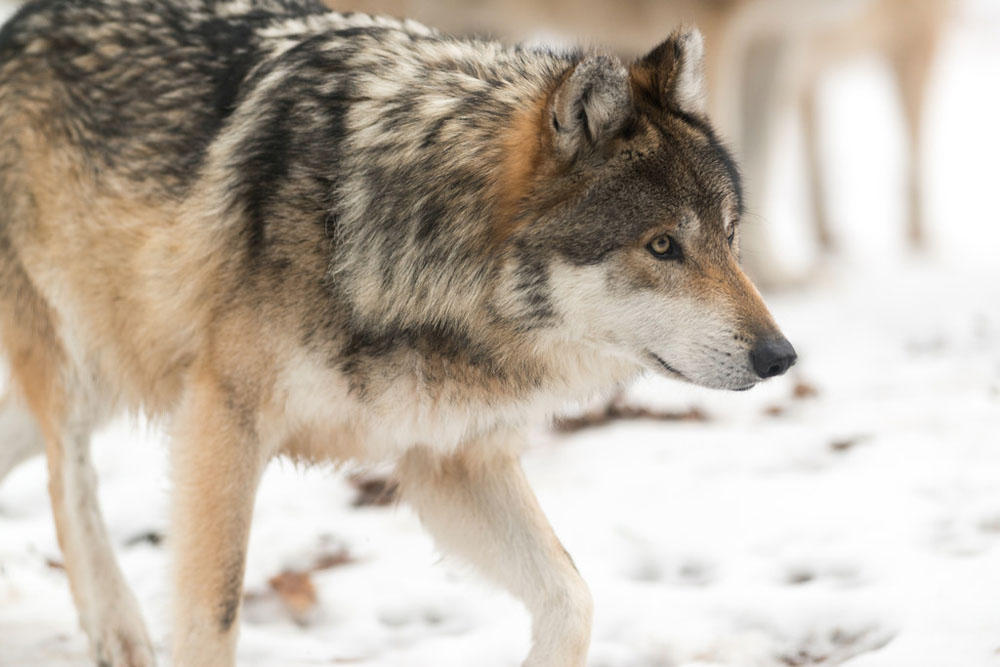
State mulls killing ‘predatory’ wolf pack in Eastern Wash.


[Excuse me, but wolves are predators–Humans can go vegan!]

Gray wolf (File photo)

AA

SPOKANE, Wash. (AP) – The state of Washington has not made a decision on whether it will kill members of a wolf pack that have been preying on cattle.

Members of the Togo pack are suspected of attacking five head of cattle in the past 10 months in the northeast corner of Washington.

The Washington Department of Fish and Wildlife is gathering more information about the incidents, which began last November.

The Spokesman-Review reports the state’s policy allows killing wolves if they prey on livestock three times in a 30-day period or four times in a 10-month period. That policy was developed in 2016 by the agency and its Wolf Advisory Group, which represents environmentalists, hunters and ranchers.

In the latest depredation, a cow was killed Aug. 8 while grazing near Danville, Washington.

Wolf pack kills a cow in Eastern WA

SPOKANE, Wash. (AP) – Members of the Togo wolf pack in the Colville National Forest of eastern Washington state killed one cow and injured another last week.

The state Department of Fish and Wildlife says the Togo pack is responsible for five depredations in the past 10 months, including two last November and one in May.

The agency said Monday that it was alerted last week about a potential wolf depredation near Danville, Washington. Staff have confirmed the cow was killed by a wolf or wolves.

The agency’s policy allows the killing of wolves that prey on livestock three times in a 30-day period or four times in a 10-month period.

The agency says it will continue to monitor the Togo pack as it considers its next steps.

How O-Six became Yellowstone’s ‘most beloved’ wolf

Every hunter that kills a wolf ends a wonderous adventure, says author

CBC Radio · 2 hours ago

<https://i.cbc.ca/1.4760707.1532518854!/fileImage/httpImage/image.jpg_gen/derivatives/16x9_780/nate-blakeslee-and-book-cover.jpg>

The Wolf author Nate Blakeslee says every hunter that kills a wolf ends a wonderous adventure. (Penguin Random House Canada)

0 comments

Listen23:23

Originally aired on November 28, 2017.

Read Story Transcript <http://www.cbc.ca/radio/thecurrent/the-current-for-november-28-2017-1.4421390/tuesday-november-29-2017-full-episode-transcript-1.4423592#segment2>

When Alberta grey wolves were introduced into Yellowstone National Park in 1995, not everyone who lived around the park howled with delight.

Wolves had been absent from the area since they were killed by hunters in the 1920s.

“Because so much of that land is controlled by the federal government, you see this us versus them, this local control versus intrusive federal bureaucrats — at least that is how it is cast in the West,” says Nate Blakeslee, author of The Wolf: A True Story of Survival and Obsession in the West.

“The ranching industry is so powerful there, the hunting industry is so powerful there, all those state legislatures were largely opposed to reintroduction, even though a number of people there were very excited about it,” Blakeslee tells The Current’s Anna Maria Tremonti.

While wolf experts initially thought the wolves would be pretty invisible to humans, living deep in the park, some of the packs lived in open areas easily watched by nature enthusiasts.

She was such an accomplished hunter.- Nate Blakeslee

And of those wolves, none was more loved or photographed than an alpha female called O-Six, who lived and hunted close to humans.

“She was a grey wolf. She had uncommonly attractive facial markings, sort of this owl-like mask around her eyes,” says Blakeslee.

“She was such an accomplished hunter.”

* Grey wolf wins Canada’s Greatest Animal contest <http://www.cbc.ca/news/canada/calgary/grey-wolf-calgary-zoo-canada-greatest-animal-contest-1.4123430>
* Using poison to cull wolves in Alberta is inhumane, says animal advocacy group <http://www.cbc.ca/news/canada/calgary/alberta-wolf-cull-animals-poison-1.4388721>

The wolves of Yellowstone were free to hunt and roam the area safe from hunters until 2012 when they were removed from the endangered species list.

Any wolf that left the safe confines of the park itself became a potential target for hunters.

“‘O-Six sadly did leave the park during that first legal hunting season,” Blakeslee says.

“Who could have foreseen that one of the first wolves to be shot during Wyoming’s first legal hunting seasons in generations would be the park’s most beloved animal?”

What is the value of one wolf’s life?- Nate Blakeslee

After she was shot, the rest of the wolf pack came out of the woods and circled their fallen leader.

And then they began to howl.

“What is the value of one wolf’s life?” Blakeslee asks.

“If every wolf leads this wonderful adventure story as O-Six did, if every wolf’s life is like that, and every wolf killed by a hunter ends such an amazing story, does it force us to reevaluate how we think about those policy goals and does it force us to go back again and take a look at what our values are in that process?”

Listen to the full conversation near the top of this page.

_____

This segment was produced by The Current’s Howard Goldenthal.

https://www.cbc.ca/radio/thecurrent/how-o-six-became-yellowstone-s-most-beloved-wolf-1.4421434

Washington Salmon Researcher Safe After Wolf Encounter

a wolf in the snow
File photo. A researcher with the U.S. Forest Service in north-central Washington had to escape two wolves by climbing a tree. CREDIT: ERIC KILBY

LISTEN

Audio Player

Thanks to quick thinking, a tree and a helicopter, a salmon researcher in Washington was able to evade two wolves she couldn’t scare off.

Biologists who visited the spot Friday to investigate the incident attributed the rare wolf-human interaction to the presence of wolf pups nearby.

Authorities haven’t released the name of the student researcher involved. She could not be reached for comment. However, authorities have reconstructed what happened.

It started out as a normal morning of surveying streams in the Okanogan Wenatchee National Forest. Then the seasonal Forest Service employee started to notice wolf tracks and heard yipping and barking.

A little while later, two wolves from the Loup Loup pack appeared. The student yelled and tried to wave them away. She sprayed bear spray, but nothing worked.

That’s when she climbed 30 feet up a tree to escape. She climbed back down when she thought it was safe, only to encounter the wolves again. She called for help on a satellite phone and was rescued by a Washington Department of Natural Resources helicopter.

The helicopter crew that rescued the unidentified researcher. CREDIT: WASHINGTON DEPARTMENT OF NATURAL RESOURCES

The helicopter crew that rescued the unidentified researcher. CREDIT: WASHINGTON DEPARTMENT OF NATURAL RESOURCES

The helicopter was able to scare the wolves away and fly the researcher to safety. It was an unusual situation for the DNR pilots — typically they’re used in wildland firefighting and have been deployed all over the state for that purpose.

“To my knowledge this is the first time that we have rescued a biologist from a tree with wolves at the base,” said Hilary Franz, Washington’s commissioner of public lands.

Franz said the Department of Natural Resources, which she oversees, has helped respond to other rescues and accidents when pilots are able to.

Officials say the salmon researcher did everything right — and they’re not sure what went wrong.

Okanogan County Sheriff Frank Rogers says people need to be aware of their surroundings.

“I’ve tried to tell people, it’s not like the movies. The wolves aren’t running around in packs hunting humans. But if you see a pack, don’t antagonize it. If it’s feeding, for god’s sake, stay away from it. If you run upon a den, stay away from it,” Rogers said.

By Friday afternoon, after hiking into the area, biologists were able to determine that the researcher was near a spot where the wolves keep their pups until they are old enough to hunt. They said the location is so remote that they aren’t concerned that hikers or campers will have a similar wolf encounter.

“Wolves are generally pretty wary of humans and not aggressive towards humans,” said Ann Froschauer, a spokeswoman for the U.S. Fish and Wildlife Service.

Copyright 2018 Earthfix

CRISIS: A Death Sentence for Red Wolves

Donate Now!
Fewer than 40 red wolves cling to survival
in the wild. Help us fight for them!

The federal government seems bent on destroying what began as one of our nation’s greatest wildlife comeback stories.

As a result, red wolves are all but certain to go extinct in the wild – again.

You and I can’t let what began as such a success story end on such a heartbreaking and tragic note. This is a 100% preventable extinction.

Say ‘hell no’ to the red wolf extinction plan. Help us fight for the wildlife you love!

Last month the U.S. Fish and Wildlife Service proposed to cripple the red wolf recovery program by:

  • Reducing the recovery area in Eastern North Carolina by nearly 90% – leaving barely enough room for a single wolf pack.
  • Allowing any wolf wandering outside the cramped confines of the Refuge to be gunned down, no questions asked.

30 years ago when the red wolf recovery effort launched it was destined to become a model for recovery of wolves across the U.S. The once nearly extinct population took root and grew to 150 wolves. But ever since anti-wolf extremists mounted an anti-wolf campaign, numbers have fallen.

Fewer than 40 red wolves cling to survival in the wild – won’t you help us fight for them?

Red wolves, native to Eastern North Carolina, are a key part of our natural heritage. In our not so distant past, these animals ranged from Florida to Pennsylvania and as far west as Texas. There are no words for how tragic it would be to see them disappear forever.

Your donation will help fuel our all-out effort to rescue the red wolf from oblivion. You’ll help fund public outreach efforts in North Carolina, build community support for wolf conservation, and help us hold Fish and Wildlife Service’s feet to the fire, including legal action if necessary.

The story isn’t over. With your help, we’ll get the happy ending we have sought for three decades. It’s the happy ending these wolves deserve

Washington to study moving wolves from east to west

Washington lawmakers funded a study on moving wolves and a search to find wolves in the South Cascades

By Don Jenkins

EO Media Group

Published on March 20, 2018 5:36PM

Don Jenkins/Capital Press Washington House Agriculture and Natural Resources Committee Chairman Brian Blake, D-Aberdeen, listened to testimony Jan. 31 in Olympia on a bill to redistribute wolves within the state. Blake opposes translocating wolves to unoccupied regions, but let the bill through his committee, saying current state policy was unfair to northeast Washington.

Buy this photo

The Washington Legislature finished the 2018 session March 8 by passing a spending plan that includes money to study moving wolves from northeast Washington to unoccupied territories to the west.

DON JENKINS/CAPITAL PRESS

The Washington Legislature finished the 2018 session March 8 by passing a spending plan that includes money to study moving wolves from northeast Washington to unoccupied territories to the west.

Buy this photo

OLYMPIA — Washington lawmakers took two tentative steps earlier this month to hasten the day wolves are off the state’s protected-species list.

The spending plan passed on the session’s last day appropriates $183,000 to study moving wolves from northeast Washington to unoccupied territories to the west.

It also allocates $172,000 to the University of Washington to search for wolves in the South Cascades.

If wolves are moved or confirmed in the South Cascades, they would be big steps toward delisting.

Lawmakers are realizing the burden that wolf recolonization has put on four northeast counties, House Agriculture and Natural Resources Committee Chairman Brian Blake, D-Aberdeen, said March 9.

“I think some of the barriers are starting to break down,” Blake said.

Wolves have surpassed recovery goals in the northeast corner, but are too few or non-existent elsewhere to meet the state’s objectives. A decade after the Department of Fish and Wildlife identified Washington’s first pack, the South Cascades doesn’t have a confirmed wolf,

Already on the west side?

Blake said hunters tell him that wolves are in the region.

“We know there are wolves down there, but Fish and Wildlife has been so busy putting fires out in (northeast) Washington that they haven’t had the time or resources to put into the South Cascades,” he said.

The money is for a three-year study. Besides looking for wolves, researchers will study the region’s prey base.

Blake said he’s mostly interesting in sniffing out wolves. “If we’re ever going to get wolves delisted, we have to find out how many of them are in the South Cascades,” he said. “I firmly believe wolves are there. It is diverse, rugged country.”

Fish and Wildlife wolf policy coordinator Donny Martorello said the department has followed up on credible reports of wolves in the South Cascades. “It’s kind of like finding a needle in a haystack,” he said. “We expect there are at least a few dispersers.”

The state’s 2011 wolf plan holds out the possibility of moving wolves to energize recovery. The Department of Fish and Wildlife says it’s not necessary. The department maintains wolves will spread out on their own. For several years the department has said recovery goals could be met as soon as 2021.

“I don’t wish wolves on anybody else, but they are not dispersing naturally, like they told us they would,” said Scott Nielsen, president of the Cattle Producers of Washington, many of whose members ranch in northeast Washington. “The wolves are putting an incredible burden on a small portion of the state.”

No state involvement for now

The state won’t start moving wolves soon, if at all. The budget directs Fish and Wildlife to follow the State Environmental Protection Act and report back to the Legislature by the end of 2019. The act requires a study of the environmental consequences of state actions.

The House passed a bill directing Fish and Wildlife to do the study. The bill went nowhere in the Senate, but the House policy survived budget negotiations.

The budget also allocates $80,000 to be split equally between sheriff’s offices in Ferry and Stevens counties for wolf management. Most attacks by wolves on cattle and sheep occur in those two counties.

The counties are dispatching deputies to depredations, even though Fish and Wildlife does the investigations.

Ranchers welcome the involvement of local law officers, Nielsen said.

“I think it will be a tremendously good thing,” he said. “We have confidence in our local sheriffs.”

http://www.chinookobserver.com/co/local-news/20180320/washington-to-study-moving-wolves-from-east-to-west

Wolves in Northern California aren’t just loping through anymore; they’re here to stay

May 8, 2018 Updated: May 9,

Seven years after an Oregon wolf named OR-7 caused an international sensation by taking a historic pilgrimage through California, his offspring are settling in the Golden State, starting families and giving every indication that the howling canines are here to stay.

Wildlife biologists regard the re-establishment of Canis lupus in California as a milestone in the country’s decades-long effort to protect and preserve natural habitats and endangered species. Up to 2 million gray wolves once lived in North America, but European settlers, fed by big, bad wolf myths, drove them to near-extinction in the lower 48 states.

The last wild gray wolf in California before OR-7 showed up was killed in 1924.

Four of OR-7’s progeny have been detected in California this year and last, including the leader of the Lassen Pack, which has staked out territory in western Lassen and Plumas counties, according to a recent update on the status of the predators by the California Department of Fish and Wildlife.

Several others could well be roaming through the state undetected, said wildlife biologists, who expect the wolf population in the Golden State to grow.

“It does seem like we are continuing to see wolves entering California, and we have a breeding pack, so the stage is set for population growth,” said Pete Figura, a wildlife management supervisor for the Department of Fish and Wildlife. “It seems to be following the pattern of wolf expansion that we’ve seen over the last 20 or 30 years in the American West.”

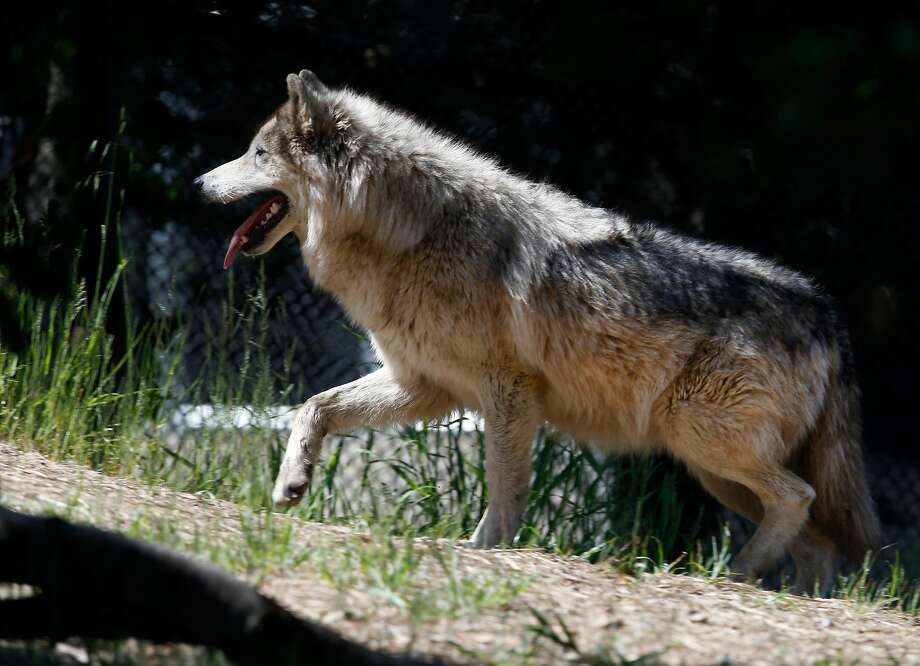
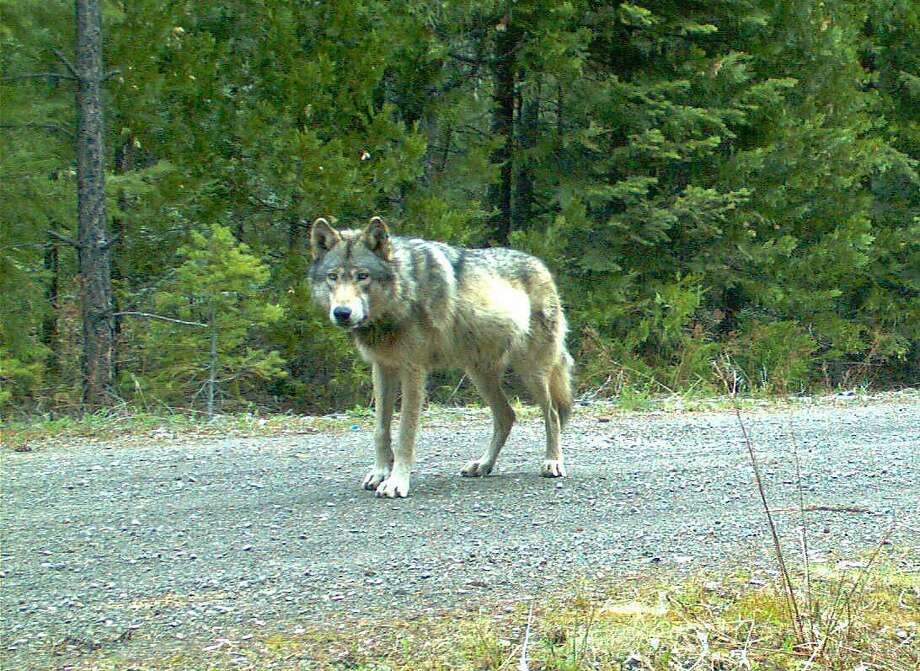
Above: The wolf known as OR-7 became the first known wolf to enter California since 1924 in late 2011. Right: A close-up of a female gray wolf at the Oakland Zoo. Photo: Oregon Department Of Fish And Wildlife Via Associated Press

Photo: Oregon Department Of Fish And Wildlife Via Associated Press

Above: The wolf known as OR-7 became the first known wolf to enter California since 1924 in late 2011. Right: A close-up of a female gray wolf at the Oakland Zoo.

OR-7, so named because he was the seventh wolf affixed with a radio collar in Oregon, eventually returned to his home state and found a mate. He is now the alpha male in the Rogue Pack, south of Crater Lake National Park, where he and his mate have raised litters every year since 2014.

One of his sons entered California and started the Lassen Pack, which is often seen in the Indian Valley area north of Quincy, in Plumas County. Known as CA-08M, he and his mate have had four puppies, three of which were spotted by locals and on trail cameras in late March.

“They’ve been fairly visible,” said Amaroq Weiss, the West Coast wolf organizer for the Center for Biological Diversity. “Someone recently posted a video of a pup barking at them.”

An uncollared wolf Figura said is the likely daughter of OR-7 is also in California, where she was observed and tracked in January moving southeast through Siskiyou County.

In January, wildlife biologists tracked another of OR-7’s daughters, OR-54, 500 miles through four California counties. The radio-collared female covered much of the same ground her famous father did from 2011 to 2013. State wildlife biologists said GPS showed she left California in February and then returned to eastern Siskiyou County on April 15.

Another collared wolf known as OR-44 was tracked in March nosing around eastern Siskiyou County, apparently looking for females. He is unrelated to OR-7 or his offspring.

Although conservationists are ecstatic, there is a disturbing element about the uptick in wolf activity. The first breeding pair of wolves ever in California had five puppies in the spring of 2015, all of them sporting distinctive black coats.

The black wolves, known as the Shasta Pack, killed and ate a calf in November 2015, the first reported case of livestock predation by wolves since their return to California. Curiously, that month was also the last time the entire pack was known to be together.

None of the seven were seen again until May 2016, when a single juvenile male was spotted by trail cameras near where it grew up. In March 2017, that same wolf was spotted in northwestern Nevada, the first wolf verified in Nevada in nearly 100 years.

Nobody knows what happened to the other members of the Shasta Pack. Figura said it is possible they all migrated to a new region, but that would be unusual.

Weiss believes the predators, none of which had radio collars, were gunned down. Ranchers in the area had previously threatened to employ the “three S’s” — shoot, shovel and shut up — if any of the sharp-toothed meat-eaters got near their livestock.

“I and others have reason to believe the wolves may have been poached (because) it’s rather difficult for an entire seven member all-black pack to have just disappeared,” Weiss said. “It is disturbing to have California wolf recovery starting out with something so bleak.”

State wildlife officials are trying hard to minimize wolf-livestock conflicts by providing ranchers with the locations of the animals, but not all of the wolves in California have GPS collars. The Lassen Pack traverses both public and private property, including National Park and U.S. Forest Service acreage and ranch and timber lands.

“Even though there are vast areas of forest, there are also little pockets of small towns, so people are going to see them,” Weiss said. “The response has so far been mixed.”

Meanwhile, two more calves in Northern California fell prey to wolves in 2017 and one adult cow is believed to have been killed by the pack hunters.

WA. Fish and Wildlife Asking County Input on New Wolf Protection Methods

AA

Wolf populations across Washington state have been steadily increasing. Washington Fish and Wildlife now has new information on how to best keep those populations protected. There are 122 wolves across Washington that make up 22 different packs. But even though numbers are still low, wolves are still being poached for encroaching on livestock. Three wolves were killed in 2017, and Fish and Wildlife are now asking for county input on what their options are.

In 2013, Washington Fish and Wildlife began tracking wolf populations in the state with radioed collars that can pinpoint to a specific location within a few feet.

“Wolf location information as a tool for livestock producers. To try to help producers on the ground have a sense of a radioed wolf’s territory, and when that particular animal was in proximity to its livestock.” Says Steve Pozzanghera, Fish and Wildlife Region One Director.

There are currently three wolf packs in the Blue Mountains, with one of the packs residing in Asotin County near the Oregon border. The data from those wolf collars is to be used for warning producers of potential wolf activity.

“I’m going to call up Mr. Johnson and let him know there’s wolf activity in his area, and livestock behaving normally, anything unusual, probably need to have a little bit of a heads up,” he says.

That’s how the information is supposed to be used. But Fish and Wildlife have seen maps with pinpoint data replicated and passed out to the public. That presents a problem.

“We also know that we have had collared wolves that have been poached. As well as un-collared wolves that have been illegally killed. We do know that in 2017 alone, we had 3 collared wolves that were killed.”

That’s why the department is now reworking the way that system works.

“When the wolf appears at the point on the map, the program that we utilized takes that point, and it fills in an entire section. It says the wolf was in that one mile by one-mile section.”

It’s also because they now have Washington specific data on the denning period. It was previously thought denning was from March 15th through June 1st. But now there’s newer data.

“Wolves are actually at their den until the middle of July. July 15th.”

During that period, producers are blacked out from the data, to ensure wolf safety.

“It becomes pretty obvious where the den site is. Currently, producers have that blackout. We need to modify that blackout period to actually reflect that denning window.”

That blackout window doesn’t apply to county commissioners, but Fish and Wildlife is collecting input from commissions across the state to see if they should also be blacked out from the data.

WY G&F proposes increase to 58 wolves in 2018 hunt

WYOMING – Wyoming Game and Fish Department is proposing an increase to the wolf mortality limit for the grey wolf 2018 hunting season. After a successful season last year where the 44-wolf quota was met, officials at WGFD would like to see the harvest targeted at 58 now, as they say the population is thriving and exceeding all criteria established to show that the species is recovered.

“The primary change for the 2018 wolf hunting season proposal is adjustment of the wolf mortality limit, which was increased to 58,” said Ken Mills, Game and Fish’s large carnivore biologist who focuses on wolves. “We calculate mortality limits annually based on the best available population and mortality data for wolves and packs present in the Wolf Trophy Game Management Area to be sure harvest levels are appropriate and ascribe to our commitment to manage for a recovered wolf population. This proposal is the result of a data-driven approach based on measured wolf population dynamics.”

The total minimum population of wolves in Wyoming living outside of Yellowstone National Park and the Wind River Reservation at the end of 2017 was 238, with 198 in the Wolf Trophy Game Management Area. The proposed mortality limit for 2018 is expected to result in an end of year population of around 160 wolves in the trophy game area, similar to the 2017 wolf hunting season.

The draft regulation for the 2018 wolf hunting regulation is now available for public comment.

It includes the allocation of higher hunt area quotas in those areas where wolf conflicts with livestock are high or in areas where wolves are impacting big game populations.

Public meetings on these regulation changes and others will occur at the following times and locations:

  • April 30, 6pm, Sheridan, Game and Fish Office
  • May 2, 6pm, Laramie, Game and Fish Office
  • May 8, 6pm, Cody, Park County Library
  • May 9, 6pm, Casper, Game and Fish Office
  • May 10, 6pm, Dubois, Headwaters Arts & Conference Center
  • May 16, 6pm, Pinedale, Game and Fish Office
  • May 17, 6pm, Jackson, Teton County Library Auditorium
  • May 22, 6pm, Evanston, BEAR Center Pavilion
  • May 23, 6pm, Kemmerer, South Lincoln Events Center
  • May 24, 6pm, Green River, Game and Fish Office

Written comments will be accepted through 5pm June 4 at public meetings, by mailing: Wyoming Game and Fish Department, Regulations, 3030 Energy Lane, Casper, WY  82604 or online at http://wgfd.wyo.gov. Copies of the proposed regulations are available on the Game and Fish website and at the address above.

Written comments will be presented to the Game and Fish Commission prior to the public hearing at its July 10-11 meeting in Laramie at the Game and Fish Office.