Exposing the Big Game

Forget Hunters' Feeble Rationalizations and Trust Your Gut Feelings: Making Sport of Killing Is Not Healthy Human Behavior

Exposing the Big Game

Lawsuit claims WDFW is not following proper protocols

Photo courtesy Western Wildlife Conservation
A Smackout Pack gray wolf, photographed by a wildlife camera.

By Ann McCreary

Two conservation groups have filed a lawsuit seeking to stop the Washington Department of Fish and Wildlife (WDFW) and its director, James Unsworth, from killing any more gray wolves, which are listed as an endangered species by the state.

The suit, filed Sept. 25 on behalf of the Center for Biological Diversity and Cascadia Wildlands, asserts that WDFW’s killing of wolves from the Smackout and Sherman packs in northeastern Washington relied upon a faulty protocol and failed to undergo required environmental analysis. The suit was filed in the Superior Court of Washington for Thurston County.

“We can’t sit by and watch Washington wildlife officials kill more wolves from the state’s small and recovering wolf population,” said Amaroq Weiss, West Coast wolf advocate for the Center for Biological Diversity. “Washingtonians overwhelmingly want wolves recovered, not killed. The Department of Fish and Wildlife needs to listen to public opinion and consider the dire environmental costs of killing more wolves.”

In June of this year, Fish and Wildlife officials adopted a revised “wolf-livestock interaction protocol” for determining when to kill wolves in response to livestock conflicts. The protocol provided for the state to kill wolves more quickly than in prior years. The lawsuit states that the protocol was adopted without any public input or environmental review, in violation of the state’s Environmental Policy and Administrative Procedure Acts.

“Reasonable minds can differ on when we should and should not be killing wolves, and whether the killing of the wolves in these two packs was justified,” said Nick Cady, legal director for Cascadia Wildlands. “But there is no question that we should be fully analyzing the efficacy of these actions, welcoming public and scientific input, and be able to hold the state accountable. This is a state agency spending taxpayer dollars.”

The department has since relied on the protocol to order killing of wolves from two packs, with two wolves from the Smackout pack and one wolf from the Sherman pack killed to date. At the time of the Sherman pack kill order, only two wolves could be confirmed as comprising the pack, one of which the department has now killed. The department has temporarily paused killing wolves from both packs, but will resume if there are more livestock losses.

“Overall, since 2012, the state has killed 18 state-endangered wolves, nearly 16 percent of the state’s current confirmed population of 115 wolves. Fifteen of the wolves killed since 2012 were killed on behalf of the same livestock owner,” said Weiss. “Those kills have now led to the near eradication of three entire wolf packs, including the Profanity Peak pack last year, and the Wedge pack in 2012. The rancher in question has been a vocal opponent of wolf recovery and has historically refused to implement meaningful nonlethal measures designed to protect his livestock from wolves,” Weiss said.

Washington’s wolves were driven to extinction in the early 1900s by a government-sponsored eradication program on behalf of the livestock industry. The animals began to return from neighboring Idaho and British Columbia in the early 2000s, and their population has grown to 20 confirmed packs as of the end of 2016.

Wolf recovery in Washington is still a work in progress, Weiss said. “Wolves remain absent from large areas of the state and although the population has been growing, it remains small and vulnerable. Given the continued endangered status of wolves, the state and livestock operators should stick to nonlethal methods as the sole means for reducing loss of livestock to wolves,” she said.

“We appreciate that many livestock owners already are using nonlethal methods,” said Weiss, “since the science shows such methods are more effective anyway.”

Plaintiffs are represented in the case by attorneys from the law firm Lane Powell.

Washington State Ends Wolf Killing After 2 Months Without Cattle Attac

http://www.opb.org/news/article/washington-wolf-killing-smackout-pack-livestock-attacks/#.Wc0-apZmVZ8.facebook
by AP AP | Sept. 27, 2017 7:45 a.m. | Olympia, Washington
Washington officials have ended efforts to kill members of the state’s Smackout pack after two months without a documented livestock attack.

John and Karen Hollingsworth/USFWS
The Washington Department of Fish and Wildlife says efforts to kill members of a wolf pack north of Spokane have ended.
The agency said Tuesday that wolves from the Smackout pack have shown no signs of preying on livestock in Stevens County since July when state wildlife managers trapped and killed two of its members.

Agency wolf manager Donny Martorello says the wolves killed were a 30-pound female and a 70-pound female.

Martorello says officials took that action after documenting four instances of predation on livestock over 10 months. He says under their wolf-removal protocol, the pattern of predation on calves belonging to three ranchers met the threshold for lethal removal.

He says their goal was to change the pack’s behavior and that the break in wolf attacks on livestock is consistent with the desired outcome.

Lawsuit would prevent Washington from killing more wolves to protect cattle

Cowboys examine a calf they say was severely injured by wolves, latest in a series of wolf attacks on Diamond M Ranch cattle since mid July.  (Stevens County Cattlemen's Association)
Cowboys examine a calf they say was severely injured by wolves, latest in a series of wolf attacks on Diamond M Ranch cattle since mid July. (Stevens County Cattlemen’s Association)

ENDANGERED SPECIES — Two conservation groups say they filed a lawsuit today seeking to stop the Washington Department of Fish and Wildlife from killing any more state-endangered wolves.

Three wolves from two packs were killed by state-authorized shooters this summer in an effort to stop a series of wolf attacks on cattle that occurred on public and private land in northeastern Washington. No further attacks on cattle have been confirmed.

However, in today’s suit the Center for Biological Diversity and Cascadia Wildlands claim the agency’s killing of wolves from the Smackout and Sherman packs failed to undergo required environmental analysis. The protocol was created by a Wolf Advisory Group that includes about 18 people with a range of interests, from wolf advocates to ranchers. The protocol was revised this year.

Amaroq Weiss, the Center’s West Coast wolf advocate, said the suit was filed by attorneys from the law firm Lane Powell in Thurston County Superior Court.

“Reasonable minds can differ on when we should and should not be killing wolves, and whether the killing of the wolves in these two packs was justified, ” Nick Cady, legal director for Cascadia Wildlands said in a release. “But there is no question that we should be fully analyzing the efficacy of these actions, welcoming public and scientific input, and be able to hold the state accountable.”

The Fish and Wildlife Department has been following the protocol threshold of five cattle depredations within 10 months before authorizing the killing of some wolves a pack. The protocol also requires a list of preventative measures to be addressed by the livestock producer before lethal removal of wolves is authorized by Jim Unsworth, agency director.

Two wolves from the Smackout Pack were killed this year along with one wolf from the Sherman Pack. Since attacks on cattle have stopped, no more wolves have needed to be killed, state wildlife officials say.

Weiss says supplemental environmental impact statements should have been completed before allowing lethal removal of wolves.

“We just discovered these facts,” Weiss said when asked in a telephone interview why the lawsuit is being filed now even though lethal removal of cattle-attacking wolves has been going on in Washington since 2012.

Donny Martorello, department wolf program manager, could not be reached for comment today.

The gray wolf is protected by state endangered species rules throughout Washington as well as by federal laws in the western two-thirds of the state.

Since 2012, Washington Fish and Wildlife has killed 18 state-endangered wolves. At the beginning of 2017, before the year’s new crop of pups was produced, officials said the state held a minimum of 115 wolves in 20 confirmed packs.

Two wolves, including a disperser from British Columbia, may be forming a new pack, according to the agency’s recently release wolf report.

Wolves are moving back into Washington on their own from neighboring Idaho, Oregon and Canada.

http://www.spokesman.com/blogs/outdoors/2017/sep/25/lawsuit-would-prevent-washington-killing-more-wolves-protect-cattle/

Found: Wolf Puppies Born Outside of Rome for the First Time in Decades

Wolf puppies!
Wolf puppies! LIPU

CENTURIES AGO, WOLVES WERE COMMONLY found around Rome, Italy. They’re also part of the city’s founding myth. But over time, hunting reduced their numbers until they were living only in one area, in the mountains of central Italy. In 1971, they received protected status.

Since then, the number of wolves in Italy has grown to somewhere between 1,500 to 2,000, and in 2005 wolves were first seen around Rome. Now, for the first time in many years, wolf puppies have been born in the vicinity of city, The Telegraph reports.

The two puppies were spotted at a nature reserve not far from the city’s international airport. The area is protected by a bird conservation group, LIPU, and in 2014 the puppies’ father, Numas, was first seen in the reserve. He and his mate, Aurelia, were also seen together in 2016. Now, their offspring have been captured cavorting in the woods by hidden cameras.

Wolves are sometimes seen as a threat to livestock, which is one of the reasons they were hunted to such small numbers. But, according to the conservation group, farmers shouldn’t worry about these wolves. Based on analysis of their feces, they eat only wild boar, which no one likes anyway.

Washington kills three wolves this season to quell cattle attacks

A gray wolf in the Blue Mountains of southeastern Washington triggers a trail cam put out by the Department of Fish and Wildlife. (Washington Department of Fish and Wildlife)

ENDANGERED SPECIES — Killing three wolves from two northeastern Washington wolf packs appears to have had the desired affect of stopping a series of wolf attacks on cattle, officials say.

Wolves have kept Washington Department of Fish and Wildlife field staff busy this summer, especially in Stevens, Ferry and Asotin counties.

At least six wolf attacks on livestock have been confirmed this season despite prevention efforts including range riders. Cattle depredations have been confirmed in Stevens and Ferry counties this summer as well as in Asotin County, where a cow and calf were attacked this month southeast of Cloverland by the Tucannon Pack.

Two wolves from the Smackout Pack and one wolf from the Sherman Pack have been killed by state-authorized shooters in response to separate incidents.  In both cases, no further cattle attacks in those pack areas have been confirmed.

Gray wolves are protected in Washington by state endangered species rules, but lethal measures can be taken in cases of self-defense or repeated attacks on livestock.

The wolf from the Sherman Pack in Ferry County was killed by shooters between Aug. 25 and Sept. 1 following confirmed wolf attacks on cattle on Aug. 24 and 28, according to wolf management reports posted by the agency. The Sherman Pack was involved in six confirmed cattle attacks in a span of 11 months.

More than a dozen incidents were investigated in the past month alone to see if wolves were culpable in attacks on livestock and pets. Dogs, coyotes and other issues were the cause of most of those reports, officials said.

However, a wolf that officials say may be part of a new pack forming in northern Stevens County killed a cow, confirmed on Aug. 31.  The culprit in the livestock attack is thought to have dispersed from the Dirty Shirt Pack. That wolf has been photographed in proximity to a wolf that branched out of a pack in British Columbia, officials said.

The Dirty Shirt disperser killed the cow in a fenced pen on private land despite daily checks by the producers and other deterrent actions such as using lights, said state wolf manager Donny Martorello.

The department earlier this year had confirmed at least 20 wolf packs in Washington.

Stevens County holds the majority of wolves that are naturally moving back into Washington from Idaho, British Columbia and Oregon. Six of the 20 confirmed packs in Washington are in Stevens County.

At least one wolf in all of the confirmed packs has been captured, fitted with a GPS collar and released so biologists can monitor pack movements.

One wolf that dispersed into Western Washington this season was captured and collared.  At last report, it was still in Skagit County.

Therapy dog mistaken for wolf shot to death by hunter

http://bc.ctvnews.ca/therapy-dog-mistaken-for-wolf-shot-to-death-by-hunter-1.3596900#_gus&_gucid=&_gup=Facebook&_gsc=ACPPBWN

Darcy MathesonSenior Digital Producer, CTV Vancouver

Published Tuesday, September 19, 2017 2:01PM PDT 

Last Updated Tuesday, September 19, 2017 3:38PM PDT

A therapy dog that worked with people with autism and PTSD was shot to death by a hunter who mistakenly believed the pet was a wild animal.

Valeria Calderoni, founder of Canine Valley rehabilitation centre in Squamish, B.C. says Kaoru was shot at point blank range while she was out with a trainer and nine dogs on their regular Monday morning hike north of the city.

They were putting leashes back onto the dogs when she heard a bang so loud that she instinctually crouched down.

That’s when she saw her four-year-old pup had been hit by a bullet, just three metres away from her. The distraught owner tried to save her dog but the injuries were too grave.

“There was a huge amount of blood. I just told her to ‘let go’ and she died,” she said.

“This man took my dog’s life because he thought she was a wolf. We could have died.”

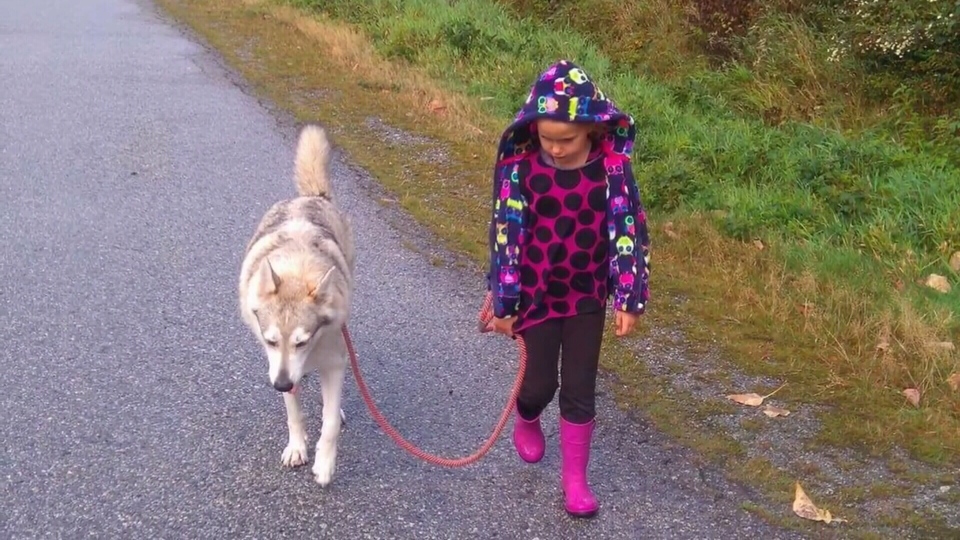
Kaoru was a Tamaskan dog, a rare Finnish breed. The working dog was specifically bred to look like a wolf by mixing the Siberian husky, Alaskan malamute and German shepherd breeds, according to the website Dog Breed Plus.

The BC Conservation Service has launched a full investigation into what it calls a “very unfortunate situation.”

Sgt. Simon Gravel said the shooter is claiming misidentification of the species. He was hunting for deer on Crown land but “believed the animal was a wolf.”

While deer hunting is allowed in the area, wolf hunting is not, Gravel added.

squamish dog shot by hunter

Calderoni says she frequently hikes in the region with children, and believes that the hunter could have easily hit one of them instead.

“Could you imagine if a child had to experience that? Or worse, if he had hit a child?” she said.

Kaoru worked as an emotional therapy dog whose biggest talent was working to calm children with autism.

“These beautiful kids have episodes and would sometimes be rough with her, but Kaoru was amazing and followed her training perfectly. She would squint her eyes, lay down, and let out a sigh, the kids then would slowly begin to calm down as their hands crunched tightly on Kaoru’s fur,” she said.

In a region commonly used by hunters, dog walkers, mountain bikers and hikers alike, conservation officials say the dog’s death serves as an important reminder for anyone using the backcountry.

“Always be very visible when you walk in the forest, knowing it’s hunting season,” Gravel told CTV Vancouver.

“It’s also important for hunters to be 100 per cent sure of their target before they shoot an animal.”

Now grieving her pet, Calderoni said she is planning on starting an online campaign to have hunting banned in the area.

“This is a huge tragedy,” she said. “Something good should come of Kaoru’s death.”

The hunter is cooperating with its investigation.


Endangered Mexican Wolf Killed Following Livestock Attacks

https://www.usnews.com/news/best-states/new-mexico/articles/2017-09-15/endangered-mexican-wolf-killed-following-livestock-attacks

An endangered Mexican gray wolf has been killed by federal employees after a Native American tribe requested the animal be removed from the wild in the wake of a string of cattle deaths near the Arizona-New Mexico border.

Sept. 15, 2017 

[ To be more accurate, this headline should have read: “Endangered Mexican Wolf (one of fewer than 50 in the wild)  Killed Following Livestock (introduced and bred by the thousands and slaughtered within a few years of birth, for human consumption) Attacks (read: predation–sorry, but it’s what wolves do and have always done).”]

By SUSAN MONTOYA BRYAN, Associated Press

ALBUQUERQUE, N.M. (AP) — An endangered Mexican gray wolf has been killed by federal employees after a Native American tribe requested the animal be removed from the wild in the wake of a string of cattle deaths near the ArizonaNew Mexico border.

The death of the female wolf marks the first time in a decade that efforts by the U.S. Fish and Wildlife Service to curb livestock attacks by wolves has had lethal consequences for one of the predators.

The decision to remove the member of the Diamond Pack was first made in June after three calves were killed over several days, sparking concern among wildlife managers about what they described as an unacceptable pattern of predation.

An investigation determined the female wolf was likely the culprit based on GPS and radio telemetry tracking, according to documents obtained Thursday by The Associated Press.

Another calf was killed in July, prompting the White Mountain Apache Tribe to call for the removal. That was followed by one confirmed kill and another probable kill by members of the pack on national forest land adjacent to the reservation.

Fish and Wildlife Service Regional Director Benjamin Tuggle issued another order in August calling for the wolf’s removal by the most expeditious means possible.

“I am concerned with the numerous depredations in this area over the past year and the toll these depredations have caused the area’s livestock producers,” Tuggle wrote.

Environmentalists decried the move, saying they are concerned about the possibility of managers reverting to a rigid three-strikes rule that called for wolves to be removed from the wild or killed if they preyed on livestock. Following years of legal wrangling, federal officials revised that policy in 2015 to allow for more options when dealing with nuisance wolves. 

Michael Robinson with the Center for Biological Diversity argued that killing wolves does nothing in the long run to reduce livestock losses.

“The recovery of endangered Mexican gray wolves has taken an unnecessary step backward,” he said.

Fish and Wildlife officials said current rules allow for the control of problem wolves and that the agency will continue to manage wolves in Arizona and New Mexico under those provisions. They also said they will continue to work with ranchers to limit conflicts.

The wolf recovery team earlier this year set up a diversionary cache of food for the Diamond Pack, which roams parts of tribal land and the Apache-Sitgreaves National Forest. Two other pack members were also removed and placed in captivity at the beginning of the year due to predation concerns.

There are now more Mexican gray wolves roaming the American Southwest than at any time since the federal government began trying to reintroduce the animals nearly two decades ago. The most recent annual survey shows at least 113 wolves spread between southwestern New Mexico and southeast Arizona.

Efforts to return the predators to the region have been hampered over the years by everything from politics to illegal killings and genetics.

The Fish and Wildlife Service has been criticized for its management of the wolves by ranchers, who say the animals are a threat to their livelihoods, and environmentalists who want more captive-bred wolves to be released.

Copyright 2017 The Associated Press. All rights reserved. This material may not be published, broadcast, rewritten or redistributed.

Congress: Michigan, Great Lakes wolves could lose federal protection

http://www.freep.com/story/news/local/michigan/2017/09/12/michigan-wolves-endangered-species-protection/657932001/

WASHINGTON — Legislation under committee consideration in the U.S. House of Representatives today would strip gray wolves in the western Great Lakes states of protections they enjoy under the Endangered Species Act.

Less than two months after an appeals court in Washington, D.C., ruled that the protection afforded wolves in Michigan, Minnesota and Wisconsin should continue unless there is a further study, the House Federal Lands Subcommittee today took up legislation that would reverse that decision.

 A second bill —- co-sponsored by several Republican Michigan members of Congress — would do much the same and is expected to get a vote in the subcommittee, as well, perhaps as early as this week.

The section regarding gray wolves’ protection considered by the Federal Lands Subcommittee is part of a larger bill that would take steps to ensure that public lands remain largely open to hunting and fishing.

During today’s hearing, Democrats voiced deep concerns about other portions of the legislation, including measures that would make it easier for people to buy firearm silencers and put more of a legal and financial burden on law enforcement when stopping a vehicle suspected of potentially transporting a firearm across state lines.

The U.S. Fish and Wildlife Service has been attempting for years to de-list the 600 or so gray wolves in Michigan’s Upper Peninsula and larger populations from Minnesota and Wisconsin from protection under the Endangered Species Act but has been turned back each time.

Related:

In the most recent ruling, the court said Fish and Wildlife could not go through with such a de-listing without studying what such a move would mean to the population across the rest of the U.S. Proponents of hunting wolves argue that the numbers are significantly recovered to allow for de-listing and that wolves increasingly threaten livestock, reduce deer populations and even threaten humans.

In August, Wayne Pacelle, president and CEO of the Humane Society of the United States, called such anecdotal evidence “fabricated” and “exaggerated,” noting that in cases where wolves are found to kill livestock, farmers can get permission to kill wolves.

“Congress should not subvert the rulings of two federal courts affirming the conclusion that de-listing of wolves in the Great Lakes region is premature,” Pacelle said today, adding that they help reduce auto collisions with deer by reducing the population. “The wolf population in the state is small and not increasing, and Michigan voters have rejected trophy hunting of the animals by voting down two statewide ballot measures to allow it.”

Michigan rejected wolf hunting in state referendums in 2014.

The legislation — like that co-sponsored by Republican U.S. Reps. Bill Huizenga of Zeeland, John Moolenaar of Midland and Tim Walberg of Tipton — calls for issuing the order de-listing wolves within 60 days of it being signed into law and prohibits any judicial review of the order.

Join now for as low as
99¢/1st month

“Basically, it’s been technicalities in the rules (that have kept wolves listed). There’s no question (they) belong off the endangered species list,” said Anna Seidman, government affairs director for Safari Club International, a hunters rights group. “We need to end this endless court battle and have Congress step in.”

While it’s possible the full committee would send both measures to the full House for consideration, it’s unlikely both would be scheduled for a vote. The more sweeping legislation could be seen as more of a priority then and could get top consideration.

But the legislation still faces difficulties: With so much before Congress between now and the end of the year, it could be caught in a logjam and Democratic members of the U.S. House, while outnumbered with Republicans in the majority, will likely try to do all they can to slow it, especially because of the firearm portions of the bill.

If it gets to the Senate, it would have to cross a 60-vote threshold. Republicans hold only a 52-seat majority in the Senate, though some Democrats from western and rural states potentially might be convinced to vote for it with changes.

Contact Todd Spangler: 703-854-8947 or tspangler@freepress.com. Follow him on Twitter @tsspangler. Staff writer Keith Matheny contributed to this report.

Life-and-death vote for wildlife

HSUS logo
Protect Alaska's wildlifeProtect Alaska’s wildlife

Today, Congress will vote on an appalling amendment from Alaska U.S. Rep. Don Young that seeks to open millions of acres of National Park Service (NPS) lands to the ruthless killing of grizzly bears and wolves. These practices should not occur anywhere, least of all on lands managed by the NPS.

Congress nixed a rule that forbid these terrible practices on National Wildlife Refuges earlier in the year. Now they’re aiming at our National Park Service lands. The Young amendment #43 would subject Alaskan wildlife on NPS lands to hunting methods that most Americans find appalling—such as killing wolves and their pups while in their dens, baiting bears with rotting food in order to shoot them point-blank, and luring hibernating black bears out of their dens with artificial light in order to shoot them.

Your voice is needed to help defeat the Young amendment #43. Please make a brief, polite phone call to Rep. Jaime Herrera Beutler at (202) 225-3536 now.You can simply say, “Please protect wildlife in the FY18 spending package (H.R. 3354) and vote ‘no’ on the Young amendment #43.”

After you call, please send a follow-up message.

Take action
Thank you for all you do for animals.
Wayne's signature
Wayne Pacelle, President & CEO

Washington continues to kill wolves that prey on livestock

 http://www.hcn.org/articles/wolves-washington-continues-to-kill-wolves-that-prey-on-livestock

The state’s increasing wolf population is creating a tangle between advocates, ranchers and politicians.


In late August, a range rider found a calf with bite wounds and lacerations dead on public grazing lands in Ferry County, Washington. The Sherman wolf pack was at it again. The newly-formed pack had already taken three other livestock animals over the last 10 months, forcing the Washington Department of Fish and Wildlife to authorize lethal action against it. Under the state’s wolf plan, on Sept. 1, Fish and Wildlife officials killed one of the wolves, in hopes the remaining wolves would change their behavior.

Earlier this summer, the agency killed two wolves from another pack, the Smackout, also due to livestock killings. Seven other wolves were removed from the Profanity Peak pack last fall. In a state where wolf recolonization is a relatively new phenomenon, the killings raised the hackles of wolf advocates — and questions about how the state will manage its new population.

“We’re earlier in recovery, and we’re the outlet for the frustration for activists that didn’t get what they wanted from Rocky Mountain states,” says Paula Sweeden, carnivore policy lead at Conservation Northwest, a group that works with ranchers, agency officials and other conservationists to compromise on wolf policy. “I think it’s because we’re a last bastion.” Both the Profanity Peak and Smackout pack killings brought widespread commentary from organizations and individuals skeptical that killing wolves stops depredations.

The Snake River wolf pack lopes through the snow in Hells Canyon National Recreation Area. While this pack has not been targeted, two other Oregon wolf packs have been targeted after repeated killings of cattle this year.
Oregon Department of Fish and Wildlife

The Sherman pack in Washington represents only the fifth time since 2008, when the state’s first wolf pack formed, that the agency has targeted a pack of wolves due to attacks on livestock. (By comparison, Wyoming killed 113 wolves in 2016, with much less outcry.) Washington’s wolf population has increased by 30 percent annually the past two years. That has heightened tensions between wolf advocates, ranchers and politicians.

Gray wolves are protected as endangered in western parts of Oregon and Washington, but they are delisted in the eastern regions where their populations have proliferated. In Washington, wolves are concentrated in the northeast corner of the state. Seventeen out of 20 of the state’s packs roam one district, No. 7. The district has a large population of ranchers, some of whom have received death threats for reporting livestock deaths and thereby instigating wolf killings. State Fish and Wildlife officials have also been threatened. “It’s a tough thing because our country is so divided right now, and more and more we have these kind of issues going on,” says Donny Martorello, a spokesman for the Washington Fish and Wildlife. “Imagine going home at night and having someone pull up to the house and taking pictures of your house at 2 a.m.”

Joe Kretz, a Republican who represents District 7, has been outspoken about the impacts wolves have on ranchers. In January, he co-sponsored a bill to protect the identities of ranchers reporting livestock deaths. Critics say the bill threatens transparency in the wolf-killing process and some argue that Fish and Wildlife already obfuscates too often.

In August, 14 conservation groups sent a letter to Fish and Wildlife, relaying their concerns. “We’re aware of the challenges the Department encounters with communications around controversial issues and appreciate the need for sensitivity,” the letter reads. “But it’s also clear that the Department can and should do much better.”

Wolves are more likely to kill or attack livestock in late summer and early fall, as they prepare for winter and teach their pups to hunt. This year, four wolf packs in Oregon and Washington have been targeted after repeated killings of cattle. It is clear that as wolves become more established, perennial conflicts will arise.

Still, Washington has no plans yet to revise its wolf management plan. Sweeden says some stakeholders think the plan does not need updating, since it has wolf population recovery goals “more robust than any other state, including Oregon.” To revisit the plan could weaken those goals. Instead, she thinks conflicts will level out as the packs disperse through the state, and as more ranchers and property owners take up deterrence methods.

Washington’s wolves are likely to continue to thrive, no matter what, Martorello says. After all, they’re doing that without much help already. Instead, the real question has more to do with the humans, and how they’ll adapt to a carnivore reclaiming the landscape.

Anna V. Smith is an assistant editor at High Country News. Follow @annavtoriasmith