Exposing the Big Game

Forget Hunters' Feeble Rationalizations and Trust Your Gut Feelings: Making Sport of Killing Is Not Healthy Human Behavior

Exposing the Big Game

Howl of the Hunted Part III

Continued from https://exposingthebiggame.wordpress.com/2016/05/23/excerpt-from-the-howl-of-the-hunted/ and https://exposingthebiggame.wordpress.com/2016/05/26/the-howl-of-the-hunted-part-two/
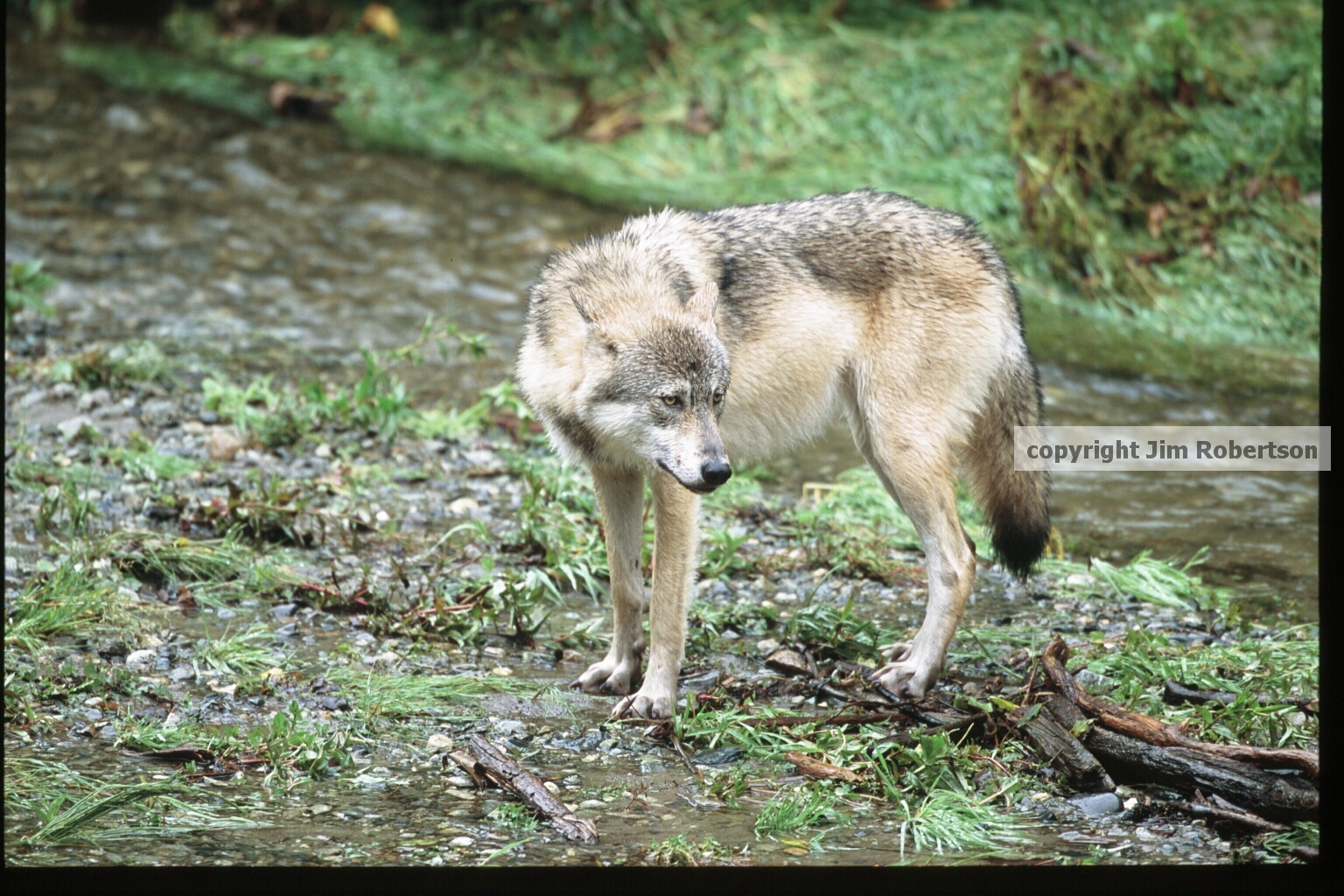
copyrighted wolf in river

“Lone wolves are rare. Normally wolves live in packs ranging in size from three to thirty members, but averaging less than eight. The pack is essential for the species’ survival and its size is determined by the abundance of prey in a given area. A single wolf can rarely bring down an animal as large as a deer or elk, but a pack–working together with each individual taking a role–can usually, procure enough food for all members. Wolves often have great difficulty overcoming a hoofed animal contrary to older beliefs. This well known by the wolf himself and is reflected in the way he chooses his prey. If the prey does not run at first rush but holds his ground, he’s usually left alone. A good example of wolves ‘testing’ prey comes from L. David Mech’s book, The Wolves of Isle Royale, a study of wolf/moose relationships on a large protected island in Lake Michigan:

‘Seven wolves encountered three adult moose standing a few yards inland among sparse conifers and heavy blowdown. The wolves ran fifteen yards to the nearest moose, but the animal stood at bay and threatened the wolves. Immediately they headed for the second moose, which started running. However, they soon abandoned pursuit, for the animal had a head start. Then they turned to the third moose, which had watched them chase the others. This animal ran upon their approach and when during the pursuit it charged the wolves, one got ahead of the moose. The moose charges this wolf and chased it down the trail for fifty yards while the rest of the pack pursued it. Finally the moose stood next to a spruce and defied the wolves. Within half a minute they gave up.’

“On Isle Royale, Mech regularly observed moose from the air. Of the 160 in the range of the hunting wolves, 29 were ignored by wolves, 11 discovered the wolves first and eluded detection, 24 refused to run when confronted and were left alone. Of the 96 that ran, 43 got away immediately, 34 were surrounded but left alone, 12 made successful defensive stands, 7 were attacked, 6 were killed and 1 was wounded but escaped. These cases he observed over several winters in the 1960s.

“Wolves must be very economical in their energy expenditure if they are to survive. A healthy adult moose has a good chance of escaping and the wolves know they can’t afford to chase for long distances without results. Also a wolf knows he can be seriously injured or killed by his hoofed prey, if it is strong and healthy. Weaker individuals, logically, are easier to catch and the wolves–not caring about making trophy kills or obtaining fine hides–go for the easiest prey possible. Wolves often stare down their prey before deciding which one is healthiest and which one is weakest. The weaker usually show some sign of nervousness not exhibited by healthier individuals.

“The personality of wolves was summed up by Adolf Murie, who spent long periods of time with wolves in Mount McKinley National Park. In his 1944 book, The Wolves of Mount McKinley, he writes, ‘The strongest impression remaining with me after watching wolves on numerous occasions, was their friendliness. The adults were friendly towards each other and were amiable toward the pups.’

“His social nature contributes greatly to the wolf’s personality traits. One of the strongest traits is his capacity to make emotional attachments to other individuals. This is very important to the formation of a pack as the unit of a wolf’s society. Another characteristic necessary for wolf pack system cohesion is the aversion to fighting. This non-violent nature is advantageous considering they must spend much of their time together.”


to be continued…

The Howl of the Hunted Part Two

Continued from: https://exposingthebiggame.wordpress.com/2016/05/23/excerpt-from-the-howl-of-the-hunted/

“The mournful, eerie howl, heard at dusk and dawn, contributed greatly to the fears man had of wolves. It was believed his howls at dusk were signaling the coming of the hours of famine, witchery, or, as they were called, ‘the hours of the wolf.’

“In reality, the howl is one of the wolves’ many forms of communication. The howl itself has a variety of meanings: to assemble the pack, to pass on an alarm, to locate one another in a storm or unfamiliar territory, and communicating over a large area (six miles in open terrain). When a group of wolves howls, they harmonize with one another, each one choosing a different pitch. By singing in this way, a group of three or four wolves may sound like a group of fifteen or twenty.

“Other vocal communications include a quiet bark, usually by the female when surprised near her den. Growling is used between wolves during food challenges. Puppies also growl when playing amongst themselves. Intimate sounds between wolves, such as whines and high pitched squeals, are associated with greeting, play and feeding the pups.

“As modern man from Europe immigrated to North America, he brought with him the distorted views of the wolf. North America had a stable wolf population from coast to coast, and in all types of terrain, at this time. Bounties were placed on wolves beginning in 1630, when the Massachusetts Bay Company offered to pay a penny per wolf killed. Shortly thereafter, the other colonies followed suit, each trying to exterminate the wolf from their territory. As colonization spread, it wasn’t long before the wolf was wiped from the eastern seaboard and Appalachian Mountains.”

copyrighted-wolf-argument-settled

 
to be continued…

Manmade problem led wolves to kill elk

http://trib.com/opinion/columns/lloyd-manmade-problem-led-wolves-to-kill-elk/article_163910e6-0a09-5f83-8e3d-e82bce14f0eb.html

By Jared Lloyd

A lot of noise has been made about the 19 elk killed last month by a pack of wolves in Bondurant. What has been lost throughout much of the coverage are the facts about what actually led to this extremely rare occurrence. Behind the headlines is a manmade story. To be able to understand what went down that night in Wyoming, these facts need to be understood.

To begin with, the elk in question were killed on a feedlot. Just like cattle, in Wyoming elk have feedlots as well. Picture anywhere between a few hundred to a few thousand “wild” elk standing around waiting to be fed. Wyoming has elk feedlots all over the place. Come winter, these feeding grounds shovel out bales of hay for the elk like they are livestock. Elk are heavily concentrated in these feedlots, fed all winter long, and have learned to just stand around waiting for their daily handouts.

So why does Wyoming feed elk in the first place? Is it because predators in the ecosystem are killing so many? No. Wyoming actually considers elk to be overpopulated. This practice was started in part to keep elk from competing with cattle back when predators across the Rocky Mountains were at their lowest numbers. In the absence of predators, elk populations exploded. Come winter, these animals would flood onto ranches in search of food, gorging themselves on stocks of hay.

So what has all this done to the elk? Quite simply, elk no longer act like elk. Given that these animals have grown up in a relatively predator-free environment for nearly 100 years, elk are now being forced to come to terms with the reality of predators again. And in order to survive, lesson number one is not to stand around in groups of a several thousand, in one place, for months on end waiting for handouts from humans.

So what did the wolves do? They committed what is known as surplus killing. Occasionally, when prey is so plentiful, predators will kill multiple animals in one go. Scientists state that when faced with a bonanza such as the feedlot provided, wolves may kill with the intention to return as often as that food is available.

More: http://trib.com/opinion/columns/lloyd-manmade-problem-led-wolves-to-kill-elk/article_163910e6-0a09-5f83-8e3d-e82bce14f0eb.html

copyrighted wolf in water

Lone wolf in northern B.C. destroyed after stalking walkers, killing dog

copyrighted wolf in water

The wolf on the header of this site:https://www.facebook.com/groups/251083981900420/                  looks like part of a pack we saw in that area in 2005 or so….


Locals tracked wolf and warned neighbours on Facebook

By Betsy Trumpener, CBC News
< http://www.cbc.ca/news/cbc-news-online-news-staff-list-1.1294364> Posted:
Apr 12, 2016 9:10 PM PT Last Updated: Apr 12, 2016 9:10 PM PT

Prince Rupert resident Mariana Hülsen spotted this wolf, which approached
and growled at her.
< http://i.cbc.ca/1.3533187.1460520177%21/fileImage/httpImage/image.jpg_gen/d
erivatives/16x9_620/lone-wolf.jpg>

Prince Rupert resident Mariana Hülsen spotted this wolf, which approached
and growled at her. ( Mariana Hülsen/Facebook)

Conservation officials have killed a lone wolf that was prowling city
streets in Prince Rupert, B.C.

Conservation officer Ryan Gordon says the wolf had been approaching people
and recently killed a dog in a backyard. He says the wolf was severely
underweight and coming too close for comfort.

“It was showing elevated levels of interest in people and increased
habituation levels towards people, especially people out walking their
pets,” said Gordon, who fielded numerous complaints over several months.

In March, a woman walking her dog in daylight was stalked by the wolf.
< http://www.cbc.ca/news/canada/british-columbia/a-lone-wolf-stalks-a-waterfr
ont-dog-walker-in-prine-rupert-1.3514900>

Neighbours share wolf warnings

Prince Rupert residents tracked the wolf’s movements and posted sightings on
a special Facebook page
< https://www.facebook.com/groups/251083981900420/?ref=br_rs> to warn
neighbours when the wolf was nearby.

Recently, the wolf was spotted pacing near a red van, playing near a
Petro-Canada station, and prowling a hotel parking lot.

One resident posted that the wolf approached from the local fish plant and
< https://www.facebook.com/20531316728/posts/10154009990506729/> “growled at
us.”

A mother asked, “Any more wolf sightings? I would like to go running with my
child today.”

Conservation officials had advised people to keep small children close by,
leash their dogs, carry bear spray, and avoid wooded areas at dawn and dusk.

The wolf was destroyed April 7, and Gordon says wolf complaints have stopped
since then.

Gordon says wolves are common on the fringes of Prince Rupert and are often
drawn in to the city while chasing deer. He says the city’s wolves tend to
be more habituated to humans than in other parts of the northwest.

http://www.cbc.ca/news/canada/british-columbia/lone-wolf-destroyed-after-pro
wling-city-streets-1.3532927

https://www.facebook.com/groups/251083981900420/


Death of wolf pack is a sobering turn for Oregon’s wolf plan

http://www.dailyastorian.com/da/capital-bureau/20160408/death-of-wolf-pack-is-a-sobering-turn-for-oregons-wolf-plan?utm_source=Daily+Astorian+Updates&utm_campaign=304b60fbbe-TEMPLATE_Daily_Astorian_Newsletter_Update&utm_medium=email&utm_term=0_e787c9ed3c-304b60fbbe-109860249
Age and injury may have fractured Oregon’s most influential wolf pack, and led to the downfall of its longtime alpha male.

By Eric Mortenson

Capital Press

Published on April 8, 2016 12:01AM

Oregon Department of Fish and Wildlife biologists place a new GPS collar on OR-4, the Imnaha wolf pack’s alpha male, after darting him from a helicopter in March 2012.

Courtesy of Oregon Department of Fish and Wildlife

Oregon Department of Fish and Wildlife biologists place a new GPS collar on OR-4, the Imnaha wolf pack’s alpha male, after darting him from a helicopter in March 2012.

Eric Mortenson/Capital Press

<!–

–>

They called him OR-4, and by some accounts he was Oregon’s biggest and baddest wolf, 97 pounds of cunning in his prime and the longtime alpha male of Wallowa County’s influential Imnaha Pack.

But OR-4 was nearly 10, old for a wolf in the wild. And his mate limped with a bad back leg. Accompanied by two yearlings, they apparently separated from the rest of the Imnaha Pack or were forced out. In March, they attacked and devoured or injured calves and sheep five times in private pastures.

So on March 31, Oregon Department of Fish and Wildlife staff boarded a helicopter, rose up and shot all four.

The decisive action by the department may have marked a somber turning point in the state’s work to restore wolves to the landscape. It comes on the heels of the Wildlife Commission’s decision in November to take gray wolves off the state endangered species list, and just as the commission is beginning a review of the Oregon Wolf Plan, the document that governs wolf conservation and management.

Oregon Wild, the Portland-based conservation group with long involvement in the state’s wolf issue, said shooting wolves should be an “absolute last resort.”

“While the wolf plan is out of date and under review, we shouldn’t be taking the most drastic action we can take in wolf management,” Executive Director Sean Stevens said in an email.

The commission should not have taken wolves off the state endangered species list in the first place, but it isn’t likely to revisit that decision, Stevens said.

The commission should call upon the department to not shoot more wolves until the plan review is finished, he said.

“But, more importantly, they should recognize that delisting does not mean that we should suddenly swing open the doors to more aggressive management,” Stevens said.

The ongoing wolf plan review, which may take nine months, should include science that wasn’t considered in the delisting decision, and the public’s will, he said. It also should create more clarity on non-lethal measures to deter wolves, he said.
Both sides
Publicly, at least, no one is celebrating the shootings.

The Oregon Cattlemen’s Association, long on the opposite side of the argument from Oregon Wild, said ODFW’s action was authorized by Phase II of the state’s wolf plan.

“The problem needed addressed and ODFW handled it correctly,” spokeswoman Kayli Hanley said in an email. “We acknowledge that while this decision was necessary for the sake of species coexistence, it was a difficult decision.”

Michael Finley, chairman of the commission, said the department handled the situation properly.

“I feel that the department acted in total good faith,” Finley said. “They followed the letter and the spirit of the wolf plan.”

Another conservation group, Defenders of Wildlife, called the shootings “a very sad day for us” but also said it appeared Fish and Wildlife followed the wolf plan.

“The final plan is a compromise, but it is among the best of all the state plans in that it emphasizes the value of wolves on the landscape, and requires landowners to try non-lethal methods of deterring wolves before killing them is ever considered,” the group said in a prepared statement.

Amaroq Weiss, West Coast wolf organizer for the Center for Biological Diversity, said the Imnaha Pack shootings may lead to more poaching, because killing wolves decreases tolerance of them and leads to a belief that “you have to kill wolves in order to preserve them.”

Weiss agreed that coming across a calf or sheep that’s been torn apart and consumed — the skull and hide was all that was left of one calf after the OR-4 group fed on it — must be gut-wrenching for producers. But she said those animals are raised to be killed and eaten. “They don’t die any more a humane death in a slaughterhouse than being killed by a wild animal,” she said. “It’s a hard discussion to find a common place of agreement.”

She said such losses are the reason Oregon established the compensation program: to pay for livestock losses and to help with the cost of defensive measures that scare wolves away.
Rush to Phase II
Weiss said Oregon rushed to move to Phase II of its wolf conservation and management plan in the eastern part of the state, which was prompted by reaching a population goal of four breeding pairs for three consecutive years. That also prompted the Fish and Wildlife Commission to take wolves off the state endangered species list in 2015, although they remain on the federal endangered list in the Western two-thirds of the state.

Like others, Weiss believes the state should have held off on such changes until it finished the mandated review of the wolf plan.

“Under Phase I, Oregon was the state we could all point to” for successfully managing wolves, Weiss said. “I would hope they look at what parts of the wolf plan are working, and look at the parts that are not working.”

Politics and policy aside, the shooting of OR-4 gave people pause. He was a bigger-than-life character; he’d evaded a previous state kill order and had to be re-collared a couple times as he somehow shook off the state’s effort to track him.
Pack history
OR-4’s Imnaha Pack was the state’s second oldest, designated in 2009, and it produced generations of successful dispersers. OR-4’s many progeny included Oregon’s best-known wanderer, OR-7, who left the Imnaha Pack in 2011 and zig-zagged his way southwest into California before settling in the Southern Oregon Cascades.

OR-25, which killed a calf in Klamath County and now is in Northern California, dispersed from the Imnaha Pack. The alpha female of the Shasta Pack, California’s first, is from the Imnaha Pack as well.

Rob Klavins, who lives in Wallowa County and is Oregon Wild’s field representative in the area, ran across OR-4’s tracks a couple times and saw him once.

Despite his fearsome reputation, the wolf tucked his tail between his legs, ran behind a nearby tree and barked at Klavins and his hiking group until they left.

“Killing animals four or five times your size is a tough way to make a living,” Klavins said. “Some people appreciate OR-4 as a symbol of the tenacity of wolves, even a lot of folks who dislike wolves have sort of a begrudging respect for him.”

Wolf population in Washington continues to grow

freewallpapersdotcom golden-wolf

http://www.maplevalleyreporter.com/news/372191731.html

Washington state’s wolf population continued to grow last year and added at least four new packs, according to the Washington Department of Fish and Wildlife’s (WDFW) annual survey. By the end of 2015, the state was home to at least 90 wolves, 18 packs, and eight breeding pairs.

The recently completed survey shows the minimum number of wolves grew by 32 percent last year, despite the deaths of at least seven wolves from various causes. Since 2008, when WDFW documented just one pack and five wolves, the population has increased by an average of 36 percent per year.

“Wolf populations in Washington are steadily increasing, just as we’ve seen in the upper Midwest and Rocky Mountain states,” said WDFW Director Jim Unsworth. “This increase – and the wolves’ concentration in northeast Washington – underscores the importance of collaboration between our department, livestock producers, and local residents to prevent conflict between wolves and domestic animals.”

Donny Martorello, WDFW wolf policy lead, said the new Beaver Creek, Loup Loup, Skookum, and Stranger packs were confirmed in Ferry, Okanogan, Pend Oreille, and Stevens counties, respectively.

However, researchers found no evidence of the previously documented Wenatchee Pack, and the Diamond Pack shifted its activity to Idaho and is no longer included in Washington state totals.

Martorello said the minimum number of breeding pairs in Washington increased from five to eight – the first increase since 2011.

WDFW conducted the research using aerial surveys, remote cameras, wolf tracks, and signals from 22 radio-collared wolves from 13 different packs. Twelve wolves were fitted with radio collars during the year, while one pup was marked and released without a collar due to its small size.

Despite their growing numbers, wolves were involved in fewer conflicts with livestock than in 2014. Martorello said the department determined wolves from four packs were responsible for killing a total of seven cattle and injuring one guard dog.

Three of the seven wolves that died in 2015 were killed legally by hunters on the reservation of the Spokane Tribe of Indians, which authorized the harvest up to six wolves per year by tribal members. The four other deaths included one wolf killed in a collision with a vehicle, one shot in self-defense by a property owner, and one that died during an attempt to capture it. One wolf’s cause of death is unknown.

Unsworth said WDFW took several steps in 2015 to expand public involvement in wolf conservation and management. He said the most important actions were doubling the size of the department’s Wolf Advisory Group to 18 members, and initiating a “conflict transformation” process to improve working relationships among the members and the groups they represent and the department.

Martorello said WDFW will continue to emphasize the importance of preventive actions to minimize wolf attacks on livestock and domestic animals. For example, WDFW wildlife conflict specialists are available to work with residents of communities where wolves are present.

WDFW has also adopted a “range rider” program to provide an increased human presence in grazing areas. WDFW continues to offer cost-sharing agreements for ranchers through a program designed to help them reduce their expenses for preventive measures.

Gray wolves, all but eliminated from western states in the last century, are protected under Washington law throughout the state and under federal law in the western two-thirds of the state.

Because of the difficulty of confirming the presence of every single wolf, survey results are expressed in terms of the minimum number of individuals, packs, and breeding pairs. The state Wolf Conservation and Management Plan defines a pack as two or more wolves traveling together in winter and a successful breeding pair as an adult male and female with at least two pups that survive to the end of the calendar year.

Under the state management plan, wolves can be removed from the state endangered species list once 15 successful breeding pairs are documented for three consecutive years among the three designated wolf-recovery regions.

WDFW’s complete wolf survey for 2015 will be available by the end of March on the department’s website: (http://wdfw.wa.gov/conservation/gray_wolf/).

Wolf advocates warn U.S. Fish and Wildlife Service of coming lawsuit

http://missoulian.com/news/local/wolf-advocates-warn-fws-of-coming-lawsuit/article_76c1e772-ce25-55bc-9269-272cfd222e1a.html


A coalition of wolf advocates has warned the U.S. Fish and Wildlife Service that they plan to sue if the agency doesn’t extend its supervision of wolf populations in Montana and Idaho another five years.

“When the Montana Fish, Wildlife and Parks is offering five tags to every wolf hunter and Idaho Fish and Game is putting sharpshooters in the Frank Church-River of No Return Wilderness and funding aerial gunning in the Lolo Zone, we feel renewing another five years of federal monitoring is warranted,” said Matthew Koehler of Missoula-based Wild West Institute, one of five groups putting FWS on notice. “Given the situation on the ground and the ways state policy is changing, we think the prudent thing to do is keep monitoring wolf populations so they’re not hunted and trapped back to the brink of extinction.

The Center for Biological Diversity, Western Watersheds Project, Friends of the Clearwater and Cascadia Wildlands joined Wild West Institute in the notice. By law, groups objecting to a federal agency must give it 60 days advance warning to offer time to craft a solution before going to court.

Gray wolves were extirpated from the continental U.S. in early 20th century. The Fish and Wildlife Service reintroduced wolves in remote areas of Idaho and Yellowstone National Park in 1994 and 1995. The wolves were protected under the federal Endangered Species Act until 2011, when Congress passed a provision removing their listed status in Idaho and Montana. However, FWS personnel were required to monitor wolf populations for five years after giving state wildlife agencies local control of the species.

Wolves remain a federally protected species in Wyoming, Washington, Oregon and the Great Lakes region. Congress is considering several provisions to change or remove those protections this year.

In early January, Idaho Department of Fish and Game workers improperly collared two wolves in the Frank Church-River of No Return Wilderness along the Montana border while carrying out a helicopter-assisted elk-collaring project. The agency reported the incident to the U.S. Forest Service, which suspended Idaho’s permission for further helicopter work in the wilderness pending a review of the state’s practices.

Idaho has also maintained a state-sponsored wolf-removal program in addition to a public wolf hunting season.

In Montana, resident hunters may buy up to five wolf licenses a season for $19 each. The state removed its annual quotas on wolf seasons in 2012.

How killing wolves to protect livestock may backfire

wolf

Lone wolves are more likely to go after goats and other livestock than wolves living in packs, a new study finds.

A couple of years ago, biologists from Washington State University found that killing a wolf to rid a threat to livestock actually increased the chances that cattle or sheep would be killed in the following year. Only eliminating a quarter or more of the wolves in a state resulted in declines in wolves killing livestock.

Ranchers have long killed wolves to protect their animals, but the study’s results seemed to show that the practice might not be as productive as they’d like. Now a new study of wolves in the Italian Alps shows why keeping packs together could be a good move for ranchers.

Camille Imbert of the University of Pavia in Italy and colleagues wanted to know why wolves kill livestock instead of wild prey. Sheep or cattle might look like an easy meal to us, but that may not be true for wolves. And even if a goat was easy to catch, that might not be a wolf’s sole consideration when looking for something to eat.

The researchers studied a population of wolves in Liguria, in northwest Italy, one of the few European wolf populations that has managed to survive into the 21st century and is now starting to expand its range due to new laws and efforts to restore its habitat. From 2008 to 2013, the team collected 1,457 samples of wolf scat and determined which wolf had left the poop behind and what it had eaten. The scientists also figured out whether or not the wolf had belonged to a pack, which consist of a pair of adults and their offspring.

Wolves that belonged to packs tended to eat more wild boar and roe deer and less goat and other livestock than did single wolves, the researchers report in the March Biological Conservation. Lone wolves — either young wolves that are moving to new territory or the former members of a pack that has been broken up (say, when the leaders were killed) — may not know as well what prey is available in an area as the resident pack and may therefore hunt whatever is available, Imbert and her colleagues write. Packs, it seems, can be pickier and go for wild prey when it’s available.

Not that a pack of wolves won’t hunt livestock. Pack wolves did eat goats and other domestic animals. But it seems at least a little blame can be put on Italian herders, who let goats roam unguarded and free in the mountains. And wolves will readily eat young calves born in open pastures; when birthing is done closer to home, cows tend to be safe from wolves.

To keep livestock from being eaten by wolves, the researchers make a few recommendations: Institute a few more protections for domestic animals. Promote a rich community of wild animals that the wolves can eat. And don’t kill wolves and break up packs. “Removal measures do not solve the problem in the long run,” they write.

Oregon: Enlightened or Dishonest, Cruel and Corrupt?


Robert Goldman's photo.
by Robert Goldman

Oregon’s legislators and governor have a big decision to make regarding the future of wolves in the state. It is a litmus test on whether these leaders are honest, decent and wise and whether they serve the hopes and dreams of a clear majority of Oregonians, or other interests. Will these supposed leaders do the right thing for wolves and for a brighter future for Oregon or will they fall back on the dark side of Oregon’s history?

Honest science, healthy ecosystems and biodiversity, the public trust doctrine, basic decency and respect and the clear will of the majority, all favor wolf protection. 96% of Oregonians told the state wildlife agency they favor wolf protection. Additionally, Oregon’s Department of Fish and Wildlife website makes crystal clear that the presence of approximately one hundred wolves has resulted in a near zero effect on the state’s 1,300,000 cattle, as depredation by wolves is barely out of the single digits per year. No honest person can claim with a straight face that Oregon has anything resembling a wolf problem because it does not have such a problem.

The truth is, just as in nearby Idaho, there is a people problem, but in Oregon it comes from a relatively small number of people. Their long held prejudices and their willingness to demonize and kill vital and innocent wolves while lying about them is well known. Some have no shame in spreading utter nonsense about ‘Canadian super wolves’, snarling monster beings and the end of the world triggered by…. fairy tales.

But Oregon is supposed to be different, isn’t it? Oregon is a green and enlightened state, where honesty, decency and justice rule, right?

I had the pleasure of visiting Oregon for three weeks in June and July of 2014. I arrived in the state with a high regard for its vast natural beauty, its magnificent native wildlife, lush forests and magical coast. The forward thinking reputation of its people resonated in my mind.

After an enjoyable week with a hiking club based in Portland, I rented a car and drove to the Wallowa Valley drawn by my respect for Chief Joseph and his Nez Perce people whose sacred homeland this had been for thousands of years. I hiked into the mountains and canoed, took lots of pretty pictures of horses and deer (they are everywhere), water and forests and people and their dogs. I explored and lingered for many hours in the very field where Chief Joseph gathered with his people as they prepared to flee their homeland, their very lives hanging in the balance. My heart felt heavy and sad, as if the unbearable heart ache of 800 innocent souls still hovers over this valley and the beautiful green field guarded by trees and mountains.

The Nez Perce were the peaceful native tribe who saved the entire Lewis and Clark expedition from certain starvation and death only seventy years earlier. President Jefferson personally promised, in gratitude, that the Wallowa Valley would never be taken from the Nez Perce. Later Presidents re-affirmed that promise, even as more white settlers invaded and threatened to steal the land from its rightful owners. The settlers kept coming and kept threatening. Gold was discovered nearby and the land was taken, the promises broken.

The ancestors of these white settlers are among the 8,000 people who call the Wallowa Valley home today. Some of these people are present day Wallowa cattle ranchers who mythologize and demonize wolves, pressure the state wildlife agency to take action, persistently lobby state legislators and the governor to do something about the wolf problem, the problem that exists in their own minds.

I visited the tourist town of Joseph and its wonderful museums, including the Maxwell Plantation Museum dedicated to African Americans who worked for a time as lumbermen in the region. There I learned that the founding state constitution of 1859 forbade the presence and citizenship of African Americans anywhere in Oregon.

Just east of the Wallowas, I explored the dusty, rugged town of Pendleton. On the Pendleton Underground Tour, I learned of the hard working Chinese men who helped build the early railways of the expanding United States. When their decades long hard labor was done and the rail lines complete, they were not wanted by the white settlers who had only recently established the new town of Pendleton. These human beings, thousands of miles from their native land, excavated a village beneath the streets of early Pendleton, a cavernous and dark place. There they lived, set up small businesses and did their best to survive from day to day. Above ground, it was legal to shoot a “Chinaman” for no reason. These poor souls survived in their underground village into the early 1900’s, which is not much more than a hundred years ago.

This not so distant history is part of Oregon’s past, or is it?

On behalf of ecologically vital, remarkably intelligent and social, deeply family-connected and innocent wolves, on behalf of the hopeful and decent majority of Oregonians you are supposed to serve and who have spoken clearly on this issue, in light of the facts and honest science, with full knowledge of your obligation to at long last live up to the public trust doctrine in which wildlife belongs to everyone and is to be managed (or left alone) accordingly, I am asking Oregon state legislators, the governor and the state wildlife agency, which Oregon will you be? The enlightened Oregon of your reputation or the dishonest, cruel and corrupt Oregon of your past?