http://www.speakforwolves.org/
West Yellowstone, Montana
An opportunity for the American people to unite and demand wildlife management reform and restore our national heritage.
http://www.speakforwolves.org/

http://www.speakforwolves.org/
West Yellowstone, Montana
An opportunity for the American people to unite and demand wildlife management reform and restore our national heritage.
http://www.speakforwolves.org/

Around this time last year, wolf advocates celebrated news that after traveling thousands of miles alone looking for love and a new home, Oregon’s famous lone wolf OR-7 had found a mate and welcomed a litter of pups into the world.
Now wolf advocates are celebrating confirmation that not only are the three known pups who were born last year thriving, but the family, now formally known as the Rogue Pack, has welcomed yet another litter this spring.
Remote cameras caught last year’s pups playing in the Rogue River-Siskiyou National Forest in late June and officials collecting the cameras found pup scat in the area, which led to the recent confirmation of
Read more: http://www.care2.com/causes/oregons-famous-wolf-welcomes-more-pups.html#ixzz3gvsOokze

ANCHORAGE, Alaska — Six conservation organizations are asking state and federal authorities to stop hunting and trapping seasons for Alexander Archipelago wolves, a southeast Alaska species that den in the root systems of large trees.
Greenpeace and the Center for Biological Diversity petitioned to list the wolves as endangered in August 2011.
The groups say large-scale logging fragments forests and reduces carrying capacity for Sitka black-tailed deer, the prey of the wolves.
The U.S. Fish and Wildlife Service in September agreed to decide by late 2015 whether the wolves warrant endangered species protection.
Rebecca Noblin of the Center for Biological Diversity says without hunting and trapping suspensions, wolves on Prince of Wales Island will be gone before the government can decide whether they need endangered species protection
Read more at http://www.wral.com/groups-want-hunting-season-suspended-for-rare-alaska-wolves/14791150/#xiWVTIADPi8vqbkV.99


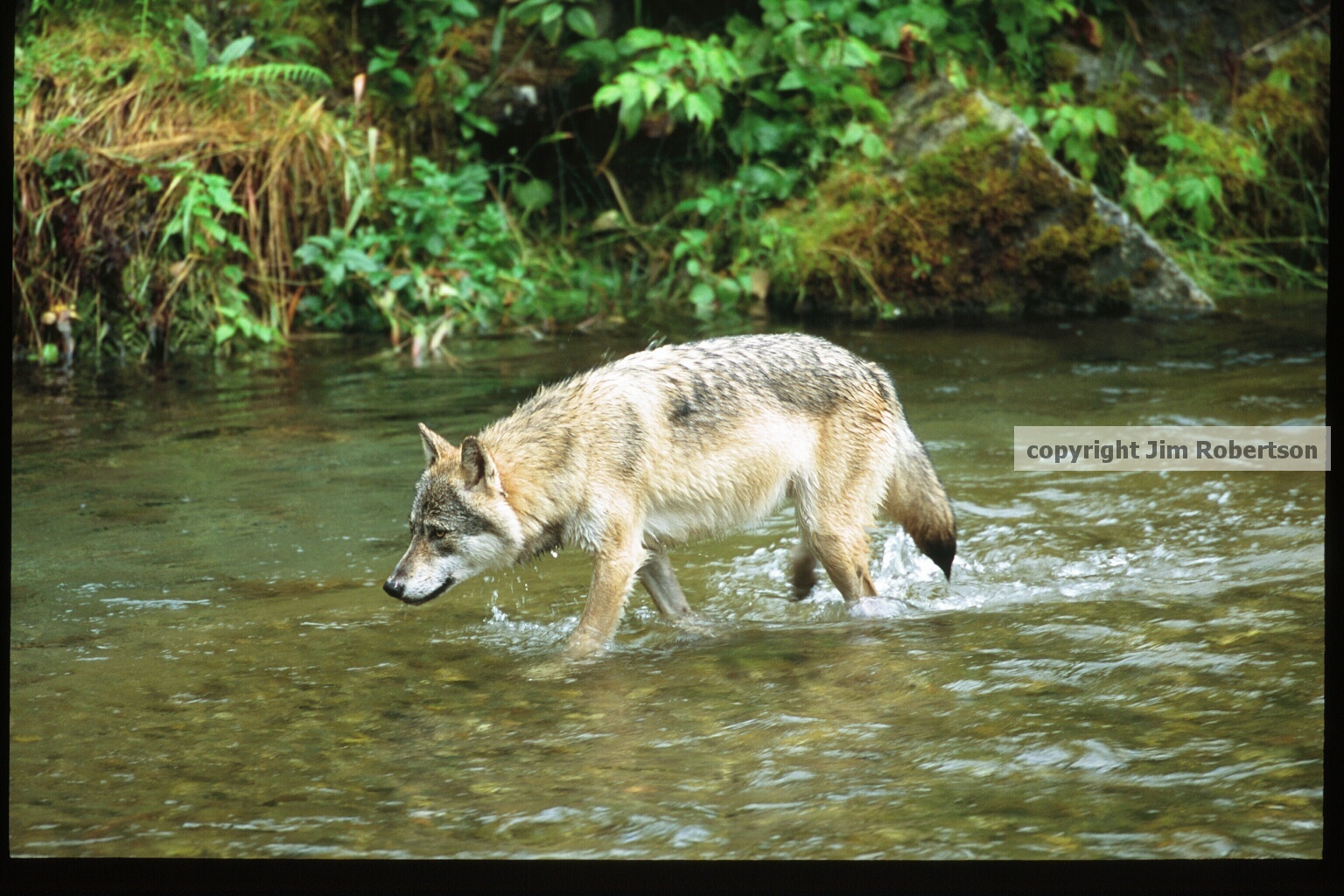
A gray wolf patrols its territory in the mountains of Idaho.
Wednesday, July 8, 2015 4:00 am
Idaho Wildlife Services has killed five wolves due to two incidents of sheep depredation that occurred on BLM land at the head of Croy Canyon and two incidents of cattle depredation that occurred on private land about 10 miles northeast of Fairfield.
Wildlife Services director Todd Grimm said the Idaho Department of Fish and Game confirmed that wolves had killed a ewe and a lamb on May 26 and a second ewe on June 3. He said the department confirmed a wolf kill of a calf on June 24 and a probable wolf kill of a cow on July 3.
Grimm said three wolves were shot on May 28 and two were shot on June 4.
He said the sheep were attended by herders and guard dogs, but said he did not know whether any scare devices were employed. He said the agency does not release the names of livestock producers whose animals are involved in depredation incidents.
Local wolf advocate Lynne Stone, director of the Boulder White Clouds Council, said the wolves were part of the Red Warrior pack, which had been viewed by people this winter on the hillside opposite the Warm Springs base area. She said that at that time, the pack consisted of nine wolves, though the alpha female died before the depredation incidents occurred.
“These wolves were in a great place with lots of wild country,” she said. “Then in came the sheep and we lose the wolves.”
Stone contended that Wildlife Services was “jumping the gun” by using lethal means before giving other methods a chance to scare off the wolves.
“When one ewe and one lamb get killed, they go in with their airplanes and shoot the whole pack,” she said. “We’re not going to have wolves in Blaine County if this is what the sheep industry and Wildlife Services are going to continue to do.”
Grimm said that elsewhere in the state this season, Wildlife Services killed three wolves due to depredation incidents in the Pahsimeroi Valley and three near Cascade. In February, the federal agency killed 19 wolves in the Lolo zone in northern Idaho at the request of the Department of Fish and Game to boost a declining elk population there.
http://www.theoaklandpress.com/opinion/20150706/dont-cater-to-trophy-hunters-when-it-comes-to-wolves
Some members of Congress are catering to trophy hunters by proposing to remove Endangered Species Act protection for wolves. The federal government tried this in several states, the states immediately opened hunting seasons, and wolf numbers plummeted. The fate of these animals should be determined by science, not Congress.
The stories about wolves constantly gobbling up all livestock and children are myths. They only account for just 0.1 percent to 0.6 percent of all livestock deaths. There have been no documented attacks by wolves on people in the lower 48 states.
Let’s be clear: hunting wolves is completely counterintuitive. It actually increases the tendency of wolves to pray on livestock because it breaks up stable wolf packs and allows younger animals to start breeding and expanding into new territories.
Wolves are trying to survive after centuries of persecution. I would like to urge my Representative, Brenda Lawrence, to support keeping federal protections for wolves.
Please contact your Congressional representative and let them know you want our remaining wolves to stay protected under the Endangered Species Act.
Kristina Pepelko,
West Bloomfield
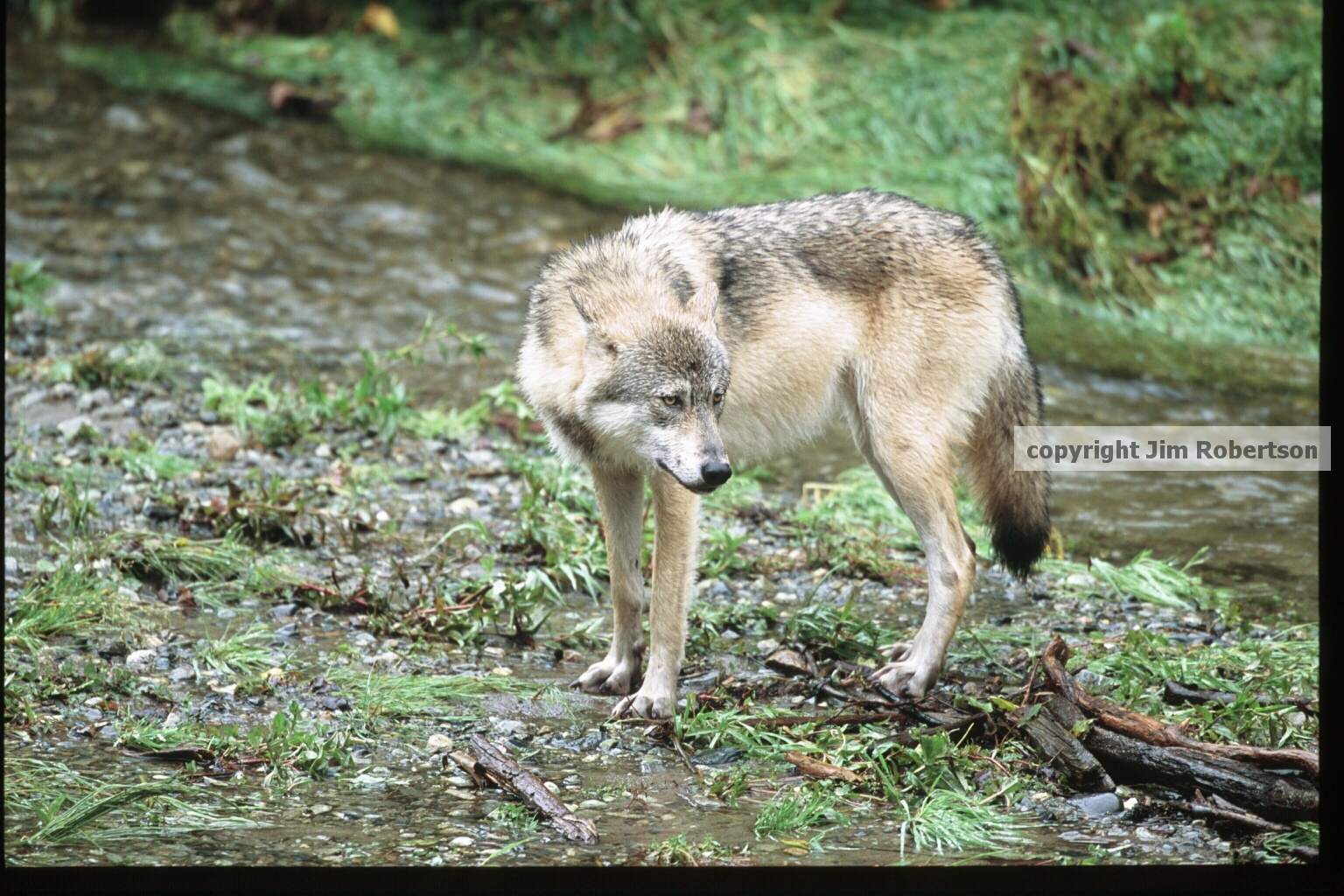
What would happen if there were no Mexican grey wolves in Arizona? We asked two experts to weigh in on federal programs to reintroduce the species
—————————–
IT WOULDN’T MAKE MUCH DIFFERENCE
Arizona would be identical to Texas in that respect and the Mexican wolf population would more closely resemble its historic range (90 percent of the Mexican wolf’s original habitat is in Mexico).
However, I am not advocating for Mexican gray wolf eradication. I simply want the U.S. Fish and Wildlife Service to leave species conservation efforts to the states, to comply with federal law, and to stop implementing a flawed experimental program that poses a serious threat to Arizona ranchers, citizens and economies.
Mexican wolves have repeatedly stalked citizens, devastated big game herds and killed livestock. In Catron County, N.M., the wolf’s presence has resulted in a $5 million economic hit and “1,172 calves lost annually,” according to the Southwest Center for Resource Analysis.
In January, Fish and Wildlife implemented new regulations that dramatically expanded the area Mexican wolves can roam and designated the wolf as an endangered subspecies. The agency acknowledged its failure to secure appropriations prior to implementing the new regs, in violation of federal law.
The Mexican wolf has lingered on the Endangered Species list for nearly 40 years. During that time, Fish and Wildlife has failed to work with local stakeholders and has been using an illegal recovery program, as it is not based on the best available science and fails to establish a recovery goal. Arizona recently sued as a result.
The agency has acknowledged the recovery plan violates federal law and that the new regulations will not result in a de-listing. In the U.S., the Mexican wolf population now exceeds the primary goal of 100 wolves, and there are another 250 in captivity. The wolf is no longer in danger of extinction.
The bipartisan Mexican Wolf Transparency and Accountability Act rejects the new January mandates as Arizonans deserve a viable solution that adequately protects local communities.
U.S. Rep. Paul Gosar is a Republican representing Arizona.
—————————–
IT WOULD BE A TRAGEDY
If there were no Mexican gray wolves in Arizona, this rarest gray wolf would be on a direct path to extinction. Essentially eradicated from the southwestern United States by the 1930s, the Mexican gray wolf It is one of the most endangered mammals in North America. There are fewer than 120 wild Mexican gray wolves in the entire world: 109 in Arizona and New Mexico and a handful in Mexico.
Why does that matter? Lobos hold profound cultural significance in our region, and are important apex predators that contribute to the environmental health of the areas they inhabit. Sadly, despite the work that has been done to recover them, the Mexican gray wolf is still noticeably rare on our beautiful landscape in Arizona. The truth is, Without lobos, Arizona would not be safer or more productive, but it would be lacking an iconic part of our heritage.
No one has ever been killed by a Mexican gray wolf, and in Arizona, wolves account for less than 1 percent of total cattle and calf losses. On the other hand, 87 percent of voters polled in Arizona agree that wolves are a “vital part of America’s wilderness and natural heritage,” and 83 percent of Arizonans agree that “the US Fish and Wildlife Service should make every effort to help wolves recover and prevent extinction.”
To lose the lobo would be a tragedy of our lifetime.
Eva Sargent is Southwest program director for Defenders of Wildlife.
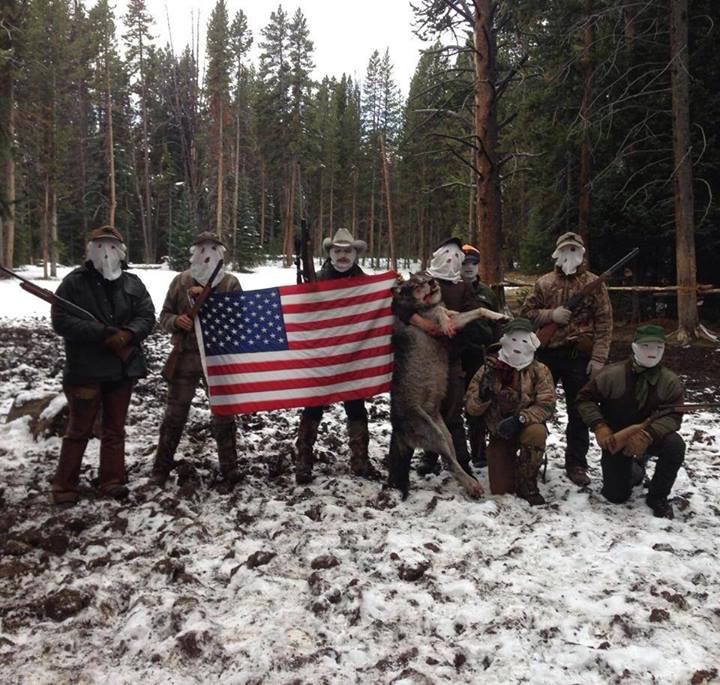
What happens when the states try to manage wolves…
Feds decline to reclassify gray wolf under Endangered Species Act
Gray wolves across most of the Lower 48 are classified as endangered, which is more protective than a threatened designation. Advocates hoped a change to threatened would pre-empt intervention from members of Congress who want to lift federal protections altogether.

by Rosemary Lowe
 Exposing the Big Game
