Minnesota Department of Natural Resources Urged to Stop the Trophy Hunting of Wolves

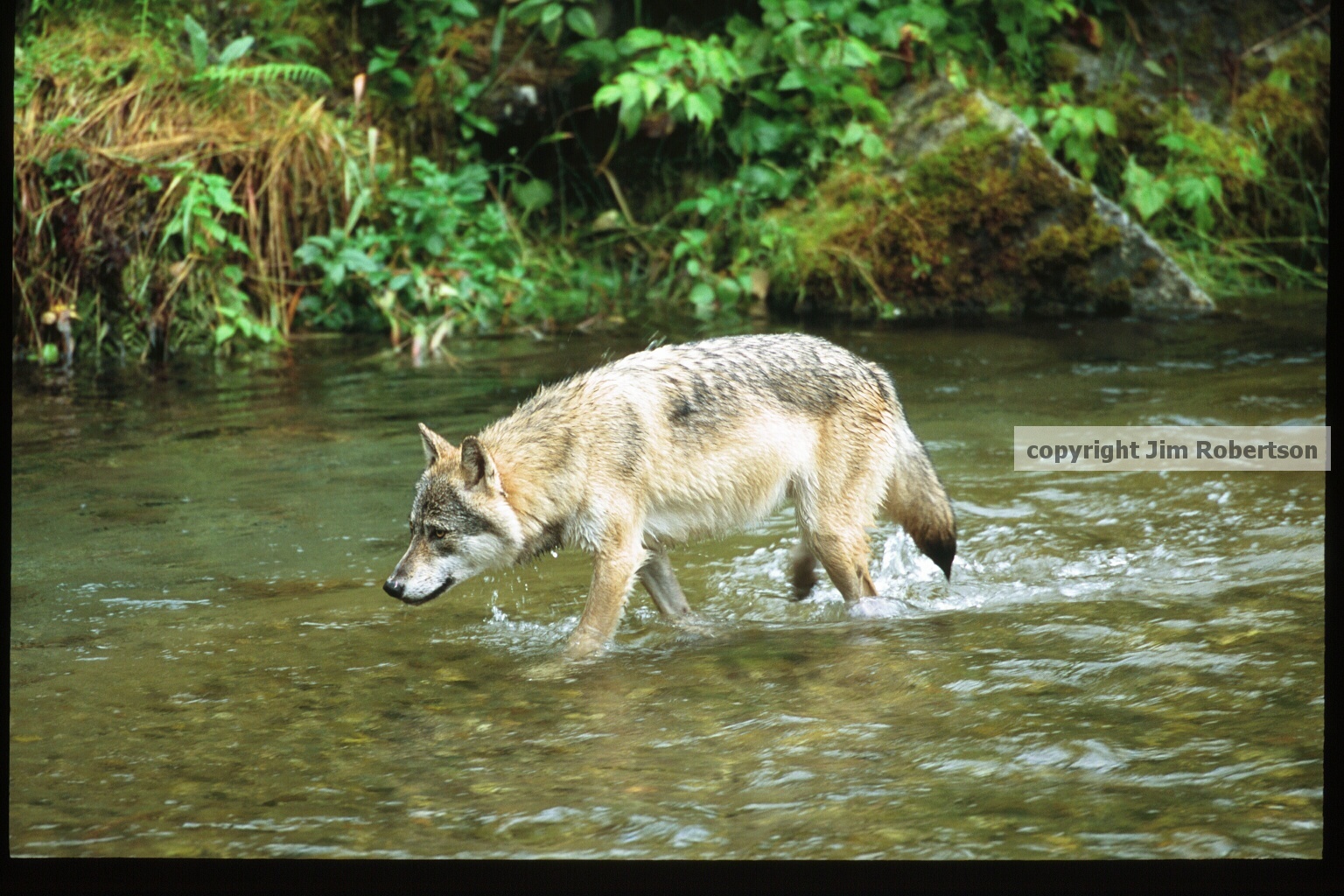
copyrighted wolf in water

http://www.humanesociety.org/news/press_releases/2014/11/mn-trophy-hunt-wolves-111714.html

Nov. 4 vote in nearby Michigan highlights overwhelming opposition to this needless killing

The Minnesota Department of Natural Resources is being urged to stop the trophy hunting of wolves, in the wake of the nation’s first statewide vote on wolf hunting in last week’s election.  In nearby Michigan on Nov. 4, voters overwhelmingly rejected two wolf hunting measures, Proposals 1 and 2, with the “no” side winning by a 10-point margin and a 28-point margin, respectively. On Proposal 2, the “no” side received more than 1.8 million votes, more than any candidate who won statewide office, and prevailed in 69 of Michigan’s 83 counties.

This was the first statewide vote on wolf hunting in any state since wolves were stripped of their federal protections under the Endangered Species Act, and since more than 2,200 wolves were killed across the Great Lakes and Northern Rockies regions over the last two years. The Humane Society of the United States is urging decision makers in Minnesota to pay attention to this vote in Michigan, and see how regular citizens feel about the trophy hunting and trapping of wolves.

The Michigan election results mirror public opinion polling showing that Minnesotans, by huge majorities, appreciate wolves and want them conserved. In 2012, before the first wolf trophy hunting season, the DNR conducted an online survey, and 79 percent of residents opposed wolf hunting and wolf trapping.

Howard Goldman, Minnesota senior state director of The HSUS, said: “Michigan and Minnesota are states with strong hunting and farming traditions, and the resounding votes in Michigan demonstrate that voters think trophy hunting and commercial trapping seasons for wolves are premature and unacceptable.  Nobody eats wolves, and there are already tools that exist to manage problem animals.” I’m confident that Minnesotans would have voted similarly if they had a chance to decide this issue directly.”

Minnesota is home to approximately 2,400 wolves and the DNR set this season’s hunting quota at 250 (30 more individuals than permitted in the last season). In 2013, a total of 602 wolves died, and the numbers of wolf packs have declined from 503 in 2008 to 470 in 2014 – a loss of 33 entire packs of wolves. Biologists warn that hunting this iconic species—even at low levels—harms not only the animals but also pack dynamics.   When fellow pack members are killed, wolf packs can disband, leading to starvation of the pack’s youngest members.

Wolves keep deer and other ungulate herds healthy and scientific studies show that because of wolf predation, both plant and animal communities become far more diverse. The Minnesota DNR’s own data show that wolves prey on miniscule numbers of livestock.

Goldman continued: “We want state lawmakers and the Minnesota DNR to take heed of the overwhelming votes in Michigan. Most voters want wolves and their packs protected from needless killing, and they recognize wolves bring economic and ecological benefits to the state.”

Minnesota permits cruel and unsporting trophy hunting methods to kill wolves, including trapping the animals with leghold traps and neck snares. The state also allows hunters to lure in wolves using electronic calls and bait.


Media Contact: Kaitlin Sanderson

For wolves to be abundant enough to be hunted would be a victory(?)

The eventual goal in Washington is to remove wolves from the critically endangered list so they can become a game species. While it may seem hypocritical, for wolves to be abundant enough to be hunted would be a victory.

http://dailyuw.com/archive/2014/11/13/science/washington-wolves-after-80-year-absence-pack-back#.VG4nhWd0y1s

Washington wolves: After 80 year absence, the pack is back

November 13, 2014 at 12:01 AM | Jessica Knoth

A wolf howl is the call of the wild. But for decades, that howl was muted.

Gray wolves once covered North America, but ruthless hunting nearly drove them to extinction in the United States by the 1930s. However, strong conservation efforts brought them back from critical endangerment. UW researchers have been monitoring the state wolf population and are currently in the process of analyzing the ecological and economical impacts these animals have. While wolf packs have been shown to drastically improve ecosystems, like in Yellowstone National Park, their effect on Washington state remains to be seen.

“You can’t have a one-size-fits-all approach,” said Aaron Wirsing, head researcher of the project. “We want to see if these documented effects in parks also occur in managed landscapes.”

A managed landscape is an area that has a lot of human influence. Hunting, logging, ranching, and recreation alter the natural ecosystem. In Yellowstone, human activity is restricted, so the ecosystem can develop and change naturally. But Washington’s wolf population lives in a highly trafficked area.

“Human influence may be so pervasive that wolves don’t have an effect on the environment,” said Justin Dellinger, a researcher on the team.

In Yellowstone, the reintroduced wolves were a top predator. The return of the wolves slowly brought elk and deer populations under control, which in turn allowed vegetation to flourish. This brought smaller animals back into the area, as well as foxes, eagles, and even bears. Deer began avoiding the lowlands where wolves hunt, which allowed the plants by rivers to replenish themselves, strengthening the banks of the rivers and resulting in new wetland habitats.

Wirsing and his team have been monitoring the wolves’ movement in Washington state with GPS tracking collars, but have also been capturing deer to watch their behavior. By attaching a camera to a deer, they can watch the animal’s actions 24 hours a day. They back up the video footage with GPS data to see whether the deer are starting to avoid wolf hunting grounds, which sparked habitat regeneration in Yellowstone.

“It’s not to say that cougar, coyote, or bear don’t have an impact on the deer, it’s just now there’s potential for deer to have to account for another predator on the landscape,” Dellinger said.

The researchers have also been working with the Confederated Tribes of the Colville Indian Reservation, who have begun to encounter wolves on their tribal lands.

“They are really interested in knowing how the wolves are changing the ecosystem on the reservation,” UW researcher Carolyn Shores said. “They especially want to know how wolves will impact game species because the tribes depend on deer and elk for sustenance.”

The members of the Colville tribes aren’t the only people impacted by the wolves.

“They conflict with people by eating their livestock, but they also can bring in tourism dollars, like they have in Yellowstone,” Wirsing said.

Controversy seems to be the standard when it comes to wolves. Humans tend to have an ingrained fear of wolves, but researchers say that fear is unfounded.

“They are actually very timid animals when it comes to encounters with people,” Shores said. “In fact, if they see you, they will run away as fast as they can.”

The eventual goal in Washington is to remove wolves from the critically endangered list so they can become a game species. While it may seem hypocritical, for wolves to be abundant enough to be hunted would be a victory.

“Ultimately, public outreach will be the key to shaping policy here in Washington,” Wirsing said. “We hope to get the word out there that it’s a good thing to have this wolf recolonization effect, and will do so by getting the public involved in the research.”

The researchers are not sure if wolves will have an impact on Washington’s ecosystem, but that doesn’t mean people shouldn’t try to help them repopulate their old habitats.

“There are few animals more polarizing than the wolf,” Wirsing said. “But that’s what makes them so fascinating.”

Wolves: Hunting Affects Stress, Reproduction, and Sociality

Harassed wolves show elevated levels of stress and reproductive hormones

Wolf hatred has spread west to Washington State

From Defenders.org:

Yesterday, we learned that the alpha female of the Teanaway pack was shot and killed, throwing the entire pack’s future into jeopardy. Disturbingly, the killing may have been intentional and a criminal investigation is underway since wolves in Washington State are protected under both state and federal law.

Fear and demonization of wolves is like a virus.

Defenders of Wildlife and our conservation partners are offering a reward for any information leading to the apprehension and conviction of the wolf’s killer.

There are barely 60 known wolves in the entire state of Washington. With the tragic loss of the alpha female, the fate of the Teanaway pack is now uncertain. This is a major blow to wolf recovery in the Pacific Northwest.

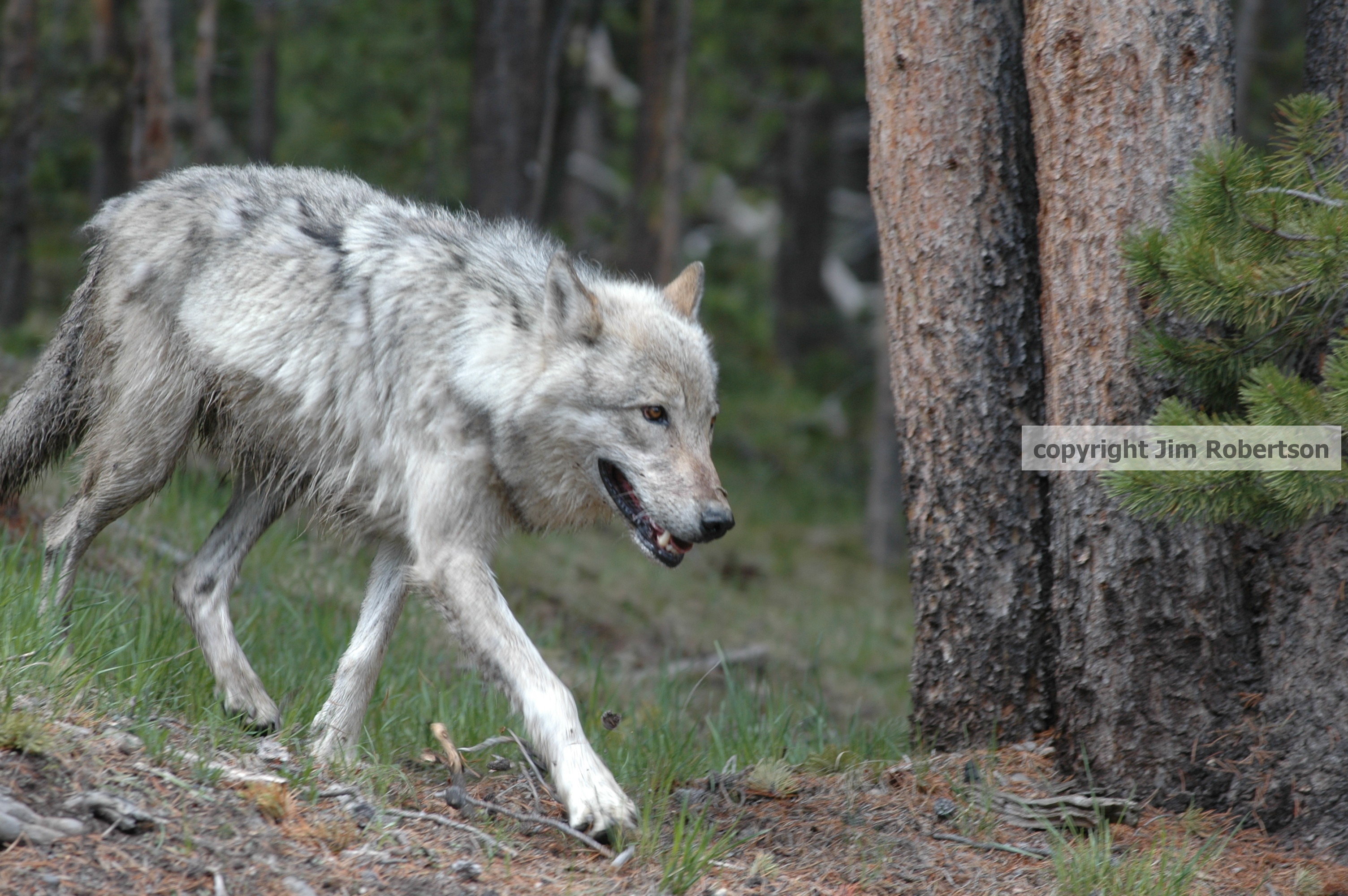
copyrighted Hayden wolf walking

Wolves Belong to no one but Themselves

One of the hazards of sending a letter to the editor of a newspaper is that the paper generally gets to choose a title for it…, and the title often reflects their attitude on a given issue rather than the writer’s. For example, in this letter, recently published in the Methow Valley News, the paper chose to use game department jargon, rather than quoting what I personally believe about who wolves belong to “…no one but themselves.” Here’s what they came up with for a title:

Wolves belong to everyone

Dear Editor:

I recently attended a Washington Department of Fish and Wildlife (WDFW) wolf management hearing to find out how far they ultimately plan to go with wolf hunting, once wolves are inevitably removed from the state’s endangered species list. It turns out the department was only there to talk about a few cases of sheep predation, and the WDFW’s subsequent collusion with aerial snipers from the federal Wildlife “Services” for some good old fashioned lethal removal.

For over 20 years I lived in a cabin well upriver from Twisp, but moved away before the whole poachers’ bloody-wolf-hide-bound-for-Canada fiasco. Since then, I’ve had numerous positive experiences with the wolves themselves. I photographed them in Alaska and Canada as well as in Montana, where I lived a mile from Yellowstone National Park, and got to know the real nature and behavior of wolves.

I’d like to think that if ranchers knew the wolves the way I do, they wouldn’t be so quick to want to kill them off again. Folks shouldn’t have to be reminded that wolves were exterminated once already in all of the lower 48 states, before the species was finally protected as endangered.

Although I personally believe that wolves belong to no one but themselves, to use game department jargon, wolves and other wildlife “belong” to everyone in the state equally — not just the squeakiest-wheel ranchers and hunters. Most of Washington’s residents want to see wolves allowed to live here and don’t agree with the department’s wolf “removal” measures, that no doubt include plans for future hunting seasons on them.

What’s to stop Washington from becoming just like Idaho, Montana and Wyoming in implementing reckless wolf-kill programs that eventually lead to the likes of contest hunts (as in Idaho), or year-round predator seasons that ultimately result in federal re-listing (as in Wyoming)? What guarantee do we have that Washington’s wolves will be treated any differently?

Food for thought: If we don’t speak out now, the next disgusting dump you find deposited along a hiking trail well might belong to a legal wolf hunter.

Jim Robertson

Text and Wildlife Photography©Jim Robertson

Text and Wildlife Photography©Jim Robertson

Killing is Game Departments’ Primary Business

[Here’s yet another friend’s testimony to the WDFW hearing]:

I am appalled that the Washington Department of Fish and Wildlife (WDFW) killed the alpha female of the Huckleberry Pack and plan to kill other wolves in the pack.  In other countries, endangered species are lost due to habitat destruction, over-hunting, and poaching.  Here, in addition to the above, we have wildlife agents killing and supporting the killing of endangered species.

The Eastern Washington wolves were removed from the federal Endangered Species List, but it was politics at its worst and not science that caused them to be removed.  They are still endangered and at risk of extinction, especially with the all-out war on wolves going on.

Under Washington state code, the primary mandate for the Department of Fish and Wildlife is to “protect, preserve and perpetuate” our state’s wildlife.  Gunning down wolves along with their pups to protect sheep and cattle grazing, especially on state and federal land, is abhorrent, a crime against nature, and goes against state code.

Why is the state killing wolves to protect sheep and cattle ranchers, especially when they are already being paid for animal losses and in many cases grazing their animals on state and federal lands for next to nothing?  According to the USDA less than one quarter of one percent of cattle are lost to predators, which include dogs.  It should be up to the ranchers to protect their animals by using fencing, guard dogs, etc.  They should also buy insurance to protect themselves from losses just like every other business.

After slaughtering the Wedge Pack, WDFW Director Phil Anderson stated “Going out and killing wildlife is not what this agency is all about.”  This comment is disingenuous or he does not have a clue as to what his department does.  Unfortunately, killing is what WDFW is all about.  They sell hunting and trapping licenses to kill wildlife.  They try to recruit more people including women and children to kill wildlife.  They raise animals for killing.  They “manage” wildlife to increase the numbers of animals to be killed by hunters.  Killing is their primary business.  Apparently killing the Huckleberry pack is just continuing business as usual.

I also find it appalling that WDFW would not even accept calls about the wolf slaughter.  This shows a closed mind.  It is highly dismissive and disrespectful.  It is in essence thumbing their nose at the citizens of the state.

I had hoped better of my state government.

528624c939a88_preview-620

Wolf Hunting in Washington?

WDFW also should open discussions about setting an upper limit on the wolf population. “There’s got to be a top number. We can’t let an apex predator grow unchecked,” he said…

http://www.capitalpress.com/Washington/20141031/washington-peeks-ahead-to-life-after-wolves-recover

Washington peeks ahead to life after wolves recover

Capital Press

Published:October 31, 2014 1:56PM
 
With Washington’s wolf population growing, talk about delisting the species has already started.

Washington will have a plan by 2018 for managing wolves after they’ve been taken off the state’s endangered species list, according to a Department of Fish and Wildlife proposal.

The agency sets the date in its 2015-21 game management plan, which has yet to be approved by the Fish and Wildlife Commission.

The document outlines objectives for managing game animals. WDFW received comments urging it to address wolf predation of deer and elk now.

Instead, the game management plan defers to the state’s wolf recovery program, which calls for establishing wolves in Washington before considering the effects on deer and elk.

The agency did for the first time set a time frame for developing a plan in anticipation the wolf population will outgrow endangered species status.

The department projects wolf-recovery goals could be met by 2021, the year the game management plan expires.

Washington Cattlemen’s Association Executive Vice President Jack Field said he was disappointed wolves didn’t get more attention in the game management plan.

“We’re going to achieve our recovery objective in Washington state,” said Field, who’s on the state’s Wolf Advisory Group. “There’s going to be an impact on ungulates.”

Field said WDFW also should open discussions about setting an upper limit on the wolf population.

“There’s got to be a top number. We can’t let an apex predator grow unchecked,” he said.

WDFW Game Division Manager Dave Ware said wildlife managers have not seen a decline in deer and elk populations in northeast Washington, where the state’s 52 wolves are concentrated.

The state projected in 2011 that once the population reached 50, wolves would take up to 630 elk and 1,500 deer a year, a fraction of the 7,900 elk and 38,600 deer killed by hunters annually.

Ware said the 2018 deadline will ensure the department has a plan ready if recovery-goals are met sooner than expected.

The head of a wolf sanctuary in Tenino, Wash., said WDFW appears set to start working on a post-recovery plan prematurely.

“It doesn’t make any sense to us,” said Diane Gallegos, executive director of Wolf Haven International. “Our focus should be on recovery and working with people who are most effected by recovery.

“We don’t know what the impacts of wolves are going to be in Washington,” Gallegos said. “We’re going to know so much more in five years that anything we do know, we’re going to have to redo.”

Conservation Northwest Executive Director Mitch Friedman agreed talks on managing an established wolf population can wait.

“It’s not a bridge we have to cross now,” he said. “It would create more smoke than light in the near term, and we would have to repeat it in the long term.”

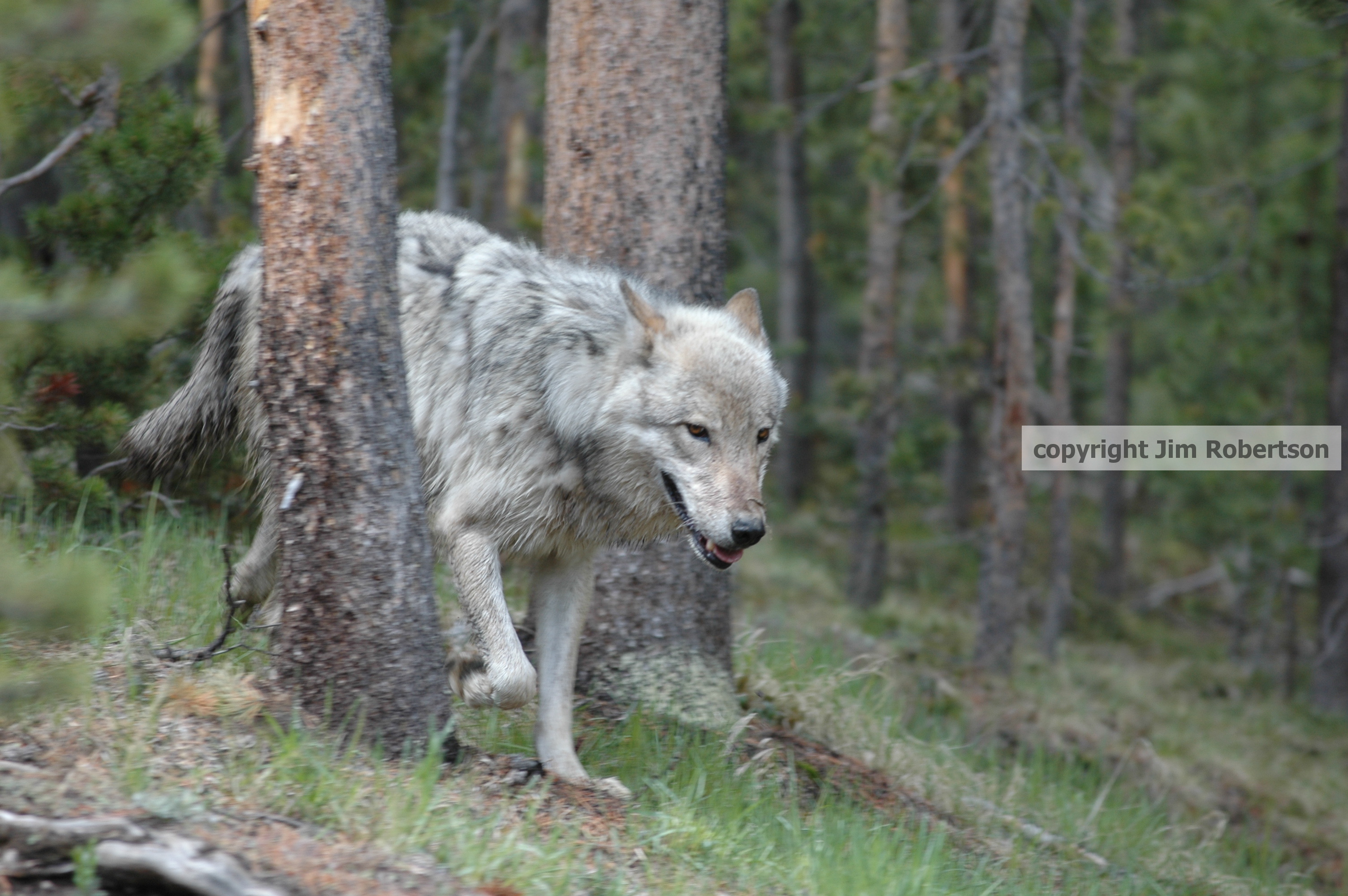
copyrighted Hayden wolf in lodgepoles


More Input to the WDFW

Photo and Input by Oliver Starr

Photo and Input by Oliver Starr

Submitted to WDFW Hearing October 14, 2014

Today, the advocacy community is putting WDFW and all interested parties in Eastern Washington on notice. The actions taken by WDFW with respect to recent wolf-related problems are unacceptable, as is WDFW’s tepid response to the threats, statements and resolutions passed by local stock growers.
Prior testimony, as well as WDFW’s own public chronology of the Huckleberry Pack depredations show that the department has failed to faithfully implement its own management plan — or even adhere to its published decision tree. Further, WDFW’s lack of transparency with respect to the lethal removal of the Huckleberry Alpha female was reprehensible and violates the spirit of working with all stakeholders to resolve wolf/livestock/human conflict.
We wish to make it clear for the record that WDFW’s quasi-official narrative with respect to the Huckleberry Pack depredations is not the only version of events. We are aware of the changes to this story that have transpired over the past few weeks. The version being promoted by both the department and the producer differs in many key respects from the facts that were reported from the field as the incident was occurring.
We know the producer knew of the presence of wolves in advance yet failed to make even the most basic efforts to prevent wolf/livestock conflict for weeks after they ceased to have a regular and consistent human presence on the allotment. WDFW’s own photographs of multiple decayed carcasses strewn in numerous locations document the failures of the producer to take this required action. WDFW’s claim that the producer removed attractants is puzzling since it is obviously untrue.
As a result of the failure on the part of WDWF to be fully transparent, the advocacy community will now be watching, documenting and publishing everything going forward. We intend to use all means at our disposal to monitor and make public every aspect of wolf management actions in the state including using social media and FOIA requests when and if we feel the department is failing to provide us with accurate and timely information.
We wish to remind the department that they have an equal obligation to all stakeholders including those of us that advocate on behalf of wolves, and that the overwhelming public majority are in favor of wolves and oppose lethal wolf control actions.
As advocates we are deeply troubled that WDFW has failed to make it clear that the vigilante statements made by producers and the various anti-wolf resolutions being passed by county commissioners are contrary to state and federal laws. We demand the department state unequivocally that any unlawful take of wolves is poaching and will be investigated and prosecuted to the fullest extent of the law.
Given the current climate as well as the threats to illegally kill wolves, the department can no longer provide producers with GPS telemetry that provides them with the locations of collared wolves. Continuing to provide this information under current circumstances is irresponsible and puts wolves at grave risk of being unlawfully killed.
Additionally, as a result of the threats to kill wolves made by the ranching community in Eastern Washington, the advocacy community demands full documentation for every suspicious wolf mortality including a full toxicology report as part of any necropsy where cause of death has not otherwise been determined.
The recent poaching of a wolf in Whitman County is an example of the results of WDFW’s clear bias against wolves and in favor of producers. WDFW has an obligation to adequately represent all stakeholders and develop and implement a sensible management plan with coexistence and not lethal actions as its cornerstone. Condoning unlawful killing or simply looking the other way is unacceptable.
While I and other wolf advocates stand ready to work with producers committed to non-lethal deterrents, we oppose efforts to remove or translocate wolves at the behest of producers that are unwilling to implement the same non-lethal methods that have proven effective at reducing and/or eliminating wolf/livestock conflict in places including Idaho that have much greater wolf density.

Gray wolf reported at Grand Canyon for first time in decades

528624c939a88_preview-620

Thursday, October 30, 2014 LAURA ZUCKERMAN FOR REUTERS
(Reuters) – A gray wolf was recently photographed on the north rim of the Grand Canyon in Arizona in what would be the first wolf sighting in the national park since the last one was killed there in the 1940s, conservation groups said on Thursday.
The U.S. Fish and Wildlife Service was sending a team to try capturing the animal in order to verify its species and origin, although federal biologists are assuming it is a wolf unless otherwise determined, a spokeswoman said.
The agency later issued a statement saying a collared “wolf-like” animal had repeatedly been observed and photographed on U.S. forest land just north of Grand Canyon National Park, and that wildlife officials were “working to confirm whether the animal is a wolf or wolf-dog hybrid.”
It said the collar “is similar to those used in the northern Rocky Mountain wolf recovery effort,” and that feces would be collected for DNA analysis.
Several photos of the animal were taken over the weekend by a Grand Canyon park visitor who shared them with conservation activists and park staff, according to the Center for Biological Diversity, which first made the findings public.
A note accompanying images viewed by Reuters said two wolf biologists and “an experienced wolf observer” who reviewed the photos concluded they “appear to depict a radio-collared northern Rocky mountain gray wolf.”
Any wolf roaming the Grand Canyon, in north-central Arizona, would be protected under the U.S. Endangered Species Act. If confirmed to be a western gray wolf, it would presumably have ventured hundreds of miles (km) south from the Northern Rockies, where the animals were reintroduced in the 1990s and are now estimated to number nearly 1,700.
A separate smaller population, from a subspecies called the Mexican gray wolf, inhabits southeastern Arizona and western New Mexico, hundreds of miles (km) in the opposite direction. But the animal in question appeared larger than a typical Mexican wolf, experts said.
The sighting comes as the Obama administration is weighing a proposal to lift Endangered Species Act protections for all wolves but the Mexican gray subspecies, even in states where wolves are not known to have established a presence.
Center for Biological Diversity executive Noah Greenwald said the new wolf sightings helped show such a move would be premature.
“It highlights … that wolves are still recovering and occupy just a fraction of their historic range,” he said.
(Reporting by Laura Zuckerman in Salmon, Idaho; Editing by Steve Gorman, Peter Cooney and Sandra Maler)

Why it’s bad to be a Wolf in northeastern Washington

[The following is a statement a friend made at the recent WDFW hearing]…

I am not a rancher, but I have dear friends who own a fourth generation family ranch in Montana, located in wolf country. Through good stewardship and the use of Anatolian shepherd dogs and range-riders, they have lost no livestock to wolf depredation. They have, however, lost sheep and cows over the years to injury, illness and poachers.

I am not a city dweller, and never have been, but my stand for wolves should hold no less weight if I were. Washington’s wolves belong to no one; they belong to the landscape and to their own packs. They certainly do not belong to irresponsible ranchers and to the Washington Department of Fish and Wildlife (WFDW).

For a time, I lived in an old log cabin on 146 acres in Northwest Montana, a stone’s throw from a collared wolf pack, and I listened to their haunting howls during the morning’s wee hours.

Following Montana, I lived in the Methow Valley (on the east slopes of Washington’s North Cascade mountains), fifteen crow miles from the Lookout wolf pack, the pack that the White family all but destroyed. The White’s had lost no livestock to wolves while they attempted to ship bloody wolf pelts to Canada, emailing boasts and images of the dead wolves to friends.

I spoke up for the Wedge Pack in Olympia (WA’s capitol), after seven members of the pack were shot from a helicopter by Wildlife Services in 2012, all to protect irresponsibly ranged cows grazing on terrain unsuitable to livestock. Lethal removal of the Wedge, said WDFW director Phil Anderson, would hit a re-set button with ranchers so that the action would not need to be repeated. I was at the meeting when he spoke these words and they were indeed in this context.

I now live a handful of miles from the Canadian border, on the west slopes of the North Cascades and I will tell you there are wolves here, dispersers and with packs on the horizon. I saw my first wolf fourteen years ago in this greater Kulshan area, and my second wolf nine years ago in a canyon above the Methow Valley.

On Tuesday, October seventh, I attended the WDFW wolf meeting in Colville, Stevens County, in northeastern Washington. I sat quietly and observed during the meeting, taking notes and quotes, as well as images with my camera. The crowd in attendance was filled mainly with ranchers and with those opposing wolf recovery. It was a lynch mob scene! WDFW allowed the crowd to call out mean-spirited comments to those few who spoke in support of wolves (this was ranching country, after all). WDFW allowed those speaking against wolves to talk well in excess of their allotted three minutes, permitting speakers to talk back to the WDFW panel and refuse to sit down and shut up when asked. Rancher Len McIrvine refused to stop talking well after using his and other’s time allotments, and the crowd cheered. The department allowed this behavior.

WDFW allowed the crowd to stand and cheer loudly when there was talk of wolves having been killed: the Ruby creek female hit by a car and the Huckleberry female flushed out of dense forest (forest unsuitable for grazing) and shot from a helicopter by Wildlife Services.

I acquired the necropsy report for the Huckleberry female and interviewed the department’s veterinarian who had performed the necropsy and had written the report. It is notable that the Huckleberry pack female’s stomach was empty when she was shot dead. She had not eaten for close to two days. She certainly hadn’t been eating the rancher Dashiell’s sheep, and so the non-lethal tactics and helicopter hazing had worked. And yet a wolf needed to die.

The Colville crowd called for three more Huckleberry wolves to die, and better yet the whole pack! They demanded a total of at least four dead wolves, although the department had said they would shoot “up to four wolves” never guaranteeing they would shoot four wolves total. The WDFW panel just sat and listened to the calls for more dead wolves, nodding their heads and looking sympathetic, never making this correction to the ranchers’ demands for more wolf blood to be spilled.

The department’s initial statement regarding the aerial assault on the Huckleberry pack is that they would only shoot if there were multiple animals under the helicopter as a means of size comparison so that they would only take out pups and two year-old wolves. They would not target black, adult wolves as the collared male is black (they use the collars for tracking purposes, of course). Later the department’s directive was amended (changed and twisted) and it was stated they would remove any wolf (or wolves) but for the collared male.

When the Huckleberry female was shot, she was the sole animal under the under helicopter and weighed close to 70 pounds while alive (reports of 65 and 66 lbs were post-mortem, although WDFW never made this clear). Said the department’s carnivore specialist Donny Moratello, “We were certainly disappointed in this outcome but, there was no way to sort from the air in this circumstance.” When I asked him why take the risk of shooting the wrong wolf if there is no means of comparison, he replied, “You know going into it you get what you get. We did not have the opportunity to sort in this case.” As well as saying, “To not shoot (a wolf) they would have not been complying with the directive at that point, they would not be following orders.”

So, you get what you get. The helicopter had been up on multiple occasions over a number of days, unable to spot animals due to the visibility limits of the dense terrain, terrain unsuitable for healthy and responsible ranching and in which the sheep were being grazed. Simply, the lethal endeavor was becoming too expensive, so they flushed out a single black, adult sized wolf and shot. Blam! They shot the breeding female whose pups at the time were only a little over 4 months old and unable to hunt on their own. The department’s reports to this day say the pups were almost full grown but, this is grossly inaccurate as per their own veterinarian.

It is also important to note from WDFW’s own reports and slide presentation, that most of the wolf activity and depredations fell outside of Dashiell’s grazing allotment. Dashiell had not had a working range rider for close to thirty days; during the onset and well into the confirmed depredation activity. He had merely two working guard dogs which, is insufficient for the size of the herd (1800) and sprawling, densely forested terrain. Two more guard dogs and additional human presence were added around the period of the Huckleberry kill order, but it was too little too late. Wolves needed to die.

Additionally, rancher Dashiell had not been removing sheep carcasses including well before the confirmed depredations, as evidenced by the carcass’ level of decomposition and thus, the inability to determine cause of death.

Northeastern Washington commissioners spoke in support of the ranchers and the call for dead wolves, speaking to taking matters of wolf control in their own hands. There was talk of shooting, trapping and most of all, poisoning the wolves. In a Seattle Times article Rancher Len McIrvine is quoted as saying, “Our ancestors knew what had to happen — you get poison and you kill the wolves.”

The quad-county commissioners grandstanded and played to the lynch mob. Jim DeTro, Okanogan County commissioner opened his speech with, “Welcome to Okanogan County where you can now drink a Bud’, smoke a bud and marry your bud.” He said this with obvious disdain and the crowd laughed loudly. He said, “People in my county have decided to not shoot, shovel and shut up, but to be totally silent.” He said this as a wink and nod to poisoning wolves while the department panel sat there silently, nodding their heads up and down and looking sympathetic.

I tell you, when a wolf is killed illegally and poisoned, WDFW is guilty of complicity by not speaking out against these illegal acts and by nodding their heads up and down in agreement.

DeTro continued on that people in his county don’t want the agency to know when they’ve seen a wolf or experienced (alleged) wolf depredation. They want, he said, to take matters in their own hands. DeTro then said smiling proudly, “Olympia, you have a problem.”

Mike Blankenship, Ferry County commissioner, stood there and encouraged people to take matters in their own hands, as well. All the while, WDFW just sat there nodding their heads, looking sympathetic and remaining silent. More complicity!

A local sheriff said, “Wolves are messy eaters, scattering a cow from hell to breakfast,” and making other inflammatory statements about wolves to the again cheering crowd. He said he was “pissed” that only one Huckleberry pack member had been killed.

One rancher cried out angrily, “Wolves kill to eat!” I was curious then, as to what he had done to his livestock before they ended up in the grocer’s meat section, if his livestock were not also killed to be eaten.

At the end of the meeting, WDFW director Phil Anderson acted very cozy and familiar with the ranchers, in spite of them having raked him mercilessly over the coals for not killing more wolves. He looked sympathetic and referred to them by name, and recalled riding around in their trucks with them. Anderson said he would plan a closed meeting with the area ranchers to discuss wolf issues and management.

I demand that NO meeting in relation to Washington wolves be closed. Two final points:

* In the case of the Huckleberry pack, the department did not adequately implement the state’s wolf management plan, nor did they adhere to their own published procedures, before lethal removal took place. This negligence WILL NOT be repeated.

* We demand full documentation of every wolf mortality, and that given the threats to use poisons, we expect that toxicology reports be made public as part of any necropsy, where cause of death has not otherwise been determined. If wolves are poisoned, WDFW will be held guilty of complicity due to their behavior in Colville; supporting poisoning by remaining silent and nodding their heads up and down.

While I sat silently during the Colville meeting, a rancher two rows back passed me a piece of paper on which he had scrawled, “Wolf Lover!” When I looked back at him he scowled at me severely. I wrote in reply on the note, “So?” along with a happy face, and passed it back to him. I’ll take his accusation as a complement.

528624c939a88_preview-620