The Cruelty of Wildlife Services’ Aerial Gunning

1920332_613143138754489_331154733_n

Here’s the text of a friend’s testimony to the WDFW at their wolf “management hearing:

I’m speaking on behalf of wolf protection and recovery. I’m going to cover three points tonight.

 First, perceived “conflicts” with majestic predators like wolves or cougars are just one of the COUNTLESS examples of the negative impact livestock grazing is having our state and planet. You mentioned California’s drought and fires raging in the forests of Washington, which are a direct result of livestock grazing. Climate change aside, livestock grazing continues to decimate wildlife populations at utterly astonishing rates.
My second point is that rural forested USFS land is remote and ideal for predators like wolves. Looking at the pictures of this habitat shown tonight, I was frankly shocked. This is land where I’d expect wolves should be able to live, free from harm. Where in the species recovery process are wolves expected to live and thrive if even THIS habitat is considered unacceptable for them (but appropriate for sheep grazing)?
My final point is that killing is NOT management. The fact that aerial gunning–one of the most traumatic and terrifying and cruel methods of killing–was used speaks to where I fear the department’s values lie. Further, that USDA’s WL Services–which is increasingly under scrutiny for their careless killing practices–was used to do the department’s killing speaks to the same. I call WL Services the “killing squads” because ALL they do is kill; they kill wildlife en mass and usually in exceedingly cruel ways. I’ve seen them kill first-hand, with my own eyes. This is unacceptable.
Thank you for the opportunity to speak this evening.

What’s to Stop Them?

I attended the Washington Department of Fish and Wildlife (WDFW) wolf hearing last week to find out how far the WDFW ultimately plans to go with wolf hunting, once wolves are inevitably removed from the state endangered species list, and when Washington residents can expect to hear that hunting groups are holding contest hunts on wolves like our neighbors in Idaho have already done.

It turns out the department wasn’t ready to come clean on their ultimate plans to implement hunting seasons on wolves (starting in Eastern Washington). They were only willing to talk about the few cases of sheep predation (a few dozen out of a flock of 1,800 animals grazing on public forest land), and the WDFW’s collusion with areal snipers from the federal Wildlife “Services” for some good old fashioned lethal removal. Here are some notes on what I was planning to say, had it been on topic:

Over the years spent living in rural Eastern Washington, I’ve gotten to know how ranchers think and feel, and what they’re capable of. For over twenty years I lived in a cabin outside the Okanogan County town of Twisp, where rancher/convicted poacher Bill White is currently under house arrest. Exploiting his then-good standing and local influence to get permission from the WDFW to gather road-killed deer, under the guise of distributing them as meat to members of the Colville tribe, he used some of the deer as bait to lure wolves from the Lookout pack to within shooting distance. He and his son are credited with killing several members of that pack—the first wolves to make it back into Washington. Their sense of entitlement was so overblown they thought they could get away with sending a blood-dripping wolf hide across the Canadian border.

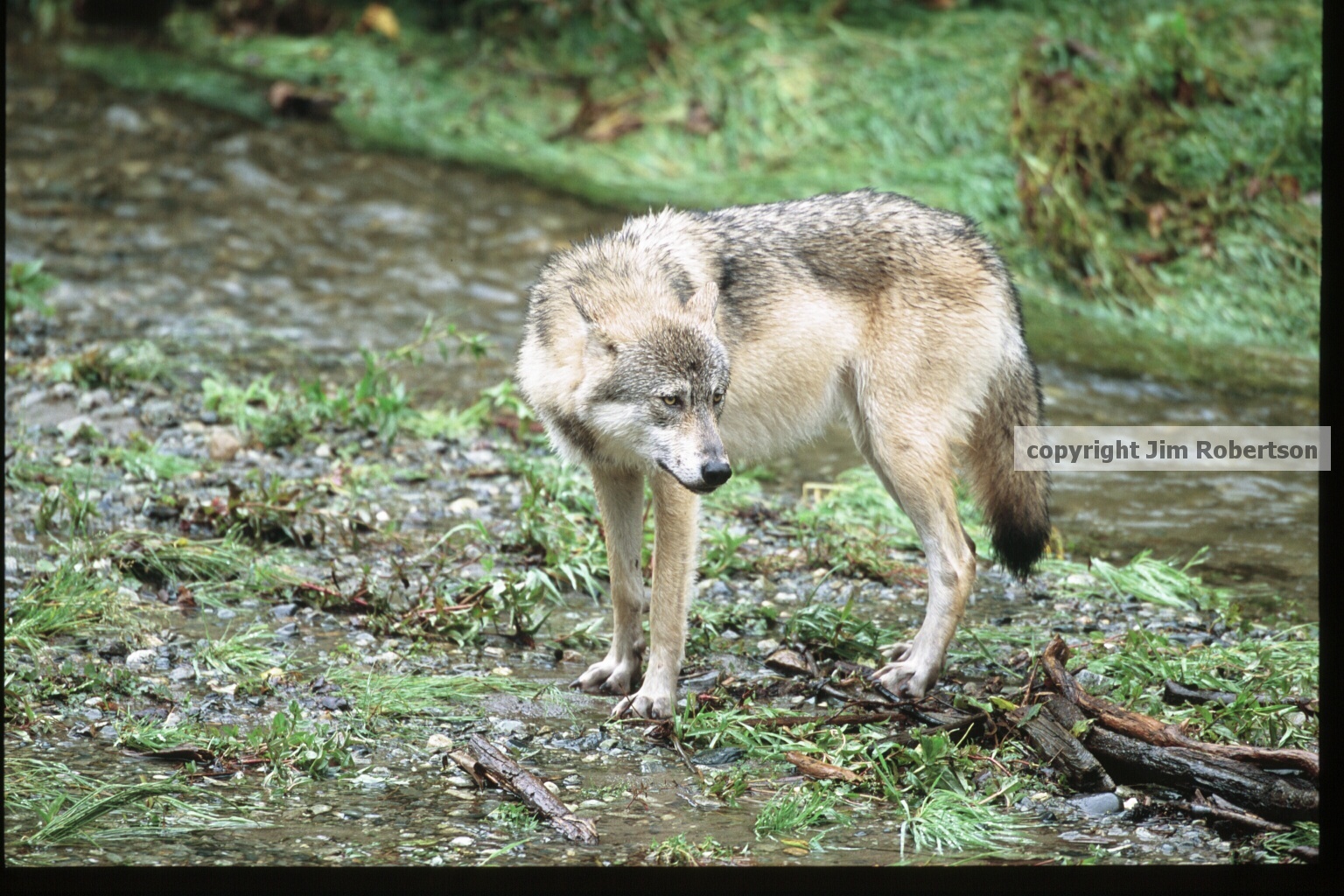
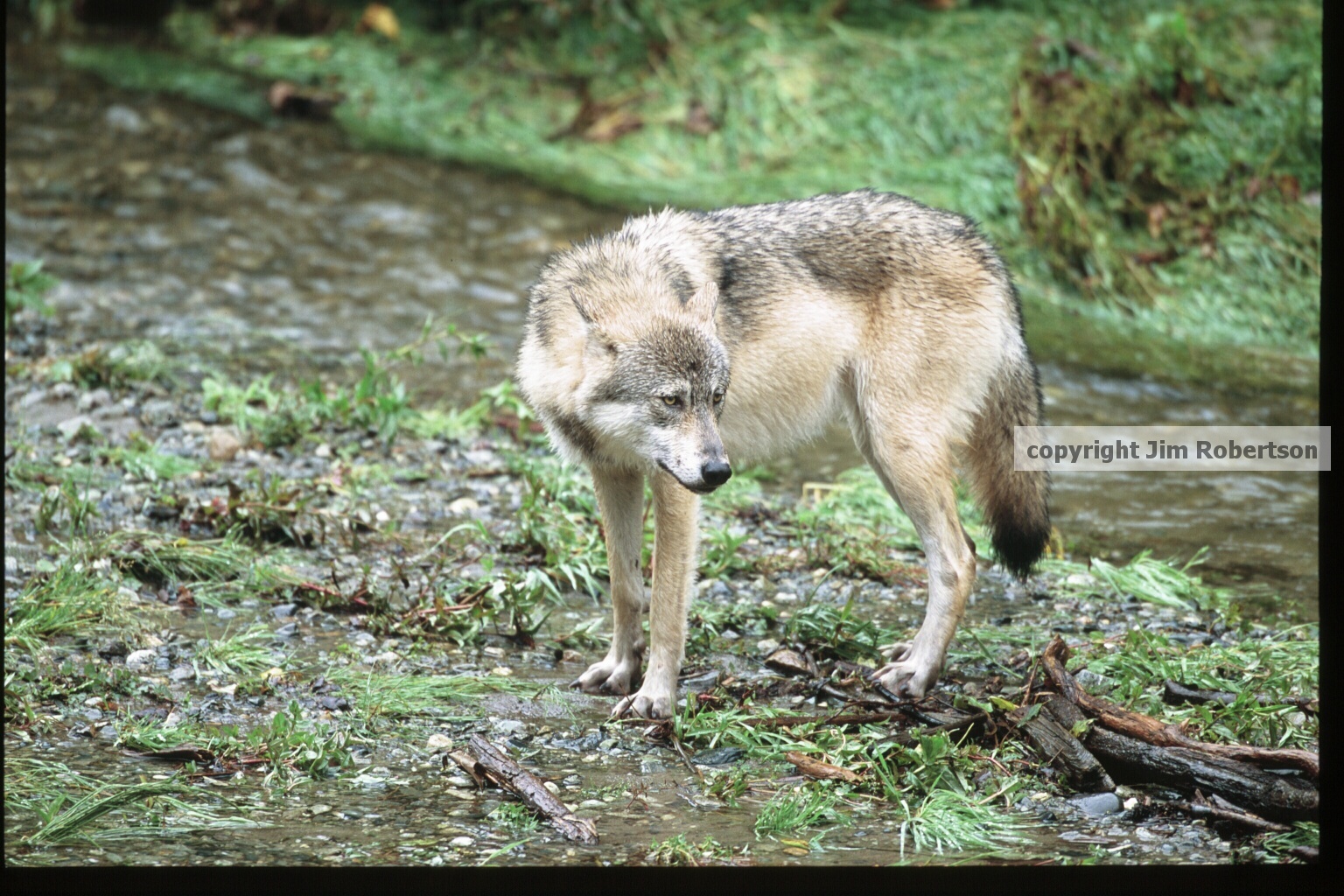
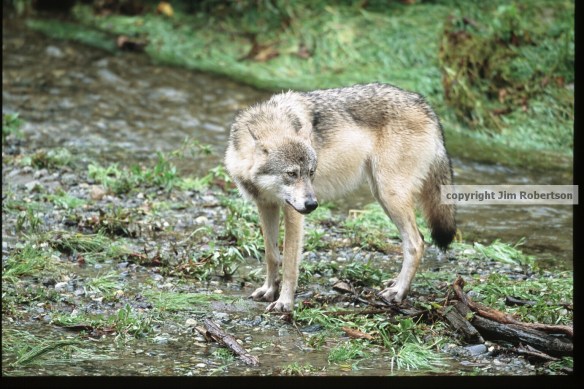
On the plus side, I also have a lot of experiences with wolves themselves. As a wildlife photographer I’ve photographed them in Alaska and Canada as well as in Montana, where I lived a mile away from Yellowstone National Park. I got to know the real nature and behavior of wolves. I’d like to think that if ranchers knew the wolves the way I do, they wouldn’t be so quick to want to kill them off again. I shouldn’t have to remind folks that wolves were exterminated once already in all of the lower 48 states, except Minnesota, which had only six wolves remaining before the species was finally protected as endangered.

Although I personally believe that wolves belong to no one but themselves, to use game department jargon, wolves and other wildlife belong to everyone in the state equally—not just the squeakist-wheel ranchers and hunters. By far most of Washington’s residents want to see wolves allowed to live here and don’t agree with the department’s lethal wolf removal measures (that no doubt include plans for future wolf hunting seasons, which are currently being downplayed by the WDFW).

What’s to stop Washington from becoming just like Idaho, Montana and Wyoming in implementing reckless wolf-kill programs that eventually lead to contest hunts (as in Idaho) and the subsequent decimation of entire packs? Or year-round predator seasons that ultimately result in federal re-listing (as in Wyoming)? What guarantee do we have that Washington’s wolves will be treated any differently?

Text and Wildlife Photography ©Jim Robertson

Text and Wildlife Photography ©Jim Robertson

Washington game managers criticized for wolf shooting

http://www.capitalpress.com/Washington/20141015/washington-game-managers-criticized-for-wolf-shooting?utm_source=Capital+Press+Newsletters&utm_campaign=3b0a939af2-Daily_Ag_Update&utm_medium=email&utm_term=0_4b7e61b049-3b0a939af2-69631657

Don Jenkins

Capital Press  October 15, 2014   

The Washington Department of Fish and Wildlife hosted a meeting in a Seattle suburb and heard the shooting of a wolf to protect sheep criticized.

LYNNWOOD, Wash. — The east-west divide over how Washington should manage conflicts between ranchers and the state’s growing population of wolves was apparent Tuesday at a meeting in this Seattle suburb.

Speaker after speaker told state Department of Fish and Wildlife officials that game managers shouldn’t have OK’d the shooting of a wolf in August to deter a pack from preying on sheep in Stevens County in northeast Washington.

A week ago at the Stevens County Fairground in Colville, game officials were accused of being slow to stop livestock predation. At the Lynnwood Convention Center, they were charged with being quick to kill wolves at the bidding of ranchers.

Denise Joines, representing a Seattle-based philanthropic conservation group, the Wilderforce Foundation, said the economic contribution of “wildlife watchers” dwarfs that of ranchers who graze their animals on public lands.

“The Department of Fish and Wildlife should focus on serving the interests, both recreational and economic, of the majority of our state’s citizens, not a small extractive industry,” she said.

A sharpshooter from a helicopter killed a breeding female in the Huckleberry Pack on Aug. 23. The department called the Lynnwood and Colville meetings to give residents a chance to vent.

Ania Pastuszewska, of Seattle, called the wolf a symbol of the American West and the August shooting “plain lazy” and an act of “cowardice.”

Hank Seipp said he drove across the state from his home in Spokane because he didn’t have a chance to speak in Colville.

He held prepared remarks laying out his belief that non-lethal means can deter attacks on livestock. Instead of referring to his paper, he turned to look at three department officials and spoke through clenched teeth.

“We, you, have to do better,” he said.

Afterward, Seipp said he was surprised by his vehemence. “My emotions got the better of me over this subject,” he said.

About 100 people came to the Lynnwood meeting and heard the department’s assistant director, Nate Pamplin, defend the shooting.

He said the Huckleberry Pack had killed 34 sheep grazing in rugged terrain. He said non-lethal efforts to protect the sheep, including patrols by state employees around the flock, didn’t stop wolves from killing and injuring livestock.

The state spent an estimated $53,000 in first tying to protect the flock and then in shooting one wolf.

Many in the audience accused game managers of failing to do enough before resorting to lethal action. The same managers were criticized in Colville for allegedly failing to take action against the wolves.

Tricia M. Cook, of Glacier, said a rancher at the Colville meeting slipped her an unfriendly note accusing her of being a “wolf lover.”

“I’ll take that accusation as a compliment,” she said.

In Lynnwood, south King County resident Bill McCorkle stood out when he applauded the shooting of the wolf.

“These guys are just trying to make a living. They are American farmers,” McCorkle said. “I’m not a wolf-hater. I don’t want to see them all dead. I just don’t want things to get out of hand.”

Washington lists the wolf on the state’s endangered species list. Game officials estimate there are 52 wolves in the state, mostly in northeast Washington.

Game officials say the population is growing rapidly and spreading. They anticipate the wolf population will recovery as soon as 2021.

“Wolves in Washington are here to stay,” Pamplin said to applause.

The department’s carnivore manager, Donny Martorello, said conflicts between wolves and livestock likely will increase.

The Huckleberry Pack caused the department the most trouble last summer.

In Ferry County, the Profanity Pack killed a cow and calf. “This is a pack we’ll have to closely monitor next year,” Pamplin said. “This will be a challenging area for 2015.”

10172782_486237174810952_1604406170771652512_n

Group demands return of federal wolf protections at Capitol protest

http://helenair.com/news/local/group-demands-return-of-federal-wolf-protections-at-capitol-today/article_f26cfaea-576b-5185-a950-0da100a42bd5.html

October 20, 2014 6:52 pm  • 

Saying that Montana’s wolf management policy violates the United Nations Charter for Nature, members of the Wolf and Wildlife Action Group delivered a “violation notice” to Gov. Steve Bullock’s office at the Capitol Monday.

Montana’s wolf policy allows for a landowner to kill up to 100 wolves, using what WWAG called cruel and barbaric methods such as aerial gunning and trapping, the violation notice said.

The policy is an attempt to exterminate the gray wolf, and WWAG demanded that wolves return to federal protection under the Endangered Species Act, said member Jeanne Rasmussen.

Bullock was not at his office at the time WWAG delivered the violation notice.

“They are being shot and trapped and gut shot, and they burn baby pups out of their dens,” Rasmussen said. “Hunters just want them eliminated.”

WWAG described itself as an “international grassroots organization” at the Capitol on behalf of 80 percent of Americans who want wolves protected.

Madison County resident Diane Nelson-Steiner spoke passionately about wolves killed near her home along the Big Hole River. She recalled an entire pack shot by government officials flying a USDA plane, and seeing the animals left to rot.

“To see those wolves killed and laying in a field is horrible,” Nelson-Steiner said. “They killed most of the Big Hole pack, and since then we’ve been overrun with elk and deer. It’s getting absolutely ridiculous with the herds getting to be overly large.”

Wolves also kept coyote numbers in check, which have increased dramatically since elimination of the wolf pack, she said.

Nelson-Steiner and her husband, Tim Steiner, brought several foothold traps they said were found illegally set on their property by trappers after wolves. They have found or heard of multiple animals caught in traps including domestic cats and dogs, an eagle, a badger and coyotes, but no wolves, Steiner said.

Yes that’s cruel and inhumane,” Steiner said while holding a trap. “Animal cruelty is against the law in all 50 states. It’s not just wolves they’re catching; it’s everything else.”

“Why are these psychopaths allowed to torture animals in this country, yet 86 other countries have banned trapping?” asked WWAG member Michelle Domeier.

The group held posters showing wolves dead in both foothold traps and snares identified as legal means of killing wolves in Montana. More than 2,600 wolves had been killed since being stripped from federal protections, they said.

After speaking on the Capitol steps, WWAG member Karen Wells delivered the violation notice to the governor’s office, which was taken by staff in Bullock’s absence.

“Montana has a highly-effective wolf management plan, developed through collaboration with stakeholders and based on scientific principles and thorough research,” said Kevin O’Brien, Bullock’s deputy chief of staff, in an email. “While some on the far left and far right may take issue with the management plan, it has resulted in healthy wolf populations in Montana.”

Within the violation notice, WAGG made the following statement:

“One Montana landowner deems a wolf a ‘problem’ wolf (and) they can legally kill it, and may ‘legally’ kill up to 100 Wolves in any cruel method, including cruel and barbaric leg hold traps and snares, poisoning, gassing and burning alive pups in their dens, stomping, clubbing, gut shooting, chasing down and shooting from the air, with no restrictions or quotas. In addition, wolf ‘hunting’ and trapping is allowed from Oct. to May.”

That statement contains several inaccuracies in reference to seasons and new regulations for landowners, said FWP spokesman Tom Palmer. Hunting and foothold traps are legal methods of take, while other methods are prohibited by hunters or trappers, he said.

Montana’s general wolf hunting season runs from Sept. 15 to March 15. The archery only season runs from Sept. 6 to Sept. 14. The trapping season runs from Dec. 15 to Feb. 28, according to regulations. Landowners can kill wolves threatening livestock or people out of season and without a permit under FWP rules.

“Most of this isn’t allowed,” he said. “Snares aren’t allowed. You can’t bait or poison them. You can’t burn them alive. Gut shooting isn’t allowed.”

Landowners also do not have special regulations allowing aerial shooting, he said.

The Fish and Wildlife Commission approved rules that allow up to 100 wolves per landowner, authorized at 25 at a time, he said. Landowners have harvested four wolves under the rules, he said, and baiting is not allowed either in hunting or trapping.

“They (wolves) have to be actively threatening you or your livestock,” Palmer said. “The chances of a landowner seeing a threat and setting out a trap immediately is almost nill.”

When told of FWP’s response, Nelson-Steiner insisted that the regulations allow landowners to use “any” means of killing wolves.

Violations of existing regulations have run rampant, and FWP and the sheriff’s office have failed to enforce state laws in her area, Nelson-Steiner said.

On the issue of international law, Bullock was in direct violation of several items within the UN’s charter, Wells said.

“We demand that these violations be corrected forthwith or these violations will be brought before the International Court of Justice,” the violation notice said.

copyrighted wolf in water

Wolves Can’t Win…

…If they’re mean, they get shot and if they’re “too-friendly” they get trapped and have to spend they rest of their life stuck in an enclosure…

Too-friendly Eastern Wash. wolf still on the loose

SPOKANE, Wash. (AP) – Officials are still trying to trap a wolf that has to be moved from northeast Washington to prevent it from becoming too friendly with dogs, the Washington Fish and Wildlife Department said Monday.

“It can take some time to trap a wolf,” spokesman Craig Bartlett.

The wolf, known as Ruby Creek Wolf 47, may be wary because it was trapped in July 2013 and equipped with a radio collar. Tracking last summer showed the wolf hanging around homes near Ione and playing with pet dogs. It has not been aggressive to people or livestock, but there is potential for more serious problems.

To prevent the wolf from mating with dogs over the winter, the state Wolf Advisory Group decided in September to move it to the Wolf Haven sanctuary in Tenino.

The sanctuary has set aside an enclosure in an area away from public view, spokeswoman Kim Young told The Chronicle in a story published Friday.

It would be only the second time in Wolf Haven’s 32-year history that it has accepted a wolf from the wild.

“It’s pretty disheartening the Ruby Creek wolf has become habituated to dogs and being around people, that she now has to spend her life in captivity,” Young said.

“The challenge is that she has lived her entire life in the wild,” she said. “We do all that we can, but we are very aware that this is not the wild.”

Wolf Haven has 82 animals, including eight wolf-dog hybrids and two coyotes.

The sanctuary provides a home for displaced, captive-born wolves and also serves as a breeding facility for two types of highly endangered wolves – the Mexican wolf and the red wolf.

Wolf Haven monitors wolves by remote cameras to reduce stress to the animal by minimizing human presence.

copyrighted Hayden wolf in lodgepoles

WDFW officials to discuss wolf

copyrighted wolf in river

OLYMPIA – The public will have an opportunity to discuss wolf management with Washington Department of Fish and Wildlife (WDFW) leaders during a meeting Tuesday, Oct. 14, in Lynnwood.

The meeting will take place from 6 to 9 p.m. in Room 1EF of the Lynnwood Convention Center, 3711 196th St. SW, Lynnwood.

WDFW officials will provide information on recent wolf attacks on livestock in the state, and on the packs involved in those incidents – the Huckleberry pack in Stevens County and the Profanity Peak pack in Ferry County.

WDFW’s actions to protect sheep this summer from the Huckleberry pack are described in a question-and-answer document on the department’s website at http://wdfw.wa.gov/conservation/gray_wolf/huckleberry_faq.html .

WDFW officials also confirmed recently that wolves were responsible for killing a cow and calf at a cattle grazing site in Ferry County, within the range of the newly discovered Profanity Peak pack. WDFW wildlife conflict specialists continue to monitor that situation.

In 2011, the U.S. Fish and Wildlife Service removed gray wolves from the federal list of endangered species in the eastern third of the state, but the species is still protected under Washington state law. The state Wolf Conservation and Management Plan and state laws set the parameters for responding to wolf predation on livestock.

The department has also established a Wolf Advisory Group that provides input to the department on wolf plan implementation. More information on that group is available on WDFW’s website at http://wdfw.wa.gov/about/advisory/wag/


This message has been sent to the WDFW News Releases & Weekender mailing list.
Visit the WDFW News Release Archive at:
http://wdfw.wa.gov/news/  

As wolves return, so do tensions with ranchers

As wolves return, so do tensions with ranchers

Wolves are making a comeback in Eastern Washington’s timbered mountains and dry-grass lowlands, with their population growing 38 percent in the last six years. The price of success, though, includes growing conflicts with ranchers.

Seattle Times environment reporter

When the cougar trackers finally figured out it wasn’t a big cat that was wiping out Dave Dashiell’s livestock, the wolves already were on their way to killing or wounding 33 sheep.

By then even dogs, traps and specialists armed with lights, paintball guns and rubber bullets couldn’t keep the wolves and livestock apart.

“There were days when I walked down a drainage and when I came back two hours later there was a dead lamb where I walked,” Dashiell’s tearful wife, Julie, told a state wildlife panel last weekend.

And by the time a government aerial hunter aboard a helicopter unintentionally shot and killed a breeding female wolf amid the cedar, grand fir and thick underbrush of Dashiell’s Stevens County grazing land, the outrage had reached almost everyone.

Less than a decade after the state’s first wolf pack in 70 years returned to Eastern Washington’s timbered mountains and dry-grass lowlands, tempers have returned to a boil. But with the state’s wolf packs now numbering 15 and wolf populations growing 38 percent in six years, these conflicts, in some ways, are the price of success.

For the last six weeks, it seems, no side has been happy. Ranchers are furious that the state backed off in September without killing more of northeast Washington’s Huckleberry wolf pack. Conservationists are furious that the lone wolf killed after conflicts with livestock was the one government officials implied they would not target.

Tens of thousand of emails flooded the state, most opposed to killing wolves at all. One county adopted a resolution proclaiming its citizens free to kill the predators themselves. Another county declared a state of emergency.

Trappers just this weekend started trying to catch or dart a wolf so habituated to people she’s aggravating rural residents and playing with nearby sheep dogs. A legislator told wildlife officials that ranchers were getting death threats. One reported his cows being shot.

The tensions highlight a reality that wolf experts have known Washington would face eventually: The chief barrier to the return of healthy populations of Canis lupus is rarely habitat or disease, but maintaining a healthy degree of social tolerance.

“Yes, wolves are recovering, and their population is increasing and naturally dispersing,” said Nate Pamplin, who oversees the wolf program for the Washington Department of Fish and Wildlife (WDFW). “We’ll do everything we can to minimize conflicts. But it will be necessary at times for the department to lethally remove wolves.”

Yet with a wildlife issue that touches hearts and pocketbooks, and salts festering wounds left by decades of land-use battles, details matter.

While wolf recovery enjoys overwhelming support in Washington, how well recovery will proceed in coming years depends in part on how all sides navigate these budding skirmishes.

Because nobody thinks they are going away.

Trouble on the rise

Aside from the Methow Valley cattle rancher who killed a wolf and tried to mail its pelt to Canada in a bloody FedEx box in 2008, Washington wolf recovery had, for the most part, been relatively smooth. Until two years ago.

In 2012, wildlife officials killed seven wolves in northeast Washington after several were caught killing cattle owned by a rancher very public about his disdain for wolves.

After a quiet grazing season in 2013, the conflicts blew in like a tornado again this summer.

When some of the sheep Dave and Julie Dashiell turned out on their private allotment on Hancock Timber land in June went missing, they attributed it at first to the cost of doing business. When more died, they thought they had a hungry cougar, but experts determined the culprit was canine.

Then the Dashiells’ losses mounted through August, and state teams sent to haze the wolves weren’t effective. The state contracted with a federal government hunter to shoot up to four younger wolves. But the terrain is so thick, dense and steep, and the helicopter had only a brief window to work, so the hunter killed a single wolf, which turned out to be the pack’s breeding female.

“It was less than ideal for us to learn that,” Pamplin said. But the state pointed to studies suggesting packs in Alaska often stay together even when a different female assumes mating duties.

With Labor Day coming and grouse season starting up, state officials decided hunting or trapping had to end.

The Dashiells moved their sheep to new rangeland, which proved difficult to find, and discovered several hundred sheep were missing. The losses may have nothing to do with wolves, but for many the link was clear.

“My husband and I came from nothing,” a clearly shaken Julie Dashiell said last weekend. “We came from nothing to watch it all go down the drain in a matter of minutes. Our losses probably total over $100,000.”

While the move and the lone wolf-kill appeared to halt livestock deaths for the moment, Eastern Washington ranchers were livid the state didn’t keep reducing the pack.

“If we’re going to have livestock and wolves on the environment, something is going to die,” Stevens County Commissioner Wes McCart told the commission that oversees WDFW. “And right now it seems like that’s a one-way street.”

Len McIrvin, who lost two cows on different rangeland and was the cattleman who lost the livestock in 2012, was more blunt: “Our ancestors knew what had to happen — you get poison and you kill the wolves,” he said.

McIrvin said he’s been harassed by wolf lovers. A Ferry County sheriff’s deputy confirmed last week that a cow was shot on McIrvin’s land. But he pointed out that the cow was butchered, which made it more likely an act of someone stealing meat rather than a political protest.

As the tensions deepened during the last two months, environmentalists held a conference call with the governor, and the Dashiells’ summer conflict quickly become the center of a major dispute that has simmered since 2012:

When, precisely, should the state start killing wolves? How much did this rancher — and should others — do proactively to avoid potential conflict? And who decides, before the wolf-killing starts, whether or not ranchers’ efforts have been enough?

Wildlife officials maintain these issues are largely settled, with some steps outlined in the state’s wolf recovery plan.

And the Dashiells certainly had taken steps to avoid wolf-livestock conflicts. They helpfully put off grazing until late June, after deer and moose have given birth, which offers wolves an alternate source of food. Dashiell and his wife ran sheep using guard dogs, which can deter predators.

And he moved quickly when necessary to remove carcasses of dead livestock so they wouldn’t attract more wolves.

Dashiell, however, didn’t enter into a cooperative agreement with the state to take proactive measures, such as using range riders, which the department would help pay for.

Before wolves are killed, “we need a referee in real time that people trust who could judge whether a rancher has shown due diligence,” said Mitch Friedman of Conservation Northwest.

Calls to Dashiell’s cellphone were returned by Jamie Henneman, a spokeswoman for Stevens County’s local ranching group. Henneman said ranchers already are doing everything they could possibly do.

“The rancher is running a private business,” she said. “He needs to have the latitude to run his business any way he thinks is best.”

Finding what works

While the state’s wolf population still hovers in the low 50s, a dozen of the 15 packs are located in northeast Washington, with conflicts mostly stemming from just two — the Huckleberry and Profanity packs.

So some ranchers there are trying to be pragmatic.

For the last several years, John and Melva Dawson and their son Jeff, outside Colville, have used money from outside groups to hire their daughter to work as a professional range rider.

“The wolves are here to stay — haven’t got a choice about that,” said John Dawson. “We can’t just go out like a wild man and start shooting them all. So I’m trying to do whatever I can to just stay in business.”

His daughter puts in up to 12 hours a day for five months, circling the cattle, preventing contact by wolves. And when a wolf with a radio collar is near, she tracks the animal on her laptop and goes out with her four-wheeler to drive it away.

“Sometimes they just circle around and get out of sight,” Dawson said. “But we’re putting the message to them that they don’t want to eat here.”

The Dawsons haven’t lost a cow to a wolf in years, and if they did, some environmentalists say they would react without suspicion.

“If a pack started eating Dawson’s cattle, I’d say, kill those buggers,” Friedman, the environmentalist, said. “We know sometimes wolves have to go. The debate occurs when ranchers are being less than diligent or when pro-wolf people suspect anti-wolf people are manipulating them.”

No one believes range riders are the solution to every wolf conflict. The terrain in Eastern Washington is often too rough and brushy. And managing sheep can be more complex than running cattle.

But state officials said they know this corner of the state hasn’t seen its last conflict. State officials are hosting a meeting in Colville on Tuesday to talk with ranchers and others about wolves — and to encourage more people to consider precautionary steps.

“I remain very concerned about this pack coming into the next grazing season,” Pamplin, with WDFW, said of Huckleberry. “We’re going to work very hard with this rancher and others to figure out what preventive measures can be deployed. Are there other things that can be considered?”

But if conflicts resurface, some wolves again may have to go, he said, “but not at a level that hinders recovery in Washington.”

Craig Welch: 206-464-2093 or cwelch@seattletimes.com.
copyrighted wolf in river

FWP Ends I-90 Wolf-Kill Investigation

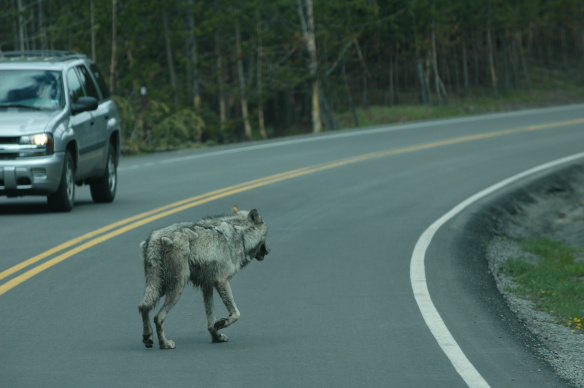
Montana Fish, Wildlife & Parks ended its investigation today into a Facebook posting from Missoula resident Toby Bridges, where he claimed to have killed a wolf and injured another with his vehicle on Interstate 90 just east of the Idaho border. After having the Mineral County Attorney’s office review the investigation, FWP will not be filing any charges in this case.

FWP was first notified of the Facebook posting on September 17, and game wardens initiated an investigation the next day.

“In Montana, harassing or intentionally killing wildlife with a motor vehicle is illegal, and we take reports of such incidents very seriously,” said FWP Warden Captain, Joe Jaquith.

On September 18, wardens investigated the area described in Bridges’ online account, and found a wolf carcass off the shoulder of the road that was consistent in size and color with the online photo. The carcass, however, was far more decomposed than typical for a wolf killed at the time Bridges reported to have struck the wolf.  Wardens found no physical evidence of a collision on or near the Interstate.

Wardens also searched surrounding hillsides for signs of the second wolf that Bridges claimed to have hit and injured.  They could not locate any signs of a carcass or injured wolf, including evidence of blood, tracks, hair, odors, or scavengers.

Wardens interviewed Bridges and used his photographs from the scene for further investigation by other law enforcement officials and wildlife specialists.

A Montana Highway Patrol crash scene investigator analyzed Bridges’ photograph from the scene and concluded that based on the photograph, the vehicle had not been involved in an accident. No accident report had been filed.

Wardens searched for potential witnesses and worked with the Montana Department of Transportation as part of the investigation, but no witnesses came forward.

“In typical cases involving harassment or killing of wildlife with a vehicle, there has always been either a witness to the event, and/or fresh physical evidence that could be directly tied to the violation,” Jaquith said. “In this particular case the only witness appears to be Mr. Bridges, the vehicle shows no evidence of having been in an accident, and the lack of any other physical evidence supporting the claim precludes the filing of criminal charges.”

Brooks Fahy Executive Director

PREDATOR DEFENSE

Photo copyright Jim Robertson

Photo copyright Jim Robertson

Man who posted dead wolf photo to Facebook speaks out

Photo copyright Jim Robertson

Photo copyright Jim Robertson

MISSOULA – The man behind a controversial Facebook post is speaking out.

Toby Bridges is under investigation by Montana Fish, Wildlife, and Parks for pictures he posted of a dead wolf. Bridges boasted that he hit two wolves with his car.

Bridges is an avid hunter and fisherman who has come under national scrutiny for a Facebook post on the page Lobo Watch, an organization he founded in 2008.

“Lobo Watch is a web site for wolf control advocates,” Bridges said.

The Sept. 16 post references an incident on Aug. 14 when Bridges hit two wolves while driving on I-90 near the Idaho-Montana border, killing one of them.

“A mature cow elk and a calf ran out onto the interstate. I slowed down and took my foot off the gas,” Bridges said.

That’s when Bridges spotted four more wolves. He wrote in the post that he let off the brakes and hit the accelerator, because he was going to “save that calf”.

He said that he did not actually intend to hit any wolves, but rather scare them off. Bridges added that hitting the wolves was unavoidable.

“My goal was to get it up there and to either haze those wolves off those elk, or get in between those wolves and those elk. I had no intention of hitting a wolf. There was no stopping, there was no opportunity to stop, even the greatest NASCAR driver out there in the world couldn’t have prevented running into some of those wolves.”

When asked why he decided to post the picture of the dead wolf, Bridges said it was to send a message to pro-wolf advocates.

“They don’t have any problems going after us all the time. I did it, I’ll be honest with you. I did it just to aggravate them. I wanted them to do something. I wanted them to step across the line, and they did. So I got what I wanted.”