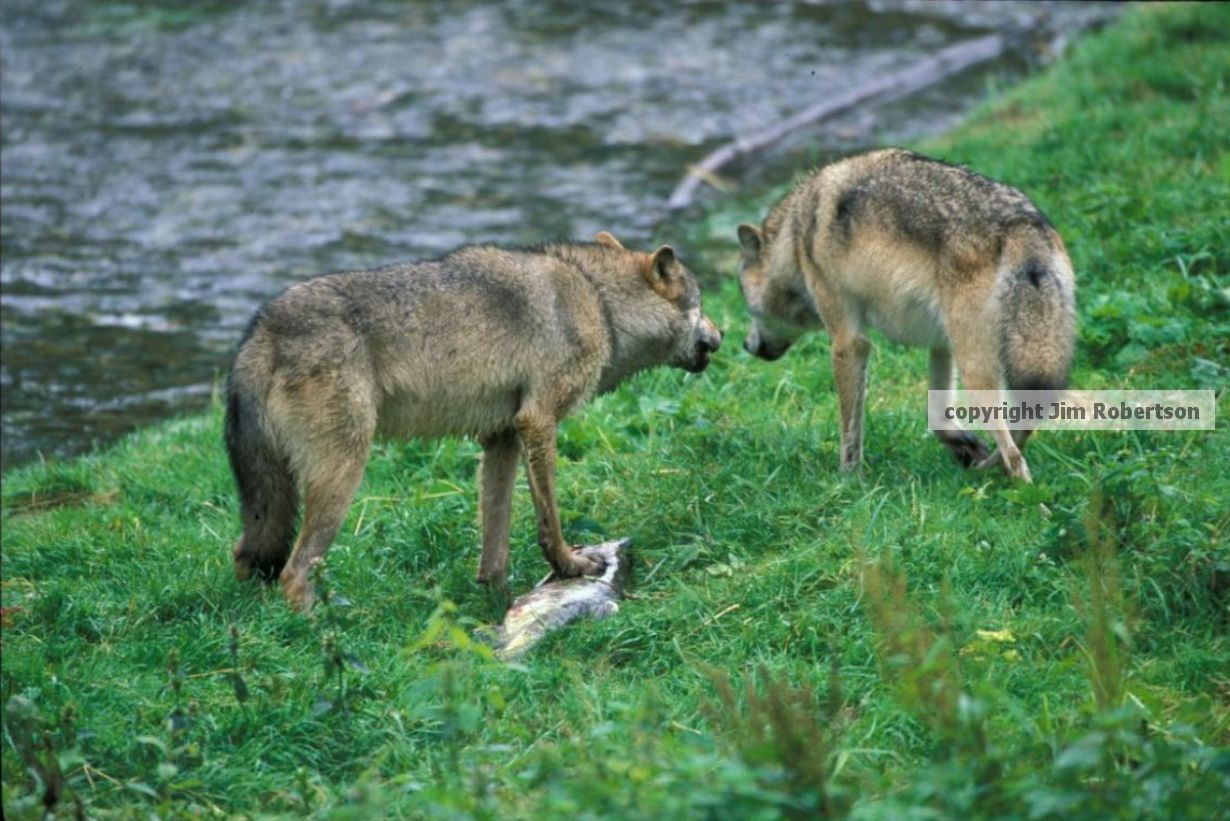
Wyoming fights wolf decision, files emergency rule to allow hunting season

copyrighted Hayden wolf walking
September 25, 2014 6:00 am  • 
 

Wyoming filed an emergency rule Wednesday with the Secretary of State’s Office, hoping to still begin its wolf hunting season Oct. 1.

The move came a day after a Washington, D.C., judge placed wolves back on the endangered species list, which immediately stopped all wolf hunting in Wyoming.

The emergency regulation would place a Wyoming Game and Fish Commission wolf management plan into effect in an attempt to address the judge’s concerns.


There are no guarantees it will work, said Brian Nesvik, head of the wildlife division of the Wyoming Game and Fish Department.

A coalition of conservation groups argued three points in a lawsuit filed against the U.S. Fish and Wildlife Service in 2012. They said Wyoming’s plan did not ensure a viable population of wolves, that there was not enough genetic exchange with other populations and that the gray wolf is still endangered in some of its range.

U.S. District Judge Amy Berman Jackson wrote in her ruling that while wolves had recovered with sufficient genetic exchange, Wyoming’s plan to have a viable population was not binding.

“It’s just another page in the saga of this whole issue,” said Budd Betts, owner of Absaroka Ranch, a guest ranch and outfitting business near Dubois. “I thought this very well could have happened. This is going to be a recipe for an exploding population.”

At issue in the judge’s ruling is Wyoming’s promise to maintain more than the required 100 wolves and 10 breeding pairs outside the national parks, said Nesvik.

Wyoming put an addendum in its management plan that it would maintain a buffer of wolves above the required number. It did not specify how many or make the buffer binding by law.

The emergency rule the state filed Wednesday changes that addendum and turns it into a regulation, Nesvik said.

“This is a formality is all it is,” he said. “Two-thirds of this decision affirmed the merits of Wyoming’s wolf management plan.”

Gov. Matt Mead signed the emergency rule Wednesday, he said.

Wyoming needs to do more than add a regulation to its plan resolving the buffer to assure wolves’ continued survival in the state, said Mike Senatore, vice president of conservation law and general counsel for Defenders of Wildlife, one of the groups involved in the lawsuit.

“What we hope Wyoming does is they go back and put in place a plan that will actually ensure the long-term recovery and survival of wolves in the state,” he said. “We continue to have major problems with the two-tiered status of wolves in the state.”

Wyoming has a hunting season on wolves in the northwest corner, but outside the area they can be shot on sight in what is called the predator zone. Senatore would like to see the predator zone eliminated or greatly restricted, he said.

Nesvik believes the plan Wyoming implemented is adequate to maintain the required number of wolves. Wyoming had at least 178 wolves and 15 breeding pairs in its trophy management area at the end of hunting season in 2013.

That number does not include wolves living in Yellowstone National Park, the Wind River Indian Reservation or the predator zone.

About 85 percent of the state’s wolf population is in the trophy management area. Nesvik did not have an estimate for the number of wolves in the rest of the state.

In 2012, 42 wolves were killed in the trophy area, and 25 were hunted in the rest of the state, according to Game and Fish. In 2013, 24 wolves were killed in the trophy area and 39 in the rest of the state. Hunters did not kill the quota of wolves allowed during either hunting season.

Wyoming’s attorney general will work with attorneys from the U.S. Department of Justice to bring the case before the judge again.

In the meantime, no more wolf licenses will be sold. The department is working on a system to refund money to the hundreds of hunters who already purchased a 2014 license.
More Than 71,500 People Speak Out for Endangered Mexican Gray Wolves

http://www.biologicaldiversity.org/news/press_releases/2014/mexican-gray-wolf-09-23-2014.html

For Immediate Release, September 23, 2014

Contact: Michael Robinson, Center for Biological Diversity, (575) 313-7017
Sandy Bahr, Sierra Club – Grand Canyon Chapter, (602) 999-5790
Drew Kerr, WildEarth Guardians, (312) 375-6104
Emily Renn, Grand Canyon Wolf Recovery Project, (928) 202-1325
Kevin Bixby, Southwest Environmental Center, (575) 522-5552

More Than 71,500 People Speak Out for Endangered Mexican Gray Wolves

New Rules Expand Area Mexican Wolves Can Roam, But Also Allow Increased Wolf Killing

TUCSON, Ariz.— More than 71,500 people submitted comments to the U.S. Fish and Wildlife Service in support of stronger protections for Mexican gray wolves during the comment period ending today. In July the agency proposed a new rule updating management of the wolves that would, for the first time, allow releases of captive-bred animals into New Mexico and allow wolves much more room to roam than they’re currently allowed. Scientists and citizens have long urged adoption of these measures.

The science-supported provisions in the proposed rule, however, would be undermined by provisions arbitrarily limiting wolves to south of Interstate 40 in Arizona and New Mexico, as well as language increasing the circumstances in which wolves could be trapped or shot despite scientists’ recommendations that the Service must decrease excessive human-caused removal and mortality rates.

“We’ve got to let wolves roam, find the best habitat with their own noses and paws — and frankly, we’ve got to stop the slaughter of wolves by both government and private citizens,” said Michael Robinson of the Center for Biological Diversity. “The proposed rule falls short of what is needed, and we hope the government will listen to the tens of thousands of citizens requesting they follow the science and let these lobos raise their pups, travel freely and contribute to the balance of nature without persecution.”

“The Endangered Species Act and the hard work of wildlife biologists and individuals and groups throughout the country have given these endangered wolves a lifeline, a second chance,” said Sandy Bahr, chapter director for Sierra Club’s Grand Canyon (Arizona) Chapter. “Now we need the U.S. Fish and Wildlife Service to do its part — to reject these arbitrary borders, to stop the excessive killing of wolves, and to afford them the protections that are necessary for their recovery.”

Comments from conservation groups and thousands of citizens urged the Service to allow Mexican wolves to roam freely in Arizona, New Mexico, Utah and Colorado; redesignate the small and vulnerable reintroduced population in the Southwest as “essential” under the Endangered Species Act; and spare wolves from trapping, snaring and shooting by the government and private individuals.

“The Service must decide how to manage the reintroduced Mexican wolf population based on the best available science,” said Drew Kerr, carnivore advocate with WildEarth Guardians. “The science shows that to recover, lobos need multiple populations in the American Southwest, freedom to roam their native habitat in the Grand Canyon and southern Rockies regions, and more protections from shooting and trapping.”

Said Grand Canyon Wolf Recovery Project Executive Director Emily Renn: “Multiple studies, including peer-reviewed science published in Conservation Biology just last year, show that the best available habitat for recovery of these special wolves is north of I-40. Many thousands of U.S citizens understand this, so why doesn’t the agency responsible for the wolves’ recovery?”

At last count, after 36 years of the government’s recovery efforts, just 83 wolves, including only five breeding pairs, survive in the wilds of Arizona and New Mexico.

“Wolf supporters throughout the U.S. are united in wanting to see Mexican wolves roam throughout the Southwest so their howls can be heard again in every canyon and mountain range, and they can once again fulfill their important role as a top predator in maintaining the balance of nature in southwestern ecosystems,” said Kevin Bixby, executive director of the Southwest Environmental Center.

Background
Under a 1998 rule, the Service reintroduced Mexican gray wolves to a small area on the border of Arizona and New Mexico known as the Blue Range Wolf Recovery Area. In accordance with a settlement agreement with the Center for Biological Diversity, the Fish and Wildlife Service has now proposed to revise this rule and must finalize it by Jan. 12, 2015.

The proposed rule allows release of captive wolves directly into New Mexico, which was previously only allowed for recaptured wolves. This should allow the release of more wolves from captivity, which is badly needed to bolster the genetic diversity of a wild population suffering from inbreeding depression and consequent lower reproductive rates.

The proposed rule also expands the recovery area across Arizona and New Mexico, and south to the Mexican border. By limiting wolves to the area south of Interstate 40, however, the proposed rule falls short of what scientists recommend.

A recovery team formed by the Service drafted a Mexican wolf recovery plan in 2013 that called for creating additional populations in the Southern Rockies and Grand Canyon regions. In response to objections from the states of Utah and Colorado, the agency neglected to finalize this recovery plan. Conservationists are pursuing litigation to obtain a final plan.

The proposed rule would liberalize take of wolves by allowing states to dictate wolf removal in response to wolves eating their natural prey such as elk and deer, and by allowing livestock owners greatly increased latitude to kill wolves, even those not involved in depredations.

In their comments, conservationists recommended the following:

• Designating Mexican gray wolves as “experimental essential” under the Endangered Species Act to bolster their legal and on-the-ground protections;

• Allowing wolves to roam into habitat north of Interstate 40;

• Requiring ranchers to remove or render inedible (for example, through lime) the carcasses of non-wolf-killed livestock before wolves can scavenge and become accustomed to eating livestock; and

• Disallowing take of wolves until the population reaches a science-based population threshold, in accordance with recovery recommendations the Service has ignored.

The Center for Biological Diversity is a national, nonprofit conservation organization with more than 775,000 members and online activists dedicated to the protection of endangered species and wild places.

The Sierra Club is now the nation’s largest and most influential grassroots environmental organization — with more than two million members and supporters.

WildEarth Guardians is a nonprofit conservation organization dedicated to protecting and restoring the wildlife, wild places, wild rivers and health of the American West.

The Grand Canyon Wolf Recovery Project is dedicated to bringing back wolves and restoring ecological health in the Grand Canyon Region.

The Southwest Environmental Center speaks for wildlife and wild places in the southwestern borderlands.

The following organizations also generated comments for Mexican wolf recovery:

Sierra Club-Rio Grande Chapter, Grand Canyon Wildlands Council, White Mountain Conservation League, Great Old Broads for Wilderness, Endangered Species Coalition, Wolf Conservation Center and Mexicanwolves.org

1453351_1488724231352782_186999841_n

Victory for Wolves in Wyoming!

http://earthjustice.org/news/press/2014/victory-for-wolves-in-wyoming

Victory: Federal Judge Reinstates Federal Protections Statewide

copyrighted Hayden wolf in lodgepoles

September 23, 2014
Washington, D.C. —Federal protections for gray wolves in Wyoming were reinstated today after a judge invalidated the U.S. Fish and Wildlife Service’s 2012 statewide Endangered Species Act delisting of the species. The ruling from the U.S. District Court halts the management of wolves by Wyoming, a state with a history of hostile and extreme anti-wolf policies.

“The court has ruled and Wyoming’s kill-on-sight approach to wolf management throughout much of the state must stop,” said Earthjustice attorney Tim Preso. “Today’s ruling restores much-needed federal protection to wolves throughout Wyoming, which allowed killing along the borders of Yellowstone National Park and throughout national forest lands south of Jackson Hole where wolves were treated as vermin under state management. If Wyoming wants to resume management of wolves, it must develop a legitimate conservation plan that ensures a vibrant wolf population in the Northern Rockies.”

Earthjustice represented Defenders of Wildlife, Natural Resources Defense Council, the Sierra Club and the Center for Biological Diversity in challenging the Fish and Wildlife Service’s September 2012 decision to strip Endangered Species Act protections from gray wolves in Wyoming. The conservation groups challenged the 2012 decision on grounds that Wyoming law authorized unlimited wolf killing in a “predator” zone that extended throughout most of the state, and provided inadequate protection for wolves even where killing was regulated.

“Today the court affirmed that delisting gray wolves in Wyoming by the Obama administration was premature and a violation of federal law,” said Defenders of Wildlife President and CEO Jamie Rappaport Clark. “Any state that has a wolf management plan that allows for unlimited wolf killing throughout most of the state should not be allowed to manage wolves. Wolves need to remain protected under the Endangered Species Act until the species is fully recovered. State laws and policies that treat wolves like vermin are as outdated and discredited today as they were a century ago.”

“The decision makes clear that ‘shoot-on-sight’ is not an acceptable management plan for wolves across the majority of the state,” said Dr. Sylvia Fallon, senior scientist and wildlife conservation director at the Natural Resources Defense Council. “It’s time for Wyoming to step back and develop a more science-based approach to managing wolves.”

“The court has rightly recognized the deep flaws in Wyoming’s wolf management plan. Wolves in Wyoming must have federal protection until the state gets it right. That means developing a science-based management plan that recognizes the many benefits wolves bring to the region instead of vermin that can be shot on sight in the majority of the state,” said Bonnie Rice of the Sierra Club’s Greater Yellowstone Our Wild America Campaign. 

“We’re thrilled that protections for Wyoming’s fragile population of wolves have been restored,” said Noah Greenwald, endangered species director with the Center for Biological Diversity. “With Wyoming allowing wolves to be shot on sight across more than 80 percent of the state, there is no way protections for wolves should have ever been removed.”

The 2012 delisting of wolves in Wyoming turned wolf management over to the state, which opened up over 80 percent of its land to unlimited wolf killing and provided weak protections for wolves in the remainder. Since the delisting, 219 wolves have been killed under Wyoming’s management. Prior to the 2012 reversal of its position, the Fish and Wildlife Service denied Wyoming the authority to manage wolves in the state due to its extremely hostile anti-wolf laws and policies.

Background: There were once up to 2 million gray wolves living in North America, but the animals were driven to near-extinction in the lower 48 states by the early 1900s. After passage of the federal Endangered Species Act in 1973 and protection of the wolf as endangered, federal recovery programs resulted in the rebound of wolf populations in limited parts of the country. Roughly 5,500 wolves currently live in the continental United States — a fraction of the species’ historic numbers.

The U.S. Fish and Wildlife Service is currently proposing to remove Endangered Species Act protection for most gray wolves across the United States, a proposal that the groups strongly oppose; a final decision could be made later this year.

Montana wolf hunt begins; activists shadow hunters

Montana wolf hunt begins; activists shadow huntersThe Associated Press The Associated Press
September 15, 2014 3:12 pm  • 

BILLINGS — Montana’s six-month general hunting season for gray wolves began Monday as outside activists sought to highlight the killing of wolves that leave Yellowstone National Park.

It’s the fourth annual hunt since Congress revoked endangered species protections in 2011 for the animals, and the fifth since 2009, when gray wolves briefly lost their protected status before it was temporarily restored by a federal judge. There was no hunt in 2010.

Yet the hunt continues to stir debate. For this year’s opening, a small group of activists said they were shadowing two groups of backcountry hunting outfitters in a wilderness area next to Yellowstone.

Rod Coronado with the recently formed Yellowstone Wolf Patrol said he and eight other volunteers planned to use a video camera to document the killing of any wolves. Coronado said they would not directly interfere with hunting, which would be illegal.

“We’re hoping our presence here and taking video of it and photographing evidence can persuade Montana citizens to ask their governor to shut down the hunt outside the park,” Coronado said.

In 1995, a federal judge sentenced Coronado to more than four years in prison for his role in an arson attack on an animal research facility in Michigan. He said Monday that he no longer considers illegal actions effective and has no intention of breaking any Montana laws.

Montana law prohibits harassment of hunters, punishable by a fine of up to $500 and 30 days in prison. But tracking hunters and their activities is not illegal as long as nothing is done to disrupt the hunt itself, said Sam Sheppard, a warden captain with Montana Fish, Wildlife and Parks.

Hunting is not allowed inside Yellowstone. Just north of the park, two Montana hunting units are subject to a combined six-wolf quota. That limit on the number of wolves that can be taken annually was put in place after park scientists raised concerns in recent years that too many animals were being killed as soon as they passed over the park boundary and into Montana.

Areas outside Glacier National Park also have a quota.

There is no limit on how many wolves can be killed statewide, and 230 were harvested during the 2013-2014 season.

As of Monday, only one wolf had been taken this season, during an early season archery hunt. Wolf trapping season begins in December.

Coronado said he and his fellow activists plan to remain in the Absaroka-Beartooth wilderness area outside Yellowstone for about 10 days or until their food runs out.

He said similar actions are planned this fall to protest hunts in Wisconsin, where opening day is Oct. 15, and possibly Idaho, where the season is already underway.

http://helenair.com/news/local/montana-wolf-hunt-begins-activists-shadow-hunters/article_a963f81e-a8ed-5df7-b660-43a7664fce4e.html


Proving Ourselves to Save the Wolf


Bold Visions by Bold Visions @ 11:16am

Stephen Capra

For some time now, many of us–me included–have bitterly complained about the current state of wolves in the West. There is plenty of blame to go around, but recently the focus has turned to the conservation community itself and the actions of groups like Defenders of Wildlife. Yet, it’s small conservation organizations like Bold Visions, which have yet to fully prove their merit in the debate over wolves.

Smaller organizations contribute to helping wolves via updates, commenting, video, rallies and determined writing on the subject.  This is not meant in any way to diminish the hard work that these groups have made. But to date, the only groups that seem to control efforts and the funding around the wolves are major groups that have wantonly compromised away wolves, in order to proceed with what they term ‘incremental change,’ which ultimately means their actions are nothing more than fundraising schemes.

It also permits endless blame to be directed at US Fish and Wildlife, which is simply responding to the level of concern voiced, which is ‘let’s find a way to work together.’ If we are to change that message, it’s up to smaller subset of us in the conservation community to become the voice of a new direction, with the goal of impacting what the agencies and the American public are hearing from the passionate voices speaking for wolves.

The issue is how to impact the decisions in a meaningful and perdurable way. Small organizations that represent the point of view- that wolves do not need to be slaughtered to maintain public lands grazing, must band together much like a Union, and use the power of many small groups to become a large and crucial voice in the debate over wolves. Otherwise, we can complain and watch the slaughter continue.

So here is my challenge and pitch to any and all that are listening: We need to unite seven small conservation groups operating in the West. These would include only groups that oppose livestock grazing on public lands and want wolves protected-not shot or trapped. My proposal would be to have a three day, two night meeting in Boise, ID (a somewhat centralized location).

The purpose of the meeting would be to create a strategic plan, foundation plan and media plan for saving wolves across the West, both Northern Gray and Mexican. It would be the genesis of a unified coalition who will work together to support a single strategy we agree upon; one that will impact the protection of wolves and stop the compromising that working with opposition ranchers and politician at the expense of wolves.

We might call ourselves “The Wild Wolf-Healthy Lands Coalition.”

The purpose of that coalition requires a lot of participant input, but clearly our basic goal would be to form a working group that can share a vision; one working to end public lands grazing, and expands instead of shrinks shrinks the wolves’ range.

A Coalition that challenges state Game and Fish Departments, Governors and other elected officials who appear to be beyond both reason and the law. By bringing groups from several states, we can create a consistent messaging and develop an informational network that spans the entire West.

Such a meeting would be the start, not an end-point. Future meetings would morph to include other stake holders: Tribes, additional conservation groups, scientists, wilderness philosophers, foundations and volunteers, who are already giving so much to help wolves.

But a first meeting must be small and willing to dig deep; to argue, celebrate, build trust, and find common ground that benefits wolves, not a group’s or individual’s ego.

Large national groups have millions of dollars to operate with and drive a stale, tired message of cooperation and partnerships with the livestock industry. Many of us with experience know far too well that the ‘feel good’ approach is doomed to failure.

By forging a new alliance, we can create a stronger voice that demands that large, corporate conservation groups begin to compromise, not with ranchers, but with a strong constituency within their own ranks that wants to re-frame the debate on wolves.

The basic thought is this: we are killing wolves to appease ranchers and their powerful allies. In so doing we show no respect for ourselves (as conservationists), or the fate of wolves. We are constantly told that we must stop being so “extreme” and learn to work with our opposition for the sake of the wolf.

This mealy-mouthed rhetoric sounds great in a corporate board room, and sounds weak and aimless outside the borders of Yellowstone and high up in the Gila. We need to become galvanized, intelligent and begin to shift the paradigm of wolf recovery.

United, we have a chance for change; standing alone, we remain a feeble voice in wilderness of rhetoric. Millions of dollars have been spent compromising on the wolf. We can bring some groups together to change that status quo. For three days and two nights we can work towards an enlightened vision and the cost would be no more than $7000-$9000 to cover participants’ expenses and travel. It’s feasible that a single donor, or a handful could make this proactive plan a reality. Will we be successful? It’s far too soon to know. We represent a segment of the conservation movement that to date has largely been ignored, to be heard we must show success or better prove ourselves. Our chances are better if we are a coalition- a group of people with guts and determination.

This coming week, we will be contacting the various groups to access  their interest in a meeting, and to determine what each group requires to be part of this effort. We feel we can hold this crucial first meeting  in the first week of December, and begin the New Year with hope and a vision that wolves are more important than the livestock industry, and gives notice that their days of control are coming to an end.

That is the challenge if wolves are to be truly free to reclaim the wildness that is our public lands and for justice to prevail.

Aerial Gunner Shot Washington Alpha Female Wolf

http://www.king5.com/story/news/local/2014/09/04/losing-alpha-female-threatens-pack-survival/15102151/

Washington state accidentally shoots alpha wolf

STEVENS COUNTY, Wash. — When a sharpshooter took out a member of a problem wolf pack last month, it looked like a small female, but it wasn’t just any female. A necropsy determined it was the breeding female of the Huckleberry Pack, Washington State Department of Fish and Wildlife (WDF&W) officials said today.

The Huckleberry Pack has been feeding on sheep being raised on private forest lands in northern Stevens County.

State decides to kill, not scare, wolves

WDF&W biologists tried non-lethal means to keep the wolves away from the 1,800 head sheep herd. But when they found five dead sheep and three injured on August 23, they issued the order to kill up to four wolves in the pack.

The only wolf killed was the female shot from a helicopter by a federal contractor.

WDF&W was hoping to keep the breeding pair alive so that if the pack learned to leave the sheep alone, it could rebuild and return to hunting wild animals.

“Obviously, this is an unfortunate development and one we hoped to avoid,” said Nate Pamplin, WDF&W’s Assistant Wildlife Program Director. “We provided direction for individuals involved in aerial removals or trapping/euthanasia to try to remove smaller bodied animals.”

He added the alpha wolf weighed 66 pounds and was 3 years old. Pamplin said they couldn’t determine it was the alpha female from the air.

Biologists say losing the alpha female harms the survival of a wolf pack, but other females in the pack may fill that role.

copyrighted Hayden wolf in lodgepoles

View From the Other Side: Rancher left ‘high and dry’ by canceled wolf hunt

http://www.capitalpress.com/Washington/20140903/rancher-left-high-and-dry-by-canceled-wolf-hunt#.VAi8TDwQuxQ.facebook

Matthew Weaver

Published:September 3, 2014 2:45PM

1
1

<!–

–>

The Stevens County sheep rancher said he was left “high and dry” when state wildlife officials called off a wolf hunt, forcing him to move his flock to keep it from being attacked.


A Washington state rancher says he was left “high and dry” when state wildlife managers called off a wolf hunt to protect his 1,800 sheep.

The cancellation forced Dave Dashiell of Hunters, Wash., to move his flock or risk more attacks by the wolves, which had already killed 24 animals.

Washington Department of Fish and Wildlife managers had planned to kill four wolves from the Huckleberry pack but called off the helicopter hunt after one wolf was killed and pulled out trappers shortly after.

“We’re on pause right now, if something new develops — another series of depredations, perhaps even with a different producer and the same pack in neighboring areas — then we’ll reassess at that point,” department carnivore section manager Donny Martorello said.

A federal wildlife agent contracted by the state killed one adult female Aug. 23 from a helicopter. The helicopter hunt wasn’t as efficient as the department expected, Martorello said. The wolves were screened by thick trees or were on the Spokane Tribe of Indians reservation, where they couldn’t be killed. The department continued trapping until the start of the Labor Day weekend, then removed the traps because of the increase in recreational activities like camping and hunting in the area, he said.

The department still has the authority to kill more wolves in the vicinity of the sheep, Martorello said.

“Our ranch was left high and dry to try and handle the situation ourselves while at the same time having our hands tied due to the wolves’ state endangered species status,” Dashiell said in a Stevens County Cattlemen’s Association press release. Wolves in the area are protected under the Endangered Species Act.

Dashiell moved the sheep to a friend’s pasture, where they will stay until he can move them to a new grazing location far from the current site.

The department is working with Dashiell to determine his strategies for managing straggling sheep and will keep a range rider on the site, Martorello said.

The department is also communicating with other producers in the area.

“Having to make this kind of change in the middle of the summer has caused considerable stress, expense and hardship to our operation,” Dashiell said. “The grazing lease we had arranged with the private timber company was good until the middle of October and now we have to move our animals and try to find an alternate spot at the last minute.”

Martorello said there are no requirements in the department’s wolf management plan and protocols that producers move their livestock to alternate grazing sites to reduce conflict. It was an opportunity to break the pattern of repeated behavior, he said.

“In this particular case, with the producer nearing that period of time where they were moving sheep to a winter range, we wanted to work with the producer to see if we could expedite that process at all,” Martorello said. “We weren’t asking the producer to necessarily take a step he wasn’t going to take, but maybe to do that a little bit sooner.”

Dashiell has represented the Cattle Producers of Washington on the Washington Department of Fish and Wildlife wolf advisory group.

“But in the end all of the talk did very little to help a person in my situation,” he stated. “The Huckleberry wolf pack needs to be removed, not our sheep. By making us leave we are only passing the problem along to others in the area when the wolf finds their pets, animals and livestock.”
                                                 <!–

Previous
2
3
Next

–>

1,800 WA Sheep Moved, Wolves’ Fate Still Uncertain

http://www.spokesman.com/stories/2014/sep/02/stevens-county-ranchers-move-sheep-after-wolves/
September 2, 2014

Stevens County ranchers move sheep after wolves kill 24

By The Spokesman-Review

A Stevens County family moved 1,800 sheep off private grazing land over the weekend to protect their flock from wolves that have killed at least two dozen of the animals this summer.

Dave and Julie Dashiell decided to get their sheep to safety rather than wait for state wildlife officials to track down and kill up to four wolves from the Huckleberry Pack, which is at least six strong and hunts north of the Spokane Tribe reservation.

The ranchers tried everything to thwart the attacks, said Jamie Henneman, spokeswoman for the Stevens County Cattlemen’s Association, which is working on behalf of the Dashiells. They had a full-time herder, four guard dogs, range riders and extra help from state employees, but confirmed wolf kills kept mounting, Henneman said Monday.

“There’s a point where you’ve got to decide, do you leave and hopefully stay in business, or do you stick around until there’s just nothing left,” she said.

The Dashiells know of 24 sheep they lost to wolf attacks the past few weeks and fear the actual toll could be twice that number.

On Sunday they pulled their remaining sheep off rangeland they leased from Hancock Timber Co. northeast of Hunters in southern Stevens County. The animals were moved, with assistance from state employees, to a temporary pasture and soon will be trucked to their winter range, about six weeks earlier than planned, Henneman said.

The Washington Fish and Wildlife Department shot one of the wolves, an adult female, from a helicopter on Aug. 23 and set out traps in hopes of removing up to three others from the pack. But the agency pulled its traps before the Labor Day weekend to avoid conflicts with recreationists and grouse hunters.

The state responded quickly to assist the Dashiells once it was clear wolves were attacking the flock, said Donny Martorello, carnivore section manager for Fish and Wildlife.

When wolves start preying on domestic sheep, losses can add up quickly, Martorello said Monday. “The alarm bells went off for us,” he said, and the agency worked with the rancher daily on preventing more attacks.

Now that the Dashiells have removed the sheep, the state will re-evaluate what to do next, Martorello said.

“We’re certainly concerned about the behavior, the repeated depredations,” he said. “We did remove one wolf; we don’t know if we’ve broken that pattern of depredation, that prey-switching from natural prey to sheep.”

Henneman said the cattlemen’s association sees this as a case of the state falling short of protecting livestock producers.

“If this is the precedent – that Fish and Wildlife refuses to control their animals, that the rancher has to leave – we have a private property rights crisis here,” she said. “That means anyone that owns land out here … it means you’re going to get kicked out, the predator has precedence.”

Henneman also noted that other land and livestock owners in that area may be at risk from the Huckleberry Pack.

“As soon as that pack figures out that their 1,800 sheep are gone, they’re going to move on to the next site,” she said. “This is not the end to these troubles.”

Until recently the pack had spent most of its time on the Spokane reservation but now is more active north of the reservation. The Dashiells did not know the pack was that close until the attacks began, Henneman said.

Fish and Wildlife plans to reach out to neighboring livestock owners to discuss the pack and offer help to try to prevent more attacks. The agency also is evaluating compensation for the Dashiells for the sheep injured and killed by wolves.

———————–

At this time WDFW is not certain if lethal action will continue to be pursued. WDFW and stakeholders are meeting this afternoon and information from this meeting will be posted by WDFW Public affairs office under “Latest News” on their website’s homepage.    http://wdfw.wa.gov/index.html

WA Suspends Huckleberry Wolf Slaugher, but Only For the Weekend Grouse Hunt

Priorities. The state wolf trappers must have wanted the weekend off to hunt grouse… They can trap wolves anytime, but this weekend is opening day of grouse hunting!
August 29, 2014 at 12:03 PM

State suspends wolf hunt this weekend

SPOKANE  — The state Department of Fish and Wildlife (DFW) will suspend its hunt for three more members of the Huckleberry wolf pack until after the Labor Day weekend.

Hunters contracted by the state for the past week have been trying to kill a total of four members of the pack in order to protect a herd of 1,800 sheep the wolves have been preying upon. One wolf was shot and killed by a hunter in a helicopter on Aug. 22.

The state says at least 24 sheep have been killed in eight confirmed wolf attacks on the herd in southern Stevens County since Aug. 14.

Officials for DFW say they have suspended efforts to hunt or trap the wolves in order to avoid conflicts with Labor Day recreationists and grouse hunters.

598875_10151079569092823_924805190_n

WDFW Scrap Helicoter for Traps

This is the latest from the Washington state Department of Fish and Wildlife: 


Helicopter flights occurred on Saturday, August 23 through Tuesday morning, August 26.  As we noted in Monday’s news release, one female wolf has been removed.  Helicopter activity provided hazing which may have kept wolves from the flock, and we have had only one sheep injured by a wolf attack, found on Sunday morning (and was later found dead this week, and it is being investigated).  As indicated before, on the Saturday morning flight (and the subsequent ground investigation), five sheep were found dead and three were injured.

We did not fly on Tuesday evening and do not plan to fly today.  We have established a trapline and have provided instructions to euthanize up to three more wolves caught.  We also have ongoing authorization for our staff and the rancher to kill up to two wolves observed in the vicinity of the flock.  We will continue to assess these efforts each day, and the directive is to remove up to four wolves from the Huckleberry pack. 

Nonlethal measures continue to be in place, with the rancher, a range rider, and up to four department staff, and four guard dogs providing an on-going presence.

We continue to work with the producer to try to find an alternative grazing location.  We’re hoping that will occur soon, and the producer understands our desire that for this particular situation, we’re hoping to eliminate the killing of his sheep by wolves by moving the sheep to their winter range.  He received a communication yesterday saying that he should be able to move the sheep soon. 

We’ve received a lot of inquiries about why moving sheep hasn’t happened sooner.  A couple items I hope you’ll keep in mind.  First, with the Carlton Complex Fire in Okanogan County and other fires across the state, there has been a tremendous demand for alternate pasture for displaced livestock operations.  We’re offering whatever assistance we can to help the operator with the various logistics. 

Second, I think it is important to remember that neither the Wolf Conservation and Management Plan nor our preventative measures checklist suggest that moving livestock off of an allotment is a requirement to address wolf-livestock conflicts.  With the operator moving his sheep to winter range anyway, we’re hoping to work with him to expedite that move.  But in the long run, and in other conflict situations that we will face, it is not likely to be feasible for a rancher to move livestock out of the vicinity of problem wolves.  Maintaining working lands and the livestock industry is important both from the perspective of social tolerance of wolf recovery, and the overall maintenance of viable local economies and support for working lands (and the wildlife conservation benefits of those lands continuing in that status). 

Finally, we have approached the rancher about compensation for sheep injured and killed by wolves and will likely continue that dialogue with him at a later date, once some of the immediate issues are resolved.

copyrighted wolf argument settled