Idaho Suspends Wilderness Wolf-Killing Plan In Face of Court Challenge

Idaho Suspends Wilderness Wolf-Killing Plan In Face of Court Challenge

By On July 29, 2014

POCATELLO, Idaho – Faced with a legal challenge by conservationists and an imminent hearing before a federal appeals court, the Idaho Department of Fish and Game (“IDFG”) has abandoned its plan to resume a professional wolf-killing program in the Frank Church-River of No Return Wilderness during the coming winter.

In a sworn statement submitted to the U.S. Court of Appeals for the Ninth Circuit on July 24, 2014, IDFG Wildlife Bureau Chief Jeff Gould stated that IDFG “will not conduct any agency control actions for wolves within the Frank Church River of No Return Wilderness before November 1, 2015.” IDFG had previously advised the court that the program could resume as early as December 1, 2014.

A professional hunter-trapper hired by IDFG killed nine wolves in the Frank Church Wilderness last winter and state officials in February announced plans to kill 60 percent of the wolves in the Middle Fork section of the wilderness over a period of several years in an effort to inflate wilderness elk populations for the benefit of commercial outfitters and recreational hunters.

“As we mark the 50th anniversary of the Wilderness Act this September, we are relieved that the Frank Church Wilderness will be managed as a wild place, rather than an elk farm, for at least the coming year,” said Earthjustice attorney Timothy Preso, who is representing conservationists challenging the wilderness wolf-killing program. “Now we must make sure that wilderness values prevail for the long term.”

Earthjustice is representing long-time Idaho conservationist and wilderness advocate Ralph Maughan along with four conservation groups—Defenders of Wildlife, Western Watersheds Project, Wilderness Watch, and the Center for Biological Diversity—in the lawsuit challenging the wolf-killing program. The conservationists argue that the U.S. Forest Service, which is charged by Congress with managing and protecting the Frank Church Wilderness, violated the Wilderness Act and other laws by allowing and assisting the state wolf-killing program in the largest forest wilderness in the lower-48 states.

In a separate sworn statement filed with the Ninth Circuit on July 24, the Forest Service committed to providing the conservationists with notice by August 5, 2015 of any plans by IDFG to resume professional wolf-killing in the Frank Church Wilderness during the 2015-16 winter, as well as “a final determination by the Forest Service as to whether it concurs with or objects to such plans.”

“IDFG’s announcement now gives the Forest Service the chance to play out its mission—its obligation to protect our irreplaceable Frank Church Wilderness for the American people and for all its wildlife against an effort to turn it into a mere elk farming operation on infertile soil,” said Maughan, a retired Idaho State University professor who was a member of the citizens’ group that drew up the boundaries of the Frank Church Wilderness 35 years ago.

“We are pleased to see this truce in Idaho’s wolf reduction efforts in the Frank Church for a full year,” said Suzanne Stone, Defenders’ regional representative who has worked nearly three decades to restore wolves in Idaho. “The Frank Church is both the largest forested wilderness area and a core habitat for gray wolves in the western United States. Wolves belong here as they have made the ‘Frank’ truly wild again. Ensuring healthy wolf populations here is critical for the recovery of wolves throughout the entire northwestern region.”

“It is hard to imagine a decision more inconsistent with wilderness protection than to allow the hired killing of wolves,” added Travis Bruner, executive director of Western Watersheds Project. “Today, some relief for wild places flows from the news that IDFG will not continue that odious operation this year. Next we will see whether the Forest Service will take action to protect the Frank Church Wilderness from such atrocities in the future.”

“It’s time for the Forest Service to stand with the vast majority of the American people by taking the necessary steps to protect wolves in the Frank Church-River of No Return Wilderness for the long-term, not just the next 15 months,” stated George Nickas, executive director of Wilderness Watch. “Wolves are the epitome of wildness. Their protection is key to preserving the area’s wilderness character.”

“We’re glad Idaho’s wolves are rightly getting a reprieve from the state’s ill-conceived predator-killing plan, at least for a year,” said Amy Atwood, senior attorney at the Center for Biological Diversity.  “We’re also happy to see the Forest Service agree to be more transparent about any future decision to allow Idaho to kill wolves in the Frank Church.”

BACKGROUND: The Ninth Circuit Court of Appeals had scheduled an August 25, 2014 court hearing to address the conservationists’ request for an injunction to prevent IDFG from resuming its program of professional wolf killing in the Frank Church Wilderness during the coming winter. IDFG commenced the program in December 2013 without public notice but abruptly suspended the program on January 28, 2014 amidst emergency injunction proceedings before the Ninth Circuit. Since then, the conservationists have continued to press their case for an injunction before the Ninth Circuit, which led to the scheduled August 25 court hearing.

Because IDFG has abandoned the 2014-15 professional wolf-killing program in the wilderness, the conservationists have agreed to forego the scheduled court hearing, but they renewed their call for the Forest Service to fulfill its legal duty to protect the Frank Church Wilderness.

copyrighted wolf in river

War on wolves has reached new a low


By LYNNE STONE

Since early July, Idaho’s war on wolves has another chapter—once again in the Sawtooth National Recreation Area (SNRA). This time, it involves the Casino Pack in the Sawtooth Valley near Fisher Creek.
It works like this: A rancher has a hurt or dead calf or sheep, calls the misnamed federal agency Wildlife Services, who will say it’s a wolf kill. Wildlife Services calls the Idaho Department of Fish and Game, and Fish and Game rubber-stamps whatever Wildlife Services wants—usually to “kill all offending wolves.” In the summer months, there are thousands of sheep and cattle on the SNRA. Some are going to be sick or hurt every day. If wolves come around, they are blamed.
The Casino Pack alpha male was B450. I had first seen him as a yearling in 2009 with his three younger sisters and brothers in the Stanley Basin. His family, the Basin Butte wolves, were killed on Thanksgiving week 2009 because cattle ranchers would not adapt to living with wolves.
B450 survived five more years and had his own family before he was trapped on July 9 near Fisher Creek. Although Fish and Game had told Wildlife Services to release any collared wolves, B450 was so mortally injured from being in the leg-hold trap in hot weather that he was shot. The same with his yearling son, B647—caught in a trap on July 1, and in such bad shape when the Wildlife Services agent finally checked the trap, the wolf would not live if released. This is not the first time wolves have suffered in the SNRA due to trapping. A collared yearling died in a trap on Decker Flat last May.
Another Casino Pack wolf, a subadult female, has also been killed by Wildlife Services, leaving only the pack’s mother, pups and one other sibling. The kill order is out for them, too. All because one rancher lost one calf, maybe to wolves.


The town of Stanley struggles in winter to survive. Wildlife viewing, especially for wolves, could change that.


Fish and Game in Salmon told me this week that they were sorry that the collared wolves were killed. Fish and Game seems to have no control over the actions of Wildlife Services, nor do they seem to care in a state where our cowboy governor Butch Otter has made it clear he doesn’t want wolves here.
On the SNRA since 2000, the Stanley Pack, Whitehawk Pack, Galena Pack and Basin Butte Pack have been eradicated because of a handful of cattle and sheepmen. When people claim that the SNRA protects wildlife, it’s simply not true when it comes to wolves and other animals that ranchers don’t like. They call the shots, literally.
It doesn’t have to be this way. Ranchers could be proactive and learn about nonlethal methods of deterrence. A few are doing this in the Wood River Valley. Landowners who lease pasture to cattlemen could stop—that would help wolves. The SNRA could be a place like Yellowstone Park’s Lamar Valley—where people come from all over the world to see wolves and nearby communities benefit—receiving millions of dollars from tourists. The town of Stanley struggles in winter to survive. Wildlife viewing, especially for wolves could change that.

    Lynne Stone is the director of the Boulder-White Clouds Council, an environmental group. She has been a longtime advocate for wolves in central Idaho.

http://www.mtexpress.com/index2.php?ID=2007152960#.U8_dOGdOVy0

First Known Litter Of Mexican Gray Wolves Born in The Wild

http://www.myfoxphilly.com/story/26065039/mexican-grey-wolves

Jul 20, 2014t;em class=”wnDate”>Sunday, July 20, 2014 9:33 PM EDT</em>

 1507924_1384643448473483_1390811510_n

Mexico- Officials in Mexico have released video of the first known litter of Mexican gray wolves to be born in the wild.

The births are part of a three-year program to reintroduce the subspecies to a habitat from which they disappeared three decades ago.

The country’s National Commission of Natural Protected Areas says the wolf pups were spotted last month by a team of researchers in the Western Sierra Madre Mountains in northern Mexico.

The above footage shows the wolf cubs playing.

Mexico began reintroducing the wolves three years ago. The parents of this litter were released in December with hopes they would breed.

Authorities seldom reveal the exact location of breeding pairs in recovery programs in order to protect endangered species.

The Mexican gray wolf was almost wiped out in the southwestern United States by the same factors that eliminated the animal in Mexico, such as hunting, trapping and poisoning.

The Mexican gray wolf is still an endangered species in the United States and Mexico.

Alaskan wolf pups rescued from fire heading to Minnesota Zoo

The zoo plans to ‘spay and neuter them because they are no longer and endangered species’ — WTF?

http://www.startribune.com/local/266956601.html

by: JIM ADAMS , Star Tribune

 July 14, 2014 – 11:22 AM

Rescued from wildfire, the pups will replace older wolves and are expected to draw visitors.

wolf pups

A revived and lively litter of wolves is expected Tuesday at the Minnesota Zoo, just weeks after being plucked from the smoldering aftermath of an Alaskan wildfire.

Officials at the Apple Valley zoo said the five gray wolf pups have rebounded nicely after being abandoned by their parents during the May fire and then losing a sibling to a porcupine attack.

Four firefighters discovered the 2-week-old pups in their den, dehydrated and stuck with quills. A porcupine apparently had wandered into the den to escape the smoke and flames of the massive Funny River wildfire in the Kenai Peninsula Wildlife Refuge.

Such a wildfire rescue of pups is rare, according to the Alaska Department of Fish and Game website. Officials believe the pups’ parents fled the den because of the fire and firefighter activity in the area.

The five survivors — three males and two females; three gray, two light-colored — were taken to the Alaska Zoo in Anchorage on May 27, where staff tended and bottle-fed them. One pup is named X-Ray, after the fire crew that saved them. The others were named after the four rescuers’ hometowns: Gannett, Hooper, Huslia and Stebbins, said Minnesota Zoo spokesman Josh Le.

Now eight weeks old, the pups have tripled in size and can be seen playing on video taken at the Alaska Zoo. Visitors were invited to view wolf feedings five times a day at the zoo, and as they grew, watched them romp and roll outside.

“So far they are really healthy and that is why they are coming Tuesday to the Minnesota Zoo,” Le said. “They are growing but still adorable.”

But don’t expect to see the Alaskan canines in person until mid-August. The pups will be in quarantine for a month while they are monitored and blood and fecal tests are done to ensure they carry no disease or parasites to the zoo, Le said.

The furry five will replace the zoo’s adult pair of gray wolves, Kaskapahtew and Wazi, who have never bred successfully, Le said. He said the pair will be sent to another accredited zoo in the U.S., and had no chance of being euthanized.

The five siblings likely will boost attendance by creating the wolf pack the zoo has long sought. They will have free run of the spacious wolf enclosure on the Medtronic Minnesota Trail. They will be spayed and neutered because they are not an endangered species and the zoo avoids inbreeding, Le said.

Le said the pups will be escorted by Alaska Zoo staff on a flight donated by Delta Air Lines. Two Minnesota Zoo managers will greet the Alaskans at the Minneapolis airport.

Wolf Hunting Reinforces Intolerance

Attitudes about wolves after 1st wolf hunt
 
Hypotheses: Attitudes towards wolves and wolf policy among residents in wolf range since 2009, and since the wolf harvest, with increase in tolerance with hunt. (Note: this was one of the rationales the state used for establishing the legal hunt.)copyrighted Hayden wolf walking
Plurality of wolf range respondents  said tolerance would increase if people could hunt wolves in pre-hunt surveys.
Assumption: Making wolves a game species even in a limited number might make wolves part of the utilitarian culture of wildlife and provide rural residents with increased comfort.
Survey sample: 81% male, 19% females, 70% hunters. Most in “wolf range.”
Results: Significant change occurred: Tolerance decreased by 35% within the wolf range.
 
35% net shift towards agreement with the statement “killing wolves is the only way to protect people and pets.”
Conclusion: Wolf hunting reinforces social acceptance of intolerance, decreases tolerance for wolves in “wolf range” in Wisconsin.
Need to explore other publically acceptable, ecologically sustainable methods of carnivore conservation

Did the Hunters Get your Wolves’ Elk?

In one of Edward Abbey’s many epic books he mentions seeing a bumper sticker on the back of a gas hog, redneck rig that went something like, “Did the coyotes get your deer?” It was an unabashed show of narcissistic entitlement which spelled out just how the driver felt about nature and the need for a diverse ecosystem.

Although his type doubtless have no qualms about supporting factory farming by buying a nightly meal of meat from the local “Western Family” grocery store, when hunting season rolls around they are right there to lay claim to the wildlife as well, in the form of deer, elk, moose or pronghorn.

It don’t mean shit that apex predators such as wolves, cougars, bobcats and coyotes have nothing else to eat and have evolved over eons to live in harmony with their wild prey. Hunters think of themselves as apex predators, decked out in their best Cabella’s camouflage outfit, tearing up the land on their trusty 4-bys or 4-wheelers, hoping a deer steps out in front of them.

But as a faithful reader pointed out this morning, human hunters aren’t apex predators, they’re apex parasites (Homo parasiticus).

Personally, I’d rather “my” deer went to the coyotes and “my” elk went to the wolves, as nature intended.

Text and Wildlife Photography ©Jim Robertson. All Rights Reserved

Text and Wildlife Photography ©Jim Robertson. All Rights Reserved

RMEF Opposes Congressman’s Call for Yellowstone Wolf Buffer Zone

 http://www.outdoorlife.com/blogs/newshound/2014/07/rmef-opposes-congressman%E2%80%99s-call-yellowstone-wolf-buffer-zone

In the latest move to curtail wolf hunting across the country, Oregon Congressman Peter DeFazio–one of the most vocal, influential, and persistent critics of Western wolf management–called for federal intervention to protect gray wolves that range beyond Yellowstone National Park.

DeFazio claims hunters who harvest wolves outside park boundaries are directly responsible for the recent decline in Yellowstone’s wolf population. To help solve this “problem,” he penned a letter to the Department of the Interior requesting the agency coordinate among states to establish a “wolf safety zone” around Yellowstone National Park. The Rocky Mountain Elk Foundation responded to DeFazio with a letter of their own.


RMEF described the request for a no-hunting buffer zone “unfounded by any science,” noting that it also “contradicts what the entire wolf reintroduction and ESA listing represent.” The organization goes on to point out scientific studies that account for the decline in wolf numbers in Yellowstone Park.

First, the availability of elk–the primary prey of northern range wolves–has declined significantly. Yellowstone’s northern elk herd has fallen from 17,000 animals in 1995 to roughly 4,000 in 2013. Second, a recent study demonstrated wolves will kill one another when an area’s population becomes too large for the available prey and habitat.

DeFazio has overlooked such evidence, and instead finds fault in state management of wolf numbers.

“…Gray wolves do not respect invisible park boundaries and once the wolves cross out of the park and onto bordering lands,” DeFazio wrote. “…There are myriad inconsistent state regulations that allow hunters to kill wolves on sight; in some instances without limit.”

Both Wyoming and Montana maintain strict management quotas that apply to wolves in the Greater Yellowstone Ecosystem. In 2013 Montana limited its combined hunting/trapping sub-quota (unit 316) to four just four wolves near Gardiner. Wyoming biologists indicate its harvest quotas near the park are deliberately small to provide proper management. Additionally, Yellowstone officials support RMEF’s position that hunting wolves outside the park does not contribute to the park’s overall downward trend in wolf numbers.

Finally, RMEF notes gray wolf reintroduction in the Northern Rocky Mountains met minimum recovery goals nearly 15 years ago, and has since exceeded the mutually-agreed upon population by 500 percent. M. David Allen, RMEF president and CEO, concludes his letter: “The continuing drumbeat of individuals and organizations to halt any form of state based management of wolves shows a total disregard for the state based management system, the originally agreed upon [wolf] recovery goals and the 10th Amendment which delegates such matters to the states.”

DeFazio is the ranking Democrat on the House National Resources Committee and has previously opposed the USFWS proposal to lift ESA protections for gray wolves in the lower 48.

Wolf hunt limits set for 2014-2015; landowners may kill up to 100 threatening wolves per year

Private land | Owners can kill wolves they believe are a threat without it counting toward hunting season

MISSOULA — Private landowners may kill up to 100 wolves a year they believe are threatening livestock, dogs or people under a new state law that doesn’t count toward Montana’s wolf-hunting season.

But Fish, Wildlife and Parks commissioners opted to monitor those landowner killings in blocks of 25 instead of an earlier plan to allow 50 kills before review. The decision came during the commission’s meeting in Missoula on Thursday.

The landowner quota is separate from the state’s annual wolf hunt. Hunters must have a wolf license and operate during an annual season, while landowners or their agents can kill wolves “that are a potential threat to human safety, livestock or domestic dogs” at any time of year. That option comes from Senate Bill 200, passed in the last Legislature.

Landowners may also kill wolves in the act of attacking livestock without affecting the 100-animal quota.

But they can only use that privilege on private land — not on public-land grazing allotments. And while landowners may allow private hunters to kill threatening wolves on their property under the quota, the landowner (not the hunter) would be responsible for any illegal wolf kill.

So, for example, if a rancher told elk hunters on his land they had his permission to shoot wolves near his cattle, they could do so under the landowner quota without using their hunting licenses. But if a hunter killed a wolf after the quota was exceeded or somewhere that the wolf posed no believable threat, the landowner could be liable for the violation.

On Thursday, the commissioners also set rules for the 2014-15 wolf hunting season, which remained generally the same as last year. The coming rifle season will run from Sept. 15 to March 15, with a bag limit of five wolves per hunter. Two hunting districts near Yellowstone National Park have quotas of three wolves, to protect packs popular with wildlife watchers in the park.

Hunters have no quota on wolves except in those areas close to Yellowstone and Glacier National parks. Last year, hunters killed 128 wolves while trappers took another 97.

Landowners have killed far fewer wolves under previous shoot-on-sight rules for livestock protection. FWP wildlife manager Quentin Kujula said the past several years averaged less than 10.

“Landowners want the opportunity to deal with the situation themselves,” FWP director Jeff Hagener said after the unanimous approval of the quota. “They don’t want to wait for compensation for wolf depredation or for (federal) Wildlife Services to arrive. This way, they don’t have additional costs, and we the taxpayers don’t have additional costs.”

That prompted commissioners Matthew Tourtlotte and Gary Wolfe to amend the landowner rule. The original version required commission review after the first 50 wolves were killed. Tourtlotte and Wolfe proposed making checks in 25-kill blocks.

“I’m really concerned about a perception there’s open season on wolves on private land in Montana,” Wolfe said. “This is to give landowners the ability to address legitimate perceived threats, not to create an open season on private land. It’s easier to become more liberal than try and back off in the future.”

Commission chairman Dan Vermillion said estimates of the state’s wolf population show it has been able to absorb the impact of no-quota hunting seasons. Montana has around 600 wolves.

copyrighted Hayden wolf in lodgepoles

“I think this is the kind of program that helps foster more tolerance for wolves on the landscape,” Vermillion said.

When wolves were protected under the federal Endangered Species Act, Montanans felt powerless to deal with the predators’ impact, and that fostered intolerance for their presence, he argued.

Reuters on Yellowston Wolf Rally

Wildlife Photography ©Jim Robertson

Wildlife Photography ©Jim Robertson


http://www.reuters.com/article/2014/06/29/us-usa-wolves-rally-idUSKBN0F400620140629

(Reuters) – A rally to protest sport hunting and trapping of wolves in the United States drew about 150 participants on Saturday outside the gates of Yellowstone National Park, an organizer said.

Demonstrators at the event in Gardiner, Montana, at the northwest entrance to the park called for an overhaul of government wildlife management policies for the animals.

Thousands of wolves have been legally hunted, trapped or snared in the three years since the predators were removed from the federal endangered and threatened species list in the Northern Rockies and western Great Lakes.

“We need some places out West where wolves can be wolves without fear of being shot, trapped, strangled or beaten to death,” rally organizer Brett Haverstick said in a telephone interview.

Haverstick said roughly 150 people attended the rally, with participants coming from a range of U.S. states such as Idaho, Montana, California and Florida.

Wolves neared extinction in the Lower 48 states before coming under U.S. Endangered Species Act protections in the 1970s. Federal wildlife managers two decades ago released fewer than 100 wolves in the Yellowstone area over the objections of ranchers and hunters, who complained wolves would prey on livestock and big-game animals like elk.

Wolves in the park and its border states of Idaho, Montana and Wyoming were estimated at nearly 2,000 at the time of delisting and now number about 1,700 due to liberal hunting and trapping seasons and population control measures by states such as Idaho.

Ranchers and sportsmen say wolf numbers must be kept in check to reduce conflicts.

“Livestock producers have made many concessions to accommodate wolves on the landscape and the result is we have a healthy wolf population and yet a decrease in cattle depredations,” said Jay Bodner, natural resource director for the Montana Stockgrowers Association.


(Reporting by Laura Zuckerman in Salmon, Idaho, Editing by Alex Dobuzinskis, Bernard Orr)

Wolves and Dogs Speak With Their Eyes

summer-dire-wolf-GoT-fanpop 

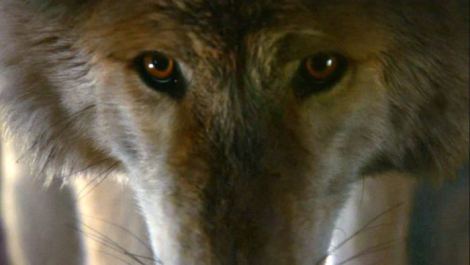
Wolves and dogs can communicate using their eyes alone, suggests a new study in the journal PLoS ONE.

The color of the face around the eye, the eye’s shape and the color and shape of both the iris and the pupil are all part of the elaborate eye-based communication system, according to the research, which could apply to humans as well.

Sayoko Ueda of the Tokyo Institute of Technology and Kyoto University led the study, which compared these characteristics of the face and eyes among 25 different types of canines.

Full Story: http://news.discovery.com/animals/pets/wolves-and-dogs-speak-with-their-eyes-140624.htm