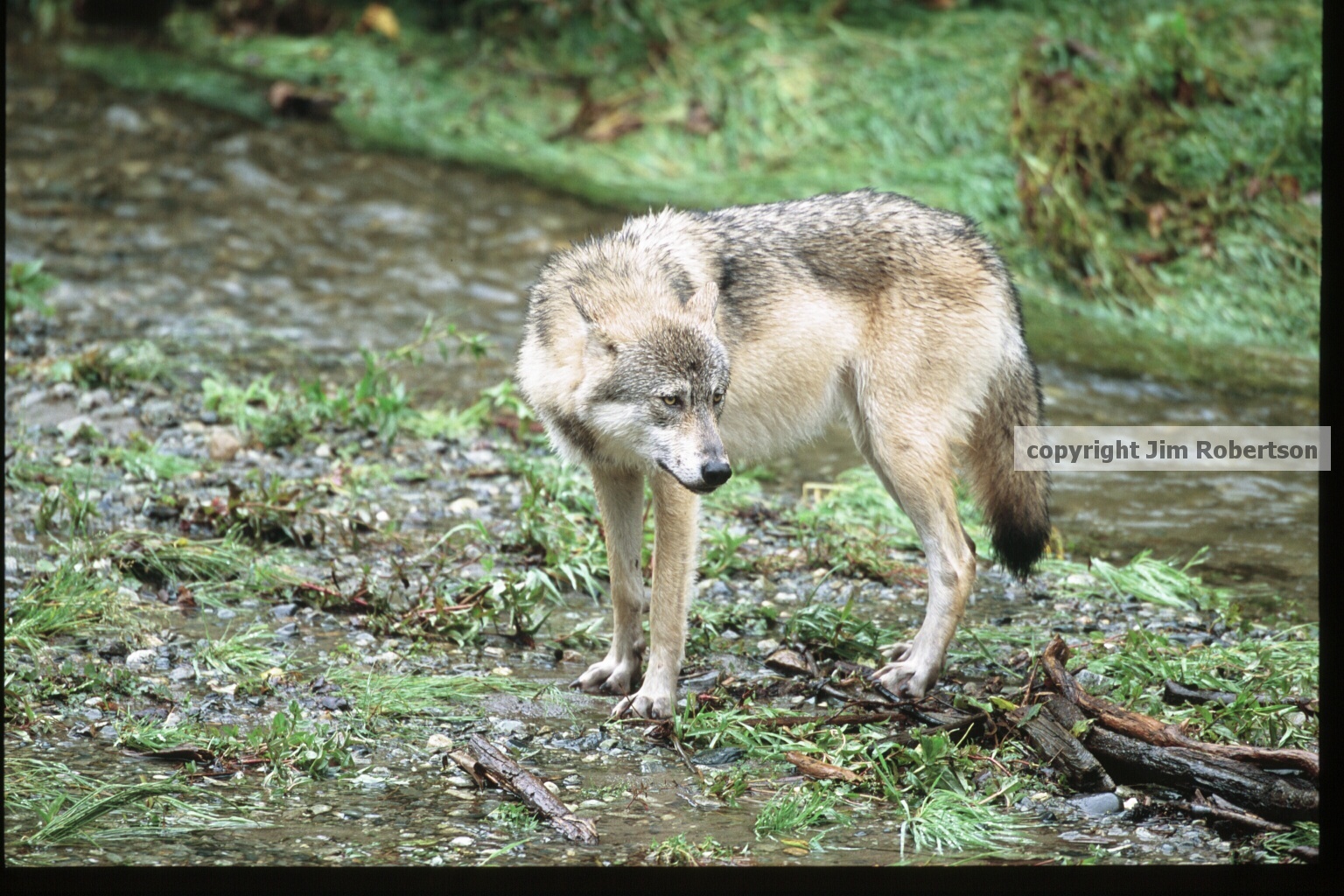
How Many Wolves are in Montana? Just Ask the Hunters

FWP looks to new technique to document wolf population size By TOM KUGLIN Independent Record Helena Independent Record
June 19, 2014 6:00 am  • 

Researchers from Montana Fish, Wildlife and Parks and the University of Montana estimate the state’s wolf population at more than 800 using a new statistical technique.

Researchers conducted a study of the new technique from 2007 to 2012. The new method, called patch occupancy modeling, uses deer and elk hunter observations coupled with information from radio-collared wolves. The statistical approach is a less expensive alternative to the old method of minimum wolf counts, which were performed by biologists and wildlife technicians. The results of the study estimate that for the five-year period, wolf populations were 25-35 percent higher than the minimum counts for each year.

“The study’s primary objective was to find a less-expensive approach to wolf monitoring that would yield statistically reliable estimates of the number of wolves and packs in Montana,” said Justin Gude, FWP’s chief of research for the wildlife division in Helena.

Counting predators in remote and forested areas is notoriously difficult and expensive. FWP submits a required yearly wolf report to the U.S. Fish and Wildlife Service based on the exact number of wolves observed through tracking by FWP wolf specialists. Biologists track wolves with on-the-ground and aerial surveys, radio collaring and denning confirmation. The minimum count has hovered around 625 for the last three years.

According to a 2012 article in Population Ecology authored by FWP and university researchers, wolf numbers remained small in the initial stages of recovery in the early 1990s, and tracking the minimum count of wolves in Montana meant only a few packs in isolated areas. In 1995, when the U.S. Fish and Wildlife Service reintroduced wolves into Yellowstone National Park and central Idaho, the minimum wolf count in Montana was 66.

With minimum counts now nearly 10 times greater, it’s more difficult to assess the minimum number of wolves. The traditional field methods yield an increasingly conservative count and well below actual population sizes, according to the article.

“It takes a lot of people and time, and the budget has gone down with delisting,” Gude said. “It’s getting more and more difficult to keep up, and we felt like we’re getting farther and farther away with the minimum count.”

In two years, FWP’s requirement to provide a yearly minimum count to the Fish and Wildlife Service expires. That expiration opens the door for state officials to use other means to estimate the state’s wolf population.

The agency plans to do both the required minimum count and the patch occupancy modeling for the next two years. After the expiration, FWP plans to transition to the new techniques and adjust field methods of gathering data accordingly, said Ron Aasheim, FWP administrator.

“Certainly there have been people out there who said we have significantly more wolves than the minimum count,” he said. “If anything, this verifies that was a minimum count and we don’t have exact numbers; we have trend counts but this gets us closer to the actual number. The more information we have the better.”

Using hunter observations during the five-week general hunting season has the immediate benefit of cost savings and accounts for those wolves not verified in the annual counts. The technique is very similar to wolf counting methods used in the upper-Midwest, which has already withstood court challenges, Gude said.

“This new approach is not only good science, it’s a practical way for Montana to obtain a more accurate range of wolf numbers that likely inhabit the state,” he said.

Using the public to count wolves has its drawbacks as biologists consider public sightings less reliable than those of professionals. Given the sample size of around 2 million deer and elk hunter days and 50,000 to 80,000 hunters interviewed in FWP’s annual telephone survey, researchers believe the sample provides a diverse observation of Montana’s hunting districts and provides an accurate picture of wolf occupancy.

Based on the study, FWP and university researchers estimated the areas occupied by wolves in packs using the hunter observations, then the number of wolf packs by dividing the occupied area by average territory size, and finally they multiplied the number of packs by the average pack size to get an estimated population. In 2012, the minimum count for wolves was verified at 625 and 147 packs. The statistical technique estimated 804 wolves in 165 packs inhabit Montana.

The study further estimated that 18, 24 and 25 percent of Montana was occupied by wolves in 2007, 2008 and 2009, respectively.

In addition to wolves living in packs, various studies have documented between 10 and 15 percent of wolves living alone.

The Rocky Mountain Elk Foundation threw its support behind the study with a $25,000 grant.

“The bottom line is you can’t have true effective wolf management if you don’t know how many wolves are really out there and where they live,” said David Allen, RMEF president and CEO. “This grant funding will help to better determine that.”

Defenders of Wildlife was still looking at the research and was not ready to comment on the merits of the science, said Erin Edge, Rockies and Plains associate for Defenders.

Wildlife program coordinator for the Greater Yellowstone Coalition Chris Colligan said his organization supports using the best available science, but planned to keep an eye on the use of the new techniques.

“We want to make sure it’s accurate and they’re making sound decisions for management,” he said.

The research has been peer reviewed, but GYC has questions about the accuracy of using hunter observations and the ability of that data to apply on a small scale to create individual quotas for hunting districts, Colligan said.

“Self-reporting of wolves has its downsides,” he said. “There’s concerns about bias in hunters reporting wolves when they’re not present. It also diminishes the need for biologists on the ground, which is a valuable resource.”

Gude cautioned that future statistical approaches need to include wolf harvest locations and how hunting and trapping influence where wolves choose to live.

“Perhaps the best future use of these statistical methods won’t necessarily only be for monitoring and keeping tabs on wolf population numbers, but to better inform the complicated decisions that accompany the public harvest and management of wolves,” he said.
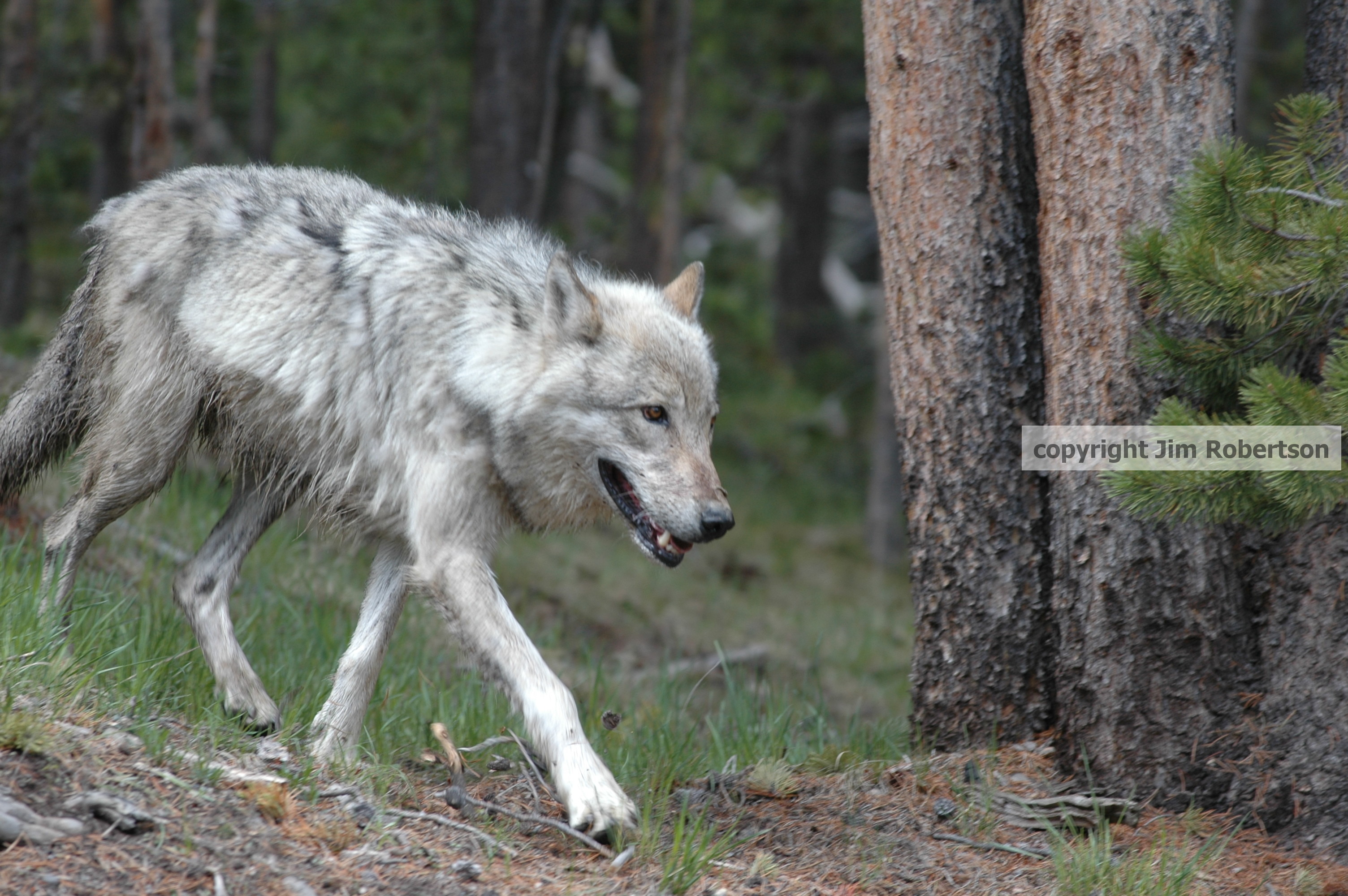
Hiding in the Trees

copyrighted Hayden wolf walking

by Stephen Capra

So much has been written about wolves that a person can be understandably tired of hearing any more. Yet, one is compelled to keep a voice alive in the wilderness that is everyday life. The numbers continue to pour in and wolves are losing, genetic diversity is losing, as is the environment. What exactly are we losing to remains the most important question?

For some the easy answer is the livestock industry. Let’s be clear, the livestock industry is one of the major culprits. Their continued ignorance and greed not only has destroyed wolves and their recovery, but is at the heart of so many problems that plague the West. Yet, the wolf issue is more complex and demands elucidation, if change is ever to occur.

It begins with literature. You see much of people’s view of wolves can be framed by Little Red Riding Hood. No joke. For so many that never leave the confines of civilization, that simple and misleading fairy tale helped to frame fear in their minds as it relates to wolves. Being subjected to such a story in such a young and impressionable time of life, and if like myself, you wanted that story read over and over again, can leave a powerful impression.

Culture and custom! This is perhaps one of the most damaging aspects of wolf recovery, the ignorance that comes from a perceived culture. In rural America, there is a hunting culture, a sense of being part of the land and an independence born of necessity. Somehow, this culture has had a long history of killing not only the Native Americans that stood in the way of their land grab, but of wildlife that was viewed as threatening to their livelihood. In this culture, grizzly bears left the plains, wolves were shot on sight, and bison became a symbol of our perfidy.

Game and Fish Departments- In our modern times it is this department that holds the key to wolf recovery and survival. Yet, it’s this very agency that continues to operate from Idaho to New Mexico with a 19th century mindset. It is this select group of commissioners and directors that play not to the population base of the state, but to the rural, hunting and livestock culture. The reason is simple. Hunting tags and funding from the sale of rifles and ammunition support and pay for these agencies to exist. If this does not change, then the will to enter the 21st century is not a priority for the agency and its corrupt commissions. Conservationists are going to have to be willing to pay, in the form of an annual fee for using the outdoors and a surcharge on the sales of outdoor gear, if we are to level the field with sportsmen and have a real voice in the commissions.

Many have suggested removing the commissions, but that is something that comes with being Governor in many states and politicians are not inclined to lose their power. With the ability to raise funds, we would also be in a position to dictate how it is spent. That could mean earmarking funds for retiring grazing leases, for endangered species recovery, for land acquisition and for demanding serious peer reviewed science in decision making and animal harvest quotas.

Outfitters.-If there is money to be made killing wildlife, outfitters want to make it. By not having peer reviewed science, this group can lobby the agency to demand more opportunity to kill and profit. In New Mexico that has led to the killing spree on black bears and the continued “varmint” label on species like coyotes, prairie dogs to name just a few.

US Fish and Wildlife- An agency void of a moral compass and fearful of republicans that consistently threaten their funding. This agency which is the front line for wildlife must grow the balls necessary to protect and educate the public about the value of wolves in the wild. Instead, they try to “compromise” as we watch the very ecosystems dependent on them becoming sterile. The agency needs an overhaul and leaders that put wildlife before their personal retirement pension.

More:http://www.bvconservation.org/opinion.html

Rally At Yellowstone National Park Aims To Boost Public Support For Wolves In The Wild

Alternate Text

Editor’s note: A rally to raise public awareness about wolves in and around Yellowstone National Park is scheduled for late June near the north entrance to the park at Gardiner, Montana. The following release came from the program’s organizers.

The establishment of Yellowstone National Park in 1872 represents one of the greatest achievements in American history, affording protection to one of our country’s true wild places. Appreciation for this action, and the land it preserved, is increasing with each passing generation. And Yellowstone is much more than an American treasure; it is an international jewel, attracting millions of people from all over the world every year.

Fast-forward 123 years to 1995 and 1996, when the federal government, at the behest of the American people, released 66 gray wolves into Yellowstone. After one of America’s most iconic species was brought to near extinction through hunting, trapping, poisoning, and other government-funded methods in the 19th and 20th centuries, the U.S. Fish & Wildlife Service finally began to recover this internationally beloved species. And, because of its wildness and large size, as well as its complement of abundant prey species, Yellowstone was one of two places chosen to welcome the wolves home. Idaho was the second place.

On June 28-29, 2014, people of all walks of life are invited to attend Speak for Wolves: Yellowstone 2014, a 2-day family-friendly celebration of wolves, predators and other native species that contribute to our rich national heritage. The event will be held at Arch Park in Gardiner, MT, just north of the Roosevelt Arch, near the north entrance to Yellowstone National Park. Speak for Wolves: Yellowstone 2014 will feature prominent speakers and authors from the conservation community, and will include live music, education booths, children’s activities and food vendors. The event is free and open to the public.

In addition to daytime activities at Arch Park, the screening of two wildlife documentaries will occur on Saturday evening, June 28, at 7 pm. The films will be shown at the Gardiner Community Center, which is located at 210 W. Main Street in downtown Gardiner. Organizers will be showing Predator Defense’s film, Exposed: USDA’s Secret War on Wildlife and Project Coyote’s film, Coexisting with Wildlife: The Marin Livestock and Wildlife Protection Program. The films will be followed by a panel discussion composed of conservationists and scientists. The films are free.

Speak for Wolves: Yellowstone 2014 is an opportunity for the American people to unite and demand wildlife management reform, and to take an important step toward restoring our national heritage. Unbeknownst to many Americans, over 3,000 gray wolves have been slaughtered across America, including around Yellowstone National Park, since certain segments of the wolf population were prematurely stripped of federal protection under the Endangered Species Act just a few years ago. The controversial delisting of the northern Rockies gray wolf was the first time Congress intervened and delisted a species in the 40-year history of the Endangered Species Act.

Alternate Text
A public rally is scheduled for late June to raise awareness about wolves/Monty Sloan

Lengthy hunting seasons now occur in Idaho, Montana, Wyoming, Minnesota, Wisconsin, and Michigan. Hunters are permitted to hunt wolves with dogs in Wisconsin. Barbaric trapping/snaring seasons exist in Idaho. The USDA Wildlife Services just gunned-down 23 wolves from a helicopter in a rugged national forest in Idaho. In just 20 years, the federal government has completely reversed its course on the biological recovery of the gray wolf, and is now in the business of wiping them out again.

While many people are calling for relisting of gray wolves under the Endangered Species Act, others are saying that it is time to completely reform wildlife management in the United States.

Event organizers for Speak for Wolves: Yellowstone 2014 have developed the following five keys to reforming wildlife management in America:

* Ban trapping/snaring on all federal public lands.

* End grazing on all federal public lands.

* Abolish the predator-control department of the USDA Wildlife Services.

* Reform how state fish and game agencies operate.

* Introduce legislation to protect all predators, including wolves, from sport hunting, trapping, and snaring.

Please consider attending Speak for Wolves: Yellowstone 2014. The only thing that can save the gray wolf from a second extermination is a strong grassroots movement consisting of every-day people. Let’s come together and embark on this journey together. Let’s make the world a better place, for not only current generations, but also for those generations still to come. Your support is greatly appreciated! Learn more at www.speakforwolves.org or follow the event for updates at www.facebook.com/speakforwolvesyellowstone2014

Wolf pups confirmed in Oregon Cascades for first time since 1940s

 
By Mark Furman Published: Jun 4, 2014 at 9:38 AM PDT Last Updated: Jun 4, 2014 at 12:15 PM PDT
Two of wolf OR-7’s pups peek out from a log on the Rogue River-Siskiyou National Forest, June 2, 2014. Photo courtesy of U.S. Fish and Wildlife Service
Related Content


EUGENE, Ore. – Biologists confirmed that Oregon’s wandering wolf is a proud papa.

OR-7 and his mate have produced offspring in southwestern Oregon, the first pups confirmed born in the Oregon Cascades since the 1940s.

“This is very exciting news,” said Paul Henson, state supervisor of the Oregon U.S. Fish and Wildlife Service Office.  “It continues to illustrate that gray wolves are being recovered.”

Rep. Peter DeFazio cheered the discovery but vowed to oppose removing the wolf form the Endangered Species List.
“This is great news, but the critical federal protections that have allowed OR-7 to start his new pack are in jeopardy,” DeFazio, D-Oregon, said. “As we celebrate OR-7 and his new family, the U.S. Fish and Wildlife Service is threatening to disregard science and take the gray wolf off the Endangered Species list. If the Service delists the gray wolf, states could declare open season on gray wolves like OR-7, his mate, and these new pups. For over a year, I have fought to keep these critical federal protections for gray wolves and will continue to do so until Fish and Wildlife Service makes their final decision later this year.”

Biologists theorized last month that OR-7 had found a mate after spotting a female in the same vicinity. 

GPS data from a collar on OR-7 also showed that the wandering wolf, which had walked from Northeastern Oregon to California and back into Southern Oregon over the last few years, had stuck around the same area of the southern Oregon Cascades, suggesting a possible den and offspring.

OR-7’s territory includes eastern Douglas County south to the California border.

On June 2, biologists observed and photographed 2 pups. They suspect there could be as many as 4 or 6 pups, based on typical wolf litters.

Wolves in Oregon are protected by the state Endangered Species Act.  Wolves west of Oregon Highways 395, 78 and 95 are also protected by the federal Endangered Species Act. 

At the end of 2013, there were 64 known wolves in Oregon.  

Most known wolves are in the northeast corner of the state. 

OR-7 was born in April 2009 in northeastern Oregon in the area around the Imnaha River.

Oregon Department of Fish and Wildlife collared him with a GPS tracker in February 2011, allowing biologists to observe his movements.

He left the pack in September 2011 and walked across Oregon and into California on Dec. 28, 2011, the first known wolf in that state since 1924.  

Since March 2013, OR-7 has spent the majority of its time in the southwest Cascades in the Cascades south of Crater Lake.  

Breaking News: Wolves Protected in California

Huge news out of California today: The state wildlife commission just protected wolves under the state Endangered Species Act.

Today’s decision is the culmination of years of work by the Center, sparked by the arrival of wolf OR-7 in California in December 2011.

The timing couldn’t be better. Just hours before the commission’s decision, it was confirmed that OR-7 had pups in southern Oregon — a sign that this once-lone wolf is now establishing himself as a resident of the area, including Northern California.

This exciting win wouldn’t have happened without your thousands of letters, phone calls, trips to rallies and generous donations to our Predator Defense Fund.

We knew it would be an uphill climb when we filed our petition to protect wolves in California in February 2012, but there was no other choice: If these expanding wolf populations were going to survive, they’d need protection from guns and traps.

Today’s decision opens a new chapter in the history of wolf recovery in America. It ensures that California, where there’s plentiful wolf habitat, will provide a safe haven for wolf families like the one OR-7 just started.

We know it won’t be long before the howl of wolves, silenced in California for nearly a century, will be heard there once more.

Thank you from all of us at the Center for Biological Diversity

copyrighted wolf in water

Wolves Need Trees Too

Alexander Archipelago wolf
Bookmark and Share

For thousands of years, black wolves have roamed the snow-covered islands of southeast Alaska’s Alexander Archipelago. But even in this remote stretch of more than 1,000 islands and glaciated peaks, Alexander Archipelago wolves have been no match for industrial logging, road building and overharvest.

Right now the Forest Service is about to close a deal on the Big Thorne timber sale, with logging planned for more than 6,000 acres of prime old-growth habitat for wolves, Sitka black-tailed deer, black bears, Queen Charlotte goshawks, flying squirrels, marten and other imperiled species.

Alexander Archipelago wolves can’t coexist indefinitely with clearcut logging: The wolf population is directly connected to the health of black-tailed deer, which in turn is directly tied to the health of the old-growth forests. And as road density increases, so do wolf kills — both legal and illegal. In the Tongass National Forest logging roads provide access for wolf hunters and trappers, and road density on much of Prince of Wales Island is already beyond sustainable levels.

Dr. David Person, the preeminent Alexander Archipelago wolf biologist, has bluntly concluded that “the Big Thorne timber sale, if implemented, represents the final straw that will break the back of a sustainable wolf-deer predator-prey ecological community on Prince of Wales Island.”

Take action below — tell the Forest Service to drop Big Thorne now: http://action.biologicaldiversity.org/p/dia/action3/common/public/?action_KEY=15803

Montana’s Wolf “conservation” Stamp A Wolf In Sheep’s Clothing


Montana’s Wolf “conservation” Stamp A Wolf In Sheep’s Clothing 

By On June 2, 2014 · 4 Comments · In Wildlife News

Recently the Montana Dept of Fish, Wildlife and Parks (MDFWP) commission approved a new “Wolf Conservation Stamp”. The purpose of the stamp is ostensibly to get non hunters to pay for wildlife “management”, especially the “management” of wolves.  The stamp would be voluntary.  Despite the fact that I support the idea of non-hunters/anglers paying to support wildlife agencies, I do so only with the caveat that the agency changes their entire philosophical approach to wildlife.

The details of this wolf stamp proposal demonstrates to me that MDFWP still has the same unscientific and unethical attitude towards predators as it has always demonstrated. Without a change in its overall philosophy, all this stamp will do is help the Department perpetuate the same old myths and misinformation about predators that it currently dishes out—only wolf supporters will be helping to fund it. According to MDFWP, funding from the stamp would cover the following three areas.

  1.  One third would be made available to Montana livestock owners to help pay for nonlethal ways to protect their animals from predators like wolves, bears and mountain lions.  By keeping both livestock and large carnivores alive, this would be a good deal for ranchers and wolves alike.
  2. Another third would be used to pay for studying wolves, educating the public about wolves, and improving or purchasing suitable wolf habitat.  This would benefit everyone, by increasing our knowledge about wolves, ensuring the public has access to accurate information about wolves, and securing habitat in which wolves and other wildlife can thrive.

3.  The final third would be used to hire additional MDFWP wardens—essentially, wildlife police—in occupied wolf habitat.  This would enhance enforcement of our wildlife management laws as they pertain to wolves and other species, and reduce incidents of poaching, trespassing, wasting animals, unlawful use of or failure to check traps, and other violations.  This is something every Montanan and every American—hunters, non-hunters, property owners, public land users, agency officials, recreationists, and wildlife enthusiasts alike—should encourage and support.

RESPONSE TO PAYING FOR NON-LETHAL MEANS OF LIVESTOCK PROTECTION

One has to ask what is MDFWP thinking. Let’s see we will help ranchers with non-lethal means of protecting livestock so we can allow hunters and trappers to blow away more wolves? That is essentially what they are suggesting. As long as MDFWP has a vindictive and unethical attitude towards predators, there is no reason to “save” any of them—just so someone else can shoot them. Asking predator supporters to pay ranchers to adopt non-lethal means of protecting livestock is analogous to asking those who cherish clean air to pay for air pollution devices on coal fired power plants.

Ranchers have EXTERNALIZED the cost of their operations through predator control.

Ranchers should pay to protect their own herds—it is part of the cost of doing business—a cost that they have successfully avoided for a century because they were able to get the government to kill off most predators from the landscape. Just as the coal power plants must install pollution control devices or get out of business, ranchers must practice better animal husbandry. It is not the responsibility of wildlife supporters to subsidize their business. Ultimately the additional costs should be borne by those who want to eat beef, just as the users of electricity from coal-fired power plants should pay more per Kilowatt Hour to reduce air pollution from power generation.

The last part of this is that wolves are simply not a big deal for ranchers. Last year in Montana fewer than 60 cattle out of 2.5 million in the state  were killed by wolves. If MDFWP were truly interested in educating the public it would be countering the myth that wolves are “destroying” the livestock industry.

Basically livestock depredation is a non-issue and even giving it credibility by pretending that wolves are somehow a significant cost for ranchers is nothing less than deceptive. I think the real reason MDFWP wants non-hunters to pay for non-lethal livestock protection is to reduce ranchers’ hostility towards the department so that more ranches are left open to hunting, not because MDFWP has any goal of helping wolves.

Worse the livestock industry has many negative impacts on predators besides simply lethal killing. Every blade of grass consumed by cows is that much less for elk, deer, and other wildlife.  Not to mention that the mere presence of cattle, often socially displaces other wildlife like elk. In effect, there are numerous “costs” to livestock that the ranching industry externalizes.

RESPONSE TO FUNDING WOLF STUDIES AND EDUCATING THE PUBLIC

The second part of the proposal to use stamp funds to study wolves, educate the public about wolves, and purchase suitable wolf habitat I seriously object to the way MDFWP has “educated’ the public about wolves already.

The problem is that MDFWP doesn’t even use the existing scientific information it has available to ecologically and ethically treat predators. So why should I or anyone else believe more studies would result in “better” outcomes.

Indeed, I fear giving MDFWP more funds to “educate” the public about wolves. They have repeatedly demonstrated that they are unwilling to counter mythology and misinformation. And they will promote the idea that we “need” to “manage” predators. Predators do not “need” management. They need to be left alone. They are perfectly capable of self regulating, primarily because of social intolerance among packs helps to reduce and limit wolf numbers.

Paying MDFWP to “educate” the public about wolves is like handing over more money to the Rocky Mountain Elk Foundation to educate the public about wolves. For those of you who are unfamiliar with RMEF, they promote the idea that wolves are “destroying” elk herds, and “need to be managed like other wildlife.”

If MDFWP were using science, it would be “educating” the public that wolves pose little threat to big game herds as proven by their statistics. For instance, elk numbers have risen in Montana from 89,000 just prior to wolf restoration to 150,000 animals now. Most elk management units are “over objectives”.

They would manage for social stability rather than having kill quotas based on nothing more than the idea that fewer wolves will mean more elk and deer—as if that should be the goal of wildlife management. MDFWP like all agencies has a mission to promote all wildlife not just the ones that hunters like to kill. But the philosophical bias of the agency, like all state wildlife agencies, is grossly skewed towards promoting animals that hunters like to shoot.

Furthermore, MDFWP when it does discuss wolves sees them only as a “problem” instead of educating the public on the many benefits associated with wolves and other predators like a reduction in disease spread in ungulates, reduction in some herbivory pressure in some places due to a reduction in elk numbers and/or changes in habitat use, and changes in predator effects on other species like a reduction in coyotes that in some cases has lead to an increase survival of pronghorn. And these are only a few of the benefits that the department could be extolling.

As far as buying wolf habitat, there is nothing special about wolf habitat. It’s basically anyplace where there is sufficient prey for wolves to eat. You don’t buy “wolf habitat”, you buy wildlife habitat. I have no problem with buying wildlife habitat, and if this stamp only did that, I would support it. But I fear this will be a minor effect of the stamp.

RESPONSE TO HIRING MORE WARDENS AND MANAGEMENT

Finally, the third part of the stamp receipts would go to fund more wardens to enforce wildlife management laws. The problem isn’t with poaching or any other illegal activities. The problem is what is legal. MDFWP legal actions towards predators are archaic, vindictive and unethical. The agency says its new wolf stamp will prevent, among other things suggested, the “wasting” of wildlife? Huh? What is more wasteful than shooting predators just for fun or worse out of vengeance?

If the Department were truly interested in avoiding “waste” it would call for the ethical treatment of wildlife and outlaw the killing of all predators except for very special situations like an animal that is habituated to humans.

As for poaching, much of the poaching of predators is done because hunters and others believe that wolves are “destroying” hunting opportunities—a perceptive that MDFWP does little to counter. If MDFWP were doing its job, and using scientific findings to educate hunters, it would at least be saying to hunters that wolves haven’t caused the sky to fall.

DON’T SUPPORT MORE ‘MANAGEMENT” OF WOLVES AND OTHER PREDATORS

We don’t need more management of wolves and other predators. What we need is to leave them alone. There is simply no reason to “manage” predators. The science is clear on this—they have many ecological benefits to ecosystems. The idea that we should manage predators is a throwback to the early days of wildlife management—it’s time for MDFWP and other wildlife agencies to enter the 21st Century and start treating predators as a valued member of the ecological community instead of a “problem” that needs to be solved—usually by killing them.

copyrighted Hayden wolf in lodgepoles

Idaho has declared a war on wolves

http://www.jhnewsandguide.com/jackson_hole_daily/state_and_regional/writerrs_on_range/idaho-has-declared-a-war-on-wolves/article_ea0b8b62-ad9b-5f4e-914e-dc936aa64977.html?fb_action_ids=10152158813396188&fb_action_types=og.recommends&fb_ref=.U4jdLo-KFj4.like

Wednesday, May 28, 2014 12:15 am

Nearly 20 years ago, I served on the team that captured and released the first wolves in daho and Yellowstone National Park. Though this reintroduction effort was heralded as a significant achievement in the recovery of endangered species, we’re in a far different place today, especially in Idaho.

The state has been working to undermine this conservation success story by proclaiming its intentions to kill most of its 659 wolves.copyrighted wolf in river


And state officials are just getting started. Idaho Gov. Butch Otter’s recently established “Wolf Control Fund and State Board” is charged with killing hundreds more wolves, with funding coming from state taxpayers. Recently, the Idaho Department of Fish and Game adopted a new predation management plan that calls for killing up to 60 percent of the wolves living in the heart of the federally protected Frank Church Wilderness. Wilderness is defined as a special place set aside for wildlife, and visitors are expected to leave no trace. Now, Idaho is going to fill this wild place with traps and snares to kill wolves in hopes of increasing the number of elk for a few hunters.

What is truly destructive is that state officials seem bent on perpetuating a culture of fear and loathing toward wolves. They repeat tales from mythology and fail to tell the true, full story about successful ranching in the presence of wolves, or the many reasons why the elk population has declined. And livestock losses to wolves have always ranked among the lowest causes of livestock loss in the West.

I know that not everyone in Idaho hates wolves. I grew up in Idaho, and I’ve found that most Idahoans don’t know many of the facts behind the wolf conflict. I also don’t believe that rural residents are fooled by the propaganda from campaigners against the wolf.

In Idaho’s Sawtooth National Forest — a sheep superhighway that is also wolf territory — Blaine County ranchers, county, state and federal agencies, and local wolf advocates have been working together to resolve conflicts using nonlethal wolf management and livestock husbandry methods. These methods include deterrents like livestock guard dogs and electric fencing that reduce or eliminate livestock losses while also building social acceptance for wolves. The results are undeniable.

After being persecuted for centuries, wolves deserve a better future in this country — and in Idaho in particular. We need to demand that the U.S. Fish and Wildlife Service examine how wolves have fared since being stripped of Endangered Species Act protection. Wolves in Idaho need our support to stay alive.

Suzanne Stone is a contributor to Writers on the Range, a syndicated column service of High Country News (hcn.org). She is the Northern Rockies representative for Defenders of Wildlife in Boise, Idaho.

Animal Planet Cancels Man-Eating Super Wolves Show

Program Nominated for Scat Award by

International Wolf Center

Contact: Tom Myrick, communications director

Office: 763-560-7374 , ext. 225

Cell: 763-567-1907

tmyrick@wolf.org

Following sharp public criticism, Animal Planet removed its Man-Eating Super Wolves show from previously scheduled air times on Tuesday evening, May 27, and Wednesday, May 28.  The program was a part of the special series Monster Week, which routinely demonizes real and imagined predators.

“The show was irresponsible,” said the Center’s Executive Director Rob Schultz. “Producers blended distorted facts, fabricated details and unreliable resources to confuse the public and incite fear and hatred of wolves.”

It is because of these damaging distortions that Man-Eating Super Wolves has been nominated for the Center’s 2014 Scat Award, given for the worst portrayal of wolves in the media, literature or cinema.
 
“Left unchecked, these distortions can cause people to make poor and misinformed decisions that affect the future of wolves living in the wild,” Schultz explained.

Renowned Senior Research Scientist and wolf expert L. David Mech, of the U.S. Geological Survey, denounced the program as “Total nonsense and a real disservice to the wolf, to science, and to the public.

Mech, who has spent his 55-year career studying wolves in many areas of the world, says that the program is one of the most sensationalistic, exaggerations of the real wolf that he has ever seen.

“If wolves were so dangerous to humans,” Mech asked, “how have Minnesotans canoeing and hiking survived throughout the Superior National Forest and other parts of northern Minnesota, where some 2,500 or 3,000 wolves roam?  Or throughout most of Canada, where an estimated 60,000 wolves live?”

Photo Caption: Mech takes behavioral notes on an arctic wolf during a research expedition.  He carries no gun and never felt he needed to do so.

“Wolf attacks on humans are uncommon and extremely rare,” says Schultz. “To suggest that wolves have consumed all of their natural prey and are beginning to feed on humans is ridiculous and demonstrates a lack of understanding of our natural world.”

The Scat Award was last given to the movie The Grey in 2013. 
 

2013 Scat Award

   The International Wolf Center advances the survival of wolf populations by teaching about wolves, their relationship to wildlands and the human role in their future.

http://myemail.constantcontact.com/Animal-Planet-Cancels-Man-Eating-Super-Wolves-Show.html?soid=1110808930815&aid=xpWPBhmYubI