Norway store caught selling wolfskin rugs

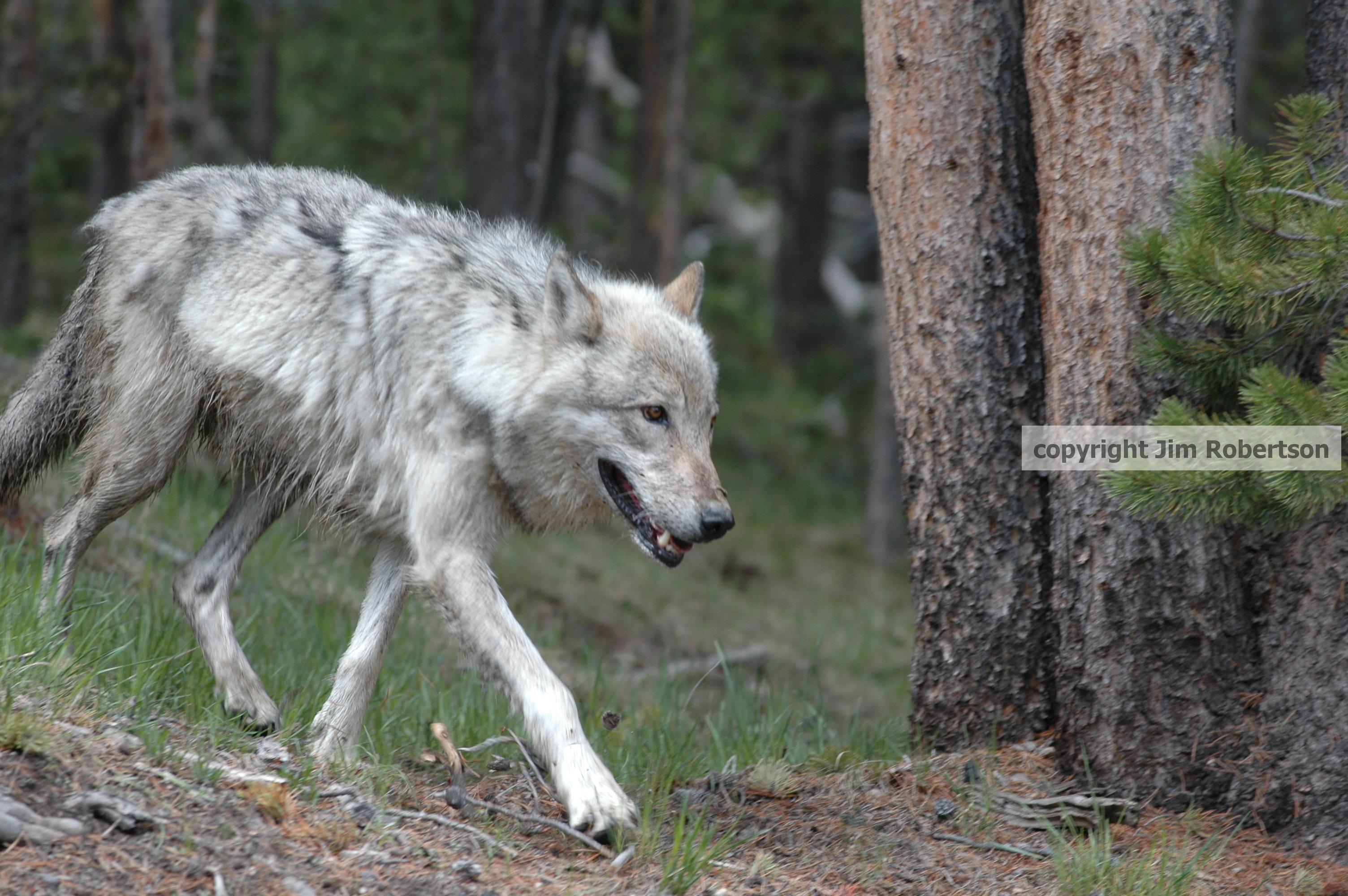
copyrighted Hayden wolf in lodgepoles

An upmarket furniture shop in Norway has outraged animal rights activists after it was caught selling wolfskin rugs – despite the fact that the wolf is an endangered animal in the country.

The rugs were on sale for 27,800 Norwegian kroner ($4,682) each.

Ingunn Lund-Vang, from the animal rights organization Predator Alliance Norway (Bygdefolk for Rovdyr) on Sunday attacked the shop as “completely unethical and abusive” in a post on Facebook.
“There are no fur farms for wolves so either the wolf was shot somewhere, or it may be from abroad, where it is permitted to hunt wolves with a foot trap,” she told Norway’s VG newspaper.  “This is a barbaric trapping method that involves hours of pain for the animals. If so, it’s even worse.”
Ruben Amundsen, Mobelringen’s general manager, on Sunday moved rapidly to diffuse the scandal, apologizing immediately.  “We have now removed the skin, and it will never be for sale in the shop again,” he said.
He said that he had bought the wolf skins, which had been imported from Canada, at a design fair in Oslo. The skins’ importer, Erik Garthus, told VG that the trade was  “perfectly legal”, stressing that the animal had been shot, not trapped.
According to Norway’s wildlife research organization Rovdata,  the country’s wolf population is now down to less than 37 animals, leading some to fear that the animal could soon be extinct.

Wolf Update

528624c939a88_preview-620
WOLF UPDATE 5.26.2014
Latest Posted Idaho Wolf Hunt Kill total (current season): 188
Latest Posted Idaho Wolf Trapping Kill total: 104
Latest Posted Montana Wolf Hunt Kill Total (current season): 144
Latest Posted Montana Wolf Trapping Kill total: 86
Wyoming Wolf Kill Total (2014):0 
Regional Total Reported Killed Since Delisting: 1744
 
WEST COAST
NATIONAL
NORTHERN ROCKIES
ELSEWHERE AND OTHER

“Documentary” Presents Distorted View of Wolves

Portrayal of the wolf as ravenous superpredator is hyperbolic exaggeration.

Last week my colleague and fellow Psychology Today blogger, Marc Bekoff, called out Animal Planet over a particularly noxious piece of myth making that purports to sound an alarm about super-predatory wolves.  These ravenous creatures, we are told, have decimated their natural, wild prey—elk, deer, moose—and now must turn to livestock and even humans themselves.  These wolves are stone-cold killers with razor sharp teeth who can hear your heart beating fear and terror.  They are living among us and they are proliferating.   In times of scarcity, they can form into super packs with hundreds of wolves and besiege whole towns.

Man-Eating Super Wolves (cost is $1.99 but save your money), the program containing these hyperbolic exaggerations, ran as part of Animal Planet’s “Monster Week.”  It represents nearly all that is wrong with nature films.  It is sensationalist; it has a tenuous relationship to its subject in particular and nature in general; at its best, it is misleading.  Despite the presence of Gregory Erickson, a paleobiologist from Florida State University who tries to keep the narrative from spinning free of reality, this program is what in journalism is known as a one-source story, relying on the views of one man, Valerius Geist, an ethologist specializing in wild ungulates, now retired from the University of Calgary.  Geist is best known for providing intellectual cover to the most extreme wolf-haters.  Perhaps he is the primary on screen source because the filmmakers could find no reputable wolf biologist who shares his vision.  Erickson isn’t a wolf biologist—he specializes in alligator evolution and predatory dinosaurs.

Geist’s central thesis as expressed on this program is that wolves are blood-thirsty killers who, as they have increased in numbers due to government protection, have depleted their natural, wild prey and turned to livestock and ultimately humans. According to him, they are “cunning, intelligent, relentless.” They study us in order to prey upon us.  Geist thinks anyone who thinks a wolf or wolf hybrid is their friend is delusional.  We must kill them before they turn on us, and when you do confront one, he says, you should always stare into its eyes and never flinch; that way you establish dominion.

The program is filled with reenactments (unlabeled as such) of the two officially recorded fatal wolf attacks on humans in North America: the first, November 8, 2005, when wolves purportedly killed Kenton Carnegie, a young university student at Points North Landing, Saskatchewan, Canada; and the second, March 8, 2010, when wolves killed Candice Berner in the village of Chignik Lake, Alaska.

This program depicts a gruesome death for Kenton Carnegie while failing in any way to reveal that questions remain. Despite an official coroner’s ruling that wolves were responsible, some experts have suggested from the start that a black bears…

More: http://www.psychologytoday.com/blog/dogs-best-friend/201405/documentary-presents-distorted-view-wolves

10172782_486237174810952_1604406170771652512_n


Montana Announces Wolf Conservation Stamp

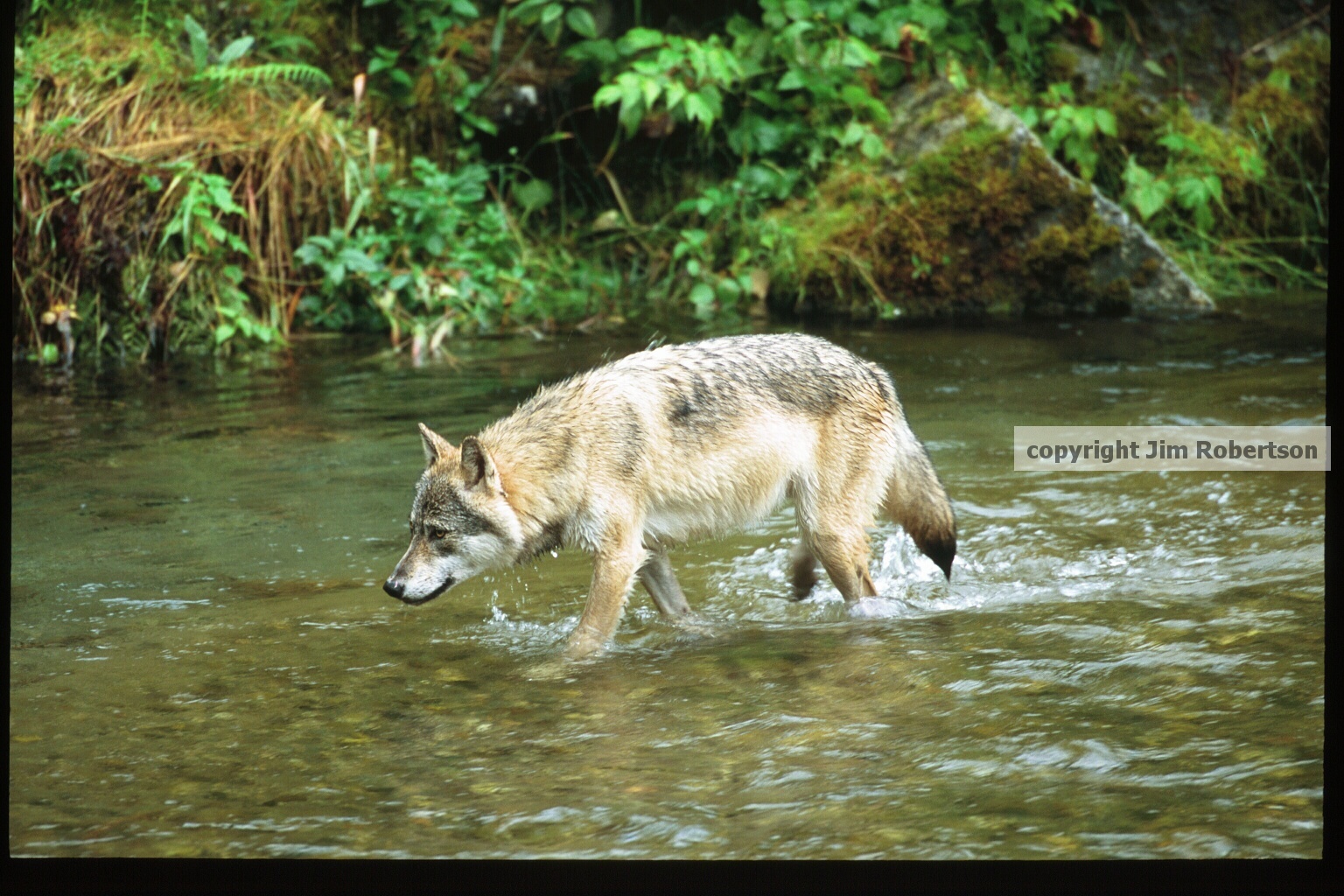
copyrighted wolf in water

[Good news for those who believe that wolves should be responsibly “managed”…]

May 21, 2014 by 

Zack Strong

Last week, the Montana Department of Fish, Wildlife and Parks (FWP) announced that it would be proposing a “Wolf Conservation Stamp” at its May 22 meeting that, if approved, would be available for purchase by the public later this year. This is a truly groundbreaking proposal because it creates, for the first time, an opportunity for anyone to contribute funding to FWP that would only be spent on efforts to promote the conservation and responsible management of wolves and other wildlife in the state.

FWP, and wildlife management agencies around the country, are struggling to find ways to increase and diversify their revenue bases. The Wolf Conservation Stamp presents the perfect opportunity for non-hunters, non-trappers, “non-consumptive” wildlife watchers and recreationists to help support FWP while contributing to wolf and wildlife conservation in Montana – and by doing so, to add their voices and perspectives to the development of wildlife policies in our state.

Here’s how it would work. After covering the costs of administering the program, revenue generated by the purchase of wolf stamps would be equally allocated and spent in three ways:

  • One third would be made available to Montana livestock owners to help pay for nonlethal ways to protect their animals from predators like wolves, bears and mountain lions. By keeping both livestock and large carnivores alive, this would be a good deal for ranchers and wolves alike.
  • Another third would be used to pay for studying wolves, educating the public about wolves, and improving or purchasing suitable wolf habitat. This would benefit everyone, by increasing our knowledge about wolves, ensuring the public has access to accurate information about wolves, and securing habitat in which wolves and other wildlife can thrive.
  • The final third would be used to hire additional FWP wardens—essentially, wildlife police—in occupied wolf habitat. This would enhance enforcement of our wildlife management laws as they pertain to wolves and other species, and reduce incidents of poaching, trespassing, wasting animals, unlawful use of or failure to check traps, and other violations. This is something every Montanan and every American—hunters, non-hunters, property owners, public land users, agency officials, recreationists, and wildlife enthusiasts alike—should encourage and support.

And what’s more, the wolf stamp would be available to everyone. Just as FWP allows non-residents to purchase and use hunting and trapping licenses in the state, the wolf stamp would be available to any wildlife or conservation supporter, anywhere in the country.

If you care about wildlife in the northern Rocky Mountains, including wolves, we believe this is truly a chance to make a difference. Please spread the word about this proposal. And please thank FWP for its leadership and willingness to create this unique opportunity to directly support and contribute to conservation and sound wildlife management in Montana.

Tonight’s the Night…

…that Animal Planet spreads their latest wolf lies.

Contact info for Discovery (their corporate parent).

The above link is quite slow, perhaps due to an overload of comments, so you might try their phone number – this works!  (571 )262-4899.
Petition:
 
Full episodes will air:
Today, Sunday May 25th at 1:00 p.m. EST 
Tuesday, May 27th at 9:00 p.m. Eastern. 
Wednesday May 28th at midnight Eastern and 4:00 a.m. Eastern on the Animal Planet channel (630 HD on Fios). 
copyrighted wolf in river

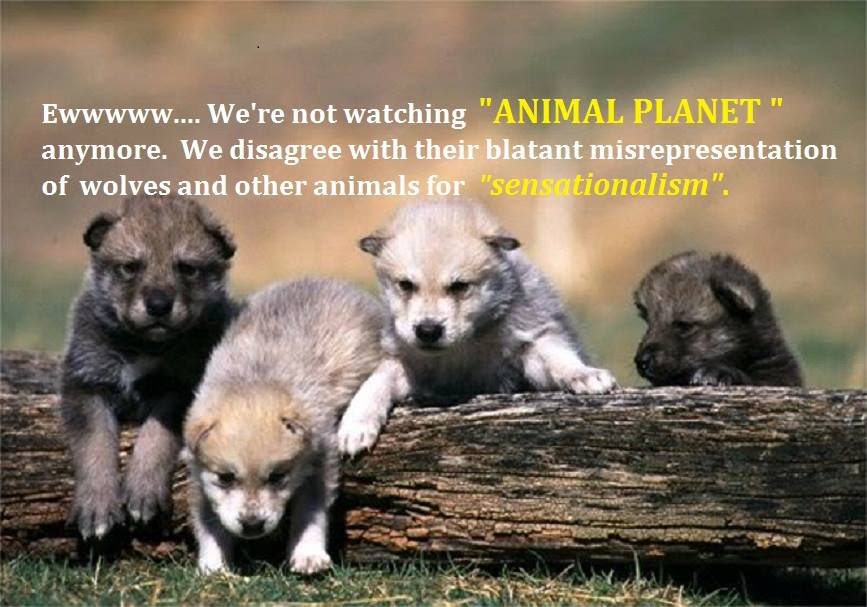
Ewwwww, We’re Not Watching “Animal Planet” Anymore

Boycott Animal PlanetTo anyone who is angry at what Animal Planet did to wolves and are fed up with the anti-wildlife and non-educational programming being aired on Discovery owned networks, here is a number to call to tell them off.

Discovery: 571-262-4899 begin_of_the_skype_highlighting 571-262-4899 FREE  end_of_the_skype_highlighting. Feel free to call them and tell them how you feel. Time to take a stand.

Montana FWP approves killing of 100 wolves per year by landowners

copyrighted Hayden wolf walking

http://missoulian.com/news/local/montana-fwp-approves-killing-of-wolves-per-year-by-landowners/article_331cb662-e1ee-11e3-8aa5-001a4bcf887a.html

(AP) BILLINGS – Montana landowners could kill a combined 100 gray wolves annually if the predators are perceived to pose a threat to humans or domestic animals, according to a rule that received initial backing from state wildlife commissioners Thursday. 

The proposal significantly expands the circumstances under which wolves can be killed without a hunting license.

The Montana Legislature passed a measure last year requiring the change. The legislation didn’t define what qualifies as a “potential threat” so the Fish and Wildlife Commission didn’t detail it either, spokesman Ron Aasheim said.

Previously, landowners were largely limited to shooting wolves that had attacked or were attacking livestock. Under the new rule, shooting wolves would be permitted whenever they pose a potential threat to human safety, livestock or domestic dogs.

Critics say the proposal is excessive and equates to a year-round wolf-hunting season.

A final vote is scheduled for July.

Between 2005 and 2013, landowners killed 69 wolves in response to livestock attacks. Over that same time period, hundreds of the animals were shot by government wildlife agents.

Separately, commissioners on Thursday tentatively approved hunting regulations for the 2014-15 wolf season.

The annual wolf quota would be reduced from four animals to three in an area near Yellowstone National Park, and trapping for wolves would be allowed for the first time in several wildlife management areas.

Gray wolves were exterminated across most of the Lower 48 states last century before being reintroduced to Yellowstone National Park and central Idaho in the mid-1990s.

The population has since grown exponentially, and there were 627 wolves counted in Montana at the end of 2013.

The animals were removed from the endangered species list in 2011.

During the past year, hunters took 144 wolves in Montana during a season that started in September and ended in March. Trappers took 86 wolves.

Animal Planet: Remove Wolf-Hating Episode!

http://petitions.moveon.org/sign/animal-planet-remove.fb47?source=s.icn.fb&r_by=10588579

Petition by Elizabeth Huntley

To be delivered to John S. Hendricks, Chairman of Discovery Communications

Petition Statement

It’s unacceptable and irresponsible to air an episode depicting wolves as over-populated, man-eating, and causing “murderous carnage”. To air such an episode perpetuates myths and misconceptions about wolves that scientific research has long ago de-bunked! Tell Animal Planet to remove this episode and issue a formal apology to viewers for airing such a false and misleading program about wolves!

There are currently 1,816 signatures. NEW goal – We need 2,000 signatures! 

Petition Background

Wolves in the United States are fighting for their lives. De-listed from the Endangered Species List in six states, they are hunted, trapped, and gassed in their dens, resulting in at least a 20% overall drop in their population. Wolves are not a threat to humans, and have a minimal impact on livestock losses. Wolves are deeply committed to family life, and when a pack member is slain, it can fatally disrupt pack life. Animal Planet must stop perpetuating lies about wolves!

You can leave a comment for Animal Planet at this number  1-571-262-4899 begin_of_the_skype_highlighting 1-571-262-4899 FREE  end_of_the_skype_highlighting – it’s the best way to do so – thank you!

copyrighted Hayden wolf in lodgepoles

Wolves Control Their Own Populations

http://www.ksl.com/?nid=148&sid=29873051

http://www.sltrib.com/sltrib/news/57939764-78/wolves-park-wolf-yellowstone.html.csp

UT: Utah study: ‘Crowded’ wolves raid other packs, kill pups

Posted on May 15, 2014 by 

Wildlife » Utah State scientist studied 13 years of data on the Yellowstone National Park wolf population.

By Lindsay Whitehurst | The Salt Lake Tribune

Wolves kill one another and the pups of competing packs in battles over territory even if there is plenty to eat, according to a new study from Yellowstone National Park.

The research is a rare glimpse into the way wolves behave when humans are generally out of the picture, said Utah State University ecologist Dan MacNulty.

“At the end of the day, the success of a wolf from an evolutionary perspective is based on how many pups it leaves behind,” said MacNulty, who worked with scientists from the University of Oxford and the Yellowstone Wolf Project on a new paper published online in the Journal of Animal Ecology. “If they’re packed close together, they have the opportunity to raid each other and kill pups and eliminate the competition.”

For a wolf, closeness is relative — as in 65 wolves per 1,000 square miles, the point at which adult survival rates drop below 70 percent.

The study, which will also appear in a print edition of the British Ecological Society publication, is based on 13 years of data from radio-collared wolves at Yellowstone. Until now, it’s been hard to say how a large population of the animals interact with one another in the wild because their numbers were tightly controlled.

The animals were eliminated from Yellowstone by the National Park Service in the 1920s. They were reintroduced starting in 1995 and grew to something unique in the country — a group of wolves protected from human development and hunting.

The population peaked in 2004, though, and has declined since — but not for lack of food. The canines had plenty of their main prey: elk, as well as bison, bighorn sheep and mule deer.

Rather, the No. 1 cause of death during the study period was other wolves.

“They need more than simply food,” MacNulty said. “That’s sort of an unappreciated aspect of their biology.”

If wolves leave the park looking for more elbow room, they can be hunted, hit by cars or otherwise affected by people, though they occasionally survive to establish new packs with Wyoming wolves.

Researchers, though, generally don’t follow the predators after they leave Yellowstone.

The research suggests wolf populations are self-limiting, MacNulty said.

“There’s a perception that if wolves come into a new area, there will be no holding them back,” he said, “but ultimately what will be holding them back, if humans don’t, is themselves.”

copyrighted wolf in water


LOGAN — Having your own space not only brings peace of mind, but it also correlates strongly to a greater chance of survival for wolf families at Yellowstone National Park.

A new study involving Logan’s Utah State University and University of Oxford found wolves will fight to the death to protect their turf if they lack adequate space to raise their pups.

The aggressive behavior of families looking out for their own is not limited to wolves, or the wilds of nature, said researcher Dan MacNulty, a USU ecologist and assistant professor in the Department of Wildland Resources.

“These family groups of wolves that are competing with each other for space and resources. That is not unlike humans,” he said. “It is well-demonstrated that chimpanzees will compete and war with each other over space and resources and certainly humans are known to do so, if in a more sophisticated way.”

The study, published in the online issue of the Journal of Animal Ecology in the British Ecological Society, followed 280 collared wolves in northern Yellowstone for 13 years.

“This study produced a generally novel result because the conventional thinking is that large carnivores are limited by the abundance of prey in a given area,” MacNulty said. “But what these wolves are ultimately limited by is the amount of space they have to raise their pups in safety.”

Wolves killing wolves is their No. 1 cause of death in Yellowstone and MacNulty said the research showed that adult survival rates dropped below 70 percent if there were greater than 65 wolves per 1,000 square kilometers.

This study produced a generally novel result because the conventional thinking is that large carnivores are limited by the abundance of prey in a given area. But what these wolves are ultimately limited by is the amount of space they have to raise their pups in safety.

–Dan MacNulty, USU ecologist

These key observations in wolf infanticide may provide helpful lessons for management of wolf populations because of the insights they deliver, he said.

“For those concerned about wolf populations, even when you have super abundant prey like in Yellowstone, there are limits to wolf population growth. There is an intrinsic limit to the number of wolves that occupy a given space,” MacNulty said, adding that because rival packs will attack and kill rival wolf pups, their numbers are self-limiting.

“What this paper does say is, though there is this notion that wolves will increase like a locust without any sort of natural limit, that idea is not supported by the data,” he said.

MacNulty, who has been studying the wolves at Yellowstone for 19 years, said the rivalry among wolf families ramps up despite ample food when they are packed in too closely to one another.

“One of the things everyone needs to realize is that these wolf packs are not random collections of individuals,” he said. “They are packs led by parents, with the offspring of the current year and preceeding years, often with aunts and uncles who are related to the breeding male and females. … More wolves meant more fighting and killing. As a result, survival rates declined as wolf density increased.”
Read more at http://www.ksl.com/?nid=148&sid=29873051#Jt2mbQIpqIVSvXx6.99

LOGAN — Having your own space not only brings peace of mind, but it also correlates strongly to a greater chance of survival for wolf families at Yellowstone National Park.

A new study involving Logan’s Utah State University and University of Oxford found wolves will fight to the death to protect their turf if they lack adequate space to raise their pups.

The aggressive behavior of families looking out for their own is not limited to wolves, or the wilds of nature, said researcher Dan MacNulty, a USU ecologist and assistant professor in the Department of Wildland Resources.

“These family groups of wolves that are competing with each other for space and resources. That is not unlike humans,” he said. “It is well-demonstrated that chimpanzees will compete and war with each other over space and resources and certainly humans are known to do so, if in a more sophisticated way.”

The study, published in the online issue of the Journal of Animal Ecology in the British Ecological Society, followed 280 collared wolves in northern Yellowstone for 13 years.

“This study produced a generally novel result because the conventional thinking is that large carnivores are limited by the abundance of prey in a given area,” MacNulty said. “But what these wolves are ultimately limited by is the amount of space they have to raise their pups in safety.”

Wolves killing wolves is their No. 1 cause of death in Yellowstone and MacNulty said the research showed that adult survival rates dropped below 70 percent if there were greater than 65 wolves per 1,000 square kilometers.

This study produced a generally novel result because the conventional thinking is that large carnivores are limited by the abundance of prey in a given area. But what these wolves are ultimately limited by is the amount of space they have to raise their pups in safety.

–Dan MacNulty, USU ecologist

These key observations in wolf infanticide may provide helpful lessons for management of wolf populations because of the insights they deliver, he said.

“For those concerned about wolf populations, even when you have super abundant prey like in Yellowstone, there are limits to wolf population growth. There is an intrinsic limit to the number of wolves that occupy a given space,” MacNulty said, adding that because rival packs will attack and kill rival wolf pups, their numbers are self-limiting.

“What this paper does say is, though there is this notion that wolves will increase like a locust without any sort of natural limit, that idea is not supported by the data,” he said.

MacNulty, who has been studying the wolves at Yellowstone for 19 years, said the rivalry among wolf families ramps up despite ample food when they are packed in too closely to one another.

“One of the things everyone needs to realize is that these wolf packs are not random collections of individuals,” he said. “They are packs led by parents, with the offspring of the current year and preceeding years, often with aunts and uncles who are related to the breeding male and females. … More wolves meant more fighting and killing. As a result, survival rates declined as wolf density increased.”
Read more at http://www.ksl.com/?nid=148&sid=29873051#Jt2mbQIpqIVSvXx6.99