Exposing the Big Game

Forget Hunters' Feeble Rationalizations and Trust Your Gut Feelings: Making Sport of Killing Is Not Healthy Human Behavior

Exposing the Big Game

Washington State Officials to Kill Wolf Families to Protect Cows

Washington Department of Fish and Wildlife (WDFW) officials have ordered the killing of the members of the Old Profanity Territory (OPT) family.

Why? To protect cows grazing on public lands.

Last September, WDFW killed two members of the OPT family in an attempt to stop livestock attacks. When the depredations continued, officials attempted to kill the remaining two wolves but were unsuccessful. Director Kelly Susewind then paused action seeking to lethally remove the two remaining wolves from the OPT pack.

Beyond being cruel and in violation of the desires of a majority of Americans, these kill orders are not working.

“WDFW has been killing wolves to deter conflict since 2012 when the agency wiped out the entire Wedge Pack, yet depredations on livestock continue,” said Maggie Howell, executive director of the Wolf Conservation Center. “Peer-reviewed research demonstrates that killing predators is not only an ineffective solution to deter depredation on cows, but it can even result in increased attacks.”

WDFW knows that peer-reviewed research demonstrates that killing predators is not only an ineffective solution to deter depredation on cows, but it can even result in increased attacks on livestock by survivors.

Killing state-endangered wolves on to benefit the profit margins of a private business is wrong on every level.

Please contact WDFW Director Kelly Susewind before it’s too late and respectfully ask him to call off the kill order.

CALL 360-902-2200
E-mail director@dfw.wa.gov

URGENT! Please read and make just one phone call! This could be the fourth time that Washington State politicians kill wolves because of the same rancher, Len McIrvin, who is a known wolf hater and saboteur. McIrvin’s private, non-native cows do not belong on public lands, land that is clearly vital native wolf habitat. PLEASE MAKE ONE PHONE CALL TO: Washington State Governor Jay inslee NOW, tomorrow may be too late. Urge Gov. Inslee to rescind the kill order on these native wolves. Inslee is running for President. Tell him your interest in his candidacy will sky rocket if he rescinds the kill order! Call Gov. Inslee at 360-902-4111, and leave an urgent comment on his comment line. If enough good people call, we have a chance to stop the killing.

A Surprising Idea About the Risks of Extinction

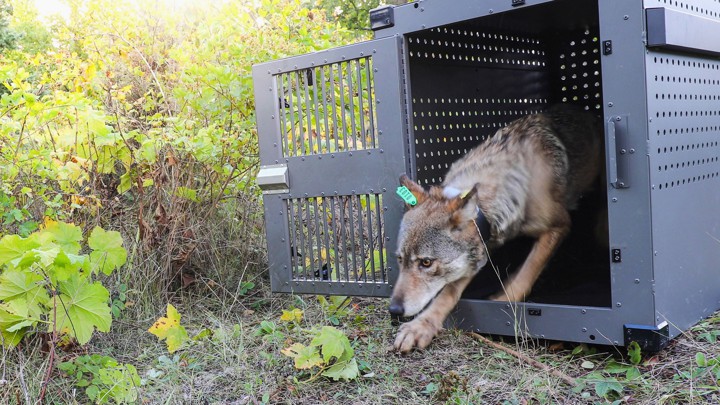
A wolf steps out of a metal crate on Isle Royale in 2018
A wolf is released on Isle Royale in 2018.NATIONAL PARK SERVICE / ASSOCIATED PRESS

Isle Royale is 200 square miles of land in the watery expanse of Lake Superior. One cold winter 70 years ago, wolves came over an ice bridge and settled into a largely isolated island existence. Unfortunately, island life has not been good for them.

By 2016, the number of wolves on Isle Royale declined from a peak of 50 to just two, a male and a female. As a result of inbreeding, they were half-siblings as well as father and daughter. They had a pup together that lived less than a year. Even before that, scientists were finding wolves on Isle Royale with crooked spines and extra ribs.

The wolves of Isle Royale inspired Chris Kyriazis and his colleagues at UCLA to simulate animal populations over hundreds of generations. Their findings were counterintuitive: What doomed the wolves is not just the small number that have lived on the island in modern times, but perhaps also the large number of wolves that lived thousands of years ago. Kyriazis presented his study at the Evolution 2019 conference, and the team posted a preprint of the article, which has not been peer reviewed yet, on bioRxiv.

A large ancestral population can lead more quickly to extinction, the authors argue, because harmful but recessive mutations are not purged over thousands of years. The chances of any one individual getting two copies of the mutation is low, so natural selection doesn’t get a chance to act on it. But if the breeding population then dramatically shrinks—as when the wolves of Isle Royale isolated themselves from wolves on the mainland—those harmful mutations start to come into play.

Now, if the ancestral population were smaller, the purging of harmful mutations could have taken place beforehand. Of course, a population too small to get rid of harmful mutations might simply go extinct. What the simulations find, Kyriazis says, is a “sweet spot” for population size.

“People usually just think about how small is the population now—and how small it’s been over the last 100 years,” Kyriazis says. These simulations suggest the deep history of a species even thousands of years ago can be relevant for conservation today.

The team next simulated what this finding might mean for the practice of genetic rescue, when individuals are brought in to diversify an inbred population. The Isle Royale wolves actually went through a natural genetic rescue when a lone male wolf arrived on this island and had 34 pups. But this “rescue” ultimately failed, ending with the two wolves left in 2016. In 2018, the National Park Service actually moved the first of 15 wolves to Isle Royale as part of a planned genetic rescue. The simulations suggest that rather than aiming to introduce the most genetically diverse wolves from the biggest populations, one might go for wolves from more moderately sized populations.

In practice, though, actually applying these findings will be easier said than done. “It can be a useful guide to help us to think about those deleterious, recessive mutations, but at the end of the day you have to do what you have to do because there’s only wolves in so many places that can be moved,” says Kristin Brzeski, a conservation geneticist at Michigan Technological University who studies the Isle Royale wolves. Eight of the recently relocated wolves came from Michipicoten Island in Canada, where caribou, their usual prey, had disappeared. The wolves were starving and had to be moved if they were going to survive.

Philip Hedrick, a population geneticist at Arizona State University who has studied the wolves at Isle Royale, says the simulations oversimplify a few things. Greater genetic variation also helps a population adapt, for example, especially as climate changes in the future. And often, having just one copy of a deleterious, recessive mutation can slightly decrease an individual’s fitness, he says, so the mutation’s frequency could be low even in large populations.

In the meantime, the genetic rescue at Isle Royale has hit a few unrelated snags. Two relocated wolves died and another left the island when an ice bridge formed during the polar vortex this winter. But scientists have been studying the wolves there for 50 years and will likely continue to for much longer. Isle Royale has one of the most well-studied wolf populations in the world, and it may well reveal how genetic rescue actually works.

We want to hear what you think about this article. Submit a letter to the editor or write to letters@theatlantic.com.

Idaho GOP considers ‘wolf hunter sanctuary state’ proposal

Parents’ rights and decriminalizing marijuana also on the table at meeting that concludes today in Boise

Idaho GOP officials will consider a proposal to designate Idaho a “wolf hunter sanctuary state” during their summer meeting in Boise today.

The two-day convention, which began Friday, gives party members from across the state an opportunity to mingle and meet with elected officials. It’s also a chance to take positions on various topics of interest and tweak party procedures.

The election of a new state party chairman highlights today’s agenda. However, officials will also consider a number of resolutions and proposed rule changes — several of which were submitted by Republicans from north central Idaho.

The list includes a new “platform loyalty and accountability” rule, which allows the state central committee to judge, reprimand and sanction any Republican legislator deemed to have undermined and opposed the core principles of the Republican Party.

The rule, proposed by the Idaho County Central Committee, lays out the procedure for challenging a legislator’s commitment to the party principles.

If the lawmaker is found guilty, a warning will be issued; if he or she is found guilty of a second violation, the committee would have the authority to withdraw the party’s endorsement, and the legislator would no longer be recognized as a Republican.

The Clearwater County Central Committee proposed the resolution designating Idaho a “wolf hunter sanctuary state.”

The measure cites the impact wolves have on the state’s moose, deer and elk populations, as well as on livestock. It also notes that Democratic jurisdictions have created various sanctuary regions by refusing to cooperate with federal officials on detaining illegal immigrants or other issues.

The resolution calls on the state central committee to work with Idaho lawmakers to pass legislation prohibiting Department of Fish and Game employees, as well as county and city officials, from assisting the federal government in enforcing any laws regarding wolves.

Once such legislation is approved, “hunters will be allowed to shoot and kill an unlimited number of wolves with no interference from any state or local officials,” the resolution declares.

Out-of-state hunters who have the necessary tags and licenses to hunt other game would also be allowed to purchase a special wolf permit for $10.

The Latah County Central Committee submitted a resolution supporting multiyear licensing for boats, motorhomes, ATVs and other recreational vehicles.

The resolution suggests that discounted three- and five-year licenses be created.

The Benewah County Central Committee proposed a resolution “to protect the rights of parents concerning their child’s health, safety and well-being.”

The resolution cites government-mandated vaccines, anti-homeschooling sentiments, the gay rights agenda and driver education requirements as potential threats to the fundamental right of Idaho parents to direct the upbringing, education and care of their children.

The measure encourages the Idaho Republican Party to support a parents’ rights amendment to the Idaho Constitution.

Other resolutions being considered at this year’s meeting include a proposal for at least one employee of every school to be designated a school security officer and be authorized to carry a concealed weapon; a proposal to decriminalize marijuana and all other forms of cannabis; and a measure supporting President Donald Trump’s declaration of a national border emergency.

Washington’s Wolves Need Your Help

https://act.biologicaldiversity.org/onlineactions/ONAuW3rLGkGYPfYMS-9d4g2?sourceid=1005699
Wolf

The U.S. Fish and Wildlife Service wants to strip federal Endangered Species Act protection from wolves in almost all of the lower 48 states — including Washington. This could be a devastating blow, returning us to the days when wolves were shot on sight, killed in traps and relentlessly persecuted.

To make matters worse: Washington’s wildlife agency has sent a letter to the Trump administration supporting this plan and claiming that it will protect the state’s wolves if they lose federal protections.

We know that’s not true.

The agency has a long history of gunning down wolves within state borders anywhere federal protections don’t apply. If wolves lose these protections in the rest of the state, the agency will expand its atrocious wolf-killing program.

But there’s something we can do.

The proposal to delist wolves has been slammed as fundamentally flawed by a panel of scientists, who found that it contains misleading statements and erroneous scientific interpretations.

Washington’s Governor Jay Inslee has made science a hallmark of his administration and in the bills he’s championed to protect Washington’s environment. We can call on Gov. Inslee to stand up for scientific integrity and rein in his rogue wildlife agency.

Urge Gov. Inslee to officially tell the Service that he opposes removing federal wolf protections.

For the greatest impact, add a few sentences of your own at the start of our form letter.

Federal agency hears testimony on fate of gray wolves

Minnesota DNR
Minnesota DNR

BRAINERD, Minn. – Federal officials are weighing testimony from the only public hearing in the country on the government’s latest attempt to take gray wolves off the endangered and threatened species list.

The proposal would return management of the wolves to the states, potentially subjecting them to hunting and trapping. In most states it’s illegal to kill a wolf unless it’s threatening a person.

Officials explained at the hearing Tuesday night in the east-central Minnesota city of Brainerd that they no longer consider gray wolves endangered. They’ve made a dramatic recovery since they were protected in 1974.

But supporters of the protections said removal is premature. While wolves in Minnesota, Wisconsin, Michigan and the northern Rockies have rebounded, they haven’t fully recovered across their historic range.

https://kfgo.com/news/articles/2019/jun/26/federal-agency-hears-testimony-on-fate-of-gray-wolves/

Oregon wildlife commissioners adopt hotly contested wolf management plan

Commissioners with the Oregon Department of Fish and Wildlife adopted a new plan to manage the state's gray wolf population on Friday. (Oregon Department of Fish and Wildlife via AP)

AP -WR

Commissioners with the Oregon Department of Fish and Wildlife adopted a new plan to manage the state’s gray wolf population on Friday. (Oregon Department of Fish and Wildlife via AP)

65
2.4k shares

After years or revisions, scores of contentious meetings, an outside mediator and the abandonment of talks by half of the stakeholders, Oregon wildlife commissioners approved the state’s long-overdue Wolf Management Plan on Friday.

In a 6 to 1 vote, the 155-page plan, which governs how wolves are handled in the areas of the state where they don’t enjoy federal protection under the Endangered Species Act, was approved by the seven-member commission of the Oregon Department of Fish and Wildlife.

“We see a lot of concern on both sides of this plan,” she said. “For someone like me, who has looked forward to seeing wolves living free on our landscape, it’s time to celebrate.”

The state’s first wolf plan was issued in 2005, before any wolves had actually come back to the state after decades of extirpation due to hunting and trapping. Language in the original plan called for updates every five years and, in 2010, just a year after wolves had been confirmed in the northeast corner of Oregon, the second version of the plan was released. At the time, at least 21 of the canids were known to wander the state’s rural areas.

When it came time to update the plan for 2015, though, stakeholders on both sides — hunters and ranchers on one side, environmentalists and wolf advocates on the other — couldn’t come to a consensus on some of the most sensitive issues. Over the following years, facilitated meetings were held all over the state in an effort to find compromise between the two sides.

Much of the tension surrounding the wolf plan boils down to when wolves can be killed, why and by whom. The latest revision has some key changes to the plan’s most controversial provisions.

Under the old plan, a wolf that attacked livestock twice or more over any period of time was deemed a “chronic depredator” and could be killed in the eastern third of the state, where wolves are managed by the state. The new plan will allow the state to kill wolves after two confirmed attacks during a nine month period.

State officials have stressed that when a wolf meets that threshold, it doesn’t necessarily mean it will be killed. Non-lethal deterrents like fencing, alarm devices, hazing and removal of carcasses must be documented before a permit to kill a wolf can be issued. Even then, the state can exercise its own discretion, taking other factors into account before allowing a wolf to be killed.

“Discretion is more valuable than an actual number,” said Derek Broman, the state’s carnivore coordinator and one of the key architects of the plan. “When lethal action is taken, it’s not retribution.”

Once a wolf is deemed a chronic threat to livestock, however, the state can issue a permit for lethal action against the animal and, because staff and resources available to the state are limited, those permits can be issued to members of the public. That kind of action, called “controlled take,” was clarified in an amendment to the plan that said any permits issued to the public would require approval from the commission. Still, wolf advocates remained fiercely opposed to the provision, saying it could open the door to wolf hunts by the general public.

“With just 137 wolves in the state, it is absurd that ODFW would put hunting on the table,” Sristi Kamal, Northwest representative of Defenders of Wildlife, told commissioners. A spokesman for Rep. Peter DeFazio read a letter from the Oregon congressman that called for the provision allowing permitted hunting by the public, even under very specific circumstances, to be stripped from the plan.

Akenson responded that the commission would not issue permits lightly.

“This commission isn’t going to meet and say ‘Yep, let’s do it.’” she said. “It’s going to be a deliberative process.”

Numerous ranchers and hunters expressed concern over some aspects of the plan. Many said the state didn’t do enough to track wolves, particularly in Wallowa County, where the majority of wolves reside and most attacks on livestock take place. When a wolf is suspected of killing livestock, it must be confirmed by an investigation and many ranchers said it could take up to a week for investigators to show up, time when evidence can degrade and a confirmation becomes more difficult. Without a confirmation, ranchers aren’t eligible for compensation from the state.

Others livestock producers said, given the continued growth of the wolf population, the state should establish “management zones,” defined geographic areas that would have a maximum number of wolves. Any wolves in the area beyond the maximum could be killed.

Though both sides found parts of the plan they disagreed with, many in the ranching community urged commissioners to adopt the plan as it was written, while environmental advocates pressed officials to revise the plan or remove the provisions they found most troubling.

After public comment concluded, Commissioner Gregory Wolley, the sole “no” vote, acknowledged the divide in the room.

“We have one side that seems to support the plan despite its imperfections, while the other side is 100 percent against it,” he said. “We say we’re trying to go down the middle, but that doesn’t sound like a compromise.”

Friday’s commission meeting came against the backdrop of a push from federal regulators to strip the wolf of protections under the Endangered Species Act. That plan, like Oregon’s plan but on a larger scale, has been met with condemnation from advocates and scientists, but was welcomed by hunters and ranching industry groups.

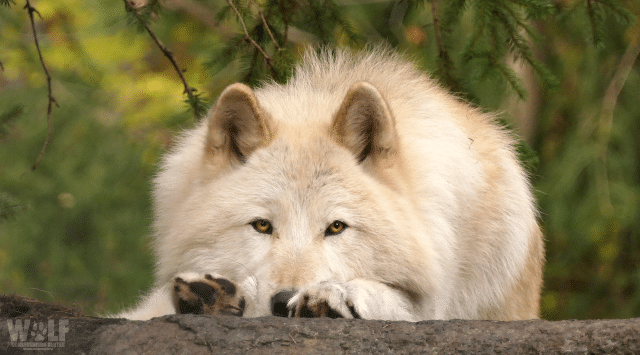
Still snarling after 40,000 years, a giant Pleistocene wolf discovered in Yakutia

Sunday, Jun 09 2019
All Cities
Choose Your City
‘Lake Baikal is contains more water than the five US great lakes combined’
Mike Carter, The Observer, 2009
By The Siberian Times reporter
07 June 2019

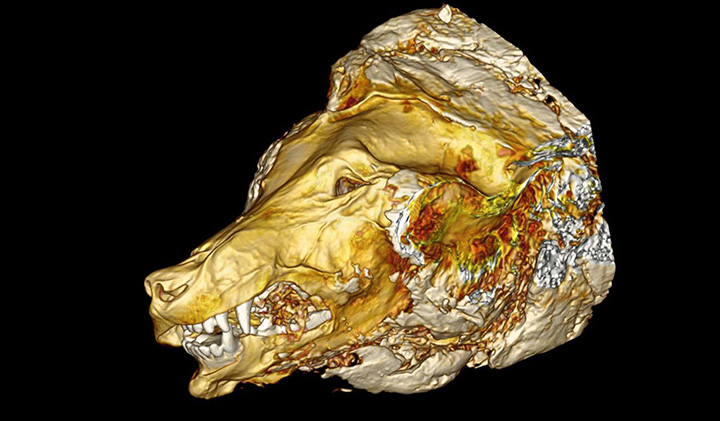
Sensational find of head of the beast with its brain intact, preserved since prehistoric times in permafrost.

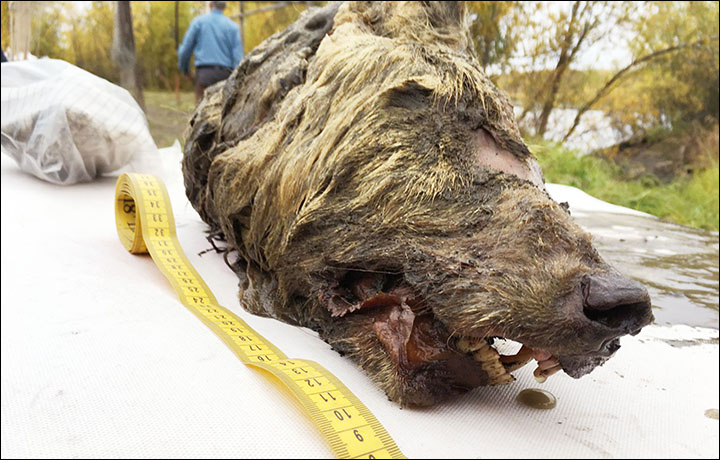
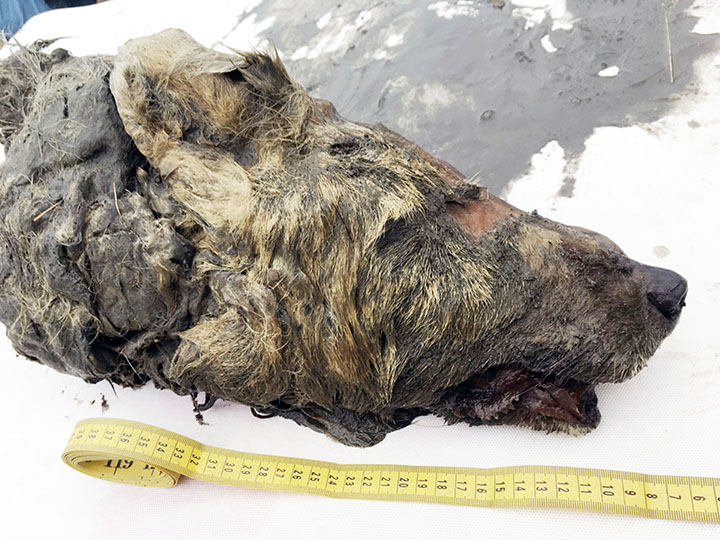
The Pleistocene wolf’s head is 40cm long, so half of the whole body length of a modern wolf which varies from 66 to 86cm. Picture: Albert Protopopov

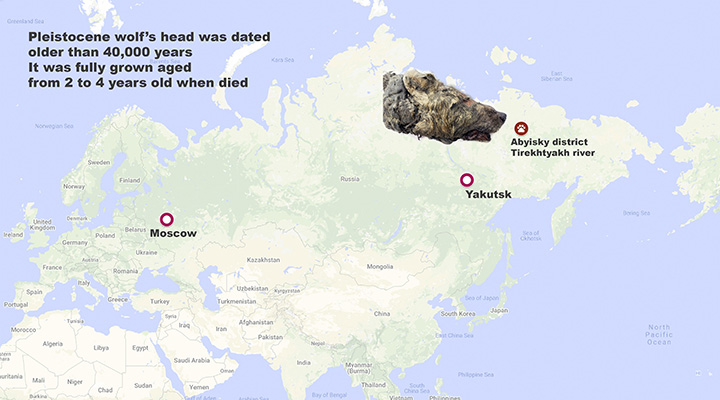
The severed head of the world’s first full-sized Pleistocene wolf was unearthed in the Abyisky district in the north of Yakutia. 

Local man Pavel Efimov found it in summer 2018 on shore of the Tirekhtyakh River, tributary of Indigirka.

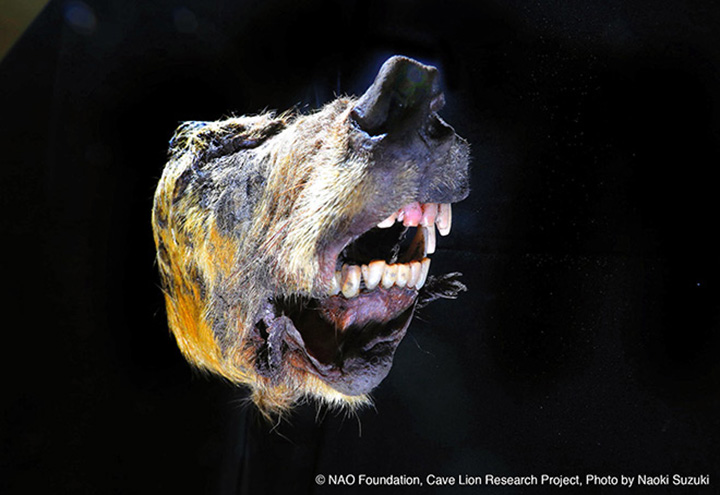
The wolf, whose rich mammoth-like fur and impressive fangs are still intact, was fully grown and aged from two to four years old when it died. 

Pleistocene wolf

The wolf, whose rich mammoth-like fur and impressive fangs are still intact, was fully grown and aged from two to four years old when it died. Picture: Albert Protopopov

The head was dated older than 40,000 years by Japanese scientists.

Scientists at the Swedish Museum of Natural History will examine the Pleistocene predator’s DNA.

‘This is a unique discovery of the first ever remains of a fully grown Pleistocene wolf with its tissue preserved. We will be comparing it to modern-day wolves to understand how the species has evolved and to reconstruct its appearance,’ said an excited Albert Protopopov, from the Republic of Sakha Academy of Sciences. 

Map

Local man Pavel Efimov found it in summer 2018 on shore of the Tirekhtyakh River, tributary of Indigirka.

The Pleistocene wolf’s head is 40cm long, so half of the whole body length of a modern wolf which varies from 66 to 86cm. 

The astonishing discovery was announced in Tokyo, Japan, during the opening of a grandiose Woolly Mammoth exhibition organised by Yakutian and Japanese scientists. 

CT scan


CT scan


CT scan

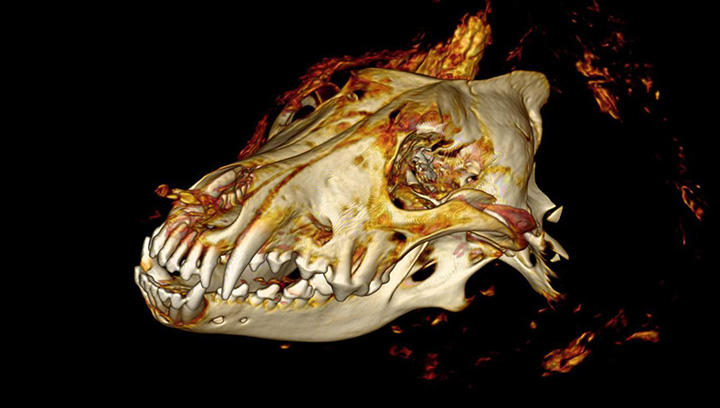
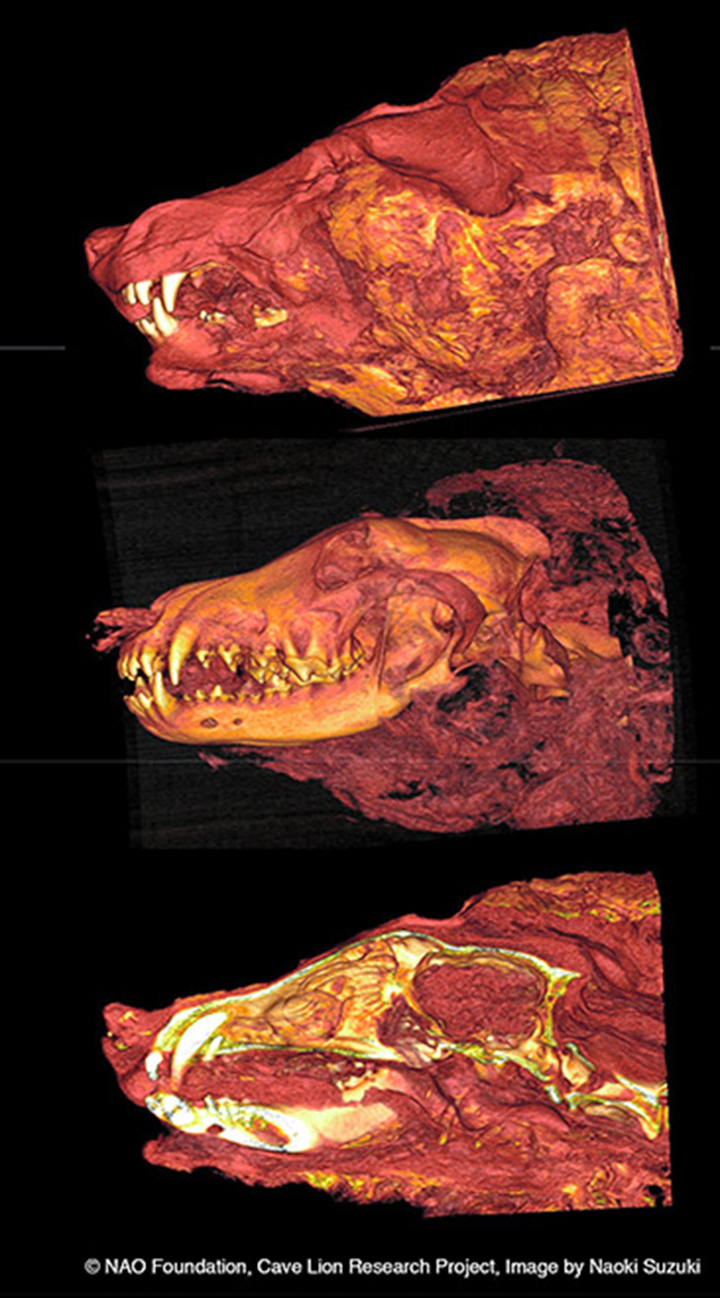
CT scan of the wolf’s head. Pictures: Albert Protopopov, Naoki Suzuki

Alongside the wolf the scientists presented an immaculately-well preserved cave lion cub. 

‘Their muscles, organs and brains are in good condition,’ said Naoki Suzuki, a professor of palaeontology and medicine with the Jikei University School of Medicine in Tokyo, who studied the remains with a CT scanner. 

‘We want to assess their physical capabilities and ecology by comparing them with the lions and wolves of today.’

Pleistocene wolf


Pleistocene wolf

‘This is a unique discovery of the first ever remains of a fully grown Pleistocene wolf with its tissue preserved.’ Pictures: Naoki Suzuki

Oregon wildlife commissioners adopt wolf management plan

SALEM, Ore. (AP) – Oregon wildlife commissioners have approved the state’s long-overdue Wolf Management Plan after years of revisions, contentious meetings, an outside mediator and half the stakeholders abandoning talks.

The Oregonian/OregonLive reports the plan to govern how wolves are handled in areas of the state where they don’t enjoy federal protection under the Endangered Species Act was approved Friday by the commission of the Oregon Department of Fish and Wildlife.

The state’s first wolf plan was issued in 2005, before any wolves had come back to the state after decades of extirpation due to hunting and trapping. The second version of the plan came out in 2010, a year after wolves had been confirmed in Oregon.

The plan finally approved Friday came after hunters and ranchers, and environmentalists and wolf advocates squared off over when wolves can be killed, why and by whom.

News release from ODFW:

Commission adopts revised Wolf Plan in 6-1 vote

SALEM, Ore.—The Commission adopted a Wolf Plan today at its meeting in Salem in a 6-1 vote after hearing from 44 people who came to testify and reviewing thousands of public comments.

Allowing controlled take (limited regulated hunting and trapping of wolves) was one of the most controversial topics in the new Wolf Plan. The original Plan adopted in 2005 allowed for controlled take only in Phase 3 (currently eastern Oregon), in instances of recurring depredations or when wolves are a major cause of ungulate populations not meeting established management objectives or herd management goals. While ODFW believed it needed to remain a tool available for wolf management, the department has not proposed any controlled take of wolves and has no plans to at this time.

Commissioners made some changes related to “controlled take” from the proposed Plan.  An addendum was added clearly stating that “Use of controlled take as a management tool requires Commission approval through a separate public rulemaking process” and the definition of controlled take was modified.

Additional minor changes were made to emphasize the importance of non-lethal tools to address wolf-livestock conflict and easy access to this information. Non-lethal measures to prevent wolf-livestock conflict continue to be emphasized in all phases of the Plan, and required before any lethal control is considered.

After some discussion, Commissioners revised the definition of chronic depredation (which can lead to lethal control of wolves if non-lethals are in use and not working) in Phase 2 and 3 from two confirmed depredations with no specific time frame to two confirmed depredations in nine months.

The Wolf Plan will be filed with the Secretary of State and posted on the ODFW Wolves webpage (www.odfw.com/wolves) within the next few business days.

·Allocated big game auction and raffle tags for 2020.

·Heard a briefing on the crab fishery and reducing the risk of whale entanglements.

·Adopted harvest limits for Pacific sardine in state waters for July 2019-June 2020 based on federal regulations.

·Approved funding for Access and Habitat projects that provide hunting access or improve wildlife habitat on private land.

·Heard a briefing on proposed changes to 2020 big game hunting regulations as part of efforts to improve and simplify the Big Game Hunting Regulations

The Fish and Wildlife Commission is the policy-making body for fish and wildlife issues in Oregon. Its next meeting is Aug. 2 in Salem.

Wolf-dog hybrids taking over Europe, study warns

Wolf-dog hybrid walks along woodland path
© diary_of_a_wolfdog – Instagram

Researchers from the University of Exeter have warned that European wolf populations are at risk of being wiped out by a surge of wolf-dog hybrids.

By Nick WhittlePublished on 28 May 2019

https://wamiz.co.uk/news/12178/wolf-dog-hybrids-taking-over-europe-study-warns?fbclid=IwAR3Af_CCbBJDNlMMOttxfSThfPhlDkWxhInMffkxnheg4LqTFpwQ01UAFBg

Lead author Valerio Donfrancesco from the Centre for Ecology and Conservation at the University of Exeter warns that wild populations of wolves will soon give way to wolf-dogs if nothing is done to manage the interactions of the two species.

Wolf-dogs are a hybrid species that results from the mating of wolf and dog. The study states that wolf-dog offspring are most commonly found in areas where human territory borders wolf territory and where domestic dogs are allowed to roam free.

Publicité

Habitat destruction is also cited as a cause of wolves edging ever closer to urban areas.

The interbreeding ‘threatens the genetic identity’ of wolves, writes Harry Cockburn for the Independent.

Study reveals disagreements between scientists

In the journal Frontiers in Ecology and Evolution Donfrancesco writes: ‘We need to address this issue before wolf-dog hybrids backcross with wolves to the extent that wolf populations will be lost to hybrid swarms, and the conservation of wild populations will become unfeasible.’

The study scrutinised the approach of numerous scientists and concluded that disparate opinions endangered any forthright restorative action. The lack of agreement among those ‘best placed to tackle the problem‘ was cited as a hindrance to proper manangement of the growing numbers of wolf-dogs.

A rescue bid is also hampered by a lack of research of wolf-dog hybrids. ‘The fact that we know so little about the ecology, behaviour and social acceptance of the wolf-dog hybrids adds a layer of concern to the issue,’ Mr Donfrancesco told the Independent.

Should the number of wolf-dog hybrids continue to rise, the long-term survival and evolution of the lupine species are threatened.

Despite the research it seems inevitable that in some parts of northern Europe wolf populations will cease to be, due to the steady encroachment of humans into wilderness and the vast numbers of domestic dogs that accompany human habitations.

Co-author Dr Nibedita Mukherjee, from the University of Exeter, said: ‘We hope that by highlighting areas of disagreement and why they occur, we will be able to build a more unified scientific opinion, and aid an effective management of this urgent issue.’

Newhouse heads bipartisan contingent in seeking to delist gray wolf as endangered

Newhouse heads bipartisan contingent in seeking to delist gray wolf as endangered

U.S. Rep. Dan Newhouse (R-WA) this week headed a bipartisan contingent in supporting the U.S. Fish and Wildlife’s proposed rule to delist the gray wolf from the Endangered Species Act (ESA) in the contiguous United States.

“The gray wolf should be considered a success story of the Endangered Species Act,” Rep. Newhouse said on Tuesday.

Because gray wolves now are found across the United States and globally, their populations should be managed in America at the local level by individual states, wrote Rep. Newhouse and 33 other bipartisan members of Congress in a May 28 letter sent to U.S. Department of the Interior Secretary David Bernhardt and Margaret Everson, principal deputy director of the U.S. Fish and Wildlife Service (USFWS).

“State and local governments, tribes, and other stakeholders are best suited to develop effective, local management plans for gray wolf populations,” the members wrote. “We should be empowering them to do so — not hindering them with unscientific, burdensome federal regulations.”

Among the 33 members joining Rep. Newhouse in signing the letter were U.S. Reps. Cathy McMorris Rodgers (R-WA), Tom Emmer (R-MN), Greg Walden (R-OR), Ken Calvert (R-CA), Sean Duffy (R-WI), Mark Amodei (R-NV), Bill Flores (R-TX) and Collin Peterson (D-MN).

Rep. Newhouse and his colleagues wrote that a USFWS 2013 review determined gray wolf recovery goals had been achieved, but the agency’s proposed rule to remove them from the ESA was stalled by objecting environmental groups.

Now, according to their letter, “We cannot let scientific findings fall victim to politically motivated attacks. As the proposed rule demonstrates, the gray wolf is a success story of the ESA.”

The lawmakers want the USFWS proposed rule finalized swiftly, they wrote.

“Federally delisting the gray wolf will allow Washington state to implement the comprehensive wolf management plan that will give relief to farmers, ranchers and communities that are affected by growing wolf populations,” Rep. Newhouse said.