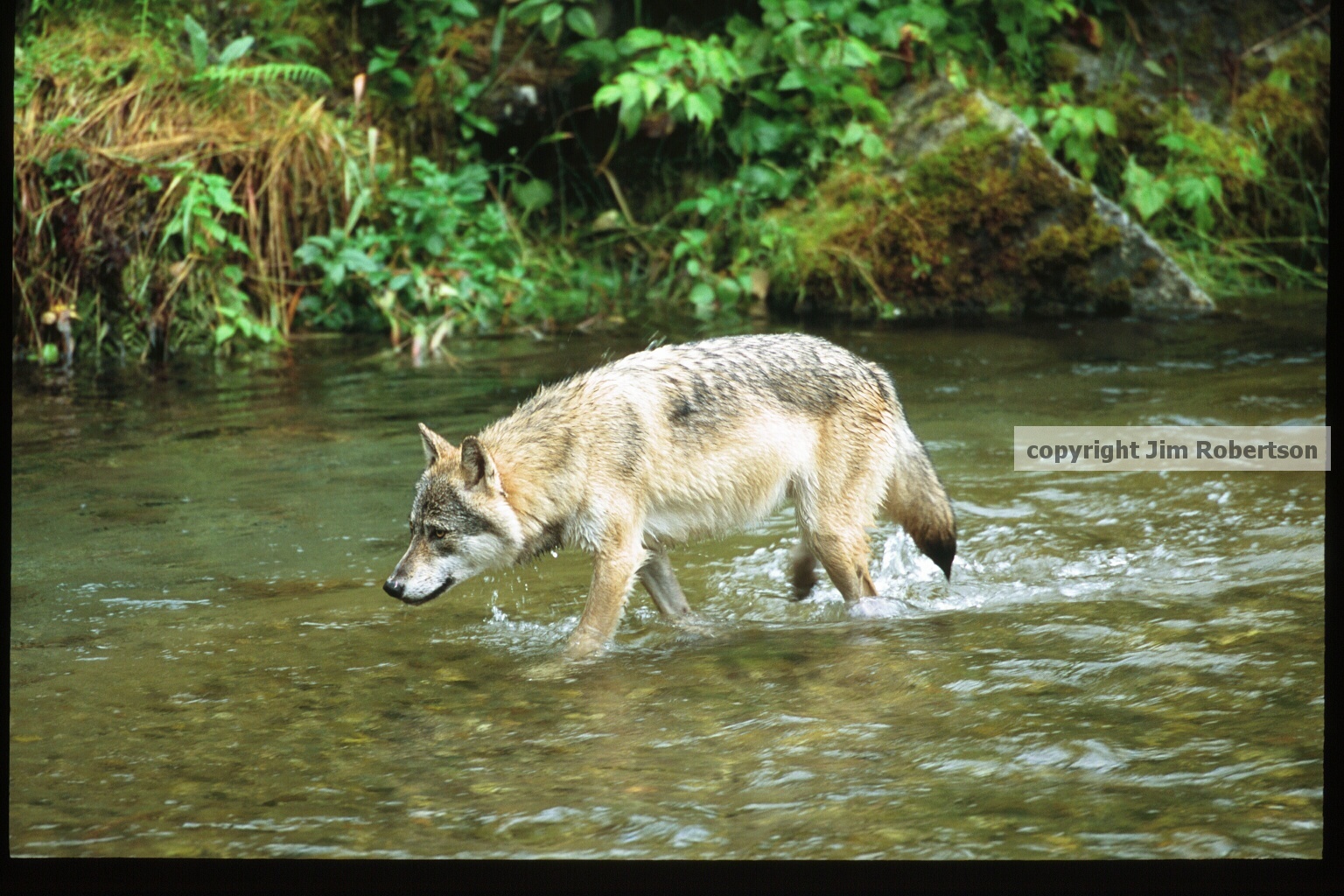
If You Love Wolves, Love Elk and Hate Hunting

Wolf advocates have known for a long time now that ranching is the nemesis of all things natural and wild, and that if you want to help the wolves, boycott beef, leather, wool, lamb and mutton. But lately hunters like those in the Idaho trophy elk hunting industry have been out to prove that they are a wolf’s gravest threat.

Not only do certain Idahoans want to run wolves out of lands cleared for ranching, they want to eliminate them from the wilderness as well.

They see public lands, such as the Lolo National Forest and the Frank Church wilderness area, as private breeding grounds for elk specimens they love to kill, and they’re not willing to share those specimens with the likes of wolves.

Some wolf lovers respond with hatred for the cows and sheep themselves, and disregard for deer and elk. But wolves need elk and deer to survive, therefore wolf lovers should also be elk and deer lovers and wilderness advocates. Ultimately, a true wolf lover is not only anti-cattle and sheep ranching, but also anti-deer, moose, caribou and elk hunting.

Wolf advocates who are indifferent to ungulates and accepting of hunting and ranching will never see an end to wolf hunting or “control.”

Text and Wildlife Photography ©Jim Robertson

Text and Wildlife Photography ©Jim Robertson

Idaho kills 23 wolves from helicopter this month in Lolo Zone

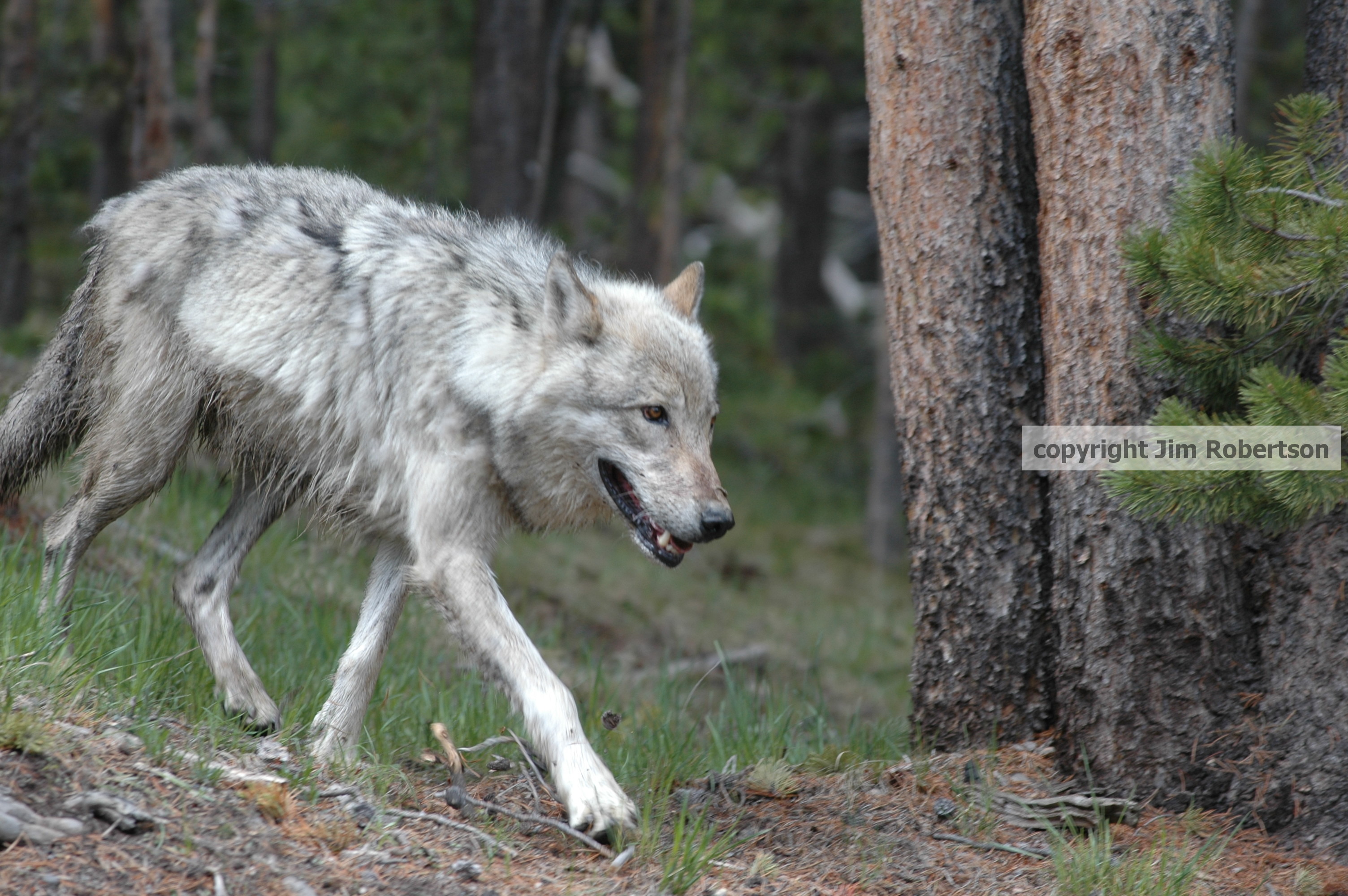
copyrighted Hayden wolf in lodgepoles

This article was sent to me with the comment:

“Bastards aerial gunned down 23 wolves those fuckers 
How is this going to end Jim
I feel so sad
And hateful.”
…To which I answered: It will end when the human race or finally grows a conscience or goes extinct , whichever comes first.

http://www.spokesman.com/blogs/outdoors/2014/feb/28/idaho-kills-23-wolves-month-lolo-zone/

by Rich

Feb. 28, 2014 3:36 p.m.                             •  12 comments

PREDATORS — Idaho Fish and Game, in cooperation with the USDA Wildlife Services, killed 23 gray wolves from a helicopter near the Idaho-Montana border during February in an effort to relieve predation on the struggling elk herds in the remote Lolo Zone.

The agency said in a just-issued media release that the wolf-control effort has been completed.

“The action is consistent with Idaho’s predation management plan for the Lolo elk zone, where predation is the major reason elk population numbers are considerably below management objectives,” the agency said in the release.

In addition to the animals killed in this control action, 17 wolves have been taken by hunters and trappers in the Lolo zone during the 2013-14 season – 7 by hunting and 10 by trapping, officials said.

The trapping season ends March 31, the hunting season ends June 30.

Fish and Game estimates there were 75 -100 wolves in the Lolo zone at the start of the 2013 hunting season with additional animals crossing back and forth between Idaho and Montana and from other Idaho elk zones.  Officials said their goal is to reduce that Lolo zone wolf population by 70 percent.

The Lolo elk population has declined from 16,000 elk in 1989 to roughly 2,100 elk in 2010, when Fish and Game last surveyed the zone.

The Lolo predation management plan is posted on the Fish and Game website.

This is the sixth agency control action taken in Lolo zone during the last four years.  A total of 25 wolves were taken in the previous five actions.

Fish and Game officials say they authorize control actions where wolves are causing conflicts with people or domestic animals, or are a significant factor in prey population declines.  Such control actions are consistent with Idaho’s 2002 Wolf Conservation and Management Plan approved by the U.S. Fish and Wildlife Service and the Idaho Legislature, they say.

More from IFG:

Fish and Game prefers to manage wolf populations using hunters and trappers and only authorizes control actions where harvest has been insufficient to meet management goals.  The Lolo zone is steep, rugged country that is difficult to access, especially in winter.

Restoring the Lolo elk population will require liberal bear, mountain lion, and wolf harvest through hunting and trapping (in the case of wolves), and control actions in addition to improving elk habitat.  The short-term goals in Fish and Game’s 2014 Elk Plan are to stabilize the elk population and begin to help it grow.

Helicopter crews are now capturing and placing radio collars on elk, moose, and wolves in the Lolo zone in order to continue monitoring to see whether prey populations increase in response to regulated wolf hunting, trapping and control actions.

MEXICAN GRAY WOLF ALERT

Arizona senators approve bill allowing livestock owners to kill Mexican wolves
PHOENIX — The Arizona Senate has approved a bill that allows livestock owners to shoot wolves protected by federal regulations if the… wolf is attacking other animals.
Senate Bill 1211 passed by an 18-12 vote on Monday..This would be devastating for the critically endangered Mexican gray wolf population which totals just 83 in the wild
Support Lobos of the Southwest for more information on how you can help save the Mexican Gray Wolf. The bill now goes before the House of Representatives.
http://www.mexicanwolves.org/index.php/news/1185/51/Urgent-Act-Now-to-ProtectLos Lobos
If you live in AZ follow this link to contact your state legislator http://www.azleg.gov/alisStaticPages/HowToContactMember.asp
528624c939a88_preview-620

How Wolves “Change Rivers”

You may have seen this already. I decided to go ahead and post this video, even though I don’t agree with everything it suggests. For instance, it states that wolves kill coyotes, implying that, as a result, there are now lots of rabbits in Yellowstone. I’ve seen many cases of wolves getting along famously with coyotes there, and yet I haven’t noticed any real increase in rabbits (which wolves would prey on themselves, if rabbits were becoming so numerous). In many ways this is an important and effective video; I’m just saying at times it’s kind of overstated .

http://newswatch.nationalgeographic.com/2014/02/16/this-will-shatter-your-view-of-apex-predators-how-wolves-change-rivers/

copyrighted-wolf-argument-settled

Idaho House panel backs $2 million plan to kill wolves that prey on elk, livestock

http://www.therepublic.com/view/story/b0d0c545a3e9408e8e7b7352300d4e08/ID-XGR–Wolf-Panel

THE ASSOCIATED PRESS
February 17, 2014 – 6:08 pm EST

BOISE, Idaho — Idaho’s House will get to consider a measure seeking to shift $2 million in taxpayer money toward a panel that will oversee the killing of wolves that prey on livestock and elk herds. [Wolves eat elk, get over it.]

Republicans on the House Resources Committee voted Monday 14-4 for the disputed bill.

It’s being pushed by Gov. C.L. “Butch” Otter [the man is an insult to the entire weasel family], over objections labeling this a “funding mechanism for a war on wolves.”

With this cash infusion, Otter wants to target wolf packs blamed for killing too many cattle, sheep and elk. [When did elk become a domesticated species?]

Backers including the cattle and sheep industry pledged not to reduce Idaho’s wolf population, now roughly 680 animals, to levels triggering a renewed federal Endangered Species Act listing.

But foes branded it a “thinly veiled proposal aimed at the second extirpation of wolves in Idaho.”

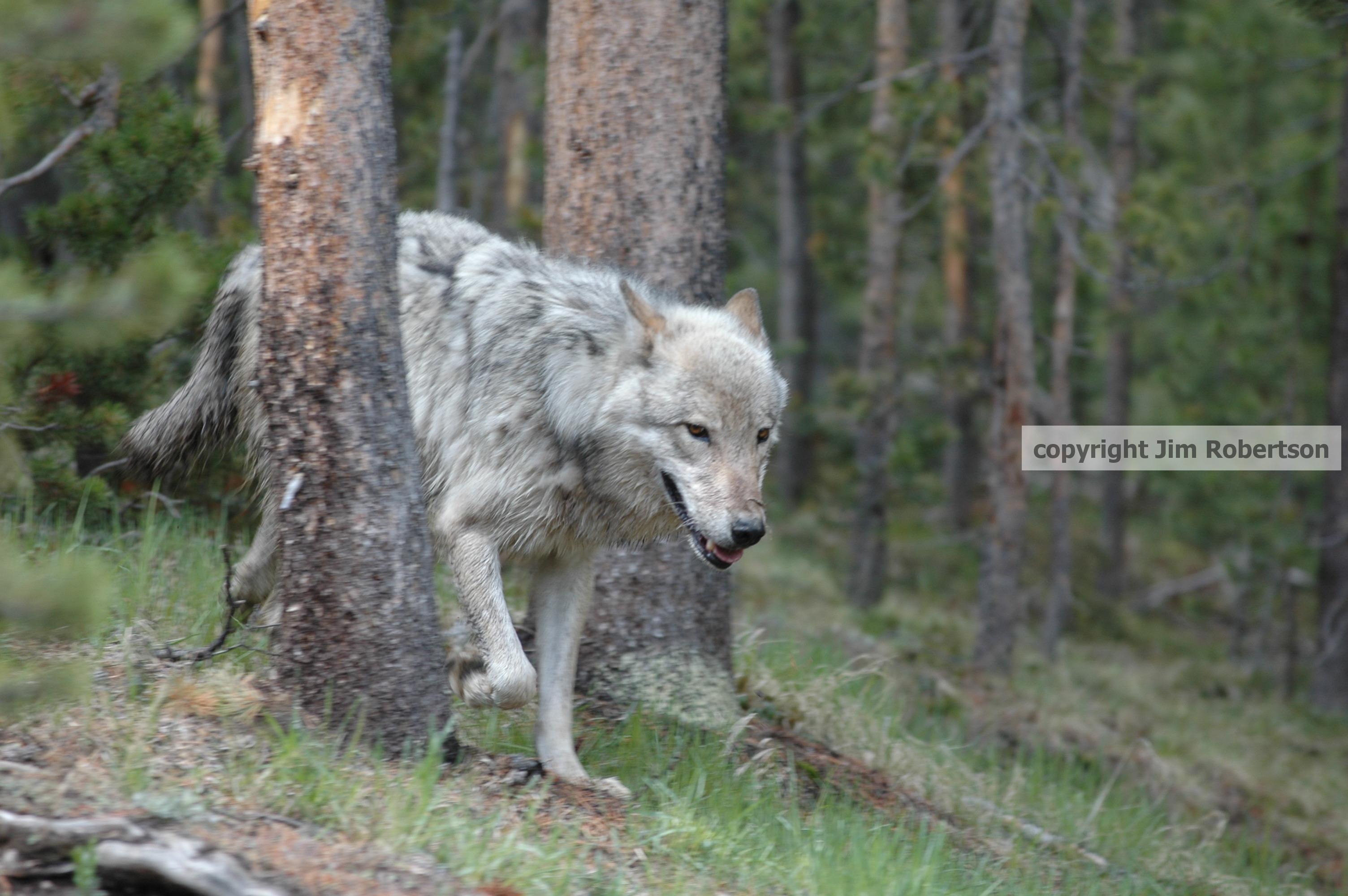
copyrighted Hayden wolf walking

USFWS Grants Landowner Permit to Kill Critically Endangered Red Wolf

USFWS Grants Landowner Permit to Kill Critically Endangered Red Wolf

Landowners who own property in the vicinity of the Red Wolf Recovery  Program, a 27-year federal project aimed at restoring to the far-eastern  edge of North Carolina one of nature’s most fragile species, claim red  wolves are invading their private property and impacting their  longstanding cultural tradition of deer hunting.   Although the deer  population has dropped somewhat, NC Wildlife Resources Commission  representatives believe the decline is more likely the result of  increased doe hunting than impacts by red wolves.

USFWS Red Wolf Recovery Coordinator, Dave Rabon, said opposition to  red wolves isn’t pervasive. Cultural differences in Eastern North  Carolina make it difficult for people to support a government-funded  predator program. “A lot of them will work with us,” he said. “But  they’re not going to advertise it. They’re not going to put a bumper  sticker on their car.”

Fourteen red wolves died in 2013 that the coalition knows about,  including nine dead by suspected or confirmed gunshot wounds. Another  wolf was found killed, apparently shot, on Jan. 7.  “Because of the  similarity of appearance between red wolves and coyotes, it is nearly  impossible for individual hunters to avoid shooting red wolves,” said  the recent lawsuit that the Red Wolf Coalition and other wildlife groups  filed against the state in its claim that it is not doing enough to  protect.

To date, there are no known red wolf attacks on humans and few  documented livestock kills. Still, resentment started building early on.  Though red wolves are protected under the Endangered Species Act,  locals were promised that they would be classified as “nonessential and  experimental,” giving landowners more leeway in dealing with them.

Farm owner Jett Ferebee has recently been granted by the USFWS the  first (and only) known permit to kill one of the red wolves that they  had not been able to trap and remove it from his Tyrell County  property,  as long as the taking was done while trying to legally kill  coyotes on his farm.

Relief for landowners depends on what they expect,” said USFWS Red  Wolf Recovery Coordinator, Dave Rabon.”  Canids of some kind, whether  wolves or coyotes, will always be in the area.  With Mr. Ferebee,” he  said, “we’ve been very successful removing animals from his property  when he’s called us. But it’s temporary. They’re going to come back.  Something is going to come back.”   Rabon added that opposition isn’t  pervasive. Cultural differences in Eastern North Carolina make it  difficult for people to support a government-funded predator program. “A  lot of them will work with us,” he said. “But they’re not going to  advertise it. They’re not going to put a bumper sticker on their car.”

Fourteen red wolves died in 2013 that the Red Wolf Coalition knows  about, including nine dead by suspected or confirmed gunshot wounds.  Another wolf was found killed, apparently shot, on Jan. 7.   “Because of  the similarity of appearance between red wolves and coyotes, it is  nearly impossible for individual hunters to avoid shooting red wolves,”  said the lawsuit that the Red Wolf Coalition and other wildlife groups  filed against the state.

If successful, the suit could stop coyote hunting altogether in the  five eastern counties. If it does, one can expect continued conflict  between pro-recovery efforts and landowners.

The red wolf (Canis rufus) is one of the world’s most endangered  canids.  Once common throughout the eastern and southcentral United  States, red wolf populations were decimated by the early part of the  20th century as a result of intensive predator control programs and  habitat loss.  We oppose USFWS’ action to allow this landowner to  lethally remove a red wolf. Thus, we ask that you express your  opposition with a respectful email to the parties below:

By email:

cynthia_dohner@fws.gov (Regional Director, Southeast Region)

leopoldo_miranda@fws.gov (Assistant Regional Director, Southeast Region)

d_m_ashe@fws.gov (Director, U.S. Fish and Wildlife Service)

New Wolf Film in Production

Check out Medicine of the Wolf– a film by Julia Huffman.

https://www.kickstarter.com/projects/645287247/medicine-of-the-wolf

Needs funding to get off the ground; 25 Days to go..for the Pledge of $50.000…

Medicine of the Wolf pursues the deep intrinsic value of brother wolf and our forgotten promise to him.

“To look into the eyes of a wolf is to see your own soul.”

~ Aldo Leopold

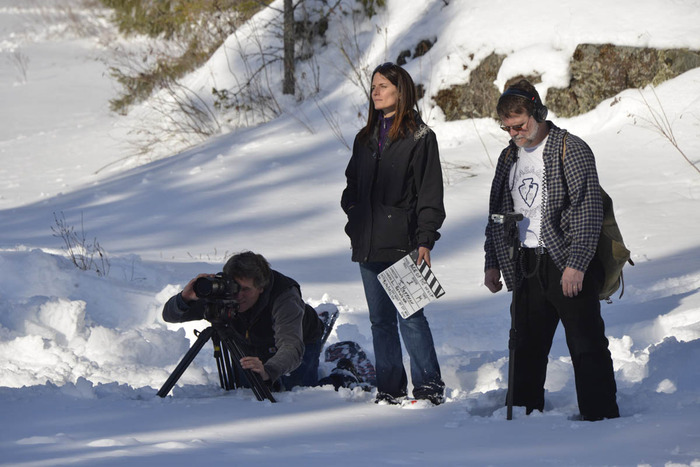
Director of Photogaphy Lawrence Schweich with Director Julia Huffman and Chris Hunter, Sound.

Filmmaker Julia Huffman travels to Minnesota and into wolf country to pursue the deep intrinsic value of brother wolf and our forgotten promise to him.

Medicine of the Wolf will take viewers on a journey to understand the powerful relationship that we have with the wolf by interviewing prominent people who represent the different levels of connection to this ancient and iconic species – from Anishinaabe creation stories that reflect our interconnectivity to all things, to a lifetime of observations of a complex and dynamic family unit, to a wolf scientist expressing his layered findings in an over 50 year study of the delicate web that wolves weave into our ecosystem.

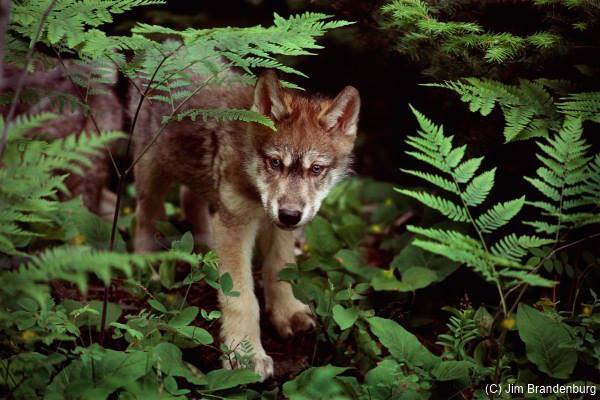
Wolf Pup Ravenwood - Photo by Jim Brandenburg
Wolf Pup Ravenwood – Photo by Jim Brandenburg

We are very honored to share that Medicine of the Wolf, our documentary examining the treatment of America’s gray wolves, has won the eighth annual Animal Content in Entertainment documentary grant offered by The Humane Society of the United States. 

“This feature-length documentary from filmmaker Julia Huffman follows the work of renowned environmentalist and National Geographic photographer Jim Brandenburg, who has studied wolves in the field for 44 years. The film explores the role wolves have played through American history, including their esteemed place in Minnesota’s Ojibwe tribe.

~ The Humane Society of the United States

TESTIMONIALS

“Medicine of the wolf will inspire us to take another look at our most important connection to the wolf and ultimately to our own souls.”

~ Brooks Fahy, Predator Defense

“A film like this could really not have come along at a more vital time for wolf conservation. Anti-wolf sentiments nearly led to the extermination of America’s wolves, and just when populations are starting to bounce back, wolves are being hunted and trapped at an alarming rate in several states as we speak, placing this iconic species in jeopardy once again.”

Colin McCormack, Manager of The Humane Society of the United State’s ACE program

“Julia’s film is profoundly moving. This is an important film that may help galvanize the hearts of many to protect this beautiful animal.”

Mark Coleman, Author, AWAKE in the WILD

“Thanks for sharing the trailer, it was Beautiful.”

Mike Phillips, Executive Director, Turner Species Fund

A HISTORY – WOLF AND MAN 

“Canis lupus, the wolf of my imagination and of the northern forest, did indeed roam Minnesota. Once the most abundant large predator on the continent, the wolf had virtually been eliminated from most places. Minnesota remained the only state among the lower 48 where a truly viable population existed.”

Jim Brandenburg, Author, BROTHER WOLF 

Weekly Wolf News

I hope all these links work for you…

Latest Posted Idaho Wolf Hunt             Kill total (current season):169
Latest Posted Idaho Wolf Trapping             Kill total: 78              Latest Posted Montana Wolf Hunt Kill Total (current season): 137              Latest Posted Montana Wolf Trapping             Kill total: 77 Wyoming Wolf Kill Total             (2014):0
Regional Total Reported Killed Since             Delisting: 1683
Pacific West
Op-ed/Letter to the Editors
National
Op-ed/Letter to Editors

Northern Rockies

Op-ed/Letter to Editors

Elsewhere and other

——- Subscription Only

By George Plaven                  EO Media Group | 0 comments
A possible new wolf pack is roaming Eastern Oregon                 after wildlife biologists confirmed finding tracks from                 five animals near Medical Springs in Union County.
The Oregon Department of Fish & Wildlife first                 documented tracks in late December, based on reports                 from a landowner in the area. Tracks were found again                 three more times last month, stretching into northern                 Baker County.
While little is known about the exact location of the                 pack, a designated Area of Known Wolf Activity was                 mapped in the southern Catherine Creek and northern                 Keating wildlife management units. Size was estimated by                 looking at the range and behavior of other packs across                 the region.
Wolf packs are typically defined as consisting of a                 male, female and their offspring. For purposes of                 monitoring, a pack can also mean four or more wolves                 traveling together over winter, and this group of wolves                 meets that definition.
ODFW will attempt to collar one of the new wolves to                 learn more about their territory and breeding status,                 said spokeswoman Michelle Dennehy. It is still too early                 to know if there is a breeding pair or pups within the                 group of five.
“There is evidence that they have used this area over                 several weeks, so we know they’re not just dispersing,”                 Dennehy said. “We don’t know much more about them yet.”
The as yet unnamed pack would be Oregon’s eighth. The                 Imnaha, Umatilla River, Wenaha, Snake River, Walla                 Walla, Minam and Mount Emily packs also inhabit the                 state’s northeast corner. Total wolf figures in 2013 are                 not yet available, though 46 were counted at the end of                 2012.
Wolves remain listed under the state Endangered Species                 Act, and are federally protected west of highways 395,                 78 and 95. Management is done by ODFW to conserve                 populations, while mitigating damage from livestock                 depredation.
No incidents of depredation have been reported with the                 new group. ODFW will work with ranchers in the area to                 let them know about rules and different preventative                 measures for minimizing wolf-livestock conflicts.
Non-lethal measures are required before ODFW will use                 lethal control against wolves. In order to count as a                 “qualifying incident,” a pack must prey on livestock                 four times within a six-month period. These incidents                 must be investigated by ODFW and be confirmed                 depredations by the agency.
Confirmed depredations only qualify toward lethal                 control if livestock producers had preventative measures                 already in place.
Once a wolf kills livestock for the first time, an Area                 of Depredating Wolves is established. At that point,                 livestock producers must use preventative measures for a                 depredation to qualify.
It is up to producers to remove, treat or dispose of                 all known and reasonably accessible attractants on the                 property, such as bone piles. Finally, ranchers must                 have in place one additional deterrent — such as fladry                 fencing or range riders — to protect livestock.
No packs have met all the lethal control criteria. Most                 recently, there was confirmed depredation of a ewe Jan.                 30 by the Imnaha Pack on Upper Prairie Creek in Wallowa                 County. A report on whether this is a “qualifying                 incident” is still pending.
Before delisting wolves, wildlife managers need to                 observe four breeding pairs for three consecutive years,                 each with two pups that survive through the end of the                 year. Oregon met that requirement for the first time in                 2012, and 2013 could mark the second time depending on                 final year-end survey results.
Additional information about wolves is available on                 ODFW’s website at www.dfw.state.or.us/wolves.
copyrighted Hayden wolf in lodgepoles

Ranchers seek to extend lethal elk removal season–right outside Yellowstone!

[This is just north of Yellowstone, where wolves should be allowed to take care of the elk “problem”…]

http://helenair.com/news/state-and-regional/ranchers-seek-to-extend-lethal-elk-removal-season/article_4ea84c0e-9548-11e3-8653-001a4bcf887a.html

BILLINGS — Cattle ranchers in the Paradise Valley asked the Fish and Wildlife Commission on Thursday to extend the season for lethal elk removals in the area to May 15 and to pay for fencing to keep elk out of feeding and calving areas.

The controversial proposals were drawn up by a subcommittee of the upper Yellowstone watershed group as a way to reduce the transmission of the disease brucellosis from infected elk to cattle during the spring, which is when brucellosis is spread through contact with aborted fetal tissue from infected animals.

Fish, Wildlife and Parks currently has a policy to pay for fencing materials to block wildlife from raiding haystacks. The fencing supplies are provided to landowners who allow public hunting.

In what has been deemed the designated surveillance area for brucellosis around Yellowstone National Park, FWP allows elk hazing and fencing to help landowners from Jan. 15 through June 15. Lethal elk removals are allowed through April 30, but the number of elk killed is limited to 10 each time. Hunters on a roster are called to remove the elk.

Defending idea

Although admitting the fencing proposal is “a little scary” because it lacks details about the type of fencing and costs, Paradise Valley rancher Druska Kinkie told the commission the finer details would be worked out by the landowner and Fish, Wildlife and Parks to address specific situations on different properties. Each project would be unique.

“The goal is not to stop elk but to get them to take a different route,” she said.

Eric Liska, the Department of Livestock’s brucellosis program veterinarian, supported the proposals, noting that landowners have only two tools to fight brucellosis infection: vaccination of their livestock, which isn’t 100 percent effective, and keeping their livestock separated from elk during the spring.

Wildlife groups opposed

The proposal immediately came under fire from people attending the meeting or listening in.

Park City resident J.W. Westman said the Laurel Rod and Gun Club was opposed to the proposals, placing the blame for spread of the disease on some ranches that provide a safe harbor for elk during the hunting season. He also pointed to the surrounding states of Idaho and Wyoming which have elk feedgrounds where disease is more easily spread as being at the root of the problem.

Kathryn QannaYahu, a Bozeman environmentalist, said such measures seem extreme and possibly expensive and said the risk of brucellosis transmission from elk to cattle is only .00024 percent.

“This is about depopulating, removing a forage competition ungulate from the landscape, sportsmen’s dollars subsidizing their socialized agriculture and game ranching,” she wrote in an email.

Working groups rapped

Others expressed concern that the group making the proposal contains no members of sporting groups, hunters or other members of the public to provide a balanced recommendation.

“These working groups have become more or less dysfunctional,” said Bill O’Connell, a Bozeman-area farmer who was once a member of a similar group in the Madison Valley.

Mark Albrecht, a Bozeman veterinarian and member of the statewide elk working group, agreed the local working groups need help. He also said that if the department decides to extend the season for lethal elk removals, an environmental assessment should be conducted. He said that without studying the issue, FWP could be promoting more elk abortions caused by stressing the animals. If that were the case, the agency would be increasing the risk of transmission by trying to remove more elk.

“Let’s not forget the science,” Albrecht said.

Public’s chance

Fish and Wildlife Commission chairman Dan Vermillion, who lives in Livingston, supported the Paradise Valley landowners for coming forth with recommendations to address the problem. He noted that some of the ranches where infection has occurred were open to public hunting, that elk numbers are within FWP’s objectives and that the elk causing problems aren’t showing up during the hunting season, but arrive in March.

But he also expressed concerns about the methods landowners proposed and the difficulty of solving an issue when Wyoming and Idaho continue to congregate elk on feedgrounds during the winter.

“It’s now time for Montanans to weigh in,” Vermillion said, noting that proposals will come before the commission again at its April 10 meeting. Comments will be taken until March 21.

“Let us know what you think, because this is huge,” he said.
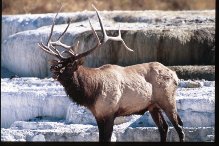
Photo Copyright Jim Robertson

Photo Copyright Jim Robertson
US government could drive grey wolf to extinction

http://www.salon.com/2014/02/14/outrageous_the_u_s_may_take_the_grey_wolf_off_the_endangered_species_list_paper/

Friday, Feb 14, 2014

OnEarth About 300 wolves live in the nearly 2-million-acre swath of central Ontario forest known as Algonquin Provincial Park. These wolves are bigger and broader than coyotes, but noticeably smaller than the gray wolves of Yellowstone. So how do they fit into the wolf family tree? Scientists don’t agree on the answer—yet it could now affect the fate of every wolf in the United States.

That’s because last June, the U.S. Fish and Wildlife Service proposed removing gray wolves across most of the country from the endangered species list, a move that would leave the animals vulnerable to hunting. To support its proposal, the agency used a contested scientific paper—published, despite critical peer review, in the agency’s own journal—to argue that gray wolves never existed in the eastern United States, so they shouldn’t have been protected there in the first place.

Instead of the gray wolf, the service said, an entirely different species of wolf—the so-called “eastern wolf,” a species whose remnants perhaps survive in Algonquin Park—once inhabited the forests of eastern North America. Canid biologists have argued over the existence of this “lost species” for years. Yet researchers on all sides say that even if the Algonquin wolves are a separate species, that shouldn’t preclude continuing protections for the gray wolf.

On Friday, an independent panel of five leading geneticists and taxonomists came down hard on the agency’s proposal to delist gray wolves, unanimously concluding that the service had not relied on the “best available science.” Individual panel members described “glaring insufficiencies” in the supporting research and said the agency’s conclusions had fundamental flaws.

“What’s most significant,” says Andrew Wetzler, director of land and wildlife programs for the Natural Resources Defense Council (which publishes OnEarth), “is that this is coming from a group of eminent biologists who disagree with each other about the eastern wolf—and even so, they agree that the agency hasn’t properly understood the scientific issues at hand.”

copyrighted wolf in water