Animal Welfare Institute plans lawsuit over red wolf deaths

By Hayley Benton on 02/08/2014

From Tara C. Zuardo
Wildlife Attorney at the Animal Welfare Institute

To Whom It May Concern:

On October 29 2012 and you did stories on the red wolves being found shot dead in North Carolina (by Jake Frankel). There is a hearing on the next step of this campaign on Tuesday, February 11, 2014 in case you are interested for Mountain Express: We are suing the North Carolina state wildlife agency for authorizing day and night hunting in the red wolf’s recovery area of an identical looking animal – coyotes – and hence violating the Endangered Species Act, which the red wolf is listed under. Again, the hearing on our injunction is this coming Tuesday, February 11, 2014. I have included below a list of facts about this red wolf population, and I am happy to send you anything else you need – a press release, mortality statistics, court documents, etc.:

-The red wolf (Canis rufus) once ranged throughout the eastern and southcentral UnitedRed-wolf-and-pups-240x300 States. Intensive predator control programs and the degradation and alteration of the species’ habitat had greatly reduced its numbers by the early 20th Century, however. Designated as an endangered species in 1967, the red wolf was declared extinct in the wild in 1980. In 1987, an experimental population of red wolves was reintroduced into eastern North Carolina. Four pairs were released into the Alligator River National Wildlife Refuge. The red wolf recovery area is approximately 1.7 million acres along North Carolina’s Albemarle Peninsula. This is the home to the only population in the wild.
-Between June 2013, when the Red Wolf Education Center opened, to December 2013, there were approximately 2,000 visitors from around the world who came to learn about red wolves. The Red Wolf Coalition gave 40 scheduled programs and about 12 special programs for various organizations. There is much local support of and interest in the wolf population.
-Total current estimated population is only 90-110 wolves, making the red wolf one of the most endangered species in the world. –
-USFWS has determined that gunshot mortality is the single biggest threat to the recovery of the wild red wolf population. Since 2008, up to ten percent of the wild population has been shot each year (confirmed death for 20 wolves, suspected cause of death for additional 18 wolves). The number of wolves killed by gunshot increased between 2012 and 2013.
-Because of the similarity of appearance between red wolves and coyotes, it is nearly impossible for individual hunters to avoid shooting red wolves, during the day or night. Larger coyotes can weigh 35 to 40 pounds, and while red wolves are typically in the 60-pound range, smaller females can weigh 45 to 50 pounds, infringing on the typical size of a large coyote. Judging 60 pounds versus 40 pounds at a distance might be incredibly difficult. U.S. Fish and -Wildlife Service (USFWS) red wolf recovery team members believe the wolves tend to be killed because they are considered to be large coyotes and thus make for larger hunting trophies.
-To combat interbreeding and lower coyote populations in the area, the USFWS captures and sterilizes coyotes. Sterilized coyotes are then outfitted with radio collars, released back into the wild and utilized by the USFWS to expand the range of red wolves. Hunting coyotes in the red wolf recovery area – and thus the shooting of sterilized “placeholder” coyotes — allows unsterilized coyotes to move into red wolf territory, increasing opportunities for inbreeding between red wolves and coyotes, decreasing the genetic integrity of the wild population, and injuring red wolves by disrupting population dynamics.
-Daytime coyote hunting has been authorized in the recovery area by the North Carolina Wildlife Resources Commission (NCWRC) since 1993, and they proposed adding night time hunting with spotlights in February of 2012. A coalition of conservation organizations (Animal Welfare Institute, Defenders of Wildlife, Red Wolf Coalition and Southern Environmental Law Center) sued and obtained a temporary injunction to block the temporary rulemaking (authorizing night time hunting with spotlights in the recovery area) in November 2012. However, the North Carolina General Assembly then allowed the permanent rulemaking (again, authorizing night time hunting with spotlights) to go into effect in July 2013. There is no language in the state regulations indicating the red wolves should be avoided when killing coyotes, and no information distributed to hunters to let them know that red wolves live in the recovery area and should be avoided when hunting or simply shooting coyotes.
-Just between Oct 28 and Nov 19, 2013, USFWS recovered the bodies of five red wolves with gunshot wounds, and a collar for a sixth. A month later, they found a bullet-ridden body of a seventh red wolf. Nearly 10 percent of the population died during this time span.
-Anyone found responsible for illegally “taking” or killing red wolves is subject to up to a year in prison and $100,000 fine, but the threat of this punishment and the $25,000+ reward offer still has not led to any leads for fall 2013 deaths.
-According to USFWS, red wolves rely heavily on the set social structure of a pack, comprised of five to eight wolves, to grow and maintain the population. One component of that pack involves breeding pairs, or “breeders” — two wolves that bond for life and mate once a year in February. All seven wolves killed during the fall 2013 span were adults, and by extension, potential breeders. These breeder deaths can damn populations in the future because they are what actually contribute to the growth of the population. In addition, the total number of red wolf pups born during whelping season has decreased each of the last three years, from 43 pups in 2010, to 34 pups in 2013.
-The 60 day notice of intent to sue for the North Carolina Wildlife Resources Commission for violations of the Endangered Species Act; causing the illegal take of endangered red wolves by authorizing day and night hunting was filed on July 30, 2013. The federal complaint was filed on October 17, 2013. The motion for a preliminary injunction was filed on December 16, 2013. The hearing on the injunction is February 11, 2014.
 

Why Wolves Need ESA Protection

1509686_1453770291507881_1955386015_n

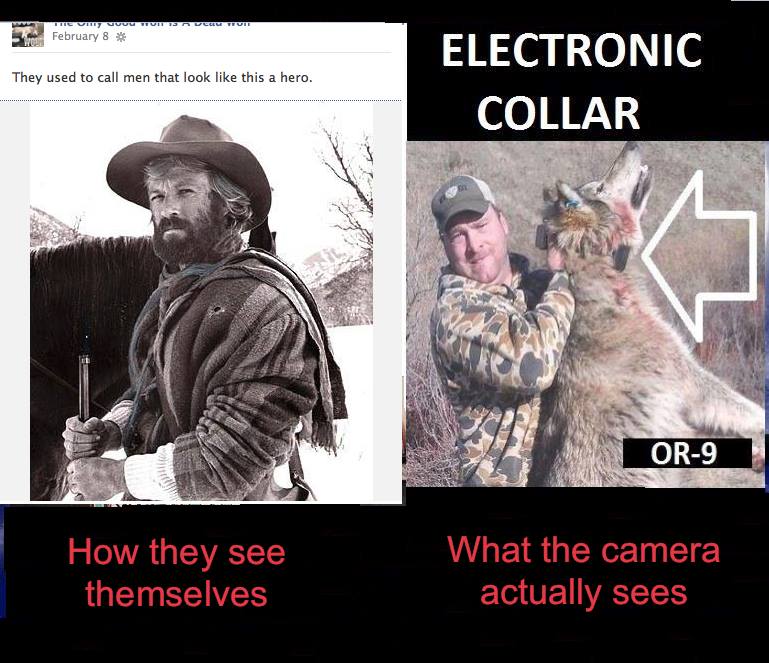
The sad story of OR9 is a prime example of why wolves need to remain on the federal Endangered Species list…

Sibling of famous OR-7 wolf killed by hunter in Idaho

Published: Friday, February 10, 2012

JOSEPH — A sibling of Oregon’s world-famous wolf OR-7 has been shot and killed in Idaho by a hunter whose wolf tag was no longer valid.

“What an amazing difference between how this wolf’s story evolved compared to his brother, OR-7, who is now in California and is an international celebrity,” said Suzanne Stone of Boise, spokeswoman for the 530,000-member Defenders of Wildlife environmental group.

The radio-collared male wolf identified as OR-9 was killed Feb. 2 near a cattle feedlot and winter calving area north of Emmett, between Boise and the Snake River, said Mike Keckler, spokesman for the Idaho Department of Fish and Game.

Like his famous brother, OR-9 was born into the Imnaha pack near the northeastern Oregon town of Joseph. He was collared Feb. 26, 2011, in the Grouse Creek area east of Joseph when he was about 1 1/2 years old and weighed 90 pounds then.

OR-9 departed Oregon in July two months before OR-7 began his epic 730-mile trek to Crater Lake and south into California earlier this winter. OR-9 headed east, swam the Snake River into Idaho at Brownlee Reservoir and traveled south toward Emmett.

His travel destination turned out to be dangerous. Unlike the Joseph area, where gray wolves are protected under Oregon’s Endangered Species Act, Idaho’s wolves are classified as big game animals and subject to regulated hunting rules.
More…http://www.oregonlive.com/pacific-northwest-news/index.ssf/2012/02/sibling_of_famous_or-7_wolf_ki.html

From Defenders of Wildlife:
You didn’t support it. We didn’t support it. Now it’s been shown that the best available science doesn’t support the plan to delist nearly all gray wolves in the Lower 48 either.

ACT NOW: Demand that Secretary Jewell abandon this reckless delisting proposal and allow for the full recovery of gray wolves!

An independent peer review board, commissioned to assess the quality and adequacy of the science underlying the U.S. Fish and Wildlife’s (FWS) delisting plan for gray wolves, just released their unanimous decision: that the proposal to strip gray wolves of Endangered Species Act Protection is not based on the best available science and contains numerous omissions and errors.

This is a major development in our efforts to stop this irresponsible proposal from going through.

Please speak out! Urge Secretary Jewell to direct the Fish and Wildlife Service to withdraw this proposal immediately!

Now that it’s been confirmed that this proposed delisting is clearly not based on the best available science, we are left wondering why FWS wants to turn its back on wolves.

In states like Idaho, we continue to see what happens when wolves are prematurely stripped of federal protection and left to be managed by states with deadly anti-wolf agenda’s – just recently they announced a proposal to kill off as many as 450 wolves statewide!

Wolves now serve as a scapegoat for anti-government extremists with a political agenda – and these groups will spare no expense to try and derail wolf conservation in America. We simply can’t allow politics and private interests to trump science – it’s irresponsible and unacceptable.

The Time to be Bold is Now

copyrighted wolf in river

The Time to be Bold is Now

By Brett Haverstick On February 8, 2014

Over the years, I have come to realize that the current wildlife management model in America, at the federal level, and particularly, the state level, is broken. The system is such, in which, politics trumps the best-available science, the special interest-minority overwhelms the democratic-majority and the almighty dollar is more powerful than ethics, heritage and legacy. Can this be found throughout the American political landscape? Of course, the answer is yes. But when applied to the current wolf slaughter taking place in the West, and in the Great Lakes, it fits perfectly. In fact, it embodies it.

During my brief time working in the conservation community, I have sadly concluded that both grassroots and national conservation groups, and every-day citizens, are limited to the degree, in which, they can enforce public lands laws, ensure that the best-available science is used and entrust that public sentiment is reflected in wildlife policy and management decisions. Recent examples of this include–with all, unfortunately, taking place in Idaho–are the Wolf-Coyote Derby in Salmon, the killing of two wolf packs in the Frank-Church River of No Return Wilderness by a 21st Century bounty hunter and the efforts of Governor C.L. “Butch” Otter to launch a predominantly tax-payer funded, $2-million dollar independent wolf control board to wipe out another 500-grey wolves. If this were to occur, wolves would be reduced to the bare-minimum of 150-wolves in Idaho (federally mandated), would not be able to fulfill their ecological niche, and most importantly, could be on the precipice of yet, another extinction.

The conservation community, and the American people at-large, is now approaching the crossroads. Do we continue to take the band-aid approach (attending public meetings, issuing action alerts, circulating petitions, and filing appeals/lawsuits) or do we step out-of-the-box and confront the root causes of the problem? While some may respectfully disagree with me, or question the feasibility of such a challenge, I advocate for the latter.

So what solutions do I offer? The 5 Keys to Reforming Wildlife Management in America, are as follows:
1.Restructuring the way state Fish & Game departments operate. Politics: western governors appoint agency commissioners, which essentially, tell the state departments what to do. This is cronyism at its worst. Economics: state departments are mostly funded by the sale of hunting/fishing tags or permits. These agencies are bound into serving the interest of “sportsmen” because it’s the hand that feeds them. Modern funding mechanisms, the application of best-available science and genuine public involvement are sorely lacking in these institutions and it must be addressed. Another option would be to empower the federal government to manage wildlife on federal public lands.
2.Removing grazing from all federal public lands. The “management” or “control” of native wildlife to benefit the livestock industry is ground zero. It is also well documented the damage that grazing causes when livestock infests wildlands. Livestock are non-native and largely responsible for soil compaction, a decrease in water retention and aquifer recharge, erosion, destruction of wetlands and riparian areas, flooding and a net-loss of biodiversity. Grazing enables invasive plant species to proliferate, which greatly affects the West’s historic fire regime.
3.Abolishing Wildlife Services. Hidden within the US Department of Agriculture, is a rogue agency that is essentially the wildlife killing-arm of the federal government. For over 100-years, this federal tax-payer supported agency has largely worked on behalf of the livestock industry and is responsible for the death of tens-of millions of native wildlife. Methods of killing include trapping, poisoning and aerial gunning. Conservation efforts are currently culminating into a potential Congressional investigation of this corrupt agency.
4.Banning trapping/snaring on all federal public lands. We must evolve as a society and move away from this barbaric, unethical, cruel and tortuous method(s) of killing native wildlife. Leg-hold traps, conibear traps and other devices are indiscriminate killers. Over the past couple years, there has been an increase in the number of dogs caught/killed by traps when recreating with their owners on public lands. When is an adult or child going to step into a leg-hold or body-gripping trap? Some states currently require individuals to check their traps every 72-hours, while other states only recommend that trappers check them, at all.
5.No killing of predators, except for extreme circumstances. For example, an aggressive and/or habituated bear may need to be killed after non-lethal measures have failed. Otherwise, non-lethal measures should be implemented in rare instances where there are actual human/predator conflicts. The best available science suggests that predators, including wolves, are a self-regulating species. In other words, predators don’t overpopulate. Instead, their populations naturally fluctuate, as do prey or ungulate populations. We need to better understand and embrace the trophic cascade effect predators have within ecosystems.

How do we take that ever-so-important first step, you may ask? We embark on this journey, together, on June 28 – 29, 2014 at Arch Park in Gardiner, Montana.

Speak for Wolves: Yellowstone 2014 is an opportunity for the American people to unite and demand wildlife management reform. It’s about taking a critical step towards stopping the grey wolf slaughter. It’s about hope, our collective-future and restoring our national heritage and legacy. The weekend-long event is family friendly and will feature prominent speakers, live music, education and outreach booths, children’s activities, food and drink vendors, video production crews and the screening of wildlife documentaries.

On June 28-29, 2014, Americans from all walks-of-life will converge at Arch Park in Gardiner, Montana to tell the government we need to reform wildlife management, at both the state and federal level. With your support and participation, this will be the event of the year in the northern Rockies. Together, we can make history and embark on restoring our wild national heritage. The time to be bold is now.

Meanwhile in CA, Gray wolf doesn’t warrant endangered status, official says

http://www.sfgate.com/bayarea/article/Gray-wolf-doesn-t-warrant-endangered-status-5208673.php

by Melody Gutierrez Wednesday, February 5, 2014copyrighted wolf in water

Sacramento —

The gray wolf should not be listed as an endangered species in California, according to staff at the state Department of Fish and Wildlife, much to the chagrin of wildlife conservation advocates who petitioned for the designation.

Following a yearlong review, the department’s director, Chuck Bonham, told the California Fish and Game Commission on Wednesday that there is scientific evidence to support some protections for the gray wolf, but not for listing the animal on the endangered species list. The commission will consider his recommendation and may act on it this spring.

“Look, this decision has been weighing on me for weeks,” Bonham said. “It’s possible I may lose friends over this, which is why I ask everyone to read the documents before passing judgment.”

The recommendation was in response to a petition filed by conservationists in 2012 seeking protections for the species after a gray wolf from Oregon, known as OR-7, entered California. It was the first wild gray wolf in the state in almost 90 years. The wolf has since gone back to Oregon but has made some short excursions to the Golden State.

Bonham said his department’s recommendation is to designate the gray wolf as a species of special concern, prohibit the killing of OR-7 or other gray wolves and consider recommendations for placing the gray wolf on the state’s endangered species list at a later date.

Bonham said the recommendation documents will be posted on the department’s website by Thursday. Bonham’s announcement comes as the U.S. Fish and Wildlife Service proposed removing the gray wolf from the federal list of threatened and endangered species.

Nearly all of the public comments at Wednesday’s meeting in Sacramento on the gray wolf petition favored listing the animal as endangered.

“Wolves deserve a chance to recover in California, so it’s disappointing to see the Department of Fish and Wildlife’s recommendation against protections,” said Amaroq Weiss, West Coast wolf organizer at the Center for Biological Diversity, one of the groups that petitioned the state to have the gray wolf listed as an endangered.

In other developments at the Fish and Game Commission meeting, commissioners agreed to take up a possible ban on killing contests, a response to a controversial annual coyote killing contest held in Modoc County.

The annual event, scheduled for this weekend, triggered outrage last year after Project Coyote and several other conservation groups started a statewide campaign to stop the killings.

Camilla Fox, executive director of Project Coyote, said wildlife killing contests are more common than the public realizes. Organizers of the event have attempted to hide the contest from public view due to criticism and media attention.

One supporter of the event, Perry St. John, said the coyote hunt is held this time of year to help reduce the coyote population before spring calf births.

“It’s not killing for fun,” St. John told the commission during public comments. “It’s a chance for people to come together.”

NPR: MT Ranchers Learn to Tolerates Wolves

Gray wolves are a controversial and polarizing animal in much of the American West. Wolves have slowly come back from extinction, forcing people to learn how to coexist with the cunning predator. One farmer is teaching his cattle to huddle together as bison do when threatened — there is safety in numbers.

SCOTT SIMON, HOST:

Efforts to remove the gray wolf from the endangered species list across most of the lower 48 states hit a hurdle yesterday. A U.S. Fish and Wildlife Service panel said the scientific research is insufficient to make a decision. The ruling disappointed those who see wolves as cunning predators who threaten their livestock. NPR’s Nathan Rott spent several weeks in Montana, a state where wolves are no longer on the list, talking to people there about the troubled relations between the two species.

And while he encountered a lot of polarization, he also found there are people trying to seek ways that humans and wolves can coexist.

Transcript continues here: http://www.npr.org/2014/02/08/273577607/montana-ranchers-learn-ways-to-live-with-wolves

528624c939a88_preview-620

A Federal Reprieve for Wolves

WASHINGTON — The Obama administration backed away — for now — from its plan to lift federal protections for gray wolves throughout the continental United States after an independent report on Friday faulted the science behind the proposal.

The study by the National Center for Ecological Analysis and Synthesis found that U.S. Fish & Wildlife Service’s proposal to delist the animal from the Endangered Species Act is “not well supported by the available science,” according to a statement from the University of California-Santa Barbara, which houses the center.

The proposal “was strongly dependent on a single publication, which was found to be preliminary and not widely accepted by the scientific community,” according to the statement.
The authors — who at the administration’s request did a peer review of the science behind the wolf plan — said additional research is needed before the administration can decide whether to delist the species or keep it on Endangered Species Act.

The Fish & Wildlife Service turned to the California center for an objective scientific analysis after encountering a barrage of criticism from conservationists and scientists whose research was used in writing new wolf rules. The government had no role in picking the scientists who did the study.

In response to the findings, the Fish & Wildlife Service decided to once again seek public input before issuing final wolf rules. The previous public comment period ended in December and the administration planned to issue a final rule this year.

Reopening public comments is a sign that the administration is rethinking its position.

“Peer review is an important step in our efforts to assure that the final decision on our proposal to delist the wolf is based on the best available scientific and technical information,” Fish & Wildlife Director Dan Ashe said in a statement. “We are incorporating the peer review report into the public record for the proposed rulemaking, and accordingly, reopening the public comment period.”

copyrighted Hayden wolf in lodgepoles

Bill to Fund Killing up to 500 Wolves Survives Committee

http://magicvalley.com/news/local/govt-and-politics/bill-to-fund-killing-up-to-wolves-survives-committee/article_1dbf6eec-87dd-11e3-bbcb-0019bb2963f4.html

January 28, 2014
By Kimberlee Kruesi –

BOISE • Gov. C.L. “Butch” Otter’s proposed $2 million fund to kill as many as 500 wolves barely passed its preliminary vetting Monday by the House Resources and Conservation Committee.

Committee members quizzed sponsors state Sen. Bert Brackett, R-Rogerson, and Rep. Marc Gibbs, R-Grace, on the effectiveness of creating a separate fund — which would come with a five-member oversight board — when the state already funds a predator damage board.

Bracket and Gibbs responded that the proposed expense would keep the focus on wolves instead of splitting resources on the state’s Animal Damage Control Board.

Federal support to control wolves will stop in 2016, Brackett said. In Fiscal Year 2013, the federal government provided $650,000 of the state’s $1.4 million wolf management budget.

If the bill passes, the $2 million would be a one-time appropriation with the livestock industry and hunting license fees contributing $110,000 each year.

“The priority of this whole effort is to keep the wolves delisted,” Brackett said.

Idaho’s wolves were taken off the endangered species list in 2011. Today, the state’s wolf population is estimated to be around 680 animals, according to the Idaho Department of Fish and Game. If it falls below 150, the species will be once more classified as endangered by federal regulators.

The committee repeatedly questioned the need for two boards dedicated to killing predator animals that cause damage to livestock or Idaho’s elk population.

“How is this a more cost-effective approach to start a new board than to put a little more money into Idaho Fish and Game?” asked state Rep. Illan Rubel, D-Boise.

Gibbs countered that a separate board allows the state to be flexible.

The new wolf fund would not pay for livestock killed by wolves but to kill wolves that cause damage, Gibbs said.

“There are no new ways to control wolves being projected or being created by this bill,” Gibbs said. “They are simply subject to the tools we have today, which is sport hunting, trapping and aerial gunning.”

The committee voted 9-8 to move the legislation forward, with the chairman initially declaring the bill failed before Gibbs speaking out he hadn’t voted and provided the “yes” needed for the bill to be printed.

This is the second consecutive year lawmakers have tried to secure funding dedicated wolf control. Last year, Otter vetoed a bill that would have diverted money from Fish and Game to a wolf management fund. The bill was sponsored by Rep. Judy Boyle, R-Midvale, who voted against Brackett’s and Gibbs’ proposal.

Boyle said committee recommendations from the summer of 2013 supported added money to the Animal Damage Control Board for wolf damage.

“I feel like this is a breach of contract of what was promised in that committee,” she said.

Brackett said that while a committee may have submitted recommendations, their bill was based on what the governor wanted.

Idaho’s wolf control management strategies have received criticisms recently after Fish and Game hired a trapper for the first time to kill two packs in the Middle Fork of the Salmon River.

Wolf activists also spoke out against Idaho’s elk management plan during a recent public hearing updating the document.

copyrighted wolf in river

What Motivates a Wolf Killer?

Text and Wildlife Photography ©Jim Robertson, 2014. All Rights Reserved

Text and Wildlife Photography ©Jim Robertson, 2014. All Rights Reserved

Killing a wolf is a crime against nature—and the motive depends on the kind of perpetrator. To a trophy hunter, a dead wolf is something to mount on a wall and brag about. By literally possessing the animal, they can relive their kill over and over, remorselessly boosting their flagging self-esteem every time they vacuously gaze at their victim’s lifeless body. For a fur trapper, a dead wolf is just a hide and a chance to play modern-day frontiersman. Although there’s no real frontier left, they consciously choose to revive a bloody, destructive lifestyle—partly for money, but mostly for a sense of identity.

But to a “wolfer,” the kind of person whose central preoccupation is hiring on to rid an area of each and every last wolf he can, a prime sense of greed is the motivating factor.

Sure, a guy like that, such as the wolfer contracted by the Idaho Department of Fish and Game to snuff out the Golden Creek and Monumental Creek packs in Idaho’s Frank Church Wilderness Area, must get an ego boost from being known as a “professional” wolf killer. He no doubt experiences some kind of perverse thrill every time he finds an animal desperately trying to free him-or-herself from one of his leg crushing traps. And he probably even gets off on hearing that his actions are upsetting a lot of empathetic wolf advocates who desperately want him to stop his atrocities. But the main reason the wolfer does the job he does is greed, pure and simple: a selfish lust for power, control and of course, money.

That may not seem like a lot to accuse him of in a country built on the spoils of selfishness and greed. Yes, he is surely evil incarnate, soulless and sick to the core, but as long as someone is paying him to “get the job done”… And who the hell pressed the state into hiring a hit man to eliminate established packs, tormenting individual wolves and disrupting nature’s time-tested order? Ask the Idaho trophy elk hunting syndicate.*

The wolves in the Frank Church Wilderness area weren’t after anyone’s cows or frightening school kids at bus stops, they were just doing what comes naturally to wolves. Killing off apex predators to make it easier for sport hunters has got to be the height of human arrogance.
________________________________
*syn-di-cate (noun) 5) an association of gangsters that controls an area of organized crime

Idaho hunter hired to kill wolves “gets the job done”!

[This answers the question, “How many are left?”]

http://www.oregonlive.com/pacific-northwest-news/index.ssf/2014/01/idaho_hunter_hired_to_kill_wol.html

by Associated Press, January 29th 2014

KETCHUM, Idaho — A professional hunter has been called out of a federal wilderness in central Idaho because he succeeded in killing all the wolves in two packs, a state agency spokesman said.

Idaho Department of Fish and Game spokesman Mike Keckler tells the Idaho Mountain Express in a story on Wednesday that the hunter killed eight wolves with traps and a ninth by hunting.

Gus Thoreson of Salmon started hunting and trapping in the Frank Church River of No Return Wilderness in mid-December as part of a state plan to eliminate wolves to boost elk numbers. The state agency had planned to keep Thoreson hunting through the winter.

“He had been pretty effective early on, but it had been two weeks since he had taken any wolves, so we decided there was no reason to keep him in the area any longer,” Keckler said.copyrighted wolf in river

Keckler said the average size of a wolf pack in Idaho is five wolves, so the agency determined it had reached its goal of eliminating the Golden Creek and Monumental Creek packs. Officials announced Monday that Thoreson was coming out.

Fish and Game Director Virgil Moore’s acknowledgement that Thoreson’s hunt relied on the use of the U.S. Forest Service’s backcountry airstrips and cabin had prompted strong emotions, including from wolf advocates who sued in federal court to force him to quit.

Defenders of Wildlife, Western Watersheds Project and Wilderness Watch filed the lawsuit Jan. 6 asking the judge to stop the plan immediately to give the case time to work through the courts. The environmental groups were joined by Ralph Maughan, a former Idaho State University professor, conservationist and long-time wolf recovery advocate from Pocatello.

They lost their initial bid on Jan. 17 when a federal judge rejected their request for a temporary restraining order. The conservation groups argued that Thoreson’s activities violated the 1964 Wilderness Act and other federal acts.

The groups had appealed that decision to the 9th U.S. Circuit Court of Appeals when the state agency announced the hunter was being pulled out.

“I am happy that the Idaho Department of Fish and Game has relented, but it is unfortunate that so many wolves have been taken in this senseless plan to manhandle wildlife in an area that Congress recognized as a wilderness,” said Ken Cole, National Environmental Policy Act coordinator at the Boise office of Western Watersheds Project.

Wolves were reintroduced to Idaho in the mid-1990s and have since flourished in backcountry regions, including the Frank Church wilderness.

Last year, state game managers estimated Idaho’s wolf population at 683, an 11 percent drop from 2012. The highest total was in 2009, when it estimated 859 wolves were in the state.
___

Information from: Idaho Mountain Express, http://www.mtexpress.com

Never Mind, Idaho Does Suck–Worse Than Ever

[Drop those champagne glasses, Idaho doesn’t deserve praise just yet. Although an Idaho judge decided to halt the slaughter of two packs in the Frank Church wilderness area, some of their lawmakers won’t be satisfied until they’ve killed most of the wolves in the rest of the state!!]…

http://www.nbcmontana.com/news/lawmakers-2m-aimed-to-kill-more-than-500-wolves/24142924

Lawmakers: $2M aimed to kill more than 500 wolves

             Associated Press
POSTED: 3:29 PM Jan 27 2014

BOISE, Idaho –

Republicans promoting Gov. C.L. “Butch” Otter’s proposed $2 million fund to kill wolves say they hope the cash helps eliminate more than 500 of the predators in Idaho, reducing numbers to 150 animals in 15 packs.

Rep. Marc Gibbs of Grace and Sen. Bert Brackett of Rogerson Monday told the House Resources and Conservation Committee the cash set aside with Otter’s proposal will bolster Idaho’s predator arsenal.

Idaho now has about 680 wolves, according to state Department of Fish and Game estimates.

Brackett says the priority is to keep wolves delisted, even with these proposed killings.

He said provided Idaho still has 150 wolves – the minimum required in a 2002 plan approved by the Idaho Legislature – “we’ll have a defensible line of defense” against renewed federal protections.

copyrighted Hayden wolf walking