Symposium on wolves draws opposing views to Duluth

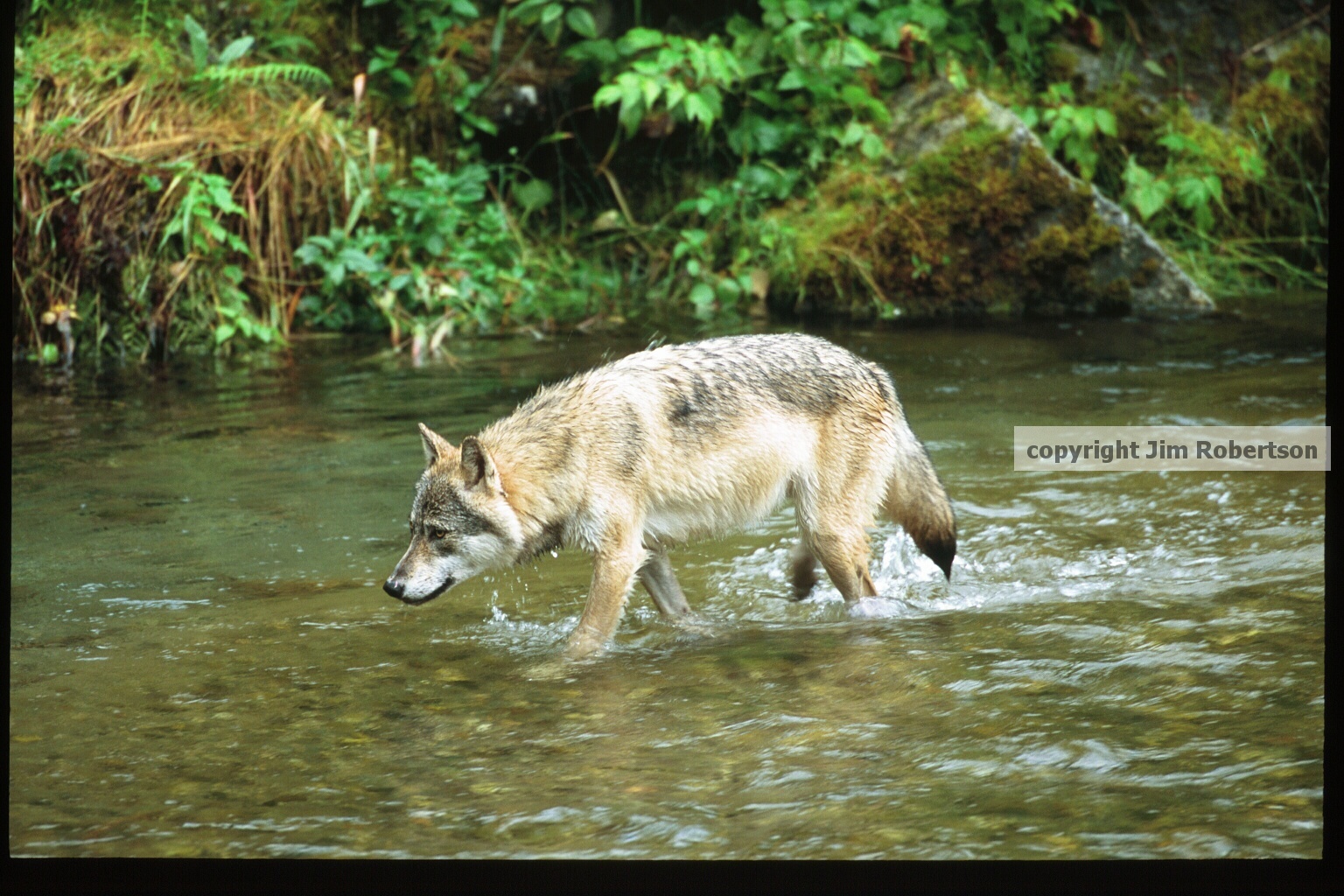
copyrighted wolf in riverDULUTH, Minn. — Wolf experts from 19 nations will meet in Duluth for a major symposium this weekend focused on the future of the animal and its interactions with people.

The International Wolf Center global event, which is the first since 2005, will feature wolf advocates, researchers and wildlife managers who represent opposing viewpoints on how humans should treat wolves, the Wolf Center’s Nancy Gibson told the Duluth News Tribune (http://bit.ly/18RSwDa ). A debate on hunting, trapping and wolf protection is set for Saturday.

“Global interest in wolves, both wolf research and just a general public interest, just seems to be growing,” said Gibson, a wolf center co-founder and board member.

Wolves face many issues throughout the world. Their prey and habitat is under threat in places such as Russia. Farmers are pressing for more wolf killing in France. And closer to home, wolf hunts have been held in Minnesota and Wisconsin and soon will be Michigan.

Minnesota has an estimated 2,200 wolves, which is down from nearly 3,000 a decade ago. Wisconsin has about 800 wolves and Michigan about 500.

Gibson said wolves seem doomed to a constant state of conflict with people.

“With the human population ever increasing, and more people living where wolves live, wolves will usually come out on the short among these two species that historically haven’t gotten along very well,” she said.

Arizona’s wolves another casualty of federal shutdown

Scott: Make decisions for species based on science, not politics

By David Scott My Turn Wed Oct 9, 2013copyrighted Hayden wolf walking

Closed national parks and monuments have become a symbol of the cost of the federal government shutdown.

Vacation plans are on hold, local economies are hurting, hundreds of thousands of Americans are temporarily out of work, and without the federal agencies in charge of monitoring pollution, many Americans have been left vulnerable. So, too, has our wildlife.

Without U.S. Fish and Wildlife Service officers on the beat, animals such as wolves are at risk — both in the short term from immediate dangers, including poachers, and over the long term from delays in making important management decisions that affect their future recovery.

Recently, the U.S. Fish and Wildlife Service proposed removing the gray wolf from the list of endangered and threatened species. The proposal would remove Endangered Species Act protections for wolves across nearly the entire lower 48 states, despite the fact that there are still few, if any, wolves in the vast majority of their former range.

It is a critical time for wolves. Yet public hearings scheduled by the U.S. Fish and Wildlife Service on the proposed delisting have been delayed, to be rescheduled when the government re-opens.

This is also a critical time for Mexican gray wolves, the smallest, rarest, southernmost-occurring, and most genetically distinct subspecies of North American gray wolf. Although the Mexican wolf would be listed as endangered, the Fish and Wildlife Service is proposing to keep and expand its “experimental nonessential status,” even though it remains one of the most endangered animals in North America.

Virtually exterminated in the U.S. by 1970, Mexican wolves were reintroduced north of the border in 1998. But by early 2013 there were still only about 75 Mexican wolves living in the wild in the U.S. These animals are “essential” and should have the full protection of the Endangered Species Act.

Wolf recovery has been one of our greatest Endangered Species Act success stories. Stripping away federal protections now, before the population has fully recovered, will negate the decades of hard work that have gone into bringing wolves back from the brink of extinction in this country.

Without federal protections, this magnificent symbol of our wild heritage will almost assuredly slide back into harm’s way. Wolf hunting seasons have been reintroduced over the last two years in Idaho, Montana and Wyoming, and more than 550 wolves were killed by hunters or trappers in the Northern Rockies last season alone.

Wolves are among North America’s most charismatic animals. The howl of the wolf is emblematic of our country’s last wild places, reminding us of the power and beauty of the natural world. The oldest and largest ancestor of domestic dogs, wolves once ranged from coast to coast and from Alaska to Mexico, but these magnificent animals have been victims of prejudice since their early encounters with people.

Targeted by bounty hunters for their pelts, they were poisoned, trapped, and shot, until by the 1970s, wolves remained only in remote areas of Minnesota and Michigan in the lower 48 states.

The tide began to turn in 1973 when Congress enacted the Endangered Species Act, and wolves received official protection that same year. Since then, thanks to these federal protections, wolf populations have rebounded in the continental United States.

In response to public outcry and the advocacy of conservation groups, the U.S. Fish and Wildlife Service reintroduced wolves to Yellowstone National Park and central Idaho in the mid-1990s. Today, there are about 1,600 gray wolves in the Northern Rockies and some 3,700 in the Great Lakes states.

Wolves are vitally important to maintaining nature’s balance throughout their habitat, culling out weak and sick animals among their prey, which helps keep deer and elk populations healthy and in check. (Over the last two decades, exploding deer populations have been wreaking havoc on ecosystems from the Rockies to New England and the Great Lakes to the Deep South.)

Wolf reintroduction has also been a factor in the reappearance of willow and aspen trees, the return of beavers, and increased populations of red foxes throughout gray wolf habitat. Wolves are even helping local economies as people from across the country come to view these inspiring icons of wild America.

The current proposal to strip gray wolves of federal protections reflects a political desire, not scientific reality. The proposal is based on a single study that has not been peer-reviewed and relies on a wildlife classification theory that is not generally accepted within the scientific community.

In fact, the Fish and Wildlife Service’s “Proposed Rule Removing the Gray Wolf from the List of Endangered and Threatened Wildlife” is contrary to the fundamental principles of the Endangered Species Act. Now is the time to finish the job of wolf recovery, not abandon the gray wolf to the same kinds of destructive forces that endangered them in the first place.

David Scott is president of the Sierra Club.

Does It Really Make Sense for 6,000 People to Kill 600 Wolves?

http://www.care2.com/causes/wolf-hunter-gets-it-all-wrong-in-interview-but-hes-on-the-winning-side.html

Does It Really Make Sense for 6,000 People to Kill 600 Wolves?

In a short video recently released, the Center for Biological  Diversity asks if you would pay $19 to kill a wolf. You probably wouldn’t, but  6,000 people in Montana just did.

Montana has an estimated 625 wolves left. Sadly, new changes to the hunting  season, which started in September, could prove to be a disaster for those  remaining wolves. It was extended to run for six months during which time  hunters will now be allowed to take five wolves each, and they’ll be able to use  traps, bait and electronic calls. The extra long season could also put pregnant  and nursing females in the crosshairs because they’ll be allowed to continue  through the spring. As an added bonus for hunters, out of state hunting fees  have been reduced from $350 to $50.

In an attempt to get the other side of the story, the Digital Journal’s  Justin King interviewed Montana hunter Jason Maxwell, who runs a pro-wolf hunting Facebook page.  According to him, no one wants wolves in the state, and they “should be hunted  24/7 just like the coyote.” He also believes they were never actually endangered  because there are thousands in Canada and Alaska and that people who don’t live  in wolf states shouldn’t get to have an opinion.

While he sounds almost reasonable in the interview, he spews vitriol in the  comments section and elsewhere on the Internet, proving that, at least for some,  wolf hunting is about nothing more than hate, arrogance, intolerance and  sometimes petty revenge. While he cites numbers from  the state, trying to get a straight answer from  wildlife officials about where the science is and how they came up with them in  the first place is apparently as easy as trying to herd cats.

Last year, Montana Fish, Wildlife and Parks reported that 225 wolves were  killed – 128 by hunters, 97 by trappers –  during the 2012-2013 season.  This was an increase from the previous year, with more than half of the wolves  being killed on public lands. Another 104 were killed by the state throughout  the year.

Conservationists fear the consequences of such policies if hunting is allowed  to continue at this rate under state management. This year, Wyoming wants to  reduce numbers by 60 percent, which will leave only abut 100 wolves. Since they  lost ESA protection in the Great Lakes and Northern Rockies, more than 1,700  have been brutally killed.

When asked whether the government or environmentalists have hunters’  interests at heart, Maxwell responded that the “pro wolf side is fighting for  the preservation of one animal while hunters and sportsmen are fighting for the  preservation of all wildlife. The introduction is not just about the wolf it is  also about maintaining the wildlife the wolf preys on.”

If that were true, predators would have dibs on prey, and if anything still  needed to be “managed” then maybe human interference could be justified. In  Montana’s case, indiscriminate killing with the sole intent to reduce the number  of wolves to appease special interest groups isn’t management; It’s just a  bloodbath.

Also, for conservationists, fighting to protect an apex predator and keystone  species has beneficial cascading effects on other species, including plants, in  the environments they’re present in. For some areas, they’re also a popular  tourist draw which helps support local economies.

When it comes to wolf management, the very agencies charged with keeping  track of numbers and deciding their fate have a serious conflict of interest due  to the facts that hunting licenses generate revenue and there are no  consequences for poor management policies or ignoring science unless the wolf  population drops below the number required by the federal government, at which  point they would lose management authority.

The Feds Still Want Them Off the Endangered Species List

The U.S. Fish and Wildlife Service (FWS) is still defending its proposal to  remove Endangered Species Act (ESA) protections for all wolves in the lower 48,  with the exception of Mexican gray wolves, despite how terrible state management  has proven to be.

As of September, there were 18,000 public comments opposing the delisting.  There were also three public hearings scheduled; While one hearing in Washington  D.C. took place, the other two in California and New Mexico were canceled thanks  to the shutdown. However, organizations are still calling for more public  hearings in states where wolves live or may appear so the public can actually  have an opportunity to weigh in.

An independent peer review is also required to remove a species from the ESA.  However, at the end of the summer the process was put on hold when three  scientists were kicked off the peer review because they had added their names to  a letter that was sent to the Department of the Interior questioning the science  behind the proposal to delist wolves.

According to the Center for Biological  Diversity, this is the first time the FWS has put restrictions on scientists who  may have an “affiliation with an advocacy position.” In this case the scientists  in question didn’t necessarily have a stance as wolf advocates, they just did  exactly what they were supposed to do. They looked at the available data and  formed an opinion. Their opinions just didn’t match the objectives of the FWS,  so they got blacklisted.

The FWS should continue to do its job, which is to ensure wolves are not  subjected to out of control hunting policies and intolerance or the special  interests of very vocal hunting and ag groups who continue to call for more to  die.

Keeping ESA protection for wolves in the lower 48 won’t impact decisions in  the northern Rocky Mountains or western Great Lakes, where wolves are present,  but it will keep protections for the rest who are venturing into their historic  range in other parts of the U.S. where there is suitable habitat in Pacific  Northwest, southern Rocky Mountains, Northeast and California. Their continued  survival depends on their ability to expand, instead of being confined by  arbitrary lines they’ll never understand.

TAKE ACTION!

There’s still time to speak up on behalf of wolves. Since the peer review  debacle, the FWS has extended the comment period until October 28. Please submit a comment asking that wolves remain  protected under the ESA.

As for Maxwell, yes there is a petition calling on Facebook to  shut down his page for promoting violence towards animals if you care to sign  it.

Read more: http://www.care2.com/causes/wolf-hunter-gets-it-all-wrong-in-interview-but-hes-on-the-winning-side.html#ixzz2hIH0SZo4

Would You Pay $19 to Kill a Wolf?

Gray wolf

 Alert from the Center for Biological Diversity
Breaking news: The anti-wolf zealots are losing ground.

After weeks of intense pressure from the Center for Biological Diversity and other groups, the U.S. Fish and Wildlife Service just admitted to excluding key wolf experts from the scientific analysis of its infamous, nationwide wolf-delisting plan. The Service has dissolved its hand-picked panel and turned over the entire review process to an independent research institute. Now the nation’s top wolf scientists –once improperly disqualified for questioning the Service’s proposal to delist wolves — will be reconsidered as candidates for the review panel.

This is a victory in our fight to keep federal protections for gray wolves — but another battle is raging in the northern Rockies and Great Lakes. The wolf-killing season is starting, and hunters and trappers are lining up by the thousands.

In case you missed my last email, the Center urgently needs 6,000 wolf heroes to counter 6,000 wolf killers in Montana. Will you help now by giving to our Wolf Defense Fund and become a hero for these beleaguered animals?

In Montana 6,000 people just paid $19 to kill a wolf. Selling cheap $19 wolf tags to 6,000 people is an atrocity, because  Montana only has 625 wolves left after last year’s killing season. Not satisfied with the massacre, the state has lined up 10 times as many rifles as there are wolves to finish the job.

I’m writing today because the Center for Biological Diversity needs help balancing the odds. We need 6,000 wolf heroes to donate to our Wolf Defense Fund to ensure that federal protections are not stripped from all wolves across the country.

By donating, you’ll help stop the killing and send Montana a powerful message that a wolf’s life is worth far more than $19.

We can’t let these extermination practices spread nationwide. Wolf haters are putting up money to wipe out wolves. Wolf supporters need to do the same if we’re going to stop the killing.

Hunter kills gray wolf in Pasayten Wilderness area

http://methowvalleynews.com/2013/10/02/hunter-kills-gray-wolf-in-pasayten-wilderness-area/

by admin on Oct 2, 2013

Photo courtesy of WDFW

Photo courtesy of WDFW

By Ann McCreary

A deer hunter shot and killed an endangered gray wolf north of Harts Pass last month, according to state and federal wildlife officials who are investigating the incident.

The hunter, who lives in the western part of the state, told state wildlife officials that he shot the wolf, an adult female, because he felt threatened.

“He felt he was in danger. He acted in self defense,” said Sgt. Dan Christensen of the Washington Department of Fish and Wildlife (WDFW).

The hunter called WDFW on Sept. 20 to report shooting the wolf, which is protected under federal law as an endangered species. Wolves in the western two-thirds of Washington state (west of Highway 97) are listed as a federally endangered, while wolves in the eastern one-third were removed from federal protection in 2011. Wolves throughout Washington are protected under state law as an endangered species.

Because the wolf was killed in an area of the Pasayten Wilderness where wolves are under federal protection, U.S. Fish and Wildlife Service  (FWS) officials are leading the investigation and collaborating with state officials, said spokesman Doug Zimmer.

Capt. Chris Anderson, of WDFW enforcement, said a group of four state and federal wildlife officials hiked on Sept. 22 to the site where the hunter reported shooting the wolf. He said the animal was a healthy adult female without a radio collar, and had been shot twice.

Christensen, who supervises wildlife enforcement for Okanogan and north Douglas counties, said he spoke with the hunter on the phone. The man said he was participating in the high buck hunt and was about five miles north of Slate Peak, not far from Silver Lake, when the wolf was shot on Sept. 19.

Christensen said the man was hunting with three companions from western Washington, but was alone when he encountered and shot the wolf. He called WDFW to “self-report” the next day, Christensen said.

Wildlife officials examined the dead wolf, took tissue samples and brought the hide back for examination and evidence, Christensen said. “There is no evidence” that the wolf is one of the wolves that has been monitored in the Lookout Pack territory, west of Twisp.

“We are assuming it was a lone female on a road trip,” Christensen said. “We have dispersing females just like we’ve had dispersing males. There were no signs of other members” of a pack, he said.

It will be up to federal investigators to determine if criminal charges related to killing an endangered species are warranted, said Christensen.

Also from the same paper:

State, feds consider changes in management of gray wolves

By Ann McCreary

Changes in the way endangered gray wolves are managed are being considered at both the state and federal levels.

The Washington Fish and Wildlife Commission will consider amending state wildlife interaction rules during a public meeting Friday (Oct. 4) in Olympia.

Those rules include conditions that allow ranchers and farmers to take lethal action to protect livestock from predators, including wolves, as well as for compensation for the loss of livestock killed by predators.

Amendments under consideration would:

• Make permanent an emergency rule that permits ranchers, farmers and other pet and livestock owners in the eastern third of the state to kill a wolf that is attacking their animals;

• Add sheep, goats, swine, donkeys, mules, llamas and alpacas to the list of animals livestock owners could be compensated for if those animals are killed by wolves. The current list only includes cattle, sheep and horses.

• Permit state compensation regardless of whether livestock owners were raising the animals for commercial purposes; and

• Compensate livestock owners for their losses at market value.

The commission, a citizen panel appointed by the governor to set policy for the Washington Department of Fish and Wildlife, will meet in Room 172 of the Natural Resources Building, 1111 Washington St. S.E. The meeting is scheduled to begin at 8:30 a.m.

On the federal level, the U.S. Fish and Wildlife Service (FWS) proposes removing Endangered Species Act (ESA) protections from wolves in most of the nation and has scheduled hearings around the country on the proposal.

The proposal affects wolves in Washington because, if enacted, it would remove federal protections for wolves in the western two-thirds of the state, where they are currently listed under the federal ESA. Wolves are currently protected as endangered under state law throughout Washington.

Several western conservation organizations have called on FWS to schedule more public hearings on the proposal, including hearings on the West Coast. Hearings were scheduled in Sacramento, Calif., Albuquerque, N.M, and Washington, D.C.

The Pacific Wolf Coalition, representing 34 conservation organizations, advocates scheduling additional public meetings in Washington, Oregon and California.

Wolf season starts this week; Three “harvests” made on first day of the hunt

http://county10.com/2013/10/02/wolf-season-starts-week-three-harvests-made-first-day-hunt/

by                                                                                                 October 2, 2013                                     

grey_wolf_1

(Jackson, Wyo.) –  Many fall hunting seasons have begun across the state of Wyoming, including wolf hunting seasons in the northwest part of the state. Hunting seasons in each wolf hunt area begin October 1 and end December 31, 2013, except for Hunt Area 12 south of Jackson, which opens October 15 and closes December 31.

As with other Trophy Game species, wolves in these areas are managed under a mortality quota system. The hunting season in each specific wolf area will remain open until the quota for the area is reached, or until December 31, whichever occurs first. All hunters must call the wolf hotline daily (1-800-264-1280) to ensure the quota for wolves in each specific area has not been reached. Wolf Hunt Area 10, southeast of Jackson, which has a quota of one wolf, has been filled.

The total quota for trophy hunt areas across this state is 26. As of Tuesday morning, three had been harvested.

Hunters harvesting wolves in areas where wolves are classified as Trophy Game Animals are required to report the kill within 24 hours by calling the hotline at 1-800-264-1280. Within five days, they are required to present the skull and pelt to a game warden, biologist, or other personnel at a WGFD regional office for registration.

In all other areas of the state where wolves are designated as Predatory Animals, no license is required to take a wolf, and there are no closed seasons or bag limits. Anyone who takes a wolf in areas of the state where wolves are designated as Predatory Animals is required to report the kill to a game warden, biologist, other personnel at a WGFD regional office, or by phone (1-800-264-1280 begin_of_the_skype_highlighting 1-800-264-1280 FREE  end_of_the_skype_highlighting) within 10 days. Anyone who takes a wolf in this area of the state is not required to present the skull or pelt, but the WGFD is encouraging them to do so to aid in department efforts to monitor wolf populations and genetic interchange throughout the state.

Hunters with questions about hunting seasons or regulations should pick up a copy of the current hunting regulations for the species they are interested in at any license selling vendor or call the Game and Fish office nearest the area they intend to hunt.

In other Wolf News:

Controversial Proposal for Wolf Conservation Gets a Reboot

Gray Wolf Killed in WA:http://www.therepublic.com/view/story/ecfdd3ddf08542cbb102934e8039533f/WA–Gray-Wolf-Killed


Feds Defend Plan to Drop Wolves

September 30, 2013 (AP)

By JOHN FLESHER AP Associated Press

Federal officials offered a staunch defense Monday of their proposal to drop legal protections for the gray wolf in most of the country, as opponents rallied in the nation’s capital before the first in a series of public hearings on the plan.

The U.S. Fish and Wildlife Service called for removing the wolf from the endangered species list for the lower 48 states in June, except for a subspecies called the Mexican wolf in the Southwest, which is struggling to survive. Ranching and hunting groups have praised the proposal, while environmentalists have said it is premature.

A final decision will be made within a year, following a scientific analysis of the agency’s proposal and three public hearings, the first of which was being held Monday in Washington. The others are scheduled for Wednesday in Sacramento, Calif., and Friday in Albuquerque, N.M., although officials said they will be postponed if the government partially shuts down because of the fight in Congress over the health care overhaul.

Fish and Wildlife Service Director Dan Ashe acknowledged the fierce opposition to the wolf plan from many advocacy groups, scientists and members of Congress. They say the predator remains in a tenuous position despite bouncing back from the last century, when trapping, shooting and poisoning encouraged by federal bounties left just a few hundred survivors in Minnesota by the time they were placed on the protected list in 1974.

“There’s certainly no more polarizing issue than wolves,” Ashe said.

But he said the agency’s mission is not to restore an endangered species in every place it once lived. Rather, it is to ensure that a species is established and thriving in enough places that it won’t die out.

“Recovery of the wolf is one of the greatest conservation success stories in the history of our nation … a poster child of what we can achieve through the protections of the Endangered Species Act even for our most imperiled species,” Ashe said.

More than 5,000 gray wolves roam the land, primarily in the western Great Lakes states of Michigan, Minnesota and Wisconsin and the northern Rockies states of Idaho, Montana and Wyoming. Minnesota officials said in July their population has dropped in the past five years by more than 700 animals — to about 2,200 — with the resumption of hunting and a decline in deer on which they prey.

Wolves also have spread to the Pacific Northwest. In Washington state, the population is estimated to be 50 to 100 wolves.

“We continue to believe that wolves are healthy, well distributed, genetically connected and continuing to prosper,” Ashe said.

Brett Hartl, of the Center for Biological Diversity, was among the proposal’s critics who planned to testify at the Washington hearing.

“The Fish and Wildlife Service is walking away from recovery even though wolves occupy just a fraction of their former range and face continued persecution,” Hartl said. “Large swaths of the American landscape would benefit from the presence of these top carnivores.”

In a study published this month, the Klamath Center for Conservation Research said the wolves’ chances in the West may depend on whether they can stake out new territory, instead of being bottled up in a few areas.

Ashe said the wolf still could return to states such as Colorado, Utah and Nevada, but that protecting them would be up to state governments.

More: http://abcnews.go.com/US/wireStory/feds-defend-plan-drop-gray-wolf-protection-20421604?page=2

copyrighted Hayden wolf walking

Jessica Lange to Governon: Halt wolf hunting in Minnesota

http://www.startribune.com/politics/statelocal/225371722.html

by Paul Walsh  September 26, 2013

The actress urges the governor to suspend the next wolf hunting season in the state; he said he can’t.

Jessica Lange

Hollywood actress and “Minnesota daughter” Jessica Lange is urging Gov. Mark Dayton to suspend the next wolf hunting season in Minnesota.

Lange cites the sharp drop in the state’s wolf population following the first of the newly reinstituted hunts last year and adds that hunters do this for no more than sport, fun or trophies.

“Nearly all Minnesotans believe the wolf is an asset that should be protected for future generations,” wrote Lange, who grew up in Cloquet, lived for a time in Stillwater and now counts a place in the woods near where she was raised as one of her homes.

In the letter released Wednesday by the Twin Cities-based advocacy group Howling for Wolves, Lange said the state’s reauthorization to resume the hunting of wolves was rushed by the Legislature and the Minnesota Department of Natural Resources (DNR) “to cater to particular groups, who for years had been clamoring for the chance to kill wolves.”

Dayton responded in a written statement, pointing out that he does not have the power to halt the hunt.

“Since Ms. Lange no longer lives in Minnesota, it is understandable that she is not familiar with all of the considerations in the Legislature’s decision to establish a wolf hunting season in Minnesota,” the statement began. “That decision was written into law; thus only the Legislature can change its terms.”

Maureen Hackett, founder and president of Howling for Wolves, said that Lange “contacted us and asked what she could do … to be of help to the wolf.”

Hackett said having Lange’s support for her group’s effort to halt the hunt is beneficial because “she’s a Minnesota daughter, so to speak … and lives in wolf country.”

The number of wolves that hunters can kill in Minnesota this fall will be slashed nearly in half, from 413 a year ago to 220. Also, only 3,300 hunters and trappers will be given permits this year to kill wolves, down from 6,000. The early season runs from Nov. 9 to Nov. 24.

The licensing reductions follow a survey last winter that estimated the state’s wolf population at 2,211 — a 24 percent decline from 2008, but a figure that didn’t include this year’s surviving pups.

In that first season since wolf hunting resumed in Minnesota, Lange contended that more than half of the wolves killed were less than 2 years old and almost a third were less than a year old.

“They were not problem wolves,” her letter said. “They were not in conflicts with people, livestock, or domestic animals. They were just wolves living wild and free in our North Woods.”

The state’s recent announcement of a nearly 25 percent drop in Minnesota’s wolf population “should compel action,” she said. “We haven’t had this few wolves in our state since 1988.”

Lange, whose Minnesota property is within one of the wolf hunting zones, also went after the “cruel methods” used to hunt and trap wolves, referring to “metal leg-hold traps that crush limbs, wire choke snares that cause painful brain bleeding, and bait like food and the calls of wolf pups in distress that lure adult protectors to their death.”

Near sellout: Licenses for Michigan’s first wolf hunt move briskly on first day of sale

Wolf photo.jpg
                    Once endangered, Michigan has an estimated 658 gray wolves. A Nov. 15 hunt in the Upper Peninsula will target 43 wolves total in three separate areas. Critics say it is unnecessary.
(photo Scott Flaherty/National Park Service)
By John Barnes on September 28, 2013 

Licenses for Michigan’s first managed wolf hunt sold briskly today, with 900 of the 1,200 available snatched up in 30 minutes.

As of 5 p.m. Saturday, only about 100 of the 1,200 licenses were still available, said Ed Golder, public information officer for the Michigan Department of Natural Resources. Licenses cost $100 for residents, $500 for non-residents.

“It went excellently,” said Golder of the first-come first-served sale that began at noon. The effort had been delayed to ensure proper procedures were in place to handle high demand online and at 1,400 retail outlets.

Even if there is a sellout, he urged hunters to check back as licenses may be returned if the buyer is ineligible, there are payment issues or cancellations.

While the Nov. 15 hunt will target just 43 wolves total in three Upper Peninsula locations, it has become highly controversial. Those on both sides of the issue accuse each other of spreading misinformation and half-truths.

Wolf photo trail.jpgGenerally there are about five wolves in a pack dominated by an alpha male, though packs can be larger. Douglas Smith/National Park Service
The state says the hunt is a necessary tool to reduce wolves in areas where they have entered communities and to manage wolf numbers in areas where cattle and dogs have been killed.

There have been 155 such predation reports from 2010 through this week, some involving more than one animal. That’s about the same number as for the previous 14 years.

Critics say those numbers are grossly exaggerated, particularly by one farmer’s actions and his failure to properly use state-provided deterrents. They say the effort is little more than a trophy hunt, and that lethal and non-lethal means already exist to manage wolves.

“The facts speak for themselves and it just shows this is all politically motivated and has nothing to do with science,” said Nancy Warren, a resident of the western Upper Peninsula town of Ewen and the Great Lakes regional director for the preservationist National Wolfwatcher Coalition.

DNR wildlife biologist Brian Roell, a wolf specialist in Marquette, says critics “cherry pick facts and leave out facts.”

“This is another control for minimizing wolf conflicts, a very conservative approach for taking away 43 animals,” Roell said.

Gray wolves essentially disappeared from Michigan by the time they received endangered species status in 1978.

It would be a decade before the state counted just three wolves in 1988-89. Their numbers grew exponentially, peaking at 687 in 2010-11. The current census puts their number at 658.

The resurgence here and in Minnesota and Wisconsin led the U.S. Fish and Wildlife Service to lift protections for the gray wolf in January 2012.

Minnesota and Wisconsin allowed hunts last year. This will be the first controlled hunt in Michigan.

Critics hope it will be the last.

The ballot group Keep Michigan Wolves Protected is gathering signatures to put a referendum on next year’s ballot. The effort seeks to throw out a law that allowed the Natural Resources Commission this summer to designate wolves as a game animal.

The Legislature shifted that authority to the commission, essentially to get around a successful petition drive by the group that would have stopped this year’s hunt.

The group hopes to have enough signatures by March to support the new ballot measure.

The upcoming hunt will be limited to three areas in the Upper Peninsula. The areas and the number of wolves that can be killed are:

Zone A: A portion of Gogebic County including the city of Ironwood, 16.

Zone B: Portions of Baraga, Houghton, Ontonagon and Gogebic counties, 19.

Zone C: Portions of Luce and Mackinac counties, 8.

The hunt will run from Nov. 15 until Dec. 31, or until the target harvest for each area is reached.

Hunters will be required to report any wolf kills by phone on the day it occurs. Once the target number of wolves are killed in a specific hunting area, that unit will be closed to hunting. License holders will be required to check daily by phone or online to determine whether any zones have been closed.

Mexican gray wolf: Where the wild things aren’t

by Jamie Rappaport Clark Special to the Arizona Daily Star

When I was the director of the U.S. Fish and Wildlife Service, I was fortunate enough to take part in the release of 11 Mexican gray wolves into Arizona’s Apache National Forest in 19XX. I will never forget the light in their eyes as we released the lobos from the confines of their crates, destined for a new life in the wilderness where they belong. This came after we had worked hard to restore wolves to the Yellowstone region just a few years before.

Back then, our hopes were certainly high for these icons of American wilderness.

Recently, however, the thrill of seeing gray wolves returning to the Southwest and across the country has been tainted by the fact that the Fish and Wildlife has announced its intention to abandon wolf restoration before the job is done. Wolves are still not recovered in suitable habitat in Colorado, the Pacific Northwest and California—wild places that can offer a good home to this iconic species. In fact, wolves only occupy about 36 percent of currently suitable habitat nationwide.

Delisting gray wolves across the nation is premature and will negatively impact the species’ long-term recovery, but unfortunately, this is not the worst of it for America’s wolves. Another of the Fish and Wildlife’s recent proposals makes it almost impossible for the lobo to ever recover — putting this rarest wolf on the path to a second extinction in the wild. While the imperiled population of only about 75 individuals will remain on the endangered species list, the service’s proposal for its continued management makes the future for these wolves look dim.

If the lobos are going to survive, they need much more than a “smoke and mirrors” plan that, by ignoring science and good sense, obstructs the path to recovery.

Real recovery of Mexican gray wolves will require the completion and implementation of a recovery plan that incorporates updated science, the release of new breeding pairs into the wild and the establishment of at least two new core populations. And herein lays the proposal’s gravest sin: the most suitable areas of habitat in the southwest are in the Grand Canyon region and northern New Mexico/southern Colorado – beyond the new arbitrary land borders the proposal sets up for wolves. Fish and Wildlife knows that the lobos desperately need access to these areas, so why has it proposed a plan that does the opposite; effectively ensuring the lobo will never recover?

Recent polls have shown that residents of Arizona and New Mexico strongly support the restoration of Mexican gray wolves — in fact, 87 percent of voters in both states agree that wolves are a vital part of our heritage. Eight in 10 voters agree that Fish and Wildlife should make every effort to prevent extinction, with more than seven in 10 in Arizona and nearly as many in New Mexico agreeing that wolves should be restored to suitable habitat in the region.copyrighted wolf in water

As the people concur, lobos are indeed iconic animals, and beyond that, they are crucial for healthy ecosystems.

But despite the ecological and cultural significance of the wolves and the importance they hold in the eyes of the public, it seems that our government doesn’t really want to hear what the people have to say about finishing the job of lobo recovery. With only one hearing to take public comments on the fate of the Mexican gray wolves scheduled for the whole region, we have to find as many opportunities as possible to speak out for the lobos before it is too late.

I don’t want to visit Arizona and New Mexico, Colorado and Utah in the years to come and have to accept that these are places where the wild things used to roam.

I don’t want to stand on a ridge in the Grand Canyon straining to hear a howl that will never come.

I want to remember the beautiful eyes that I saw in the Apache National Forest and know that the lobos are alive and well, running freely not just there, but across the region that was their home before it was ours.

Jamie Rappaport Clark is president of the Defenders of Wildlife