Wolf hunting season opens in Montana

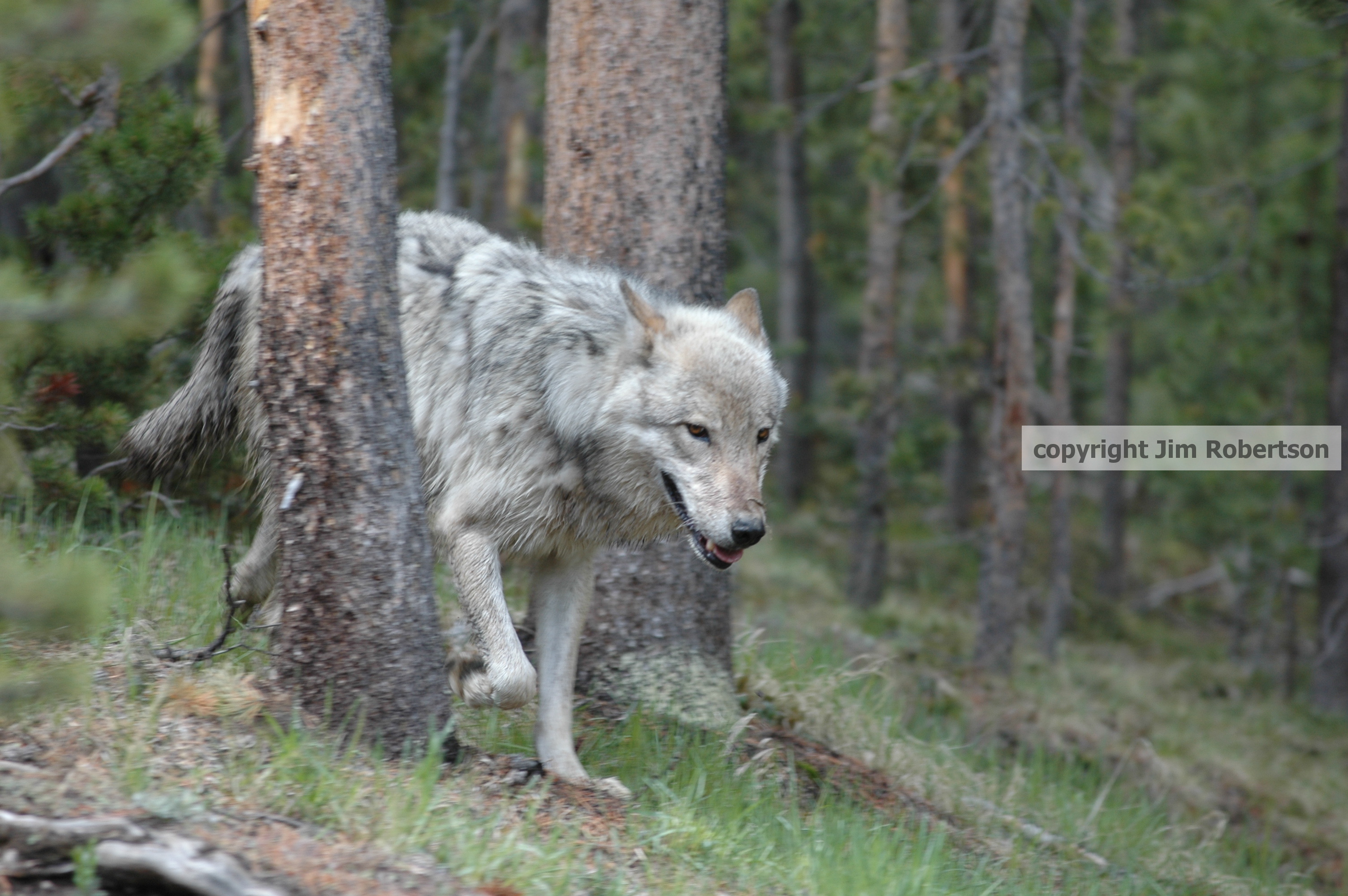
The Associated Presscopyrighted Hayden wolf in lodgepoles
First Published Sep 14 2013

Billings, Mont. • Montana’s general wolf season opens Sunday with much looser rules than in past years, as state wildlife officials ramp up efforts to reduce the predators’ population in response to public pressure over livestock attacks and declines in some elk herds.

Lower license fees, a five-wolf per person bag limit and a longer season top the list of changes put in place for the 2012-2013 season.

Only two areas in the state — near Glacier and Yellowstone National Parks — have limits on how many gray wolves can be killed.

Conservation groups have criticized the state’s liberal wolf hunting rules as a threat to their long-term population. But livestock owners and hunters have pushed for even more wolves to be killed, and state officials say they intend to maintain a smaller, but still viable, wolf population.

At the beginning of 2013 Montana had 625 wolves. That was a slight drop from the prior year and the first decline since Canadian wolves were brought to the Northern Rockies in the mid-1990s as a way to bolster the population.

State officials hope to continue driving the population down this year but have not set a target number.

The number of out-of-state hunters buying licenses is up sharply this year, with 370 purchased through this week compared to 55 at the same point last year. That comes after the Legislature reduced out-of-state licenses from $250 to $50.

Almost 6,000 state residents have purchased wolf licenses so far for $19 apiece. That’s roughly in line with last year’s sales figures.

The general rifle season runs through March 15.

Trapping season for wolves starts Dec. 15 and runs through Feb. 28. The two-week archery season for wolves ends Saturday, with two harvested as of Friday.

Some in Utah Welcome Wolves

http://www.sltrib.com/sltrib/opinion/56862219-82/wolves-friend-nature-peace.html.csp

Letter: Welcome wolves

First Published Sep 14 2013 01:01 am • Last Updated Sep 14 2013 01:01 am

Re “Wolves need protection to fully recover” (Opinion, Sept. 7): I wish to thank authors Peter Metcalf and Doug Tompkins for their timely commentary in support of keeping wolves protected under the Endangered Species Act.

No other creature has been more reviled or ruthlessly persecuted than the wolf; or for so little reason. Wolves are nature’s police force. They keep prey species fit and ecosystems healthy. In a deep sense they are the best friend that deer and elk ever had because they are partners in the dance of evolution.

I find it fascinating that the domestic dog, human beings’ best friend, is loved above all other animals, while its progenitor the wolf is feared and hated more than all other animals. Surely this reveals more about people’s insecurities than it does about wolves.

To make peace with wolves is to make peace with nature, and so also with ourselves. Utah wants wolves. Let’s not shut the door on them. Let’s welcome them back home.

Kirk Robinson

Salt Lake City

The messy politics and controversial science around the gray wolf

http://www.boston.com/bostonglobe/ideas/brainiac/2013/09/the_endangered.html

Posted by Kevin Hartnett September 13, 2013

The Endangered Species List has a sacred status in American life, and you might think that simple arithmetic is enough to decide which animals require a place on it. As the ongoing controversy around the status of the gray wolf shows, however, defining an endangered species is anything but straightforward.

The Endangered Species Act was signed into law in 1973, providing federal protection for animal species that were “in danger of extinction throughout all or a significant portion” of their historical range. An editorial in Nature on September 11 explains that based on that definition, in 1978 the gray wolf was declared endangered in the lower 48 states. Over the next three decades its numbers rebounded, and today there are about 4,000 gray wolves in the Great Lakes region and 1,700 in the northern Rockies. As a result, in June the US Fish and Wildlife Service (FWS) recommended that gray wolves be removed from the Endangered Species List. It sounds like a perfect success story.

Many scientists and academics, however, think the FWS decision is opportunistic and flawed.

Back in July, Roberta Millstein, who studies the history and philosophy of biology at the University of California, Davis, wrote on the academic blog New APPS, that the decision to remove gray wolves from the list was “arbitrary, capricious, and inconsistent.” The main point of contention for Millstein and others is how the species of gray wolf is defined. In order to support its new recommendation about gray wolves, the FWS narrowed its definition of what counts as a gray wolf: Previously the Eastern wolf was considered a subspecies of gray wolf but the FWS reclassified the Eastern wolf as a species in its own right. The distinction is important because if gray wolves do not include Eastern wolves, then the calculation about whether gray wolves have recovered a “significant portion” of their historical range no longer needs to take into account the eastern United States. And that makes it easier to justify removing their endangered status everywhere.

So how do you define a species? It’s a hotly contested question. When the FWS pared Eastern wolves from gray wolves, it cited a 2012 paper which argued that species should be identified based on a range of factors, including “genetic markers, morphometric analysis, behavior, and ecology.” Millstein and others claim that the 2012 study was written by the FWS for the express purpose of justifying the preordained reclassification of the gray wolf. In her July blog post, she notes that the study was published in the long-dormant journal North American Fauna, which is issued by the FWS, and which, prior to the 2012 study, last published an article in 1991. Millstein looks more favorably on the definition of a species set forth in the Endangered Species Act itself, which defined a species as “multiple loosely bounded, regionally distributed collections of organisms all of the same species or subspecies.”

The Fish and Wildlife Service is a surprising target for the type of double-dealing charges we associate more frequently with Wall Street or the National Security Agency. To explain why the FWS might act with anything but the best interests of the gray wolf in mind, Millstein cites the environmental publication Earth Island Journal, which has accused the FWS of conducting a “long retreat in the face of wolf hater intimidation” by a “loose coalition of hunters’ groups, outfitters, and ranchers.” For its, part, the FWS says it is simply being pragmatic: By delisting the relatively healthy populations of gray wolves, it hopes to concentrate its resources on protecting the Mexican wolf, a more imperiled subspecies of gray wolf.

This blog is not written or edited by Boston.com or the Boston Globe.
The author is solely responsible for the content.

Feds Cutting Out the Pro-Wlf States From the Hearings!!!!

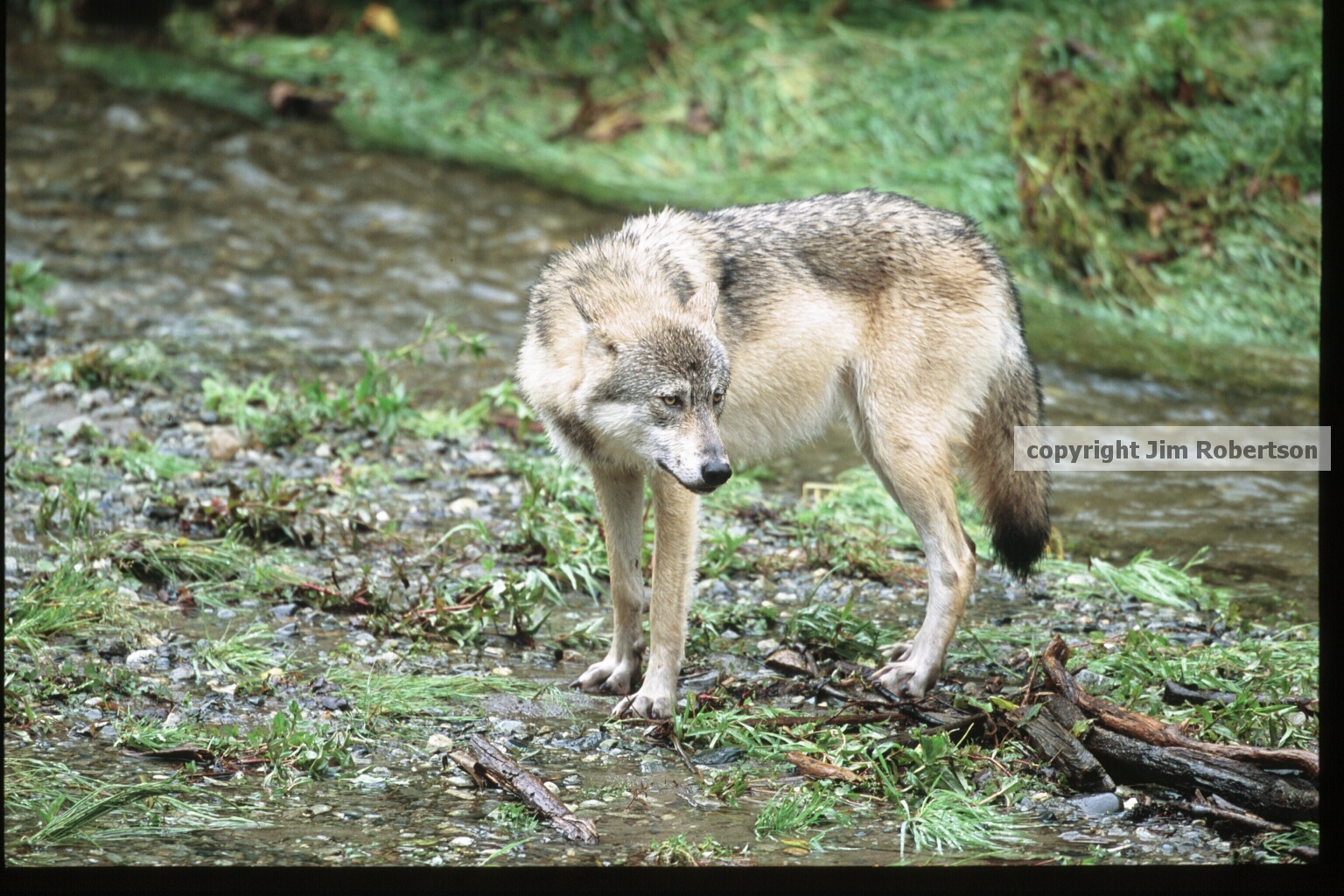
copyrighted wolf in water

Feds Decide To Halt Western Wolf Hearings
Colorado, Pacific Northwest public sessions terminated.

A decision by the U.S. Fish and Wildlife Service to halt public wolf hearings in Colorado, Oregon and Montana has met with criticism from environmental advocates such as the Defenders of Wildlife.

“We are very disappointed to see the Obama Administration and the Fish and Wildlife Service ignoring wolf supporters in some of the nation’s best remaining, unoccupied wolf habitat,” says Jamie Rappaport Clark, Defenders president.

The federal government is turning its back on Americans who want to see thriving wolf populations restored, adds Clark. “Those who oppose the Service’s premature and short-sighted delisting proposal deserve a chance to voice their concerns. By excluding their voices, the Fish and Wildlife Service is effectively cutting off public debate about the future of wolves in Colorado and the Pacific Northwest,” he argues.
Read more: http://farmprogress.com/story-feds-decide-halt-western-wolf-hearings-9-102378

Archery season for wolves closes near Yellowstone

The archery season for wolves north of Yellowstone National Park came to an abrupt halt this week after the pre-established sub-quota of one wolf was met.

Montana Fish, Wildlife and Parks noted that the wolf archery-only season will close a half-hour after sunset on Friday in Wolf Management Unit 313, which include portions of Park County.

This hunting district will re-open for the hunting of wolves for the general season in this district beginning Sept. 15.

Check helenair.com for more on this breaking story.

copyrighted wolf in river

Wolf hunt: Montana’s longer season starts Sunday with bag limit now at five

copyrighted Hayden wolf walking

Montana’s general wolf hunting season opens Sunday and runs through March 15. The archery season is underway now and closes Saturday. Trapping runs from Dec. 15 to Feb. 28.

Written by Erin Madison Tribune staff writer Sep. 12, 2013

Hunters will have a longer season this year to pursue wolves and will be able to take more wolves compared to last year.

Montana’s general rifle season for wolves opens Sunday and runs through March 15. This year’s season is about a month and a half longer than last year’s. The archery season for wolves opened Sept. 7 and goes through Saturday. Trapping will begin Dec. 15 and run through Feb. 28.

This year, wolf hunters and trappers will be able to take a total of five wolves, whether through hunting or trapping. Last year, trappers were limited to three wolves. Hunters were limited to one wolf until a bill passed midway through the Legislative session boosting that number to three.

With a higher bag limit and longer season, George Pauley, wildlife management section supervisor for Montana Fish, Wildlife and Parks, expects more wolves to be harvested this year than last year.

“The population is larger than we want it to be,” he said.

[Well, same to you, buddy.]

Last year hunters and trappers took a total of 225 wolves in Montana.
• Montana wolf specialists counted 625 wolves, in 147 verified packs, and 37 breeding pairs in the state at the end of 2012. The count dropped about four percent from the previous year and marked the first time since 2004 that the minimum count declined.
• Last season the total hunting and trapping harvest was of 225 wolves. Hunters took 128 wolves and trappers 97.
• A total of 108 wolves were removed through agency control efforts in 2012 to prevent further livestock loss and by private citizens who caught wolves chasing or attacking livestock, up from 64 in 2011.

A history of wolf hunts in Montana

• 2009: During Montana’s first regulated wolf hunt, hunters harvested 72 wolves during the fall hunting season. As hunters approached the overall harvest quota of 75 wolves, FWP closed the hunt about two weeks before the season was scheduled to end.
• 2010: The hunting season was blocked by a federal court ruling in August 2010 that returned wolves to the federal endangered species list. In April 2011, the U.S. Congress enacted a new federal law delisting wolves in Montana and Idaho, and in portions of Washington, Oregon and Utah.
• 2011-12: The wolf hunting season ended with a total harvest of 166 wolves, 75 percent of the overall quota of 220 wolves. The season was initially set to end Dec. 31, but was extended to Feb. 15.
• 2012-13: This was the first time wolf trapping was allowed in the state. There was no statewide quota.

2012 wolf season details

• 128 wolves hunted, 97 trapped, 225 total
• 123 resident and three nonresident hunters harvested wolves
• 124 hunters took one wolf
• Two hunters took two wolves
• No hunter took three wolves
• 62 trappers took one wolf
• 13 trappers took two wolves
• Three trappers took three wolves
• One wolf was taken with archery equipment
• 18,889 wolf licenses were issued (18,642 resident and 247 nonresident)
• 2,414 trappers completed a wolf trapper education course
• 48 percent of wolves were harvested on federal land, 37 percent on private land and 3 percent on state land
• 117 females and 108 males were taken
• The largest harvested wolf weighed 120 pounds

The story continues here: http://www.greatfallstribune.com/article/20130912/LIFESTYLE05/309120003/Wolf-hunt-Montana-s-longer-season-starts-Sunday-bag-limit-now-five


Enviro Groups Challenge Anti-Wildlife Policies

…Two of the top environmental groups have sent out action alerts challenging anti-wildlife policies today. First, from the NRDC

A little-known government agency called Wildlife Services is killing thousands of wild animals every year — and you and I are picking up the tab.

We need your help to end the taxpayer-funded slaughter of wildlife!

This out-of-control agency is part of the Department of Agriculture. It kills at the behest of big ranchers and agribusiness. It spends tens of millions of our tax dollars to “resolve conflicts” with wildlife — by using poisons, traps, aerial gunning and other brutal methods.

The result? More than 100,000 native carnivores — such as wolves, bobcats, foxes and black bears — are being wiped out every year.

The tragic toll since 2000 is two million dead, and that number grows larger every day.

More than 50,000 of those animals were killed accidentally. The victims have included endangered species and even household pets.

It’s time to expose this secretive and senseless attack on wildlife — and end it.

Please demand an investigation of Wildlife Services and its heartless “predator control” methods.

Make no mistake: The agency is going to carry on with its wildlife killing spree unless they are held accountable and forced to stop.

But that won’t happen unless hundreds of thousands of us make our voices heard right away.

Join NRDC in calling for an immediate end to this taxpayer-funded travesty. The lives of thousands of wild animals dependcopyrighted Hayden wolf in lodgepoles on it.

…and this alert is from the Sierra Club…

Strychnine is a deadly poison — but it’s slow.

A wolf pup that’s eaten bait laced with strychnine will die of suffocation, but only after hours of excruciating muscle spasms and convulsions.

That’s the cruel fate Canada has in store for wolves that get in the way of tar sands production. Wolves are being poisoned—or, if they’re “lucky,” they’re dying quickly by a helicopter-fired gunshot. It’s politicians’ answer to the disappearance of caribou that have lost their habitat to dirty tar sands oil development.

You read that right—wolves are dying to make way for tar sands and the Keystone XL pipeline. It’s like some sick alternate universe where Sarah Palin is in charge.

Within the next few months, we will know once and for all whether the Obama administration will allow Keystone XL to be built. Sierra Club members have marched and petitioned against it for years, but now we’re in the final stretch—and it’s going to take everything we’ve got to stop dirty tar sands from destroying everything we hold dear. We can do it with your added support.

Wolves and caribou aren’t the only animals under threat right now. Other vulnerable wildlife, like black bears, moose, and native fish will continue to be at risk if the Keystone XL pipeline is built and the tar sands expand as a result. So will the Boreal Forest—the “Lungs of North America”—the largest remaining intact ecosystem in the world, storing 11 percent of the world’s carbon and home to a third of North American song birds.

Wolves in the News

copyrighted wolf in water

Lots of talk of wolves in the news today. Here’s some snippets and links…

Hearing in Sacramento Oct. 2 on federal protection of gray wolf

 By Matt Weiser      The Sacramento Bee

Published: Tuesday, Sep. 10, 2013
Sacramento will host one of three hearings in the West on the federal government’s proposal to withdraw Endangered Species Act protection for the gray wolf.

The hearing will be held Oct. 2 from 6 p.m. to 8:30 p.m. at the Clarion Inn, Martinique Ball Room, 1401 Arden Way, in Sacramento.

In June, the U.S. Fish and Wildlife Service proposed removing the gray wolf from the endangered species list in 42 states, including California and Oregon.

http://www.sacbee.com/2013/09/10/5722212/hearing-in-sacramento-oct-2-on.html

Wolves need protection to fully recover

By Doug Tompkins and Peter Metcalf

First Published Sep 07 2013 01:01 am • Last Updated Sep 07 2013 01:01 am

Wildlands need their full complement of species to maintain their ecological integrity. Thus it has been heartening to see the gray wolf repopulate the rugged northern Rockies and expansive western Great Lakes in recent years.

http://www.sltrib.com/sltrib/opinion/56829741-82/wolves-wolf-protections-gray.html.csp

Minnesota’s wolves needed for ecological balance

by                                                                                                                                                                                                                                                                                          MAUREEN HACKETT                   September 8, 2013

http://www.startribune.com/opinion/commentaries/222746571.html

The recent article, “Despite wins, Minnesota’s endangered species list up by 180” (Aug. 20, 2013) quotes the Department of Natural Resources’ (DNR) endangered species coordinator as stating, “We’ve got to learn how to manage species on a larger scale.”

The state’s list of species that have gone extinct and of those that are endangered and threatening to go extinct has grown tremendously.

The Wolves Were Never at Our Doors

By Carl  M. Cannon –  September 9, 2013

To quell rumors that the destructive Rim Fire still raging in and around  Yosemite National Park was started by marijuana growers, authorities revealed  this week that the blaze was actually the fault of a careless hunter who set an  illegal campfire.

That was tough to take. The fire, which is expected to burn another two  weeks, has already charred some 400 square miles, destroyed 100 buildings, and  cost taxpayers $75 million. But my thoughts are with another hunter, the coward  who recently shot and killed a female Mexican gray wolf denning with her pups in  southwestern New Mexico.

These animals roamed the American Southwest and Mexico before there was a  border between our countries, long before Anglos or Spaniards ever set foot  there, in fact. For many millennia they coexisted easily with native people, who  not only eschewed killing them but emulated the way they stalked game.

Read more: http://www.realclearpolitics.com/articles/2013/09/09/the_wolves_were_never_at_our_doors_119864.html#ixzz2eVxd0cJA

Wolf hunting still divides Wisconsin

JAYNE BELSKY — Wisconsin Department of Natural Resources

In Madison and other urban parts of the state, wolves are noble creatures  along the lines of Jack London’s White Fang and Buck. In western and northern  Wisconsin, they are killers of the Big Bad variety.

Both views are correct, and both incorrect. Each is a matter of perspective  and personal priorities.

The state Department of Natural Resources has pursued a gray wolf management  plan that should appease both sides, but opinions have not budged much.

Last year, hunters and trappers killed 117 wolves under the DNR-managed plan.  They did not overkill, as some people had feared, remaining within the  constraints set by wildlife managers. An additional 126 died in accidents and  from other causes.

Yet despite nearly 250 deaths in 2012, the total population barely declined.  New wolves were born or moved in, and more than 800 still roam the state. The  DNR management plan calls for 350 wolves as a manageable, long-term population,  though that  figure is under review.

Despite last year’s successful hunt and plans for another this year limited to 251 wolves, a UW-Madison survey found public opinion remains entrenched. Eighty-one percent of respondents said their tolerance for wolves had not changed. At least the portion who had become more tolerant (14 percent) outnumbered those who became less tolerant (5 percent).

Support for hunting remains divided along geographic lines. Three-quarters of people who live in wolf range support it. Fewer than half outside the range do.

The DNR is handling the wolf challenge in a manner that protects people and property but maintains a viable population. All stakeholders have a seat at the table, and scientific data, not emotions, drive decision-making.

It’s easy to sit in Madison, far removed from any real wolf danger, and lament wolf killing. It’s also easy to sit in wolf country and complain about bleeding hearts. The hard thing is accepting Wisconsin’s smart compromise between killing every wolf and letting them run rampant.

Fewer people apply for permits to hunt wolves

by Elizabeth Dunbar, Minnesota Public Radio
September 6, 2013

ST. PAUL, Minn. — The number of people who want to hunt wolves in Minnesota this fall and winter has dropped significantly from last year.

About 13,000 people have applied for licenses to participate in this year’s wolf hunting season, compared to more than 23,000 last year, state Department of Natural Resources officials said.

After a survey showed the state’s wolf population has declined, department officials decided to issue 3,300 permits this year. That’s down from 6,000 permits last year.

“I’m sure last year with the novelty of it and trying to get in on the first-ever regulated wolf hunt in Minnesota’s history probably caused some people to apply,” said Steve Merchant, the DNR’s wildlife population and regulation manager. “Other people thought, ‘well geez, if the permits are down 50 percent it’s going to half my chances of winning so I’m just not going to put in this year.'”

Merchant said applicants have about a 1 in 4 chance of getting a wolf license, about the same odds as last year.

The early wolf season begins at the same time as the firearms deer season on Nov. 9.

copyrighted wolf in river