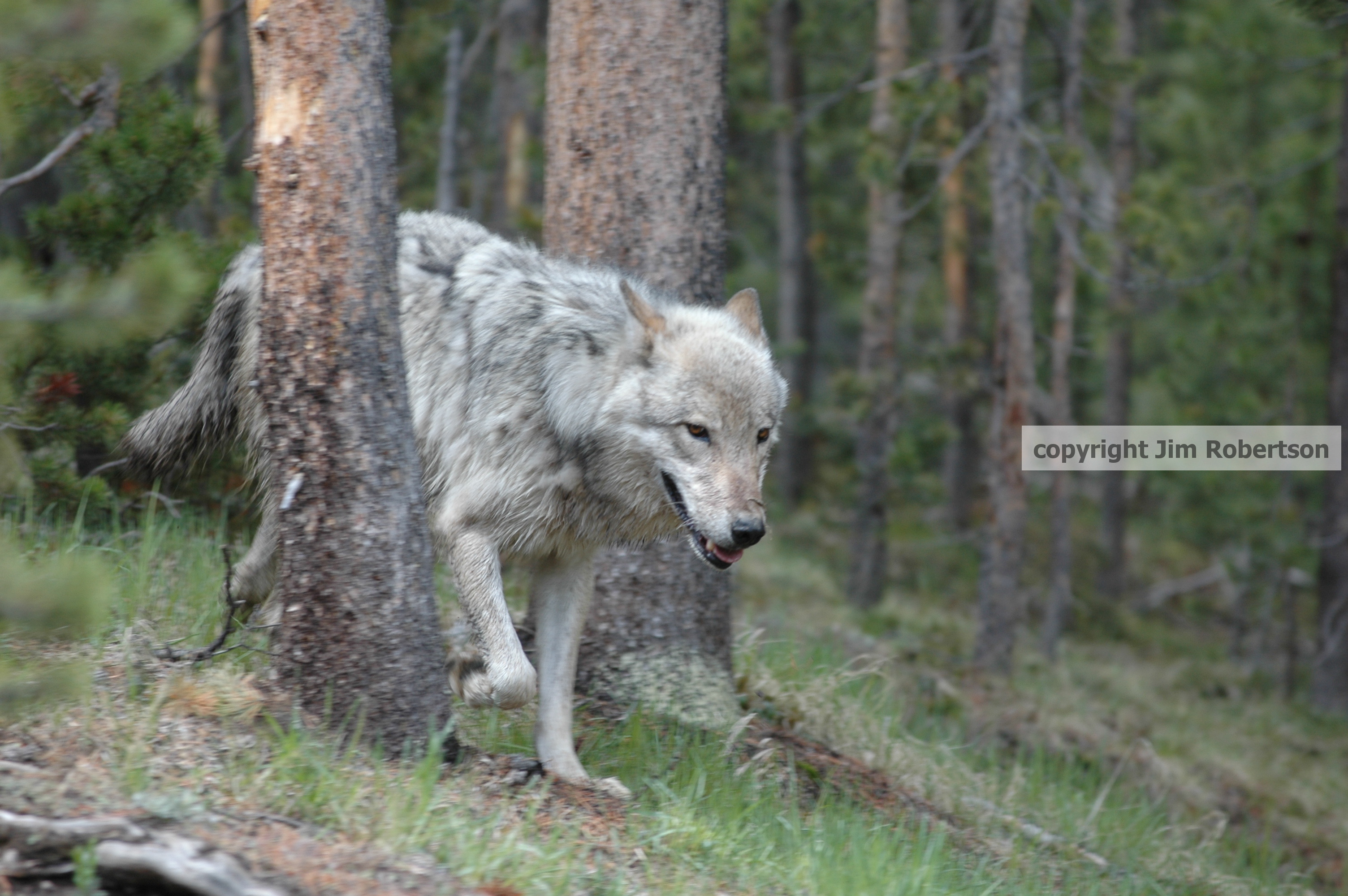
Hunted almost to extinction, wolves may soon be taken off list of endangered species.

by CARL M. CANNON / Register columnist

To quell rumors that the destructive Rim Fire still raging in and around Yosemite National Park was started by marijuana growers, authorities revealed this week that the blaze was actually the fault of a careless hunter who lost control of an illegal campfire.

That was tough to take. The fire, which is expected to burn another two weeks, has already charred some 400 square miles, destroyed 100 buildings and cost taxpayers $75 million. But my thoughts are with another hunter, the coward who recently shot and killed a female Mexican gray wolf denning with her pups in southwestern New Mexico.

These animals roamed the American Southwest and Mexico before there was a border between our countries, long before Anglos or Spaniards ever set foot there, in fact. For many millennia, they co-existed easily with native people, who not only eschewed killing them but emulated the way they stalked prey.

A similar synergy took place with wolves all over North America. It’s not too much to say that wolves taught humans how to hunt – and, thus, how to survive. It’s why, unlike in Europe, where wolves were portrayed as fiendish predators – and a constant danger to man – native peoples in the New World tended to venerate them.

To the great detriment of wolves, Europeans brought their superstitions across the ocean with them. They persist to this day. Notwithstanding the idyllic image of the creatures in “Dances With Wolves,” Hollywood contributes to the ancient mythology. In the “The Bourne Legacy,” a malevolent pack tracks the protagonist for many miles. “You should have left me alone,” the man says before ensuring the alpha wolf is killed by a missile fired from a drone. In “Centurion,” a low-budget action movie, two wolves actually stalked two armed men – a scenario for which there is no known precedent,

But killing wolves in the New World was never about protecting humans; it was about protecting domesticated animals. Wolves didn’t tend to discriminate between livestock and wildlife, and when the American frontier (originally all land west of the Allegany Mountains) was opened to farming and ranching, humans removed wolves from the land with no more emotion than when clearing trees. For the wolves, this systematic extirpation constituted a kind of holocaust.

I don’t use that word lightly. What eventually happened wasn’t merely the culling of offending predators. It was an organized campaign of eradication. And, as the last wolves took refuge in federal parklands, most notably Yellowstone, it was a slaughter carried out by federal employees. From 1865 to 1935, when the last wild packs were wiped out in the American West, farmers, ranchers, bounty hunters and U.S. park rangers employed any manner of gruesome methods to exterminate wolves.

They poisoned meat and left it on the prairie; caught wolves in steel traps before clubbing them to death; pulled them apart with ropes; shot them from airplanes; set hunting dogs on them; and strangled pups in their dens – even as they attempted to nuzzle the human hands reaching for them.

But as attitudes about wildlife management evolved in the 20th century, this grim legacy sat heavy on the consciences of many people, especially U.S. Park Service biologists. With no record of wolves killing humans in this country, where did such murderous impulses come from? Worse, it became clear almost immediately, wolves played an essential role in the ecosystems of the Yellowstone National Park and other places.

A century ago, when wolves still roamed California, Yosemite’s famed naturalist John Muir put it this way: “When one tugs at a single thing in nature, he finds it attached to the rest of the world.”

In Yellowstone, without anything to stem their growth, elk herds became too large. This wasn’t to their benefit – or that of the park. Elk overgrazed Yellowstone’s valleys, leading to cycles of starvation for the large ungulates, and leading to erosion. Beavers were crowded out, according to one theory, causing the range to dry up. It might have contributed to conditions that cause forest fires.

Maybe that’s giving wolves too much credit, but one thing is sure: Eventually, a consensus developed to reintroduce wolves into Yellowstone. And since wolves don’t recognize lines on human maps, this meant reintroducing wolves into the greater American West. Notice, I used the word “consensus,” not “unanimity.” There were always people who hated the idea of bringing wild wolves back into our lives – and there still are.

Yet, it’s clear that the debate has shifted. I first began writing about wolves in early 1993, when it became apparent that Bill Clinton’s election – and his appointment of Interior Secretary Bruce Babbitt – would likely mean the implementation of longtime Park Service plans to restore wolves to Yellowstone.

Two decades ago, I covered a public hearing in Montana where a stockman’s wife carried a placard stating, “The wolf is the Saddam Hussein of the animal world.” Fifteen years later – after Saddam Hussein’s regime had been destroyed by the U.S. and he himself executed – a protester in Bozeman, Mont., carried a sign reading simply: “I Love Wolves.”

So, yes, much has changed. The Wolf Recovery Project is a federal program that ran ahead of schedule and underbudget, and is essentially being phased out. It also had local input, and crucial help from the private sector, most notably from a nonprofit called Defenders of Wildlife, which in the early years of the program recompensed ranchers for any livestock taken by wolves.

Today, some 6,100 wolves roam the continental U.S., 1,700 of them in the Rocky Mountain West. That’s a fraction of the populations that once tramped the forests and plains of this country, but it’s apparently sustainable: Following recommendations of the U.S. Fish & Wildlife Service, the Obama administration wants to “delist” the northern gray wolf (canis lupus), meaning it’s no longer on the Endangered Species List. Meanwhile, the government has largely turned management of the populations over to the states.

This week, Fish & Wildlife announced three final public hearings – in Washington, D.C., Sacramento, and Albuquerque, N.M., – on delisting wolves. It softened the blow by announcing that it wants to expand recovery efforts of the Mexican wolf (canis lupus baileyi). With only 75 of these smaller cousins of the northern wolves left in the wild, that’s clearly a necessary program.

I don’t know what the man who shot the female Mexican gray was thinking when he pulled the trigger, or if he had any remorse afterward. I do know what famous naturalist Aldo Leopold thought when he watched a wolf die by his own hand.

“We reached the old wolf in time to watch a fierce green fire dying in her eyes,” he wrote. “I was young then, and full of trigger-itch; I thought that because fewer wolves meant more deer, that no wolves would mean hunters’ paradise. But after seeing the green fire die, I sensed that neither the wolf nor the mountain agreed with such a view.”

Register opinion columnist Carl M. Cannon also is Washington editor of the website RealClearPolitics.

Dances With Wild Wolves: Rally on National Mall

by Brenda Peterson

At the national rally on Sept. 7 to protest the federal delisting of wild wolves and the Western states’ slaughter of over 1,800 of them so far — I remember another gathering when I was eye-to-eye with a wild wolf. It was the 1997 Wolf Summit here in Washington State where ranchers, conservationists, and federal representatives met to discuss wolf reintroduction in the Pacific Northwest.

The young male wolf, Merlin, was a two-year-old ambassador from the Colorado haven Mission Wolf. He was here on an educational tour to teach us the real story of wolves. Before Merlin bounded into our midst, Mission Wolf Director Kent Weber schooled us in proper wolf etiquette. “Wolves, like humans, engage in a lot of eye contact to figure out if an expression says ‘threat’ or ‘play,'” he explained. “So when you meet the eyes of a wild wolf, keep an open attitude.”

Merlin explored the semi-circle of humans — a sniff to the face here, a sniff of an open hand there. The wolf was careful and curious. With his huge paws, his imperial and direct stare, we knew we were in the presence of a powerful peer. Merlin allowed no “good dog” pat on the head, interpreting that as a sign of dominance. Instead he responded only to an open palm, like a show of goodwill, an offering.

All eyes turned to follow the long-legged wolf as he moved toward the contingent of ranchers who were at the Wolf Summit to strongly lobby against any wolf restoration to our state. There was a tension in the crowd that the Mission Wolf director tried to defuse in a quiet voice.

“Most of what we believe about wolves is a myth and has nothing to do with the real animal,” Kurt said. “There is no such thing as the Big Bad Wolf,” he said softly. “Never was.”

Education, he said, not fear, was the key to restoring the ancient co-existence that our species once shared with the wild wolf — and now with their domesticated cousins, our companionable dogs. As Merlin stood before the group of ranchers, the room was very still. After all, for generations ranchers had poisoned, trapped, shot on sight this country’s wolf population until they were extinct in the Lower 48. Now a wild wolf had ranchers in his sights. Not a single hand reached out to Merlin. In fact, there was a kind of stoic stalemate: arms across chests, shifting, some eyes averted, others staring with open aggression. Surely Merlin sensed the anger and defensiveness

“Meet the wolf’s eyes,” Kurt advised one of the ranchers, a big man with a strong, sun-blasted face, “not as an aggressor, but as an equal.”

The rancher steadied his gaze and Merlin faced him, those wild eyes assessing. And then with a slow grace, the wolf took the man’s entire face in with his strong tongue. Grinning ear-to-ear, the rancher rocked back on his knees and whispered, “I feel as great as the first time a girl said, ‘yes’ when I invited her to dance.” He paused. “I guess this is a dance.”

Then Merlin moved on to a ranch woman who did not hold out her hand. Her fear and distrust were palpable; even I could almost smell its stringent scent. Merlin sniffed the air and kept a respectful distance. What he did next surprised us all. Suddenly stretching and arching his back, Merlin sat down next to the ranch woman’s outstretched legs. There was nothing domesticated about him as Merlin yawned to reveal startlingly white fangs. Then his huge jaw clamped shut, he shook his massive black head, and with great poise lay on his side only inches away from the ranch woman’s boot. The wolf and the woman remained like that in a motionless dance of opposites.

Merlin closed his great eyes, sighed. Stretching, he let out a soft growl, and then turned over on his back to look directly upside down at the ranch woman. Lying so near her, Merlin was no threat, and the ranch woman at last met the wolf’s eyes without any fear. “He’s… he’s really something,” she said slowly. “He does have a way of getting right up into your heart, doesn’t he.”

Wolves have not only gotten into our hearts, they are helping us restore our homelands. Scientists have documented that wild wolves are “keystone predators” whose reintroduction to their native habitat has restored grasslands, watersheds, and even songbirds. “If an ecosystem can support wolves,” Kent Weber said, “it will sustain all other life forms. Wolves restored as top predators are a sign of a healthy ecosystem.”

“We’re have an opportunity to correct a historic mistake,” Washington State Representative Norm Dicks had concluded that Wolf Summit. He told us that the total cost to taxpayers of all previous wolf reintroduction had only been a nickel per person, a small price to pay for helping to rebuild an entire ecosystem.

Wolves have helped balance every ecosystem in which they’ve been restored. We’ve paid little for this balance; even the ranchers who are reimbursed at market prices for every livestock loss by such programs as Defenders of Wildlife, have paid little. But the wolves are now paying with their lives. Only 1 out of 3 Americans in a recent poll support the very unpopular federal plan to drop Endangered Species protections for wolves across most of the U.S. and let Western states continue their lethal harvest, not sustainable management, of wild wolves.

At the Washington, D.C. rally, I keep this memory of that other Wolf Summit in my mind: A ranch woman at last reaching out her tentative, open palm to Merlin. Only then did the wolf leap up with unexpected energy and sniff her hand and, as she bowed her head, her hair. But he didn’t lick her. Instead, the wolf looked directly into her eyes, inches away from her face. Then he simply leaned his black, soft forehead against hers. It was the briefest of touches, before Merlin bounded away. But it seemed like those two minds, once opposites, rested together a long time — longer than our history, our generations of fear, our prejudice. This is the future we must hold out for, howl out for — because when we protect the wild wolf, we are also protecting ourselves~

http://www.huffingtonpost.com/brenda-peterson/dances-with-wild-wolves_b_3882170.html


NYT Fuels Anti-Wolf Fanaticism

Yesterday the New York Times ran a human-interest piece titled, “As Wolves Return to French Alps, a Way of Life Is Threatened.” This is the only part of the article that acknowledges the wolves plight:

With official encouragement, herders and farmers had hunted the gray wolf to extinction in France by the 1930s. Within a half-century, though, the animal had been made a protected species throughout Europe; the first wolves re-entered French territory from Italy in 1992, a small and delicate population at the outset. Much to the thrill of conservationists and European officials, they have thrived.

After that the article descends into just another “humans are the endangered species” diatribe. What is the NYT trying to do, fuel the fire against wolves on the eve of full-scale federal delisting?

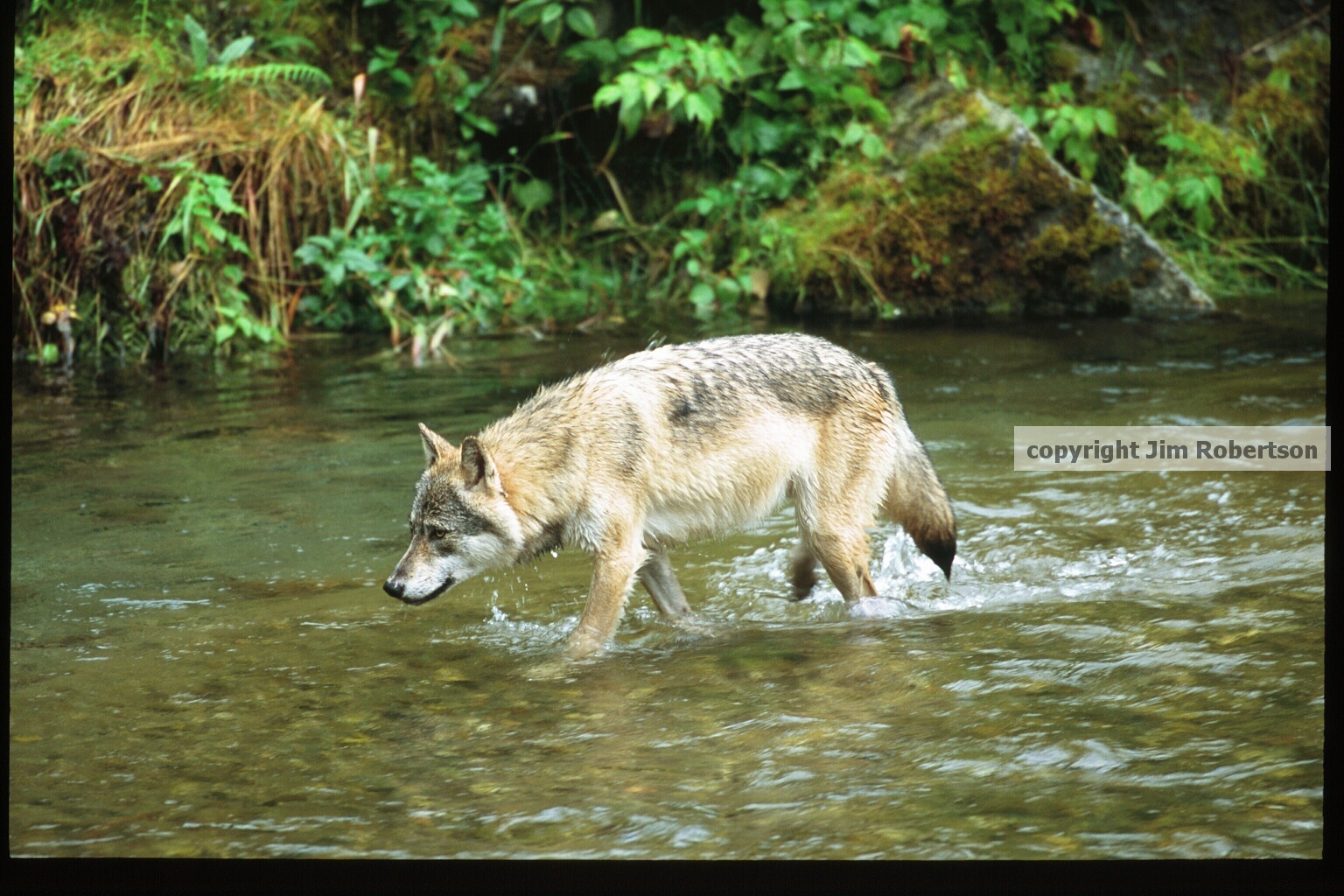
copyrighted wolf in river

Possible wolf kill in offing after recent cattle deaths in Wallowa County, OR

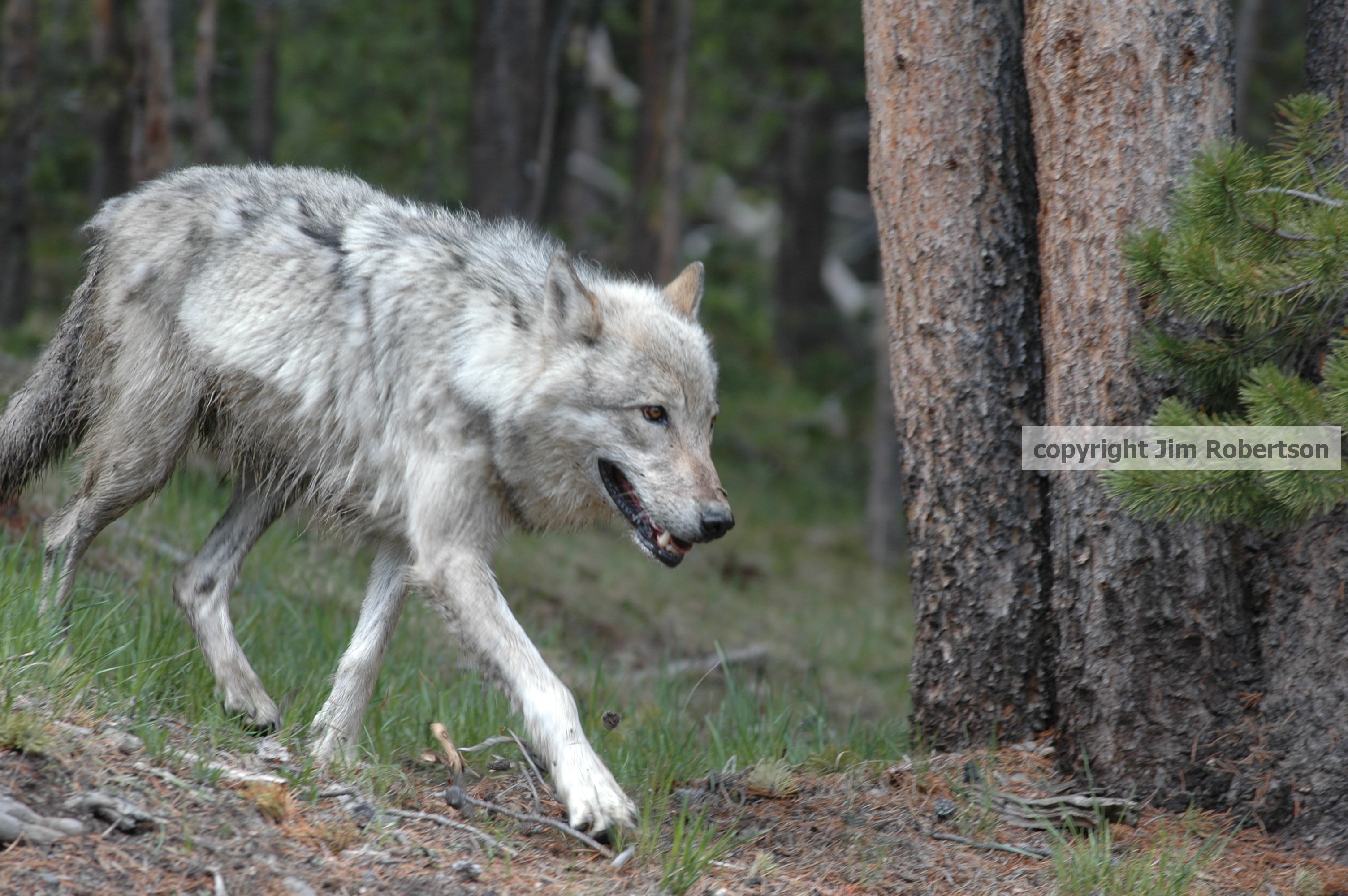
copyrighted Hayden wolf in lodgepoles

http://www.oregonlive.com/pacific-northwest-news/index.ssf/2013/08/possible_wolf_kill_in_offing_a.html

The Oregonian By Richard Cockle, The Oregonian
August 30, 2013

Two wolf attacks on cattle in Wallowa County could trigger a wolf “kill order” by Oregon wildlife officials for the first time in more than two years.

Earlier this month, wolves from the Imnaha pack injured a rancher’s cow on Upper Griffith Creek.

Last week, a horseback rider checking cattlefound the partially eaten carcass of a calf killed by a wolf along Upper Threebuck Creek.A radio-collar check showed OR-4, an Imnaha pack wolf, was in the area where the calf was discovered.

Meanwhile, the Umatilla River wolf pack northeast of Pendleton killed a goat that had been penned overnight close to the owner’s house with guard dogs nearby, said Michelle Dennehy, spokeswoman for the Oregon Department of Fish and Wildlife.

The Wallowa County attacks raised the tally of livestock deaths by the Imnaha pack to four within the past six months, enough for state wildlife biologists to begin considering “lethal controls,” Dennehy said.

Killing one or more wolves could be ordered under terms of a settlement last spring, but no decisions have been made, Dennehy said.

“I haven’t heard any discussion yet of what animals we might target, or how many,” she said.

The agreement grew out of 17 months of negotiations involving Gov. John Kitzhaber, the Oregon Cattlemen’s Association, the state Department of Fish and Wildlife and two major conservation groups after the Oregon Court of Appeals halted the killing of Oregon wolves by government hunters.

Oregon currently is home to at least 46 wolves in seven known packs — the Imnaha, Minam, Mount Emily, Snake River, Umatilla River, Walla Walla and Wenaha packs.

For the state to authorize killing a problem wolf, the affected rancher must have used at least one preventive measure to keep wolves away from livestock at least seven days before the incident.

Those can include flaggery, or strips of fabric tied to fences to frighten away wolves; burial of bone piles when cattle die naturally; guard dogs; and an increase in the presence of humans where cattle graze and wolves are known to range.

Nick Cady, spokesman for the Cascadia Wildlands environmental group, said lethal controls under the settlement are a “last resort” to deal with wolves and can occur only when livestock kills become chronic. His group helped negotiate the agreement.

If a wolf or wolves must be killed, it should be a “targeted removal” of specific animals preying on livestock, he said. Nevertheless, Cady doesn’t believe lethal controls are the best option.

Since Washington wiped out the cattle-killing Wedge pack of wolves north of Kettle Falls near the Canadian border last year, new wolves have moved in, and “they’ve been depredating again,” Cady noted.

Wolves were active this summer in northeastern Oregon. An injured calf was found July 2 in Wallowa County’s Upper Threebuck Creek drainage and was listed as a probable wolf attack, state biologists said. Calves were attacked by wolves in the same area April 22, May 10 and May 15, they said.

A calf carcass found in the Hayden Lake area of Wallowa County also suggests a possible wolf attack, they said. They also confirmed the death of a ewe sheep in the Weston Mountain area northeast of Pendleton around June 3 as a wolf kill.

Lone Wolf OR7

copyrighted Hayden wolf walking

http://www.orionmagazine.org/index.php/articles/article/7690

Lone Wolf

A forsaken predator reappears

By Joe Donnelly

Published in the September/October 2013 issue of Orion magazine

Here’s an excerpt from the article…

Except for a few stubborn holdouts, the era of man seems just about done in Plumas County. It’s an eerie, forgotten landscape, and there’s a certain poetic justice in OR7’s arrival. Bounty hunters killed OR7’s last remaining California cousin near here in 1924, back when wolves were considered to be an enemy of manifest destiny. OR7, though, doesn’t seem to have revenge in mind. He has yet to take sheep or cow from the descendants of those who shot, trapped, poisoned, and burned his kind to extinction in the West.

But this hasn’t stopped some locals from greeting his arrival as if the devil himself were paying a visit. As soon as his epic trek signaled a wolf with Golden State aspirations, the hysteria began. To calm local fears of pending doom, the California Department of Fish and Wildlife conducted public meetings featuring wildlife officials, celebrity wolf experts, government resources managers, and a highly agitated public—all awaiting the imminent arrival of a solitary, thirty-month-old Canis lupus.

After one meeting, Marcia Armstrong, a supervisor for Siskiyou County, where OR7 dallied briefly before moving on, told the Los Angeles Times that she would like to see all encroaching wolves “shot on sight.” Adding to the tinder were ranchers warning that a wolf repopulation would be “catastrophic.” Other folks spread rumors of conspiratorial wolf smuggling by federal agencies, and of a government out to trample rights and make it harder to log, mine, and dam the rural West.

Agreement limits relocation of wild wolves

copyrighted Hayden wolf walking

PHOENIX — Federal officials have agreed not to try to capture and relocate wolves entering Arizona from Mexico.

In a deal approved Monday in federal court, the U.S. Fish and Wildlife Service will consider wolves found wandering outside the current reintroduction boundary areas to be wild. The agency is, in essence, revoking the permission it gave itself to capture and relocate the animals.

Michael Robinson of the Tucson-based Center for Biological Diversity said the settlement is a crucial step in helping reintroduce the wolf population to its natural habitats in Arizona.

Robinson said the issue arose two years ago when Mexico began reintroducing wolves into its northern regions, a few dozen miles south of the area where Arizona and New Mexico meet.

What happened, he said, is the U.S. Fish and Wildlife Service, on its own, then gave itself a permit — without public notice — to capture any wolf that might cross the border and cause problems with livestock.

The agency already has the power to capture and relocate those wolves being reintroduced into Arizona and New Mexico in an effort to keep them from preying on cattle. That is because the whole reintroduction program is being conducted under rules that specifically consider the wolves in the program to be a “nonessential population.’’

But Robinson said there is no reason to unilaterally decide wolves that wander into Arizona on their own should be treated in a similar fashion.

More to the point, he said it’s illegal. Robinson said the rules that govern the domestic reintroduction program, including relocation, do not apply to wolves that were not placed by the United States government but instead wandered into this country on their own.

“These wolves, under the law, are fully protected’’ as an endangered species,’’ Robinson said. “And you can’t simply sacrifice them under the law for special interests, in this case, the livestock industry.’’

Robinson said it is impossible to determine whether any of the wolves released by the Mexican government have, in fact, made their way into the United States.

In essence, the lawsuit settlement recognizes the rules require that if a wolf is found outside the reintroduction area — or other areas where the animals have been welcome — it is required to presume the animal is “of wild origin with full endangered status.’’ And that can be overcome only with other evidence the wolf is of domestic origin and reintroduced, like a radio collar or identification mark.

Robinson said the settlement may actually help wolf reintroduction in this country.

He said the latest report shows there are 75 wolves in the program, including 37 in Arizona. But that includes only three breeding pairs.

Robinson said inbreeding results in smaller litter sizes. He said wolves released in Mexico that manage to make their way across the border could help diversify the population.

The current wolf reintroduction area includes the Apache and Gila national forests as well as lands where the owners have said they are welcoming the animals. Robinson said that includes the Fort Apache Reservation as well as property owned in New Mexico by media mogul Ted Turner.

Sleeping teen is bitten by wolf near Lake Winnibigoshish

This must have been in the same part of Minnesota that I posted about two days ago, where people have been regularly feeding wolves. Too bad, because people were starting to appreciate seeing wolves there. But wolves best be deathly afraid of humans at all times, if they know what’s good for them. The DNR doesn’t have to send in UN inspectors before going on the offensive against wolves.

There’s no mention in this article about why the wolf bit someone, but my guess is he was attracted by the smell of whatever food the humans had cooked that night or had in the tent with them. Who knows, maybe the kid had a peperoni stick by his head and the wolf was startled when he stirred his sleep. (People should know not to bring food in a tent with them.) I remember a camping trip where my brother in law had brought food in the tent and woke up to find that a mouse had chewed it, right by his head.

Anyway, the wolf (rest his soul) obviously wasn’t really trying to hurt or kill anyone, or he wouldn’t have been deterred when a 16 year old boy kicked at him.

http://www.startribune.com/local/221254011.html                                                                                                                                                                                                                                                                                                                                                                                                                                                                                                                                     JOSEPHINE MARCOTTY    Star Tribune August 26, 2013

A solitary wolf bit a 16-year-old-old boy sleeping outside his tent near Lake Winnibigoshish on Sunday, the first documented wolf attack in Minnesota history.

The unidentified boy, who is reportedly from Solway, Minn., stood up and kicked at the wolf, which then ran away, according to state wildlife officials.

The teenager, who was staying at a campground in the Chippewa National Forest, was driven to a hospital near Bemidji, where he was treated for a gash on the back of his head and canine punctures on either side of his face.

A 75-pound adult male wolf that matched the description provided by the boy and others at the campground was trapped and killed Monday morning by federal wildlife officials.

The wolf’s body was taken to the University of Minnesota veterinary school, where it is being tested for rabies and dissected. Investigators will collect DNA in an effort to match it to saliva samples on the victim.

“This is a rare occurrence,” said Tom Provost, enforcement manager for the Department of Natural Resources. He said there have been no other recorded cases in Minnesota of a wild wolf attacking a human, though it has occurred elsewhere in the United States and Canada, and more frequently in India.

The wolf that was killed Monday had a deformed jaw. The top and bottom were out of alignment, and it was missing a canine tooth, Provost said, meaning the animal likely had learned to survive by hanging around campgrounds.

In order to hunt successfully, wolves must be able to exert tremendous force on their prey, Provost said. An adult wolf is capable of biting with a force of 1,000 to 1,500 pounds of pressure per square inch, a strength that makes it possible to chomp through a moose femur in six to eight bites. A German shepherd has a biting pressure of 750 pounds per square inch.

“It was trapped in an area where it was likely habituated to humans and had the ability to grab easy food,” he said. “That’s not normal behavior.”

In fact, other campers reported that the wolf was behaving in an entirely unwolf-like way. Normally, wolves stay away from humans and are rarely alone. Pat Tetrault, 28, was one of several people who saw the wolf in the campground Friday and early Saturday. His wife saw it by their truck. In the early morning, while the family of four and their dog were fast asleep, it bit through the wall of their tent.

“It was by where my son was sleeping,” Tetrault said. “He said he felt it go under the tent, and then lift it up. He thought it was pretty cool. Took him awhile to go back to sleep.”

About ten minutes later Tetrault said he heard shouting from the direction of where the teenager was bitten.

Provost said that the teenager was lying outside his tent when “unbeknownst to him a large canine approached him from the rear.” He woke up when the wolf bit his head, and it was a “struggle to free himself from its jaws,” Provost said. The boy confronted the wolf, but it fled only when he launched a kick at it.

Friends and members of his family provided rudimentary first aid, and then drove him to the hospital.

Wildlife officials evacuated the campground and set up a perimeter. One officer saw it on the road and took a shot at it, but missed. On Monday morning federal wildlife officials found the wolf caught in a leg-hold trap that had been set around the campground over the weekend, and shot it.

copyrighted wolf in river


Habituated wolf shot near Jardine, MT

The Billings Gazette

A young collared female gray wolf was shot by a Jardine-area resident on Saturday after the wolf had recently come in close proximity to a number of homes, killed a cat as well as several chickens, according to Montana Fish, Wildlife and Parks.

“It had shown up at a number of properties since April,” said Andrea Jones, FWP information officer.

Over the last few months the wolf displayed unusually bold behavior as attempts were made by FWP and residents to haze the animal. It was shot while eating a chicken. There will be no charges filed, Jones said, since the wolf was becoming increasingly more bold.

“It has not shown normal wolf behavior when confronted,” Jones said.

Until this spring, the wolf lived primarily in the northeast corner of Yellowstone National Park as a member of the Lamar Canyon pack. Young wolves often disperse to start their own packs. After leaving the pack it moved into the Jardine area. Jardine is located northeast of Gardiner and just north of the park boundary.

FWP investigated the wolf mortality in consultation with USDA-Wildlife Services. An FWP veterinarian will examine the wolf’s general condition but a necropsy is not planned at this time, Jones said.

Wolf shootings to protect livestock as well as wolf hunting are divisive issues that have prompted death threats in the past to those involved. Consequently, FWP was not releasing the name of the individual who shot the wolf.

Two other members of the Lamar Pack were shot last fall during Wyoming’s hunting season, one of which was the pack’s alpha female. All together, hunters in surrounding states shot 12 wolves last year that spent part of their time inside Yellowstone’s boundaries. Six of the 12 were collared wolves that park staff use to study wolf movements and interactions.

copyrighted wolf in water

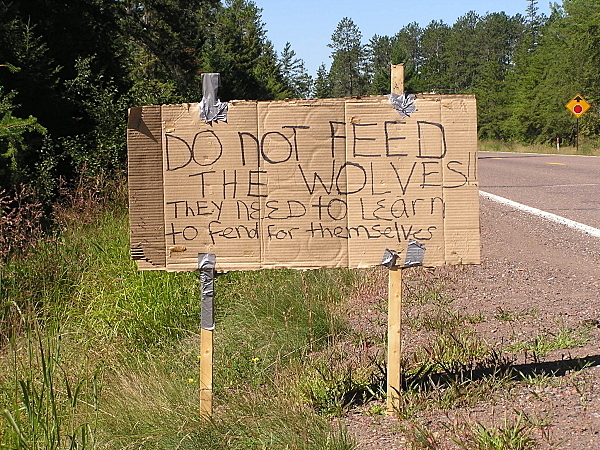
In northern Minn., a campaign against feeding wolves

http://minnesota.publicradio.org/display/web/2013/08/22/environment/campaign-against-feeding-wolves?

by Dan Kraker, Minnesota Public Radio

BRIMSON, Minn. — “Don’t feed the wildlife!” is a message frequently trumpeted at campgrounds around Minnesota. It’s usually meant to warn people not to feed deer or bears.

But this summer wildlife managers are expanding that message to wolves.

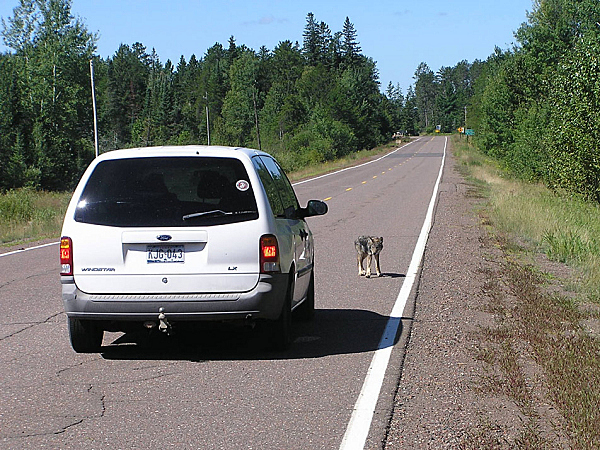
In at least two locations in northeast Minnesota, people are feeding wolf pups — easy meals that could have very negative consequences.

At Hugo’s, the bar and general store that Gary Hepola runs with his wife in the tiny town of Brimson, about 40 miles north of Duluth, it doesn’t take long to see a wolf pup.

“You’ll notice they have no fear here,” said Hepola as he pulled his pickup out of the parking lot. “They’ll come right up to that window.”

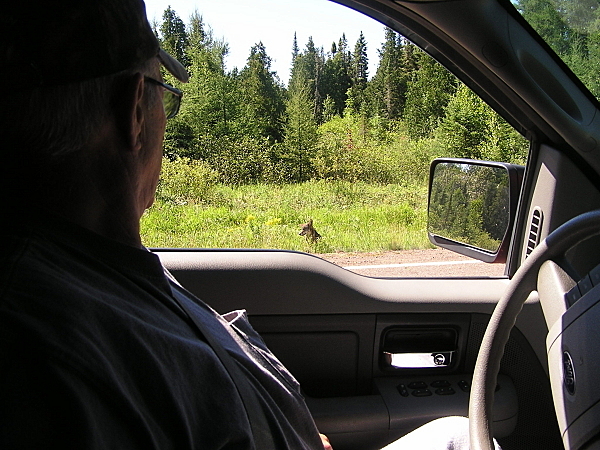
Sure enough, the young wolf, with pointy ears and splotches of gray, white and tan fur, ambles right up to Hepola’s open window. “What are you doing? Get off the road!”

Hepola said the wolves have grown steadily bolder over the past six weeks or so. He has seen people place piles of food on the side of the road to lure the wolves in close to snap pictures.

“I’ve chewed a few people out [and] said, ‘Don’t be feeding the wolves,'” he said. “People don’t realize they’re going to become adults. They’re cute now — not so cute when they’re big.”

Hepola fears that some of the pups might not even make it to adulthood. One of eight was killed by a car last week.

That number could grow, said Nancy Hansen, assistant area wildlife manager in Two Harbors for the Department of Natural Resources.

“They are at a very busy intersection,” Hansen said. “It’s going to get busier, with hunting season coming up, so I’m concerned.”

Hansen said the wolf pups are using a stretch of forest near the intersection of two county highways as a rendezvous site. The adults in the pack leave the pups to hunt and return with food.

Wildlife experts say people sometimes see wolf pups alone, perhaps think they look thin, and assume they have been abandoned and need food. Hansen said the DNR is trying to educate the public otherwise.

“Basically, we really need people to police themselves,” she said. “As neat as it is to see these animals, this is not a normal situation, and anything they’re doing to get their picture taken with a wolf pup or feed a wolf pup, it’s not good for the pups.”

Hansen said officials cannot relocate the pups, because they would either die away from the pack or just return to the rendezvous point.

“If we can’t turn it around, we’ll probably have to capture the pups, they’ll either have to be moved to a facility, or destroyed,” she said.

Hansen said she has never seen a situation like the “Hugo’s wolves” as she refers to them. She said news of the wolves has spread like wildfire on Facebook, and more and more people are flocking to see them.

Jess Edberg, the information services director at the International Wolf Center in Ely, is dealing with a similar situation on the Echo Trail near the Boundary Waters Canoe Area.

“The wolf pups were walking across the road, sitting on the road, watching vehicles go by, and somebody did see there was fresh food put out there the other day,” she said.

Edberg said every year or two she hears of emboldened wolves not fleeing from passing cars. In those situations, she said, it’s not enough to simply not feed them. She said even a passive observer can encourage wolves to frequent an area.

“We want to make sure that wildlife have a healthy fear avoidance of humans, so honking your horn or yelling, not encouraging the animal to be there is going to be helpful for the survival of that animal,” Edberg said.

At Hugo’s Bar in Brimson, owner Jody Hepola said the wolves have become something of a tourist attraction.

“The store’s been busy,” she said. “Lots of people come in to comment and get a snack while they’re out looking for the wolves, and lots of phone calls, asking, ‘Are they’re really wolves up there? What time of day, where can we see them?”

But Hepola said she would gladly give up the increased business. She wants the wolves to learn to fend for themselves.

State’s first hunt didn’t reduce tensions over wolves

The following article proves that when Yellowstone biologist, Doug Smith, stated, “To get support for wolves, you can’t have people angry about them all the time, and so hunting is going to be part of the future of wolves in the West. We’ve got to have it if we’re going to have wolves,” he was dead wrong; and when wolf hunter Randy Newberg told NPR News, “Having these hunting seasons has provided a level ofcopyrighted Hayden wolf walking tolerance again” he was totally full of shit…

State’s first hunt didn’t reduce tensions over wolves

Last year’s first managed wolf hunt in Wisconsin history did not increase tolerance toward the animals among people who live in wolf country, a new survey by University of Wisconsin-Madison researchers shows.

With a growing wolf population, state wildlife managers and legislators who rewrote state hunting laws had hoped a hunting season would lower wolf numbers and reduce tensions over the animals.

But the survey shows this didn’t happen.

The last time the researchers surveyed public’s perception of wolves in 2009, 51% of wolf country residents said they would be more tolerant of wolves if the public could hunt them.

But in this year’s survey when asked the same question, residents in wolf country were much less accepting. The level of acceptance dropped to 36%.

When measuring the public’s attitudes in all parts of the state, 37% of the respondents said they would be more tolerant toward wolves with a public hunt. There was not a statewide comparison in 2009.

The wolf range is generally described as northern Wisconsin and the state’s central forests.

The hunt took place Oct. 15 to Dec. 23. Hunters and trappers killed 117 wolves, according to the Department of Natural Resources. The agency had set a harvest goal of 116 among non-tribal hunters and trappers.

“If one of the goals of the wolf hunt was to increase tolerance for the species, the first season did not accomplish this objective,” said Jamie Hogberg, a graduate student at the Nelson Institute for Environmental Studies.

Team led study

Hogberg was part of a team that examined public attitudes toward wolves. Others on the team were Adrian Treves, an associate professor of environmental studies; Bret Shaw, an associate professor of the Department of Life Sciences Communication; and Lisa Naughton, a professor of geography.

One possible explanation for the lack of change in public opinion is that despite the hunt, the state’s wolf population has changed little.

In April, the DNR estimated the wolf population from over-winter counts at between 809 and 831 animals in 216 packs. The previous winter’s estimate was 815 to 880 wolves in 213 packs.

The survey was sent to 1,311 people. There were 772 responses, or 59%. The vast majority — 538 — of people who responded reside in areas where wolves are present.

In January 2012, the federal government removed wolves from the list of protected animals under the Endangered Species Act in the Great Lakes states. That allowed states to manage the wolf population through hunting and trapping seasons.

The Legislature approved a wolf hunt in April 2012.