Exposing the Big Game

Forget Hunters' Feeble Rationalizations and Trust Your Gut Feelings: Making Sport of Killing Is Not Healthy Human Behavior

Exposing the Big Game

 WDFW News Release: Washington’s wolf population increases for 10th straight year


WDFW NEWS RELEASE

Washington Department of Fish and Wildlife

600 Capitol Way North, Olympia, WA 98501-1091 

April 4, 2019

Contact: Donny Martorello, 360-790-5682

Ben Maletzke, 509-933-6086 

Washington’s wolf population increases for 10th straight year

OLYMPIA – The recovery of Washington’s wolf population continued in 2018 as numbers of individual wolves, packs, and successful breeding pairs reached their highest levels since wolves were virtually eliminated from the state in the 1930s.

The Washington Department of Fish and Wildlife (WDFW) today published its annual year-end report, which shows the state has a minimum of 126 individual wolves, 27 packs, and 15 successful breeding pairs – male and female adults who have raised at least two pups that survived through the end of the year. A year ago, those numbers were 122, 22, and 14, respectively.

In 2018, for the first time, WDFW documented the presence of a pack west of the Cascade Crest. A single male wolf in Skagit County, captured in 2016 and fitted with a radio collar, has been traveling with a female wolf through the winter, thereby achieving pack status. Biologists chose the pack’s name – Diobsud Creek.

“We’re pleased to see our state’s wolf population continue to grow and begin to expand to the west side of the Cascades,” said WDFW Director Kelly Susewind. “We will continue to work with the public to chart the future management of this important native species.”

Information and survey findings are compiled from state, tribal, and federal wildlife specialists based on aerial surveys, remote cameras, wolf tracks, and signals from radio-collared wolves. As in past years, the annual count provides estimates of the minimum numbers of wolves in the state, because it is not possible to count every wolf.

Virtually eliminated from the state by the 1930s, Washington’s gray wolf population has rebounded since 2008, when WDFW wildlife managers documented a resident pack in Okanogan County. Most packs occupy land in Ferry, Stevens, and Pend Oreille counties in the northeast corner of the state, but the survey revealed increasing numbers in Washington’s southeast corner and the north-central region.

Although the 2018 annual count showed a modest increase in individual wolves, the upturn in new packs and breeding pairs in those areas set the stage for more growth this year, said Donny Martorello, WDFW wolf policy lead.

“Packs and breeding pairs are the building blocks of population growth,” Martorello said. ‘It’s reassuring to see our wolf population occupying more areas of the landscape.”

State management of wolves is guided by the department’s 2011 Wolf Conservation and Management Plan, which establishes standards for wolf-management actions. 

Since 1980, gray wolves have been listed under state law as endangered throughout Washington. In the western two-thirds of the state, they are classified as endangered under the federal Endangered Species Act.

As required for all state-listed species, WDFW is currently conducting a periodic status review of the state’s gray wolf population to evaluate the species’ listing status, Martorello said.

“The state’s wolf management plan lays out a variety of recovery objectives, but the ultimate determination of a species’ listing status is whether it remains at risk of failing or declining,” Martorello said.

The 2018 annual count reflects the net one-year change in Washington’s wolf population after accounting for births, deaths, and wolves that have traveled into or out of Washington to form new packs or join existing ones. In 2018, two wolves dispersed with one forming the Butte Creek pack in southeastern Washington while the other wolf traveled through Oregon down to Idaho.  


WDFW also recorded 12 wolf deaths during 2018. Six (6) were legally killed by tribal hunters; four (4) were killed by WDFW in response to repeated wolf-caused livestock deaths; and two (2) other mortalities apparently were caused by humans and remained under investigation at year’s end.

Ben Maletzke, WDFW statewide wolf specialist, said the 2018 annual report reinforces the profile of wolves as a highly resilient, adaptable species whose members are well-suited to Washington’s rugged, expansive landscape. He said their numbers in Washington have increased by an average of 28 percent per year since 2008.

“Wolves routinely face threats to their survival – from humans, other animals, and nature itself,” he said. “But despite each year’s ups and downs, the population in Washington has grown steadily and probably will keep increasing by expanding their range in the north and south Cascades of Washington.”

Maletzke said the 2018 survey documented six packs formed in 2018 – Butte Creek, Nason, OPT, Sherman, Diobsud Creek and Nanuem – while one pack, Five Sisters, disbanded due to unknown causes.

With funding support from state lawmakers, WDFW has steadily increased its efforts to collaborate with livestock producers, conservation groups, and local residents to minimize conflict between wolves and livestock and other domestic animals, Maletzke said. 

WDFW used several strategies last year to prevent and minimize conflicts, including cost-sharing agreements with 31 ranchers who worked with WDFW to protect their livestock. State financial and technical assistance helped to support the use of conflict prevention measures which included range riders to check on livestock, guard dogs, lighting, flagging for fences, and data sharing on wolf movements.

Maletzke said five of the 27 packs known to exist in Washington last year were involved in at least one livestock mortality. WDFW investigators confirmed wolves killed at least 11 cattle and one sheep and injured another 19 cattle and two sheep. WDFW processed five livestock damage claims totaling $7,536 to compensate producers for direct wolf-caused livestock losses and one indirect claim for $5,950, which compensates the producer for reduced weight gains and other factors associated with wolf-livestock interaction.

Consistent with the Wolf Plan and the department’s Wolf-Livestock Interaction Protocol, WDFW used lethal measures to remove individual wolves from three packs after non-lethal measures failed to deter them from preying on livestock. WDFW euthanized two members of the OPT pack, and one member apiece from the Togo and Smackout packs.

Contributors to WDFW’s annual report include the U.S. Fish and Wildlife Service, the U.S. Department of Agriculture’s Wildlife Services program, the Confederated Colville Tribes and the Spokane Tribe of Indians.

The report will be reviewed with the state Fish and Wildlife Commission when it meets April 5-6 in Olympia. That meeting and a discussion about the report will be broadcast live at https://wdfw.wa.gov/. The survey report will be posted on WDFW’s website by April 5 at https://wdfw.wa.gov/species-habitats/at-risk/species-recovery/gray-wolf

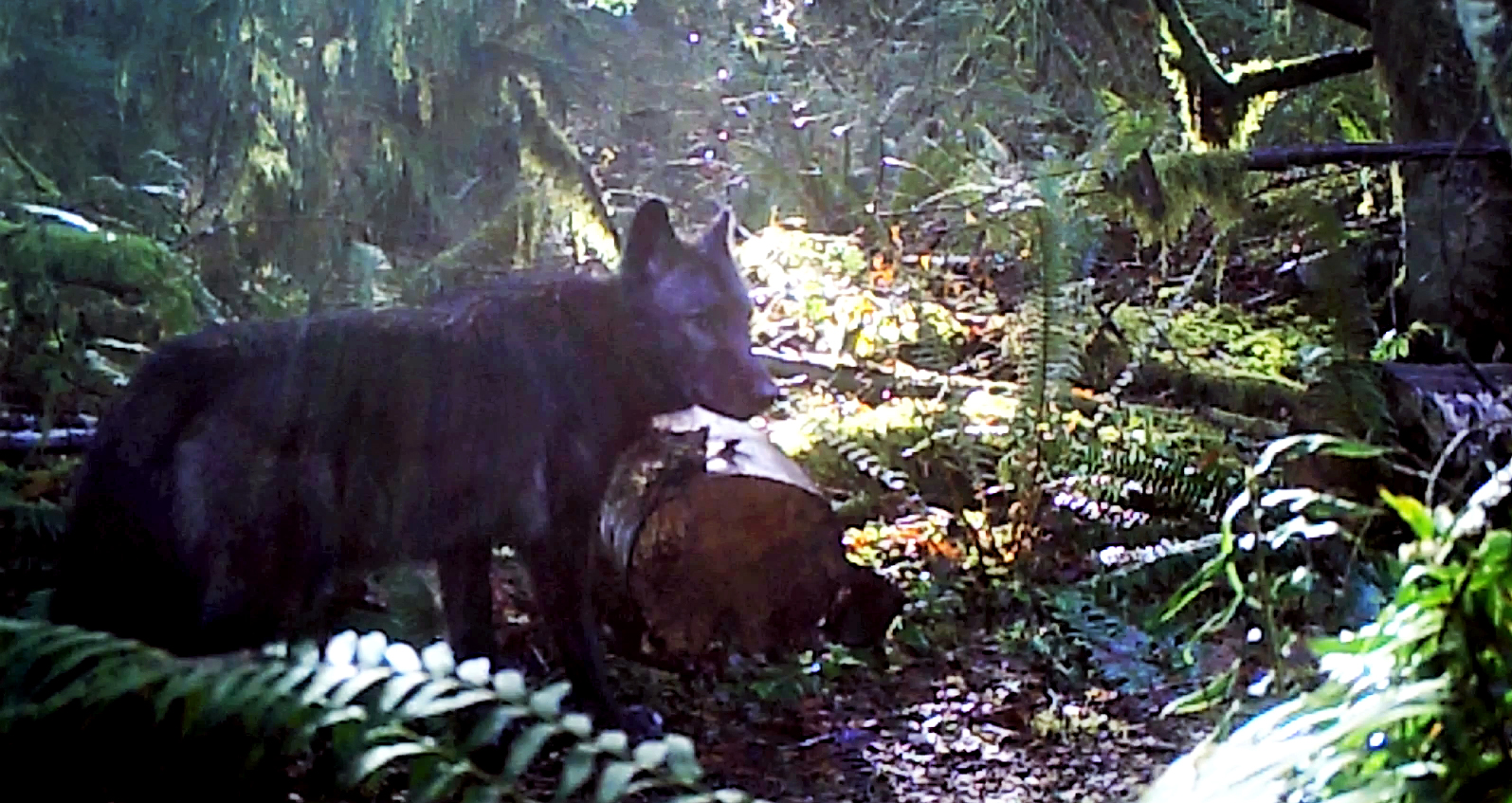
WDFW photo of the male member of the new Diobsud Creek pack in Skagit County:

Wolf population chart available at:

Yellowstone’s Beloved Wolf, Spitfire, Was Killed by a Trophy Hunter

  • by: Care2 Team
  • recipient: U.S. National Park Service
238,957 SUPPORTERS
240,000 GOAL
Spitfire was beloved by many. The young wolf was often spotted at Yellowstone National Park, much to the delight of wolf enthusiasts, biologists, and tourists. 

Sadly, future park-goers will never catch a glimpse of Spitfire. The Montana Department of Fish, Wildlife and Parks just confirmed that she was cruelly killedby a trophy hunter. What’s even worse is that her murder was completely legal. Spitfire had wandered just outside of the park, where she was no longer protected.

Please sign this petition calling for a no-hunting buffer zone around Yellowstone National Park to protect more animals from being senselessly killed for sport.

Spitfire’s mom met a similar fate six years ago, leaving Spitfire as the new leader of the Lamar Canyon Pack. According to wolf lovers, she “led her pack through a number of very difficult circumstances” and “showed incredible strength, courage and resilience in everything she did.” Now she’s gone, and the Lamar Canyon Pack is yet again without a leader.

It’s not uncommon for animals to roam just beyond national park boundaries — which is why their protection should be extended. Sign now to demand buffer zones around Yellowstone National Park.

Photo credit: Facebook

https://www.thepetitionsite.com/503/335/245/?src=ca_facebook_ads&campaign=sign_503335245-23843335022030015&fbclid=IwAR3M27CiwKI2_Je36dTO7sJ56NnXJqZDAJTMB5XzAGOlgble24oDWUXTRBI


ACTION ALERT ~ Urge the Trump Administration to Keep Wolves Protected!

The U.S. Fish and Wildlife Service has issued a proposed rule to strip Endangered Species Act (ESA) protections for gray wolves in the lower 48 states – a premature decision unsupported by science that will further threaten an already imperiled species. Federal protections for gray wolves brought the species back from the brink of extinction following decades of persecution. This rash decision to delist wolves from the list of endangered and threatened wildlife would allow states to open killing seasons on wolves, permitting special interest trophy hunters and trappers to senselessly kill wolves before the species has made a full recovery. As demonstrated in Idaho where wolves have already been stripped of federal ESA protections, once delisting occurs the species is open to a variety of killing activities – including predator derbies, contests and tournaments where those who kill the most or largest wolves are awarded prizes. This is after the federal government spent millions of taxpayer dollars reintroducing wolves into Yellowstone National Park after their populations were decimated from unlimited killing!

We need your help to keep federal protections in place for wolves so these iconic and vital animals are able to recover and return to their historic range.

Please submit comments TODAY in opposition to the proposed rule to delist wolves.

The U.S. Fish and Wildlife Service is accepting comments on their proposed ruleto remove wolves from the list of endangered and threatened wildlife.

You can submit your comments using two methods:

ELECTRONICALLY: 

Click here to submit your comments electronically. If your comments fit into the comment box, this method is preferred. For longer comments, please attach them in a Microsoft Word document.

HARD COPY:

Submit your comments by U.S. mail to:

Public Comments Processing, Attn: Docket No. FWS-HQ-ES-2018-0097
U.S. Fish & Wildlife Service Headquarters, MS: BPHC
5275 Leesburg Pike
Falls Church, VA 22041-3803

Talking Points

Your comments can simply state: “I am in opposition to the U.S. Fish & Wildlife Service’s proposed rule to remove Endangered Species Act protections for gray wolves in the lower 48 states. I urge you to reconsider this proposed rule and to instead develop a national wolf recovery plan for wolves that reflects their intrinsic value and the myriad ecological, aesthetic, and economic benefits the species provides to our communities and ecosystems.”

For maximum impact, however, we encourage you to personalize your comments. Here are some talking points you may consider incorporating:

●       Continuing Endangered Species Act protections for wolves is necessary for the species to fully recover. Federal protections saved gray wolves from extinction following decades of persecution – and the species is still recovering, currently occupying only a fraction of their historic range.

●       The proposed rule would transfer authority over wolves to state wildlife management agencies, which historically have shown little interest in preserving or restoring wolves. These state agencies have catered to special interest groups who seek to kill wolves for trophies or entertainment, or on the misguided belief that killing wolves protects livestock or increases deer and elk populations.

●       Wolves are vital to healthy ecosystems. Benefits wolves provide include increasing biodiversity by keeping large herbivores such as deer from overgrazing habitats and maintaining the health of prey animals such as deer by culling the sick members from the heard, including animals suffering from Chronic Wasting Disease.

●       The best available, peer-reviewed science demonstrates that killing wolves will not protect livestock or increase populations of game species like deer or elk. Wildlife management decisions should be based on ethics and sound science, not fear and misunderstandings.

●       The vast majority of Americans are wildlife watchers who prefer to view wolves in their natural habitat – preserved and treated with respect. Allowing wolves to return to their historic range and thrive will provide far more benefits to our economy than allowing a tiny minority of the population to extirpate these iconic animals from our landscape.

Learn more about wolves here.

Thank you for acting TODAY to protect wolves from extinction!

Is the gray wolf still endangered? Depends who you ask.


Two gray wolves walk across the snow in Yellowstone National Park. The animals were reintroduced in the region in the 1990s.

PHOTOGRAPH BY ROBBIE GEORGE, NAT GEO IMAGE COLLECTION

The government says wolves are thriving in the lower 48, but some scientists say they still face threats from hunting and habitat fragmentation.

After four decades of intense conservation efforts, it’s finally time to take the gray wolf off the Endangered Species List, the U.S. Fish and Wildlife Service recently announced.

“The facts are clear and indisputable—the gray wolf no longer meets the definition of a threatened or endangered species,” David Bernhardt, acting secretary of the U.S. Department of the Interior, said in an emailed statement.

“Today the wolf is thriving on its vast range, and it is reasonable to conclude it will continue to do so in the future.”

Not so fast, say several scientists.

For one, that definition is up for debate. According to the Endangered Species Act, a plant or animal can be considered endangered when it’s no longer in “danger of extinction throughout all of a significant portion of its range.” (See 12 of our favorite wolf pictures.)

But gray wolves occupy less than 20 percent of their historic U.S. range, notes Jeremy Bruskotter, a social scientist at the Ohio State University who has studied programs to save gray wolves in the United States.

“Does that constitute recovery? It seems like a stretch to suggest that it does,” he says.

“I’ve been watching this for 15 years, and it’s just the same story over and over again,” says Bruskotter, who published a study in 2013 arguing against a failed federal proposal—one of many over the years—to delist the species.

Before Europeans arrived, wolves roamed over nearly every inch of what’s now the U.S. Centuries’ worth of hunting, trapping, and poisoning erased the species from the lower 48 states by the 1930s. In fact, in the early 1900s, veterinarians deliberately infected wolves in the Greater Yellowstone regionwith mange-causing mites.

Today, more than 6,000 gray wolves can be found in fragmented populations across the West and Great Lakes, thanks to a reintroduction program centered in Yellowstone National Park in the 1990s and natural colonization from Canadian packs. (Two other lineages, the Mexican wolf and red wolf, are struggling to survive in small wild populations; neither would be affected by the proposal.)

State of the gray wolves

It’s important to remember that gray wolves have already been delisted in most places that they now occur, says Gavin Shire, a spokesperson for the U.S. Fish and Wildlife Service.


If the new proposal is passed, Shire says there’d be no change for those areas of the wolf’s range. (Learn about “the most famous wolf in the world.”)

What would change is federal protection for wolves in states like Minnesota, Michigan, Wisconsin, which number between 2,000 to 3,000 animals. Parts of Washington and Oregon would also be affected, as well as areas that wolves are just beginning to colonize, such as California.

Next comes a 60-day period during which the U.S. Fish and Wildlife Service accepts comments from the public. And while that can include anything from classroom letters and editorials, Shire says what they’re really looking for is “scientific information that’s going to help us make the right decision in the end.”

A wolf pack investigates grizzly bear tracks in Yellowstone’s Pelican Valley.

PHOTOGRAPH BY RONAN DONOVAN, NAT GEO IMAGE COLLECTION

“This is not a scientific determination,” says Brett Hartl, who reviewed the proposal for the nonprofit Center for Biological Diversity. “It’s simply an arbitrary policy choice to ignore how much habitat is unoccupied.”

For example, Hartl points to how differently the wildlife service pursued bald eagle conservation.

“We didn’t declare them recovered until they were found in every state, and probably at a level even higher than pre-European contact,” he says.

‘An environment of persecution’

It was always part of the plan to return control to the states once recovery goals were met, says Carter Niemeyer, a retired biologist who was the wildlife service’s wolf recovery manager for Idaho.

For the Northern Rockies wolf population in Idaho, Wyoming, and Montana, goals included maintaining populations in each state of at least 300 wolves, with 30 breeding pairs, for three years.

The problem, says Niemeyer, is that states like his native Idaho now view any individual wolves beyond those goals as “excess baggage” that can be gotten rid of with hunting and trapping.

“Those were supposed to be minimums,” he says. “We don’t manage bears that way, and we don’t manage mountain lions that way, so why do we persecute wolves this way?”

WOLVES 101With their piercing looks and spine-tingling howls, wolves inspire both adoration and controversy around the world. Find out how many wolf species exist, the characteristics that make each wolf’s howl unique, and how the wolf population in the continental United States nearly became extinct.

Many ranchers, farmers, and other landowners have been heavily opposed to reintroducing wolves, mostly due to the potential for livestock predation. Livestock owners receive compensation for any animals killed by wolves, and sometimes the wolves themselves are killed or relocated. It’s also legal to hunt and trap wolves across many western states.

One hunting organization, known as the Foundation for Wildlife Management, has even been offering cash rewards of up to $1,000 for trappers who target wolves in Idaho.

All of this just points to a growing anti-wolf sentiment, says Niemeyer. (Read why Americans are so divided over saving wolves.)

“I’ve been part of the recovery effort since the beginning, and I just hate to see it end in an environment of persecution again,” says Niemeyer, who also wrote the books Wolfer and Wolf Land.

How many wolves do we need?

Others support delisting, such as Neil Anderson, wildlife program manager for Montana Fish, Wildlife and Parks.

“One of the more significant aspects of state management of wildlife, including wolves, is it gives the local public more ownership and a voice in managing these species,” he says.

Even still, Anderson admits that wolves remain a controversial species.

“Perhaps more than any other large carnivore, there seems to be more of a gap between those that want no restrictions of wolf numbers and those that want as few as possible,” says Anderson. (See unique pictures of wolves taken in Yellowstone.)

Montana Fish, Wildlife and Parks just announced that its annual hunting and trapping season produced 315 wolf kills. The harvest represents nearly 40 percent of the state’s estimated population of 850 wolves.

That kind of hunting probably won’t drive wolves back to extinction, says Bruskotter, but it also stands in the way of further wolf recovery.

He says the new proposal would end up creating pockets of wolf populations in the wild, instead of restoring self-sustaining populations of the predators across their former range.

At the end of the day, “we’re arguing about the scope of what recovery for an endangered species will look like,” says Bruskotter.

The Latest: Wolves resilient, but proposal tests expansion

BILLINGS, Mont. (AP) — The Latest on the proposed removal of federal protections for wolves (all times local):

3:15 p.m.

A proposal to strip gray wolves of federal protections could curtail their rapid expansion across vast swaths of the U.S., yet the predators already are proving to be resilient in states where hunting and trapping occur.

The Interior Department on Thursday declared gray wolves recovered across the Lower 48 states. If finalized, the proposal would allow hunting in more areas.

The species has seen a remarkable turnaround — from near-extermination to more than 6,000 gray wolves spread across nine states.

Critics say hunts could kill thousands of the animals and prevent their further spread.

But in the Northern Rockies, where legal wolf harvests began a decade ago, the animal’s numbers have held relatively steady and packs have expanded west into Oregon, Washington and California.

__

6:45 a.m.

U.S. wildlife officials want to strip gray wolves of their remaining federal protections and declare the species recovered following a decades-long restoration effort.

The U.S. Fish and Wildlife Service proposal released Thursday would put wolves under state authority and allow hunting in more areas. The Associated Press reported last week that the proposal was coming.

Critics argue the move is premature, with wolves still absent across most of their historic range.

Government officials say their goal was to protect against extinction, not restore wolves everywhere.

Trapping, poisoning and hunting exterminated wolves across most of the Lower 48 early last century. They bounced back under federal protection, and more than 6,000 now live in portions of nine states.

A final decision on lifting protections will follow a public comment period.

Newhouse praises U.S. Fish and Wildlife proposal to delist gray wolf

U.S. Rep. Dan Newhouse

U.S. Rep. Dan Newhouse

WASHINGTON, D.C. – Rep. Dan Newhouse (R-WA) released the following statement after U.S. Fish and Wildlife Service (FWS) announced that FWS will soon propose a rule to delist the gray wolf in the lower 48 states and return management of the species back to the states and tribes.

FWS intends to publish the proposed rule in the Federal Register in the coming days, opening a public comment period on the proposal.

“The best available science shows that the gray wolf has successfully recovered from the danger of extinction and no longer requires federal protection,” said Rep. Newhouse. “We can see in Washington state that the wolf population is growing quickly while being effectively managed by the Washington Department of Fish & Wildlife in the eastern third of the state. I applaud the U.S. Fish and Wildlife Service’s for moving forward with a proposal to delist the wolf in the lower 48 states in order to return management to the states.”

Rep. Newhouse was an original cosponsor of H.R. 6784, the Manage Our Wolves Act, which the House passed on November 16, 2018.

Michigan gray wolves could lose federal protections, be hunted

LINKEDINCOMMENTMORE

U.S. wildlife officials plan to lift protections for gray wolves across the Lower 48 states, a move that will almost certainly re-ignite Michigan’s fierce, long-running debate over wolf hunting in the Upper Peninsula.

Acting Interior Secretary David Bernhardt was expected to announce the proposal during a Wednesday speech before a wildlife conference in Denver, U.S. Fish and Wildlife Spokesman Gavin Shire said in an interview with the Associated Press.

The decision to lift protections is based on gray wolves successfully recovering from widespread extermination last century, Shire said. He said further details would be made public during a formal announcement planned in coming days.

Many sportsmen see Great Lakes gray wolves as a recovered species that must be managed — through hunting — to limit depredation of livestock, dangerous encounters with people and dogs, and undesirable reductions in the number of deer. But many other Michigan residents — including those who rejected wolf hunting in 2014 ballot measures — say it would be an unnecessary sport hunt of a species that isn’t out of the woods yet on its recovery.

“We believe decisions regarding the management of wolves, or any species, should be based on the best available science, and that science says wolves need continued protection,” said Molly Tamulevich, Michigan director for the nonprofit Humane Society of the United States, a leading opponent of wolf hunting in Michigan.

Attempts to remove protections for the wolves usually “are rooted in myths and fears, rather than science,” she said.

Michigan held its controversial first, firearm-only wolf hunt in November and December 2013, with hunters killing 23 wolves in designated areas of the U.P.

Michigan voters then rejected wolf hunting in two statewide ballot measures in November 2014. But the Legislature and Gov. Rick Snyder, at the urging of hunting groups, restored the wolf hunt that year, before a 2014 federal district court ruling again restored Endangered Species Act protections to Great Lakes wolves — the third time wolves had been removed from the endangered species list and put back on. A federal Court of Appeals affirmed the district court ruling in 2017.

Wolves were hunted to near-extinction in the Upper Midwest, including Michigan, over the early 20th Century. The Upper Peninsula had only three wolves as recently as 1989. But the wolf population rebounded significantly in subsequent years, assisted by protection under the federal Endangered Species Act. The U.P. had 662 wolves found among 139 packs in the winter of 2017-18.

The wolf population “recovered a long time ago,” and wolves no longer need federal protection, said Tony Demboski, who lives in Quinessec, near Iron Mountain in the western Upper Peninsula. Demboski is president of the Upper Peninsula Sportsmen’s Alliance, a coalition of more than 50 hunting clubs and businesses.

“Outstanding,” Demboski said of the news from U.S. Fish and Wildlife. “(Wolves) are very detrimental to our deer herd, and we already have enough problems with the snow and the cold.”

Demboski said he does not support another near-extermination of wolves in Michigan.

“Nobody wants to kill all of the wolves — that’s not the idea,” he said. “But a scientific management of what we can have. We do it for everything else – deer, elk, moose, even our fisheries. Manage it.”

If finalized, the federal proposal will allow trophy hunting and trapping of wolves in the Great Lakes states, and will slow or completely halt recovery of wolves in more of their former range, said Collette Adkins a senior attorney with the environmental nonprofit Center for Biological Diversity, in a release.

“This disgusting proposal would be a death sentence for gray wolves across the country,” she said. “The Trump administration is dead set on appeasing special interests that want to kill wolves.”

Contact Keith Matheny: 313-222-5021 or kmatheny@freepress.com. Follow on Twitter @keithmatheny. Associated Press reporters Matthew Brown and John Flesher contributed to this report.

U.S. plans to lift protections for gray wolves, angering wildlife activists

U.S. wildlife officials plan to lift protections for gray wolves across the Lower 48 states, re-igniting the legal battle over a predator that’s running into conflicts with farmers and ranchers as its numbers rebound in some regions.

The proposal would give states the authority to hold wolf hunting and trapping seasons. It was announced Wednesday by acting Interior Secretary David Bernhardt at a wildlife conference in Denver.

Wolves had previously lost federal protections in Montana, Idaho and Wyoming, where hunters and trappers now kill hundreds of the animals annually.

Wildlife advocates and some members of Congress reacted with outrage to the latest proposal and promised to challenge any final decision in court.

Jamie Rappaport Clark, a former director of the U.S. Fish and Wildlife Service now with the group Defenders of Wildlife, warned of an “all-out war on wolves” if the plan advances.

“We don’t have any confidence that wolves will be managed like other wildlife,” she said.

But government officials countered that the recovery of wolves from widespread extermination last century has worked and they no longer need the Endangered Species Act to shield them.

“Recovery of the gray wolf under the Endangered Species Act is one of our nation’s great conservation successes, with the wolf joining other cherished species, such as the bald eagle, that have been brought back from the brink,” U.S. Fish and Wildlife Service spokesman Gavin Shire said in an emailed statement.

Agriculture groups and lawmakers from Western states are likely to support the administration’s proposal.

Further details were expected during a formal announcement planned in coming days.

Long despised by farmers and ranchers, wolves were shot, trapped and poisoned out of existence in most of the U.S. by the mid-20th century.

They received endangered species protections in 1975, when there were about 1,000 left, only in northern Minnesota. Now more than 5,000 of the animals live in the contiguous U.S.

es and Northern Rockies regions.

Protections for the Northern Rockies population were lifted in 2011. State officials and government biologists say the region’s wolves have continued to thrive despite pressure from hunting. The animals are prolific breeders and can adapt to a variety of habitats.

Wildlife advocates want to keep federal protections kept in place until wolves repopulate more of a historical range that stretched across most of North America.

Since being reintroduced in Yellowstone National park and central Idaho in the mid-1990s, the Northern Rockies population has expanded to parts of Oregon, Washington and California.

Those states so far have not allowed hunting, despite growing pressure from ranchers whose livestock herds have been attacked.

The Fish and Wildlife Service has argued for years that gray wolves have recovered in the lower 48 states, despite experts who contend they occupy only about 15 percent of the territory they once roamed. Agency officials insist the recovery of wolves everywhere is not required for the species no longer to be in danger of extinction.

John Vucetich, a wildlife biologist at Michigan Technological University, said most wolf experts probably would agree the species is not at imminent risk. But said he dropping federal protections was a premature move.

Many people “still find it difficult to live with wolves,” primarily because they kill livestock as well as deer and elk that people like to hunt, Vucetich said. If wolves are returned to state management, he said, “I do worry that some of the states could be overly aggressive and that wolves could fare worse than their current condition.”

The government first proposed revoking the wolf’s protected status across the Lower 48 states in 2013. It backed off after federal courts struck down its plan for “delisting” the species in the western Great Lakes region states of Michigan, Minnesota and Wisconsin.

Fish and Wildlife Service officials disclosed to the AP last year that another scientific review of the animal’s status had been launched.

Shire declined to disclose the agency’s rationale for determining the species had recovered, but said members of the public would have a chance to comment before a final decision in coming months.

Ryan Yates, director of congressional relations for the American Farm Bureau Federation, applauded the federal agency’s plan and said many farmers and ranchers have lost livestock to wolf kills since the species was granted legal protections. The farmers and ranchers will respect state regulations aimed at managing wolf populations, he said.

“Some people like them, some people don’t, but the law’s the law,” Yates said.

Lawmakers in Congress frustrated with court rulings maintaining protections for wolves have backed legislation to forcibly strip protections in the Great Lakes region and beyond. A similar effort by lawmakers ended protections for Northern Rockies wolves.

Flesher reported from Traverse City, Michigan. Associated Press writer Gillian Flaccus contributed from Portland.

Trump Administration Seeks To Take Gray Wolf Off Endangered Species List

The U.S. Fish and Wildlife Service will propose lifting protections on the gray wolf, seen here in 2008. The species’ status under the Endangered Species Act has been contested for years.

Gary Kramer/U.S. Fish and Wildlife Service/AP

The U.S. Fish and Wildlife Service will seek to end federal protections for the gray wolf throughout the lower 48 states, Acting Secretary of the Interior David Bernhardt announced Wednesday.

In a statement, the Fish and Wildlife Service said it will propose a rule to remove the gray wolf from the endangered species list and “return management of the species to the states and tribes.” That means states would be able to make their own rules about hunting and culling of gray wolf populations.

“Recovery of the gray wolf under the Endangered Species Act (ESA) is one of our nation’s great conservation successes, with the wolf joining other cherished species, such as the bald eagle, that have been brought back from the brink with the help of the ESA,” a Fish and Wildlife Service spokesperson said in a statement.

The proposed rule will be published in the Federal Register in the coming days. A public comment period will follow.

In 1978, the U.S. Fish and Wildlife Service classified the gray wolf as an endangered species throughout the contiguous U.S., except in Minnesota, where the wolf population was classified as threatened. The gray wolf was dropped from the endangered list in Idaho and Montana in 2011. There are now more than 5,000 gray wolves in the Lower 48, up from about 1,000 in 1975, according to The Associated Press.

The protected status of the gray wolf has been contested for years. Many farmers and ranchers see the species as a menace.

There is disagreement about how fully the gray wolf population has recovered. Conservation groups say the gray wolf is found in just a small portion of its former territory.

The Center for Biological Diversity says that gray wolf numbers have only recently recovered in certain regions, and the proposed rule would be dire for their prospects elsewhere. “The proposal will also all but ensure that wolves are not allowed to recover in the Adirondacks, southern Rockies and elsewhere that scientists have identified suitable habitat,” the organization said Wednesday.

Jamie Rappaport Clark, a former director of the Fish and Wildlife Service now with the Defenders of Wildlife, told the AP that protections were needed to prevent “an all-out war on wolves” in states that would allow them to be hunted.

“We don’t have any confidence that wolves will be managed like other wildlife,” she said. “We’re going to fight this in any way possible.”

Fish and Game trips on wolf trapping

Imagine a 10-year-old girl in tears when she wasn’t allowed to speak against wolf trapping after sitting for two hours in an Idaho Fish and Game-hosted meeting in Hailey on Feb. 19. Imagine how she felt when she was told that she could go to Boise to speak to the Fish and Game Commission on March 12. But how could she when it was on a school night? The room was packed with other concerned Blaine County citizens, but no one was allowed to speak. Apparently, this type of meeting by Fish and Game doesn’t allow public comment.

After years of respecting local values of coexistence with wolves, why is the Idaho Fish and Game Commission trampling on those values? Something has radically changed? For the first time, the commission wants to open wolf trapping on private lands in Blaine County. How does this reflect on our new Gov. Brad Little, who seems a moderate voice on the environment?

Whatever the Fish and Game rationale, wolf trapping in Blaine County ignores 12 years of collaboration with the Wood River Wolf Project, a program that deters wolf depredation of livestock through nonlethal means. Blaine County and the city of Ketchum have supported this program because coexistence with wolves expresses core citizen values of wildlife protection. The Wood River Women’s Foundation, a 380-member powerhouse, gave significant grants in 2017 and 2018 to support this important effort. Our community has spoken often and clearly.

Idaho Fish and Game has clearly tripped on wolf trapping on private lands in Blaine County. We can easily debunk the commission’s argument that trapping regulations should be uniform statewide. Why would these be uniform when most other types of hunting are regulated on an area-by-area basis?

With 1.6 million acres of land in Blaine County, there is often no distinction between public and private lands in remote canyons and valleys. Trapping anywhere puts the public at risk and ignores our hard work to coexist with wolves and all wildlife.

I urge you to contact Gov. Brad Little and the Fish and Game Commission against this proposal.

Sarah Michael, Blaine County


Sarah Michael was a Blaine County commissioner from 2001-2008.