Exposing the Big Game

Forget Hunters' Feeble Rationalizations and Trust Your Gut Feelings: Making Sport of Killing Is Not Healthy Human Behavior

Exposing the Big Game

Wolf hunting could be allowed at nighttime under Montana bill

  • Updated 
https://ravallirepublic.com/news/state-and-regional/govt-and-politics/article_fb2e7e60-ff9a-5de6-a2a4-3a79b883d4ae.html?utm_medium=social&utm_source=facebook&utm_campaign=user-share&fbclid=IwAR2uSE4w_7HDX8dX3y-PKWfv1ZmDn7huyukyYAmchtEHCVDZcfoSMyxgNTk
TRY 1 MONTH FOR 99¢
Gray Wolf

Wolves could be hunted at night and traps set along seasonally closed roads under a pair of bills brought by a northwest Montana lawmaker Thursday.

Rep. Bob Brown, R-Thompson Falls, brought House Bills 551 and 552 to the House Fish, Wildlife and Parks Committee.

Rep. Bob Brown (R-Thompson Falls)

The first bill would allow nighttime wolf hunting, making them the only big game animal that could be hunted outside of daylight hours. Other nongame animals such as coyotes and skunks already may be hunted at night.

“I know this is going to be a kind of an unpopular thing,” Brown acknowledged after several wolf bills have already brought strong debate this session. But many of his constituents in northwest Montana have been outspoken about reducing wolf numbers, he said.

The bill saw support from two individuals who described it as “another tool in the toolbox” to manage wolves.

Garrett Bacon testified that it would help key in on problem wolves by allowing hunting when they are most active and possibly preying on livestock.

Scott Blackman also testified in support and believed the number of hunters that would focus on hunting wolves at night would be limited to a few serious individuals.

Several conservation groups testified in opposition on topics ranging from ethics to safety.

“We feel hunting any game animal at night is unethical,” and won’t help the image of hunters, said Nick Gevock with the Montana Wildlife Federation.

Marc Cooke with Wolves of the Rockies agreed with the ethical concerns but also noted that shooting at night raises safety issues with identifying a target and beyond.

Montana Fish, Wildlife & Parks testified in opposition, echoing the concerns of others as well as the propensity for poaching at night, which is often associated with spotlighting.

Brown’s second bill, SB 552, was borne out of what he sees as difference in opinion about what constitutes a closed road when it comes to trapping and particularly the trapping of wolves.

Along open roads and trails, trapping regulations require traps be set a certain distance away. Called a “setback,” the distance is intended to reduce conflicts with other recreationists, particularly those with dogs that may be unintentionally caught. Traps for most animals must be set 50 feet from a road or trail while wolf traps require a 150-foot setback.

Under the bill, setback regulations would not apply to roads closed year-round to highway vehicles nor would they apply to seasonally closed gated roads for wolf trapping. The setback regulations currently apply to seasonally closed roads.

Brown said he believed the definition of a closed and open road should be made by legislators rather than the Montana Fish and Wildlife Commission, and that many of the gated roads are in the high country that sees lower use by other recreationists. He also noted that while the areas in question are public land, pet owners “also need to take responsibility for their pets” when venturing out in wolf habitat and where trapping is taking place.

Blackman, testifying for the Montana Trappers Association, agreed with the bill and felt it was “nothing more than a clarification.”

KC York with Trap Free Montana Public Lands disagreed, holding up a wolf trap and saying “Traps hold our public lands hostage,” and adding that a great deal of work went into establishing setbacks.

Art Compton with the Sierra Club felt that roads closed year-round should be the last place to lift setbacks, as recreationists such as skiers and snowshoers seek those areas out to get away from motorized users.

Brown closed on the bill by noting that many miles of ungated roads would still fall under the setback regulations and reiterated responsibility.

“(We’re) asking some responsibility from trappers in many cases and I think we need to ask some responsibility from pet owners,” he said.

The committee did not take immediate action on the bills.
Wolf Advisory group meeting Tuesday, Wednesday

http://www.spokesman.com/stories/2019/feb/07/wolf-advisory-group-meeting-tuesday-wednesday/#_=_

Thu., Feb. 7, 2019, 4 p.m.

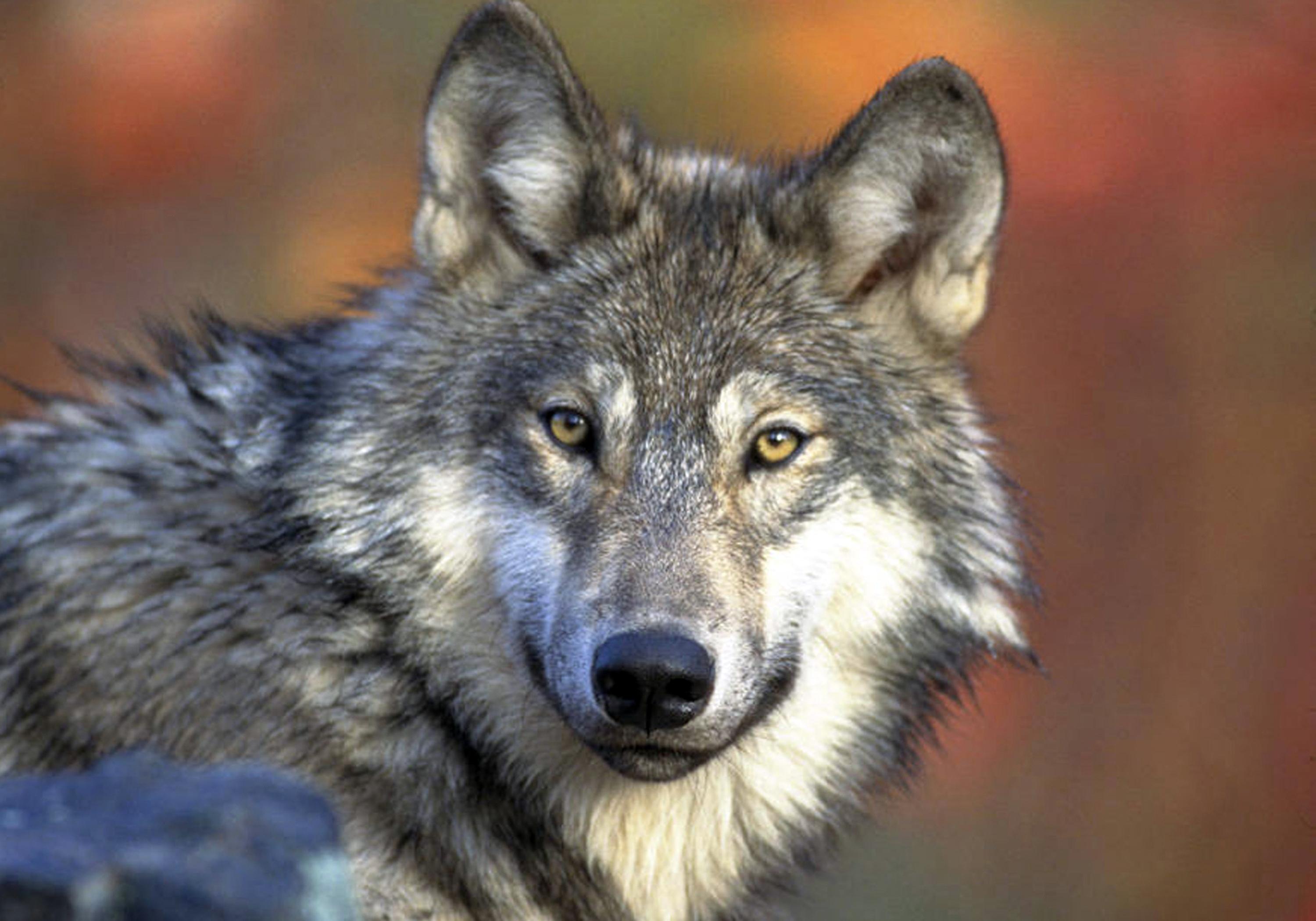
FILE - This April 18, 2008 file photo provided by the U.S. Fish and Wildlife shows a grey wolf. A federal report says gray wolves killed a record number of livestock in Wyoming in 2016, and wildlife managers responded by killing a record number of wolves that were responsible. The report released by the U.S. Fish and Wildlife Service found that wolves killed 243 livestock, including one horse, in 2016 in Wyoming. As a result, wildlife managers last year killed 113 wolves that were confirmed to be attacking livestock. (AP Photo/U.S. Fish and Wildlife Service, Gary Kramer, File) ORG XMIT: LA112 (Gary Kramer / AP)
FILE – This April 18, 2008 file photo provided by the U.S. Fish and Wildlife shows a grey wolf. A federal report says gray wolves killed a record number of livestock in Wyoming in 2016, and wildlife managers responded by killing a record number of wolves that were responsible. The report released by the U.S. Fish and Wildlife Service found that wolves killed 243 livestock, including one horse, in 2016 in Wyoming. As a result, wildlife managers last year killed 113 wolves that were confirmed to be attacking livestock. (AP Photo/U.S. Fish and Wildlife Service, Gary Kramer, File) ORG XMIT: LA112 (Gary Kramer / AP)

The Washington Wolf Advisory group will discuss what to do once wolves are delisted in the state during a meeting on Olympia, Tuesday and Wednesday.

The WAG, which is made up representatives from various interest groups across the state, will also discuss communication between the department and stakeholders: including data sharing, how and when the department makes decisions and staff response time to incidents.

The meeting will be held at the Meetinghouse at Priest Point, 3201 Boston Harbor Road NE, Olympia. There will also be an open-house style public comment period on Feb. 12 from 11:00 a.m. to 12:45 p.m. prior to the WAG work session.

For more information visit wdfw.wa.gov/about/advisory/wag/.

Wolf shot, killed near Sprague Lake about 40 miles from Spokane

http://www.spokesman.com/stories/2019/feb/08/wolf-shot-killed-in-adams-county-in-area-with-no-d/

UPDATED: Fri., Feb. 8, 2019, 10:50 p.m.

This February 2017  photo provided by the Oregon Department of Fish and Wildlife shows a gray wolf of the Wenaha Pack captured on a remote camera on U.S. Forest Service land in Oregon's northern Wallowa County. In an area where no documented wolf packs roam, a rancher shot a wolf, Monday. (Oregon Department of Fish and Wildlife)
This February 2017 photo provided by the Oregon Department of Fish and Wildlife shows a gray wolf of the Wenaha Pack captured on a remote camera on U.S. Forest Service land in Oregon’s northern Wallowa County. In an area where no documented wolf packs roam, a rancher shot a wolf, Monday. (Oregon Department of Fish and Wildlife)

A ranch employee shot and killed a wolf chasing cattle near Sprague Lake on Monday, about 40 miles southwest of Spokane where there are no documented packs.

He was checking on cattle in northeastern Adams County near the end of Sprague Lake, when he saw cattle running from three wolves.

When he yelled at the wolves, two stopped and retreated. The third, an adult female, continued the chase, said Donny Martorello, the wolf policy lead for the Washington Department of Fish and Wildlife.

The employee then shot and killed the wolf. One of the owners of the ranch, who wished to remain anonymous due to safety concerns, said the ranch hasn’t had problems with wolves in the past.

“The wolves are going to have to learn to live with us,” the rancher said. “We’re going to do our best to get along with everything, but we run a ranch. We have thousands of heads of cattle.”

The shooting has been deemed lawful by a preliminary investigation, according to Martorello. Although the Washington wolf plan does not allow private citizens to kill wolves, a subsequent WDFW commission rule allows for the killing of wolves caught in the act of attacking cattle, Martorello said.

“In areas of Washington where wolves are not listed under the federal Endangered Species Act, WAC 220-440-080 states the owner of domestic animals (or an immediate family member, agent, or employee) may kill one gray wolf without a permit issued by the WDFW director if the wolf is attacking their domestic animals,” according to a WDFW news release.

The caught-in-the-act rule has been used twice before, once in summer 2017 on the Smackout Pack and once in November 2017 on the Togo Pack, Martorello said.

The Center for Biological Diversity claims the killing is illegal and unnecessary.

“The shooting of this wolf is outrageous and saddening, and part of a troubling pattern of wolf-killing in Washington,” Amaroq Weiss, the center’s West Coast wolf advocate, said in an emailed statement. “A shot fired over the wolf’s head could have instead scared it away.”

The state’s 2011 Wolf Conservation and Management plan defines attacking “as biting, wounding, or killing; not just chasing or pursuing.”

Martorello said the WAC supersedes the wolf plan. The WAC does not define what attacking means.

“Washington state law allows people to shoot wolves that are caught in the act of attacking livestock or pets,” Chase Gunnell, communications director of Conservation Northwest, said in an email. “As difficult as situations like this are, we support this policy as a reasonable component of responsible wolf conservation and management.”

Martorello said the ranchers check on their cows daily. The cows in question were in an 800-acre pasture and the ranch runs a controlled calving operation.

The state wolf plan guidelines define a wolf pack as two or more animals traveling together in the winter, Martorello said. Agency officials will be following up to see if they can document additional tracks or sightings (either in person or by camera).

“It’s very suggestive of a formation of a pack,” he said.

In 2014, a wolf killed sheep near Lamont, south of Sprague.

Chris Bachman, wildlife program director at the Spokane-based Lands Council, said the Sprague area is not great wolf habitat.

“It would seem that it’s just sort of a fluke pass-through,” he said. “It’s really hard for me to imagine that area would become a territory that a pack would stay in.”

Turnbull National Wildlife Refuge is close and boasts both great habitat and a great prey source.

However, for the past two years there have been five cameras set up throughout the refuge to document elk, said Mike Rule, Turnbull’s wildlife biologist. No wolves have been spotted.

“You would just think that if there was one or two or three running around on a regular basis, someone would have seen one,” he said. “It could be in the near future we may end up seeing something here. As of now, nothing.”

If a pack is confirmed, Bachman said the Lands Council and others groups would hope to work with ranchers to put in place nonlethal deterrents such as fladry and fox lights.

According to the latest WDFW estimate, there are a minimum of 122 wolves, 22 packs and 14 successful breeding pairs statewide. That estimate was reported nearly a year ago.

That number is likely much higher. University of Washington researchers, using scat-sniffing dogs, said the number of wolves in the state could be closer to 200.

That minimum number has been criticized by wolf activists and ranchers alike. In the winter, WDFW staff fly in airplanes counting wolves to come to the minimum count.

“What we do know is tried and trued methodology that we’ve adopted from U.S. Fish and Wildlife Service and from other Western states,” Martorello said.

But as the number of wolves grows, the agency may consider a different methodology.

“As the numbers increase, it’s more challenging to count every wolf,” he said.

For several years, Hank Seipp has independently tried to confirm the existence of wolves in the West Plains area. In 2016 and 2017, he caught wolves on trail cameras on Mount Spokane. He’s placed numerous trail cameras throughout the Cheney and Sprague areas but hasn’t seen a wolf, although he has found paw prints and scat he believes came from wolves.

He said ranchers in the area need to stop disposing of dead cattle in open pits. That disposal method is common throughout the West Plains. Seipp hopes ranchers in the area can be reimbursed for the cost of preventive practices.

“Do they have the financial ability to do this? No,” he said. “And the community should be stepping up.”

WDFW’s lethal removal policy allows killing wolves if they prey on livestock three times in a 30-day period or four times in a 10-month periodThat policy was developed in 2016 by WDFW and its 18-member Wolf Advisory Group, which represents the concerns of environmentalists, hunters and livestock ranchers.

The policy also stipulates that cattle producers must have employed at least two proactive deterrence techniques. Lethal control is allowed in the eastern third of the state where wolves are protected by state endangered species rules. Wolves remain federally protected in the western two-thirds of the state.

Washington wolf population likely larger than estimates, researcher says

A University of Washington researcher told a state Senate committee that it’s possible the state’s population of wolves is closer to 200 animals, compared to 122 the Washington Department of Fish and Wildlife estimated.

The number of wolves in Washington state is likely much higher than previously thought, according to a University of Washington researcher who spent two years studying the animals using scat-sniffing dogs.

Samuel Wasser said his dogs detected 95 wolves in one area of Stevens and Pend Oreille counties, in the rural northeast corner of the state, during the 2016-17 season. That approached the total number of wolves wildlife officials estimated for the entire state.

The state Department of Fish and Wildlife a year ago estimated Washington had a minimum of 122 wolves, grouped in at least 22 packs, and 14 successful breeding pairs.

RELATED: Wolves making faster comeback than expected in Washington state

Wasser told a state Senate committee last week that it’s possible the population of wolves is closer to 200 animals.

State wolf managers also addressed the panel, saying Washington’s wolf population has grown on average 30 percent per year.

“We are seeing a wave of recovery,” said Donny Martorello, head of wolf policy for the Department of Fish and Wildlife. “This is indicative of adequate protections, available habitat and suitable prey base.”

Washington also has fewer conflicts between wolves and cattle than many other states, he told the Senate Agriculture, Water, Natural Resources and Parks Committee.

The question of how many wolves roam the state is important because it determines whether wolves are considered a protected species under state and federal law.

Wolves are a state endangered species throughout Washington, where they were all but wiped out early in the last century but started returning from neighboring Idaho and Canada after the turn of the new century. They also remain federally protected in the western two-thirds of the state, where killing wolves is prohibited.

According to Washington’s wolf recovery plan, wolves can be delisted after 15 successful breeding pairs are documented for three consecutive years, or after officials document 18 breeding pairs in one year.

RELATED: Bill would ship problem wolves to Bainbridge Island

Most likely, the state will document 18 breeding pairs in one year before they document 15 successful pairs over the course of three years, Martorello said.

In any event, those who wish for the removal of all wolves will not get their wish, the wildlife department’s director, Kelly Susewind, told the committee.

“Wolves are doing quite well. They’re here. They’re here to stay,” Susewind said.

The return of the wolves is problematic in ranching areas because they sometimes prey on livestock. To the dismay of some conservation groups, that has prompted the state to track and kill several wolf packs in recent years.

While many urban residents support the return of wolves, livestock producers on the front lines — in the lightly populated northeastern part of the state — are wary.

A state lawmaker from that rural area, where Wasser conducted his study, this week introduced a bill in the Legislature to create a wolf sanctuary in the heavily residential Seattle suburb of Bainbridge Island. Republican Rep. Joel Kretz’s bill was in response to the legislator from Bainbridge Island introducing a bill to ban the killing of wolves.

“I’m sure the gray wolves will seek to placidly co-exist with the dogs, cats, horses, sheep, people and other peaceful animals of the island,” said Kretz, of Wauconda.

His bill also said the state can kill wolves only after “four dogs, four cats or two children have been killed.”

Wasser and his team used dogs to sniff out scat of different animals. By analyzing the excrement, biologists can determine whether an animal is malnourished, pregnant or stressed.

Wasser’s team is also looking at how wolves and smaller predators, such as coyotes and bobcats, interact. Preliminary findings indicate wolves are avoiding coyotes.

RELATED: Washington ranchers struggle to keep cattle safe in wolf territory

Preliminary analysis of the scat composition shows wolves have been eating mostly deer, followed by moose and elk. Coyotes and bobcats have been eating mostly snowshoe hares.

Washington is a good place to study wolves because the animals haven’t spread to all areas of the state, Wasser said. Studying areas where wolves are not widely found, such as south of Interstate 90, and observing how the ecosystem responds will shed light on the interaction between wolves and other predators.

The environmental group Conservation Northwest welcomed Wasser’s findings on wolf numbers.

“Wolf recovery is progressing well in Washington,” the group said. “Despite a few high-profile events, the rate of wolf mortality is much lower here than in Rocky Mountain states.”

The group said it hopes to soon see wolves confirmed in Washington’s South Cascades, as well as new areas of the North Cascades.

Tongue-in-cheek bill would ship problem wolves to Bainbridge Island

A Washington state representative from Bainbridge Island wants to stop the state from killing wolves. In response to her legislation, an eastern Washington lawmaker now wants to send the wolves to Bainbridge Island to live.

Conservationists focused on wolf recovery know it can be one of the state’s most controversial topics, and dueling wolf bills now show the divide between politics east and west of the Cascades.

The first bill was proposed by Rep. Sherry Appleton, D-Bainbridge Island. It reads, “The department may not authorize the killing of gray wolves”. HB 1045 would make it illegal for the state to kill wolves for attacking livestock and instead force their relocation.

Rep. Joel Kretz, R-Wauconda, lives in wolf territory and filed a bill in response. HB 1639 would create a wolf sanctuary on Bainbridge Island so problem wolves can live there instead and locals can benefit from “the largely untapped wolf tourism industry.”

“It’s a response to a really insulting bill,” Kretz said.

Kretz says his constituents are constantly plagued with the challenges of wolf recovery and a bill that would ban killing wolves could ruin their rural economy.

“The big impact is the stress on the cattle. I had a rancher sell 200 of his best cows a summer ago because they had been harassed all summer long. They came in, I have pictures, they were two for 300 pounds on your way. They are skin and bones. They don’t have a calf by their side. And they’re not pregnant. They are crazy for being run all summer long,” he said.

‘Large-bodied’ Canadian wolves to help keep U.S. moose population in check

WolvesWolves are seen in a 2009 handout image on Isle Royale National Park, Michigan. (Michigan Technological University, Rolf O. Peterson)

Liam Casey, The Canadian Press
Published Wednesday, January 30, 2019 4:50PM EST 

The transfer of up to six wolves from a northern Ontario island where they were starving to the U.S. is getting underway following a weeks-long delay caused by the federal government shutdown south of the border.

The small pack, including the alpha male and female, will be moved from Michipicoten Island to Isle Royale National Park, on the U.S. side of Lake Superior, where American officials hope the wolves will help keep the moose population in check.

“We need to get these wolves off the island, otherwise they’ll die,” said Aaron Bumstead, director of lands and economic development with Michipicoten First Nation who is co-ordinating the move with the province’s Ministry of Natural Resources and Forestry.

Last year, the province and the First Nation used several helicopters to move a total of 15 caribou — a threatened species in Ontario — off Michipicoten Island. Nine of the animals were transferred to the Slate Islands, and the other six to Caribou Island.

They were the last remaining caribou from a once-thriving herd on Michipicoten Island that started with just eight caribou in 1982 and grew to more than 700 by 2013, when four wolves reached the island after making the 15-kilometre trek across an ice bridge that formed on the lake.

There they found a bounty of caribou to feast on. But as the small pack grew to more than a dozen wolves in the following years, their food source — the caribou — all but disappeared. Now the wolves themselves are in danger, said Bumstead.

“We’ve been asking (the ministry) for a plan to remove the wolves from the island since last year,” Bumstead said. “And there still is no plan to remove the ones that don’t get moved to Isle Royale.”

A spokeswoman for the Ministry of Natural Resources said she wouldn’t comment on the wolves’ transfer until the animals were captured and transferred to the U.S.

Bumstead said efforts to capture the wolves on Michipicoten Island were unsuccessful Wednesday. The two wolves they saw wouldn’t come out from under cover, he said, so they’ll try again Thursday.

American officials and researchers with Isle Royale are anxious to receive the Canadian wolves because it will help save the park’s current pack, which dwindled this fall to just a non-breeding father-daughter pair.

The move was slated to occur in early January, but that was shelved because of the U.S. federal government shutdown, said Isle Royale National Park superintendent Phyllis Green.

“The Canadian wolves are robust, large and definitely know how to hunt ungulates since they took that caribou herd down to nothing,” Green said.

There is an overabundance of moose on Isle Royale, and without enough wolves to keep their population in check their numbers will continue to grow, said Rolf Peterson, a research professor at Michigan Technological University who has been studying the wolves and moose on the island for the past 48 years.

His research — the world’s longest running predator-prey study — was also threatened by the U.S. government shutdown. On Friday, just hours before U.S. President Donald Trump temporarily ended the government shutdown, the Isle Royale National Park had secured funding from a non-profit organization to go ahead with its part in the wolves’ transfer from Canada. The funding also allowed it to open the park to researchers to continue the predator-prey study.

“The shutdown jeopardized the integrity of the data and of the entire study itself,” said Peterson, who plans to return to the park as soon as the Canadian wolves are moved.

“These large-bodied Canadian wolves are incredibly important,” he said. “They can help save both the wolf pack and the balsam fir.”

The moose on the island, with a population of about 1,600, have decimated the balsam fir trees on the island.

Twenty-two years ago, a lone wolf, likely from Canada, made its way on an ice bridge onto Isle Royale, Peterson said, and was a wildly successful mate with offspring in every pack and eventually his genes made their way into every single younger generation wolf on the island.

“Then the kill rate of moose by wolves reached a level we hadn’t ever seen before in 50 years. They were killing 20 per cent of the moose every year, which had implications for the forest,” Peterson said.

“We saw forest regeneration we had never seen before.”

But that wolf, dubbed the “Old Grey Guy,” Green said, was so successful that inbreeding became very severe. Eventually the wolf population crashed and bottomed out at two, which is when the park decided it needed outside help. Four wolves were brought in from Minnesota in the fall, but one died of pneumonia a month later.

Green said they knew about the issues facing the wolves on Michipicoten Island and Michigan’s governor at the time, Rick Snyder, reached out to Ontario Premier Doug Ford to ask for “an infusion of Canadian wolves.”

Ford agreed.

“Let’s hope everything goes well with the move,” Bumstead said.

Kretz Introduces Bill to Create Wolf Sanctuary on Bainbridge Island

[Fine by me…]
file photo

Olympia, WA – Seventh District State Representative Joel Kretz of Okanogan County says it’s time to “share the love” of Eastern Washington predatory wolves with the folks in Puget Sound, who want to protect the critters.

A legislator representing Bainbridge Island has introduced legislation that would prohibit the lethal removal of gray wolves. In response, Kretz introduced House Bill 1639, which would create the state’s first gray wolf sanctuary on Bainbridge Island.

“If that’s the kind of legislation that someone from Bainbridge Island is going to be running to impose on us who actually have wolves, maybe it would help broaden her mind a little bit to experience the benefits of wolves. So what better place than Bainbridge Island?

Kretz bill also provides guidance on when the state may use lethal removal of wolves on the island, specifically limiting such removal only after four dogs, four cats or even two children have been killed.

His message is simple: If Westside legislators who live on a protected island hundreds of miles away from wolves want to prohibit Eastern Washington ranchers and farmers from protecting their families and property, maybe it’s time to share those wolves.

“With this bill, we can deliver ‘em right to them. I’ve had lots of offers from the 7th District. If you need my stock trailer, I’ll bring a load of wolves.”

The measure is awaiting a hearing in the House Rural Development, Agriculture and Natural Resources Committee.

Press release provided by the Washington State House Republicans.

Mediator works to find common ground on Washington wolves

By Jason Nark, Special To The Washington Post.

Published: December 7, 2018, 10:28 PM

One summer, over a decade ago, biologists discovered that gray wolves — once driven to near-extinction in the continental United States — were breeding again in Washington. The sound of howling wolf pups was welcome news for conservationists, but not for the state’s $700 million cattle industry.

When some wolves began to prey on livestock, age-old tensions were resurrected. Some members of that first pack were poached, despite federal protections. Ranchers whose forefathers believed a good wolf was a dead one now had to contend with government officials and conservationists who had other opinions.

Fortunately, there was someone to call for help: Francine Madden and her Washington, D.C.-based nonprofit, the Center for Conservation Peacebuilding. In a city full of fascinating but oddly narrow areas of intellectual expertise, Madden’s is particularly niche: Her job is to make peace between humans who are fighting over wildlife.

On a warm October morning, I meet Madden at the National Zoo. The 48-year-old — today wearing cowboy boots a shade lighter than her brown hair — grows animated when she talks about her job, slapping my arm often to drive home a point. A curse or two slips out, though not when a pack of fourth-graders bounds down a path toward a hillside enclosure beside us.

“Is that a fox?” one boy asks.

“No, it’s a wolf,” another shouts.

The kids all howl at the wolf, then sprint off. Madden cracks a smile. “Honestly, I’m surprised when someone doesn’t have an opinion on wolves,” she says, hands waving excitedly. “When I see a wolf, my mental image of them is an animal that’s wearing this social, cultural and historical baggage, like a baggage cart at the airport we’ve loaded up. Think about it: ‘Little Red Riding Hood,’ ‘Peter and the Wolf,’ the Bible, the wolf in sheep’s clothing. The wolf’s had a lot of human emotion poured into it.”

Indeed, wolves have been trapped, shot and poisoned en masse for centuries, “pursued with more passion and determination,” the U.S. Fish and Wildlife Service notes, “than any other animal in U.S. history.” By the mid-1970s, gray wolves were among the first animals to make the endangered species list.

Then, in the 1990s, the U.S. government embarked on a controversial plan to boost the American wolf population with Canadian wolves. And as the wolf population of Eastern Washington state grew, ranchers and environmentalists began baring fangs. By 2015, things had gotten so bad that Washington’s Department of Fish and Wildlife hired Madden as a “third-party neutral,” charged with deflating hostilities among factions within the state’s Wolf Advisory Group. “When I took this case, I wanted it,” Madden says, “because wolves are the Middle East of wildlife conflict.”

What qualified Madden for this job? In addition to graduate degrees in science and policy from Indiana University, she had spent time as a Peace Corps volunteer in Uganda. There, conservation efforts had helped increase the population of mountain gorillas — who occasionally terrorized villagers, who, in turn, resorted to poaching. Madden helped conservationists and villagers agree on a solution: create teams that could respond quickly to gorilla attacks. In the years since, she has gone on to mediate invasive-species conflicts in the Galapagos and around the globe.

In Washington, Madden spent 350 hours interviewing 80 people about wolves before she led advisory group meetings. She found anomalies in the narrative: a hunter who described seeing a wolf as a “religious experience”; environmentalists who supported, or at least were neutral about, the idea of a wolf hunt. Wolves, she found, were a proxy for other fears, such as fading traditions and a loss of control to Seattle progressives. “Sometimes,” she says, “a dispute has surface-level issues, and that can be taxes or climate change or, in this case, wolves. But it’s all about identity.”

Madden asked combatants to steer their hybrids and pickup trucks to local bars. Grab a beer, she asked them, or a veggie burger. And don’t talk about wolves. At least not right away. “The first time I saw her, to be honest with you, I felt like this is a lot of kumbaya, no way a cowboy is going to sit through this,” rancher Molly Linville told me by phone from her 6,000-acre spread in Douglas County. “I still don’t know how it worked. It all still feels like magic to me.”

In the end, Madden spent 200 days in Washington and 7,000 hours on the phone. (For 3 1/2 years of work, the state paid her nonprofit, with a staff of two, more than $1.2 million.) Conservationists eventually agreed that wolves could be culled if they preyed on livestock. For their part, ranchers agreed to try nonlethal methods, too.

Opinion Wolves valuable part of ecosystems 

By: Sadie Par
Posted: 11/16/2018

<https://www.winnipegfreepress.com/opinion/analysis/wolves-valuable-part-of-ecosystems-500660781.html#have-your-say>

A recent Free Press story (“Wolves feasting on cattle: ‘A huge problem,’” on Oct. 31) requires more of a science-based perspective.

To begin, we must recognize that since European colonization, North America’s approach to wildlife management has focused on eradicating large carnivores or maintaining them at artificially low densities. The tools for this included poison and bounties, which continue in parts of Canada to the detriment of carnivores and the ecosystems they have evolved within.

There is growing understanding that wolves and other carnivores are an intrinsically valuable and an ecologically important component of intact ecosystems. In areas where the land is still whole enough, wolves are recolonizing the landscape they belong to. While this may provide some challenges, it is certainly worth celebrating from an ecological perspective.

If livestock-wolf conflicts are indeed increasing, a big part of this likely has to do with changes in husbandry practices after predators were killed off. Cattle have been left unsupervised in many areas following wolf extermination. Gone are the age-old methods of monitoring and doctoring domestic herds, which are often placed in areas that interface with wilderness zones. By maintaining a human presence, range-riders, shepherds and herders can deter carnivores and intervene to “teach” animals to stay away. A combination of new technology and traditional cultural practices are providing many “predator-friendly ranchers” with effective solutions that prevent and minimize losses. But a dead wolf won’t learn anything.

Following the outbreak of mad cow disease in 2003, Canada abandoned government-funded carcass removal programs. This challenge and cost fell on producers. Deadstock can attract carnivores to areas where cattle graze and may facilitate a new and easy meal. This is akin to creating a welcome buffet by baiting carnivores into the proximity of livestock.

The story made claims that an increasing number of depredation events are occurring. How many of these claims were verified by trained professionals? How much conflict prevention is occurring where these situations are unfolding? And how can this be prevented?

Studies across North America and beyond are providing mounting evidence to show that lethal control of wolves is ineffective and can even lead to increased conflicts when compared to changing husbandry practices and utilizing non-lethal preventive measures.

If producers are experiencing high numbers of calves being lost to predators, why are vulnerable calves not being monitored more closely? Several producers experience little or no losses by using a combination of methods that include synchronized and shorter calving periods, night corrals, turbo-fladry (lines with strips of coloured fabric that flap in the wind and deter wolves), livestock guardian dogs and range riding.

I agree with the Manitoba Beef Producers director’s statement that a plan is due; however, a sensible plan would focus on educating producers about prevention-based methods and facilitate support with incentives to make these methods feasible. This is in stark contrast with the stance in the Oct. 31 article that “producers want more incentives to make it worthwhile (to kill wolves),” which often results in more problems, not less. Ignoring the behaviour and biology of wolves leads to negative ecological repercussions, as well as more livestock losses.

Maintaining the social stability of apex predators, or allowing them to do so, is critical for best management practices when it comes to reducing conflicts between humans and carnivores. Socially stable carnivore populations are easier to coexist with because they are more predictable. We should not ignore the biology and behaviour of carnivores if we want to minimize conflicts and co-flourish.

Aside from their inherent intrinsic values, wolves and other apex predators (species at the top of the food chain) provide invaluable and irreplaceable ecological benefits. They have a disproportionately important role through top-down effects that shape entire ecosystems. Direct influences on herbivores and smaller consumers trickle down to stabilize vegetation structure, maintain diversity and mediate large-scale processes like carbon sequestration and hydrological cycles that characterize the diverse landscapes in our province and country.

No doubt humans will continue to find reasons to justify disdain of predators, but at the end of the day, these beings have evolved over millennia as an integral part of nature. They will continue to play their role in maintaining biodiversity, but only if we have sense enough to allow them to. Non-lethal approaches are proving to have better outcomes for livestock, wildlife and people.

Sadie Parr is the executive director of Wolf Awareness Inc.

https://www.winnipegfreepress.com/opinion/analysis/wolves-valuable-part-of-ecosystems-500660781.html

Wolves valuable part of ecosystems – Winnipeg Free Press <https://www.winnipegfreepress.com/opinion/analysis/wolves-valuable-part-of-ecosystems-500660781.html

Beloved Yellowstone Wolf ‘Spitfire’ Killed By Trophy Hunter

The wild wolf, also known as 926F, died the same way her famous mother did in 2012.

A wild wolf beloved by wolf watchers and biologists who visit Yellowstone National Park has been shot dead by a hunter.

The 7-year-old female wolf, known to scientists as Lamar Canyon Wolf Pack member 926F, had wandered just outside Yellowstone last weekend and was legally killed by a trophy hunter.

Nicknamed “Spitfire” by wolf enthusiasts, the slain she-wolf was the daughter of famous alpha female 824F, who inspired the book American Wolf: A True Story of Survival and Obsession in the West.

824F ― best known as “06” (a reference to the year she was born) ― was a tourist favorite at Yellowstone and the leader of the Lamar Canyon pack until she was killed by a hunter in 2012.

926F, also known as "Spitfire," was killed by a hunter last month after wandering just outside Yellowstone National Park.

MARK PERRY VIA GETTY IMAGES
926F, also known as “Spitfire,” was killed by a hunter last month after wandering just outside Yellowstone National Park.

“The 06 Legacy,” a Facebook group for wolf lovers, honored 926F’s life in a Facebook post Wednesday.

“926F showed incredible strength, courage and resilience in everything she did,” the Facebook post says. “She had a special bond with her daughter Little T and they stayed together all these years.”

The post continued: “We had so much to celebrate when we saw five strong and healthy pups this fall. And now it took just one bullet and 926F is gone. Just like her mother 06 and her uncle 754M before her. With current wolf management practices, the tragedy just doesn’t end. … Rest In Peace our beautiful Queen.”

The Montana Department of Fish, Wildlife and Parks confirmed Spitfire was legally killed by a trophy hunter less than five miles from the northeast entrance of Yellowstone.

The beloved wolf’s death has reignited calls for a buffer around Yellowstone, a hunting-free zone, to protect animals who wander beyond the park’s invisible boundary.

“Perhaps Montana should take a closer look at the economics of wolf hunting,” the New York-based Wolf Conservation Center wrote in a blog post Wednesday. “Seems that Yellowstone wolves are worth a lot more alive than dead.”