Exposing the Big Game

Forget Hunters' Feeble Rationalizations and Trust Your Gut Feelings: Making Sport of Killing Is Not Healthy Human Behavior

Exposing the Big Game

Famous Alpha Wolf’s Daughter, Spitfire, Is Killed by a Hunter


The shooting of another Lamar Canyon pack member has renewed calls for a buffer between Yellowstone and nearby lands, to protect roaming wolves.

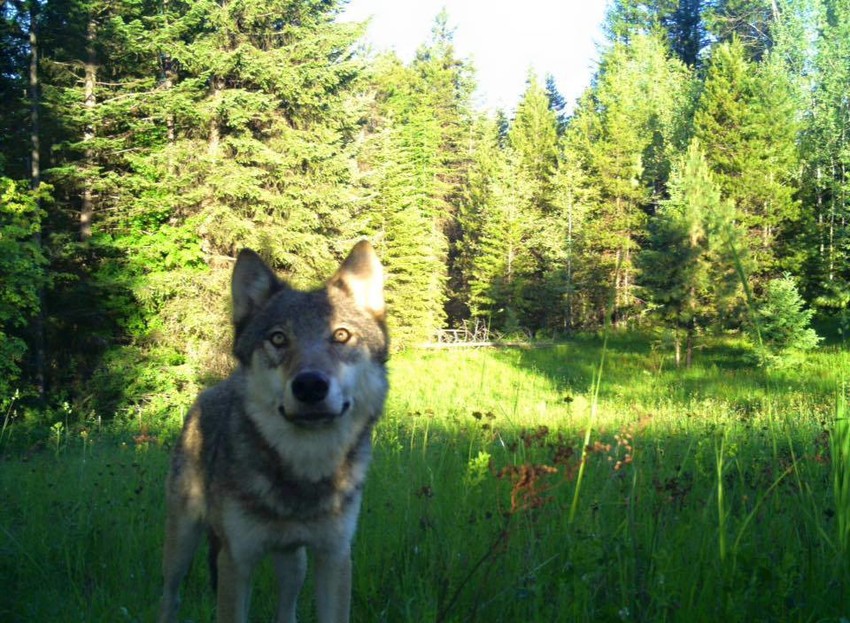
926F, a wild wolf in Yellowstone, in the late fall of 2016. Like her mother, she was killed by a hunter.CreditDeby Dixon
926F, a wild wolf in Yellowstone, in the late fall of 2016. Like her mother, she was killed by a hunter.CreditCreditDeby Dixon

HELENA, Mont. — A wild wolf known as 926F, dear to the hearts of wolf watchers who visit Yellowstone, was killed by a hunter as it wandered just outside the park last weekend.

A member of the Lamar Canyon pack in the national park’s northeast region, 926F was the daughter of 832F, an alpha female that had become a celebrity, famous for her hunting prowess and for her frequent appearances along the road traveled by tourists in the park’s Lamar Valley.

While wolf biologists called the mother 832F, the she-wolf was famously known as “06” for the year she was born. The subject of the book “American Wolf: A True Story of Survival and Obsession in the West,” she was killed by a hunter as well.

“Everybody’s mourning, everybody’s thinking about what to do to stop this madness,” said Karol Miller, who founded a group of wolf lovers on Facebook called The 06 Legacy. “People love the Lamar Canyon Pack and people know 06 from her New York Times obituary. These are the descendants of 06, her legacy. People love those wolves.”

Please disable your ad blocker.
Advertising helps fund Times journalism.

Unblock ads

Wolf watchers called 06’s daughter Spitfire.

The shooting occurred near cabins and was within hunting laws; Montana has permitted hunting of wolves since 2011, and a few hundred are killed each year.

“A game warden checked with the hunter and everything about this harvest was legal,” said Abby Nelson, a wolf management specialist with the Montana Department of Fish, Wildlife and Parks.

Help us break the next big story.

Subscribe to The Times

But the killing has renewed calls for a buffer around the park so wolves that live within the safe harbor of Yellowstone and that have little fear of humans cannot be shot if they wander beyond the park’s invisible boundary.

Spitfire, or 926F, chased away a grizzly bear that was trying to steal her kill in 2013.CreditDeby Dixon
Image
Spitfire, or 926F, chased away a grizzly bear that was trying to steal her kill in 2013.CreditDeby Dixon

While Montana lawmakers have passed legislation forbidding creation of a buffer zone, there is a hunting limit of two wolves in each of two districts adjacent to the northern boundary of the park.

Please disable your ad blocker.
Advertising helps fund Times journalism.

Unblock ads

Still, wolf hunting near Yellowstone has been extremely controversial, highlighting the clash between the New West’s ecotourism and the Old West’s hunting to protect game and livestock.

Wolves were restored to the park in the 1990s and quickly grew in number. About 100 wolves belong to 10 packs in Yellowstone, which is considered the ideal park for sightings of the animals as they hunt elk, feed on carcasses and play with their pups. Some 1,700 wolves live in the Northern Rocky Mountain states of Montana, Idaho and Wyoming.

Wild wolf cubs born in Rome for the first time in 100 years

Wild wolf cubs born in Rome for the first time in 100 years
The wolves captured on camera. Photo: Oasi LIPU

The wolf is the symbolic animal of Rome, a city founded by two brothers who were raised by a she-wolf – or so the legend goes.

And now, for the first time in over 100 years, newly-born wolves have been spotted living just outside the Italian capital.

Hidden cameras in the Oasi LIPU Castel di Guido, a wildlife sanctuary spanning 180 hectares, have snapped pictures of an entire family of wolves: mother, father, and two cubs.  The male adult has been named Romulus by researchers, a nod to the city’s legendary founder, and since he was first sighted, scientists have been studying the animals through video footage and analysis of excrement to determine their diet.

“We were very surprised!” a spokesperson from LIPU said, speaking to The Local about the birth of the cubs. “We first spotted the [adult] wolves in 2013, and this is the first time there have been cubs.”

She added that the creatures should not pose any danger to locals, because wolves are “elusive animals which keep themselves hidden”. The organization has offered advice to farmers about protecting their livestock from any attacks, but stressed that the wolves’ diet is made up of 95 percent wild boar, and that abandoned dogs pose the greater risk to cattle.

The wolves at night. Photo: Oasi LIPU

The nature reserve is located close to the ring road that surrounds Rome, and the wolves likely made their way there from the area surrounding Lake Bracciano north of the capital, which has long had a wolf population. It’s a case of “natural recolonization”, according to LIPU, without any human intervention: adult wolves typically move away from their pack when they reach maturity in order to find a new mate and territory.

The cubs were first captured on camera in summer this year, but researchers waited until the autumn to make the news public as they were unsure whether the animals would survive – only 50 percent of a wolf’s litter typically reach maturity.

“It’s very good news because in this area in recent years, we have had lots of wild boars, which have caused problems for farmers in the area. Wolves are a natural predator of boars, so this could help control the boar population,” the spokesperson explained.

The female wolf was pictured lactating, signalling the arrival of the cubs. Photo: Oasi LIPU

Rome authorities have considered sterilization of the wild boars following an increase in sightings and the death of a man in March after his scooter collided with one of the animals. Video footage has shown them in streets and residential areas as well as parks, possibly enticed into urban areas due to the capital’s problems with waste management.

The Italian wolf population dropped to just 100 in the 1960s, but in 1971 they were declared a protected species and a ban on hunting them has allowed numbers to creep back up to an estimated 1,600. They live predominantly in the mountainous regions of the Appenines and the Alps.

However, the creatures are not popular with local farmers, with agricultural organization Coldiretti saying the number of attacks of livestock has risen sharply in recent years. In 2014, farmers in Tuscany illegally killed wolves and left the carcasses in public areas in protest at the damage to their cattle and property.

Earlier this year, the country mulled a controversial plan to cull five percent of the wolf population, a measure which was stopped following protests from environmentalists.

READ ALSO: A herd of ‘rebel cows’ has been living wildly in the Italian mountains for years

A herd of 'rebel cows' has been living wildly in the Italian mountains for years

File photo: antb/Depositphotos

Ontario wolves to be trapped, transferred in effort to restore population on Michigan island…

Weather permitting, wolves will be moved by helicopter in January

Amy Hadley · CBC News · Posted: Nov 21, 2018 7:30 AM ET | Last Updated: 3 hours ago

<https://i.cbc.ca/1.4847490.1538505763!/fileImage/httpImage/image.jpg_gen/derivatives/16x9_780/isle-royale-wolves.jpg>

The first female wolf to be transported to the island this fall is captured by a remote camera, before emerging from her crate. The first four wolves to be cleared for transfer were from Minnesota. (U.S. National Park Service)

Wolves from Ontario will soon be moved across the border to try to help restore the dwindling population in Michigan’s Isle Royale National Park.

This fall, officials at the park began a multi-year effort to move wolves from the mainland to the island, to try to restore the balance between wolves and moose on the isolated island, which is located on Lake Superior, not far from Thunder Bay, Ont.

<https://i.cbc.ca/1.4857118.1539187600!/fileImage/httpImage/image.png_gen/derivatives/original_780/isle-royale.png>

The multi-year wolf transfer will involve capturing and moving mainland wolves from Michigan and Minnesota, but Isle Royale National Park superintendent Phyllis Green says they now also plan to move a pack from nearby Ontario.

The first wolves to be moved were trapped in Minnesota, but officials were hopeful that Canadian wolves would also be added to the mix. That plan has now been given the green light, said park superintendent Phyllis Green.

* Canadian wolves may be added to U.S. park service’s work to revive island population <https://www.cbc.ca/news/canada/thunder-bay/isle-royale-wolf-transfer-1.4846093>
* U.S. National Park Service will soon transport wolves to Isle Royale <https://www.cbc.ca/news/canada/thunder-bay/isle-royale-wolves-moose-1.4701281>

“Actually we were fortunate that Michigan’s Governor [Rick] Snyder had a conversation with [Ontario’s] Premier [Doug] Ford and talked about the importance of the project,” she said.

“And so after that conversation we were able to have further conversations and we’re definitely going to be — weather providing — receiving wolves from Ontario this winter.”

The wolves will come from Michipicoten Island in northeastern Lake Superior, where a very different wildlife management problem has made headlines. While Isle Royale’s wolf population has faced near extinction, wolves on Michipicoten were weakening the caribou population.

* Dwindling caribou population being moved off Michipicoten <https://www.cbc.ca/news/canada/sudbury/michipicoten-caribou-relocation-1.4487408> Island — by air

If weather permits, suitable wolves will be trapped during a normal collaring exercise done by Ontario researchers in January and transferred to Isle Royale by helicopter, Green said.

<https://i.cbc.ca/1.4847451.1538505093!/fileImage/httpImage/image.jpg_gen/derivatives/original_780/phyllis-green.jpg>

Phyllis Green, superintendent of Isle Royale National Park in Michigan, stands in front of an empty crate that held one of the first wolves to be transported to the island. (National Park Service/John Pepin)

‘Robust’ Canadian wolves desirable for genetic strength

The Ontario wolves are desirable for several reasons, said Green, including the fact that the animals on Michipicoten are well-studied by Ontario researchers who will be able to identify alpha males and females that might be well suited to the trip.

“And also we actually know that they’re actually pretty prolific on pups, and that’s certainly what you would hope to see when you start a new population.”

“And the other positive is that they’re very robust genetically,” Green added.

“On the U.S. side, we’ve had situations where the wolf population has dropped and then there’s some incursion of coyote or dog genetics into the population.”

<https://i.cbc.ca/1.4913655.1542748542!/fileImage/httpImage/image.jpg_gen/derivatives/original_780/isle-royale-wolf.jpg>

A trail camera photo shows one of the female wolves transferred to Michigan’s Isle Royale National Park this fall, as part of a multi-year effort to restore the population and balance the ecosystem. (U.S. National Park Service)

Two wolf fatalities so far

The wolf transfer is not without risks. During the first phase of the project this fall, a wolf that had been cleared for transfer died before it could be moved to Isle Royale, prompting changes to protocols in an effort to reduce stress on the animals.

One male and three females were successfully moved to the island, but in November, the National Park Service confirmed that the male wolf had been found dead. The cause of death is not known, Green said, but necropsy results expected in December should yield more information.

Some natural mortality is to be expected, Green said.

“It’s unfortunate but in the wild population about 25 to 30 per cent of the wolves die annually,” she said.

“It’s a tough life out there for them.”

The transferred wolves are being monitored using GPS technology and the other three are doing well, Green said.

The Isle Royale wolf relocation effort is expected to take three to five years, with the eventual goal of moving up to 30 animals.

https://www.cbc.ca/news/canada/thunder-bay/ontario-wolves-isle-royale-1.4913527

<https://www.cbc.ca/news/canada/thunder-bay/ontario-wolves-isle-royale-1.4913527>

Ontario wolves to be trapped, transferred in effort to restore population on Michigan island | CBC News <https://www.cbc.ca/news/canada/thunder-bay/ontario-wolves-isle-royale-1.4913527>

The first female wolf to be transported to the island this fall is captured by a remote camera, before emerging from her crate. The first four wolves to be cleared for transfer were from Minnesota.

http://www.cbc.ca <http://www.cbc.ca

U.S. House Prepares for Radical Assault Against Endangered Species Act

Legislation led by Rep. Sean Duffy Would Enable Trophy Hunting, Snaring of Small, Recovering Population of Wolves

WASHINGTON, D.C. – Today, the U.S. House of Representatives will conduct floor debate on H.R. 6784, the so-called “Manage our Wolves Act” led by U.S. Rep. Sean Duffy (R-WI-07). The legislation would short-circuit multiple federal court rulings against premature de-listing by the U.S. Fish and Wildlife Service and put Congress in the position of cherry-picking the species it wants off the endangered species list. The measure, which may likely pass the lower chamber, is scheduled for a vote of the full House on Friday morning and the debate can be viewed here.

Gray wolves, virtually eradicated between 1850 and 1920 during westward expansion, have had a slow walk back from near extinction. For decades, federal and state governments executed ruthless and effective predator control programs – a slaughter that stands alongside the massacre of bison as the most wanton chapters in the history of American wildlife management, and they’ve only recently began to recover.

“We’re shocked and dismayed that Congress would return to work and make killing endangered wolves its first order of business,” said Marty Irby, executive director at Animal Wellness Action. “It has half a dozen animal welfare bills with 218 cosponsors, but instead chooses to act on a special-interest bill with four cosponsors that is a priority for a handful of trophy hunters and ranchers. It’s so disappointing to see my fellow Republicans in the House show such disregard for animal welfare and to leave such a merciless legacy.”

Wolves now occupy habitat in about 10 states with an estimated population of only 5,000 in the lower 48 states – covering millions of square miles of space. These endangered icons play a critical role in their native ecosystems, in checking the growth of prey populations, restoring stream flows, and reducing flooding and bank erosion. Wolf predation helps maintain healthy deer populations, lowering the frequency of deer-auto collisions and prevalence of crop losses. They mitigate impacts on vegetation and bring vitality to entire ecosystems that saves private citizens and governments tens of millions of dollars a year, while also generating millions in tourism yearly.

https://mailchi.mp/animalwellnessaction.org/us-house-prepares-for-radical-assault-against-endangered-species-act-2197737?fbclid=IwAR3drDS-zGvW9EJUVE3vmOK2Nh4BBbKqRiO4tFjRd1MtxS1_ttsEvyZPZ3c

Washington Wildlife Agency Issues Kill Orders for Two More Wolf Packs

For Immediate Release, November 7, 2018

Contact: Noah Greenwald, (503) 484-7495, ngreenwald@biologicaldiversity.org

https://www.biologicaldiversity.org/news/press_releases/2018/washington-wolves-11-07-2018.php?fbclid=IwAR3RmhlDUSRvnx4BtVqlhT7E-W0H4erFqocVY8q7-UicKUkQtqbvbkQwKOE

OLYMPIA, Wash.— Washington Department of Fish and Wildlife Director Kelly Susewind today authorized the killing of wolves in the Smackout pack in Stevens County and the remaining wolves of the Togo pack in Ferry County. The Department already has been trying since Oct. 27 to kill the last adult and pup of the Old Profanity Territory pack in Ferry County.

“We’re devastated that Washington officials are killing still more endangered wolves when science shows it won’t reduce livestock loss or improve tolerance for these misunderstood animals,” said Noah Greenwald, endangered species director at the Center for Biological Diversity. “Three kill operations going at once on an endangered species by a state wildlife agency is very disturbing. They’re wiping out pack after pack, mostly at the behest of one livestock owner.”

Since 2012 the state has killed 21 state-endangered wolves, 17 of whom were killed for the same livestock operator, a longtime, vocal opponent of wolf recovery. The ongoing kill operation to kill the OPT pack’s father wolf and only remaining pup, as well as the kill order issued today for members of the Smackout pack, are on behalf of the same individual.

In September the Department killed the father wolf of the Togo pack, leaving his mate to fend for their two pups on her own. In October the Department killed the breeding female of the Old Profanity Territory pack and a five-month-old pup from the pack, leaving the breeding male on his own to provide for the sole remaining pup.

Both kill actions made it more likely the adults would attack more livestock, since livestock are easier prey than deer or elk for a lone wolf to successfully hunt. In both instances that proved to be the case, and even though it was the Department’s own actions that set these packs up for more conflict, the Department intends to eradicate both wolf families.

“Washingtonians overwhelmingly support wolf recovery,” said Greenwald. “Restoring these beautiful, intelligent animals will result in some loss of livestock, which is why the state compensates ranchers for their losses. But wildlife officials should not continue to kill this still endangered species.”

Smackout pack wolf

Smackout pack wolf photo by Carter Niemeyer. This image is available for media use.

The Center for Biological Diversity is a national, nonprofit conservation organization with more than 1 million members and online activists dedicated to the protection of endangered species and wild places.

www.biologicaldiversity.org

More press releases

Washington Fish and Wildlife targets 2 more wolfpacks

Wolfpacks in Stevens and Ferry counties have been attacking cattle; state authorizes killing wolves.

Don JenkinsCapital Press

Published on November 7, 2018 9:50AM

The Washington Department of Fish and Wildlife confirmed Sept. 7 that wolves in the Togo pack attacked this calf. The calf survived but was euthanized to end its suffering. Fish and Wildlife issued a permit Nov. 7 allowing the rancher to shoot the pack’s remaining three wolves if caught in a private fenced pasture with cattle.

COURTESY PHOTO

The Washington Department of Fish and Wildlife confirmed Sept. 7 that wolves in the Togo pack attacked this calf. The calf survived but was euthanized to end its suffering. Fish and Wildlife issued a permit Nov. 7 allowing the rancher to shoot the pack’s remaining three wolves if caught in a private fenced pasture with cattle.

Washington Fish and Wildlife Director Kelly Susewind today authorized the killing of wolves in two packs attacking cattle in the northeast corner of the state. The orders come as the department continues to try to remove the rest of a third wolfpack.

The department plans to kill one or two wolves in the Smackout pack in Stevens County. Susewind also gave permission to a rancher in Ferry County to shoot the remaining three wolves in the Togo pack in Ferry County if the wolves enter a private fenced pasture with cattle.

Fish and Wildlife is continuing an effort to remove the remaining two wolves in the Old Profanity pack, also in Ferry County, the department’s wolf policy coordinator, Donny Martorello, said Wednesday. The department killed wolves in the pack in September and resumed targeting the pack Oct. 26 because of depredations on cattle continued.

Fish and Wildlife won’t immediately undertake removing the Togo pack because it’s occupied with the two other packs, but may in the coming weeks, according to the department.

Fish and Wildlife shot one Togo pack wolf in early September, but the pack has continued to attack cattle. The wolf already had been wounded by the rancher, who said he was approached by the wolf and shot in self-defense.

The department protocol calls for removing one or two wolves initially and waiting to see whether wolf depredations on livestock stop.

Fish and Wildlife won’t start the lethal-removal operation against the Smackout pack, or allow the shooting of Togo pack wolves, until Thursday at the earliest. The early morning directives today give environmental groups one day to go to court to challenge the order.

The notice is fallout from a lawsuit by environmental groups challenging an order last year to kill wolves. A Thurston County Superior Court judge dismissed the lawsuit, but said the department should give time for courts to review future lethal-removal orders.

The Smackout pack has killed four heifers and injured one calf on private land since Aug. 20, according to Fish and Wildlife. Four of the attacks occurred between Oct. 14 and Nov. 1.

Fish and Wildlife considers lethal removal after a pack attacks three times in 30 days or four times in 10 months. The department policy calls for ranchers to do whatever they can to prevent the attacks and for wildlife managers to conclude that the attacks will continue unless the state intervenes.

The Smackout pack has four or five adult wolves, according to recent surveys by the department. The pack includes one female wolf that had been trapped and fitted with a radio collar that transmits her location. The department has not seen evidence that the pack produced pups this year.

The Togo pack has attacked cattle at least six times in the past 10 months, according to Fish and Wildlife. Two of the attacks were confirmed after the department shot one of two adults in the pack. The department confirmed the first attack Sept. 7, but held off restarting lethal removal because the department was concerned that killing the last adult would doom the pups given their size at the time.

Fish and Wildlife confirmed Oct. 26 that the pack had attacked another calf. The latest depredation indicates the pack will continue to prey on livestock, according to the department.

Fish and Wildlife said in a statement today that it did not expect the lethal-removal operations to harm the state’s overall recovery objectives. The goal is to have wolves established and regularly reproducing at least as far west as the Cascades. Washington wolves now are mostly confined to Eastern Washington, particularly in four northeast counties.

The wolf population in the eastern one-third of Washington is more than three times the recovery goal for that region, according to Fish and Wildlife.

As the wolf population has grown in that corner of the state, so has attacks on livestock. The department has removed wolves before, dating back to 2012, but has never had three lethal-removal operations active at the same time.

Fish and Wildlife approves killing of remaining two wolves in the old Profanity Peak pack area

UPDATED: Fri., Oct. 26, 2018, 10:31 a.m.

FILE - This April 18, 2008 file photo provided by the U.S. Fish and Wildlife shows a grey wolf. The final two members of a wolf pack occupying the old Profanity Peak Pack area will be killed, according to a Washington Department of Fish and Wildlife news release. (Gary Kramer / AP)
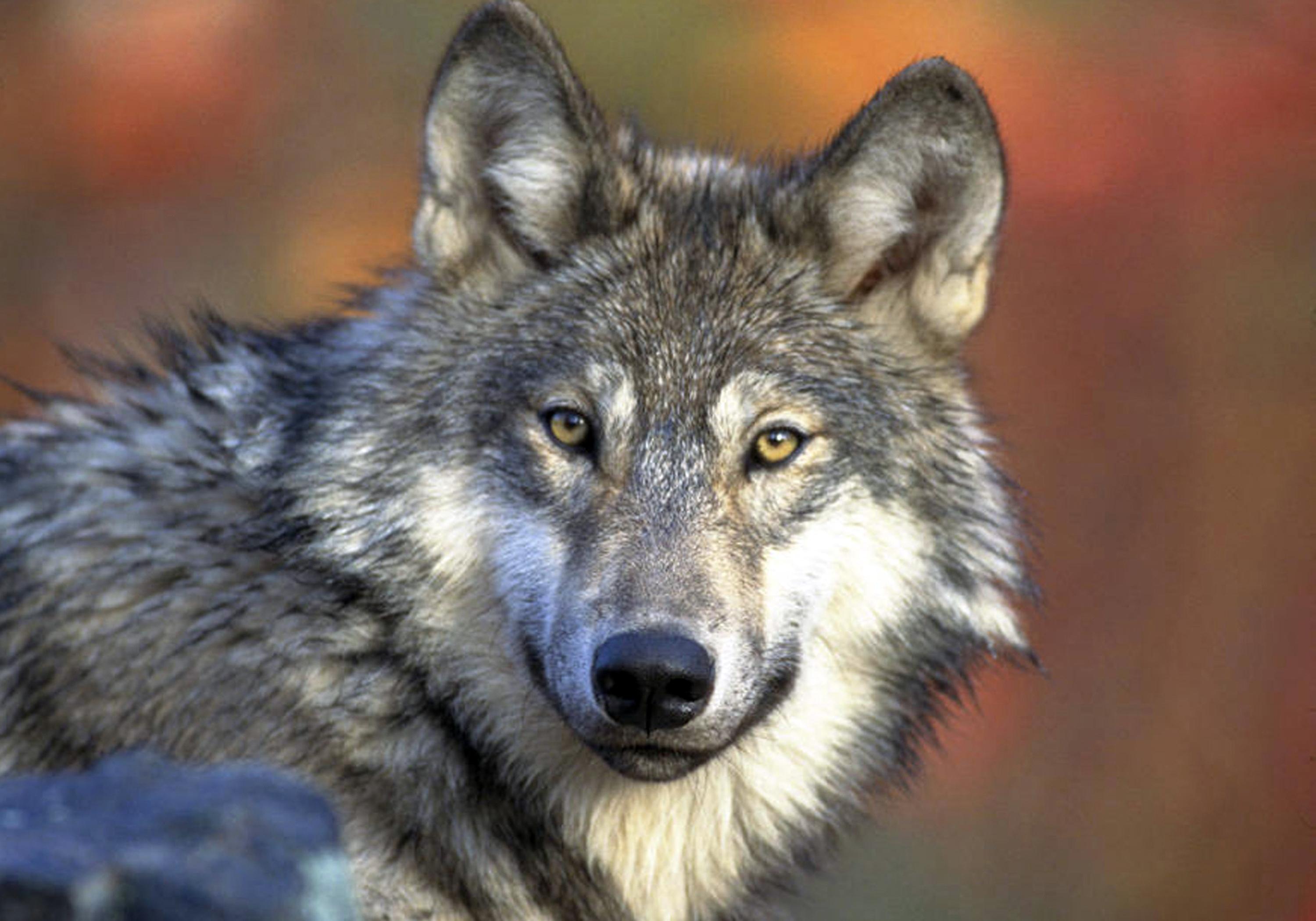
FILE – This April 18, 2008 file photo provided by the U.S. Fish and Wildlife shows a grey wolf. The final two members of a wolf pack occupying the old Profanity Peak Pack area will be killed, according to a Washington Department of Fish and Wildlife news release. (Gary Kramer / AP)

The final two members of a wolf pack occupying the old Profanity Peak Pack area will be killed, according to a Washington Department of Fish and Wildlife news release.

The kill order comes after members of the pack, which the department dubbed the Old Profanity Territory pack, killed or injured at least 16 cattle. The most recent was on Tuesday, according to the release.

WDFW killed a member of the pack on Sept. 16 following documented depredations. Per agency policy WDFW then monitored the area to see if lethal removal was effective. Despite two depredations in early October WDFW refrained from killing more wolves due to concerns about whether the range riding and other nonlethal deterrents were being implemented effectively.

The livestock in question are on a federal grazing allotment. Per allotment rules the producer was supposed to have his cattle off the land on Oct. 15. However, because of the “dense timber and rugged terrain” 10 percent of the producer’s cattle remain on the federal land.

In an interview Thursday Jay Shepherd, the wolf program lead for Conservation Northwest and one of the founders of the Northeast Washington Wolf-Cattle Collaborative, said in past years wolf-cattle conflicts had usually tapered off by now.

“It’s a weird year,” he said. “It just keeps going.”

WDFW must wait eight court hours between the announcement of a lethal action order and the execution of the order. In the past environmental groups have used that time to challenge the kill order.

Despite losses of roughly a dozen wolves a year from selective state-authorized lethal control, plus poaching, vehicle collisions and other human-related causes, Washington’s wolf population has grown each year. A minimum of 122 wolves, 22 packs and 14 successful breeding pairs was reported by the WDFW this winter.

This story will be updated throughout the day.

The full news release is copied below:

WDFW Director Kelly Susewind today reauthorized department staff to lethally remove the remaining two wolves from a pack that has repeatedly preyed on cattle while occupying the Old Profanity Territory (OPT) in the Kettle River Range of Ferry County.

On Sept. 28 the department initiated an evaluation period to determine whether removing two wolves from the OPT pack last month has changed the pack’s behavior and reduced the potential for recurrent wolf depredations on livestock.

The Wolf Conservation and Management Plan and the department’s protocol indicate that a post-removal evaluation period should consider any depredations that take place after one or more wolves are removed from a pack.

The department documented two wolf depredations to calves found in the allotment between Oct. 5-7, and determined that the depredation by the OPT on Oct. 5 likely occurred after the removal period.

That incident would have supported a decision to remove more wolves at that time, but the Director sustained the evaluation period to consider the details and complexities of the situation in the field.

The U.S. Forest Service allotment where the affected producer grazes his livestock is large and lies entirely within the territory of the OPT pack. After the Oct. 5 depredation, the department took additional steps to document the range-riding operation on the allotment to make sure it is as effective as it can be.

However, the department documented another wolf depredation to livestock on Oct. 23, bringing the total to 16 wolf depredations by the OPT pack.

The affected producer was scheduled to remove his livestock from the U.S. Forest Service allotment by Oct.15. In practice, about 90 percent of the livestock are usually removed by that date. Due to the dense timber and rugged terrain, it may take several weeks longer to round up all the cattle on the allotment.

The producer is transporting a portion of his cattle to private grazing lands west of the Kettle Crest and another portion out of state. The private grazing lands west of the Kettle Crest are within the OPT pack territory, although they are at a lower elevations and on the periphery of the pack territory, which may reduce the likelihood of wolf depredations in these areas this winter.

There are also several other allotments with cattle within the OPT that are in a similar situation in terms of removing them from Forest Service grazing allotments.

The livestock producer who owns the affected livestock has continued to employ non-lethal methods to deter wolves from preying on his herd. Strategies used include contracting range riders to monitor his herd, removing or securing livestock carcasses to avoid attracting wolves to the rest of the herd, and removing known sick and injured livestock from the grazing area until they are healed.

Wolves on the rebound across B.C. — here’s how to live with them

Once widely hated and killed, the wolf is making a comeback across the province. (Shane Fowler/CBC)

It took a close encounter to twig Paula Wild to the charm — and danger — of the once-threatened wolf.

After crossing paths with the carnivore while driving her car near a remote Quadra Island hiking trail, Wild wondered about her initial “tingling up the spine” reaction, she told On the Coast guest host Margaret Gallagher.

“There was this huge wolf in the middle of the road,” she said. “And I thought, how would I have felt if I had been walking back on the trail all by myself? What would I have done?”

That feeling spawned the author’s upcoming book, Return of the Wolf: Conflict and Co-existence, a guide to living with a wolf population that has been steadily increasing across the province for the last 50 years.

The grey wolf has disappeared from broad swathes of the world, including most of western Europe. But the B.C. population began to return to healthy levels during the 1970s, according to a 2015 provincial report.

There are an estimated 8,500 in B.C. today.

Wild’s encounter with a wolf led to a book about how humans can learn to live with the storied carnivores. (Rick James)

Once ‘demonized’, now photography fodder

Wolves are now returning to areas they haven’t inhabited for decades, Wild said, making encounters with them more likely. Despite a “misconception” that healthy wolves won’t attack humans, it does happen, she added — and it’s usually due to human interference.

“People aren’t used to wolves. They’re not sure what to do,” Wild said. “Wolves are proving capable of adapting to living near human settlements.”

But Wild warns that humans don’t always share the same skill. Feeding wolves, or even getting close enough for a photograph, can habituate a wolf to humans and make bold behaviour more likely.

Keeping wolves wild

She thinks more education could teach nearby residents to keep their distance, make noise to scare away the more curious pack members and keep dogs on-leash when walking through wolf territory.

Poisoning wolf packs was widespread practice during the first half of the 20th century, and culling programs remain in place today.

But the centuries-long relationship between humans and wolves, Wild said, has been defined by shifting perceptions.

The wolf pops up in myths, fairy tales and common expressions, Wild said, pointing out their importance to language and culture.

“We’ve demonized wolves, but now people tend to either fear them or idolize them,” she said. “And we’re maybe not giving them the respect they need as wild animals that do have potential for danger.”

“I hope people will learn to see wolves for what they are, not for what we want or perceive them to be,” she said.

“Wolves will survive on our landscape today if we allow them to, if we learn how to live with them.”

Washington Department of Fish and Wildlife seeks Wolf Advisory Group candidates

http://www.spokesman.com/stories/2018/oct/19/washington-department-of-fish-and-wildlife-seeks-w/

 Fri., Oct. 19, 2018, 3:10 p.m.

Washington’s Wolf Advisory Group is looking for new candidates to serve on the citizen committee that advises the department on wolf recovery and management.

There is one vacancy on the 18-member WAG, according to a Washington Department of Fish and Wildlife news release.

Terms last for three years.

WDFW Director Kelly Susewind will appoint members to the group from the applications and nominations the department receives to fill positions that become vacant within the next year.

“This advisory group has been extremely helpful in advising the department on the challenging issue of recovering and managing gray wolves in our state,” Susewind said in a news release. “We are looking for candidates who can work cooperatively with others to develop management recommendations that reflect a diversity of perspectives.”

However, Washington’s wolf policy has been attacked by both ranchers and conservation groups this year after wolves were credited with several cattle attacks and WDFW shooters killed members of the Togo Pack and wolves inhabiting the old Profanity Peak Pack area.

Ranchers and some northeast Washington politicians argued that the state waited too long to kill wolves which had documented cattle depredations while some conservation and environmental groups questioned whether the state can legally kill wolves.

WAG members represent the interests of environmentalists, ranchers, hunters and agriculture. New members must be available to meet as early as February 2019. The group meets four times a year.

Applications and nominations must be submitted in writing and address the following items:

  • The applicant or nominee’s name, address, telephone number, and email address;
  • People or groups making nominations must also submit their own names and contact information;
  • The candidate’s relevant experience, organizational affiliations, and reasons why they would be an effective advisory group member;
  • Familiarity with Washington’s Wolf Conservation and Management Plan and current wolf recovery status and management issues; and
  • Experience in collaborating with people who have different values.

The deadline for submissions is 5 p.m. Nov 30, 2018. Applications and nominations may be emailed to Donny.martorello@dfw.wa.gov or sent to Martorello at the Washington Department of Fish and Wildlife, P. O. Box 43200, Olympia, WA 98504-3200

Wolves — keystone predators — topic of talk

181011 BMLT Gray_Wolf The Spokesman-Review.jpg

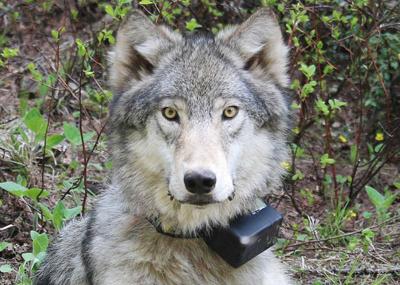
A female wolf from the Minam pack outside La Grande, Ore., after she was fitted with a tracking collar.

Wildlife biologist Mark Vekasy will discuss the dangers and benefits of reintroducing wolves in the Blues from 7-9 p.m. on Oct 18 at the Walla Walla Public Library, 238 E. Alder St.

The presentation is an opportunity to learn about the role of the wolf population in the Blue Mountains.

Wolves have been endangered across the West for decades because of various factors, including loss of habitat and extermination by livestock owners concerned for the safety of their animals.

Currently, the whole Northwest is home to only 122 gray wolves. Since these animals are keystone predators, their absence affects the entire ecosystem.

Vekasy is assistant district wildlife biologist for the Washington Department of Fish and Wildlife’s third district.

District 3 covers southeast Washington and the Blue Mountains north of the Oregon border and extends to the Snake and Columbia rivers.

Vekasy has worked in and around the District for more than 10 years, first as a biologist with the Hells Canyon Bighorn Sheep Initiative in lower Hells Canyon and currently as a District biologist based in Walla Walla.

Mark has a bachelor’s degree in biology and a master’s degree in zoology and has been working in wildlife research and management for more than 30 years on a variety of game and nongame species.

This free event is open to all ages.

For more details, contact Lauren Platman at lauren@bmlt.org or bmlt.org/.