 “A group of hunters in Norway have shot dead two elk – before
realising seconds later they were firing through a fence into the
animal’s enclosure in a zoo.”
Hunters shoot two elk – then realise they were firing through fence into zoo
11

“A group of hunters in Norway have shot dead two elk – before
realising seconds later they were firing through a fence into the
animal’s enclosure in a zoo.”
A group of elephants were filmed sheltering their young when bomb sirens rang out in Tel Aviv, Israel on Thursday as fighting continues in Israel and Gaza.
The elephants at Ramat gan Safari zoo near Tel Aviv began trumpeting and making other noises as they quickly gathered together when the sirens rang out, placing the young elephants in the middle of the circle with the larger adults on the outside.
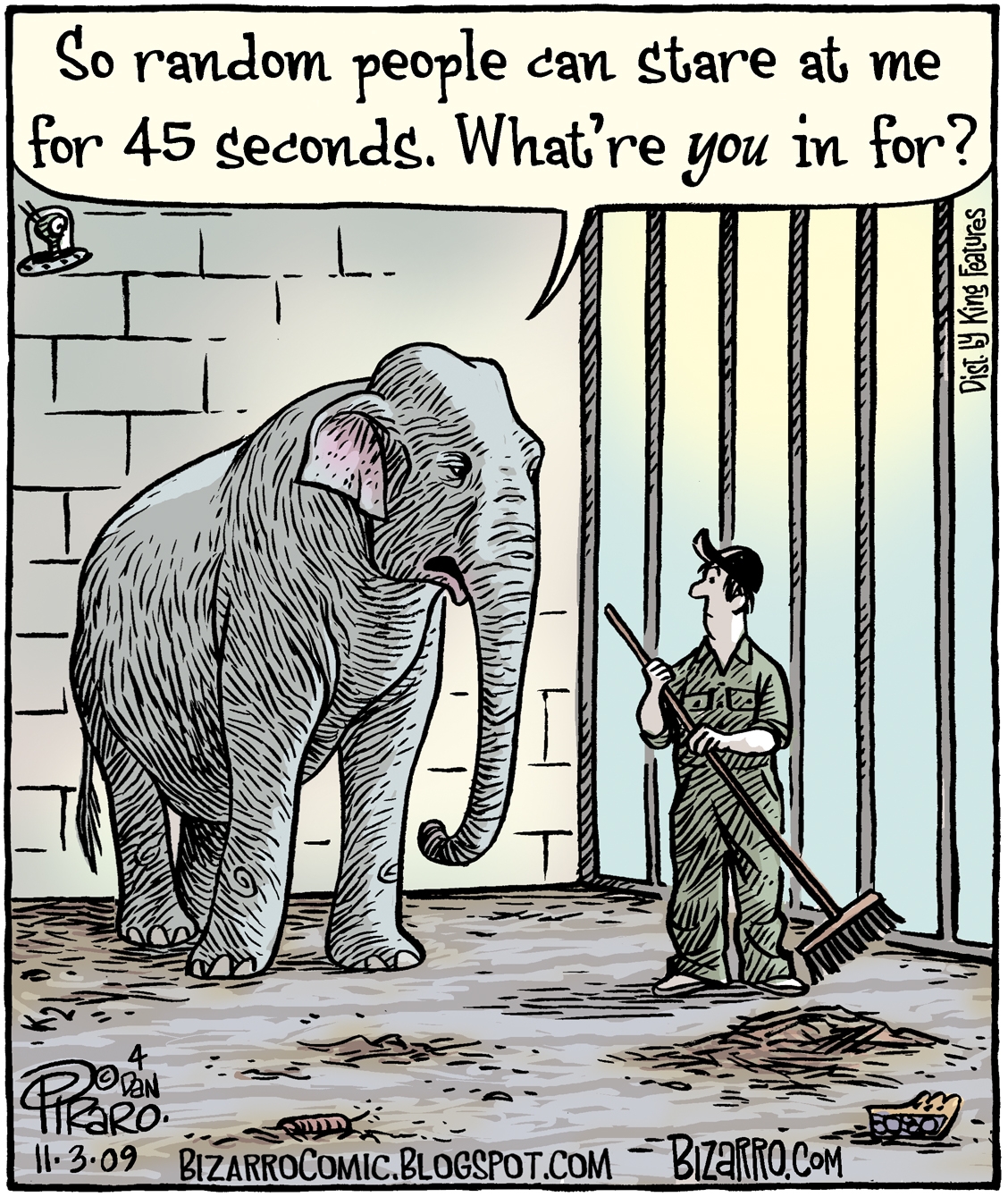
More media “hype” about climate change or against zoos? NOT !
…bears, lions, tigers, jaguars and wolves were among the animals that escaped.
“I can’t imagine this tragedy,” she said. “Almost the whole zoo is underwater.”
Torrential rains late Saturday and early Sunday poured down on Tbilisi, a hilly city that is along a river valley. The Tbilisi Zoo lies along the banks of the Vere River, which overflowed and caught the animals in their pens and cages.

The 65-year-old man was walking in the woods near Buchen, a town in southwest Germany, when the African elephant attacked him shortly after 5 a.m. (0300 GMT), said Heidelberg police spokeswoman Yvonne Schmierer. She declined to say what injuries the unnamed man suffered.
The 34-year-old female elephant, called ‘Baby,’ was captured and returned to the circus. Police are now investigating whether someone let the elephant out of its secure enclosure, and why the animal acted aggressively toward the man.
“There’s evidence of third party involvement,” said Schmierer. “Either someone forgot to shut the enclosure, or the elephant was released intentionally.”
German news agency dpa reported that the elephant had previously injured people. It quoted a representative of the German branch of animal rights group PETA calling for authorities to take the elephant away from the circus.

The killing of a young giraffe at the Copenhagen Zoo in February 2014 shook the world, causing protests from animal advocates and the public alike. “Marius,” an 18 month-old giraffe that had been born at the Copenhagen Zoo, was healthy and likely would have lived a long life. The animal was put down (and then fed to lions at the zoo), because officials at the zoo concluded it was unsuitable for breeding. A month later, the same zoo euthanized four lions, again on the grounds of genetic purity and breeding.
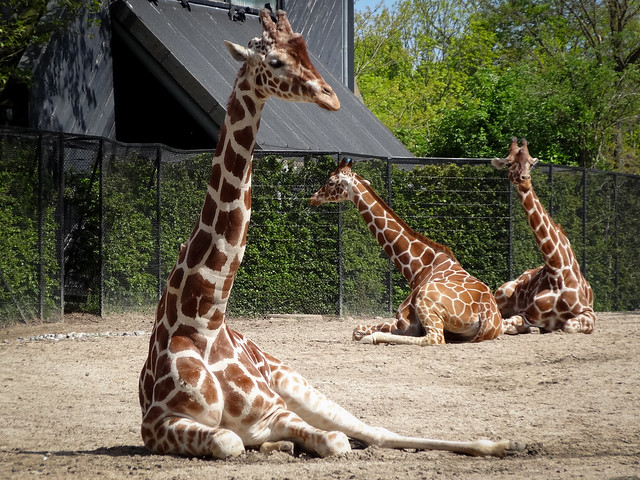 Photo by Michael ButtonGiraffes at the Copenhagen Zoo. Zoo animals are typically killed for two reasons: to control the population and manage “surplus animals,” or to maintain genetic strength and diversity within a captive breeding program.
Zoo administrators ended up receiving death threats, and the killings sparked a media feeding frenzy. The serial deaths ushered in a newfound awareness of a not-so-new practice and raised some overlooked questions: Is “zoothanasia,” as the practice has been called, really necessary? And how common is it?
Zoo animals are typically killed for two reasons: to control the population and manage “surplus animals,” or to maintain genetic strength and diversity within a captive breeding program. While many animal rights activists and some conservation biologists are against the use of euthanasia among zoo animals, organizations such as the European Association of Zoos and Aquaria and the Pan African Association of Zoos and Aquaria defend the practice. “As an organization, we believe that culling has a valid scientific basis and must remain one of the tools open to our members, provided that it is carried out humanely,” says David Williams-Mitchell, a spokesperson for EAZA.
Marc Bekoff, a professor of ecology and evolutionary biology at University of Colorado-Boulder and the person credited with coining the term “zoothanasia,” disagrees. He says that killing captive animals is the opposite of conservation. “There simply is no reason to kill any animals, members of endangered species or not, in zoos unless she/he is mortally ill or injured,” says Bekoff, who is author of the book Rewilding Our Hearts: Building Pathways of Compassion and Coexistence.
Sometimes, zoo animals are killed because there’s just too many of them in their cages and enclosures. These “surplus animals” are the result of animals that have been allowed to breed without a zoo considering how it might care for them in the future. These surplus animals then suffer due to lack of resources, money and care. According to a study from the Captive Animals’ Protection Society, at least 7,500 animals (and as many as 200,000 animals) are considered surplus at any one time. For some zoos, killing an animal is easier (and cheaper) than continuing to care for it, or even transferring it to some kind of a sanctuary. “They’ll tell you they do it for lack of money and space, for example,” Bekoff says.
Some animals are deemed ‘surplus’ because they are poor candidates for breeding. While zoos are mostly in the business of entertaining their visitors and educating them about wildlife, many are home to captive breeding programs and are under pressure to conserve the best of species to ensure they do not go extinct. Williams-Mitchell argues that, from EAZA’s perspective, there is an obligation to consider the future of a species over the future of just one animal. Williams-Mitchell said EAZA believes that “culling as a tool should be available to any zoo that is serious about maintaining a healthy population of a species,” though he was careful to caution that killing “is only one of the options.”
It’s important to note that US zoos practice euthanasia far more sparingly than zoos in the EU.
Accredited zoos in the US aren’t supposed to use euthanasia for routine population control, and typically only kill animals for medical purposes or to relieve suffering — for example, to aid ailing animals and those with deformities and terminal illnesses. In rare cases, animals are killed when the zoo cannot maintain its quality of life at an acceptable standard.
>US zoos primarily utilize contraception instead of euthanasia to manage animal populations. But veterinary birth control comes with its own risks. According to Williams-Mitchell, “Evidence from the United States shows that widespread use of contraception can and has led to catastrophic population collapse in some species, requiring severe remedial measures including the import of animals from elsewhere.”
Peter Dickinson, creator of an zoo professionals’ blog called ZooNews Digest, says the issue is complicated. Zoothanasia is a tool that can be used alongside other successful (and available) methods to help control breeding and population. And sometimes, he argues, it’s the lesser of two evils. “Within the Good Zoo/Bad Zoo way of looking at things….what is better, putting an animal to sleep or packing it off to slum facility?” he says. “Bad zoos take one of two actions. They rear the animal (hand rear) until it is just past the “cutsey” stage and then cull it. Or pack it off to some other slum facility.”
At the very least, the uproar over last year’s euthanasia is raising public awareness about this practice and sparking calls for change at European zoos. In Bekoff’s opinion, zoothanasia is accepted because in the past it was preformed routinely without the public’s knowledge. Also, few people would argue with killing in the name of “conservation.” Now, he says, that’s changing. “It’s often done behind closed doors, but more and more people today can no longer be fooled.”

5,690 signers. Let’s reach 7,500
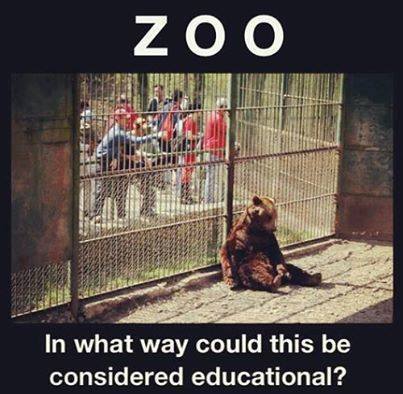
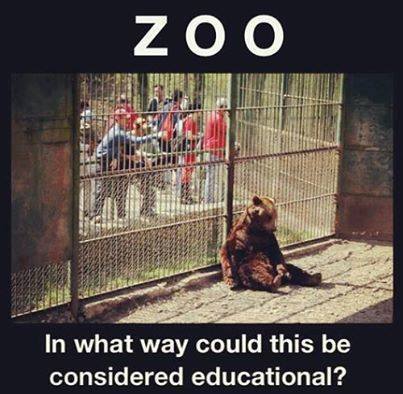
(This question was answered succinctly and correctly by a facebook friend):
“It’s educational from the point that the bear has learnt what utter scum the human race is.“

Would interacting with a captive elephant still bring you joy if you knew the animal suffered extreme abuse and manipulation? If you have interacted with a captive elephant, chances are that the massive animal has gone through the tortuous process of Phajaan, or having her spirit broken, in order to make her more docile and open to human interaction.
How to Break an Elephant’s Spirit
One Green Planet explains Phajaan, as it’s known in Asia (or “crushing” in the United States), and how it makes elephant rides in the Asian tourism industry possible.
Phajaan begins when elephants are the most vulnerable. Baby elephants are forced into crates similar to gestation crates that we abhor seeing pigs in. While the baby elephant is being starved, he is also:
Phajaan is relentless for many weeks until the elephant finally breaks. Heart of Ganesh explains that baby elephants are also denied medical attention during the crushing, and many will die during the process.
In case you’re wondering, circuses employ almost identical crushing methods. Paws for the News reports how elephant crushing is rampant in more captivity situations: elephants “begging in the streets, the ones in trekking camps, breeding camps, tourist camps, and zoos. At least more than half of them have gone through the Phajaan.”
Mahout Manipulation
Phajaan has a secret weapon to seal the deal, and he’s known as a mahout. The use of an elephant handler, or mahout, is arguably the most effective part of Phajaan.
The mahout sweeps in to “save” the elephant; they are not active participants in the Phajaan torture. They are the first person to bring the tortured and starved animal food and water. Mahouts also release elephants from the original gestation-like crates. A mahout will work and bond with only one elephant for his entire career. When a mahout retires, his relative will take over his mahout duties. Elephants are emotionally and mentally intelligent animals that thrive on social bonds, and mahouts are the only bonds that come close in the captive Asian tourism industry.
The Consequences of Exploiting Elephants
But wild spirits can never truly be broken. We keep seeing captive elephants in circuses and in the tourism industry retaliate:
There’s also a major health concern that should limit our interactions with captive elephants, and it’s the spread of tuberculosis. In 2013, Maine took the extreme measure of banning elephants from entering the state because of the health threat.
Help End Elephant Exploitation
Despite the obvious evidence that elephants and captivity do not mix, many are determined to ride it out as long as possible. For example, an action plan is being drawn out to curb elephant attacks during festivals in an Indian state, says Manorama Online.
We don’t need an action plan to stop captive elephant attacks; we need an action plan to end elephant captivity. Money talks, and industries that exploit elephants listen, so don’t fund elephant exploitation. Heart of Ganesh offers more ideas on how you can help end elephant exploitation.
________________________________
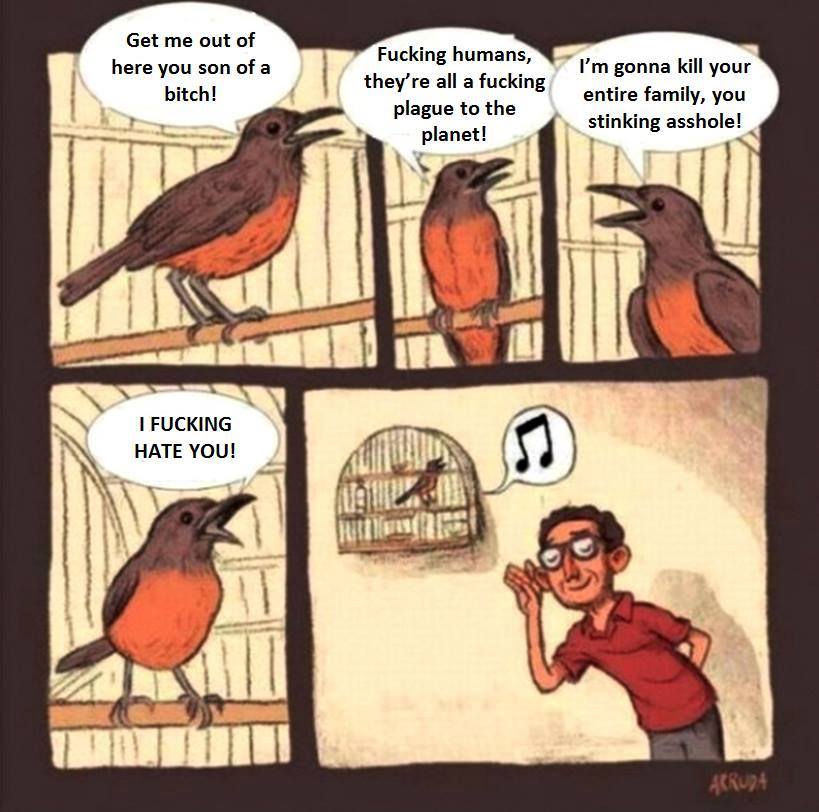
Speaking of animals in captivity, see: http://news.discovery.com/animals/ice-cream-shop-bear-150210.htm ,and hear what they would say if they could talk:
http://www.komonews.com/news/local/Activists-want-zoo-elephants-sent-to-sanctuary-284568571.html
SEATTLE — The elephant program at Seattle’s Woodland Park Zoo is closing.
Animal rights advocates want those elephants sent to a sanctuary instead of another zoo, and they gathered Tuesday night to voice that opinion at the Board of Directors public comment period during its scheduled meeting.
But the media and most of those who came to speak never got inside.
“They wouldn’t allow the press in, which I find appalling,” said Lisa Cane. “It is a public meeting. I don’t know how they could lawfully exclude the press and other witnesses for the rest of the community who would wish to be there.”
People were puzzled by the fact that access was limited even though the zoo is partially funded by public dollars. According to the zoo’s website, “public funding sources provide 30 percent of the zoo’s support, including City of Seattle and King County Parks Levy.”
The public was told seating was maxed out, but the media was originally told they were just not allowed in.
“I don’t understand when they put it out as a public meeting it’s not open to the public. It makes you wonder what they are hiding,” said Susan Hoppler.
Those who were allowed in told us they were stopped from recording and taking pictures.
When the board tried to leave by a side exit rather than the front door, none would talk or respond to our questions and some even covered their faces. Eventually we were allowed inside, where the board’s CEO spoke to us.
“It’s not a public meeting,” said Dr. Deborah Jensen. “It was not advertised as a public meeting”
But there was a public comment period on the agenda. She said it came down to seating and that even if there were seats, the media and the public are not allowed to record anything.
“It was actually a capacity issue,” Jensen said. “We don’t have a policy that keeps the media out of the room. We don’t allow filming in our meetings because it’s a private board meeting.”
The issue regarding the elephants was not on the agenda and no decision about where they will go has been made according to Jensen.
|
|||
|
___________________
Should Woodland Park Zoo elephants go to zoo or sanctuary?
Woodland Park Zoo officials pleasantly surprised me when they announced a plan on Wednesday to phase out the elephant exhibit. I’m sure a lot of people were ready to give them a round of applause.

And then they blew it. Bamboo and Chai are likely headed to a different zoo on this list of accredited institutions by the Association of Zoos & Aquariums.

The Seattle Times editorial board published an editorial Wednesday evening calling on Seattle leaders to give these animals a break. They have worked hard enough for decades. Let them retire and roam free somewhere.(If you want to have your say, scroll to the poll at the bottom of this post.)
Here’s an excerpt:
Details are yet to be ironed out, but the Seattle City Council — which also serves double duty as board members of the Seattle Park District — should require the zoo to retire these animals. Make no mistake: This is now an election issue for City Council races.
On Thursday, I asked each of the nine Seattle City Council members to respond to this question: Do you support the elephants going to another zoo or sanctuary?
As of Friday morning, every member of the council had responded except Nick Licata. Find out where they stand below.
Send them to sanctuary: Bruce Harrell, Kshama Sawant
Sawant via statement:
“Animal rights activists have made a compelling case. I agree with them that sanctuary is the best destination for the elephants.”
Harrell via email:
“I support the elephants going to a sanctuary. Our academic understanding of elephants has grown in the last several decades and the kind of captive confinement of elephants in small facilities like our zoo is an unhealthy practice. I think the health of the elephants outweigh the amusement value produced by this kind of confinement. The employees and president of the zoo, Deborah Jensen, have done great work but it is time to move forward. I would like to see a high-tech interactive elephant exhibit at the zoo, but I think it is time to send Bamboo and Chai to a safe sanctuary.”
Undecided: Mike O’Brien, Sally Bagshaw
Email from O’Brien’s aide, Josh Fogt:
Mike said that he would ideally like to see the elephants go to a sanctuary. He understands the zoo has looked into that option and has determined that of the four possible sanctuaries, two are not accepting elephants and two have tuberculosis present within their herds. The zoo has said they don’t think it is in the elephants long-term health interest to move the elephants to those sanctuaries with tuberculosis. Mike doesn’t know enough about zoology to know whether that is a real concern, and so is inclined to believe the zoo at this point. He is not afraid to withhold funding from the zoo if he feels like they are not acting in good faith, but he has been encouraged by their recent decision to move the elephants.
Bagshaw’s statement sent out Wednesday:
“Thanks to the Woodland Park Zoo director and board for making the decision to find a new home for Chai and Bamboo. I support moving our elephants to a place where they will be safe, warm, and have room to roam. I look forward to learning more about the proposed schedule and the location where Chai and Bamboo will enjoy their retirement.”
Let the zoo decide: Tom Rasmussen, Sally Clark, Tim Burgess
Rasmussen via email:
I want the best for the elephants.
I am neither a scientist nor a veterinarian. Because of that, I am not qualified to determine whether one of the zoos under consideration or a sanctuary would be the best new location.
The Woodland Park Zoo is one of the best in the world. I know that the Zoo staff care deeply about the wellbeing of the elephants and because of that I am confident they will make the right choice.
Clark via email:
Overall, I’m glad the Zoo has decided to find a healthy herd of new friends for Chai and Bamboo. My interest are that the elephants are healthy, happy and well cared for. I think professionals with experience in elephant health best practices are better to judge exactly where they go.
Burgess via email:
I’m not prepared to comment on where the elephants should go, but I applaud the Zoo for making the decision to unite Chai and Bamboo with other elephants. The decision about where they live is a question that is best left with experts in animal welfare, veterinarians, and others who have scientific knowledge of this issue.
Send them to another zoo: Jean Godden
Godden via phone interview:
My own feeling is that obviously it’s the zoo’s decision,. They are the ones managing the animals. We cooperate with them in the sense that we do own the grounds and they use the grounds. I support their decision. As a matter of fact, I have not heard good things about the sanctuary. When you talk about (Performing Animal Welfare Society), they’re a private zoo. If you give a whole lot of money, you can look at the elephants. But ordinary people can’t see them.
What do readers think? Vote in the informal poll below.


 Exposing the Big Game