Williams Lake woman calling for action after family dog killed in baited snare

Published 4:24 pm Friday, October 23, 2026

Williams Lake woman calling for action after family dog killed in baited snare | North Delta Reporter

By Rebecca Dyok/Williams Lake Tribune

email sharing button
print sharing button

Berta, a five-year-old Maremma livestock guardian dog, was discovered dead in a baited snare near her home west of Williams Lake. (Photo submitted)

https://trinitymedia.ai/player/trinity-player.php?integrationType=wordpress&postHashV2=428d4792dfddbcfb3690fef1580aca1fae0e3855&pageURL=https%3A%2F%2Fnorthdeltareporter.com%2F2026%2F10%2F23%2Fwilliams-lake-woman-calling-for-action-after-family-dog-killed-in-baited-snare%2F&ver=7.1.3&contentHash=4b71ea9f8226113ac18527e23002a2235e6f58a876a122ecb276dfbf779afda0&unitId=2900024871&userId=4f85dca0-ff11-4e7e-a31d-ab2842ee4aaa&isLegacyBrowser=false&version=20261023_539c98bf7cbcc196d3ea0ddd58b8fc6b4df77d6b&useBunnyCDN=0&themeId=477&isMobile=0&unitType=tts-player

“If I would have known the dangers in my backyard, maybe she would have been able to be saved,” is the thought that keeps coming back to Victoria Savile of Williams Lake as she calls for change after her family’s beloved dog, Berta, was killed in a baited snare not far from their home.

Savile has recently joined The Fur-Bearers, a Canadian wildlife protection charity dedicated to protecting fur-bearing animals through conservation, advocacy, research and education. She’s also working with Nicole Trigg whose dog, Moon, was killed by a baited trap off a public service road in the East Kootenays earlier this year.

Berta died after becoming entangled in the trap Savile said was set not far from their property in the Pablo Creek area west of Williams Lake, in an area she has ridden her horses, hiked and hunted for the past eight years.

Trending

Savile had never seen a snare, bait or been told a trapping line was present until Berta’s body was discovered on Sunday, Oct. 18 by a neighbour out quadding.

In shock and overcome with emotion that morning, Savile called the RAPP (Report All Poachers and Polluters) line and in less than an hour conservation officers arrived to remove the trap from Berta, who had failed to return home earlier this month.

“I couldn’t go and find her by myself,” Savile wept.

She said officers helped load Berta’s body into her and her family’s truck, which they brought back home to bury in their backyard.

Berta was a five-year-old Maremma livestock guardian dog adopted in Alberta who Savile described as a great protector in keeping predators away and everyone safe, including their neighbour’s sheep and goats.

Her family loved calling her ‘Dirty Bert’ due to the fact her pure white coat was always stained by dirt that no one knew where from.

Trending

“She was an absolute sweetheart and her life was taken from us,” Savile said.

In a media release, The Fur-Bearers said records obtained through freedom of information requests have documented 100 incidents involving pets caught in wildlife traps in B.C. between 2015 and 2023.

That number, the organization believes, is likely higher as not all incidents are reported.

According to a letter shared online by the BC Trappers Association, the BC Government engaged with the association in July and August 2025 on a proposal to require the use of signage in prescribed areas where people are, or are likely to be, to mitigate potential injuries to the public and pets.

The letter signed by the Ministry of Water, Land and Resource Stewardship further notes through engagement concerns were expressed regarding the specifics of where signs would be required, the necessity of discretion to both comply and enforce the regulation and the requirement for sign standards and placement. Interest groups also expressed concerns around sign vandalism/theft and the implications of those incidents to regulatory compliance and enforcement.

“Given the feedback received, the Province is considering an alternate approach to reduce the likelihood of pets or persons being caught in traps,” the Sept. 4. letter read.

Three proposed regulatory changes were released, including prohibiting the use of all killing traps and foothold traps within B.C. parks front country areas, 30 metres of the right-of-way of a forest service road or highway and one-kilometre of BC Parks campground or day-use area and the developed portion of a Ministry of Forests Recreation Site or Trail. Permits according to the ministry would be available to allow for the use of killing traps and foothold traps set on land within these prohibited areas for the purpose of trapping nuisance wildlife.

The BC Government also proposed requiring trappers to install signs notifying the public of active trapping on all lands within municipal boundaries, and reporting on any domestic animals incidentally caught in traps.

On their website, the BC Trappers Association states its board has completed a full review and submitted a formal response.

“The board CANNOT and WILL NOT support the proposals as presented,” the webpage reads, noting a lack of engagement and evidence in addition to operational and practical concerns.

While The Fur-Bearers notes the proposed reforms now face uncertainty following the dissolution of the B.C. legislature on Sept. 22 ahead of the Saturday, Oct. 24 provincial election, they’re calling for the proposed safeguards to remain a priority for the next provincial government.

Savile will also be adding her voice to that call.

“There’s nothing to warn the public about kill snares being set in our area, so something needs to change in the B.C. laws around trapping,” Savile said, adding she is worried about letting their other three dogs outside.

She’s certain if it wasn’t Berta that lost her life, another dog would have.

“It’s so wrong.”

B.C. Conservation Officer Service (COS) confirmed conservation officers are investigating, adding they are unable to release further details at this time.

There are active trapping seasons throughout the fall and winter in various areas of the province, COS also noted.
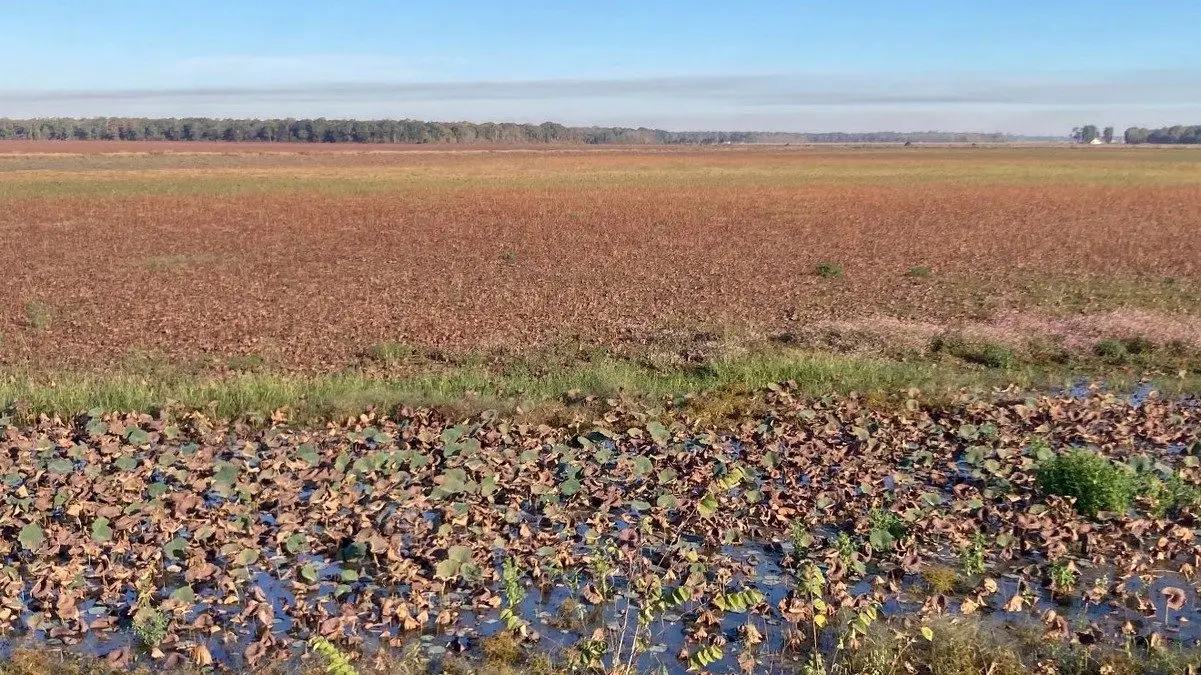

Wetland habitat, waterfowl hunting opportunities likely decreased by extended drought

wireready_10-23-2026-13-00-14_00174_agfc102326main
fsm-2412-004-andy-slater

Halowell Reservoir at George H. Dunklin Jr. Bayou Meto WMA is normally holds water to flood the rest of the moist-soil units on this rest area; but there’s no water to pump and begin flooding. AGFC photo by Jeffrey Cothren.

Fourteen months of drought have taken their toll on Arkansas’s wetlands, and the effects will be felt much more by waterfowl hunters as the first segment of Arkansas’s duck season begins Nov. 21. Although the season is a month away, Arkansas Game and Fish Commission Director Doug Schoenrock is preparing commissioners and the hunting public for an uncharacteristically dry season.

BuyMaps

“We’re still more than a month away until duck season opens, but we need to talk now to prepare you and our hunters about the effects of this prolonged drought on both public and private land,” Schoenrock said at the agency’s Oct. 7 committee meeting in Little Rock. “Much of Arkansas is more than 20 inches behind in cumulative rainfall totals. That sort of deficit doesn’t disappear after a few 1-inch rains.

“The AGFC is monitoring conditions and making sure the information across all of our wetland-focused wildlife management areas is available for everyone to see, but it’s largely in the hands of Mother Nature,” Schoenrock said. “Hunters may need to temper their expectations with the forecast we’re getting for the beginning of duck season.”

Low-Water Woes

David Luker, AGFC assistant chief of wildlife management, presented the hard facts about the lack of water.

“At the beginning of October, we had adequate water to flood only 42 percent of the moist-soil units we manage on AGFC-controlled land. Those numbers will drop as long as this drought continues,” Luker said.

Jeffrey Cothren, AGFC Wetland Habitat Program coordinator, gave a little more detail on those numbers, and the outlook isn’t promising.

“The 71 units that still have some water to flood total about 4,627 acres, but we currently have the capability to flood only 42 huntable moist-soil units, which is 3,553 acres; 2,020 of those acres are at Steve N. Wilson Raft Creek Wildlife Management Area,” Cothren said. “Even then, the best-case scenario for that area is to have 34 permit hunt locations available by Christmas, and that’s with us pumping water from the White River 24/7, which has already started. Even with the drought, staff have created some of the best moist-soil vegetation that I’ve ever seen and they should be proud of that effort; we just need the water to flood it for the ducks.”

Even some of the areas with dedicated water in AGFC-owned lakes are feeling the heat. Lake Charles, which feeds greentree reservoirs in Shirey Bay Rainey Brake in northeast Arkansas, is currently only 4.5 feet deep as land managers begin making decisions about this year’s flooding capabilities.

BuyMaps

“The lake was already 4 feet below normal pool last year before flooding the GTRs and still has not recovered. It’s now more than 8 feet below normal pool. The water left isn’t sufficient to flood the GTRs, and we would almost certainly collapse the existing fishery for little to no benefit to waterfowl or duck hunters. We have decided that we will not use water from the lake to flood the GTRs until the lake recovers.”

The same scenario is playing out at Harris Brake Lake and Harris Brake WMA in the Arkansas River Valley. The GTRs on Harris Brake Lake take a large volume of water to flood because the depth of the main channels in the system is well over 10 feet in some places. All of the channels must fill before the water overtops the banks and floods these GTRs. Harris Brake Lake is currently 2.5 feet low; using the remaining water in the lake would cause major damage to the fishery and provide little, if any, wetland habitat for waterfowl or hunters.
The Problem With Pumping

Hunters desperate for a solution often ask why the AGFC doesn’t simply “turn on the pumps” to add water to these wetland areas. The answer to that question is complex, but it ends with a simple reality: “You cannot pump water that isn’t there.”

According to Luker, roughly 95 percent of the AGFC’s artificially flooded wetlands rely on rainfall and surface water. Some are filled by gravity-fed canals connected to nearby lakes, but many must have water transported using relift pumps placed in rivers, streams, and ditches. After 14 months of drought, most of these water sources have run dry or are too low to draw from using current infrastructure. Pumps that can be used have begun pumping already, and the agency has invested in more portable pumps dedicated to Cypress Bayou, Prairie Bayou and Steve N. Wilson Raft Creek WMAs. Staff are also working with the local irrigation district at Ed Gordon Point Remove WMA to procure additional water through a dedicated canal leading to the WMA, but the availability of water through that means is limited as well.

Groundwater is not the solution, either. Pumping a few 40-acre fields is much different than supplying the massive acreage required to flood the land the AGFC controls. Furthermore, the reduction in rice acreage across Arkansas this year has greatly reduced the amount of water available on a landscape level needed to provide ducks and other waterfowl energy during their migration.

BuyMaps

“Pumping from the ground for wildlife causes a litany of issues, including the reduction of the water table farmers and cities depend upon,” Schoenrock said. “And the volume of water needed during this drought overcomes what we can responsibly pump. We’ve run pumps on Lake Ashbaugh in Northeast Arkansas nonstop for the last 16 months, and the amount of water lost to evaporation and seepage there still leaves that lake incredibly low. We’re at the point where the pumps installed last year have already been worked to death from constant use. Ashbaugh is providing some habitat, but it’s not sustainable at this rate if we don’t get help from rain.”

Cothren explains that a few wells exist on WMAs, but the volume of water needed to flood the surrounding areas using wells would take months and could be surpassed by one or two well-placed rains. “We have already initiated pumping on most of the small areas where we have groundwater available, but it’s not a long-term solution,” Cothren said.

Universal Issue

The issue isn’t solely a public land problem. Private leases and hunting clubs are also suffering from a lack of moisture.

“I spoke to David Graves in our Private Lands Habitat Division, who coordinates the Waterfowl Rice Incentive Conservation Enhancement program, and he said that only five to 10 of the 47 hunt locations enrolled for this year currently have adequate surface water available to flood,” Luker said. “Of the 4,569 acres enrolled in the program, 967 are Wetland Reserve Easement acres; only about 100 acres of that can be flooded with the water currently available to those landowners.”

All rice fields and WRE acreage enrolled in the WRICE program have strict requirements to use only surface water for flooding, ensuring that most of the water table underneath these areas is reserved for drinking water and agricultural use.

“Even with that, the water table is so low right now that I recently spoke to a farmer who said he dug 9 feet deep before finding soil that had any moisture content,” Luker said. “There are a lot of farmers in some of these drought-stricken areas who are experiencing dry wells and surging pumps because the water level of the aquifer has taken such a hit during the last year and a half.”
Rice Sparse

According to the 2026 Prospective Plantings Report from the U.S. Department of Agriculture, rice acreage in Arkansas dropped from over 1.1 million acres to 851,000 acres. This is the first time since 1983 that rice acreage dropped below 1 million acres. Rising fertilizer and fuel costs, combined with lower market price estimates, drove many rice producers to pursue lower-cost alternatives such as soybeans and corn.

BuyMaps

“Water across the Arkansas landscape is needed to meet habitat needs for migrating waterfowl and shorebirds,” Luke Naylor, AGFC chief of wildlife management, said. “We work with a lot of native vegetation and other food sources on public land to give a complete package of nutritional needs, but rice production and flooded rice fields have always been key drivers of duck numbers and are essential to their energy needs during migration and winter. We should expect lower duck numbers statewide and tougher hunting conditions as duck season begins. That said, timely winter rains can turn this around, given that much less water is needed to provide at least temporary habitat and hunting opportunities on rice fields.”

Watching Water

The AGFC has a set of tables dedicated to keeping the public informed about planned operations for the moist-soil units and greentree reservoirs it operates to benefit wetland habitat. Visit http://www.agfc.com/wetlandmanagement to learn more and see updated tables of wetland conditions and flooding plans for this winter.

Visit www.agfc.com/education/arkansas-waterfowl-rice-program-wrice/ to learn more about the WRICE program and track hunt locations available for the 2026-27 duck hunting season. Each hunt location will be evaluated weekly and will only be entered into the draw if enough water is present to offer waterfowl habitat and hunting opportunity.