Billie Eilish protests against US abortion ruling at Glastonbury

By Mark Savage
BBC Music Correspondent

  • Published5 days ago

Share https://www.bbc.com/news/entertainment-arts-61933487

Related Topics

Billie Eilish
Image caption,The star delivered a passionate and compelling performance on Glastonbury’s Pyramid Stage

Billie Eilish has used her Glastonbury headline set to protest the US Supreme Court’s decision to end the constitutional right to abortion.

“Today is a really, really dark day for women in the US,” the 20-year-old said from the Pyramid Stage

“I’m just going to say that because I can’t bear to think about it any longer.”

She went on to dedicate Your Power, a song about older men who abuse their position, to everyone affected.

On Friday, the US Supreme Court overturned a 50-year-old ruling known as Roe v Wade that guaranteed nationwide abortion rights for women.

The decision means millions of women across the US will lose their legal right to abortion as individual states will be able to make their own laws on it.

https://buy.tinypass.com/checkout/template/cacheableShow?aid=tYOkq7qlAI&templateId=OTBYI8Q89QWC&templateVariantId=OTV0YFYSXVQWV&offerId=fakeOfferId&experienceId=EXAWX60BX4NU&iframeId=offer_0e763acc7b457c03340a-0&displayMode=inline&widget=template&url=https%3A%2F%2Fwww.bbc.com

Eilish was not the only performer at Glastonbury to protest the decision.

Earlier in the night, indie-folk star Phoebe Bridgers made a similar statement during her festival debut on the John Peel stage.

“This is my first time here. It’s surreal and amazing but I’m having a real [expletive] day,” she said.

Bridgers continued by cursing the “old” Supreme Court justices “who try to tell us what to do with our bodies”.

Billie Eilish
Image caption,Eilish’s dynamic and gymnastic performance went down a storm

Eilish’s performance made her Glastonbury’s youngest-ever solo headliner, at the age of 20.

She emerged on stage shortly after 22:00, amid blasts of white noise and sub-bass before launching into her opening song, Bury A Friend.

Prowling around the stage’s catwalks and twisting her body like a character from The Exorcist, she was met by cacophonous screams and word-perfect renditions of her songs from the very first note.

“Oh boy, I love you so much,” she told the audience, which stretched right to the back of the field in front of the Pyramid Stage.

Adopting a faux English accent, she added: “How are you doin?”

The star’s set was heavily rumoured to feature a surprise appearance from Harry Styles – but, like so many Glastonbury rumours, the gossip was one step removed from reality.

Billie Eilish and Finneas
Image caption,The star was joined on stage by her brother, co-writer and “best friend” Finneas O’Connell

Instead, the show zeroed in on Eilish, who appeared with just her brother, Finneas, and a drummer on a minimal stage with a strict red and white colour palette.

Between songs, her colourful dialogue made it seem like she was talking directly to each individual member of the crowd. She led them in breathing exercises, started a reverse Mexican wave and shared her three commandments of concert-going: “Don’t be an asshole, no judgment and have fun, bitch”.

The setlist adhered closely to her ongoing Happier Than Ever world tour, which meant it was front-loaded with fan favourites like I Didn’t Change My Number, NDA and Billie Bossa Nova, instead of big crowd-pleasers.

It was a brave move, but potentially alienating for casual observers – many of whom drifted off before the explosive closing numbers, Bad Guy and Happier Than Ever.

For diehards at the front, though, Eilish could do no wrong. Even a deep album cut like Goldwing was sung at full volume, threatening to drown her out,

“This is such an honour to be here, right now,” Eilish declared them before playing When The Party’s Over. “Thank you for letting me do this. This is such a trip and a dream.”

After tonight, the chances of her being invited back are looking pretty solid.

More from Glastonbury

Eilish’s headline set marked the culmination of Glastonbury’s first day of music, which included appearances from Primal Scream, Arlo Parks, Little Simz and Supergrass.

Wolf Alice
Image caption,Wolf Alice only made the festival by the skin of their teeth

On the Pyramid Stage, Wolf Alice delivered a blistering performance after a last-minute, transatlantic dash to the festival.

The band had been left stranded in Los Angeles on Wednesday night after their flight home was cancelled. After a light-hearted (and failed) appeal for the loan of a private jet, they finally made it back via a connecting flight in Seattle.

“So we were in Seattle about 10 hours ago, and we were worried about all the train strikes,” Theo Ellis told BBC News shortly before their performance.

They were eventually escorted onto the site by a squadron of quadbikes.

“It felt like we were in Mission Impossible for 13 seconds,” said Ellis. “But we made it and it kind of feels even more special to be here now.”

“I still keep thinking something will happen and we won’t get to play,” added frontwoman Ellie Rowsell. “I’m getting scared about jinxing it.”

But they did make it onto the stage, backed by a string quartet and tearing through the down-and-dirty riffs of their opening number, Smile.

As they reached the end of their set, the chaos finally caught up with Rowsell, who lay down on the stage to summon up the energy to sing their powerful ballad Last Man On Earth, When the song ended, she looked temporarily lost and flustered, until bandmate Joff Oddie clasped her in a hug.

“We didn’t know if we were going to make it today,” she told the audience, “so this is very surreal and we’re very emotional”.

Sam Fender
Image caption,Sam Fender’s Springsteen-esque anthems kept the crowd singing after he left the stage

Sam Fender, second on the bill after Billie Eilish, was also overcome by the moment, struggling to regroup between songs, until the crowd buoyed him up with full-throated singalongs to 17 Going Under and Hypersonic Missiles.

“Me and the lads have never been to Glastonbury before. Not as a punter. Not as a performer,” he said during the set. “Now we are doing the whole lot in one day. It’s a trip.”

Other opening day highlights included Spice Girl Melanie C joining Blossoms onstage for a rabble-rousing version of Spice Up Your Life; and a blissed-out set from Crowded House, who welcomed the mid-afternoon sun with a mash-up of The Kinks’ Sunny Afternoon and their own Pineapple Head.

“I had no idea how good this would be,” said frontman Neil Finn, after leading the crowd in a mass participation version of Weather With You.

“I think we’re all reinventing the way the world works here at Glastonbury. Rediscovering community, kindness, common sense,” he continued. “The people are rewilding.”

The band also created a memorable Glastonbury moment when they invited out Buddy – Finn’s grandson, and the son of guitarist Liam Finn.

Thousands of people started chanting the youngster’s name as he moonwalked across the stage and pinched a microphone to join in the band’s final song, I Got You.

Buddy Finn
Image caption,Buddy squeaked along adorably to his grandfather’s music, before leaving the stage with a brief, “Bye Bye!”

Away from the main stage, the festival was brought to a standstill by sets from Wet Leg (Park Stage) and 90s R&B legends TLC (West Holts). Both acts attracted so many fans that access roads had to be briefly closed.

The day was bookended by appeals for help from Ukraine.

President Volodymyr Zelensky gave a pre-recorded speech on The Other Stage before festival openers The Libertines, calling on the world to “spread the truth” over the invasion of Ukraine.

Zelensky said Ukraine “will not let Russia’s war break us” and that he wants the war to stop before it “ruins people’s lives in other countries of Europe, Africa, Asia, Latin America”.

“Spread the truth about Russia’s war, help Ukrainians who are forced to flee their homes because of the war,” he added.

Ukraine’s Eurovision winners Kalush Orchestra will also play a late-night set in the Shangri-La area, starting shortly after 01:00.

Wolves survived the ice age as a single, global population

Exposing the Big Game's avatarThe Extinction Chronicles

Many dog populations seem to have two doses of wolf genes.

JOHN TIMMER – 6/29/2022, 4:43 PM

https://arstechnica.com/science/2022/06/ancient-wolf-genomes-indicate-an-east-asian-origin-for-dogs/

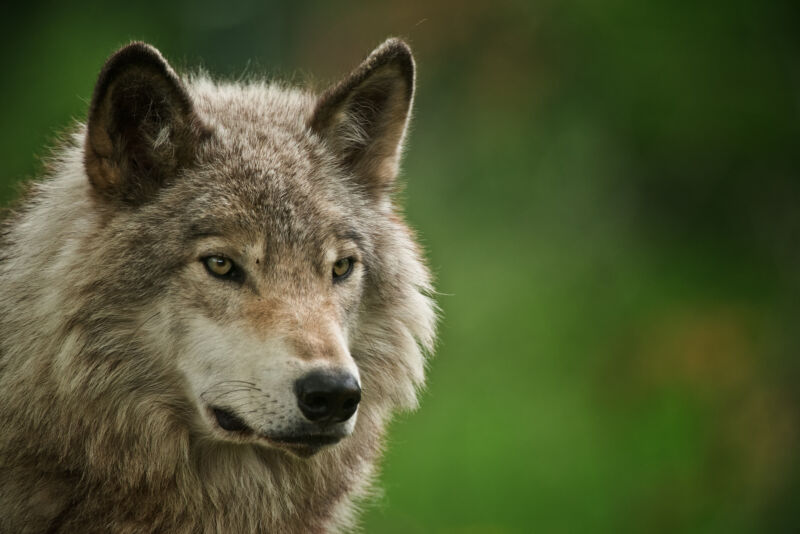
Image of a single wolf.
Enlarge/An Eastern Gray Wolf is a mix of Siberian ancestry and coyote DNA.Michael Cummings

51WITH 37 POSTERS PARTICIPATING

Man’s best friend was the first of many animals humans have domesticated. But there was no clear before-and-after moment where dogs were suddenly a distinct population of wolves. While some ancient skeletons are clearly dogs, there are a lot of ambiguous skeletons earlier than that. It’s possible to get a sense of what happenedusing the genomesof modern and ancient dogs. But this analysis depends heavily on what you think the wolf populations dogs were derived from look like.

Now, researchers have generated a much clearer picture of the last 100,000 years of wolf evolution. The picture it paints is a population that remained a single…

View original post 849 more words

Jethro Tull’s Ian Anderson words for POPULATION MATTERS

Exposing the Big Game's avatarThe Extinction Chronicles

from JethroTull.com

In 1971, I wrote and recorded the song “Locomotive Breath” for the Aqualung album. The lyrical subject matter was the topic of runaway population growth.

Now, 47 years later, you have the chance to add your voice to the single most pressing problem facing future generations. From increases in global population, all other danger factors threatening our species, including climate change, continue to accrue. Apart from the odd rogue asteroid or black hole, of course.

In my lifetime alone, the population of the planet has slightly more than tripled. Yes – in one generation!

I have been a supporter of Population Matters for some years – ever since the venerable and much-loved David Attenborough became visibly the first person of real media presence to come out, unafraid to discuss the issues of population growth in our times.

Tricky and controversial stuff, I know, but don’t think that we…

View original post 79 more words

Putin issues chilling threat over Sweden and Finland joining Nato

Exposing the Big Game's avatarThe Extinction Chronicles

Faye Brown-Yesterday 1:41 PM

React625 Comments|1k

Vladimir Putin has warned Russia will respond ‘in kind’ if Nato sets up infrastructure in Sweden and Finland.

©Provided by MetroHe said he could not rule out that ‘tensions will emerge’

The Russian despot issued the chilling threat after the Nordic countries signed an agreement that has paved the way for them to join the western alliance.

Putin was quoted by Russian news agencies as saying he could not rule out that ‘tensions would emerge’ in Moscow’s relations with Helsinki and Stockholm.

He said he does not have such problems with Sweden and Finland ‘as it has withUkraine’.

But he said he would be forced to respond in the mirror if Nato military infrastructure is deployed in these countries.

1 of 6 Photos in Gallery©Provided by Metro

Putin has ‘small man syndrome’ and could lash out…

View original post 670 more words

MIT proposes Brazil-sized fleet of “space bubbles” to cool the Earth

Exposing the Big Game's avatarThe Extinction Chronicles

The out-there proposal could take some of the risk out of solar geoengineering.

solar geoengineering space bubbles
Credit: Space Bubbles Project / MIT

ByKristin Houser

June 28, 2022

https://www.freethink.com/environment/solar-geoengineering-space-bubbles

Agroup of MIT researchers is exploring aradical ideafor reversing global warming: using a raft of “space bubbles” to reflect sunlight away from our planet.

Hot in here:The copious amounts of greenhouse gasses humans have been releasing into the air ever since the Industrial Revolution are forming a sort of blanket around our planet, trapping heat in the atmosphere and causing global temperatures to creep ever higher.

Most scientists agree that we need to dramatically reduce our emissions to minimize the most severe consequences ofclimate change, such asrising sea levels,severe droughts, and an increase inextreme weather events.

Solar geoengineering:Unfortunately, it doesn’t look like the world is ready to give up fossil fuels yet…

View original post 592 more words

THIS PLANT-BASED MEAT IS THE SURPRISING FAVORITE OF NUTRITIONISTS

Spoiler alert: You can’t get it at a fast food chain.

Illustrated by Lais Borges/Mic; Getty Images

FOOD https://www.mic.com/impact/agrihoods-urban-farming-sustainable-food

BYTRACEY ANNE DUNCAN

6.28.2022

In the past decade, the meatless meat market has kind of exploded. In the olden days — aka the 90s — vegetarians basically had to choose between salty, hard-pressed cardboard and bland, mushy cardboard as meat alternatives. Nowadays, though, plant-based meats — especially plant-based ground beef and burgers — literally bleed for our attention. But are all fake meats equally healthy and tasty? I contacted nutritionists to weigh in on what to look for and what to avoid when shopping for plant-based meat.

First of all, it’s crucial to remember that fake meat brands and companies are in the market for different reasons. “Some are designed to appeal to meat lovers as a plant-based alternative, with the look and feel of actual meat,” Maddie Pasquariello, a registered dietician in Brooklyn, tells Mic. These are products like Impossible Burger or Beyond Burger, which are meant to mimic the meat-eating experience as closely as possible. Others are designed simply to be healthy meat alternatives and don’t necessarily taste like meat, cook like meat, or even resemble meat at all, Pasquariello explains.

So when you shop for plant-based meat alternatives, you should first consider what you want out of fake meat. Do you want it to look and taste like animal meat, provide a good source of protein and other nutrients, be good for the environment, or some combination?

The best meat imposters also tend to be the most processed.

If you’re trying to find the most meat-like experience, Impossible Burger and Beyond Burger are tops, and they have the added benefit of being greener than most actual meat, Dana Ellis Hunnes, a registered dietitian in Los Angeles, assistant professor at UCLA Fielding School of Public Health, and author of Recipe for Survival: What You Can Do to Live a Healthier and More Environmentally Friendly Life, tells Mic. “Beyond and Impossible Burgers have good flavor, but are higher in processed products that are also higher in saturated fats,” she says. That doesn’t mean they’re bad for you, per se, but Hunnes recommends against making them an everyday staple.

Plant-based meat made of whole foods is more nutritious.

“Typically, the most nutritious plant-based meat you’ll find will be the ones made from whole, simple ingredients,” Pasquariello says. She recommends reading the labels to make sure that what you’re buying contains fiber, protein, and limited additives.

And, Hunnes notes, you should be especially vigilant about the sodium content and fat. “[Plant-based meats] are still a highly processed food, and they often have a lot of sodium added to them, and depending on the brand, a lot of saturated fat,” she explains.

If you’re not educated about how to read food labels, Pasquariello has some advice. “Try to look for plant-based meat alternatives that contain at least 8-10g protein per serving (or more — some offer upwards of 20-30g), with at least 5g fiber per serving, and 300mg of sodium or less per serving,” she says.

But don’t just focus on the nutritional content; look at the ingredients, too. “Ingredients that sound like an actual food tend to be less processed and healthier than those that are highly processed and unrecognizable,” Hunnes says.

Nutritionist’s recommended plant-based meats may be surprising.

One of Pasquariello’s favorites is a black bean burger made by the brand Actual Veggies. “These contain plenty of protein, as well as fiber, and have zero saturated fat. The ingredient list is super simple, and they’re high in vitamin A and magnesium, while being relatively low in sodium — a lot of bang for your buck,” she says. While they may be a relatively unknown option, a quick search reveals they’re in the refrigerated section of several grocery stores, as well as a few online markets.

Hunnes likes Dr. Praeger’s Perfect Burgers best because they contain recognizable ingredients and have a healthier nutritional profile than a lot of processed food. In fact, many of the dozens of dietitians I contacted for this article said these veggie burgers are their favorite, citing the good balance of taste and nutrition. Frankly, I was surprised by this; I’ve been vegetarian for decades and never tried these. The packaging looks a bit medical, and I’m always skeptical of products packaged under a doctor’s name — shades of Dr. Atkin’s — but it just goes to show that you can’t judge a burger by its cover.

You probably shouldn’t eat plant-based meat every day.

I don’t know who needs to hear this, but you shouldn’t eat meat at every meal, even if it’s plant-based. “I would be hard pressed to say that any vegan meat burgers are a ‘health’ food,” Hunnes says. “Most of them are not a health food, nor are they necessarily meant to be health foods. They are an environmentally friendly and humane food, and as a vegan myself, from those two perspectives, I recommend vegan meats as a ‘treat’ food or a once-a-week food, rather than an everyday food — but animal meats should not be an everyday food either.”

IMPACT

5 good news stories about climate changeIMPACTWhere is the post-Roe outrage?Stories that Fuel Conversations

I’D ALSO LIKE TO RECEIVE:Up NextSubmit

INSIDE THE MOVEMENT TO TURN RESIDENTIAL COMMUNITIES INTO FARMING COLLECTIVES

The rise of the “agrihood” could be a boon for more sustainable eating.

Illustration by Dewey Saunders

A GREEN NEW WORLD

BYAJ DELLINGER

4.22.2022

For most Americans, by the time a piece of fruit or vegetable lands on your counter or in your refrigerator, it has traveled about 1,500 miles. For residents of Detroit’s North End community, it’s a matter of a couple of city blocks.

About a decade ago, Tyson Gersh and a crew of students from the University of Michigan started the Michigan Urban Farming Initiative (MUFI), part of a growing trend of urban farms that were cropping up around the city. The all-volunteer effort set down stakes in a two-square-block area of the North End neighborhood and built up its campus with the goal of reducing food insecurity by making production-scale farming within the community itself. By 2016, the group had built the country’s first sustainable urban agricultural neighborhood — also known as an agrihood.

In the years since it launched, MUFI has become a model for a neighborhood that centers around community farming. More than 10,000 volunteers have offered up more than 100,000 hours of support and service to the project, which has yielded over 50,000 pounds of produce, including 300 different types of vegetables. That food has been distributed to more than 2,000 households located within a 2-square-mile radius of the MUFI campus, as well as local churches and food pantries. Community members pay what they can.

Image of the urban farm located in Detroit, Michigan and operated by the Michigan Urban Farming Init...
IMAGE OF THE URBAN FARM LOCATED IN DETROIT, MICHIGAN AND OPERATED BY THE MICHIGAN URBAN FARMING INITIATIVE.MICHIGAN URBAN FARMING INITIATIVE

“We’ve grown from an urban garden that provides fresh produce for our residents to a diverse, agricultural campus that has helped sustain the neighborhood and attracted new residents and area investment,” Gersh said in 2016.

MUFI has its foot in the door on two separate but growing movements: urban farming, which has taken hold in Detroit in particular but is making its way across the county, and the agrihood trend. Both efforts seek to build communities around agriculture, but agrihoods are rethinking planned neighborhoods and land usage in a more wholesale way — driven largely by millennials who want to make more of their green space.

Throughout the 1950s and 1960s, as the population of United States boomed, developers started building neighborhoods around amenities that appealed to the young adults of the era. At the time, golf courses were a centerpiece of planned communities; at one point, 1 in 4 golf courses built in the U.S. were created as part of a real estate development. That arrangement worked at the time, but has fallen out of favor for a number of reasons — not least of which is the fact that homes in these communities come at a premium, pricing out younger buyers who both have less to spend than previous generations and, frankly, couldn’t care less about golf.

Instead of fairways and greens — which are a deeply wasteful use of land, by the way — the new generation of homeowners seeks sustainability, healthier lifestyles, and a sense of contributing to social good. Hence, the agrihood.

The concept isn’t new, exactly; community gardens and urban agriculture projects were once quite popular during the Great Depression. But it has been newly formalized among housing development projects. In 2016, the Urban Land Institute provided a definition of an agrihood: a master-planned housing community with food-based amenities like working farms. Currently, there are about 200 agrihoods located in 28 states across the U.S., with more planned by developers looking to attract younger homebuyers.

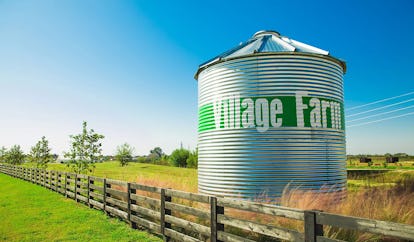
A silo at the village farm at the Harvest Green agrihood outside of Houston, Texas.
A SILO AT THE VILLAGE FARM AT THE HARVEST GREEN AGRIHOOD OUTSIDE OF HOUSTON, TEXAS.HARVEST GREEN

Like any neighborhood, agrihoods can take on a variety of shapes, as they’re often tailored to their surroundings and needs of the community they serve. Dennis Durban, an industry adviser who came to work with agrihoods through his food businesses, points to winery-focused agrihoods popping up in the West, like the Mesilla Vineyard Estates in New Mexico, which grows and sells local grapes and offers bottles at a discount to the community. Durban says he’s seen agrihoods comprised of as small as 20 homes to as large as 500 crop up in recent years, all centralizing around the agriculture that makes sense for their region.

Brett Coleman, the owner and founder of Agrihood Living, has perhaps seen more of these living arrangements up close than anyone. Over the course of several months in 2018, Coleman and his family visited 21 different agrihoods in 10 states. During that time, Coleman met people who weren’t just prioritizing sustainability with food, but also with relationships.

“You can live in a neighborhood for 10, 15 years and say ‘hi’ to your neighbors once or twice. If you’re lucky, you’ll have a good close relationship with maybe one or two neighbors,” Coleman tells Mic. “With these neighborhoods, they bring everybody together.” That was a major draw for Coleman and his wife, who wanted to see their son, now 7 years old, grow up in a place that instilled a sense of community. After touring agrihoods across the country, they settled into one themselves.

The scale of participation in the farming project for agrihood residents can vary. Often, it’s less about the work itself and more about the connection it gives you, both with the land and the people, Coleman says. “It gets you visiting with your neighbor, being outside and communicating,” he explains.

The scale of these communities is often small, but the impact that they can have on the households involved is significant. Agrihoods offer farm-to-table living, with freshly grown produce readily available. That can be hard to come by in many neighborhoods. For produce to be good produce — not just in taste, but in actual nutritional value — it has to be pretty fresh; just one week from harvest, some foods can lose 30% of their nutrients. Having fruit and vegetables grown nearby allows the community to eat better, and in a period of supply chain problems and increased delays in shipping, it also negates some concerns of food shortages. Plus, it shortens that 1,500 miles of travel for produce to almost zero, which means far fewer emissions that harm the planet.

Supreme Court hands defeat to Native American Tribes in Oklahoma

  • Facebook
  • Twitter
  • Flipboard
  • Email

June 29, 20225:45 PM ET

Heard on All Things Considered

https://www.npr.org/2022/06/29/1108717407/supreme-court-narrows-native-americans-oklahoma

NINA TOTENBERGFacebookTwitterLISTEN· 4:04

4-Minute ListenAdd toPLAYLIST

The U.S. Supreme Court

Al Drago/Getty Images

Three years ago, Native Americans in Oklahoma rejoiced when the Supreme Court ruled that the eastern half of Oklahoma is on tribal land, and that the state could not bring criminal prosecutions for crimes on Indian land without the consent of the Indian tribes. But on Wednesday, the court narrowed that decision, prompting an angry dissent from Justice Neil Gorsuch, the author of the 2019 decision, and an ardent proponent of Indian rights.

LAW

Supreme Court Rules That About Half Of Oklahoma Is Native American Land

On the surface, this might look like a cut-and-dried case. In the aftermath of the court’s 2019 decision, the state was no longer empowered to prosecute those accused of committing crimes on Indian territory. Only the tribal courts, or the federal government, could do that, and the tribal courts were generally not authorized to prosecute non-Indians. According to the federal government, effect of that decision was a 400% increase in federal prosecutions from 2020 to 2021, with many people either not held accountable or receiving lighter sentences in plea deals.

In light of that, Oklahoma’s governor and attorney general asked the Supreme Court to reverse its earlier decision. The high court refused, but on Wednesday it issued a more limited decision, declaring that the state may prosecute crimes committed against Native American victims by non-Indians in Indian country. Bottom line: power to prosecute will most likely now shift back to the state, and away from the federal government.

Sponsor Message

https://9680696fb3543e2508328c546dceec22.safeframe.googlesyndication.com/safeframe/1-0-38/html/container.html

Justice Brett Kavanaugh wrote the decision for the court’s five conservatives, minus Gorsuch.

The ruling came in the case of Manuel Castro-Huerta, a non-Indian first prosecuted by the state and sentenced to 35 years in prison for the criminal abuse of his five year old Cherokee stepdaughter, who weighed only 19 pounds and was covered in feces and lice when she was taken to the hospital. His conviction was set aside after the Supreme Court’s 2019 decision, and he was then sentenced to seven years in a plea deal with federal prosecutors.

But on Wednesday, the Supreme Court ruled that the state had concurrent power to prosecute him.

Gov. Kevin Stitt called the decision “a pivotal victory” that would allow the state to prosecute non-Indians and to protect Native American victims.

But Chuck Hoskin, Jr., the principal chief of the Cherokee Nation, said that unlike previous governors, Stitt has been unwilling to work cooperatively with the tribes.

“Gov. Stitt is an outlier in my experience with Oklahoma governors,” he said. “In the last 20 years, we’ve had very good relationship with governors. It’s only been under Gov. Stitt that we’ve ran into someone who just fundamentally does not see a role for tribes in the modern world.”

Justice Kavanaugh’s majority decision was based in large part on practicalities. Indian country is part of the state, not separate from the state, he said, and therefore, unless Congress says otherwise, a state has jurisdiction over all of its territory, including Indian territory.

Justice Gorsuch, who usually is part of the court’s most conservative bloc, instead voted with the court’s three liberals. In a scathing dissent, he recounted the famous decision, written by chief Justice John Marshall in 1832, which barred the state of Georgia from throwing some 100,000 Cherokee Indians off their land. The decision was for naught, though, because both Georgia and President Andrew Jackson flouted it, leading to the Indian Trail of Tears en route to newly designated Indian reservations west of the Mississippi River.

As Gorsuch recounted the history, that 1832 decision, though defied at the time, came to be recognized as one of the Supreme Court’s “finer hours,” and for 200 years stood for the proposition that Native American tribes retain their sovereignty unless and until Congress ordains otherwise. “Where this court stood firm then,” Gorsuch said, “today it wilts.”

Attorney embezzled clients’ money to pay for her big-game hunting trips, feds say

Exposing the Big Game's avatarCommittee to Abolish Sport Hunting Blog

https://www.kentucky.com/news/nation-world/national/article262970063.html

BY VANDANA RAVIKUMAR UPDATED JUNE 28, 2022 3:29 PM The former attorney pleaded guilty and will be sentenced on Nov. 23 Getty Images A former attorney in Portland, Oregon pleaded guilty to several federal charges after being accused of defrauding her clients and using the money to pay for personal expenses, including several big game hunting trips in Africa, the Department of Justice said in a news release. According to court documents, Lori E. Deveny specialized in representing clients who had suffered injuries from car accidents “and other traumatizing events,” and represented hundreds of clients throughout her career, her indictment said. Between April 2011 and May 2019, Deveny stole funds that she held in trust for her clients, the Department of Justice said. The stolen funds came from insurance proceeds that were supposed to go to her clients, her indictment said. TOP VIDEOS × According to the indictment, when…

View original post 280 more words

US hunting lobby spent £1m on fight to delay UK trophy import ban

Exposing the Big Game's avatarCommittee to Abolish Sport Hunting Blog

UK government put under ‘considerable pressure’, says chair of all-party parliamentary group on banning trophy hunting

https://www.theguardian.com/environment/2022/jun/29/us-hunting-lobby-spent-1m-on-fight-to-delay-uk-trophy-import-ban

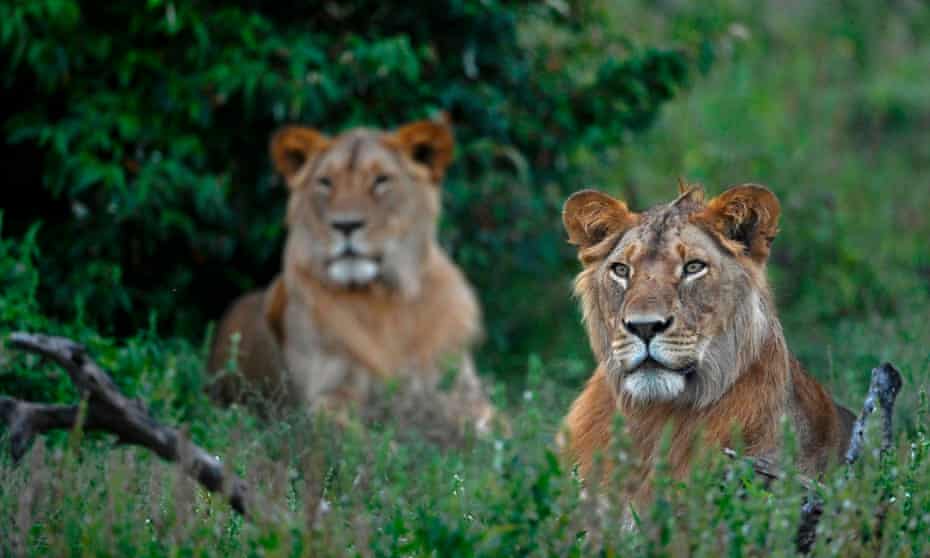
A pair of young male lions sit in a bush at the Ol Kinyei conservancy in Maasai Mara, Kenya.
Lion, elephant and rhino populations have increased in Kenya, where trophy hunting is banned.Photograph: Tony Karumba/AFP/Getty Images

Helena HortonEnvironment reporterWed 29 Jun 2022 01.00 EDT

The US hunting lobby has spent £1m putting pressure on the government to delay the trophy import ban, a new report by MPs has found.

Boris Johnson promised to ban the imports of these trophies three years ago, but the legislation has still not gone through parliament. Because of the delay, the Conservative MP and animal welfare campaigner Henry Smith has put forward his own private member’s bill to ban imports of hunting trophies.

A new report from the all-party parliamentary group (APPG) on banning trophy hunting has detailed the lobbying efforts of international hunting groups.

The report found that the US-based hunting lobby group Safari Club…

View original post 610 more words

Botswana’s ex-president pleads with Boris Johnson to ban hunting trophy imports

Exposing the Big Game's avatarCommittee to Abolish Sport Hunting Blog

Exclusive:It was disappointing that ministers postponed action, says Ian Khama, launching cross-party report calling for urgent crackdown

Jane Dalton21 hours ago

3Comments

<img src=”https://static.independent.co.uk/2022/06/28/19/newFile-2.jpg?quality=75&width=982&height=726&auto=webp” alt=”<p>‘Game trophies’ of polar bears
‘Game trophies’ of polar bears(Getty Images)

https://api.tinypass.com/checkout/template/cacheableShow?aid=SEz5CAOYyJ&templateId=OT5OZRMVSXLJ&templateVariantId=OTVNT23LEZYUH&offerId=fakeOfferId&experienceId=EXMXJAFBGBAW&iframeId=offer_86c575d9c9dcf93b5fa5-0&displayMode=inline&widget=template&url=https%3A%2F%2Fwww.independent.co.uk

A former president of the country that has the world’s biggest elephant population has issued a heartfelt plea to Boris Johnson’s government to finally outlaw imports of body parts from hunted animals, after an outcry when ministers postponed a ban.

Ian Khama, who criminalised trophy-hunting in 2014 during his decade as president ofBotswana, warned that every day without a ban on hunting trophy imports tookelephantsnearer to extinction.

“I hope very much that this time they will stick to it because every day that we lose, we are losing many animals out there in different parts of the world,” he said.

“So it’s very important that this is addressed…

View original post 842 more words