Fast-melting sea ice has opened a potential new Arctic shipping lane across the North Pole, which will give powerful nations easier access to the frozen zone’s vast riches — but has also sparked fears of war.
The Arctic Councilpredicts that, during the summers, sea icewill be gone by 2040—allowing for a major new seasonal passageway. This Transpolar Sea…
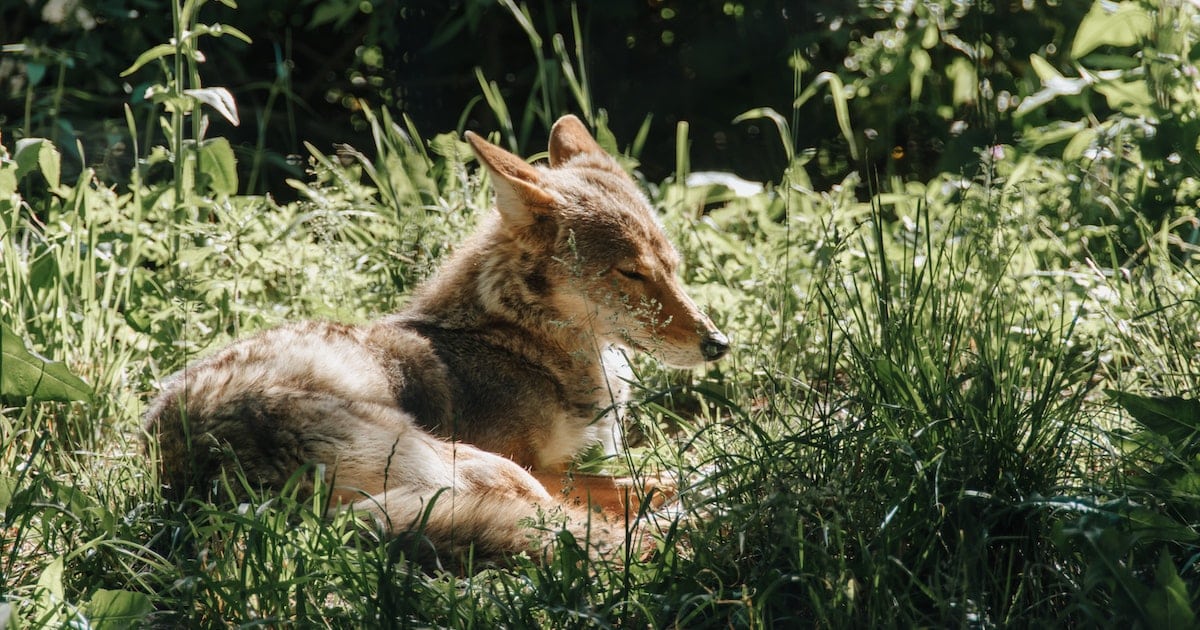
More than 50 state and national organizations have joined forces in a coalition to end wildlife killing contests targeting coyotes, wolves, bobcats, and other species. The coalition was launched by Project Coyote and the Humane Society of the United States (HSUS), which estimates that around 60,000 animals were being killed in contests annually prior to the COVID-19 pandemic.
Currently legal in 40 U.S. states, wildlife killing contests offer prizes “for killing the most, largest, or smallest animals” and claim the lives of thousands of animals each year, says the National Coalition to End Wildlife Killing Contests. The coalition aims to bring what it calls “a barbaric bloodsport” to a halt.
While the ethics and sustainability of hunting are already in question, killing contests push the sport a step further, turning a hunt into a competition with higher stakes and bigger prizes. Animal advocacy organizations are not the only ones who oppose them. Hunters have also spoken out against killing contests, concerned about the damage it may do to the public image of hunting.
Killing as a contest
The Humane Society of the United States (HSUS) estimates that one contest can draw in more than 600 participants. There is usually a fee to enter a contest, which will likely span a weekend and culminate in a count and weighing of the bodies of the animals killed. The organization also notes that contest sponsors are often gun shops or hunting equipment manufacturers, who “frequently donate guns or hunting gear” as prizes.
In April, Rene Ebersole reported that the killing of wildlife in the U.S. “became a game” in “increasingly controversial” competitions that are sparking cries for bans. The most profitable killing contest today is the West Texas Big Bobcat, which takes place three times each year. In January of this year, a team of three hunters won a top prize of over $43,000 for killing a bobcat weighing 32.5 pounds. “For the cat to qualify, the team also had to kill five foxes or coyotes,” reports Ebersole.
HSUS likens these tournaments to dogfighting and cockfighting but emphasizes that while those “blood sports” have been “condemned as barbaric and outlawed in every state,” wildlife killing contests on the other hand appear to be becoming more popular.
Lack of ‘credible evidence’
Killing competitions irrevocably damage vital ecosystems, with no goal other than maximizing the number or size of animals killed. Scientists even warn that killing contests are not and cannot be effective forms of population control, even if stated otherwise.
“There is no credible evidence that indiscriminate killing of coyotes (the most common targets of killing contests) or other predators effectively serves any genuine interest in managing other species,” reads a Project Coyote joint letter signed by more than 70 scientists.
Targeting the smallest and largest coyotes, for example, means that juvenile and pregnant animals are often killed. Although coyote populations tend to rebound quickly, coalition member Animal Legal Defense Fund (ALDF) writes that when mother coyotes are hunted, “pups are orphaned and packs are disrupted and displaced.”
Some hunters believe killing contests are a stain on hunting’s reputation. Project Coyote calls it “a death of ethics” in hunting, writing that hunters are “being called out by their own” as activities like killing contests and “predator derbies” cause hunting to lose “its appeal and credibility among the overwhelming majority of Americans who do not hunt.” According to a 2016 survey by the U.S. Fish and Wildlife Service, 11.5 million Americans call themselves hunters, representing about three percent of the U.S. population.
Protecting farming interests
Coyotes are the most common target of killing contests. PennLive reports that most of the contests in Pennsylvania are focused on coyotes alone because, as Marcus Schneck puts it, the animals are members of “a hated species among some hunters and farmers because of its overblown reputation as a predator on species such as deer, turkey, rabbit, pheasant, and livestock.”
The federal government has long had its sights set on coyotes as well. Wildlife Services, a division of the USDA, whose self-described mission is to resolve human-wildlife conflicts, reports killing more than 64,000 coyotes in 2021. In what animal advocates have called a “war on wildlife,” the agency targets coyotes and other predators mainly to protect the interests of the ranching industry.
In March of last year, Wildlife Services wrote that among other objectives, it seeks “to reduce or eliminate more than an estimated $232 million in livestock loss due to predation,” adding that coyotes “reportedly kill more than 300,00 head of livestock annually and injure even more.” The agency advises livestock owners to report these losses directly to the agency’s office in their state or district, which is responsible for following up on any possible threats.
In August, HSUS program manager for wildlife protection Katie Stennes reported that according to USDA data, “all carnivores combined—including coyotes, wolves, and cougars—are responsible for less than 0.5 percent of cattle and sheep losses in the U.S.” The predominant mortality risks for livestock, Stennes reports, come from disease, weather, and other factors unrelated to predation.
Despite the many threats they face, coyote populations in many states are thriving. But advocates know they still have a harsh reputation to overcome.
‘A lack of public awareness’
Killing contests often happen unseen by the public, which is surprising since they often result in hundreds of animals killed. Yet, animal advocates say that more awareness is desperately needed if they are to succeed in halting these particularly gruesome tournaments.
“One of our greatest impediments to bringing an end to wildlife killing contests is a lack of public awareness,” Camilla Fox, President and Executive Director of Project Coyote, said last year upon the release of the film “Wildlife Killing Contests.”
Undercover investigations have become an important tool in the effort to increase public awareness of killing contests. In January 2021, a HSUS investigation revealed that 315 coyotes and foxes were killed in a 45-hour Virginia contest. Stickers and license plates at the event bore phrases like “Coyote Hearse” and “Yote H8R.”
Still, Fox sees reason for hope. “We believe that, like cockfighting and dogfighting, which have been banned in the U.S. because of their unconscionable cruelty, we will bring an end to wildlife killing contests,” she says. A majority of the U.S. public already appears to be in favor of a change. A 2022 survey of voters from across the nation found that 80 percent of respondents were opposed to wildlife killing contests.
A wave of bans
Growing opposition to wildlife killing contests is prompting many states to ban the contests completely. In 2014, California became the first state to ban killing contests targeting coyotes, foxes, bobcats, and other species considered to be “furbearers and nongame mammals.”
“This ruling sets a trend for the nation,” said Fox. A series of other bans on killing contests quickly followed. To date, a total of eight U.S. states have bans or restrictions in place, and in April, a new bill was introduced, opening the door for a possible nationwide ban.
The Prohibit Wildlife Killing Contests Act of 2022, which would ban the contests on public lands within one year of passing, was introduced by Congressman Steve Cohen (D-TN) and 15 cosponsors, with the endorsement of Project Coyote and many other organizations.
“Congress should pass this legislation quickly so we can finally spare our native animals from these ruthless kill-fests,” said Stephanie Kurose, a senior policy specialist at the Center for Biological Diversity, another of the coalition’s member organizations. “It’s time for us to end the mass slaughter contests of America’s wild carnivores once and for all.”
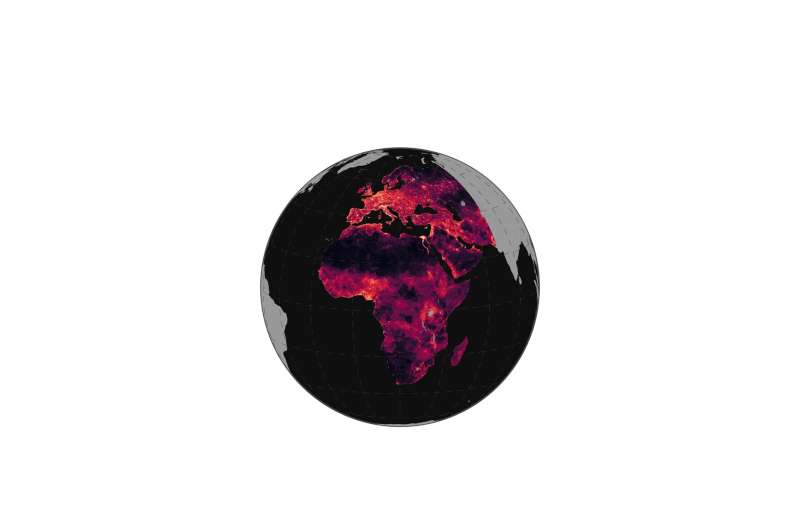
Levels of direct mortality threat intensity across the studied region. Darker regions indicate lower levels of direct mortality threats, lighter regions indicate higher levels of direct mortality threats. Grey indicates regions outside the studied area. Credit: University of East Anglia
Migratory birds are declining globally because of the way that humans have modified the landscape over recent decades—according to new research from the University of East Anglia.
A new study published inGlobal Ecology and Biogeographyreveals thatpopulation declineshave been greatest among species that migrate to areas with more human infrastructure—roads, buildings, power lines,wind turbines—as well as higher population densities and hunting levels.
Habitat degradation andclimate changehave also played a part in driving long-term declines.
The research team hope their work will help inform how best to target conservation efforts.
Under the new laws: hunting coyotes with dogs and training dogs to hunt coyotes will be temporarily banned in Vermont starting July 1; the retrieval and use of game and furbearing animals by hunters and trappers are now required with some exceptions; and the Fish and Wildlife Department is beginning a process with the Fish and Wildlife Board and Legislature to identify and implement new best management practices for trapping in the state.
Image caption,It is the best-preserved woolly mammoth discovered in North America, experts say
A whole baby woolly mammoth has been found frozen in the permafrost of north-western Canada – the first such discovery in North America.
The mummified ice age mammoth is thought to be more than 30,000 years old. It was found by gold miners in Yukon’s Klondike region on Tuesday.
The area of the find belongs to the Tr’ondek Hwech’in First Nation.
The Yukon government compared it to Russia’s discovery of a baby mammoth in the permafrost of Siberia in 2007.
It said it was “the most complete mummified mammoth found in North America”, and only the second such find in the world.
The baby, thought to be female, has been named Nun cho ga, meaning “big baby animal” in the Han language spoken by Native Americans in the area.
“Nun cho ga is beautiful and one of the most incredible mummified ice age animals ever discovered in the world,” said Yukon palaeontologist Grant Zazula.
It is the best-preserved woolly mammoth discovered in North America. The partial remains of a mammoth calf, named Effie, were found in 1948 at a gold mine in neighbouring Alaska.
CBC News says Nun cho ga was unearthed after a miner called his boss over to examine something that was hit by his bulldozer in the mud at Eureka Creek, south of Dawson City.
Image caption,The 19-year-old activist criticised world leaders in a speech to festival-goers
Greta Thunberg has made a surprise appearance at Glastonbury, to warn of the dangers of climate change.
The earth’s biosphere is “not just changing, it is destabilising, it is breaking down,” the 19-year-old told festival-goers from the Pyramid Stage.
She criticised world leaders for “creating loopholes” to protect firms whose emissions cause climate change.
“That is a moral decision… that will put the entire living planet at risk”, she added.
But she ended on a message of hope, telling festival-goers they had the power to make a difference.
“We are capable of the most incredible things,” she said. “Once we are given the full story… we will know what to do. There is still time to choose a new path, to step back from…
Russian troops took control of Severodonetsk, one of the last holdouts in the breakaway eastern region of Luhansk, on Saturday — even as Western intelligence agencies predicted that the invader’s military will soon exhaust its combat capabilities and be forced to halt its offensive.
Hundreds of civilians were believed to remain trapped in underground bunkers a chemical plant on the city’s edge, with the only way out through Russian controlled territory.Shells…
Alabama doctor describes immediate impact of Roe v. Wade decision on her clinicCNN—
Abortion-rights protesters continued to voice their fury and anguish nationwide Saturday following the seismic ruling by theUS Supreme Court to eliminatethe federal constitutional right to an abortion.
On Friday, the Court overturned the 1973 ruling known as Roe v. Wade, sparking protests that are expected to extend throughout the weekend.
Smaller gatherings of people celebrating the ruling are also taking place.
As states started enacting abortion bans and some clinics stopped offering the procedure, abortion-rights advocates took to the streets in major cities.
“It’s like seeing the train coming toward you,” said Julia Kaluta, 24, one of many abortion-rights advocates gathered in New York City. “And you finally get hit by it. And it still…
The latest breaking updates, delivered straight to your email inbox.Your Email AddressSUBMITPrivacy Notice
PROVIDENCE, R.I. —
A Rhode Island police officer accused of punching a woman at an abortion protest while he was off-duty was suspended from his job with pay Saturday while the Providence Police Department conducts a criminal investigation into his actions.
Jennifer Rourke, Rhode Island Political Cooperative Chairwoman and a state Senate candidate, told the Providence Journal she was punched in the face at least twice by Jeann Lugo, who had been running for the GOP nomination for a Rhode Island state senate seat.
Advertisement
Lugo told the Journal he was “not going to deny” the punching allegation, but added that “everything happened very fast.”
“As an officer that swore to protect and serve our communities, I, unfortunately…


 Top ArticlesbyPopular Science
 READ MORE


 Inside the ambitious plan to restore peat wetlandsin California