The conservative commentariat could not be more wrong in dismissing global heating as a concern of only the ‘woke elite’
The climate crisis is not a concern only of the rich. Water had to be brought by train to India’s state of Rajasthan during May’s global heating-induced heatwave.Photograph: Prakash Singh/AFP/Getty Images
Sat 18 Jun 2022 16.00 EDT
“What do you mean, ‘why am I working in this heat?’ If I don’t work, we will die of hunger.”
That was how Shiv Kumar Mandal, a Delhi rickshaw driver,explainedwhy he continued to transport passengers during a prolonged and horrific temperature spike thatexperts attribute to global heating.
Mandal, one presumes, does not consider planetary warming a topic relevant only to the rich.
Yet, in the wake of the Australian federal election, we’re hearing versions of that claim again and again and again.
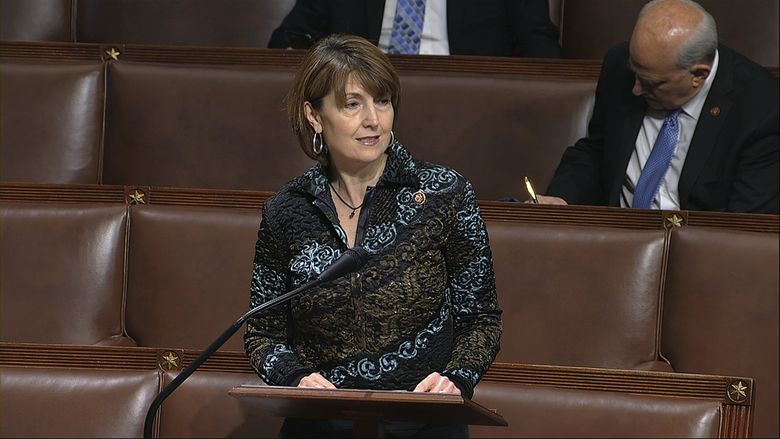
In this image from video, Rep. Cathy McMorris Rodgers, R-Wash., speaks on the floor of the House of Representatives at the U.S. Capitol in Washington in 2020. (House Television via AP)
A bill that could deliver much-needed funding to state and tribal fish and wildlife agencies passed the U.S. House of Representatives and moves on to the Senate for consideration.
The Recovering America’s Wildlife Act was approved 231-190 Tuesday. Rep. Mike Simpson, a Republican from Idaho’s 2nd Congressional District, co-sponsored the legislation and voted in favor of it. His fellow Republican, Rep. Russ Fulcher from Idaho’s 1st Congressional District, voted no.
Cathy McMorris Rodgers, a Republican representing Eastern Washington, also voted no.
If approved by the Senate and signed by President Joe Biden, the bill that amends the popular Pittman-Robertson Wildlife Restoration Act would direct the…
It’s a cool start to Father’s Day across parts of the Northeast and mid-Atlantic, with many areas seeing temperatures below average during the day.
The cooler temperatures result from a large dip in the jet stream along the East Coast that has allowed cooler air to filter into the Northeast and parts of the mid-Atlantic.
That dip will also allow for the excessive heat to remain trapped under a ridge of high pressure in the middle of the country.
In fact, heat alerts are in effect across the Plains and upper Midwest as temperatures there could get to or above 100 degrees.
The National Weather Service in Boston says daytime high temperatures will be more typical of late April or early October rather than the middle of June.
Some cities have already reported record-low temperatures in Sunday morning, and other records are in jeopardy of falling.
Most of the record low temperatures are expected across parts of the Northeast and southern New England, but other records stretching from the mid-Atlantic into the Ohio Valley could also fall.
The cooler temperatures result from a large dip in the jet stream along the East Coast.
Wheeling, West Virginia, is expected to fall back into the mid-40s to start the day.
Temperatures in the Ohio Valley and the mid-Atlantic will warm up nicely after a cool start to Sunday.
It will be into the mid to upper 70s from Columbus, Ohio into Charleston, West Virginia, Richmond Virginia and Washington.
Millions of Americans across the region will notice how cool it is after days of warmer temperatures.
Pittsburgh and New York City will get to the low-70s, but it will be much cooler further north.
Boston will only see a high temperature of around 62 degrees after a rainy start to the day.
And in northern New England, places will be even colder.
Most of the record low temperatures are expected across parts of the Northeast and southern New England.
Bangor, Maine, for example, will only see a high temperature of 49 degrees.
Millions of Americans across the region will notice how cool it is after days of warmer temperatures.
Temperatures will be slightly below average across the Ohio Valley and mid-Atlantic, but further north, like in New York City, temperatures will be 5 to 10 degrees lower than normal.15
Spider monkey dressed up as gang mascot killed in shootout, and man dies in Michoacán after trying to pet captive tiger
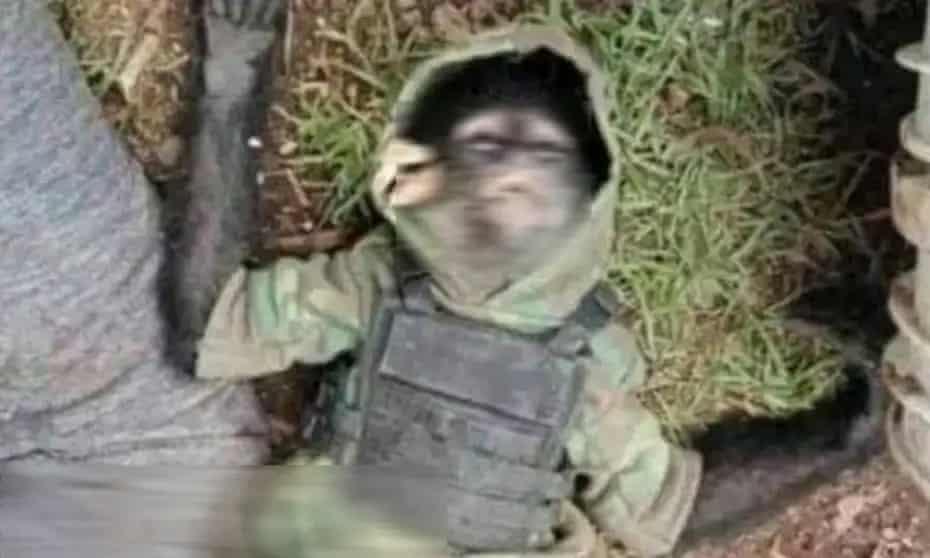
The monkey in the ‘bulletproof’ vest who died in the state of Mexico shootout. Photograph: Supplied
Associated Press in Mexico CityFri 17 Jun 2022 14.04 EDT
Mexican narcos’ fascination with exotic animals has been on display this week after a spider monkey dressed up as a drug gang mascot was killed in a shootout, a 200kg tiger wandered the streets in the Pacific coast state of Nayarit, and a man died after trying to pet a captive tiger in a cartel-dominated area of western Michoacán state.
Eleven suspected gang members died in the shootout on Tuesday in the state of Mexico, which surrounds the capital. Photos from the scene showed a small monkey dressed in a tiny camouflage jacket and a tiny “bulletproof” vest sprawled across the body of a dead gunman.
Authorities in the State of Mexico confirmed the authenticity of the photos.
“A primate was killed at the scene, which was presumably owned by a criminal who was also killed at the scene,” state prosecutors said in a statement, adding: “An autopsy will be carried out on the animal by a veterinarian specialized in the species.” They said animal-trafficking charges would be considered against the suspects who survived the shootout.
Then on Wednesday, the attorney general for environmental protection said it had seized a tiger in Tecuala, in the Pacific coast state of Nayarit, near the border with Sinaloa, which is home to the cartel of the same name.
The office said it acted “after receiving reports about a Bengal tiger that was wandering the streets of Tecuala”, and found that the animal was being illegally kept there.
Those reports were based on a video posted on social media earlier this week, showing a young woman shrieking as she came across the tiger on the street in a residential neighborhood. “Be quiet, it might come close,” a woman can be heard saying on the video.
Authorities said the tiger’s claws and fangs had been removed, and a man can be seen later in the video casually tossing a rope over the tiger’s neck and leading him away.
Perhaps the most tragic story came out of the western state of Michoacán, which has long been dominated by the Carteles Unidos gang and the Jalisco cartel.
On Sunday, authorities confirmed that a man was seriously wounded by a tiger in Peribán, Michoacán, a town in the state’s avocado-growing region, where gangs have long extorted protection payments from the lucrative avocado trade.
Advertisement
In a video posted on social media, whose authenticity could not be confirmed, the man is seen calling the tiger to the side of a fenced enclosure. “Come on, come,” the man can be heard entreating.
The man stands outside the enclosure, apparently feeding the tiger with one hand, while he stretches his other arm through the chain-link fence to stroke the animal’s neck.
The man then shrieks in pain after the tiger quickly wheels and bites the extended arm and refuses to let go.
Michoacán state law enforcement authorities confirmed that the man was taken to a hospital, where he died a few days later from his injuries.
Security analyst David Saucedo said drug traffickers often keep exotic animals as a symbol of status and power, imitating the Colombian drug lords of the 1980s and 90s.
“Mexican drug traffickers copied from the Medellín cartel the custom of acquiring exotic animals and setting up private zoos,” said Saucedo. “According to the code of the drug trafficking aristocracy, having a private zoo was a prerequisite for being part of the circle of big-time drug traffickers.”
In some cases, the animals had a more sinister use.
“Some drug cartel capos, like Zetas leader Heriberto Lazcano, acquired exotic animals to torture or disappear their victims,” Saucedo said. “Several of his enemies were devoured by the tigers or the crocodiles that the Zetas kept in their pens or cages.”
Lazcano himself was killed in a shootout with Mexican military personnel in 2012.
PORTLAND, Ore. (KOIN) — Three hunters will pay $16,000 for poaching an elk, a crime that Oregon Fish & Wildlife officials began investigating after getting a tip in November 2021.
Back then, the tipster spotted a picture on social media of a 6×6 bull elk on a trailer, thought it didn’t seem right and texted it to OSP Fish & Wildlife troopers.
One of the investigators, Senior Trooper Brent Ocheskey, also had questions. “An elk is a big animal, not easy to pack out without gutting and quartering it. That in itself was suspicious, especially in our patrol area,” he said in a statement.
An elephant in eastern India killed a 70-year-old woman and then returned to her funeral to trample her corpse.
The incident occurred in Odisha state on Thursday, police said.
Maya Murmu was at a tube well drawing water in Mayurbhanj district’s Raipal village when the wild elephant appeared out of nowhere.
Authorities said it had strayed from the Dalma wildlife sanctuary, nearly 200km from Mayurbhanj.
After being trampled, Ms Murmu was taken to hospital where she died from her injuries, police officer Lopamudra Nayak was quoted as saying to the Press Trust of India news agency.
Reports said when family members gathered for the funeral and were in the middle of performing last rites, the same elephant appeared, lifted Ms Murmu’s body from the funeral pyre and trampled it again, as shocked mourners looked on.
The family were only able to go ahead with the ceremony after the elephant left. It remains unclear if the animal harmed anyone else present.
Conflicts between elephants and humans are a common occurence in Odisha. Intensive industrial activity in the mineral-rich state has increased human encroachment in animal habitats, increasing chances of encounters between villagers and elephants.
A worrying trend in the state has also been a spike in the number of unnatural deaths of elephants. At least 1,356 elephants have died in Odisha since 2000-01, according to data provided by the state’s chief wildlife warden, reported the IANS news agency.
At least 42 elephant deaths were recorded in the state in just seven months from April to October last year.
Many other incidents of human-elephant conflict have been reported from other parts of the country.
Dove and deer hunters are advised to start looking now for seasons that open in September and might have to adjust expectations about finding their favorite brand and cartridge. CDFW Photo
Published: Jun 15, 2022, 12:29 PM
Nontoxic ammo
Q: Many sporting goods stores ran out of copper and steel ammo at the beginning of the pandemic. How can hunters continue to use the correct ammo?
A: It is true that finding nontoxic hunting ammunition as required by law in California has been a real challenge during the COVID-19 pandemic. Several factors contributed to the ammo shortage during the past couple years including global supply chain issues, a lack of raw materials such as steel, bismuth, nickel and copper, and a huge demand among consumers who were buying – and often hoarding – ammo of all types and kinds.
The bird flu outbreak that led to the deaths of millions of chickens and turkeys in the U.S. in 2022 appears to finally be waning.(Preston Keres / USDA / FPAC)
OMAHA, Neb. (AP) — A bird flu outbreak in the U.S. that led to the deaths of more than 40 million chickens and turkeys and contributed to a spike in egg and meat prices appears to be waning, but experts caution the virus hasn’t disappeared and worry another surge could take hold this fall.
The number of birds culled to limit its spread dropped from a peak of almost 21 million in March to less than 800,000 in May. However, more than 2 million birds have been killed already this month after infections were discovered at two large farms in Colorado.
“The numbers in the dashboard do tell a story, but we are not ready to say the outbreak is winding down,” said Richard Coker, a spokesman for the Animal and Plant Health Inspection Service division of the Department of Agriculture. “We remain vigilant and encourage producers to continue to practice strong biosecurity.”
Some state and industry officials are optimistic that the outbreak is ending, although no one is quite ready to relax.
ADVERTISEMENT
Iowa Agriculture Secretary Mike Naig said the virus still poses a risk because more cases are being reported, but that “it really does feel like we’re on the tail end of it for this year.”
When a case of the highly pathogenic virus is found, officials kill the entire flock to limit its spread. The virus doesn’t discriminate between backyard flocks and massive egg farms; flocks of all sizes have been infected.
Iowa, the nation’s leader in egg production, was by far the hardest hit state with 13.4 million birds lost. No cases have been reported in the state since May 4, likely because migrating wild birds, which are blamed for spreading the virus, have moved out of Iowa.
Nebraska lost nearly 4.9 million birds, Pennsylvania lost 4.2 million and Colorado saw 3.6 million birds killed. Minnesota and Wisconsin each lost about 3 million.
ADVERTISEMENT
An outbreak in 2015, when 50 million turkeys and chickens were killed, remains the most expensive animal health disaster in U.S. history. The government spent nearly $1 billion then to deal with infected birds, clean up barns and compensate farmers. The USDA has so far approved $793 million to cover costs this year.
National Turkey Federation spokeswoman Beth Breeding said the government payments “keep those losses from being catastrophic,” but they don’t cover everything. For example, farmers lose income because they can’t raise birds while their properties are being disinfected.
Food prices have increased 10% overall this year, exceeding the 8.6% inflation reported last month. Egg prices soared the most, jumping 32%, while poultry prices are up nearly 17%. But agricultural economists say that while the bird flu outbreak contributed, spikes in the cost of feed, fuel and labor are much bigger factors.
It didn’t help that outbreak peaked just as demand for eggs was highest around Easter, driving prices higher.
ADVERTISEMENT
But a relatively small proportion of the nationwide flock was affected. The 40 million birds killed represent only 6% of the chickens raised to produce eggs, 2.5% of turkeys and less than 1% of the chickens raised for meat.
Economists expect egg and meat prices to ease this summer as farms are able build back their flocks.
“I think that there is going to start being some relief,” said Jada Thompson, an agricultural economist at the University of Arkansas.
The summer heat should help kill off the disease, but experts worry that the latest version of the virus may be hardy enough to survive the season, leading to a new outbreak when wild birds migrate later in the year.
“We may have an even bigger peak this year in the fall, who knows?” University of Georgia researcher David Stallknecht said. “The honest answer is that we do not know what the future holds, but the reporting decline in commercial poultry cases is encouraging.”
The prospects for a bird flu vaccine are uncertain; foreign markets are reluctant to import meat from inoculated birds, and vaccination can hide the presence of the virus meaning farmers would have to spend more to increase testing of their flocks. And vaccinated birds can still fall sick, just like vaccinated humans.
“I personally do not see vaccine as something that’s going to be used in the United States,” said John Clifford, the former U.S. chief veterinary officer who oversaw the USDA response to the 2015 outbreak. “Countries that don’t export may feel different. We can’t afford to lose those markets.”
Emily Metz, CEO of the American Egg Board trade group, said some farmers have invested heavily in combatting the virus, including upgrading ventilation systems and installing laser light systems to ward off wild birds.
“If it does linger or come back, we’re prepared. We’re not letting our guard down,” Metz said. “The improvements our producers have made in terms of biosecurity are part of their everyday business.”
___
Associated Press reporter David Pitt contributed to this report from Des Moines, Iowa.
Two Boise-area men were sentenced to probation and banned from hunting after pleading guilty to killing a protected bird of prey at a conservation site near Boise.
According to a U.S. Department of Justice news release, 20-year-old Colten R. Ferdinand, of Boise, and 23-year-old Wyatt G. Noe, of Eagle, pleaded guilty to the crime on March 24 of killing a golden eagle in the Morley Nelson Snake River Birds of Prey National Conservation Area.
The birds have been federally protected since 1940 alongside bald eagles after both species neared extinction. U.S. Magistrate Judge Candy W. Dale sentenced both men to two years of probation, as well as two-year hunting and firearm possession bans.