GARDINER — Fran Reynolds noticed an uptick in hunting around her home overlooking Discovery Bay in 2018. Today, the shooting has reached a level that she and her neighbors believe has made the area dangerous for people, pets and livestock.
“One hunter sent his dog into a neighbor’s yard to retrieve a goose he shot,” said Reynolds, who has lived in Gardiner since 2014.
“A neighbor said she could hear a bullet whiz by her ear when she was outside.”
Industrial farming and unsustainable exploitation of natural resources create the ideal scenario for disease outbreaksThe animal industry should be shrunk and better regulated, and we also need to rethink our habits related to meat consumption
Egg-laying hens at an organic poultry farm in Corcoue-sur-Logne, France, on April 13. These birds, which are usually allowed to roam outdoors, are under lockdown indoors as the government seeks to prevent the spread of avian flu. Photo: Reuters
Feel strongly about this letter, or any other aspects of the news? Share your views by emailing us your Letter to the Editor atletters@scmp.comor filling inthis Google form. Submissions should not exceed 400 words, and must include your full name and address, plus a phone number for verification.
Much of the academic literature and healthcare guidelines published about Covid-19 focuses on how to handle the public health crisis and mitigate the consequences of the pandemic. More attention, however, should be paid to understanding the root causes of the coronavirus and other zoonoses – infectious diseases that can jump from animals to humans.
Epidemics caused by infectious diseases that originated from animals have plagued us throughout history. An “animal-human interface” – direct or indirect contact of humans with animals and their bodily fluids – is required for such cross-species transmission.
The animal-human interface has intensified in the last few decades due to several anthropogenic reasons. Intensified farming and unsustainable exploitation of natural resources create the ideal scenario for disease outbreaks.
In January, the French Ministry of Agriculture ordered the killing of millions of chickens, ducks and other poultry to halt the spread of the highly contagious H5N1 strain of bird flu which was first detected in November. By April, 13 million birds had been slaughtered. In the Netherlands, which also reported bird flu outbreaks, hundreds of thousands of birds have been killed.
Intensive factory farming is likely to have contributed to the spread of avian flu that Europe is struggling with. Wild birds may carry low-pathogenic variants, but the intensive farming environment facilitates the spread of viruses, which may then mutate into serious variants.
According to Our World in Data, the number of pigs slaughtered for meat increased by 34.5 per cent from 2000 to 2018, while that of chickens increased by almost 70 per cent. We will undoubtedly encounter other virus outbreaks or even more severe and unknown diseases if we continue with industrial farming.
Pets are also a potential source of infection, especially because they may interact with both wildlife and people. A Hong Kong study recently confirmed hamster-to-human transmission of the coronavirus related to a cluster of Delta cases. Around 2,000 hamsters imported from the Netherlands were culled.
Both domestic and wild animals play a vital role in sustainable human development, and humanity’s reliance on them has not ended – we just need to make sure it is evolving in the right direction.
Global sustainability is strongly linked to the risk mitigation and control of zoonoses. The animal industry should be shrunk and better regulated, and we also need to rethink our habits related to meat consumption. All practices involving rearing of animals and meat production should focus on health, not productivity.
WILSONS, Va. (AP) – Several property owners in Virginia are suing the state Department of Wildlife Resources over a state law that allows hunters to retrieve their hunting dogs from private property.
A number of states allow hunters to retrieve their dogs without permission from property owners under certain circumstances. But Virginian’s law says hunters are allowed to retrieve dogs even when the property owner has specifically denied access.
The property owners allege that allowing hunters to go on their property without permission amounts to an uncompensated taking of their land. However, the Virginia Hunting Dog Alliance says the vast majority of hunters are considerate of landowners and want to continue Virginia’s centuries-old tradition of hunting with dogs.
After a little training, our honeybees can be as effective as a PCR test in identifying SARS-CoV-2. Explanation.
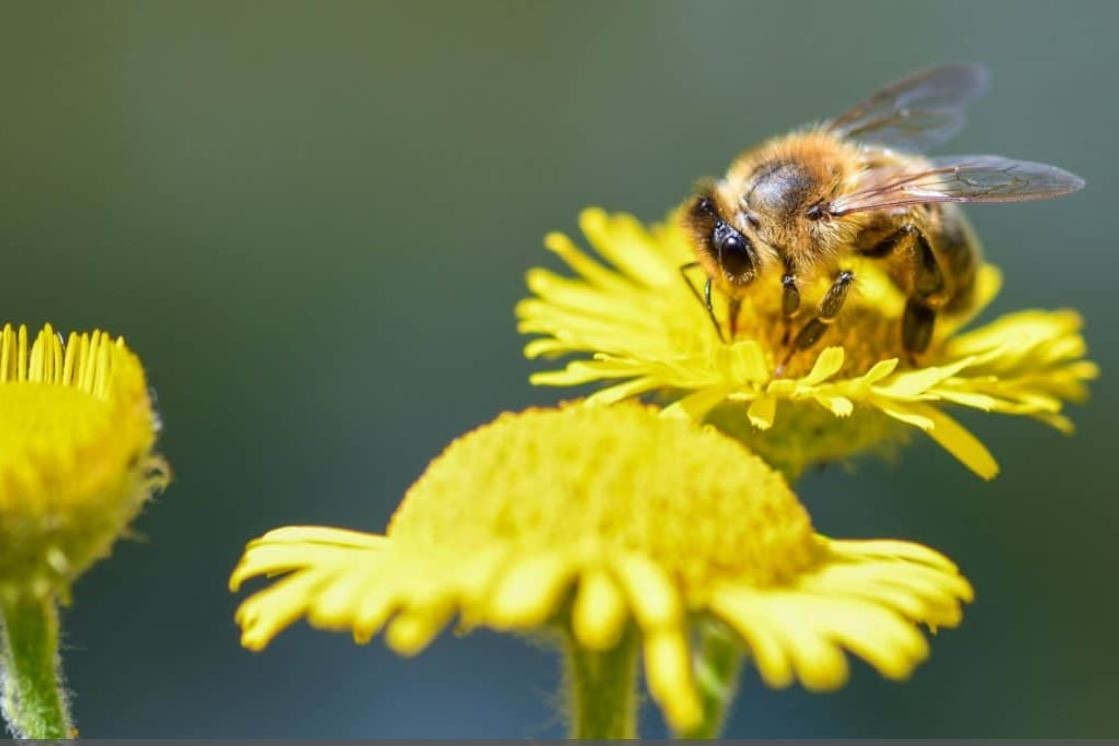
It is an exciting study published by scientists in the journal “The Company of Biologists” that shows that honeybees (Apis mellifera) can detect certain human diseases, including Covid-19. which shows that honeybees (Apis mellifera) can detect certain human diseases, including Covid-19. Provided that they are trained to do this little exercise.
“A scent imprint”
The explanation is relatively simple, at least on paper. Scientists explain that any infection or other pathology induces physiological changes in our body. As a result, volatile organic compounds (VOCs) differ between healthy and infected individuals. These VOCs therefore constitute an odor fingerprint that also depends on age, sex, diet, genetic background, metabolic conditions, etc. It is therefore a “signature” specific to each of us.
Diagnosis of diseases
The analysis of this odor print provides a lot of relevant information on the health status of individuals. However, the current Covid-19 pandemic requires the implementation of rapid tests to make a reliable diagnosis and implement rapid measures (quarantine of infected people and animals, special care, etc.). Hence the use of animals when tests are not available in some countries. It is known that dogs have been successfully trained to detect people infected with SARS-CoV-2. Similarly, some insects have very strong olfactory capabilities. Some flies can detect cancer in humans and bees can detect tuberculosis. Now these same bees can distinguish Covid-19 infected mink from healthy mink. And this is thanks to the development of Pavlovian reflex conditions. The bees “smell” the virus. They are taught to recognize it. And the results are astonishing: the reliability is about 92%! This allows scientists to consider applying these bee “tests” to populations far from traditional testing centers. In any case, the study of the Dutch researchers is hopeful for the evolution of Covid diagnostics. But not only that.
In a NASA-funded study, scientists at the University of Florida grew plants in soil collected from the moon, according to a study published Thursday in the journal Communications Biology.
The study is paramount to NASA’s long-term goals in human space exploration, NASA administrator Bill Nelson said in a press release. The research could also have implications for plants growing in harsh conditions on Earth, he added.
“We’ll need to use resources found on the Moon and Mars to develop food sources for future astronauts living and operating in deep space,” Nelson said.
In the study, researchers planted the seeds of Arabidopsis thaliana — a plant related to mustard greens, as well as other cruciferous vegetables, including broccoli and cauliflower — in lunar soil, which was sampled directly from the moon from missions Apollo 11, 12 and 17.
To compare, researchers also planted the seeds in a lunar simulant, designed to closely mimic real lunar soil.
Anna-Lisa Paul, a research professor in the horticultural sciences department at the University of Florida and the study’s first author, described the samples from the moon as “fine” and “powdery.” It also “sticks to everything,” Paul added.
The seeds started to sprout within days of planting.
“We planted them, walked away for a couple of days and then when we first went back in to take a look, it was amazing to see that every plant group, all the seedlings germinated,” said Paul, who is also the director for the University of Florida’s Interdisciplinary Center for Biotechnology Research.
Although all of the seeds sprouted, the ones that grew in lunar soil did not grow as “robust” as those in the control, according to the release. Some of the plants grown in the lunar soil samples had “stunted” roots and leaves, as well as some “reddish pigmentation,” the release said.
After the plants had grown for 20 days, researchers harvested the plants and prepared to study the plant RNA. The expressed gene patterns matched the way in which researchers had seen Arabidopsis react to stress before in other harsh environments, such as when soil carries excess salt or heavy metals, according to the release.
“Now that we have lunar soil that have been in contact with biology, we can begin to ask the question: how would you and how hard would it be to mitigate any of the adverse reactions that we saw?” said Robert Ferl, assistant vice president for research at the University of Florida and an author on the study.
ALBANY, N.Y. (NEWS10) – Wildlife experts caution that human interactions do more harm than good to wild animals. The State Department of Environmental Conservation (DEC) reminds New Yorkers to appreciate wildlife from a distance and resist the urge to pick up newborn fawns and other young wildlife
Officials said, “If you care, leave it there.” When people encounter young wildlife, they are most likely not lost or abandoned. Young wildlife is purposely left there by their parents to keep them hidden from predators while the adult animal is nearby collecting food for the newborn they noted.
According to officials, a good example of how human interaction with wildlife can be problematic is when people encounter white-tailed deer fawns in the wild. Fawns are born during late May and early June, and although they can walk shortly after birth, they spend most of their first several days lying still in tall grass, leaf litter, or sometimes relatively unconcealed.
ADVERTISING
Officials said the fawn’s best chance to survive is to be raised by an adult female (doe), which would rarely abandon their young. During this period, a fawn is usually left alone by the doe, except when nursing. If human presence is detected by the doe, the doe may delay its next visit to nurse.
Wildlife experts said the more serious cases of animals being abandoned are due to injury. Anyone that encounters a young wild animal that is obviously injured or orphaned may wish to contact the wildlife rehabilitator or DEC’s regional wildlife office.
Additionally, the DEC reminds the public that young wildlife are not pets. Experts said wild animals are not well-suited to life in captivity and may carry diseases that can be harmful to humans.
Fawns should never be picked up. A fawn’s protective coloration and ability to remain motionless help it avoids detection by predators and people.
“When young wildlife venture into the world, they may have a brief inability to walk or fly on their own, making some people believe they might need help,” DEC Commissioner Basil Seggos said. “However, young wildlife belongs in the wild, and in nearly all cases, interaction with people does more harm than good to the animals.”
Susan J. PrichardResearch Scientist of Forest Ecology, University of Washington
Keala HagmannAffiliate Assistant Professor, University of Washington
Paul HessburgResearch Ecologist, United States Forest Service
Susan J. Prichard receives funding from the Joint Fire Science Program, California Department of Forestry and US Forest Service.
Keala Hagmann has received funding from US Forest Service, California Department of Forestry, and Washington State Department of Natural Resources.
Paul Hessburg receives funding from the USDA Forest Service, Pacific Northwest Station to conduct basic and applied research. Dr. Hessburg is also Affiliate Professor of Landscape and Fire Ecology at the University of Washington, Oregon State University, and the University of British Columbia-Vancouver.
After so many smoke-filled summers and record-setting burns, residents of Western North America are no strangers to wildfires. Still, many questions are circulating about why forest fires are becoming larger and more severe – and what can be done about it.
Is climate change fueling these fires? Does the long history of fighting every fire play a role? Should we leave more fires to burn? What can be done about Western forests’ vulnerability to wildfires and climate change?
We invited 40 fire and forest ecologists living across the Western U.S. and Canada to examine the latest research and answer these questions in a set of studies published Aug. 2, 2021. Collectively, we are deeply concerned about the future of Western forests and communities under climate change.
Ironically, a chronic lack of fire in Western landscapes also contributes to increased fire severity and vulnerability to wildfires. It allows dry brush and live and dead trees to build up, and with more people living in wildland areas to spark blazes, pressure to fight every forest fire has increased the risk of extreme fire.https://public.tableau.com/views/USwildlandfiresandacreageburnedannually/USwildlandfires?:language=en-US&:display_count=n&:origin=viz_share_link&:showVizHome=no&:embed=true
The problem with fighting every wildfire
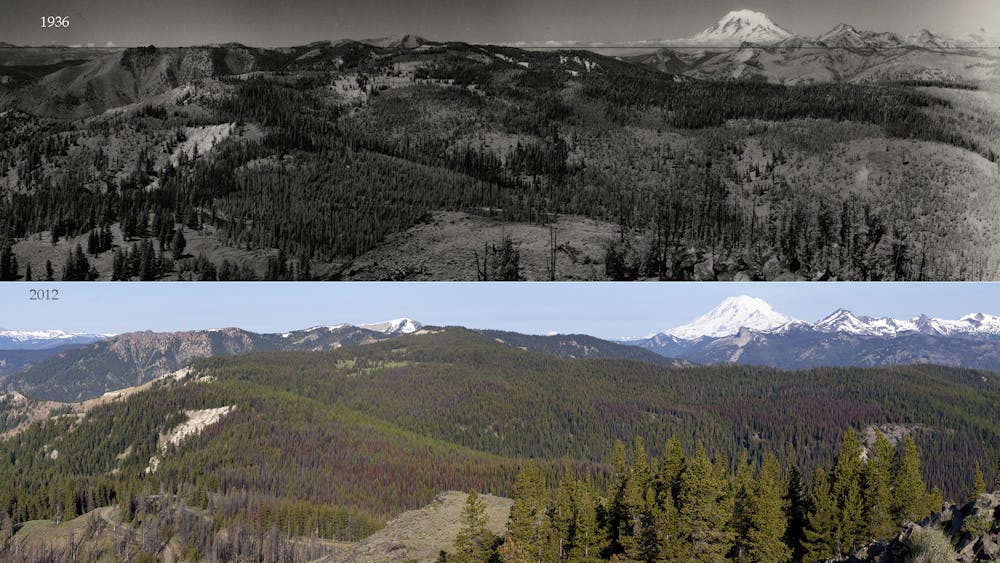
Historically, fire was a regular visitor to most Western forests, except moist locations like those along the Pacific Northwest coast and in British Columbia. Frequent or periodic fires from Indigenous burning and lightning strikes created patchworks of grasslands, shrublands and regenerating forests of all ages.
Past fires influence the way subsequent fires burn and what they leave behind. For example, Indigenous burning practices not only enhance cultural resources and wildlife habitat but also reduce the amount and connectedness of fuels that drive large, severe wildfires. Similarly, patchy burns from lightning ignitions create forest landscapes that are less likely to burn all at once.
Photos of Bethel Ridge, a moist mixed conifer forest in eastern Washington, show the difference in patchiness in 1936 compared with 2012. National Archives (1936); John Marshall Photography (2012)
The U.S. and Canada effectively suppress all but 2%-3% of wildfire starts. However, this small percentage of fires burn at the height of each fire season, when dry conditions and extreme fire weather thwart even the most aggressive attempts to suppress them.
Unintentionally, by focusing on short-term risks of wildfires, the U.S. is predisposing forests to burn under the very worst conditions. Active fire suppression contributes to what is often referred to as the wildland fire paradox – the more we prevent fires in the short term, the worse wildfires become when they return.
In one of the new studies, Paul Hessburg and co-authors explain how fire managers can mitigate the severity of future fires by managing fire-excluded forests to foster resilience to wildfires and drought. Management approaches include thinning dense forests, reducing fuels through prescribed burning and managing wildfires to restore more typical patterns of forests, meadows, shrublands and woodlands.
For example, fire exclusion has compromised aspen stands – biodiversity hot spots for everything from bears to butterflies. Increased forest cover diverts water from downslope meadows, allowing conifer forests to further encroach on aspen habitat.
A path forward
Amid the daunting reality of climate change and severe wildfires, there is a path forward for Western forests.
In a third article, Susan Prichard and her co-authors examine which adaptive forest management approaches have worked to increase resilience to wildfires and climate change. There is strong scientific evidence that fuel reduction treatments – including forest thinning, prescribed burning, Indigenous cultural burning and managed wildfires – are effective approaches for mitigating future fire impacts to Western forests. However, land managers can’t expect these treatments to work if they are applied to only a small fraction of Western forest landscapes.
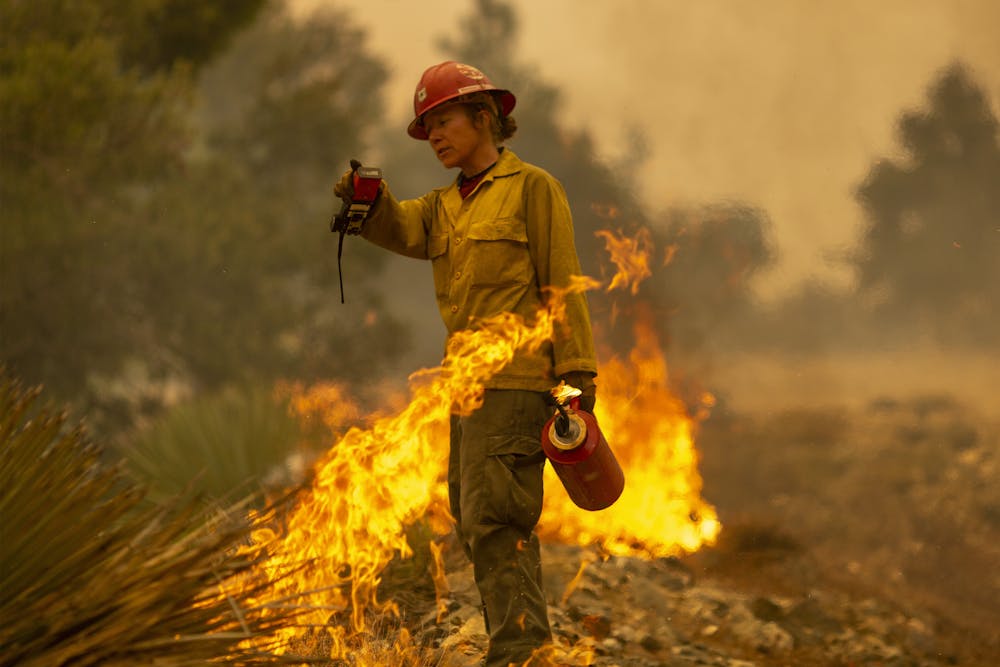
Mormon Lake Hotshots firefighter Sara Sweeney uses a drip torch in a controlled burn that removes fuel from a wildfire’s path in 2020. David McNew/Getty Images
When combined, forest thinning and prescribed burning in dry ponderosa pine and in dry and moist mixed-conifer forests have been shown to be highly effective at reducing the fire damage to forests. However, this type of treatment is not appropriate for all forest types. Fire managers in some wilderness areas and national parks have allowed fires started by lightning to burn in some wind and weather conditions. Over the past 40-plus years, these wildfires have been allowed to burn and reburn landscapes, generally limiting the size and severity of subsequent wildfires.
Given the immense diversity of Western forests, there is no one-size-fits-all solution. However, in forests that historically supported more frequent fire, revitalizing and continuing cultural burning practices, prescribed burning, and forest thinning combined with prescribed burning can reduce overcrowding and the potential for severe fires. Thinning and prescribed burning aren’t appropriate or feasible everywhere. In reality, only a portion of landscapes can be treated this way. Allowing wildfires to burn in more areas under moderate weather conditions is also part of the solution.
Promoting resilient Western forests will require that our society builds a new relationship with fire by creating fire-adapted communities and looking for opportunities to restore fire to Western forest landscapes.Paul Hessburg explains how fire suppression efforts allowed forests to overgrow and become fire hazards.
In this era of warmer, drier summers and longer fire seasons, there are no fire- or smoke-free solutions. The current approach to fire management poses unnecessarily high stakes for Western forests. There is no doubt that the future of Western forests is a fiery one. How we choose to live with fire is still up to us.
[Over 100,000 readers rely on The Conversation’s newsletter to understand the world.Sign up today.]
ONAWAY (AP) — Crews continued fighting a wildfire Saturday in a heavily forested area of northern Michigan that prompted the evacuation of 13 people from a hunting and fishing camp, officials said.
The fire was reported mid-day Friday and spread by Saturday morning to about 2,300 acres in Montmorency and Cheboygan counties, Michigan Department of Natural Resources spokeswoman Kerry Heckman said. Officials believe the fire was likely sparked by a lightning strike during a Wednesday thunderstorm.
One firefighter suffered a minor injury, but no other injuries or building damage had yet occurred, Heckman said. Those evacuated were from the Black River Ranch near the town of Onaway in the far northern end of Michigan’s lower peninsula.
Heckman said no additional evacuation were anticipated and no residential areas were immediately threatened. Crews estimated the fire was about 30% contained on Saturday.
FILE – The fox kits, collected between April 1 and April 14, came from three separate dens in Lapeer, Macomb and St. Clair counties.David Kenyon/MI Dept. of Natural Resources
Three red fox kits died from highly pathogenic avian influenza in Michigan, which is the state’s first confirmation of the virus in wild mammals.
The Michigan Department of Natural Resources received confirmation Wednesday evening that the fox kits had died and announced the news in a press release on Thursday.
The fox kits, collected between April 1 and April 14, came from three separate dens in Lapeer, Macomb and St. Clair counties, according to the release.
The DNR received a report from a wildlife rehabilitator in southeastern Michigan about the fox kits exhibiting neurologic signs of avian influenza before death…
ANCHORAGE, Alaska (AP) — A man who stars on a TV show called “The Bear Whisperer” has been accused of illegally killing a black bear in Alaska’s Kenai Fjords National Park and lying about where it was killed.
The U.S. Attorney’s Office filed misdemeanor charges last Friday against Harvey Neil Anthony of Maine and Nature Productions Inc. Anthony goes by the name of Blaine Anthony in the television series he also produces, the Anchorage Daily News reported.
An online court records system did not show an attorney listed for Anthony. There was no immediate response to an email seeking comment sent to Nature Productions Inc. on Thursday by The Associated Press. The charging documents said Anthony is the company’s sole shareholder.
Get an Entire 6 Months of Digital Access for Only 99¢




 We believe in the free flow of information