GOP Senator Mitt Romney admitted Wednesday that former President Donald Trump continues to have firm control over his party.
Romney holds the distinction of being the only Republican senator to have voted to convict Trump in both of his Senate impeachment trials. The unsuccessful 2012 Republican presidential nominee has long been one of Trump’s harshest critics but has been a somewhat lonely voice within his party, which has largely aligned around Trump and his Make America Great Again, or MAGA, movement.
After Trump’s endorsement of Ohio GOP Senate candidate J.D. Vance propelled him from third place in the polls to victory in the Republican primary this week, many analysts and supporters of the former president touted the win as a sign of Trump’s continued influence. Romney agreed in comments to Politico on Wednesday.
“I don’t delude myself into thinking I have a big swath of the Republican Party,” the Utah senator said. “It’s hard to imagine anything that would derail his support. So if he wants to become the nominee in ’24, I think he’s very likely to achieve that.”
GOP Senator Josh Hawley, a staunch Trump supporter who led the Senate effort to object to President Joe Biden‘s 2020 victory on January 6, 2021, gave a similar assessment. “He’s the leader of the party, that’s clear,” Hawley told Politico, referring to Trump. “If he decides to run [in 2024], he will be the nominee.”
Political activist Matt Schlapp, the chair of the American Conservative Union, hailed Vance’s victory in Ohio as a sign that the GOP had been “transformed,” In an opinion article published by Fox News on Wednesday, he said GOP primary candidates would succeed “due to their own abilities and association with Donald Trump, and not because of their fealty to Washington, Republicans or the support from major corporations.”
Loaded: 85.91%PauseLQCaptionsFullscreen
Watch: Mitt Romney Applauds Jackson Alone While GOP Senators Leave ChambersUnmute
Whether Trump, 75, runs for president again in 2024 is not certain. Although he has not confirmed his intentions, he has repeatedly hinted at the possibility and said his supporters will be “very happy” with what he decides.
Polls have consistently shown Trump would be the favored Republican contender by a substantial margin. Many recent polls also show that he would be well positioned to defeat Biden, 79, who has said he plans to seek a second White House term.
“If I ran, I can’t imagine they’d want to run,” Trump told The Washington Post in an April interview, discussing the possibility of other GOP contenders for the 2024 nomination. “Some out of loyalty would have had a hard time running. I think that most of those people, and almost every name you mentioned, is there because of me. In some cases, because I backed them and endorsed them.”
If 2024 does end up being a rematch between Biden and Trump, polls suggest the former president is currently in the lead. The Real Clear Politics average of polls shows Trump with a narrow 0.8 percent advantage over Biden.
Biden is supported by about 44.2 percent of voters, while Trump has the backing of 45 percent. However, some April polls showed Biden 1 to two points ahead, and others showed Trump 1 to 4 points in the lead.
Newsweek reached out to Trump’s press office for comment.
Findings suggest that the monkey is a cross between a proboscis monkey and a silvery langur. While these two species inhabit the same forest, they have very different characteristics and are distantly related.
This is the first time a hybrid of the two species has been recorded, the study said. It is also only the second time intergeneric hybridization in wild primates has been recorded.
Hybridization between closely related species is not unheard of, however the offspring of two distantly related species is “rarely observed in the wild.”
Proboscis monkeys and silvery langurs are not even part of the same genus—the two monkeys physically look very different from each other. Proboscis monkeys are larger than silvery langurs. They also have a light-colored face and large noses, while silvery langurs are black, with smaller noses—the hybrid monkey has characteristics of both.
Hybridization can often cause infertility, particularly with distantly related species, as it causes malfunctions in the chromosomes. However, a newer photograph suggest this female hybrid is fertile. The photograph show the hybrid monkey in 2020 with an infant and “swollen breasts,” suggesting she was lactating.
Despite her apparent fertility, scientists are still concerned about what the hybridization could mean.
Co-author of the report and senior lecturer at the University of Science in Malaysia, Nadine Ruppert, told Newsweek that discovering the hybrid was alarming.
“Seeing this putative hybrid is per se not of concern to the balance of the ecosystem or the two species, however it is an alarming symptom of an ecosystem that already seems out of balance,” she said.
Ruppert said the males of both species will usually disperse from their families upon adolescence to find mating opportunities. And, it seems that these mating opportunities have been “impeded” due to the fragmentation of their habitats, she said. This could explain how the hybrid came to be.
Habitat fragmentation in this area has largely been caused by “anthropogenic development and agriculture”, Ruppert said, referring to human influence on the environment.
“In the long-run, one of these two threatened primate species may be displaced by the other from the area, whereby proboscis monkeys seem to be more dominant than the silver langurs,” she said. “If habitat connectivity and dispersal opportunities will not be restored, it is also possible to see another hybrid soon, as mating between the two species seems to occur commonly in the area. But maybe this also was just a one-off random event, it’s hard to tell without further in-depth studies and long-term monitoring.”
The Moon as seen by the Galileo deep-space probe in 1992
NASA/JPL/USGS
VIEW 1 IMAGES
The Moon may look like a big dry ball, but there’s more water up there than you might expect. In a new study, scientists have shown that at least some of it could have been showered onto the lunar surface from the Earth’s atmosphere.
Over the past decade or so, water has been detected on the Moon by many spacecraft. Most of it appears to be in the form of ice that’s particularly concentrated around the poles, while other regions of the lunar surface may host water-rich minerals. Tracking the vital stuff could inform the locations of future crewed missions to the Moon.
But how did that water get there in the first place? The most widely accepted explanation is that the majority was delivered by comet and asteroid impacts over billions of years, but some of it may have been deposited as hydrogen and oxygen ions from the solar wind. Yet more may date back to the formation of the Moon itself, when a huge protoplanet crashed into the early Earth 4.4 billion years ago, bringing some water with it.
Now, researchers from the University of Alaska Fairbanks have proposed a new mechanism that could account for a portion of the water on the Moon – it rains down from the Earth’s atmosphere for a few days every month.
The Earth’s magnetic field creates a bubble known as the magnetosphere, which protects us from cosmic rays. This bubble is rounded at the leading edge and forms a point behind the planet, much like the tail of a comet. And for five days every month, the Moon passes through this tail.
Some of the Earth’s field lines are broken, with only one end still connected to the planet, and hydrogen and oxygen ions from the atmosphere can escape into space through these. However, when the Moon passes through the magnetotail, it causes some of these broken field lines to reconnect, sending the loose ions hurtling back towards Earth. Some of these strike the surface of the Moon.
“It is like the Moon is in the shower – a shower of water ions coming back to Earth, falling on the Moon’s surface,” said Gunther Kletetschka, lead researcher on the study.
The researchers calculate that billions of years of this process could have dumped 3,500 km3 (840 miles3) of water on the lunar poles. And that’s just based on the lowest volume calculation, where only one percent of the ions escaping Earth reach the Moon.
Of course, the Moon’s water most likely arrived through a variety of mechanisms, of which this new idea is just one.
Russia’s chief propagandist has issued multiple threats against Great Britain for supporting Ukraine, saying the UK could be targeted with nuclear weapons that would wipe it off the map.
Dmitry Kiselyov, a TV host known as “Vladimir Putin’s mouthpiece,” made the threats Sunday on Russian state TV during a segment he called “The Sinkable Island,” according toThe Washington Post.
“Why threaten horizonless Russia with nuclear weapons when you sit on a small island,” Kiselyov said, apparently speaking to UK Prime Minister Boris Johnson. “Just one launch, Boris, and England is gone. Once and for all. Why play with us?”
GRAND RAPIDS, Minnesota — One of the 54 deer shot by sharpshooters in recent weeks did indeed test positive for chronic wasting disease, the Minnesota Department of Natural Resources confirmed this week.
The News Tribune reported last week that the deer was suspected to be carrying the always fatal disease. The other 53 deer shot, and several car-killed deer collected, all tested negative.
The culling and testing effort came after a car-killed deer that was tested in March came back positive for CWD.
With two wild deer within the city now confirmed to have carried the disease, DNR officials are mulling their response. The deer are…
A 17-year-old Los Fresnos High School football player is recovering after he was injured in a hunting accident.
RJ Limon has been hospitalized at Valley Baptist in Harlingen since last Wednesday. He’s been getting a lot of support from his school, friends and football team who are wishing and praying for the best.
“It’s a miracle,” said Ruben Limon, RJ’s dad. “The surgeries he’s gone through. He’s gone through three surgeries. He’s doing really good.”
Limon is a junior and a linebacker for the Los Fresnos High School football team, earning recognition the previous year as a third-team all-state linebacker.
“RJ is a, he’s a fighter,” said Los Fresnos High School Head Football Coach David Cantu. “He’s someone who is known on our team as very courageous, fearless.”
Stephen King unfurled a map on the hood of a colleague’s car in Winchester, England. Traveling across the countryside, in the middle of World War II, the car’s crankshaft had given out, stranding the pair of crop researchers on the side of a dusty back road. On his map, King carefully began to trace lines with his index finger, looking for a route home. In the distance, a motorcycle roared.
As the two-wheeler approached, King noticed it was moving at warp speed — and it was entirely horizontal. The driver, an Army dispatch writer, had lost control. The bike came sliding in King’s direction and slammed into the car. He jumped a nearby hedge, avoiding a fatal collision.
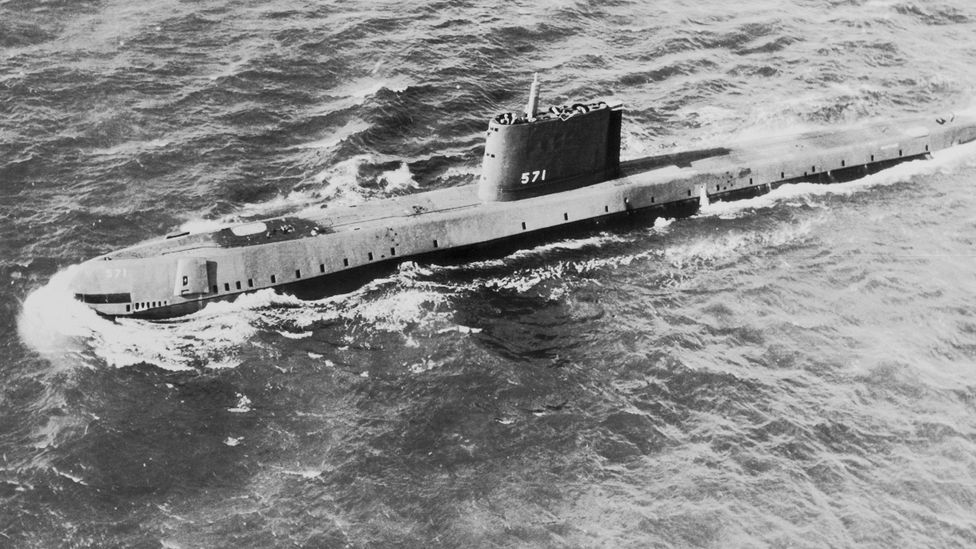
In 1958, a US submarine became the first vessel to reach the North Pole – by travelling under the ice. Its mission unlocked a whole new world for scientists to explore.
O
On 3 August 1958, the commander of the world’s first nuclear submarine made an extraordinary, if somewhat tongue in cheek, entry in his logbook: “Embarked following personage at North Pole…” wrote USS Nautilus commander William Anderson, “…Santa Claus, affiliation: Christmas.”
It was the final sentence of a celebratory record of the first crossing of the North Pole by any ship under its own power, a top-secret mission codenamed ‘Operation Sunshine’.
The transit took place with the 97-metre-long (319ft) submarine and its 116 crew (it’s not clear in the logbook if that includes Santa) entirely submerged under…
A landmark study revealed connections between carrying an unwanted pregnancy to term and pregnancy complications, worse self-reported health, and precarity for existing children.
“For every outcome we analyzed, women who received an abortion were either the same or, more frequently, better off than women who were denied an abortion,” the lead researcher of a landmark study on abortion wrote.
The overturn of Roe v. Wade, possibly presaged this week in the leak of a draft Supreme Court opinion, would be a development of enormous political and social consequence. Most fundamentally, however, such a ruling could almost immediately trigger tectonic change in the health and well-being of birthing people and children across the country.
We know this due to important research published in 2020 that compared the fates of women who were forced to carry pregnancies to term versus those who were provided abortions. The influential Turnaway Study, as it’s commonly referred to, found that, among other things, women who were denied an abortion endured more serious pregnancy complications, more chronic pain, and more short-term anxiety.
The Supreme Court’s decision is not final: Opinions go through many drafts, and, in theory, some of the justices could still change their minds before handing down their final decision in Dobbs v. Jackson Women’s Health Organization.
Yet if the court were to issue a ruling along the lines of what Justice Samuel Alito has drafted — as published this week by Politico — more than 20 states are expected to immediately ban abortion in most cases, with half of those having “trigger laws” already on their books(meaning abortion bans that would take effect almost immediately if Roe were overturned). In an instant, a common medical service that has been constitutionally protected for nearly half a century would be outlawed in almost half the country.
The precise effect of such a sweeping loss in abortion access is impossible to know from our vantage point in time. In many of these states, abortion access has already dwindled over the years as state legislators passed onerous restrictions aimed at forcing clinics to shut down — half-measures they could take until a conservative majority on the nation’s high court, as there is currently, could overturn Roe outright.
Many pregnant people rely on mail-order pills for abortions, and President Joe Biden’s administration has pledged to safeguard access for them (though anti-abortion states are already attempting to restrict access to those drugs). Some seeking an abortion may also travel to another state where abortion is still legal, though, because of the cost, it would likely be more privileged people who are able to take advantage of that option. Still, both options could help limit the consequences of a decision overturning Roe.Top ArticlesREAD MOREA better solution to America’s bighurricane problem
Nevertheless, it’s inevitable that more unwanted pregnancies would be carried to term if the court were to negate a federal right to abortion. Diana Greene Foster, a professor at the University of California San Francisco and the lead researcher on the Turnaway Study, which analyzed how women who received an abortion and women who were denied one were affected by that important juncture in their life, roughly estimates that between one-quarter and one-third of women with an unwanted pregnancy will bring the pregnancy to term if Roe is overturned.
Foster and her colleagues have given us a strong idea of the health, social, and economic consequences of outright abortion bans. The Turnaway Study began in 2007 and followed more than 1,000 women for five years to assess how their lives had been altered, if at all, by the provision or the denial of an abortion. Some of the women had an abortion shortly before reaching the gestational limit set by their state or provider, while others had just passed that limit and were denied an abortion as a result. The differences in the women’s experiences from that critical moment onward were the purview of the study.
“We find no evidence abortion hurts women,” Foster writes in the 2020 book The Turnaway Study that covered the research’s findings. “For every outcome we analyzed, women who received an abortion were either the same or, more frequently, better off than women who were denied an abortion.”
The mental health of women who received an abortion was better immediately after the procedure than that of women who were denied one. Their physical health fared better over the longer term. Their subsequent children developed better.
Foster presents a nuanced picture, noting, for example, that after the five-year period of the study, almost none of the women who ended up carrying an unwanted pregnancy to term said that they still wished they’d had an abortion. But Foster is nevertheless unequivocal in her conclusions about what being denied an abortion meant for the women involved: “We find many ways in which women were hurt by carrying an unwanted pregnancy to term.”
Physical health
The most unexpected and tragic outcome noted in the Turnaway Study was that two of the women died because of childbirth complications. It came as a shock to Foster, who wrote that she “did not expect to find even one maternal death in a study of 1,000 women.” The US maternal mortality rate is 1.7 per 10,000, meaning the odds of two women in 1,000 dying were exceedingly low.
Foster was careful not to be definitive about this finding, writing that a much larger sample size would be necessary to draw any firm conclusions about the relationship between being denied an abortion and maternal mortality. The implications remain grim, however: “This level of maternal mortality is shocking,” she wrote.
Short of death, women who are denied an abortion are more likely to have serious complications than women who received an abortion. The Turnaway Study found that 6.3 percent of the women who had given birth suffered life-threatening complications versus about 1 percent of women who had complications from an abortion.
Women who were denied an abortion also saw a higher risk of gestational hypertension, which increases their risk for cardiovascular disease later in life. The study found that 9.4 percent of women who gave birth experienced hypertension during the pregnancy versus 4.2 percent of women who had second-trimester abortions and 1.9 percent of those who had first-trimester abortions.
The women who gave birth also experienced slightly higher rates of chronic head pain and joint pain afterward. On self-reported health, a metric shown to be a strong indicator of future health and mortality, 27 percent of women who carried their pregnancies to term after being denied an abortion said they were in fair or poor health versus 21 percent of women who had second-trimester abortions and 20 percent of women who had an abortion in the first trimester.
“To the extent that there were differences in health outcomes,” Foster wrote, “they were all to the detriment of women who gave birth.”
Mental health
Foster writes with some derision about the patronizing attitudes of anti-abortion legislators who have warned of dire mental health consequences, depression and even suicide, for women who receive abortions.
Her study discovered a very different reality: “We found no mental health harm from having an abortion.”
In fact, she elaborates elsewhere, “The most common emotional response to having had an abortion is none.” Two-thirds of the women in the study who had an abortion said they had no or very few emotions about the procedure after five years; 95 percent of the women said the decision was the right one for them, a share that increased gradually over the five years. Only 14 percent of the women said they still felt sadness after five years, and only 17 percent said they felt guilt.
The women who reported difficulty deciding about an abortion before ultimately getting one were the ones who had more negative emotions, as did women who live in communities that look down on abortion and women with less social support.
Instead, the main mental health effect the Turnaway Study measured was that women who were denied an abortion experienced higher rates of anxiety and lower self-esteem in the initial weeks and months after being turned away. On those metrics, they began catching up to the women who received an abortion by six months, and by a year, the differences between the two groups of women had evaporated.
Like those who had abortions, the women who were denied them came to be content with their situation, Foster noted. The share who said they still wished they had gotten the abortion dropped from 65 percent one week after being denied an abortion to 7 percent by their child’s first birthday.
Ultimately, the study detected no long-term differences between the two groups in the rates of depression, PTSD, self-esteem, life satisfaction, drug abuse, or sexual abuse.
Child development
The effect of denial of abortion access extended beyond the women involved to their children, both those they already had and those who were born out of an unwanted pregnancy.
Most of the women seeking abortions in the Turnaway Study were already mothers, as is often the case nationally. Being turned away for the procedure led to the women’s existing children living in circumstances more precarious for their financial and physical well-being. They were more likely to live in poverty at some point over the next five years (72 percent versus 55 percent of the children of women who received their desired abortion) and more likely to live with adults who had trouble paying for food and housing (86 percent versus 70 percent).
The ripple effects were also felt in the relationships between women who were denied abortions and the children born out of that unwanted pregnancy. Those women were much more likely to answer survey questions in a way that signaled a failure to emotionally bond with their new baby than the women who received an abortion and went on to have another baby later in their lives.
“Scientific literature on child development shows an association between poor parent-child attachment and children’s long-term psychological and developmental outcomes,” Foster wrote.
The findings of the Turnaway Study add to that body of research. Children whose mothers were denied an abortion were less likely to accomplish fine motor, gross motor, receptive language, expressive language, self-help, and social-emotional developmental milestones on time than the children of women who did receive an abortion. It was a small but noteworthy difference: 73 percent versus 77 percent.
Foster ended her book contemplating the Turnaway Study’s findings and the possibility of a world in which Roe v. Wade was overturned, which seemed plausible in the summer of 2020 after Donald Trump named two highly conservative justices to the Supreme Court. Across the inquiries that made up her and her colleagues’ landmark project, they found a profound impact when abortions are denied. Those aftershocks touched every part of a person’s life.
If the Supreme Court hands down the ruling signaled in Alito’s draft, many more women across the United States will have to live with those consequences.
“For those women,” Foster wrote in what may prove to be the twilight of Roe v. Wade, “all the burdens outlined in this book — worse physical health, reduced life aspirations, higher exposure to domestic violence, increased poverty, a lowered chance of having a wanted pregnancy, worse outcomes for their other children — will result.”
Millions turn to Vox’s well-researched, accessible, and approachable explanatory journalism to understand a chaotic world, and gain clarity on how to act. We’re committed to keeping our work free. Financial contributions from readers help us do that, and hold us accountable to you, our readers. Support our mission,
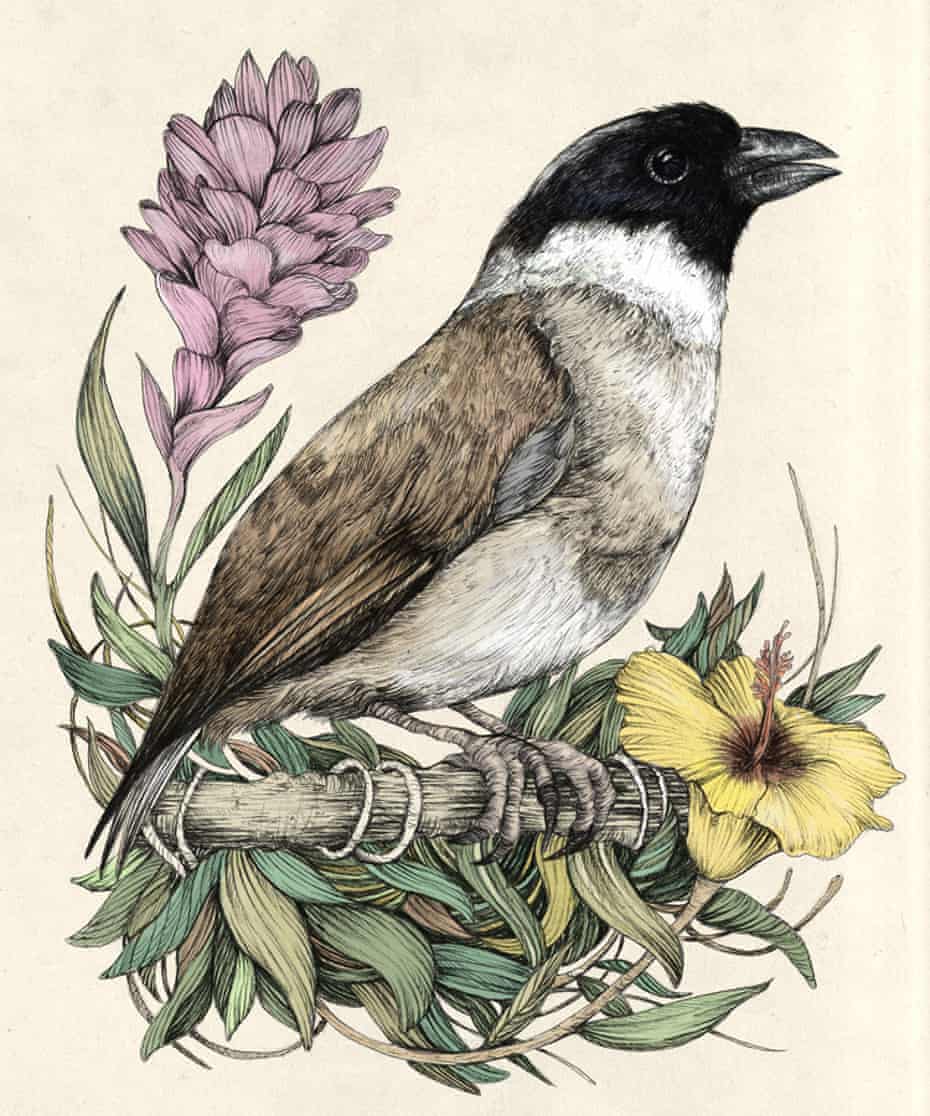
Frantic conservation efforts couldn’t save the tiny, intricately colored songbird, whose obit is the first in our new series of memorials for species that have gone extinct in living memory
The Hawaiian po’ouli: ‘I’m crying for it again now.’Illustration: Ricardo Macia Lalinde/The Guardian
The last po’ouli died in an unusual nest. Too weak to perch, the brownish-greyish songbird rested in a small towel twisted into a ring. He was the last of his species, the last in fact of an entire group of finches, and occurred nowhere on Earth outside its native Hawaii. For weeks, as scientists tried to find him a mate,he had been getting sicker. The only remaining po’ouli had just one eye. Alone in the towel, alone in all the world, he closed it.











 Top Articles