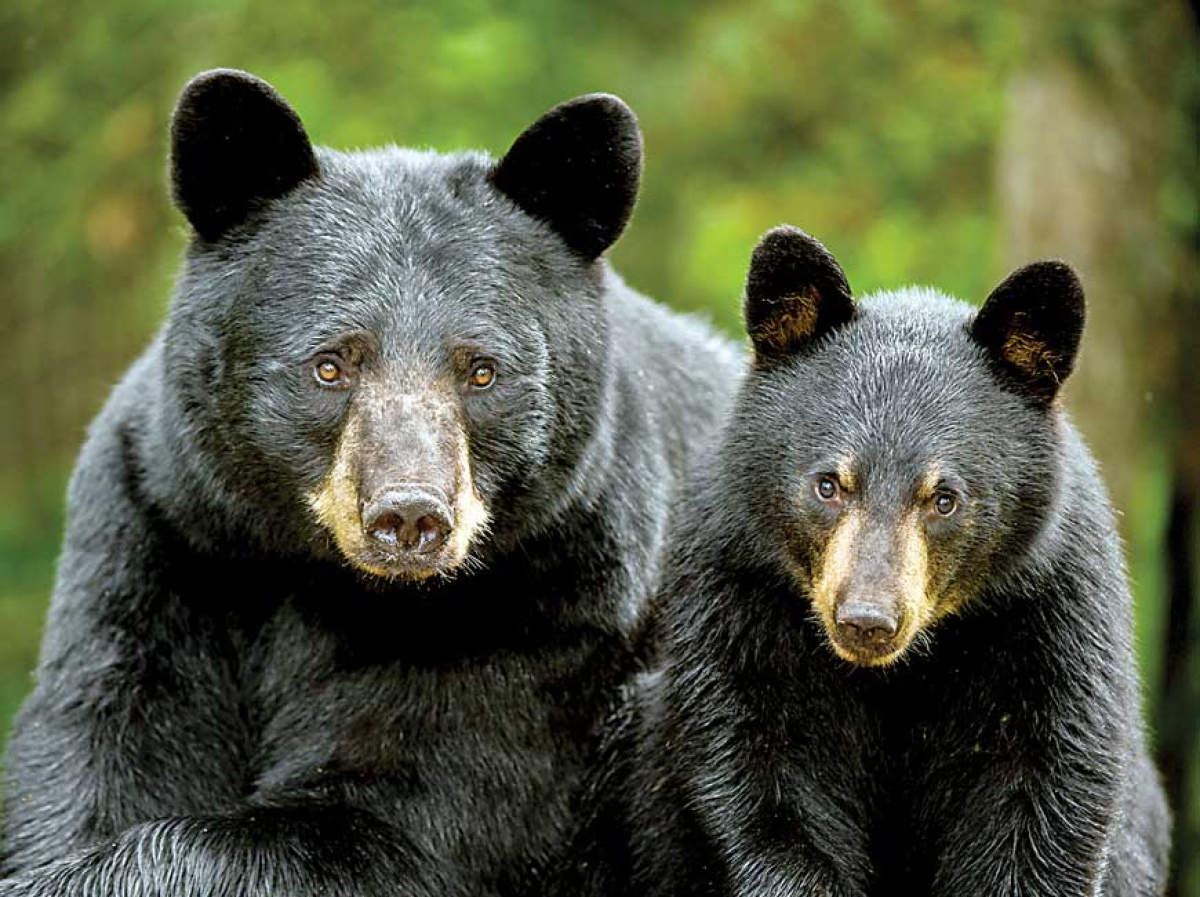
Anew ruleallowing bear hunting in three Western North Carolina sanctuary areas currently off-limits to the practice might not take effect following an April 21 vote from the N.C. Rules Review Commission.
The Rules Review Commission received a barrage of letters requesting legislative review of the rule, with thepacketcollating those letters totaling 439 pages.State lawrequires legislative review for rules that receive 10 or more letters requesting it.
Rules sent for legislative review have delayed implementation dates and might end up not being enacted at all. According to state statute, the clock will start ticking when the N.C. General Assembly convenes for its short session on May 4. Legislators will have 31 days to file a bill specifically disproving the rule. If such a bill is filed in that timeframe, then the rule cannot become effective until…
The man was working on a commercial farm in Colorado and was involved in culling poultry suspected to be infected when he was directly exposed to the H5N1 flu, the state’s health department said in a release.
The man, described as younger than 40, has reported only one symptom — fatigue — and was taking the antiviral drug Tamiflu, the department said.
A positive test administered this week by the state health department, which said it has been monitoring people exposed to poultry and wild birds, was confirmed Wednesday by the Centers for Disease Control and Prevention, the agency said.
Health officials still don’t know with certainty whether the man was actually infected with the virus or if the virus had only contaminated the surface of his nose at the time the test was taken, Colorado state epidemiologist Rachel Herlihy told NBC News on Friday.
“With all that said, we are certainly being cautious here and treating this like it could be an infection,” she said.
The state health department described the man as a prison inmate who was working at a Montrose County farm as part of a pre-release employment program.
The farm had recently experienced an outbreak of the H5N1 bird flu, and he and other incarcerated individuals had been tasked with helping to euthanize the flock, Herlihy said.
They were given personal protective equipment, though it’s unclear whether all of it was being properly used, she said.
The other incarcerated people are being monitored but have tested negative for the virus. The man, who tested positive, has since tested negative but has been asked to remain in isolation until Saturday, she said.
The state health agency and the CDC said Thursday that the risk the virus poses to people still remains low.
Get the Morning Rundown
Get a head start on the morning’s top stories.SIGN UPTHIS SITE IS PROTECTED BY RECAPTCHA PRIVACY POLICY | TERMS OF SERVICE
Although public health officials have worried that a mutation could present a threat to humans, only one other human case has been detected worldwide — a person who raised birds in the United Kingdom tested positive for the virus in December. The person was asymptomatic, the CDC said.
A boat speeding on the Jurura river in the heart of the Brazilian Amazon Forest on March 15, 2020. The greatest tropical forest lost last year was in Brazil.Florence Goisnard/AFP/Getty ImagesCNN—
The area of tropical forest destroyed in 2021 was enough to cover the entire island of Cuba, and sent morecarbon dioxide into the atmosphere as Indiadoes in an entire year from burning fossil fuels, according to an analysis published Thursday.
Some 11.1 million hectares (around 43,000 square miles) of forest was destroyed, predominantly by logging as well as fires, the analysis by the World Resources Institute’s Global Forest Watch and the University of Maryland found. Some ofthose fires were deliberately litto clear land and many were exacerbated by climate change.
Tropical primary forest lossWorld Resources Institute
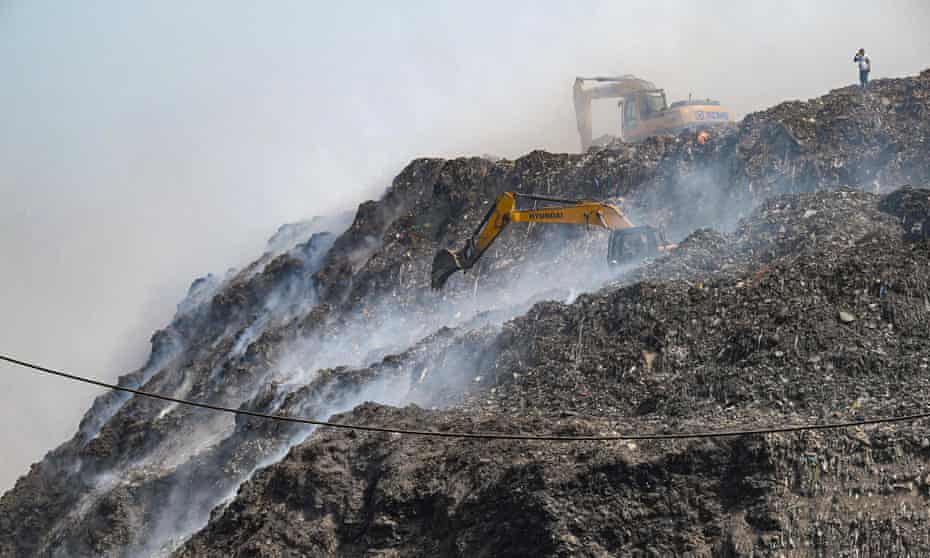
Power stations face coal shortages while burning landfill chokes residents in New Delhi
Fire broke out at the Bhalaswa landfill in New Delhi on 28 April.Photograph: Prakash Singh/AFP/Getty Images
AFPinDelhiThu 28 Apr 2022 16.36 EDT
Millions sweltered in a dangerous early summer heatwave acrossIndiaand Pakistan that has led to power and water shortages as annual furnace-like temperatures hit South Asia.
In New Delhi, a burning rubbish dump choked residents for a third day on Thursday as temperatures crossed 45C (113F) in parts of the region. Forecasters warn it will get even hotter this weekend.
Heatwaves have killed more than 6,500 people inIndiasince 2010, and scientists say climate change is making them harsher and more frequent across South Asia.
“This is the first time I’ve seen such horrible weather in April. Usually, we’re prepared for this in May and onwards,” said 30-year-old Delhi housewife Somya Mehra, as…
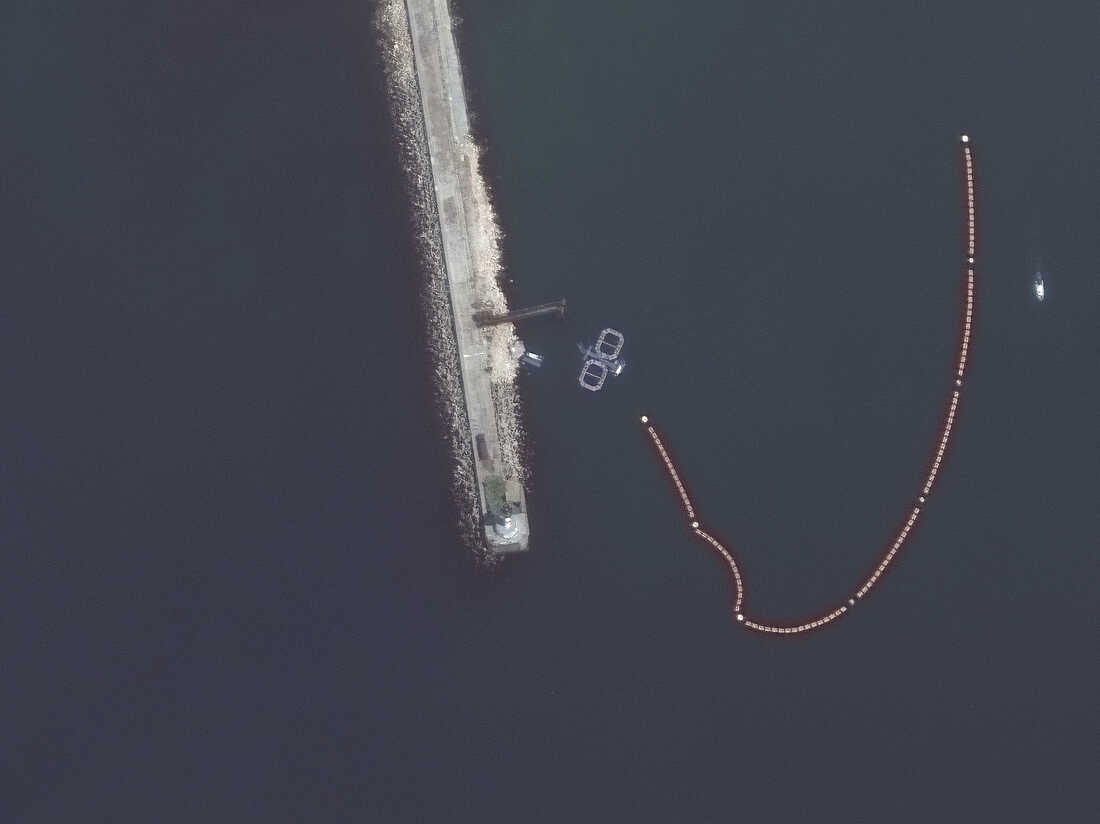
Satellite imagery from Friday appears to show dolphin pens at the entrance to Sevastopol’s harbor. The naval base there is important to the Russian military because of its proximity to the Crimean Peninsula.
Russia’s military is using specially trained dolphins to defend a critical naval base off Crimea, according to an analysis published by U.S. Naval Institute News.
Submarine analyst H I Sutton wrote for the online news and analysis outlet — which is editorially independent from the nonprofit USNI — this week that satellite imagery from Maxar Technologies shows two dolphin pens at the entrance to Sevastopol’s harbor, the Russian navy’s “most significant” naval base in the Black Sea. He said the pens were moved there in February, around the time that Russia launched its full-scale invasion of Ukraine.
The Maxar News Bureau confirmed to NPR that it agrees with that analysis. The firm also provided new satellite images, taken on Friday and showing a closer view of dolphin pens in the water at the entrance to the bay.
Andrew Lambert, a professor of naval history at King’s College London, told NPR that he isn’t surprised by the use of defense dolphins in the conflict, since they were in Sevastopol’s harbor “long before it started.”
Indeed, the Soviet navy ran several marine-mammal programs during the Cold War, including training dolphins near Sevastopol. That particular unit transitioned to the Ukrainian military when the Soviet Union collapsed, Sutton explained, but “barely stayed open” despite attempts to remain operational. Russia took control of the unit after it annexed Crimea in 2014, and it expanded the program once again.
“The Ukrainian work that pre-dated the seizure of Crimea was a continuation of existing programmes, and we know the Russians seem to be using other marine mammals, including belugas in the Arctic,” Lambert added in an email.
And Russia isn’t the only country to do this kind of work with marine mammals. In fact, the U.S. Navy has a history of similar programs, and it trains dolphins as well as seals for similar purposes to this day. Here’s a look at why dolphins make good defenders and which countries rely on them.
Dolphins’ agility, speed and sonar make them valuable assets
Dolphins play at the Sevastopol State Oceanarium in Crimea, on March 30, 2014. After Russia annexed Crimea, its military revived a Soviet-era dolphin-training program.
Pavel Golovkin/AP
Many kinds of animals have been key assets in war, Lambert says, but dolphins are especially well-suited to their underwater duties because they are “fast, agile and brilliantly adapted to hunting and killing underwater.”
“Dolphins would be ideal for killing human divers… fast, clever, and powerful,” he adds. “There is no evidence that they have done this, or are trained to do so, but it is probable. Any diver in the harbour at night would be a target.”
According to Sutton, the dolphins in the Black Sea could be tasked with counter-diver operations, with the aim of preventing Ukrainian special operations forces from infiltrating the harbor underwater and sabotaging the high-value Russian warships there.
Dolphins can also use echolocation — also called sonar — to detect underwater mines. Sam LaGrone, an editor of USNI News, told PRX’s The Worldthat dolphins can detect things that electronic and mechanical systems are unable to find. They’re also less likely to accidentally set off those mines, he added, since they’re nimble in the water and, unlike ships, don’t carry a “magnetic signature” that could detonate one.
He also noted they can swim faster than people and are also more trainable, since they can dive down and back up to the water’s surface quickly without having to deal with decompression sickness like a human diver would.
And dolphins make excellent patrol animals, he said, calling them “kind of like the guard dogs of the sea.” Lambert made a similar comparison, noting powerful dogs are used for security on land.
Still, putting dolphins not only in captivity but on the potential front lines of a conflict raises a slew of ethical questions. Activists have long called on the U.S. to end its dolphin program, calling it “inhumane and outdated.”
Dolphins and other marine mammals have been trained to do this work for decades — even as technology has improved. So why hasn’t that changed?
“Someday it may be possible to complete these missions with underwater drones, but for now technology is no match for the animals,” the Navy says.
And, LaGrone adds, “Sometimes you can’t beat hundreds of thousands of years of evolution.”
There’s a long history of animals playing a role in war (and possible espionage)
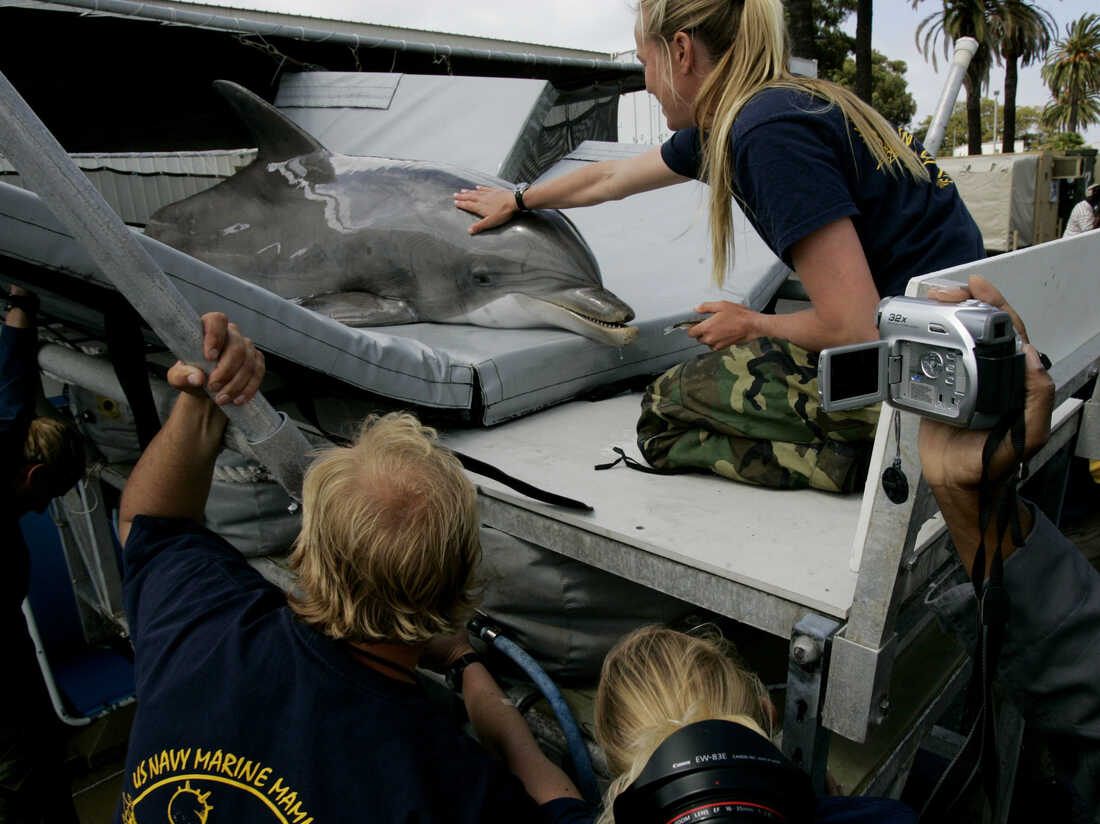
A trainer calms a U.S. Navy dolphin before it is transported to a boat prior to a training exercise at Naval Base Point Loma in 2007 in San Diego, Calif. The Navy’s Marine Mammal Program was declassified in the 1990s.
Sandy Huffaker/Getty Images
The use of defense dolphins — and marine mammals more generally — is by no means a new practice.
Lambert says that during World War I, the United Kingdom’s Royal Navy bribed trained circus sea lions to find submarines.
“They could find the submarines, but got bored,” he adds.
EUROPE
Dolphins In Crimea Join Russian Navy
Add toPLAYLISTToggle more options
The U.S. established the Navy Marine Mammal Program in 1959. It operates out of San Diego, where it trains bottlenose dolphins and California sea lions to “detect, locate, mark and recover objects in harbors, coastal areas, and at depth in the open sea.”
(The Navy’s program was declassified in the early 1990s, though its website still reminds people not to believe the rumors reinforced in the popular 1973 sci-fi thriller The Day of the Dolphin — in which dolphins are trained as offensive weapons.)
One of the first uses of defensive dolphins was by the U.S. during the Vietnam War. Navy dolphins named Garth, John, Slan, Tinker and Toad were stationed in Cam Ranh Bay, working to prevent enemy swimmers from attacking an ammunition pier, according to the MIT Technology Review. And in 2003, the Navy flew nine dolphins to an Iraqi port on the Person Gulf to identify mines.
Sutton, writing in USNI News earlier this year, identified four countries that currently have marine mammal programs: The U.S., Russia, North Korea and Israel. (Sweden set up a seal-training program in the 1940s.) The ongoing programs primarily use dolphins, he said, but have also involved beluga whales, seals and sea lions.
And all sorts of animals have been accused of being spies, as the BBC reports.
Some of those rumors are based on confirmed training programs: During the Cold War, for example, the CIA spent millions of dollars on a project that would fit listening devices inside cats to pick up Russian intelligence (it ended in failure on the first day, apparently).
Others were more based on hunches. Iranian intelligence operatives “arrested” 14 squirrels, saying they had been caught within the country’s border wearing western spy gear. And in 2013, Egyptian police took a stork into custody on suspicion of spying, because it was fitted with a noticeable tag (that was actually being used by French scientists to track its movements).
The case of Hvaldimir, the beluga whale accused of being a Russian spy
Russia’s marine mammal endeavors have already made headlines in recent years. For one, satellite imagery suggests that its Black Sea dolphins were deployed to a Russian base in Tartus, Syria, for several months in 2018.
And in April 2019, fishermen in Norway spotted a beluga — notable because he had an unusual affection for human attention, and was an usual sight that far south of the Arctic. It turned out to be wearing a harness attached to a camera mount and clip inscribed “Equipment St. Petersburg.”
ANIMALS
Beluga Whale Found In Norway May Be A Russian Spy
Add toPLAYLISTToggle more options
That immediately led to widespread speculation that the whale was a spy. He was locally named Hvaldimir — a combination of the Russian president’s name and “hval,” the Norwegian word for whale.
In May 2019, The Barents Observer reported that satellite images — identified by Sutton — showed a secret Arctic marine mammal facility belonging to the Russian Navy, with Beluga whales visible in pens.
The BBC reported last year that Norway’s domestic intelligence agency concluded in an investigation that the whale likely came from a Russian research program, though Russia’s military has not addressed its origins. A retired Russian colonel told Reuters he had been informed that the scientists in Russia’s north were “using beluga whales for tasks of civil information gathering, rather than military tasks.”
According to OneWhale, a nonprofit established specifically to protect Hvaldimir, the whale has spent the majority of his time at industrial salmon farms, which is both a workplace hazard and environmental liability.
It adds that his affinity for humans and celebrity spy status have also made him a target of dangerous “unregulated tourism,” and he has suffered injuries from boat propellers, fishing hooks and other sharp objects. The organization aims to relocate Hvaldimir to “his own safe fjord” and create a protected nature reserve for him and other whales needing refuge, before potentially releasing them back into the wild.
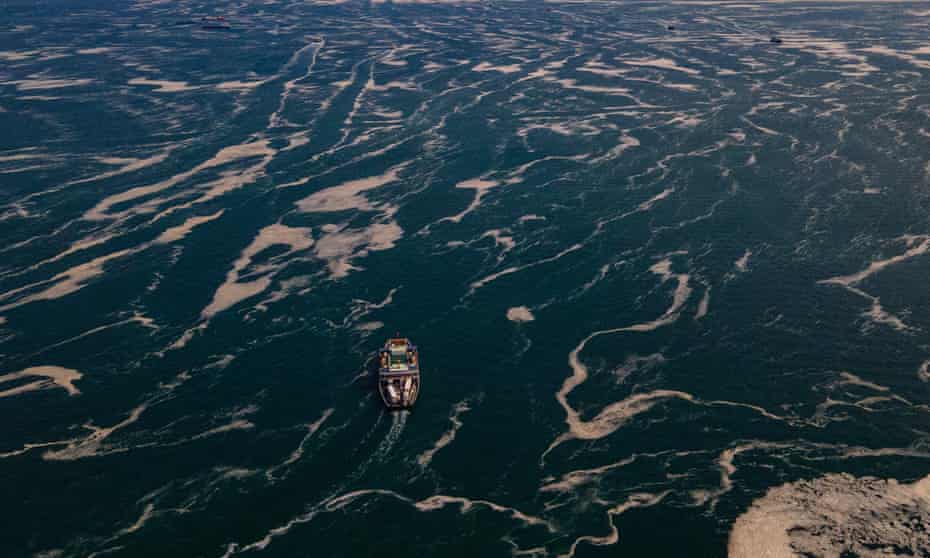
Boats sailing among the Marmara sea covered with sea snot that develops on the surface of the water due to the excessive proliferation of phytoplankton, gravely threatening the marine biome, in the Darica district of Kocaeli, Turkey.Photograph: Yasin Akgül/AFP/Getty Images
Global heating is causing such a drastic change to the world’s oceans that it risks a mass extinction event of marine species that rivals anything that’s happened in the Earth’s history over tens of millions of years, new research has warned.
Accelerating climate change is causing a “profound” impact upon ocean ecosystems that is “driving extinction risk higher and marine biological richness lower than has been seen…
An invasive species — one that can survive in drought, freezing weather and even outer space — is consuming and competing with native species in western Washington, officials are warning. Scientists have spotted African clawed frogs in Issaquah, Lacey and Bothell, KING5 reported.
The frogs were initially brought into the United States to be used in pregnancy tests and later became pets, said state wildlife scientist Max Lambert.
One of two African Clawed frogs hatched in space is seen at the Tulsa Zoo, Jan 3, 1997, in Tulsa, Okla. STEPHEN PINGRY VI AP
Although Washington made it illegal to own them, some still do. Some who have decided not to keep the frogs released them into ponds and streams. As officials began looking into the issue, they discovered hundreds of frogs.
“These are considered one of the worst invasive species on earth,” Lambert said. “They’ll eat a lot of native insects, which are good forage food for our fishes and our amphibians, they will eat tadpoles of our native salamanders, and they’ll eat fish. We looked at some of their stomach contents — and they’re full of baby fish.”
African clawed frogs have olive or brown skin, often with blotches or spots, and they don’t have eyelids, tongues, or vocal sacs, according to state wildlife officials. Their front feet are unwebbed while their back feet are fully webbed with black, sharp claws.
“The primary use of these claws is likely to shred food, which could be a decaying carcass, another frog species, fish, bird, snail, or anything else they can fit in their mouth,” state officials say. “In fact, their claws help them eat other frogs and fish that are bigger than them because they can tear their prey into smaller pieces.”
People working to restore salmon populations fear the frogs will infringe on that progress.
Since Trout Unlimited began trapping in January, the organization has caught about 300 frogs, Rebecca Lavier said. Around half of those have been found in the past few weeks. They believe it’s just a fraction of the population.
According to the Washington Department of Fish and Wildllife, African clawed frogs “harm native ecosystems by competing with and preying on native species: and they also have the potential to introduce harmful pathogens that hurt native fish and amphibian populations.”
“African clawed frogs have a long life span, an extended breeding season, and are prolific reproducers,” the agency says. “They can even survive severe drought and freezing conditions!”
In fact, they can even survive in outer space. Four female African clawed frogs were launched aboard space shuttle Endeavour in September 1992 for a study that showed frogs can reproduce in zero gravity. Once in orbit, the frogs were injected with a hormone that caused egg production.
Russia has placed trained dolphins at the entrance to a key Black Sea port to help protect a Kremlin naval base there, suggest satellite photos analyzed by a naval analyst.
Around the time of Russia’s invasion of Ukraine, two pens of dolphins were placed at the entrance to Sevastopol harbor, the most significant naval base in the Black Sea, according to the imagery.
The dolphins could be trained to perform tasks such as preventing divers from infiltrating a military base undetected. Both the U.S. and Russian military have trained marine mammals to complete such tasks.
“This could prevent Ukrainian special operations forces from infiltrating the harbor underwater to sabotage warships,” H I Sutton, a submarine analyst wrote in an article published by the U.S. Naval Institute on Wednesday.
HUMANITY MIGHT “ALREADY BE A DEAD SPECIES WALKING.”
GETTY IMAGES
Apocalypse When
Our days on Earth may be numbered.
In fact, by the end of this century, the global population could start its inevitable decline, paleontologist andNatureeditor Henry Gee argued in anewopinion piece forScientific American— and he’s not shy about using the word “extinction.”
“I suspect that the human population is set not just for shrinkage but collapse — and soon,” he wrote.
Extinction Debt
Gee points to lack of genetic variation, falling birth rates, pollution, and stress caused by living in overcrowded cities as a recipe for disaster.
“The most insidious threat to humankind is something called ‘extinction debt,’” Gee explained. “There comes a time in the progress of any species, even ones that seem to be thriving, when extinction will be…