THE Ministry of Environment, Forestry and Tourism says it is currently developing a crocodile management plan involving hunting quotas and population management.
This was announced by ministry spokesperson Romeo Muyunda this week, following recent crocodile attacks in the Kavango East and Kavango West regions.
This comes as the body of a 13-year-old boy, who was attacked by a crocodile at Mupapama village in the Mashare constituency in the Kavango East region on Thursday last week has still not been recovered.
Mushongo Manga, who was a pupil at Sambyu Primary School, was attacked by a crocodile at the beginning of the Easter weekend when he and his two siblings went to the river to bath.
Muyunda said the ministry is at an advanced stage of developing a crocodile management plan to consider effective ways to manage crocodiles, and identify economic opportunities following…
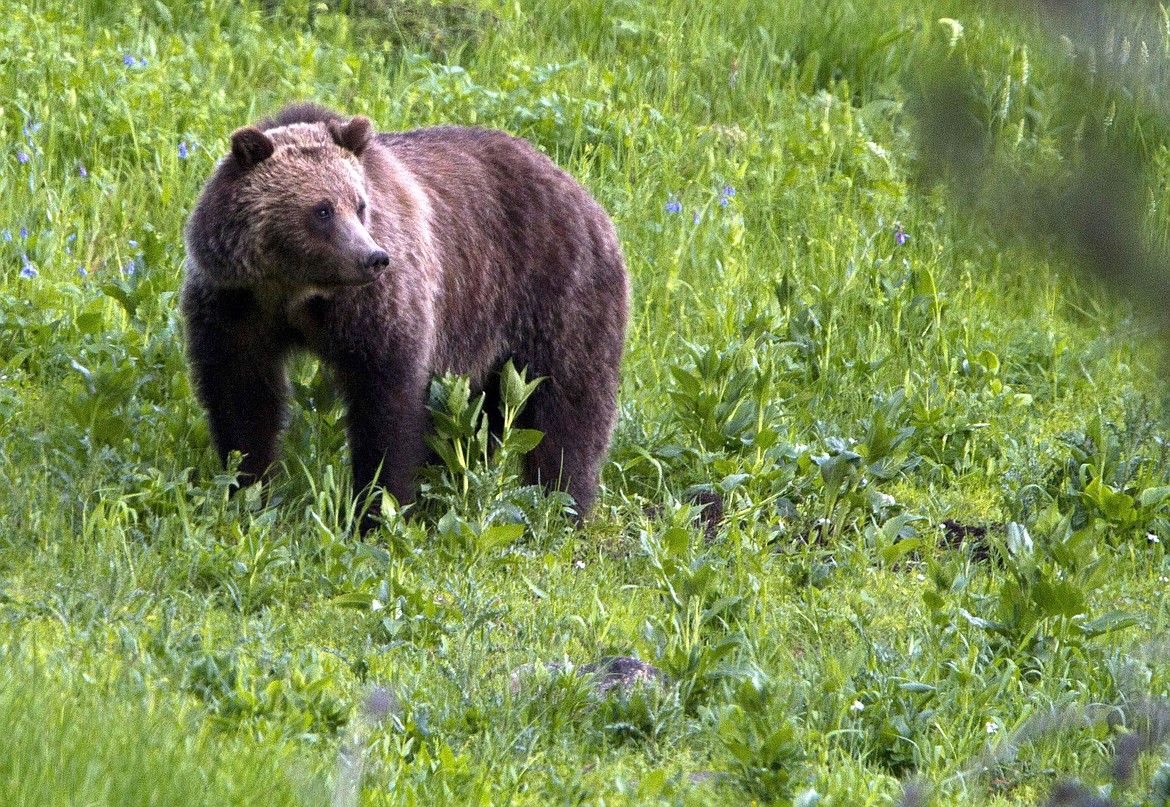
BOISE, Idaho (AP) — Two Idaho men have been sentenced to jail time and banned from hunting for years after pleading guilty to poaching a grizzly bear near Yellowstone National Park.
The Idaho Department of Fish and Game said in a press release that Rex Baum, 79, pleaded guilty to a misdemeanor in connection with the female grizzly’s death last year. He was ordered to serve 3 days in jail and was banned from hunting for a decade. Baum’s son, Jared Baum of Ashton, was sentenced to 30 days in jail and banned from hunting for life after pleading guilty to a felony in connection with the incident.
Fish and Game officers discovered the grizzly’s carcass on April…
Troy Ellis, 11, was killed May 1, 2020, when he was fatally shot by a former U.S. Marine during a turkey hunt for disabled veterans. (The Troy Ellis Foundation)
The father of an11-year-old boy killed during a turkey huntorganized for a disabled veteran nearly two years ago on Tuesday gave an emotional account of the final moments of his young son’s life.
Troy Ellis, then a fifth grader in Trussville, was killed May 1, 2020, on his father’s hunting land in eastern Jefferson County.
UpdatedApr. 22, 20222:45PM ETPublishedApr. 22, 20224:48AM ET
Listen to article12 minutes
In the heart of Silicon Valley in Palo Alto, California, there’s a group of retired physicists and engineers working on a nozzle to save their grandchildrens’ lives. The team, affectionately dubbed “the Old Salts,” designed the nozzle to spray sea salt particles in a specific size and concentration into the air. Once finished, it’ll be used to inject the substance into the skies over certain regions of the world.
It’s all part of an experiment to see if this approach can “brighten” clouds so they’re capable of reflecting more sunlight away from the Earth. While the tests would be small, they will attempt to uncover whether a larger scale operation like this could cool downthe planet—albeit temporarily. Then…
The biggest elephant in Botswana has been killed by trophy hunters for its near 8-foot-long tusks.
The elephant had been carrying 200 pounds of ivory in itstusks, and was the largest to be hunted in the country since 1996, according to Wildlife At Risk International.
Thetrophy hunter hadtraveled to Botswanaand paid $50,000 to partake in the hunt along Botswana’s northern border,The Timesreported.
Photographs of the trophy hunter standing next to the ginormous tusks have sparked debate on social media.
Example of vandalism at the Willwood Public Access Area. (Wyoming Game and Fish Department)
CASPER, Wyo. — TheWyoming Game and Fish Department said Tuesdaythat it plans to close vehicle access to Willwood Public Access Area near Powell due to repeated instances of vandalism, illegal dumping and unauthorized use of the area over the years.
“We have hauled off garbage, pallets, discarded appliances, and even a slide-in truck camper that had been shot and burned,” Game and Fish Cody Region Habitat and Access Supervisor Brad Sorensen said. “In addition, signs continually need to be replaced because they are destroyed with firearms or graffiti.”
“Hopefully, the restriction of vehicle access will help the access area be used for its intended purpose, hunting and fishing.”
VENICE, La. (AP) — A Louisiana hunting guide has pleaded guilty to harassing duck hunters and shooting their decoys.
The 32-year-old local guide from Buras was trying to make the other duck hunters leave public land in Venice so he could hunt there, Louisiana Department of Wildlife and Fisheries enforcement spokesman Adam Einck said in an email on Tuesday.
“It is public land, so it is first come first serve and the duck hunters he harassed were already set up in that area,” Einck wrote.
A judge sentenced the man on April 12 to pay a $1,075 fine, a $200 civil penalty to the department, and restitution for the decoys, the department said in a news release on Tuesday.
Israel’s National Security Council has assumed control of a massivebird fluoutbreak in the Galilee, which scientists warn could become a “mass disaster” for humans.
Over half a billion migrating birds pass through the area every year, heading for warm African winters or balmy European summers, making this a catastrophic location for a majorbird fluoutbreak—right at the nexus of global avian travel.
The virus can be deadly if it infects people.The World Health Organization saysmore than half of the confirmed 863 human cases it has tracked since 2003 proved fatal. Most strains or variants of avian flu, H5N1, are relatively difficult to transmit to people.
Crows and ravens have “taken over the world” – living in both the Arctic and tropical rainforests, reveals new research.
Large brains and bodies, as well as the ability to diversify, mean they have what it takes to colonize across different habitats, scientists say.
Specimens taken from across the globe have shown crows and ravens, unlike other birds which stay within single continents, have rapidly expanded worldwide.
Researchers that the secret is their great flying ability, longer wings, and big brains which means they are smarter than other Corvids like jays or magpies.
Crows and ravens experienced high rates of trait evolution and speciation as they adapted to the many different environments they encountered during their rapid expansion across the planet.
Dr. Carlos Botero, associate professor at Washington University in St Louis, said: “When we think about processes of global diversification, it is important to consider not just the ability to reach new places, but also the ability to survive once you get there.
“Our work suggests that crows and the ravens diversified both quickly and widely because they were particularly good at coping with different habitats.
“We are excited with these new insights on how these birds were able to do things that even close relatives did not.
“It truly seems that their incredible behavioral flexibility may have played a major role in allowing these birds to survive initial periods of maladaptation and hang in there long enough for selection to catch up and produce a range of new species in the process.
“These new environments often favor tweaks to an organism’s phenotype that facilitate survival and overall performance. That process is often known as optimizing selection.”
Dr. Joan Garcia-Porta, at the University of Barcelona, added: “We hypothesize that these three very convenient combinations of traits are what allowed this group of birds to colonize and diversify across the world.
“Thanks to these amazing birds, we now understand a bit more the processes by which animals rapidly expand across the planet and how this geographic expansion translates to the production of new species with new morphologies.”
President Vladimir Putin has once again promoted Russia’s nuclear might against the backdrop of the Ukraine conflict, saying on Wednesday that a new ballistic missile system should make Moscow’s enemies stop and think.
Announcing Russia’s invasion of Ukraine eight weeks ago, Putin warned the West that any attempt to get in its way “will lead you to such consequences that you have never encountered in your history”. Days later, he ordered Russia’s nuclear forces to be put on high alert.
United Nations Secretary-General Antonio Guterres said last month that “the prospect of nuclear conflict, once unthinkable, is now back within the realm of possibility.”
Here is how Russia’s chain of command would work in the event of a nuclear weapon launch.
A small briefcase, known as the Cheget, is kept close to the president at all times, linking him to the command and control network of Russia’s strategic nuclear forces.
The Cheget does not contain a nuclear launch button but rather transmits launch orders to the central military command – the General Staff.
If Putin gives the nuclear order, what happens?
The Russian General Staff has access to the launch codes and has two methods of launching nuclear warheads.
It can send authorisation codes to individual weapons commanders, who then execute the launch procedures.
There is also a back-up system, known as Perimetr, which allows the General Staff to initiate the launch of land-based missiles directly, bypassing all the immediate command posts.
Did Putin’s ‘high alert’ order make a launch more likely?
After Putin said on February 27 that Russia’s deterrence forces – which include nuclear weapons – should be put on high alert, the defence ministry said the Strategic Missile Forces, the Northern and Pacific Fleets, and the Long-Range Aviation Command had been placed on “enhanced” combat duty, with reinforced personnel.
The term enhanced, or special, combat duty does not appear in Russia’s nuclear doctrine, leaving military experts puzzled over what it might mean.
Pavel Podvig, a senior researcher at the United Nations Institute for Disarmament Research in Geneva, said on Twitter that the order might have activated Russia’s nuclear command and control system, essentially opening communication channels for any eventual launch order.
Alternatively, he said, it might just mean the Russians had expanded the staff at their nuclear facilities.
Does Russia have rules on using nuclear weapons?
The 2020 doctrine presents four scenarios that might justify the use of Russian nuclear weapons:
– the use of nuclear weapons or weapons of mass destruction against Russia or its allies;
– data showing the launch of ballistic missiles aimed at Russia or its allies;
– an attack on critical government or military sites that would undermine the ability of Russia’s nuclear forces to respond to threats;
– the use of conventional weapons against Russia “when the very existence of the state is in jeopardy”.
What nuclear capabilities does Russia have?
The Federation of American Scientists estimates that Russia has 5,977 nuclear warheads, more than any other country. Of these, 1,588 are deployed and ready for use. Its missiles can be fired from land, by submarines and by airplanes.
Putin oversaw a coordinated test of Russia’s nuclear forces on February 19. On April 20, he was shown on TV being told by the military that the intercontinental ballistic missile Sarmat, which has been under development for years, had been successfully test-launched for the first time. Russia’s nuclear forces will start taking delivery of the new missile “in the autumn of this year”, Tass news agency quoted a senior official as saying on Wednesday.
The United States, for its part, last month postponed a routine test launch of its Minuteman ballistic missile in an apparent effort to lower tensions with Russia.
Has Russia ever used a nuclear weapon in war?
No. To date, the only use of nuclear weapons during conflict was in 1945, at the end of World War II, when the United States dropped atomic bombs on the Japanese cities of Hiroshima and Nagasaki.






 Coronavirus


