It’s alligator mating season, which means Florida’s state reptiles will likely be more active and may have more interactions with humans.
GAINESVILLE, Fla.-Final approval of around-the-clockalligatorhunting is set to go before theFloridaFish andWildlifeConservation Commission when it meets next month in Gainesville.
Alligator hunting rules are part of the agenda on the first day of the two-day meeting, which will start May 3. The commission previously gave support to the hunting change on March 2.
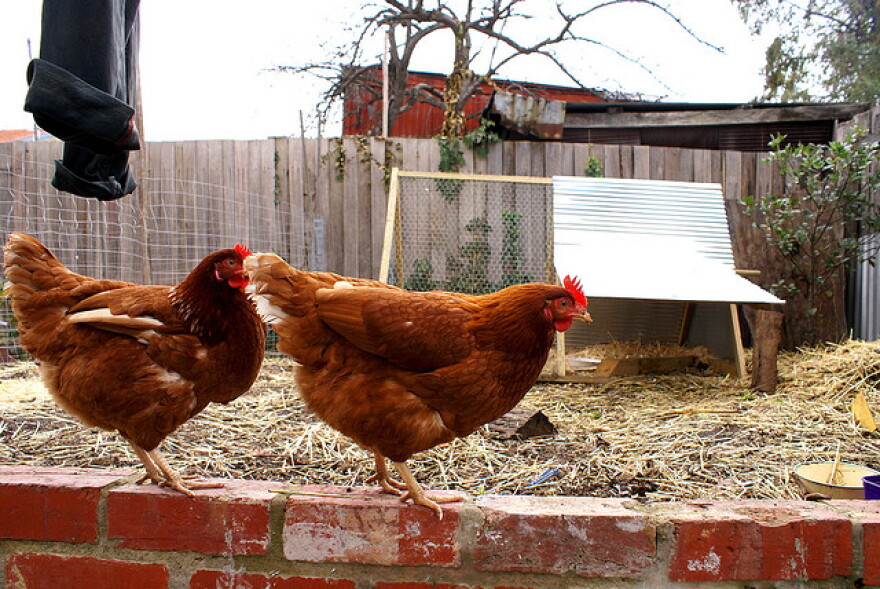
The U.S. Department of Agriculture has confirmed bird flu in three domestic chicken flocks in Idaho. Two flocks in Gooding County and one in Caribou County have tested positive in the past week.
Highly pathogenic avian influenza is a contagious viral disease that often leads to dead chickens. Human infections from bird flu are possible but rare.
Domestic poultry are particularly susceptible, said Dr. Scott Leibsle, the Idaho state veterinarian, in part because the state doesn’t have a good way to notify everyone who keeps birds in their backyard.
Liebsle said the best way to protect your flock is to limit contact with wild waterfowl. Geese and ducks often carry influenza as they migrate, including through Idaho in the Pacific Flyway.
“If your backyard birds are kind of free-ranging and have a little bit more area to roam around that would give them the opportunity to interact with wild waterfowl, try to limit that,” Leibsle said.
If you live near ponds or streams where the birds take off from or land, that could be an infection source, Leibsle said, because that’s often when they drop the fecal matter.
If you buy new birds, isolate them from your existing flock for two weeks. Positive flocks need to be depopulated.
In terms of symptoms, Leibsle said occasionally infected chickens will show signs of a respiratory virus, like swollen heads or nasal discharge, though not always.
“Unfortunately, the most common symptom of your birds being infected with highly pathogenic avian influenza is you coming out and there being dead birds — they often don’t show any symptoms that they’re sick,” he said.
Above all, make sure to wash your hands and your boots, Leibsle said, and try to limit the number of people who come into contact with your birds.
A group of doe graze in a yard in Dedham.Credit:Linda Coan O’Kresik / BDN
Letters submitted by BDN readers are verified by BDN Opinion Page staff. Send your letters toletters@bangordailynews.com.
Starting anarticleby telling readers that if they’re “lucky,” they can kill two animals this year instead of one is suited to a hunting magazine, not this newspaper.Many of your readers are appalled that deer are gunned down in Maine and that the deer population is managed — no, cultivated — to produce more deer so as to sell more hunting licenses and increase revenue.
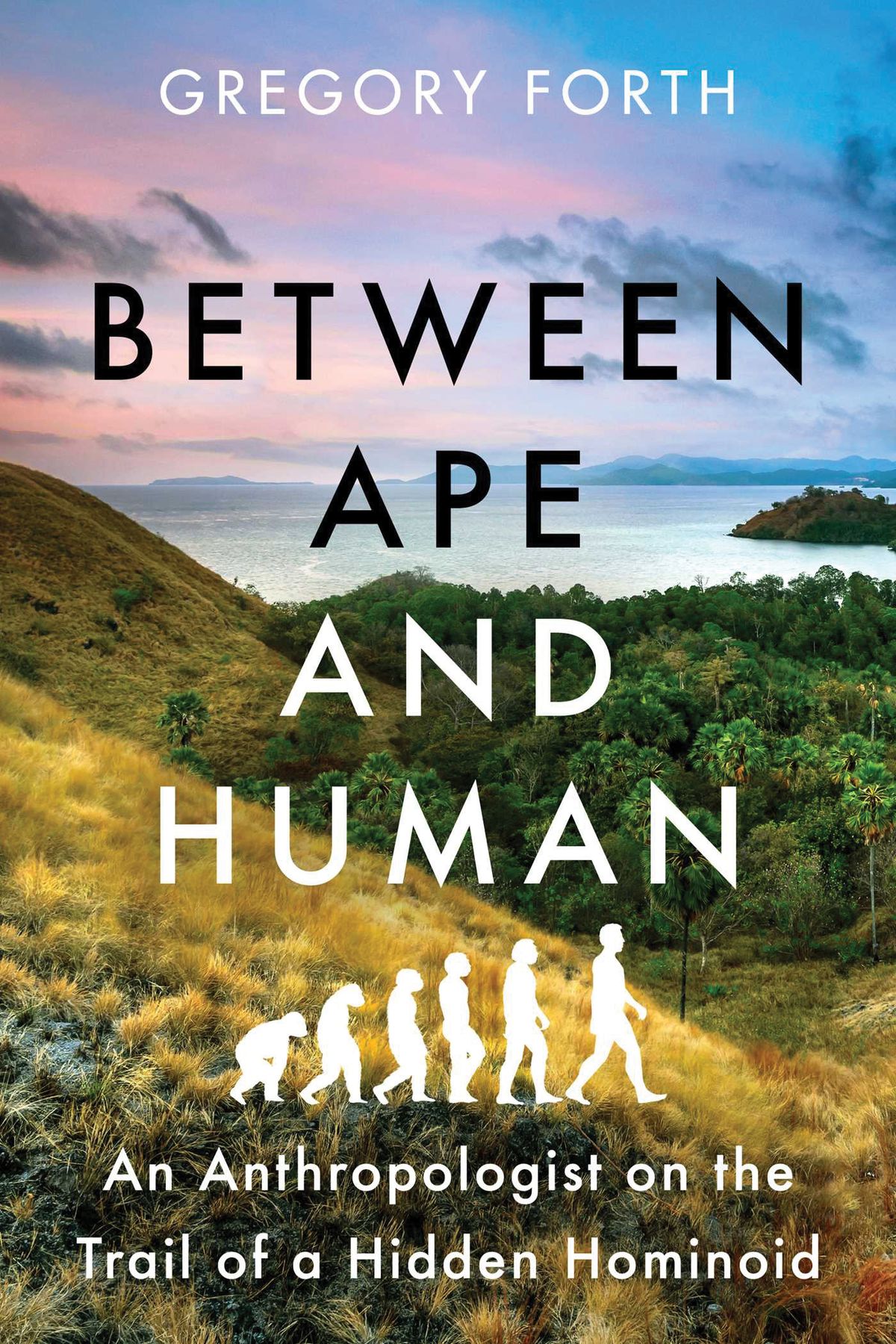
Do members of Homo floresiensis still inhabit the Indonesian island where their fossils helped identify a new human species fewer than 20 years ago?
Gregory Forth
Apr 18, 2022
115
ABOVE:PEGASUS BOOKS, MAY 2022
In 2004, the scientific world was shaken by the discovery of fossils from a tiny species of hominin on the Indonesian island of Flores. Labeled Homo floresiensis and dating to the late Pleistocene, the species was apparently a contemporary of early modern humans in this part of Southeast Asia. Yet in certain respects the diminutive hominin resembled australopithecines and even chimpanzees. Twenty years previously, when I began ethnographic fieldwork on Flores, I heard tales of humanlike creatures, some still reputedly alive although very rarely seen. In the words of the H. floresiensis discovery team’s leader, the late Mike Morwood, last at the University of Wollongong in Australia, descriptions of these hominoids “fitted floresiensis to a T.” Not least because the newly described fossil species was assumed to be extinct, I began looking for ways this remarkable resemblance might be explained. The result is a book, Between Ape and Human, available in May 2022.
Coming from a professional anthropologist and ethnobiologist, my conclusions will probably surprise many. They might even be more startling than the discovery of H.floresiensis—once described by paleoanthropologist Peter Brown of the University of New England in New South Wales as tantamount to the discovery of a space alien. Unlike other books concerned with hominin evolution, the focus of my book is not on fossils but on a local human population called the Lio and what these people say about an animal (as they describe it) that is remarkably like a human but is not human—something I can only call an ape-man. My aim in writing the book was to find the best explanation—that is, the most rational and empirically best supported—of Lio accounts of the creatures. These include reports of sightings by more than 30 eyewitnesses, all of whom I spoke with directly. And I conclude that the best way to explain what they told me is that a non-sapiens hominin has survived on Flores to the present or very recent times.
Between Ape and Human also considers general questions, including how natural scientists construct knowledge about living things. One issue is the relative value of various sources of information about creatures, including animals undocumented or yet to be documented in the scientific literature, and especially information provided by traditionally non-literate and technologically simple communities such as the Lio—a people who, 40 or 50 years ago, anthropologists would have called primitive. To be sure, the Lio don’t have anything akin to modern evolutionary theory, with speciation driven by mutation and natural selection. But if evolutionism is fundamentally concerned with how different species arose and how differences are maintained, then Lio people and other Flores islanders have for a long time been asking the same questions.
Lio folk zoology and cosmology also include stories of natural beings, specifically humans, transforming permanently into animals of other kinds. And they do this, in part, by moving into new environments and adopting new ways of life, thus suggesting a qualified Lamarckism. As my fieldwork revealed, such posited changes reflect local observations of similarities and differences between a supposed ancestral species and its differentiated descendants. Like the majority of named categories in Lio animal classification, these derivatives coincide with the species or genera of modern systematics. At the same time, Lio distinguish humans from nonhuman animals in much the same way as do modern Westerners, that is, not just on morphological grounds but by attributing complex expressions of culture, language, and technology exclusively to humans.
Like other folk zoologists, the Lio put humans first, most notably as the origin of nonhuman animals, a sort of Darwinism in reverse. In contrast, evolutionary theory puts humans (or hominins) last, just as does the biblical story of Genesis. Yet in all instances, the position confers on Homo sapiens a unique status, thereby separating us from the rest of the animal kingdom.
For the Lio, the ape-man’s appearance as something incompletely human makes the creature anomalous and hence problematic and disturbing. For academic scientists, H.floresiensis is similarly problematic, but not so much for its resemblance to H.sapiens; rather, it’s because the species appears very late in the geological record, surviving to a time well after the appearance of modern humans. Whether H.floresiensis would have been any harder (or easier) to accept had it been interpreted as a bipedal ape rather than a species of human is difficult to say. Nevertheless, it’s interesting that Morwood, taking an implicitly unilinear view of hominin evolution and arguing for the species’ inclusion in Homo, spoke of the evidence that the diminutive hominin walked the Earth relatively recently as one “good reason” to classify H. floresiensis in our genus. For this can only mean that, in the view of this author, what survives until recent times has to somehow belong with us.
As for ape-men, the Lio identify them as animals. In fact, they are one of several animals that Lio people claim descended from humans. But this classification has nothing to do with geological dating or any paleoanthropological evidence. Instead, Lio people, who distinguish natural from supernatural (or spiritual) beings in essentially the same way religious Westerners do, interpret ape-men as non-human animals with reference to observable features that clearly separate them from invisible spirits; from other, more familiar animals; and, of course, from people. Some features of the ape-men might suggest a scientifically undiscovered species or population of modern apes. But Lio statements mostly count against this hypothesis, as does all we know about the biogeography of eastern Indonesia.
Our initial instinct, I suspect, is to regard the extant ape-men of Flores as completely imaginary. But, taking seriously what Lio people say, I’ve found no good reason to think so. What they say about the creatures, supplemented by other sorts of evidence, is fully consistent with a surviving hominin species, or one that only went extinct within the last 100 years. Paleontologists and other life scientists would do well to incorporate such Indigenous knowledge into continuing investigations of hominin evolution in Indonesia and elsewhere. For reasons I discuss in the book, no field zoologist is yet looking for living specimens of H. floresiensis or related hominin species. But this does not mean that they cannot be found.
Gregory Forth, now retired, was a professor of anthropology at the University of Alberta for more than three decades. Read an excerpt of Between Ape and Human.
‘Urgent’ coordinated action to tackle overconsumption, farming subsidies and the climate crisis also needed to halt biodiversity loss
Protected parks such as Yellowstone national park in the US are ‘a good start’ say scientists, but more needs to be done to stop biodiversity loss. Photograph: Ryan Dorgan/AP
Expanding national parks and protected areas will not be enough to halt the destruction of nature, warn leading scientists, who say urgent action on overconsumption, harmful subsidies and the climate crisis is also required to halt biodiversity loss.
Governments are expected to commit to a Paris-style agreement for nature at Cop15 in Kunming, China, later this year, with targets that include protecting at least 30% of the oceans and land by 2030.
An analysis of the draft UN Convention on Biological Diversity (CBD) agreement by more than 50 leading scientists has found that, while expanding protected areas will, if done well, help slow the destruction of the natural world, much more is needed to stop it.Q&A
Prof Paul Leadley, an ecologist at Paris-Saclay University and co-author of the report, said: “The target of protecting 30% of all land and seas is important and attracting a lot of attention. And expanding protected areas is a good start if done well, but far short of what is needed to halt and reverse biodiversity loss – called ‘bending the curve’ for biodiversity.
“There is very good evidence that we will fail again to meet ambitious international biodiversity objectives if there’s too much focus on protected areas at the expense of other urgent actions addressing the threats to biodiversity.”
A “massive” reduction in harmful agricultural and fishing subsidies, holding global heating to 1.5C and tackling human overconsumption, including of meat, is necessary, the scientists said, as part of coordinated action across a diverse, interconnected set of “transformative” changes.
The 21 draft targets to be negotiated at Kunming include proposals to eliminate plastic pollution, reduce pesticide use by two-thirds and half the rate of invasive species introduction. The agreement aims to stop what some scientists have called the sixth mass extinction of life on Earth, driven by human behaviour, which threatens ecosystems vital to human civilisation.
The analysis of the proposed agreement, conducted by the scientific bodies BioDiscovery and the Group on Earth Observations Biodiversity Observation Network (Geo Bon), has been sent to governments, who will give their feedback later this month.
The assessment looked at the impact of three scenarios on halting and reversing biodiversity loss: business as usual, improved quality and quantity of conservation, and transformative change of society. It found that only the last scenario will have the desired effect, assuming global heating is limited to 1.5C.
“What we’re doing is trying to take the best science and explain why the global biodiversity framework looks like it does. A lot of countries are saying it’s so complicated. We’re trying to explain why you need all the pieces and how each piece fits together,” Leadley said.
The analysis comes after confusion over the breath and complexity of the draft agreement, which ranges from pollution to the inclusion of indigenous communities.
In March, governments are scheduled to hold in-person negotiations for the first time since February 2020, after several delays to the process. Governments have failed to meet a single target on halting the destruction of nature in the past decade.
María Cecilia Londoño Murcia, a researcher at the Humboldt Institute in Colombia and co-author of the analysis, said: “The sooner we act, the better. Time lags between action and positive outcomes for biodiversity can take decades, so we must act immediately and sustain our efforts if we are to reach the global goals by 2050.”
Changing the Earth’s climate artificially could have significant effects on the prevalence of disease carriers such as the Anopheles mosquito.Photograph: Soumyabrata Roy/NurPhoto/Rex/Shutterstock
Helena HortonEnvironment reporterWed 20 Apr 2022 05.00 EDT
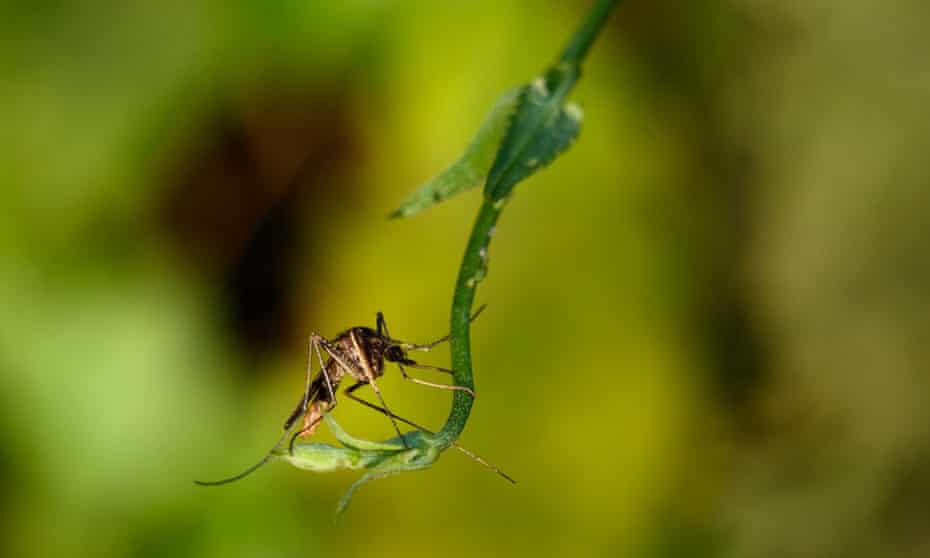
Geoengineering to prevent the worst impacts of climate breakdown could expose up to a billion more people to malaria, scientists have found.
The report, published in Nature Communications, is the first assessment of how geoengineering the climate could affect the burden of infectious diseases.
Geoengineering includes removing carbon dioxide from the sky so the atmosphere will trap less heat, and solar radiation management (SRM) – reflecting more sunlight away from the planet so less heat is absorbed in the first place. The latter could be done in various ways, including spraying particles into the sky to reflect the sun…
The Sarmat intercontinental ballistic missile is launched during a test at Plesetsk cosmodrome in Arkhangelsk region, Russia, in this still image taken from a video released on April 20, 2022. Russian Defence Ministry/via REUTERS
Register now for FREE unlimited access to Reuters.com
Register
Summary
Sarmat launch comes at moment of extreme tension over Ukraine
Putin boasts it can evade missile defences
Test follows years of design and funding delays
LONDON, April 20 (Reuters) – Russia said on Wednesday it had conducted a first test launch of its Sarmat intercontinental ballistic missile, a new and long-awaited addition to its nuclear arsenal which President Vladimir Putin said would make Moscow’s enemies stop and think.
Putin was shown on television being told by the military that the missile had been launched from Plesetsk in the country’s northwest and hit targets in the Kamchatka peninsula in the…
Violent incidents towards dolphins are not uncommon in the Gulf of Mexico – at least 27 have washed up shot by guns or arrows or impaled since 2002. Photograph: Chris O’Meara/AP
Wildlife officials in Florida are investigating the mysterious death of a bottlenose dolphin that was recovered on a beach with an apparent stab wound to the head.
The mammal, which was found on Fort Myers beach in the south-west of the state on 24 March, is believed to have been killed deliberately, probably while it was being fed illegally by humans.
“Based on the shape, size and characteristics of the wound, it is suspected that the dolphin was impaled while in a begging position,” the National Oceanic and Atmospheric Administration (Noaa) said in a statement.
“Begging is not a natural behavior for dolphins and is frequently associated with illegal feeding.”
The dolphin was an adult lactating female, and was above water with its mouth open when it was attacked, NBC News reported. Its carcass was recovered by the Florida fish and wildlife commission, whose officers passed details on to Noaa.
“A necropsy, non-human autopsy, revealed the dolphin was impaled in the head with a spear-like object while alive,” the Noaa statement said.
“Further examination indicated the wound, above the right eye, was inflicted before the animal died. The animal appeared to have died from the trauma, which occurred at or near the time of death.”
The agency is seeking information about the incident and has an enforcement hotline where tips can be left anonymously.
Violent incidents toward dolphins in the Gulf of Mexico are not uncommon. The latest incident brings to at least 27 the number washed up to shore after being shot by guns or arrows, or impaled with sharp objects since 2002.
Harassing, harming, killing or feeding wild dolphins is prohibited under the Marine Mammal Protection Act, with fines of up to $100,000 and up to a year in jail for each violation.
Experts say illegal feeding of marine mammals is harmful to more than just the individual being fed.
“Those dolphins have learned to associate humans with food. Once they learn that, they also teach it to other dolphins and they teach it to their babies,” Laura Engelby, Noaa marine mammal branch chief, told WBBH News.
According to the Noaa statement, “Dolphins fed by people learn to associate people, boats, and fishing gear with food, which puts dolphins and people in harmful situations.”
Smoke from a wind-whipped wildfire rises above neighborhoods on the outskirts of Flagstaff, Arizona, on Tuesday.Photograph: Sean Golightly/AP
AssociatedPressWed 20 Apr 2022 08.47 EDT
Heavy winds kicked up a towering wall of flames outside a northernArizonatourist town late on Tuesday, ripping through two dozen structures and sending residents of more than 700 homes scrambling to flee.
Flames as high as 100ft raced through an area of scattered homes, dry grass and Ponderosa pine trees on the outskirts of Flagstaff as wind gusts of up to 50mph pushed the blaze over a major highway.
Coconino county officials said during an evening news conference that 766 homes and 1,000 animals had been evacuated. About 250 structures remained threatened in the area popular with hikers and off-road…
Nobody is denying that James Michael Rick went hunting.
The question of who or what he was hunting, however, is at the heart of a criminal trial that started on Tuesday afternoon.
Rick, who is from North Myrtle Beach, South Carolina, is charged with first-degree murder in the death of Delia “Joyce” Aldridge Rick, who he is alleged to have shot with a crossbow before dumping her car, with her body in it, in Lake Wylie.
In Rick’s trial on Tuesday, Assistant District Attorney Deborah Gulledge argued that on the evening of May 4, 2019, Rick thought that his girlfriend, Melinda Kay Robinson of Belmont, had stolen money that he planned to spend on drugs.
“And he got mad. He got really, really angry,” sending texts to someone else saying that he was looking for Robinson, Gulledge said.


 by