When Is “Speciesism” Learned? Children Think Farm Animals Deserve Same Treatment as Pets

TOPICS:Behavioral SciencePsychologyUniversity Of Exeter

By UNIVERSITY OF EXETER APRIL 11, 2022

Child With Cow

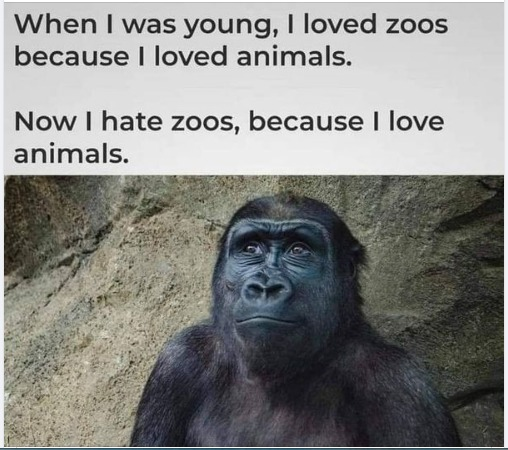
Children differ dramatically from adults in their moral views on animals, new research shows.

University of Exeter researchers asked children aged 9-11 about the moral status and treatment of farm animals (pigs), pets (dogs), and people.

Unlike adults, children say farm animals should be treated the same as people and pets, and think eating animals is less morally acceptable than adults do.

The findings suggest that “speciesism” – a moral hierarchy that gives different value to different animals – is learned during adolescence.

“Humans’ relationship with animals is full of ethical double standards,” said Dr. Luke McGuire, from the University of Exeter.

“Some animals are beloved household companions, while others are kept in factory farms for economic benefit.

“Judgments seem to largely depend on the species of the animal in question: dogs are our friends, pigs are food.”

The research team – including the University of Oxford – surveyed 479 people, all living in England, from three age groups: 9-11, 18-21, and 29-59.

The two adult groups had relatively similar views – suggesting attitudes to animals typically change between the ages of 11 and 18.

“Something seems to happen in adolescence, where that early love for animals becomes more complicated and we develop more speciesism,” said Dr. McGuire

“It’s important to note that even adults in our study thought eating meat was less morally acceptable than eating animal products like milk.

“So aversion to animals – including farm animals – being harmed does not disappear entirely.”

The study also found that, as people age, they are more likely to classify farm animals as “food” rather than “pets” – while children were equally likely to consider pigs to fall into either of these categories.

While adjusting attitudes is a natural part of growing up, Dr. McGuire said the “moral intelligence of children” is also valuable.

“If we want people to move towards more plant-based diets for environmental reasons, we have to disrupt the current system somewhere,” he said.

“For example, if children ate more plant-based food in schools, that might be more in line with their moral values, and might reduce the ‘normalization’ towards adult values that we identify in this study.”

The paper, published in the journal Social Psychological and Personality Science, is entitled: “The development of speciesism: Age-related differences in the moral view of animals.”

Reference: “The development of speciesism: Age-related differences in the moral view of animals” 11 April 2022, Social Psychological and Personality Science.
DOI: 10.1177/19485506221086182

Ukrainian marines warn of ‘last battle’ in Mariupol

Exposing the Big Game's avatarThe Extinction Chronicles

3h agoFollow

View Profile

React|151

Ukrainian troops in the besieged city of Mariupol have warned that they may be facing their “last battle” against Russia.

©ReutersMariupol has been “burned to ashes”, Ukraine’s president claims

“Today will probably be the last battle, as the ammunition is running out,” an account belonging to the 36th marine brigade said on Facebook.

“It’s death for some of us and captivity for the rest,” it said.

WordPress Migration Plugin – Fast and Simple Site Migration

Ad

Adjetpack.com/WordPress/Migration

Ukraine’s President Volodymyr Zelensky said that tens of thousands of people had likely been killed in Mariupol.

The BBC has not verified the figure, but reports from the region and the refugees fleeing the city spoke of bodies lying in the streets and most buildings damaged or destroyed.

Mariupol lies between the pro-Russia breakaway regions of Donetsk and Luhansk in the east, and…

View original post 506 more words

Thousands of new viruses discovered in the ocean

By Rachael Rettner published about 10 hours ago

More than 5,000 new RNA virus species were identified.

An illustration of a torovirus, a type of RNA virus.

(Image credit: Nanoclustering/Getty Images)

More than 5,000 new virus species have been identified in the world’s oceans, according to a new study.

The study researchers analyzed tens of thousands of water samples from around the globe, hunting for RNA viruses, or viruses that use RNA as their genetic material. The novel coronavirus, for instance, is a type of RNA virus. These viruses are understudied compared with DNA viruses, which use DNA as their genetic material, the authors said.

The diversity of the newfound viruses was so great that the researchers have proposed doubling the number of taxonomic groups needed to classify RNA viruses, from the existing five phyla to 10 phyla. (Phylum is a broad classification in biology just below “kingdom.”)

Sponsored Links

Dog Food, Delivered, No Obligations—Quit AnytimeThe Farmer’s Dog

“There’s so much new diversity here – and an entire [new] phylum, the Taraviricota, were found all over the oceans, which suggests they’re ecologically important,” study lead author Matthew Sullivan, a professor of microbiology at The Ohio State University, said in a statement(opens in new tab).

RECOMMENDED VIDEOS FOR YOU…

The Berlin Wall Comes Down

On December 22, 1989, the Brandenburg Gate crossing in east Germany opened after being closed for 30 years. Credit: ITN

https://imasdk.googleapis.com/js/core/bridge3.509.0_debug_en.html#goog_1890321843

0 seconds of 1 minute, 41 secondsVolume 0%

PLAY SOUND

Related: The deadliest viruses in history 

Studies of RNA viruses have usually focused on those that cause diseases, according to Sullivan. (Some well-known RNA viruses include influenza, Ebola and the coronavirus that causes COVID-19.) But these are just a “tiny slice” of RNA viruses on Earth, Sullivan said.

“We wanted to systematically study them on a very big scale and explore an environment no one had looked at deeply,” Sullivan said in the statement.

For the study, published Thursday (April 7) in the journal Science(opens in new tab), the researchers analyzed 35,000 water samples taken from 121 locations in all five of the world’s oceans. The researchers are part of the Tara Oceans Consortium, a global project to study the impact of climate change on the ocean.

They examined genetic sequences extracted from small aquatic organisms known as plankton, which are common hosts for RNA viruses, the researchers said. They homed in on sequences belonging to RNA viruses by looking for an ancient gene called RdRp, which is found in all RNA viruses but is absent from other viruses and cells. They identified over 44,000 sequences with this gene.

But the RdRp gene is billions of years old, and it has evolved many times. Because the gene’s evolution goes so far back, it was difficult for the researchers to determine the evolutionary relationship between the sequences. So the researchers used machine learning to help organize them.

RELATED STORIES

—70,000 never-before-seen viruses found in the human gut

—Going viral: 6 new findings about viruses

—Sea science: 7 bizarre facts about the ocean

Overall, they identified about 5,500 new RNA virus species that fell into the five existing phyla, as well as the five newly proposed phyla, which the researchers named Taraviricota, Pomiviricota, Paraxenoviricota, Wamoviricota and Arctiviricota.

Virus species in the Taraviricota phylum were particularly abundant in temperate and tropical waters, while viruses in the Arctiviricota phylum are abundant in the Arctic Ocean, the researchers wrote in The Conversation.(opens in new tab)

Understanding how the RdRp gene diverged over time could lead to a better understanding of how early life evolved on Earth, the authors said.

“RdRp is supposed to be one of the most ancient genes — it existed before there was a need for DNA,” study co-first author Ahmed Zayed, a research scientist in microbiology at Ohio State, said in the statement. “So we’re not just tracing the origins of viruses, but also tracing the origins of life.”

Originally published on Live Science. 

Chilling image shows eight-mile long Russian convoy heading towards under-siege Ukraine

Exposing the Big Game's avatarThe Extinction Chronicles

Maxar technologies took the satellite images which showed the heavy military build-up as it made its way through Velykyi Burluk in an eight mile procession

A convoy of Russian armoured military vehicles

Satellite images show the convoy of Russian armoured military vehicles(

Image: MAXAR TECHNOLOGIES/HANDOUT/EPA-EFE/REX/Shutterstock)

https://www.mirror.co.uk/news/world-news/chilling-image-shows-eight-mile-26679975

By

Graeme Murray

  • 17:50, 10 Apr 2022

An eight-mile long Russian convoy is making its way towards under seigeUkrainemarking a new phase in theconflict.

Images from space showed the mass of military vehicles and artillery travelling in the direction of the eastern part of the war-torn country.

Maxar technologies took the satellite images which showed the heavy military build-up as it made its way through Velykyi Burluk.

The military column is headed towards eastern Ukraine according to experts who reckon it is bound for Luhansk and Donetsk.

After fierce resistance fromUkraine, Russian forces withdrew from around Kyiv…

View original post 331 more words

A worrisome new bird flu is spreading in American birds and may be here to stay

Exposing the Big Game's avatarThe Extinction Chronicles

SCIENCE

  • Facebook
  • Twitter
  • Flipboard
  • Email

April 9, 20228:01 AM ET

Heard onWeekend Edition Saturday

Nell Greenfieldboyce 2010

NELL GREENFIELDBOYCELISTEN·3:43

3-Minute ListenAdd toPLAYLIST

Waterfowl and the raptors that dine on them, like this bald eagle and snow goose, have both been killed by the new bird flu virus.

Jeff Goulden/Getty Images

Anewly arrived bird fluis sweeping through wild bird populations in the United States, and that may mean trouble for poultry farmers who have been doing their best to control this flu outbreak in their flocks.

Some 24 million poultry birds like chicken and turkeys have already been lost, either because they died from the virus or were killed to prevent its spread. But unlike a similar bird flu outbreak seven years ago, this one is unlikely to just burn itself out.

That’s because this particular flu virus seems capable of…

View original post 1,224 more words

Congress Introduces Legislation to Ban Wildlife Killing Contests on Public Lands

Exposing the Big Game's avatarCommittee to Abolish Sport Hunting Blog

The Prohibit Wildlife Killing Contests Act of 2022 introduced to end federally permitted, prize-driven wildlife massacres

WASHINGTON — Today, more than 15 members of Congress introduced legislation that would prohibit organizing, sponsoring, conducting, or participating in wildlife killing contests on more than 500 million acres of U.S. public lands.

The Prohibit Wildlife Killing Contests Act of 2022, whose introduction was led by Rep. Steve Cohen (D-Tenn.), would require the Bureau of Land Management, Bureau of Reclamation, National Park Service, U.S. Fish and Wildlife Service, and U.S. Forest Service to enact regulations banning wildlife killing contests within a year. Eight states — Arizona, California, Colorado, Maryland, Massachusetts, New Mexico, Vermont and Washington — have already outlawed these events within their borders.

Wildlife killing contests are organized competitive events in which participants compete for cash or prizes by killing the most, the largest, or sometimes the smallest animals over a certain time…

View original post 677 more words

“Bird flu’s grisly question: how to kill millions of poultry”

7 April 2022

Two hens
UPC Sanctuary Hens Photo by Karen Davis

| AP News

By Josh Funk, April 7, 2022

https://upc-online.org/alerts/220407_bird_flu_grisly_question-how_to_kill_millions_of_poultry.html?fbclid=IwAR3wJ_5vsBfi_7bMg9dBe1x4qQWajK49CL15u5ADvSpcnd2_j0jeYOpy3oQ

OMAHA, Neb. (AP) — The spread of a bird flu that is deadly to poultry raises the grisly question of how farms manage to quickly kill and dispose of millions of chickens and turkeys.

United Poultry Concerns president Karen Davis was interviewed for this article and is quoted in it on the horrific methods that are being used to exterminate millions of chickens and turkeys suffering the consequences of avian influenza on industrial farms in the United States. Regardless of the methods being used to kill them, the birds are NOT dying “quickly” but slowly in excruciating agony.

Read the article here:
Bird flu’s grisly question: How to kill millions of poultry

For more information and what you can do, see

7 April 2022

Two hens
UPC Sanctuary Hens Photo by Karen Davis

“Bird flu’s grisly question: how to kill millions of poultry” | AP News

By Josh Funk, April 7, 2022

OMAHA, Neb. (AP) — The spread of a bird flu that is deadly to poultry raises the grisly question of how farms manage to quickly kill and dispose of millions of chickens and turkeys.

United Poultry Concerns president Karen Davis was interviewed for this article and is quoted in it on the horrific methods that are being used to exterminate millions of chickens and turkeys suffering the consequences of avian influenza on industrial farms in the United States. Regardless of the methods being used to kill them, the birds are NOT dying “quickly” but slowly in excruciating agony.

Read the article here:
Bird flu’s grisly question: How to kill millions of poultry

For more information and what you can do, see

Pink Floyd reunite for Ukraine protest song

Exposing the Big Game's avatarThe Extinction Chronicles

By Mark Savage
BBC Music CorrespondentPublished2 days agoShare

https://www.bbc.com/news/entertainment-arts-61037080

Related Topics

David Gilmour
Image caption,David Gilmour said the song was a show of “anger at a superpower invading a peaceful nation”

Pink Floyd have reunited to record their first new material in 28 years, a protest song against the Ukraine war.

Hey Hey, Rise Up! features David Gilmour and Nick Mason alongside long-time Floyd bassist Guy Pratt and Nitin Sawhney on keyboards.

But the song is built around a spine-tingling refrain from Ukrainian singer Andriy Khlyvnyuk of the band Boombox.

Gilmour says the song is a show of “anger at a superpower invading a peaceful nation”.

But it is also intended as a morale booster for the people of Ukraine, and a call “for peace”.

https://www.youtube.com/embed/saEpkcVi1d4?feature=oembedFigure caption,

Warning: Third party content may contain adverts

Work on the song began a couple of weeks ago, when Gilmour was shown Khlyvnyuk’s Instagram…

View original post 422 more words