The hunter voluntarily turned himself in to police, the DEC said.(Courtesy Virginia Frati)
HAMPTON BAYS, NY — The hunter who shot and killed a deer just feet from the Evelyn Alexander Wildlife Rescue Center in Hampton Bayshas been arrested and charged,the New York State Department of Environmental Conservation said.
According to the NYSDEC, on Jan. 13, DEC environmental conservation officers, working with the Suffolk County District Attorney’s Office, arrested Isidoro Scarola, 75, of Islip Terrace.
He was charged with fourth-degree criminal mischief, a misdemeanor, and engaging in posted activity in a restricted, “no hunting area,” discharging a shotgun within 500 feet of a…
Heinrich Himmler, who founded the quasi-military police unit known as the SS [Schutzstaffel]and administered the Nazi death camps, was initially a chicken farmer.
According to Charles Patterson in his book Eternal Treblinka: Our Treatment of Animals and the Holocaust, Himmler’s “agricultural studies and experience breeding chickens convinced him that since all behavioral characteristics are hereditary, the most effective way to shape the future of a population – human or non-human – was to institute breeding projects that favored the desirable and eliminated the undesirable” (p. 100).
“By blurring the boundary between animals and human beings,” says Boria Sax in Animals in the Third Reich: Pets, Scapegoats, and the Holocaust, “many Nazi practices made the killing of people seem like the slaughtering of animals. The Nazis forced those whom they were about to murder to get completely undressed and huddle together, something that is not normal behavior for human beings. Nakedness suggests an identity as animals; when combined with crowding, it suggests a herd of cattle or sheep” (p. 150) – or, as well, a pile of defeathered chickens making the victims “easier to shoot or gas.”
(Merritt Clifton collage)
“Most people unite in defense of human supremacy”
For most people, as I discussed in The Holocaust and the Henmaid’s Tale (2005), blurring the boundary between human and nonhuman beings, in order to harm humans more easily, is disturbing not because it raises questions about how we treat other animals, but because it threatens our superior status as humans.
For many people, the idea that it is as morally wrong to harm animals intentionally as it is to harm humans intentionally borders on heresy.
Similarly, the idea that animals could suffer as terribly as humans in being forced to engage in degrading behavior offends many people.
Hostility between and among human groups is historical, but just as bickering individuals and nations come together against a common human enemy, so most people unite in defense of human supremacy and uniqueness over all other forms of life. The boundary between “human” and “animal” cannot be breached.
(Karen Davis photo)
But the animal/human boundary is continuously breached & blurred
In reality, the boundary is continuously breached and blurred. Theriomorphy, in which the human and nonhuman animal come together, takes many forms. Humans and nonhuman animals share a common evolutionary heritage and sentience, and we share many similar and identical interests and behaviors.
Meat-eaters incorporate animals into themselves by eating them, human infants’ first milk is often that of a lactating cow or goat, and many people are theriomorphic as a result of cross-species organ transplants, as discussed by several previous ANIMALS 24-7 commentators in the wake of the first pig-to-human heart transplant, accomplished on January 7, 2022.
So-called bestiality – sexual relations involving human and nonhuman animals – is, as Midas Dekkers observes in Dearest Pet: On Bestiality, “omnipresent – in art, in science, in history, in our dreams” (p. 5).
In myth and religion, animals are frequently employed by the gods to impregnate women. Dekkers notes that “Jesus Christ, himself the Lamb of God, had absolutely no need to be ashamed of his origins, since the dove which had fathered him in Mary was a god as well as a dove. Like the children of Leda and her swan [in Greek mythology], he is at the same time the product of bestiality (man x animal) and of theogamy (god x man). The same ambiguity is found in other religions” (p. 10).
(Beth Clifton collage)
Research as “sacrifice”
A similar ambiguity appears in Western science. Animals are substituted for humans in biomedical research, which is based on the assumption that animals can double for people as sources of information about the human condition.
Inflicting human diseases on animals in search of a cure, however modern it may seem, is really a type of primitive purification ritual. Through the ages, people have sought consciously or unconsciously to rid themselves of their impurities (diseases, sins and vices) by symbolically transferring their impurities to sacrificial victims, known as scapegoats. Often, these victims are represented as having both human and nonhuman attributes.
(Beth Clifton collage)
Jesus & the chickens
In Christianity, Jesus is the sacrificial lamb who bears away the sins of the world. In the Hasidic custom of Kaporos, adherents transfer their sins symbolically to chickens, their “doubles,” who are then slaughtered.
Swinging a chicken three times by the legs around his or her head, the practitioner chants: “This is my exchange, this is my substitute, this is my atonement. This chicken shall go to its death, and I shall proceed to a good, long life and peace” (Wenig, p. 2).
The ritual transference of one’s own transgressions and diseases to a sacrificial animal victim constitutes an interspecies rape of that victim. In both cases, the animal victim is treated as a receptacle for the victimizer’s defilement. In both cases, the animal victim is involuntarily made to appear as an aspect of the victimizer’s identity.
Humans, by virtue of a shared verbal language, can aggressively challenge the profanation and misappropriation of their identity. By contrast, a nonhuman animal, such as a hen, is powerless, short of human intercession, to protect her identity, as when she is characterized by her abusers as an “egg-laying machine” or as a symbolic uterus for the deposition of a human being’s spiritual filth, illustrating Jim Mason’s observation in his book An Unnatural Order, that traditional religion “sets up a mind that is ‘entertained’ by scenes of debasement” (p. 180).
North Carolina Governor Roy Cooper trying to keep his head above pig poop. (Merritt Clifton collage)
“Animal farming invites crude conduct”
The boundary between animals as food and animals as sexual objects and religious appendages is thus blurred, even though the animals are not considered in their own right at all.
The rape of farmed animals is an ancient practice, not only because these animals have always been readily available for sexual assault on the farm, but because farmed animal production is based on physically manipulating and controlling animals’ sex lives and reproductive organs.
Sexually abusive in essence, animal farming invites crude conduct and attitudes toward the animals on the part of producers and consumers alike.
(Beth Clifton collage)
“We absorb them; they do not absorb us”
Use of domesticated birds, goats, and sheep as literal and symbolic aspects of human religious experience reflects these animals’ primary status as consumables: beings whose value resides in their absorption into the human body and into the anthropomorphic imagination in which they are frequently cast as ennobled by their contribution.
As numerous commenters on the recent transplant of a pig’s heart into a man’s body have observed in support of this operation and its future applications, people who eat animals and drink their milk are already comfortable having animals’ bodies and fluids inside their own.
Organs from other animals simply expand this comfort zone, adding even more “benefit” to humans. The superior status of humans is in no way diminished in being chimerically mingled with nonhuman animals. After all, we absorb them; they do not absorb us.
REFERENCES
Davis, Karen. 2005. The Holocaust and the Henmaid’s Tale: A Case for Comparing Atrocities. New York: Lantern Books.
Dekkers, Midas. 1994. Dearest Pet: On Bestiality. Trans. Paul Vincent. New York: Verso.
Mason, Jim. 2005. An Unnatural Order: Uncovering the Roots of Our Domination of Nature and Each Other. New York: Lantern Books.
Miller, Hallie. 2022. “University of Maryland doctors in Baltimore perform first successful transplant of pig heart into human.” The Baltimore Sun, January 11.
Karen Davis, Ph.D President United Poultry Concerns (AR National Conference photo)
Nellore, Usha. 2022. “Pigs can now hog the spotlight: Reader Commentary.” The Baltimore Sun, January 13.
Patterson, Charles. 2002. Eternal Treblinka: Our Treatment of Animals and the Holocaust. New York: Lantern Books.
Sax, Boria. 2000. Animals in the Third Reich: Pets, Scapegoats, and the Holocaust. New York: Continuum.
Wenig, Gaby. 2003. “Human Atonement or Animal Cruelty?” Jewish Journal of Greater Los Angeles. October 30.
Humans generally aren’t bothered too much with cold weather, as long as it is reasonable. Layers of clothing, insulation for the home, modern, well-stocked supermarkets and several semi-affordable sources of home heating energy allow us to survive even the most inclement weather.
But what about wildlife? How can wild animals cope with such extended bitter cold conditions?
Nature is generally a wonderful provider. She takes great pains, through the evolutionary process, to ensure that every species is capable of survival within the environmental niche it has evolved into. Either that, or nature will send that species into the oblivion we call extinction and tailor another to fill the void.
That is the real meaning of “survival of the fittest,” and it is the most unbendable law of nature.
Almost everyone knows that whitetail deer have “hollow” hairs that help them survive the cold. But not everyone understands how a hollow hair can perform that service.
Dead air space, like the air trapped between the glass layers of a double-pane window or between the outer and inner walls of a house, is the key. Hollow hairs have still air inside that helps hold in warm body heat and keep out winter’s chill.
At the same time, the close-lying hairs trap even more air around them, adding to their insulation abilities.
Deer, like many other woodland critters, also have the ability to store fat. When available food is inadequate for their needs, or when it becomes very cold, this fat reserve is tapped for additional food (heat) value.
As long as the individual animals aren’t unduly stressed by other animals such as coyotes or domestic dogs or by too many other deer competing for a limited amount of winter food, they will probably survive, and in relatively good shape.
Deep snow is another matter entirely. Two feet of snow with a thin crust is enough to cause deer to “yard up,” or congregate together in groups of 10 to 50 or more animals.
The yards are most often located in a sheltered area near good food supplies. However, if the deep snow persists and deer can’t move, they begin to starve once the local food is exhausted. Deep snow can prevent them from moving to new feeding areas, even if they are only a short distance away.
If deer are subjected to extremely harsh winter conditions, nature has another way of assisting in the doe’s survival. If she was successfully bred during the fall rutting season, a winter-stressed doe will actually re-absorb the partially formed fetus of her fawn(s). While she won’t give birth in the spring, her body has the ability to turn her fetus into useful energy that could save her life.
Wild turkey don’t have the ability to store a lot of fat, so they must rely on a steady supply of food. And while they definitely prefer some food items over others, when the chips are down they will eat just about anything edible that they might find in their travels.
It isn’t unusual to see entire flocks feeding in harvested crop fields, scratching for kernels of corn or other grains lost to the combine.
Acorns are one of their favorite food staples. During a good “mast” year, when lots of acorns are on the ground, turkey can be found scratching under oak trees all winter long. They will also eat beech nuts when available, and ash seeds are another source of preferred wild food. Unfortunately last year was not good for mast crop production, so this winter could be very hard on wild turkeys and other wildlife species.
There is one other food possibility for these big birds. Turkey will feed extensively on wild grapes and wild cherries if the mast crop fails.
Actually there is a wide array of berry and seed producing plants they will seek out during lean times. They also look for insects, worms and grubs as they scratch in the forest litter. If the snow cover does not prevent that activity.
Deep snow can have a devastating effect on turkey. If they can’t walk and scratch, they have to sit. The wind generally blows some ridges bare of snow, but not always. Flocks of turkeys have been observed sitting in the same tree for more than two weeks without moving during inclement weather.
But eventually they have to eat in order to survive the cold. If their internal reserves get used up before they can get to exposed ground, they will die. Extended periods of deep snow can be a killer on wild turkeys.
People living in turkey country are often surprised to find a flock of these homely yet somehow noble birds scratching and feeding right under their backyard bird feeders.
Wild turkey are also opportunistic when it comes to winter food. While they are normally shy birds and avoid human haunts like the plague, they will come to a bird feeder as long as they feel they are safe.
But, if a human shows himself to them for even a fleeting instant, they might move off quickly, or they may just ignore the human and continue feeding. I’ve seen both several times.
Some species like the woodchuck take the easy way out. Instead of struggling to find food during the winter, they (and some other species) hibernate for most or all of the winter. The deep sleep in an underground burrow is accompanied by greatly reduced body temperature and heart rate.
Body fat supplies the minimal calories needed for survival under these condition, and usually there is still some fat left when spring arrives to aid the species with the stress of breeding and searching for some tender new shoots.
Chipmunks hibernate, too. But while the woodchuck may awaken two or three times during the winter, chipmunks become active every week or so. During these periods they visit their larder of stored seeds and grasses for a mid-winter snack. Then it’s bedtime once again until the next hunger pangs hit.
Without any doubt the most efficiently insulated wildlife species has to be our local wintering waterfowl. Ducks and geese spend most of their time resting on water just a little warmer than ice.
Sometimes they even sit on the ice to rest. And when they feed it is either in a frozen crop field or under the surface of that cold water.
Nature has been kind to ducks and geese in the insulation department. A heavy coating of feathers, waterproofed by oil from a gland on their lower back, keeps wind and moisture away from the skin. A thick undercoating of fluffy yet efficient down feathers traps air (heat) next to the skin. That combination allows them to survive even the most frigid weather conditions.
Food, especially for our local wintering ducks, can be a serious problem. Many of them have become accustomed to getting free handouts of goodies from good-hearted humans on the city pier and along lake shores.
If that food supply doesn’t arrive on any given day, they will still be sitting there waiting for it to arrive instead of looking for more natural aquatic food stuffs.
The greatest disservice humans can show any wildlife is to get it accustomed to feeding only to suddenly stop that feeding. Wild birds and animals don’t understand when the food they have learned to rely on suddenly isn’t there any more. They will continue to come to the feeding site, spending valuable time just sitting around when they should be searching for other food sources.
By the time they do start their search they may be too weak to survive. And please remember that it is illegal to feed deer at any time.
People who have back yard bird feeders face the same problem. They must be dedicated and responsible. Once the feeding starts it can’t be suddenly stopped. To do so would stress the birds that rely on that food.
It is the human’s responsibility to keep the food coming at all costs. Failure to do so, regardless of the reason, is a most inhuman act.
Hunters have a chance to learn how to hunt and trap predators, thanks to a virtual program from the Missouri Department of Conservation.
MDC’s “Virtual Introduction to Predator Hunting and Trapping” is slated for 6-7:30 p.m. Jan. 25. This online class is free and open to ages 11 and up. It will be taught by staff from the August A. Busch Shooting Range and Outdoor Education Center.
“Among the most challenging and elusive prey a hunter can pursue in nature are animals that are themselves hunters,” according to an MDC news release. “The intelligence and cunning of these predators are on another level when compared to much of the quarry hunters typically chase.”
Predator species that are legal to hunt or trap in Missouri include coyotes, foxes, bobcatsand mink.
“With a lot of other hunting seasons winding down, predator hunting is a great…
MADISON – After four rare whooping cranes were shot and killed in Oklahoma, conservationists worry about the fate of the endangered bird in Wisconsin if a sandhill crane hunt were to be approved in Wisconsin.
The four cranes were killed in December, according to the Oklahoma Department of Wildlife Conservation, andan investigation is ongoing. The four birds were a part of the Aransas-Wood Buffalo population, which contains about 506 birds in total, according to 2019 population estimations.
Though it’s unclear why the birds were killed, or if it was an accident, theInternational Crane Foundationis concerned that similar events could take place in Wisconsin if the legislation to establish a sandhill crane hunt is approved. Some advocates worry that hunters could get sandhill and whooping cranes confused, potentially harming the very small population in the Eastern migratory population flyway.
As more wolves are killed around Yellowstone National Park, numerous groups are upping the pressure on both state and federal agencies to reduce or stop the death count.
After the Associated Press reported on Jan. 6 that 20 wolves from packs residing in Yellowstone National Park have been shot and killed, concern has grown over what continued trapping could mean for tourism, let alone the park’s research. Out of the 20 wolves, 15 were shot in Montana, and Montana’s trapping and snaring season, which started three weeks ago, is slated to run through mid-March. One more park wolf has been killed in the past week.
In response, 30 ecotourism business owners who operate in and around the Park sent a letter to Interior Secretary Deb Haaland last week, asking her to relist the gray wolf under the Endangered Species Act.
Concerned about recently passed state laws that have legalized more methods to hunt and trap wolves and increased the limit to 10 wolves per trapper, the business owners are worried Yellowstone could lose more of the estimated 94 wolves that remain.
“Wolves are not just essential to my business but make up 70% of my sales as a wildlife photographer and gallery owner. My customers travel from all over the world for a chance to see a wild Yellowstone wolf. The current slaughter of Yellowstone wolves will be detrimental to my livelihood,” said Chris T. Hoff, photographer and owner of Yellowstone Wild the Gallery.
As of Jan. 12, it’s been 26 years since the first eight wolves to be reintroduced were brought to Yellowstone Park. Now, as the park prepares to celebrate its 150th birthday, some are wondering if the killing of so many wolves will give the park and the surrounding regions a black eye.
Visitor polling in Yellowstone consistently places wildlife viewing in the top three reasons people want to visit the park. In 2005, when park visitation was more than 2.8 million, the annual economic contribution from wolf viewing was estimated at around $35.5 million. Park visitation has almost doubled to more than 4.4 million visitors in 2021 while the economic impact is now about $80 million annually.
Outside the park, most residents of the Paradise Valley are directly or indirectly affected by the recreational tourism industry driven by the park. The lodging industry in Paradise Valley alone generates $1.8 million in state taxes, driven in large part by tourists coming to Yellowstone.
While Gov. Greg Gianforte repeatedly says that Montana is “open for business,” those who depend on wolf tourism are worried about being forced to close. Up until now, Yellowstone wolves have offered great opportunities for wildlife viewing, particularly in the Lamar Valley. But guides say hunted wolves are less tolerant of people and less likely to be visible to the public.
“The states around Yellowstone Park fail to make any viable economic argument for the need to dramatically reduce wolf populations. At the same time, they pay no regard to the harm inflicted on our prosperous ecotourism industry. This lack of rationale reveals an underlying pathology that threatens not only our livelihoods with extinction, but the wolf population itself. There couldn’t be a more clear-cut case for an imminent threat to a species,” said Nathan Varley, wildlife biologist and owner of Yellowstone Wolf Tracker.
After wolves in the Northern Rockies came off the endangered species list in 2011, Montana put a low quota – no more than five – on the number of wolves that could be killed in hunting districts 313 and 316, which are just north of the park border in Park County. But that changed in August, when a Fish, Wildlife & Parks commission, appointed almost entirely by Gianforte, eliminated the quotas, creating only advisory quotas for each FWP region.
In September, after three wolf pups were killed outside the park in the early days of Montana’s hunting season, Yellowstone Park superintendent Cam Sholly asked Gianforte to stop hunting and trapping around the park. The AP reported Sholly sent a second more urgent letter on Dec. 16, to which Gianforte responded, saying it was up to the FWP commission to make that decision.
As of Jan. 14, Region 3, which includes districts 313 and 316, reports 65 wolves have been killed out of a total of 160 statewide. The commission is required to review once 82 wolves are dead in Region 3 but they don’t have to stop the season.
In September, the U.S. Fish and Wildlife Service said it would review the wolves’ status to determine if relisting is warranted. The problem for some is a USFWS review takes up to a year. The businesses asked Haaland to expedite the review.
“We recognize that living with wolves on the landscape has a cost; conflict mitigation and compensation for depredations takes time, money, and resources to address. However, wolves are essential to the wildness of the Greater Yellowstone region and to the region’s thriving tourism economy,” the letter said.
In the meantime, some are trying to make changes at the local instead of the federal level.
The Gateways to Yellowstone Business Coalition – some of the members also signed the Haaland letter – is calling on the Gianforte and FWP commission to save the livelihoods of the coalition and reinstate the two-wolf quotas in districts 313 and 316. “In sum, managing wolves with a conservative harvest close to the boundary of Yellowstone but using less conservative harvests farther away from Yellowstone Park within Park County (if that is what those locals so choose) could lessen much of the controversy,” wrote the coalition on its website.
But they aren’t the only ones going that route. The Endangered Species Coalition also recently asked its supporters to petition Gianforte and FWP Director Hank Worsech to close 313 and 316 to hunting and trapping.
In late August, the Endangered Species Coalition was one of the first groups to petition the U.S. Fish and Wildlife Service to conduct a status review of the gray wolf. By then, several groups had already called for emergency relisting of the wolf, but the Fish and Wildlife Service didn’t act, choosing instead to initiate the review.
IONA, Fla. (WFLA/NBC) — A Florida man was reunited with his dog a tornado ripped through his home, flipping it and throwing his belongings across the property.
NBC affiliate WBBH reported Edward Murray of Iona said lost his dog Coco for seven hours after the pup was trapped in the home’s wreckage. For him, it was like losing a friend.
“We did find him,” Murray told WBBH. “We were all cheering. There was about 10 or so people in the house I was at, and when I got the call, we were all cheering. It was like I was at a football game.”
Coco didn’t seem worse for wear, having been seen playing around after his rescue.
As of this report, at least 30 mobile homes were destroyed in the area, with more than 100 having suffered damage in the neighborhood.
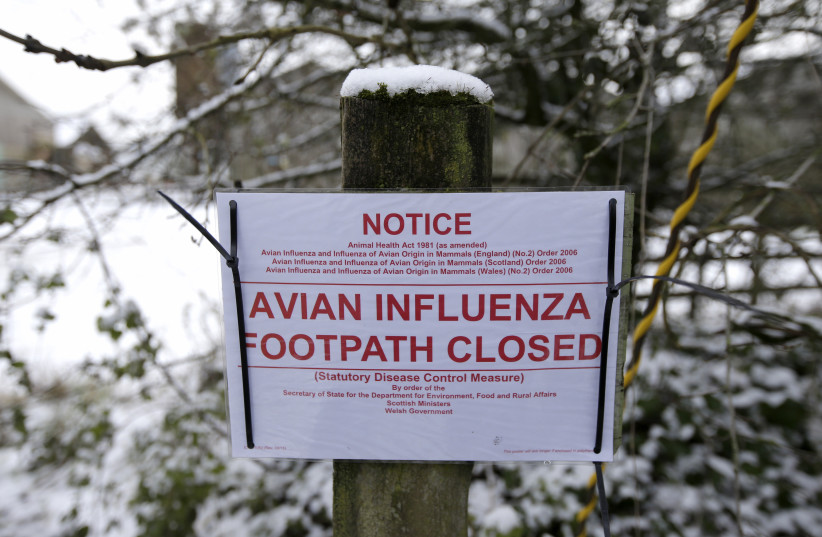
A sign at the edge of an exclusion zone warns of the closure of a footpath after an outbreak of bird flu in the village of Upham in southern England, February 3, 2015.(photo credit: REUTERS/PETER NICHOLLS)Advertisementhttps://trinitymedia.ai/player/trinity-player.php?pageURL=https%3A%2F%2Fwww.jpost.com%2Fhealth-and-wellness%2Farticle-692815&unitId=2900003088&userId=43dabe08-2b1a-4c7c-bafe-85ac9a956566&isLegacyBrowser=false&version=20220118_e4e3582abc3c23eae0811f504234052bc260c7f5&useCFCDN=0&themeId=140Five human cases of the H5N6 strain of avian influenza have been reported in China in recent weeks, the Center for Health Protection (CHP) of the Hong Kong Department of Health reported on Thursday. Two of the patients have died.Four out of the five cases had confirmed exposure to poultry, although it is as of yet unclear how the fifth case got infected, according to the Department of Health. All the cases were infected in December.The World Health Organization (WHO) reported on Friday that all the cases had a history of exposure to poultry prior to infection and that none of their family members had developed symptoms. No epidemiological links were found between the five cases.Top Articles By JPostRead More
PA minister panned for blaming Hamas for floodsAdditionally, between January 7 and 13, four new cases of human infections of the H9N2 strain of bird flu were reported in China. All four are in mild condition and have already recovered. All had a history of poultry exposure and no epidemiological links were found between the four cases. 24 cases of H9N2 were reported in China in 2021.A spike in the number of human infections caused by H5N6 has been reported in China in the past year.Workers in protective gear seen in Moshav Givat Yoav, in northern Israel, December 29, 2021, following an outbreak of the Avian influenza. (credit: MICHAEL GILADI/FLASH90)According to the WHO, the rise in H5N6 cases may reflect the continued circulation of the virus in birds and enhanced surveillance due to the COVID-19 pandemic. The WHO added that the zoonotic threat remains elevated due to the spread of the viruses among birds, but that the overall pandemic risk associated with the strain of bird flu has not significantly changed.The increase in human infections caused by the H5N6 subtype of avian influenza is causing concern among experts, who say that a previously circulating strain appears to have changed and could be more infectious to people.”The increase in human cases in China this year is of concern. It’s a virus that causes high mortality,” said Thijs Kuiken, professor of comparative pathology at Erasmus University Medical Centre in Rotterdam, to Reuters.A Simple Method to Reduce Neuropathy (Watch)Sponsored by Health Today NewsOn Friday, the United States Department of Agriculture (USDA) announced that a wild bird in South Carolina was found to be infected with highly pathogenic Eurasian H5 avian influenza, the first case of this variant of bird flu found in the US since 2016.The bird, a wild American wigeon, was found in Colleton County, South Carolina. Other variants of the bird flu have been detected in the US in recent years.The USDA added that the US Centers for Disease Control and Prevention (CDC) still considers the risk to the general public from the variant to be low. No human infections from the variant have occurred in the US.The USDA advised people to minimize direct contact with wild birds and advised bird owners to practice good biosecurity and keep their birds isolated from wild birds.A large number of bird flu outbreaks have been reported throughout Europe, Africa and Asia in recent weeks, mostly due to the H5N1 subtype, which comes from the H5 lineage, according to the World Organization for Animal Health.Over a million birds were found to be infected with the variant in Israel in recent months, although Israel’s Agriculture Ministry declared on Friday that the outbreak is now under control.The OIE has urged countries to increase surveillance for HPAI outbreaks, as the virus has been reported in over 40 countries since July.[Gallery] Experts Discover Girl Born From Two Different SpeciesSponsored by Entrepreneur[Pics] At 74, Hillary Clinton Lives In This HouseSponsored by https://afternoonedition.com/Recommended byThe H5N1, H5N3, H5N4, H5N5, H5N6 and H5N8 subtypes of HPAI are circulating in bird and poultry populations across the globe, sparking concern at OIE which called this an “unprecedented genetic variability of subtypes… creating an epidemiologically challenging landscape.”Earlier this month, OIE Director General Monique Eloit told Reuters that “this time the situation is more difficult and more risky because we see more variants emerge, which make them harder to follow.””Eventually the risk is that it mutates or that it mixes with a human flu virus that can be transmitted between humans then suddenly it takes on a new dimension,” she added.Germany’s Federal Research Institute for Animal Health, the Friedrich Loeffler Institute, told the German Deutsche Presse-Agentur (DPA) that Europe is experiencing its “strongest avian flu epidemic ever.”The institute added that “there is no end in sight” as the virus spreads throughout the continent and around the world, with new cases reported on a daily basis.
“The most significant factor in increased mortality in 2021 was a source we’ve never really had before – and that is starvation,” explains Patrick Rose, Executive Director for the “Save the Manatee Club”.
That starvation all came down to one main factor: “We’ve had such severe loss of seagrasses and that’s directly related to too much nitrogen pollution,” says Rose.
The pollution is rising for a number of reasons.
“Whether it’s from failing septic systems to the ground water, improperly treated sewage and for fertilizers and runoffs,” explains Rose.
Though the majority of deaths occurred on the East Coast, the F-W-C has started implementing several solutions.
“At this point in time, in order to stave off a repeat of this, they’re looking at some supplemental feeding for the first time also on the east coast of Florida.”
But due to warmer forecasts throughout the holiday season, the effectiveness of those solutions have been mixed.
“They really haven’t had any significant results from that yet because we’ve had an unusually warm winter so far,” says Rose.
In Southwest Florida, a leading cause of death for manatees is red tide.
“We’ve had more than three hundred manatees die in a year from red tide. So if you start adding all these things up together, the manatees are having a pretty tough time.”
And of course, boaters play a significant role, too.
“We had over one hundred manatees die from watercraft injuries this year, and likely more than that – that’s what we know about,” says Rose.
“In Fort Myers, they’ll be up the orange river, at the type power plant, but in weather like this which is unusually warm, they’re more spread out.”
Ultimately, Rose says the solution starts with us.
“We have it within our control as humans to stop the excess nitrogen from our wastewater. So whether that’s getting off of septic tanks, getting to advanced wastewater treatment – put the water back as clean as you took it out!”
So, if you’re out boating this weekend and happen to find a sick or injured manatee, you’re encouraged to report it to the F-W-C by calling 1-888-404-3922.


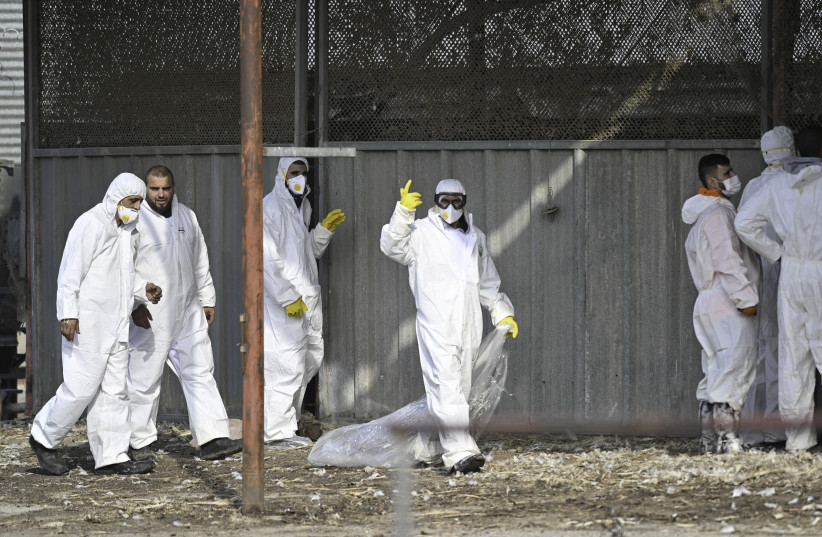 Workers in protective gear seen in Moshav Givat Yoav, in northern Israel, December 29, 2021, following an outbreak of the Avian influenza. (credit: MICHAEL GILADI/FLASH90)According to the WHO, the rise in H5N6 cases may reflect the continued circulation of the virus in birds and enhanced surveillance due to the COVID-19 pandemic. The WHO added that the zoonotic threat remains elevated due to the spread of the viruses among birds, but that the overall pandemic risk associated with the strain of bird flu has not significantly changed.The increase in human infections caused by the H5N6 subtype of avian influenza is causing concern among experts, who say that a previously circulating strain appears to have changed and could be more infectious to people.”The increase in human cases in China this year is of concern. It’s a virus that causes high mortality,” said Thijs Kuiken, professor of comparative pathology at Erasmus University Medical Centre in Rotterdam, to Reuters.


