The one hopeful bit of information in Tom Lounsbury’s otherwise disturbingly vile piece, “Predator hunting a fun winter pastime, day or night” (besides the obvious fact that Tom and his readers could be out snow shoeing or cross-country skiing rather than taking pleasure in trying to end the lives of animals otherwise struggling to survive the elements) was learning that predator slayers don’t have to wear hunter-orange.
A quick check on C.A.S.H.’s (Committee to Abolish Sport Hunting) Hunting Accident page will remind “sportsmen” that hunters mistake one another for “game” on almost a daily basis. When they’re not busily shooting each other, they’re falling out of tree-stands or having some other fatal (or nearly-so) accident. Indeed, wearing hunter-orange has surely saved many a hunter’s life, but if making a casual winter pastime of murdering foxes or coyotes…
A bucket of KFC Beyond Fried Chicken is shown in a promotional stillKentucky Fried Chicken
On Wednesday, Kentucky Fried Chicken and Beyond Meat announced the release of the plant-based Beyond Fried Chicken nationwide beginning Jan. 10.
KFC restaurants across the United States are set to offer Beyond Fried Chicken for a limited time, while supplies last.
The plant-based menu offering was developed by Beyond Meat exclusively for KFC and is expected to offer the same flavor as KFC’s fried chicken but in a plant-based option, although the plant-based option is not prepared in vegan or vegetarian manner, KFC said.
The test was expanded to restaurants in Nashville and Charlotte in 2020, as well as select restaurants in Southern California in the summer of 2020, which led to a sell-out of the product in one week.
“We couldn’t be prouder to partner with KFC to offer a best-in-class product that not only delivers the delicious experience consumers expect from this iconic chain, but also provides the added benefits of plant-based meat,” said Ethan Brown, founder and CEO, Beyond Meat. “We are truly thrilled to make it available to consumers nationwide.”
Beyond Fried Chicken is set to be served with a choice of KFC dipping sauce — Honey BBQ, Ranch, Honey Mustard and KFC Sauce. It is available as KFC’s first-ever plant-based combo meal with Secret Recipe Fries and a medium drink, or à la carte in six or 12-piece orders, KFC said. Prices will start at $6.99, tax extra, and may vary by location.
A recreation of human ancestors stoking a fire by a cave.(Image credit: gorodenkoff via Getty Images)
Our human ancestors and relatives lived tens of thousands to millions of years ago, and we still have much to learn about their existence and abilities. In 2021, researchers investigated all kinds of clues, including ancient skulls that shed light on the evolution ofHomobrains, bones from previously unknownHomospecies and fossilized footprints that revealed just how early humans arrived in North America.
Here are 10 amazing discoveries about our human predecessors that scientists made in 2021.
The Earth reached its perihelion, its closest point to the sun for 2022, on Jan. 4, 2022.(Image credit: NASA)
The sun is just a little bit closer in Earth’s sky right now.
Earthis at its closest to thesunTuesday (Jan. 4) in its 365.25-day journey. This milestone, called perihelion, coincidentally happens near the start of the Gregorian calendar year observed by much of the world, including in North America.
The exact moment of perihelion this year occurred at 1:52 a.m. EST (0652 GMT),according to EarthSky. Earth was about 3 million miles (5 million kilometers) closer to the sun than it is at aphelion, when it is farthest from the sun, which takes place in early July. That variation is relatively small compared to Earth’saverage distance from the sunof 92,955,807 miles (149,597,870…
The Earth reached its perihelion, its closest point to the sun for 2022, on Jan. 4, 2022. (Image credit: NASA)
The sun is just a little bit closer in Earth’s sky right now.
Earth is at its closest to the sun Tuesday (Jan. 4) in its 365.25-day journey. This milestone, called perihelion, coincidentally happens near the start of the Gregorian calendar year observed by much of the world, including in North America.
Perihelion and aphelion don’t cause the seasons — those happen due to the tilt of the planet’s axis — but these orbital milestones do affect the seasons’ duration. When Earth is farther from the sun, it moves a little slower in its orbit than it does during the close approach, which causes the northern hemisphere’s winter to be about five days shorter than its summer.
That orbital behavior is explained in the second law of planetary motion formulated by astronomer Johannes Kepler during the 17th century.
Based in part on early telescopic observations by astronomer Tycho Brahe, Kepler realized that planets travel in ellipses, rather than the perfect circles imagined by many previous astronomers. Kepler figured out that an invisible line connecting a planet to the sun swept out an equal amount of area over the same amount of time during a planet’s journey around the sun. This characteristic means that a planet needs to travel faster when it is closest to the sun and slower when it is farthest; the speed difference was later explained further by theories of gravity.
A diagram of Earth’s elliptical orbit around the sun. (Image credit: NOAA)
Winter will still feel rather cold in the northern hemisphere, though, even with the shorter distance to the sun.
“Even when you take into account that difference in distance between aphelion and perihelion, there’s only about a 7% difference in average global [solar energy] that we receive,” Walter Petersen, a research physical scientist in the Earth science branch at NASA’s Marshall Space Flight Center, told Space.com in 2018. “And so it doesn’t amount to a great deal in terms of weather.”
Follow Elizabeth Howell on Twitter @howellspace. Follow uson Twitter @Spacedotcom and on Facebook.
Join our Space Forums to keep talking space on the latest missions, night sky and more! And if you have a news tip, correction or comment, let us know at: community@space.com.
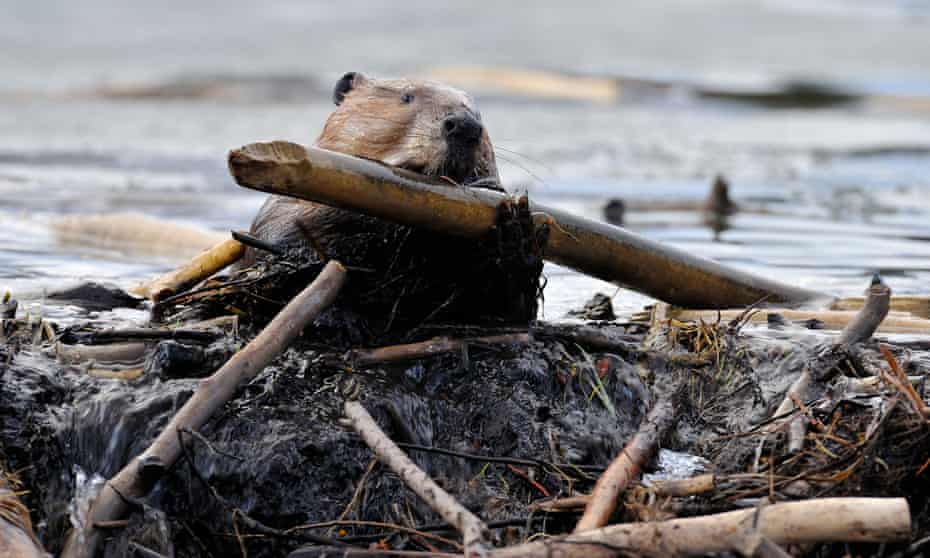
‘There are areas of Alaska that had no evidence of beavers 50 years ago that are now apparently saturated with them,’ said Ken Tape, an ecologist at the University of Alaska, Fairbanks. Photograph: Robert McGouey/Wildlife/Alamy
The transformation of the rapidly warming Arctic is being accelerated by a wave of thousands of newcomers that are waddling and paddling northwards: beavers.
Scientists who sought to map the spread of beavers in Alaska were astounded to find that the creatures have pushed far north into previously inhospitable territory and are now set to sweep into the furthest northern extremities as the Arctic tundra continues to heat up due to the climate crisis.
“We didn’t know what we would find and ended up being very surprised,” said Ken Tape, an ecologist at the University of Alaska, Fairbanks, who co-authored the new research.
“There are areas of Alaska that had no evidence of beavers 50 years ago that are now apparently saturated with them,” he said, adding: “It’s just a matter of time before they head even further north. When you consider this is likely happening across the rest of the Arctic in Canada and Russia, that gives you an idea of the scope of this change.”Advertisement
Using aerial photographs and satellite imagery reaching back to 1949, and observations recorded from before then, an international team of researchers involved in the Arctic Beaver Observation Network identified more than 12,000 ponds created by beavers damming rivers and streams across western Alaska. This number has doubled in the past 20 years.
In recent years, as the Arctic has heated up three times quicker than the global average, the North American beaver has ventured north and west and now occupies vast swaths of the Seward peninsula, a large landmass that extends from the western coast of Alaska.
The impact of these portly semiaquatic rodents has been felt by the remote Indigenous communities of Alaska, with the flooded areas created by beavers causing concern over access to food and travel.
It’s unknown how many beavers are now in the northern and western parts of Alaska, with estimates ranging from 50,000 to close to 100,000.
“The true impact of the spread of beavers into the Arctic on the environment and the Indigenous communities who live there is not yet fully known,” said Helen Wheeler, a researcher at Anglia Ruskin University. “However, we do know that people are concerned about the impact beaver dams are having on water quality, the numbers of fish downstream of the dams, and access for their boats.”
A broader consequence of the arrival of beavers could be the acceleration of the climate change which, in combination with a reduction in fur trapping over the past century, has probably allowed the beavers to push north. Beavers, which do not hibernate, have benefited from shortening winters and the wider availability of vegetation available to feed upon.
The pools that accumulate when beavers dam rivers create localized unfrozen “hotpots” that result in the thawing of permafrost, the always-frozen ground of the Arctic that holds vast amounts of carbon. Scientists warn that a widespread thawing of permafrost could cause global heating to spiral dangerously out of control.
“Those ponds absorb heat better, they change the hydrology of the area and the permafrost responds to that,” said Tape. “Beavers are coming in from the outside, imposing themselves on the ecosystem and disrupting it.
“It’s accelerating the effects of climate change. When you realize what’s happened in western Alaska is likely to happen to northern Alaska, it does give you pause.”
Tape said that the Brooks Range, a mountain range that runs across northern Alaska, will be an obstacle to the beavers but will not stop them as they follow rivers up to the north coast.
Calvin Shomaker, The Daily NewsWed, January 5, 2022, 4:18 AM·1 min read
Onslow County ambulance
A minor was shot in Onslow County last week in what officials are calling a hunting accident.
The victim, a young male, suffered a gunshot wound in Sneads Ferry on Dec. 31, according to officers from the Onslow County Sheriff’s Office and North Carolina Wildlife Resource Commission (NCWRC).
Onslow County Sheriff’s Office Chief Deputy Col. Chris Thomas said this week the incident happened in a wooded area near Old Folkstone Road and Ravenall Street, and the victim was transported to New Hanover Regional Medical Center in Wilmington.
The sheriff’s office assisted with the first law enforcement response and crime scene investigation, Thomas said, but the investigation was turned over to NCWRC, which handles investigations into hunting related incidents.
NCWRC Master Officer Barbara Smith was able to confirm the accident, but did not share further details…
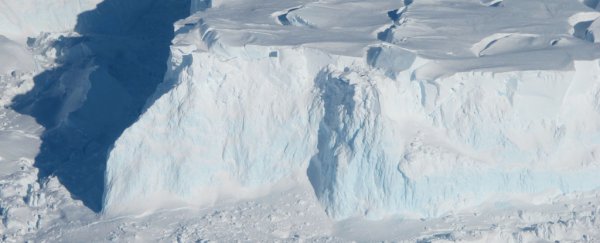
Adding 65cm to global sea levels would be coastline-changing amounts. For context, there’s been around 20cm of sea-levelrise since 1900, an amount that is already forcing coastal communities out oftheir homesand exacerbating environmental problems such as flooding, saltwater contamination, and habitat loss.
But the worry is that Thwaites, sometimes called the “doomsday glacier” because of its keystone role in the region, might not be the only glacier to go.
Were it to empty into the ocean, it could trigger a regional chain reaction and drag other nearby…
by:Nouran Salahieh,Ellina AbovianPosted:Jan 3, 2022 / 09:46 AM PST/Updated:Jan 3, 2022 / 09:49 AM PSTjavascript:false
Los Angeles County recorded nearly 45,000 new coronavirus cases over the weekend as the omicron variant continued its relentless spread.
Even with the holiday lags in reporting, L.A. County recorded 23,553 new cases on Saturday and another 21,200 on Sunday.
County officials say over 20% of those getting tested are positive for the virus.
The county’s seven-day average daily positivity rate climbed to 21.8% Sunday, up from 14.9% one week prior.
Making matters worse, the number of people hospitalized with COVID-19 has skyrocketed to 1,628.
“During this surge, given the spread of a more infectious strain of the virus, lapses can lead to explosive transmission,” L.A. County health director Barbara Ferrer said in a statement Sunday.
By Daniel Uria 1/5Palestinian workers for the Israeli Ministry of Agriculture wear personal protective equipment while retrieving dead cranes killed from H5N1 type Avian Influenza, bird flu, at the Hula Valley Nature Reserve, on Sunday. Photo by Debbie Hill/UPI | License Photo
Jan. 2 (UPI) — Two new outbreaks of bird flu were reported in Israel on Sunday, as nations throughout the world continue to add new cases.
About 7,400 infected chickens were found in two coops in the northern Israel town of Gadish, while 14,000 turkeys were found to be infected in Ne’ot Golan and eggs produced in Gadish are being kept out of the market.ADVERTISEMENThttps://0dda85b14bce25b432a4c7d0e4592fc7.safeframe.googlesyndication.com/safeframe/1-0-38/html/container.html
“This is an infection event of a magnitude we have not experienced here before,” Agriculture Minister Oded Forer said Sunday. “Each new hotspot is a warning sign that directs us to work to increase the biological safety of chicken coops in Israel.”
On Thursday, the Agriculture Ministry reported that 5,500 chickens were infected with the virus on an organic farm in Barak, which was forced to isolate the coop housing the infected chickens and halt the sale of eggs from the farm.
More than 8,000 migratory cranes have died from bird flu in a continuing outbreak in the Hula Valley.ADVERTISEMENThttps://0dda85b14bce25b432a4c7d0e4592fc7.safeframe.googlesyndication.com/safeframe/1-0-38/html/container.html
In response to the outbreak, Forer has allowed untaxed imports of eggs and instructed his office to raise the egg quotas for farmers in Israel to avoid an egg shortage.
Bird flu cases have also been reported in Canada, across Europe and into India and East Asia.
“The widespread nature of the avian flu is very concerning, especially given that it is infecting chickens and not just wild birds. It’s made the move from wildlife to stock animals and I’m hoping it won’t make the next step to humans,” he said.
The Health Ministry has encouraged Israelis to only purchase eggs from authorized suppliers and avoid wild birds to prevent transmission.
Additionally, the Agriculture Ministry has moved to cull 700,000 birds over the past few weeks in hopes of preventing the spread.







 Palestinian workers for the Israeli Ministry of Agriculture wear personal protective equipment while retrieving dead cranes killed from H5N1 type Avian Influenza, bird flu, at the Hula Valley Nature Reserve, on Sunday. Photo by Debbie Hill/UPI |


