Illinois man arrested for allegedly shining headlights to shoot deer outside hunting hours Posted: December 27, 2021 4:05 PM Updated: December 27, 2021 10:43 PM by Logan Reigstad WOODMAN, Wis. — Play Video spaceplay / pause qunload | stop ffullscreenshift + ←→slower / faster ↑↓volume mmute ←→seek . seek to previous12… 6 seek to 10%, 20% … 60% In a news release, the sheriff’s office said it got a complaint of someone hunting after hours around 6:30 p.m. on County Highway K in Woodman Township. A witness gave a deputy a vehicle description and an Illinois license plate number. Police in Fennimore saw the vehicle and another with an Illinois plate in the city. Officials spoke to the man, who reportedly admitted to using the headlights to shoot the whitetail doe after hours on private property. Officials seized the doe and the man’s rifle, according to the news release. The sheriff’s office said it plans to refer criminal charges of illegal shining and shooting of a whitetail deer, shooting a deer after hours and transporting a loaded firearm in a vehicle.
Posted: December 27, 2021 4:05 PMUpdated: December 27, 2021 10:43 PM by Logan Reigstad
WOODMAN, Wis. —Play Video
spaceplay / pause
qunload | stop
ffullscreen
shift + ←→slower / faster
↑↓volume
mmute
←→seek
. seek to previous
12… 6 seek to 10%, 20% … 60%
In a news release, the sheriff’s office said it got a complaint of someone hunting after hours around 6:30 p.m. on County Highway K in Woodman Township. A witness gave a deputy a vehicle description and an Illinois license plate number.
Police in Fennimore saw the vehicle and another with an Illinois plate in the city. Officials spoke to the man, who reportedly admitted to using the headlights to shoot the whitetail doe after hours on private property.
Officials seized the doe and the man’s rifle, according to the news release.
The sheriff’s office said it plans to refer criminal charges of illegal shining and shooting of a whitetail deer, shooting a deer after hours and transporting a loaded firearm in a vehicle.
I am writing to express my concern regarding the recent (December) introduction of snare traps – presumably targeting coyotes – into our St. James City neighborhood by one of our fellow residents.
The snares present a potential hazard to not only children, but to domestic pets as well as Federal/Florida designated threatened or protected birds such as bald eagles, wood storks and roseate spoonbills and other birds frequenting the vicinity. Some may say that coyotes represent the same threats, however, humans should know better, where coyotes cannot be held to the same standard.
I have contacted the Florida Fish and Wildlife Conservation Commission regarding the legality of setting such snares in a residential area, however, my goal here is not to discuss the legality, but rather the appropriateness – or inappropriateness of doing so.
My task is simple – please do not set snare traps in our neighborhood. While I would prefer that the responsible party learn to co-exist with the coyotes, I realize that he/she/they have a right to disagree. I would ask that they do so in a respectful manner – and that does not include the selfish act of setting potentially hazardous snare traps in our neighborhood.
Riders and hounds taking part in this year’s hunt.
Get the latest Scottish crime and courts news sent straight to your inbox with our daily Criminal Record newsletterSubscribeWe use your sign-up to provide content in ways you’ve consented to and to improve our understanding of you. This may include adverts from us and 3rd parties based on our understanding. You can unsubscribe at any time.More info
An annual Boxing Day hunt has prompted theScottish Greensto renew their call for an outright ban onfoxhunting in Scotland.
The Lanark and Renfrewshire Foxhounds hunt set off from Meadow Park Equestrian Centre…
A skull and bones of blackbucks recovered from the accusedRAJKOT: The forest department arrested four persons accused of hunting three blackbucks nearVelavadarnational park on Saturday. Officials have also recovered the carcasses of the animals and also the weapons used for hunting activity. Blackbuck falls under Schedule One of the Wildlife Protection Act. During patrolling on December 3, forest officials found five persons moving suspiciously in the revenue area of Bhavnagar. They intercepted these persons who threw away the animal remains and tried to escape. Of them, two were arrested. During remand, accused Buddha Vegad and Javed Pathan revealed where they had thrown away the carcasses and their weapons which…
Hounds gather around the huntmaster and his horse at the annual Boxing Day meet of the Duke of Beaufort’s Hunt at Worcester Lodge, Didmarton, Gloucestershire
ANIMAL welfare campaigners have renewed their calls for blood sports to be banned on public land, after Boxing Day hunts took place across Britain.
The call by the League Against Cruel Sports was echoed by the Scottish Greens and Labour, which also urged government departments to stop granting licences for trail hunting on their land.
Activists believe that more than 240 hunting days have taken place on Ministry of Defence-owned land alone this year.
This is despite both Natural Resources Wales and the National Trust announcing an end to trail hunting and numerous public bodies suspending the issuing of licences.
Campaigners say that trail hunts enable the exploitation of loopholes in the Hunting Act and can be used as cover to pursue live foxes.
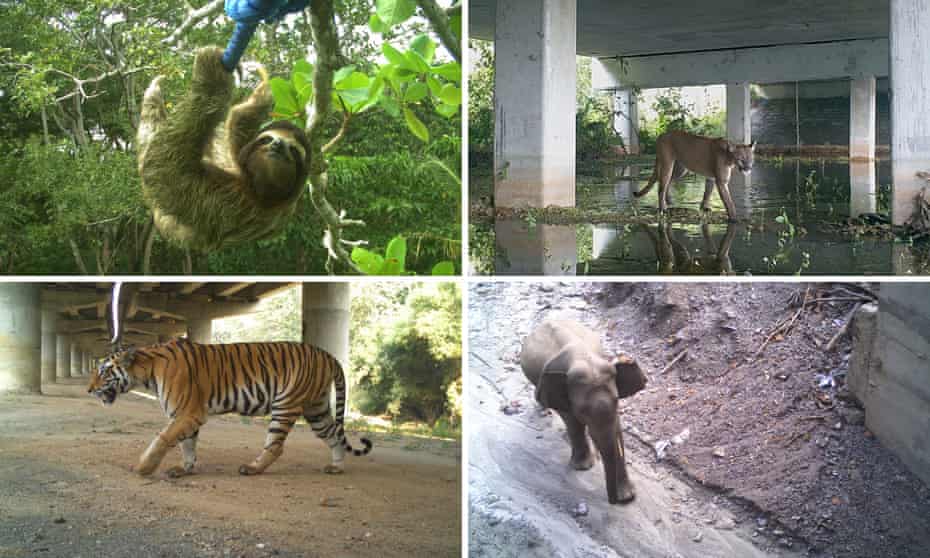
Dedicated wildlife routes are helping animals from sloths to tigers to navigate busy roads. Photograph: (clockwise from top left) Sloth Conservation Foundation/Florida Department of Transportation/Norris Dodd/Wildlife Institute of India
From a tiny railway bridge for dormice in the UK to elk, deer and bears benefitting from a slew of new animal crossings in Colorado, wildlife bridges are having a moment. As the human footprint on the planet continues to expand, a growing number of roads and railways include provisions for wildlife to pass through fragmented landscapes.
In January, we reported on Sweden’s plans to build a series of “renoducts” to help reindeer traverse the country’s main roads. The Swedish Transport Administration has since completed an ecoduct over the E6 in Skåne in southern Sweden, the third in the county. In southern California, work is due to begin on the largest wildlife bridge in the world in 2022, to connect isolated mountain lion populations north of Los Angeles that are becoming dangerously inbred. Joe Biden has earmarked $350m (£260m) of his $1.2tn infrastructure package for wildlife bridges to lessen the multibillion annual cost of collisions.Advertisementhttps://8ef1763cc532385f2086720612434a47.safeframe.googlesyndication.com/safeframe/1-0-38/html/container.html
“Ten years ago, wildlife bridges were experimental. We didn’t know whether they would work or not. Now they’ve shown they get huge reductions in collisions. In some cases, 85% to 99% reductions,” says Rob Ament, a road ecology expert at Montana State University. “You can design them for many species. Even out in the plains, we’re getting moose crossings in North Dakota.”
Wildlife bridges are found on every continent: there is an elephant underpass near Mount Kenya; the Netherlands has a network of ecoducts that may help the country’s first wolf pack in more than 140 years gain a foothold across the densely populated country; suspended water pipes are helping Java’s endangered lorises; and a bison bridge may help the animals cross the Mississippi.
Here are five projects from around the world helping animals make their way:
Alligator Alley, Florida
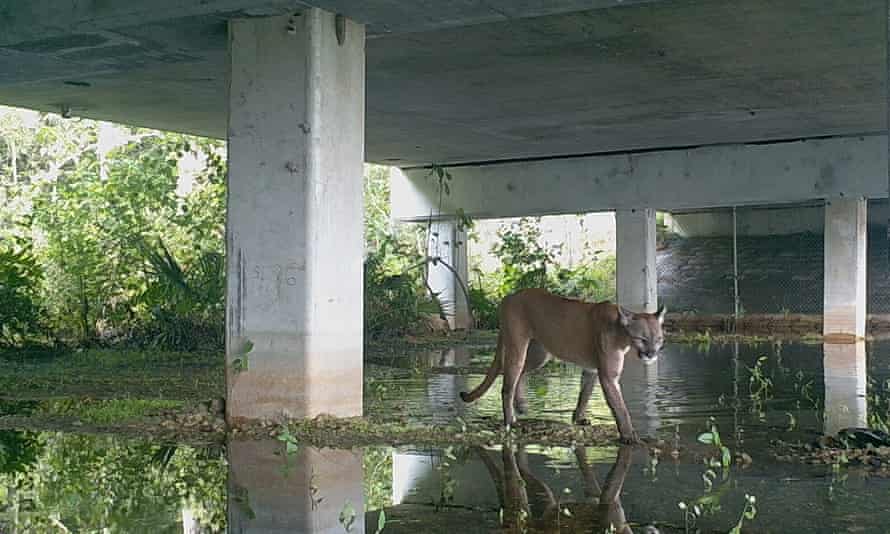
The 129km (80-mile) stretch of road between Naples and Fort Lauderdale bisects the Everglades, an enormous wetland that is home to thousands of alligators, deer and the endangered Florida panther. It used to be notorious for high-speed collisions with wildlife until the road was upgraded to a four-lane motorway and crossings were installed. Today, dozens of underpasses and fencing help wildlife navigate the road. A camera trapping exercise found panthers, black bears, skunks, deer, bats, birds and even fish use the crossings, and hope is growing the state’s wildlife bridge network could be extended north to connect potential habitats for the Florida panther. “Fencing is critical along Alligator Alley. It is a 10ft-high chain link fence with three-strand barbed wire on top. That’s to keep the wildlife off the roadway and on the crossing,” says Brent Setchell, a design engineer at Florida Department of Transportation, who identifies potential crossing sites by monitoring road collisions with panthers and bears. “The fascinating thing is we just started monitoring the crossings four or five years ago. We found an abundance of wildlife.”
A Florida panther passes under Alligator Alley, once notoriously dangerous for wildlife. Photograph: Florida Department of Transportation
‘The tunnel of love’ on the Great Alpine Road, Australia
Advertisement
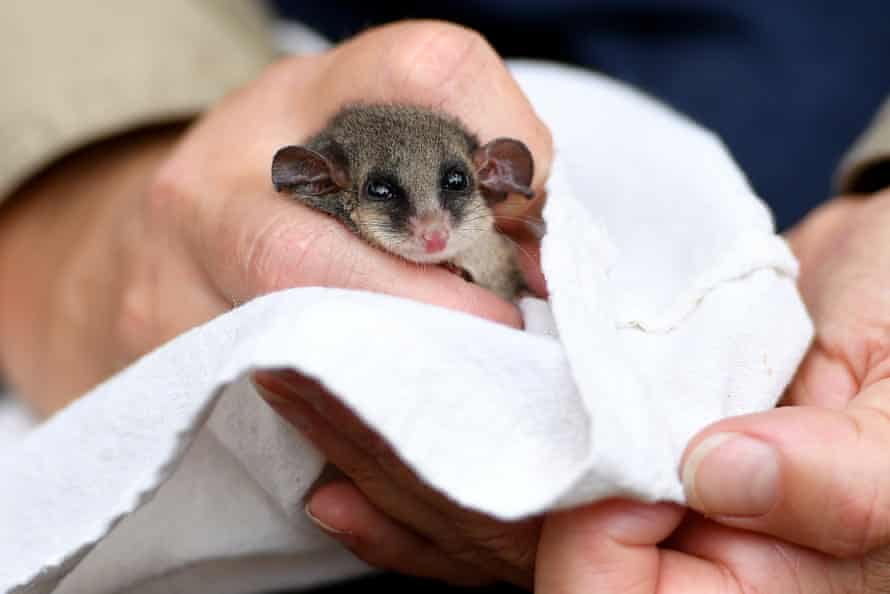
Stretching through the Victorian Alps in south-east Australia, the Great Alpine Road posed an existential threat to a colony of critically endangered mountain pygmy possums. Even though there are only about 150 of the marsupials on Mount Little Higginbotham, testing revealed genetic differences between sub-groups separated by the road, which are also threatened by fire, disappearing food sources and invasive species. Conservationists decided to build a “tunnel of love” between the isolated groups to improve mixing and strengthen their chances of survival. Over the last two summers, 30 possums have been identified using the tunnel of love, often in spring when they wake up from hibernation. The tiny marsupials can cross the nearly 15-metre tunnel in just 15 seconds – sometimes too fast for remote sensing cameras to capture them.
A pygmy possum is inspected at North Head Sanctuary in Manly, Sydney. Over the last two summers, 30 of the marsupials have been identified using the ‘tunnel of love’ through the Victorian Alps. Photograph: Dan Himbrechts/AAP
India’s tiger corridor
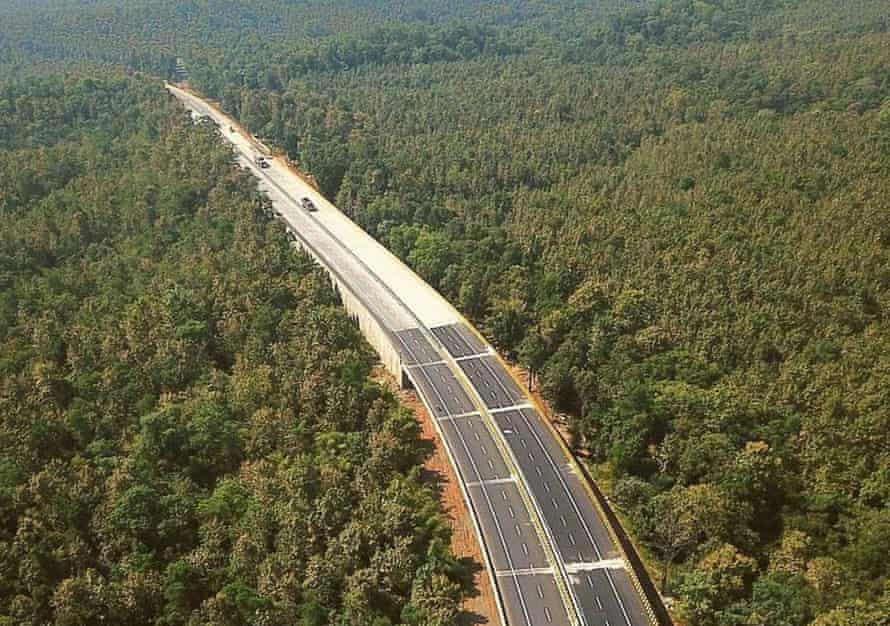
India’s first dedicated wildlife underpasses were a hard-fought victory for environmental campaigners. The nine crossings in the Pench tiger reserve were a court-ordered mitigation measure on the country’s longest road, the 4,112km National Highway 44, which runs down the middle of the country. Collisions with big cats still happen on the multi-lane motorway, but environmentalists say the underpasses have highlighted the need for more wildlife crossings on India’s road network. A 2019 camera trapping exercise found at least 18 species use the crossings, including tigers, wild dogs, sloth bears, civets and leopards. “According to our calculation, some 55,000km of roads pass through India’s forests and protected areas, many of them through wildlife corridors,” Milind Pariwakam, a road ecologist with Wildlife Conservation Trust Mumbai, told the Hindu. More infrastructure projects now have wildlife passes, including the 1,380km Delhi-Mumbai expressway currently under construction, which includes India’s first animal bridges.
Campaigners fought for a series of underpasses under the multi-lane National Highway 44 in India. Tigers, wild dogs, sloth bears, civets and leopards have been spotted using them. Photograph: Wildlife Institute of Inda
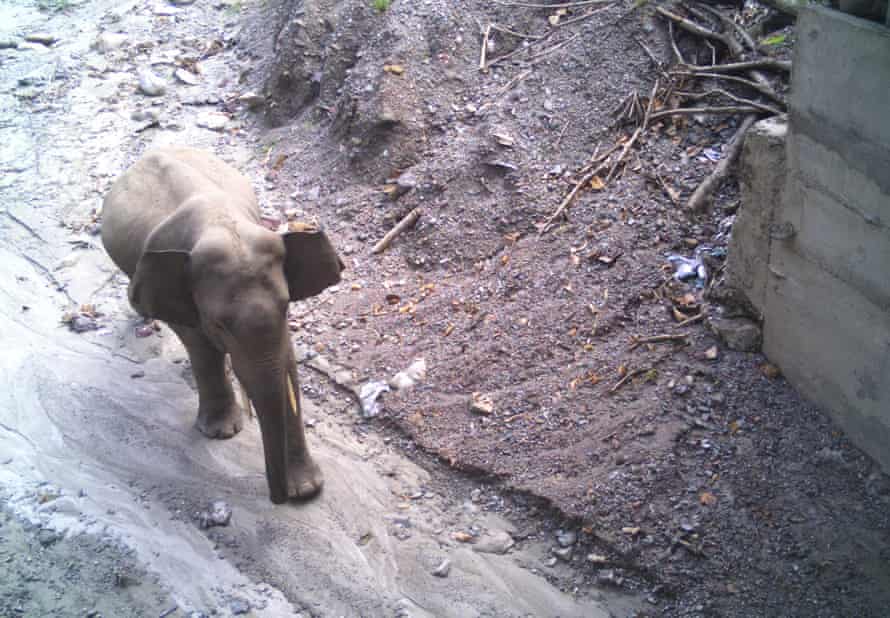
Nearly 700 Asian elephants roam Bhutan’s forest on the eastern edge of the Himalayas. The small Buddhist country sandwiched between China and India is known for its dramatic landscapes and environmental leadership, as one of the few carbon negative countries in the world. On the 183km east-west motorway, Bhutan’s first elephant underpasses were constructed to help the threatened animals move through the landscape.Monitoring from 2015 to 2017 found that 70 groups of elephants were recorded near the passes, with three-quarters passing through the structures.
Threatened Asian elephants are able to cross the east-west motorway in Bhutan thanks to a series of underpasses. Photograph: Norris Dodd/Asian Development Bank
Sloth bridges in Costa Rica
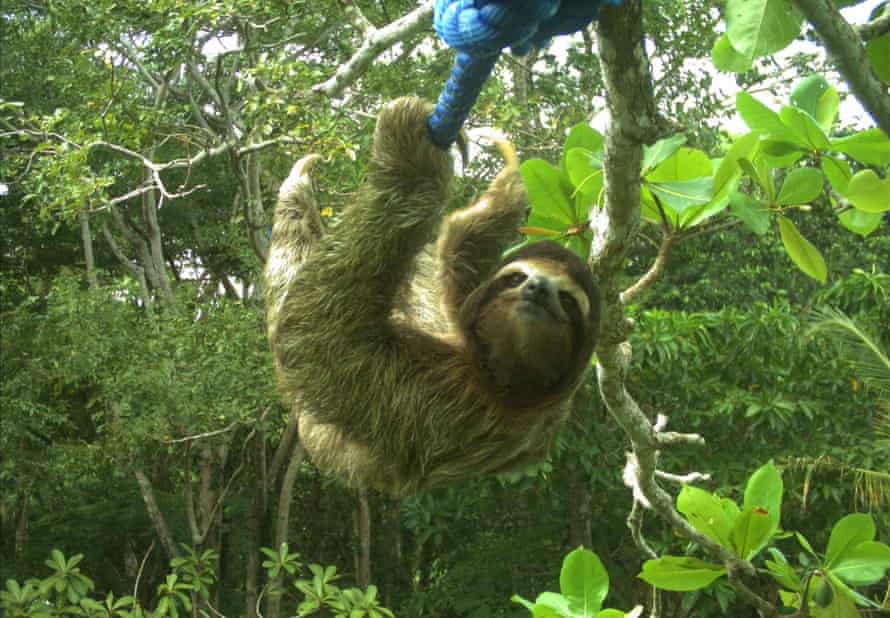
Wildlife passes are not always bridges or underpasses. In Costa Rica, canopy bridges are used to help sloths, monkeys and other wildlife cross roads to combat collisions, dog attacks and electrocutions on power lines. The rope bridges, which cost about $200 (£150), are installed by the Sloth Conservation Foundation in areas where rainforest has been interrupted by human development on the country’s Caribbean coast. Crossing roads is often deadly for the slow-moving creatures and the canopy bridges also help combat inbreeding. “People look at them and think that they’re so poorly equipped to survive because you see them crossing roads and trying to move around and they look so awkward and useless,” Rebecca Cliffe, head of the Sloth Conservation Foundation, told Bloomberg earlier this year. “But if you put them in a well-connected rainforest, then they are masters of survival.”
A sloth avoids traffic in Costa Rica using a special rope bridge. Photograph: Sloth Conservation Foundation