


[Know thy friend’s enemy]:
Paul A. SmithMilwaukee Journal SentinelView Comments

It would be probably be enough to know the Green Bay Packers were about to start their season.
Or to see yellow buses ferrying students to and from schools.
But for a segment of the Wisconsin populace, there’s another sign that autumn has arrive:the start of hunting seasons.
“The best time of year is upon us,” said Jay Snopek of Nelson, who hunts white-tailed deer, wild turkey and waterfowl in the bluffs and waters of Buffalo County. “Time to escape this crazy world and get into the swamp and woods.”
Snopek is among an estimated 1 million license buyers who will pursue game in Wisconsin this year.
Conditions are once again very good for most species, according to the Department of Natural Resources.Story fromRobert Wood Johnson FoundationThose raising kids shared hopes and challengesHere’s a look at…
View original post 1,130 more words
September 12, 2021UPDATEDhttps://www.youtube.com/embed/d4s5Cb3aNsE?controls=0CHEKWATCHMembers with Arrowsmith Search and Rescue responded to an area along Cook Creek at around 10 a.m. Saturday after receiving reports that a man out hunting had fallen on some rocks and hurt himself.
A hunter required rescuing after falling onto some rocks north of Qualicum Beach.
Members with Arrowsmith Search and Rescue responded to an area along Cook Creek at around 10 a.m. Saturday after receiving reports that a man out hunting had fallen on some rocks and hurt himself.
“We quickly attended the area and packaged up our hurt hunter and we’re able to bring him out to a waiting helicopter and flew him to the Qualicum Beach airport,” Nick Rivers, search manager with Arrowsmith SAR, told CHEK News.
Rivers said the man had dressed appropriately for the conditions and merely just slipped on some rocks.https://9a010ba8dfd007aaabd2a95d51b77ce3.safeframe.googlesyndication.com/safeframe/1-0-38/html/container.html
“The terrain was really slick with moss-covered rocks and…
View original post 217 more words
By Molly Tamulevich
Recently, Michigan’s Wolf Management Advisory Council convened in Gaylord to discuss recommendations and updates to Michigan’s wolf management plan. The meeting was not accessible, safe or transparent, as it was held in-person only with no option for providing remote testimony. The only way to watch the meeting was through a livestream on a trophy hunting and trapping lobbying group’s Facebook page. The procedures followed by this five-person council are the latest manifestation of a system that has failed Michiganders, betrayed wildlife and circumvented democracy.
Life-and-death decisions about wildlife in Michigan are controlled by these small but very powerful groups desperately clinging to outdated cultural norms. Attend a meeting of the Natural Resources Commission or wolf council and you will see how quickly talk of “science-based management” falls apart once someone questions long-held but increasingly unrepresentative traditions like trapping, neck snaring…
View original post 346 more words
September 12, 20218:56 AM ET
KAMALA THIAGARAJAN

A road blockade set up during the Nipah virus outbreak in India this month.C. K Thanseer/DeFodi Images via Getty Images
In 2018, wereportedhow the South Indian state of Kerala beat back the deadly Nipah virus. Local filmmakers and musicianseven made a celebratory music video about it. Three years later, the state is faced with yet a new case of Nipah — its third outbreak since 2018 — and it couldn’t have come at a worse time. Kerala, known for its palm-lined beaches on the Arabian Sea, is still reeling after acaseload of 4 million COVID infectionssince the pandemic began.
The Nipah virus is making news again after tragic reports that a12-year-old boy diedof the disease on Sept. 5, in Kerala’s Kozhikode district. He had been admitted to a private hospital…
View original post 1,331 more words
Trang Nguyen is a rarity in Vietnam where civil society is viewed with scepticism and most young people want more lucrative careers.
https://www.aljazeera.com/news/2021/9/10/vietnams-trang-nguyen-wildlife-trade

BySen Nguyen10 Sep 2021
Standing on top of a four-wheel drive looking out at a central Kenyan wildlife reserve wearing a bucket hat and walking boots, Trang Nguyen stands apart from most Vietnamese who prefer European charm and East Asian wonders for their holidays and photographic memories.
But Trang is no ordinary traveller.KEEP READINGIUCN Red List: Bad news for sharks, Komodo dragon; tuna improvingEndangered Sumatran tigers recovering from COVID in Jakarta zooWhat’s behind the US trade in exotic animals?The Poachers Pipeline: Exposing wildlife trafficking
The 31-year-old founder and executive director of WildAct, a Vietnamese conservation NGO, travels the world as a wildlife…
View original post 346 more words
PUBLISHED THU, AUG 26 20212:38 PM EDTUPDATED THU, AUG 26 20219:53 PM EDTEmma Newburger@EMMA_NEWBURGERSHAREShare Article via FacebookShare Article via TwitterShare Article via LinkedInShare Article via EmailKEY POINTS

The sun sets behind smoke from a distant wildfire as drought conditions worsen on July 12, 2021 near Glennville, California.David McNew | Getty Images
A year after thecoronaviruspandemic shuttered businesses, grounded flights and reduced vehicle…
View original post 520 more words
The next decade is crucial to tackle both big polluting gases.
BYSARA KILEY WATSON|UPDATED AUG 18, 2021 12:03 PM
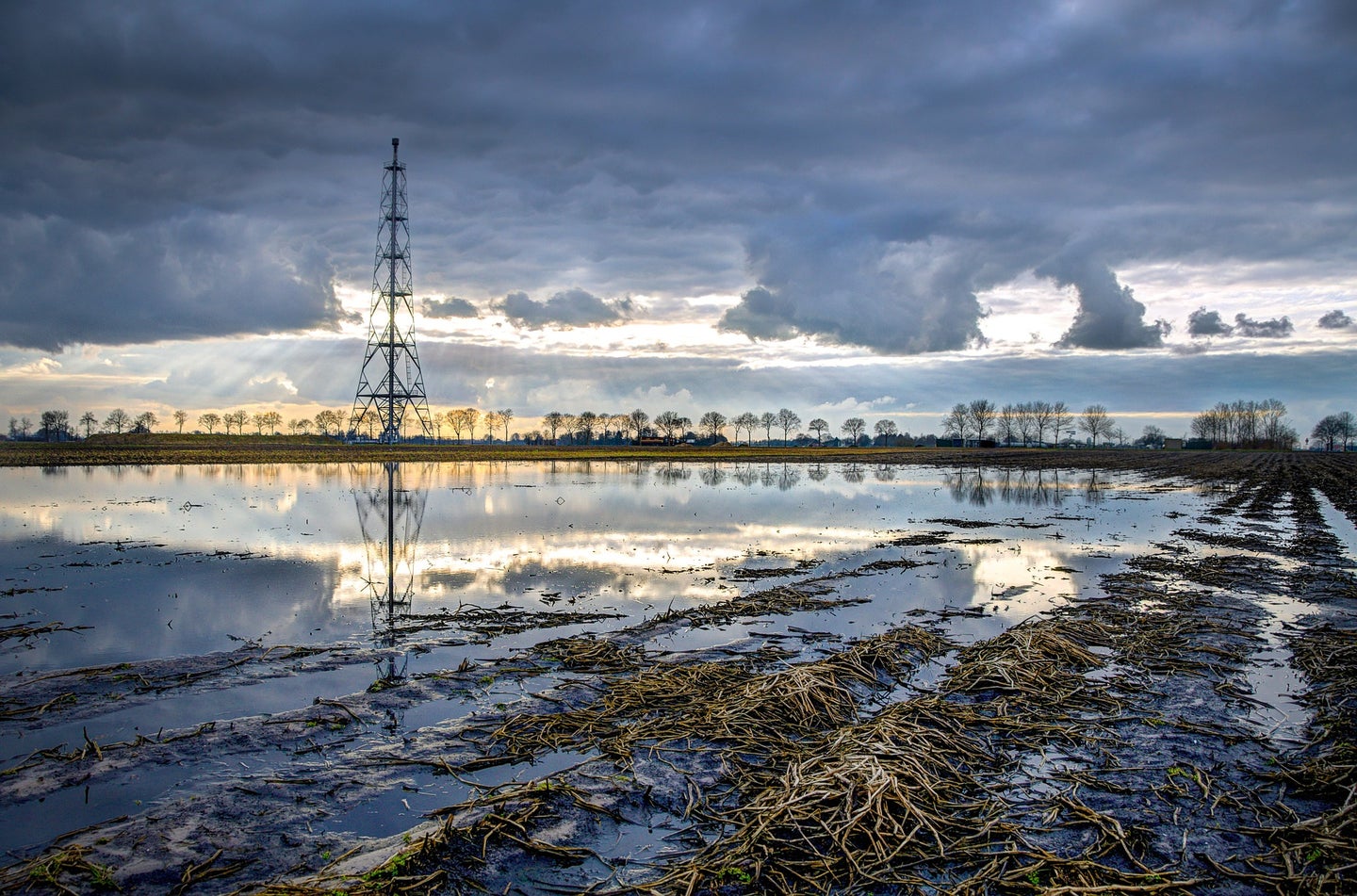
New methane-tracking methods revealed that natural atmospheric levels were far lower than previously reported, and that fossil fuel-produced levels were much higher.Rudy and Peter Skitterians from PixabaySHARE
You may have heard the story of the tortoise and the hare, and how the lesson is that slow and steady wins the race. But what happens when the race changes from a marathon to a sprint?
 ttps://imasdk.googleapis.com/js/core/bridge3.479.1_en.html#goog_2009612741https://imasdk.googleapis.com/js/core/bridge3.479.1_en.html#goog_1876987714https://imasdk.googleapis.com/js/core/bridge3.479.1_en.html#goog_2029469121javascript:falsejavascript:falsejavascript:false
For years, climate scientists have seen carbon dioxide as our tortoise—the slow, steady enemy we need to wrestle back to prevent climate change. And it’s true, CO2has a half life of somewhere between 19 to 49 years, meaning it stays in the Earth’s atmosphere anywhere from 300 to 1,000 years. That’s why over the past century or so…
View original post 666 more words

IN SUMMARY
Livestock represent more than 50% of all methane generated in California, contributing to climate-warming greenhouse gases. We should double down on investments in methane-reduction programs as effective, short-term climate solutions.
Chuck Ahlem is a San Joaquin Valley dairy farmer and former undersecretary of the California Department of Food and Agriculture,cahlem@dairycares.com.
As legislators return to Sacramento for final deliberations this year, prioritizing funding for methane reduction should be the first order of business.
Last week’s landmarkreport by the U.N.Intergovernmental Panel on Climate Change further sounded the alarm that additional warming is inevitable. The report says world leaders must achieve “strong, rapid and sustained” reductions in carbon dioxide, the most abundant and damaging greenhouse gas. The report also documents thatreducing methaneis the best and fastest strategy for…
View original post 521 more words
IN SUMMARY
Livestock represent more than 50% of all methane generated in California, contributing to climate-warming greenhouse gases. We should double down on investments in methane-reduction programs as effective, short-term climate solutions.
Chuck Ahlem is a San Joaquin Valley dairy farmer and former undersecretary of the California Department of Food and Agriculture, cahlem@dairycares.com.
As legislators return to Sacramento for final deliberations this year, prioritizing funding for methane reduction should be the first order of business.
Last week’s landmark report by the U.N. Intergovernmental Panel on Climate Change further sounded the alarm that additional warming is inevitable. The report says world leaders must achieve “strong, rapid and sustained” reductions in carbon dioxide, the most abundant and damaging greenhouse gas. The report also documents that reducing methane is the best and fastest strategy for slowing global warming.
While both methane and carbon dioxide warm the atmosphere, the two greenhouse gases do not behave in the environment in the same way. A single CO2 molecule causes less warming, but its impact lingers for hundreds of years and accumulates in the atmosphere. Methane is more potent, but short-lived, making it easier to address. Thus, reducing methane emissions is a critical climate mitigation strategy. As one of the report’s co-authors, Maisa Rojas Corradi, said, “Quickly reducing methane could counteract global warming, while also improving air quality.”
California policymakers undoubtedly will seize the U.N. report as an opportunity to talk tough on climate change, but will they seize the opportunity to actually do something to save the planet? As legislators negotiate spending on drought and climate change in the next weeks, they would be wise to follow the governor’s lead.
Gov. Gavin Newsom wisely included $60 million for the California Department of Food and Agriculture dairy methane reduction programs in his revised budget. Livestock are a significant source of methane in the state. We should be encouraging our leaders to double down on investments in these effective, short-term climate solutions.
Gov. Jerry Brown understood the importance of funding methane reduction, providing hundreds of millions of dollars for dairy and landfill methane mitigation during his time in office. It’s not rocket science, and the payoff is real.
The dairy and landfill methane reduction programs are the most cost-effective and efficient under the California Climate Investment portfolio. And the California Department of Food and Agriculture dairy digester program is by far the best investment made by the state to date. Consider the following, as reported in the California Climate Investments annual report:
A recent analysis by the California Air Resources Board further establishes the need for more public funding for dairy methane reduction efforts. The dairy digester program is oversubscribed and out of funds. The state will only meet its existing 40% reduction target if that additional funding materializes.
As a dairy farmer in the San Joaquin Valley, I’ve learned more about greenhouse gases and other air emissions than I could have ever imagined. Climate change affects everyone, especially those of us whose way of life relies on the weather. My family has made it a point to do what we can on our farm to reduce emissions — especially methane — and I see many of my fellow dairy farmers doing the same.
The bottom line: The science is clear that the planet is warming. The science is also clear that reducing methane is our best short-term hope for staving off catastrophic impacts. Our children, grandchildren and future generations are depending on it.

