A newly released study estimates that Wisconsin’s wolf population dropped by up to one-third in the months after federal officials announced plans to lift legal protections
FILE – This April 18, 2008, file photo provided by the U.S. Fish and Wildlife shows a gray wolf. As many as one-third of Wisconsin’s gray wolves likely died at the hands of humans in the months after the federal government announced removal of legal protections, according to a study released Monday, July 5, 2021.Gary Kramer – hogp, U.S. Fish and Wildlife Service
Earlier this month, the Arizona Game and Fish Commission voted to approve the country’s first statewide, year-round ban on trail cameras. We asked them, why?
The AZGF Commission says that hunter conflicts and questions of fair chase led the state to ban trail cameras entirely for hunters.Collage by Dave HurteauSHARE
If you live and hunt in the East, Midwest, or South, it’s easy to assume that Arizona’s recent trail-cam ban is a big-government overreaction to a non-issue. That was my initial take. After all, trail cameras have been a part of hunting for decades; their use is widespread and increasingly popular. And while there’s the occasional murmuring question about trail cams giving hunters an unfair edge, those queries come off as a little far fetched to many of us. If you live in Pennsylvania or Wisconsin…
COLUMBIA (AP) – South Carolina is asking for public input on whether state leased Wildlife Management Areas should be open for hunting on Sundays.
The Department of Natural Resources has an online survey up until July 28 as well as four public hearings planned across the state during the next two weeks.
The 1.2 million acres of public land in South Carolina is also used for fishing, hiking, bird watching and other ways to observe nature.
Hunters can use the public land during season, but state law only allows hunting on Sunday on private land.
The first of four public hearings on the hunting changes is today at the Clemson Pee Dee Research and Education Center in Florence. There is a meeting Thursday at the Clinton National Guard Armory on July 19 at the Santee Cooper Auditorium in Moncks Corner and July 26 at a…
More than 16,000 firefighters are combating at least 68 major fires in 12 states, the National Interagency Fire Center said. More than 1 million acres – almost 1,600 square miles – were ablaze. Long-range forecasts call for temperatures to increase over the weekend and into next week.
“The atmosphere about the West generally, and the Northwest specifically, will remain tragically dry,” AccuWeather’s senior meteorologist Matt Rinde said. “There are no indicators for at least the next week that the moisture in the Southwest will move northward or that moisture will build in from the west.”
In Oregon, the Bootleg Fire remained the nation’s largest and continued to rapidly grow. Fire officials said it might take more than four months to fully contain the blaze. More than 300 square miles have burned – an area more than twice the size of Portland – and the National Guard was called in to help with road closures and traffic control.
“Poor humidity recovery at night is contributing to active fire spread,” warned an incident report from the National Wildlife Coordinating Group. “Robust spread rates are being generated by drought-affected fuels. Expecting similar conditions for the next several days.”
The fire in the Fremont-Winema National Forest in southern Oregon, burned through an area where the Klamath Tribes have lived for hundreds of years. Don Gentry, the chairman of the Klamath Tribal Council in Chiloquin, about 25 miles west of the Bootleg Fire, said many deer and other wildlife perished.
“There is definitely extensive damage to the forest where we have our treaty rights,” Gentry said. “We are definitely concerned. I know there are cultural resource areas and sensitive areas that … the fire is going through.”
In California, progress was reported on the state’s largest fire this year. The Beckwourth Complex, a combined pair of lighting-ignited blazes, was more than 70% contained after blackening more than 145 square miles near the Nevada state line.
Beverly Houdyshell is one of several residents whose homes were destroyed by the blaze. Houdyshell, 79, said she’s too old and too poor to rebuild and isn’t sure what her future holds. She said she had insurance but had not heard from representatives.
“What chance do I have to build another house, to have another home?” Houdyshell said. “No chance at all.”
In Idaho, the Snake River Complex Fire is still burning a week after it was sparked by lighting the morning of July 7. The grouping of wildfires has burned 150 square miles of mostly grass and timber, and its expansion threatens a few structures, according to an incident report.
Contributing: Kate Mabus, USA TODAY; The Associated Press
Americans eat more meat per capita than any other country, even though meat consumption is linked to heart disease, diabetes and cancer.By Jennifer Barckley -July 13, 2021287SOURCEIndependent Media Institute
A meat market in Wuhan, China. COVID-19—the source of which has been traced to a live animal market in Wuhan, China—is only the latest in a long line of pandemics that have arisen from the meat industry. (Photo credit: Arend Kuester/Flickr)
Become a powerful force for changeJoin Us
Bacon and eggs for breakfast, a turkey sandwich for lunch, and roasted chicken for dinner are some of the go-to meal choices in America where meat is considered an essential part of the everyday diet.
Historically, Americans have been led to believe that eating meat and other animal products is necessary to be strong and healthy. This belief was ingrained in most Americans from the moment they were born. The food industry has continuously pushed consumption of these products through ad campaigns that proclaim, “Beef. It’s what’s for dinner,” and “Milk. It does a body good.” An article in Nourish by WebMD raves about chicken’s supposed health benefits, and poultry has appeared in every food guide by the United States Department of Agriculture since the 1940s. Americans have been led to believe that if they forgo these staples of the Westernized diet, they will dissolve into anemic zombies.
In truth, not only is meat consumption not necessary for humans to stay healthy, but it’s also potentially quite harmful. Consider meat’s links to heart disease, diabetes and certain cancers. Or the millions of people who fall sick from listeria, E. coli, and salmonella each year due to the consumption of contaminated meat. Or the more than 2.8 million Americans who contract antibiotic-resistant infections—which is a result of a nasty upshot of the rampant use of antibiotics on factory farms.
Americans eat more meat per capita than any other country, according to the World Economic Forum—which referred to the 2016 figures of the Organization for Economic Cooperation and Development-Food and Agriculture Organization Agricultural Outlook 2017-2026—but meat consumption hasn’t been a boon for the health of Americans. There is a high prevalence of obesity and diabetes and one of the highest rates of cancer among the American population. In light of these numbers, saying meat is essential makes about as much sense as saying cigarettes are essential.
Unfortunately, the notions that we can’t live without meat and that our meat supply is sacrosanct have been even further entrenched during the COVID-19 global pandemic. Thanks to intense lobbying by industrial meat producers in 2020, the U.S. government had deemed meatpacking and slaughterhouse workers “essential.” While many small businesses were crippled or had to shut down in order to stem the virus’s spread during the peak of the COVID-19 outbreak in the U.S. in 2020, the federal government forced slaughterhouses to stay open—this was despite the soaring coronavirus infection rates and employee deaths. A single Smithfield plant in Sioux Falls was linked to at least 1,294 coronavirus cases and four deaths in the spring of 2020, according to an article in National Hog Farmer. In Louisa County, Iowa, which is home to a Tyson plant, 1,301 of the 11,223 residents contracted the virus by July 2021.
Indeed, an insistence on consuming copious amounts of meat poses a grave threat to the very survival of our species. In our mad dash to curtail the virus and develop vaccines at warp speeds, we’ve overlooked—perhaps intentionally—one foundational, inconvenient fact: COVID-19—the source of which has been traced to a live animal market in Wuhan, China—is only the latest in a long line of pandemics that have arisen from our insistence on eating meat:
Measles, which was responsible for the deaths of millions “[b]efore the introduction of [the] measles vaccine in 1963,” according to the World Health Organization, is believed to have originated from a virus in cattle that spilled over to the human population through the process of domestication.
The H1N1 strain of swine flu is a combination of viruses from three different species—pigs, birds and humans—that evolved when a bird flu virus infected farmed pigs. The resulting 1957-1958 so-called “Asian flu” and the 1968 “Hong Kong flu” each caused 1 to 4 million human deaths. The 2009 H1N1 swine flu epidemic killed almost 300,000 people.
HIV, the virus that causes AIDS, was first identified in chimpanzees in West Africa in 1989 and is suspected to have jumped to humans through the hunting, butchering and consumption of HIV-infected primates. To date, AIDS has killed more than 32 million people, according to the WHO.
In 1998, the Nipah virus jumped to humans from fruit bats via intensively farmed pigs in Malaysia and killed more than half of the humans infected.
Ebola, which has claimed more than 11,000 human lives in West Africa between 2014 and 2015, has been traced to fruit bats and primates butchered for food.
The 2003 SARS epidemic—which originated from civet cats, via bats, from a wildlife market in Guangdong, China—infected more than 8,000 people, killed 774, and cost the global economy an estimated $40 billion during that year. At the time this amount was considered staggering, but the economic impact of the COVID-19 pandemic could be as high as $8.8 trillion, according to the Asian Development Bank.
In short, nearly every epidemic or pandemic in human history has been caused by animal-origin pathogens spilling over to people, usually as a result of the myopic quest for meat by humans.
The proliferation of industrial farms—which often cram tens of thousands of chickens into a single shed—has only made things worse. “If you actually want to create global pandemics, then build factory farms,” says Dr. Michael Greger, in his book “Bird Flu: A Virus of Our Own Hatching.” The situation has become so dire and the threat to public health so acute that in the spring of 2020, a group of Chicago doctors called for a “global moratorium” on the consumption of meat. Given the facts before us, who can blame them?
As we ponder ways to enhance our well-being in the years ahead, it’s crucial to acknowledge with clear eyes the detrimental effects that consumption of meat has on our bodies and even our species at large. A plant-based diet (which, thankfully, is in higher demand these days) can deliver all the protein, fat, and calcium we need, while also reducing the risk of cancer, heart disease and diabetes—three of America’s leading causes of death, and which have all been connected to meat consumption. If adopted broadly, it could even preclude the next global pandemic.
The myth that meat is essential is a deadly one. To bring about a future that’s healthier and safer for everyone, it’s time to leave chicken, beef, fish and other animal products off our plates.
This article was produced by Earth | Food | Life, a project of the Independent Media Institute.
byMichelle Esteban, KOMO News reporter/anchorTuesday, July 13th 2021AAhttps://imasdk.googleapis.com/js/core/bridge3.471.1_en.html#goog_1804515114Volume 90%3VIEW ALL PHOTOSThe Coleman Glacier on Mount Baker is melting rapidly as seen in pictures captured from a local photographer. (KOMO)
New images reveal the drastic change that’s happening on Mount Baker.
The “Coleman Glacier” is not what it used to be.
A local photographer who has photographed every glacier in the lower 48 for geologists and glaciologists was so stunned by what he saw – that he shared it on social media.
“I was fascinated by mountains and mountain processes,” said photographer John Scurlock, who is also a pilot that gets up close from the cockpit of his van known as VR-6.
“I literally have photographed that mountain 100,000 times,” Scurlock said during an interview Tuesday at a waterfront park on Bainbridge Island.
He’s talking about Mount Baker, the icon of the North Cascades. There’s one feature…
A wildfire raging in Oregon is currently the largest fire in the nation, burning more than 201,000 acres across the state, officials said Tuesday. The Bootleg Fire started in Klamath County on July 6, forcing officials to place more than 100 homes under mandatory evacuation orders.
As of Tuesday, the fire destroyed 54 structures and 21 homes, according toCBS affiliate KOIN. The cause of the fire is currently unknown.
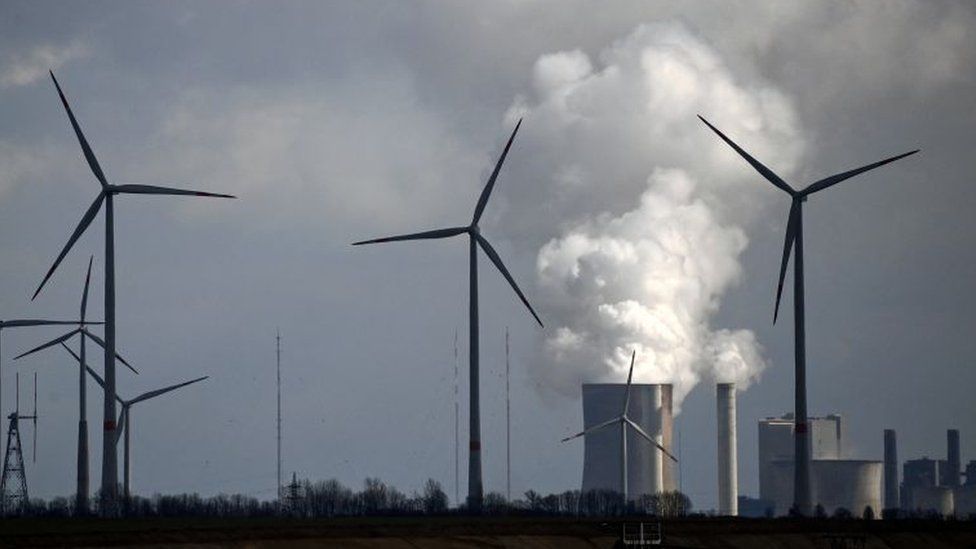
image captionRenewable energy, like wind power, is gradually replacing coal in many EU countries
The European Union has announced a raft of climate change proposals aimed at pushing it towards its goal of becoming carbon neutral by 2050.
A dozen draft proposals, which still need to be approved by the bloc’s 27 member states and the EU parliament, were announced on Wednesday.
They include plans to tax jet fuel and effectively ban the sale of petrol and diesel powered cars within 20 years.
The proposals, however, could face years of negotiations.
The plans triggered serious infighting at the European Commission, the bloc’s administrative arm, as the final tweaks were being made, sources told the AFP news agency.
“By acting now we can do things another way… and choose a better, healthier and more prosperous way for the future,” European Commission President…
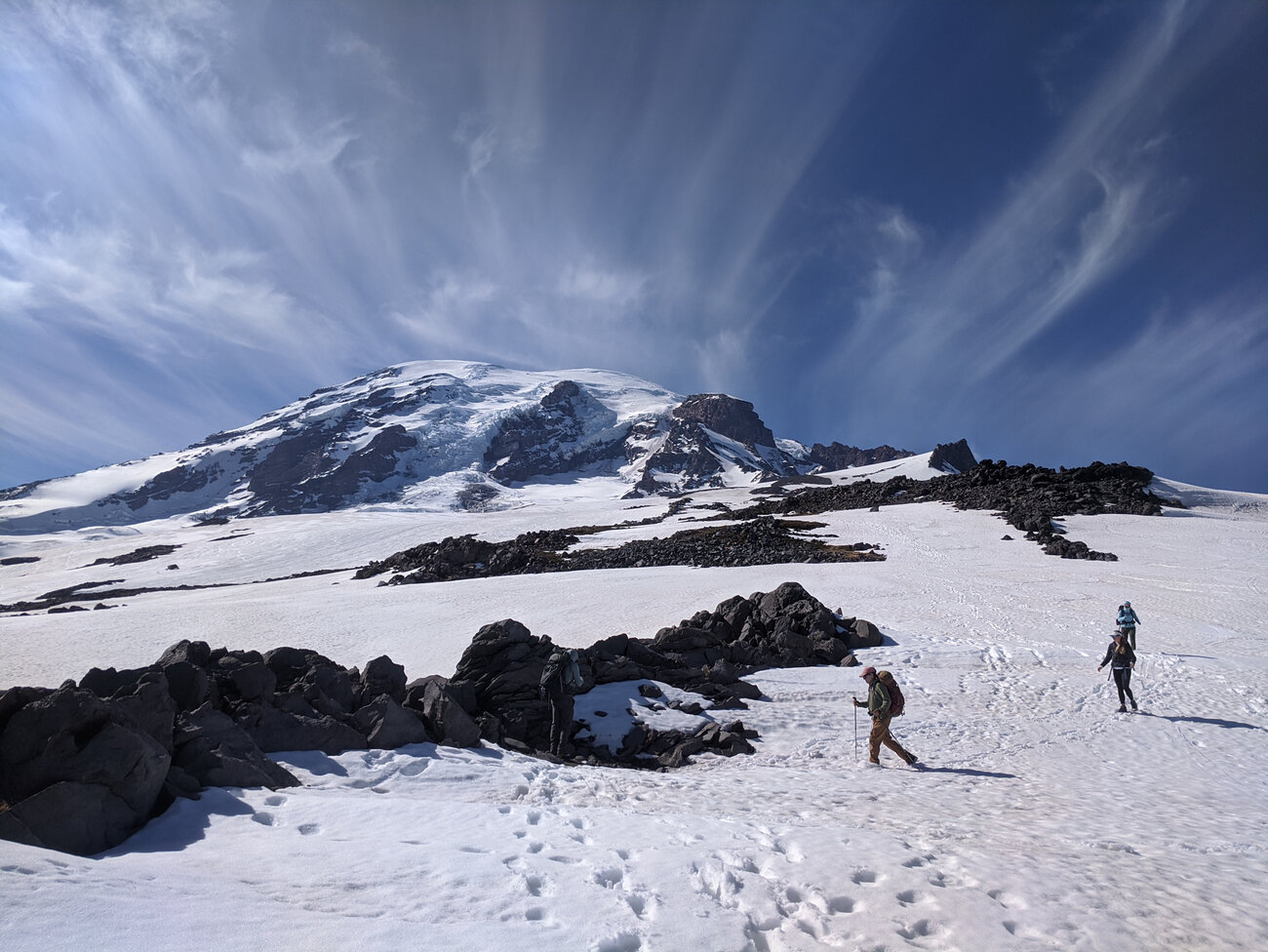
Ice worm researchers Scott Hotaling and Peter Wimberger led a trip to study life on the glaciers of Mount Rainier in June. For a long time, Hotaling says, biologists have written off high-altitude glaciers as sterile, lifeless places. But that’s no longer.Jordan Boersma
High up on Mount Rainier in Washington, there’s a stunning view of the other white-capped peaks in the Cascade Range. But Scott Hotaling is looking down toward his feet, studying the snow-covered ground.
“It’s happening,” he says, gesturing across Paradise Glacier.
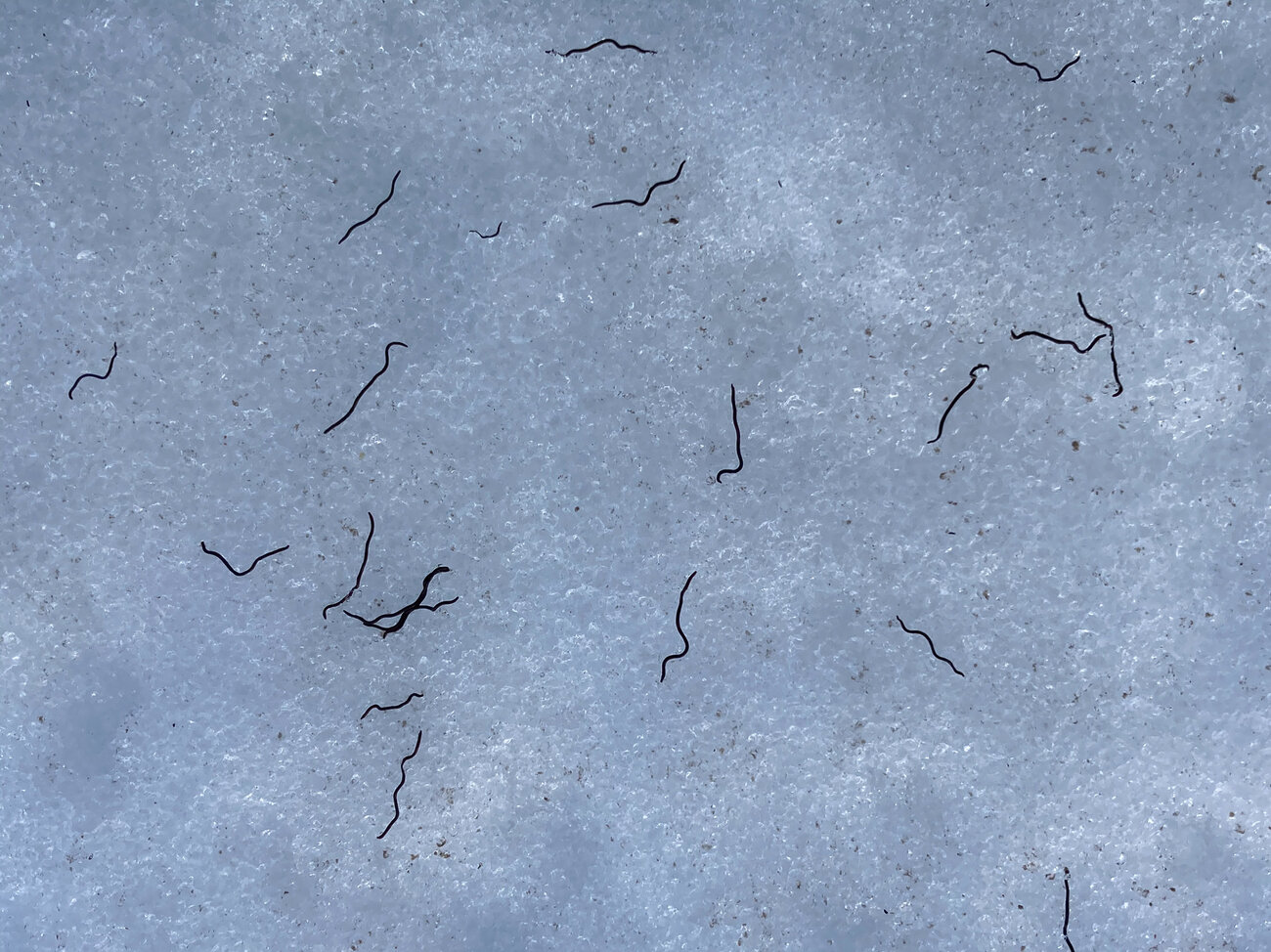
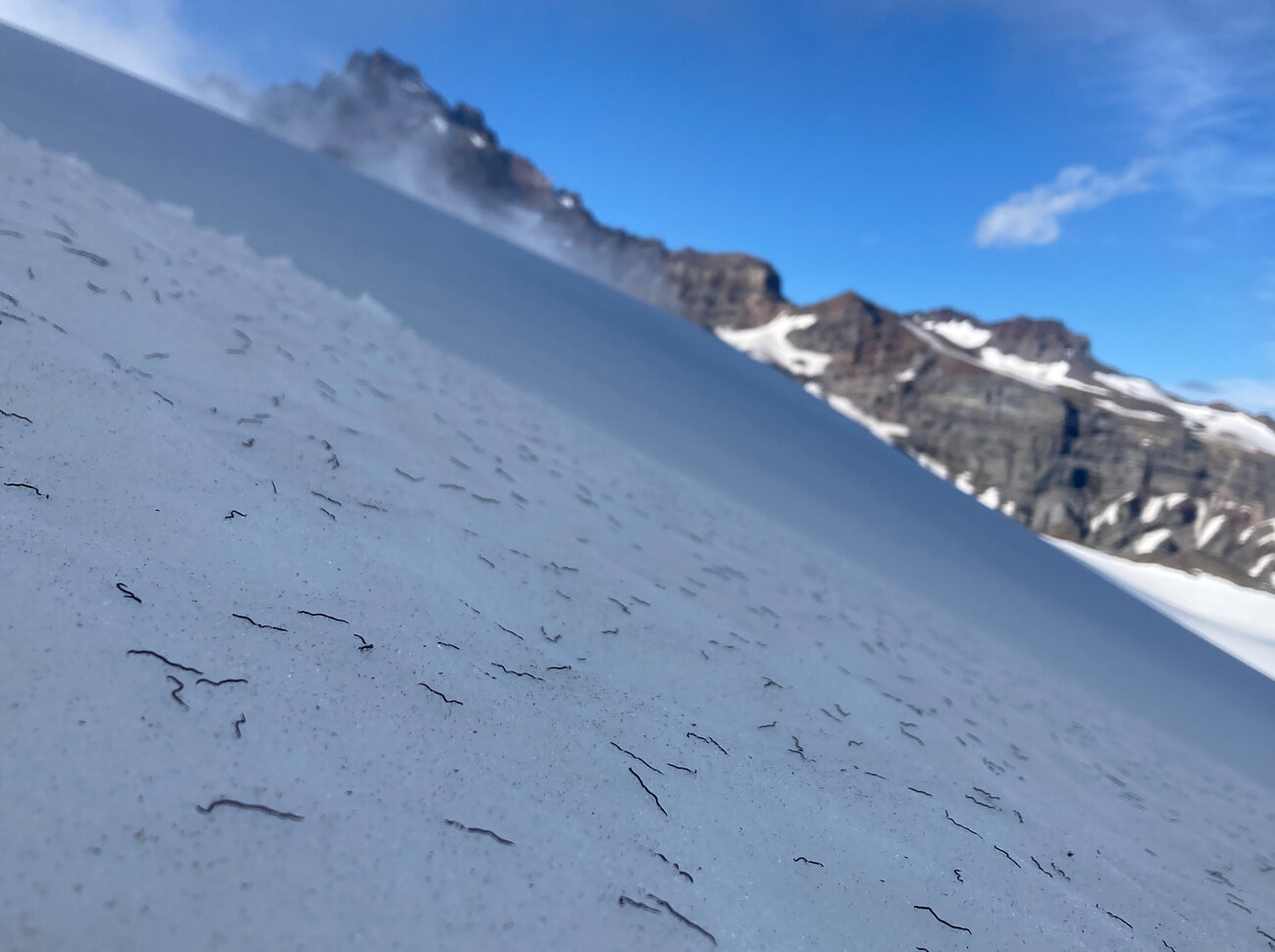
Small black flecks suddenly appear on the previously blank expanse of white. The glacier’s surface quickly transforms as more and more tiny black creatures emerge. The ice worms have returned, snaking in between ice crystals and shimmering in the sun.
Thesethread-like worms, each only about an inch long,wiggle up en masse in the summertime, late in the afternoon, to do — what? Scientists don’t know. It’s just one of many mysteries about these worms, which have barely been studied, even though they’re the most abundant critter living up there in the snow and ice.
Scientists aren’t sure why the segmented worms, each less than an inch long, wriggle to the surface of the glacier late in the day, though they think it may be to feed or to soak up the sun’s rays.Scott Hotaling
Billions and billions of inch-long black creatures
“There are so many,” says Hotaling, a researcher at Washington State University. An estimated 5 billion ice worms can live in a single glacier.
“From where we’re standing right now, I can see, five, six, 10 glaciers,” he says. “And if every one hosts that density of ice worms? That is just a massive amount of biomass in a place that is generally biomass-poor.”Article continues after sponsor message
There are more mysteries than there are solved things with ice worms.
Scott Hotaling, glacier biologist, Washington State University
For a long time, he says, biologists have written off high-altitude glaciers such as these as basically sterile, lifeless places. Ice worms, however, show that this fragile environment — where the glaciers are vulnerable to climate change and are retreating — is potentially far more complicated.
“If you were going to put a biological mascot on glaciers of the Northwest,” Hotaling says, “it’s an ice worm.”
And yet, with the possible exception of the annual Cordova Iceworm Festival in Alaska, these bizarre worms have generally been either ignored or treated as a mere curiosity.
The National Park Service’s visitors center near Paradise Glacier, for example, has a nice display on alpine wildlife, Hotaling says, “and there is somehow nothing about ice worms. And it is a source of frustration for me.”
He admits that it bothers “probably no one else that comes here.” Many people who hike, ski or work on these mountains have never seen an ice worm despite their abundance, partly because the beasts only come to the surface at certain times of the year, at certain times of day.
Though they’re called ice worms, the creatures Hotaling (right) and his colleagues study on the glaciers of Mount Rainier can’t handle the slightest bit of freezing. If temperatures dip even slightly below zero degrees Celsius (32 degrees Fahrenheit), Hotaling says, the worms die.Peter Wimberger
”Damn it, they’re real!”
“They’re very obvious once you notice them, but it’s so beyond your expectation, when you’re in a glacier environment, that there will be worms,” Hotaling says.
His colleague Peter Wimberger of the University of Puget Sound says that he got interested in the worms years ago when a student said he wanted to study them. Wimberger thought the guy was pulling his leg and that it was some kind of prank. “He realized I didn’t believe him,” Wimberger says, “and all of a sudden he pulled out this little, small stack of papers and he said, ‘Damn it,they’re real!’ “
The stack of scientific papers was small because only a half-dozen or so researchers have ever studied the worms, Hotaling says.
The worms shrug off shockingly high levels of harsh ultraviolet light, according to Hotaling, which is a good thing, because the summer sun on the treeless, snow-covered mountainside can be intense.Scott Hotaling
They thrive in a glacier but die if they freeze
No one knows how these worms survive the harsh winters, or how far they burrow down into the snow. Hotaling thinks that at times they likely live under 30 feet or more of snow, down where the yearly seasonal snow meets the older snow of the glacier.
Winter may be the best season for them and a time when they can increase their energy stores, Hotaling says, because the worms are fatter when they first come out, early in the summer, than they are later on.
The worms are thought to eat snow algae and bacteria, but they may not need much. “I’ve kept them in my fridge, in my home, for physiology experiments, for a year or more, without adding anything to their system, and they’re fine,” Hotaling says.
Actually, though, he notes that he’s not sure if those particular worms survived the year, or if they reproduced themselves. That’s because ice worm reproduction is also a big black box.
“Early in the summer you tend to see more smaller ice worms, suggesting that at some point before that, their little eggs hatched and baby ice worms popped out,” Wimberger says, “but we don’t know.”
What is clear, from lab tests, is something pretty surprising for an animal that has “ice” in its name: “They can’t handle even the slightest bit of freezing,” Hotaling says.
The worms may live at zero degrees Celsius (32 degrees Fahrenheit), but if temperatures dip even slightly below that, he says, the worms die.
Ultraviolet light doesn’t faze them
Other tests, meanwhile, show that the worms shrug off shockingly high levels of harsh ultraviolet light, according to Hotaling. Which is a good thing for them, because the summer sun on the treeless, snow-covered mountainside can be intense. Whatever drives them up to the surface, they seem to wait until the later hours in the day when the sun isn’t as unforgiving.
“I actually think they are coming looking for the sun a bit,” Hotaling says, “because they want to have some of that heat energy to drive their biochemical reactions.”
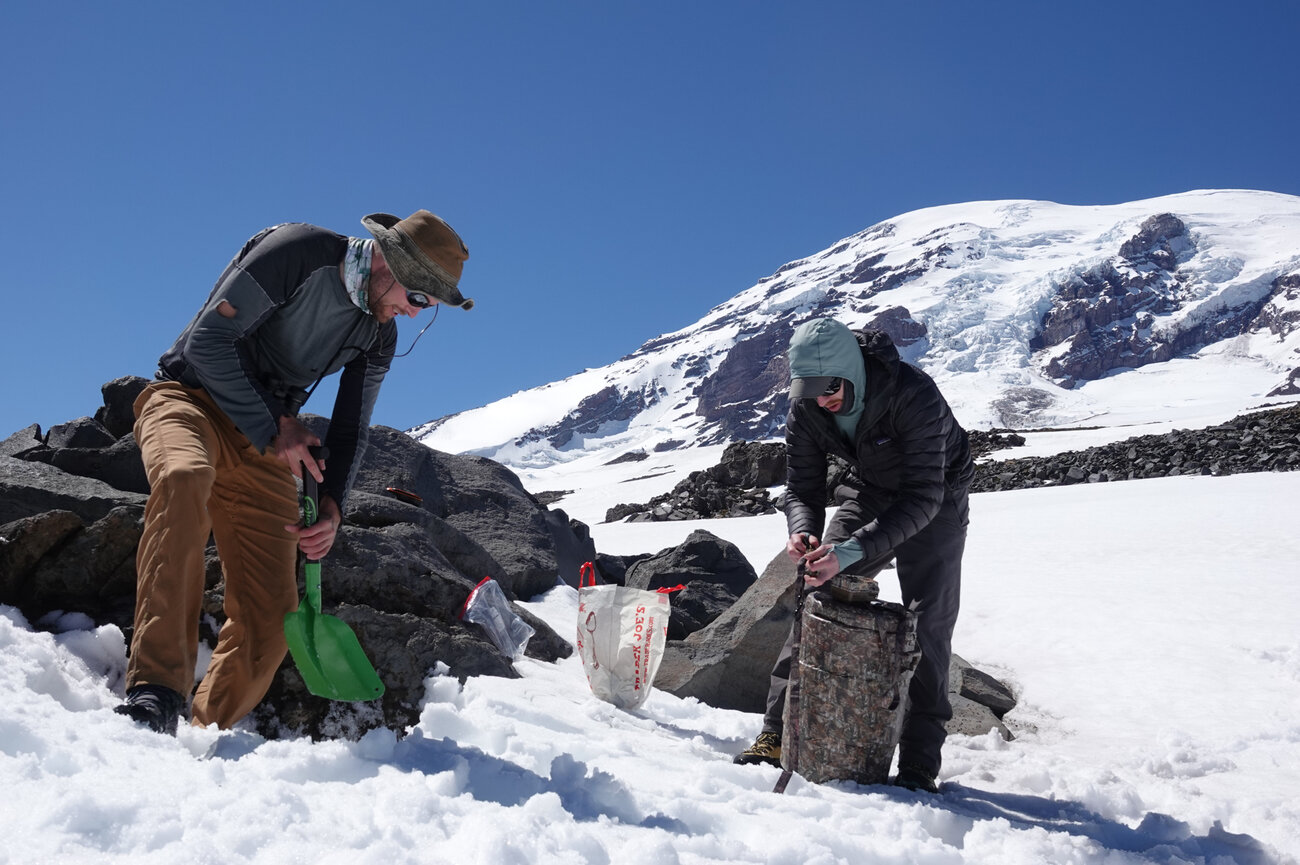
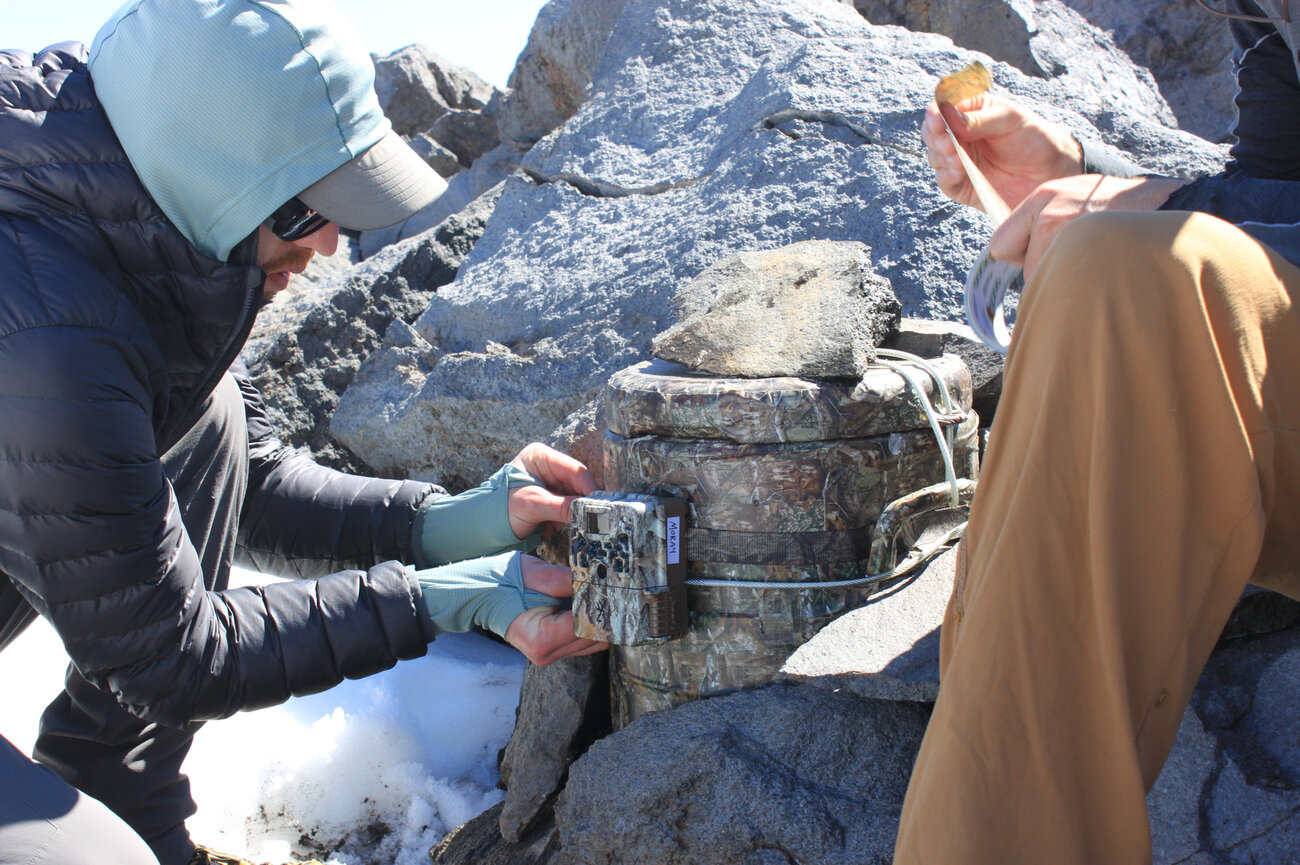
Hotaling sets up a wildlife camera. The natural history of ice worms and their predators, only now coming to light, underscores that the fragile environment of retreating glaciers is potentially far more complicated than first thought.Nell Greenfieldboyce/NPR
Hotaling, Wimberger and a grad student — Jordan Boersma — have worked together to set up wildlife cameras around Paradise Glacier this summer. They want to understand to what degree wildlife uses these glaciers — and rely on ice worms for food.
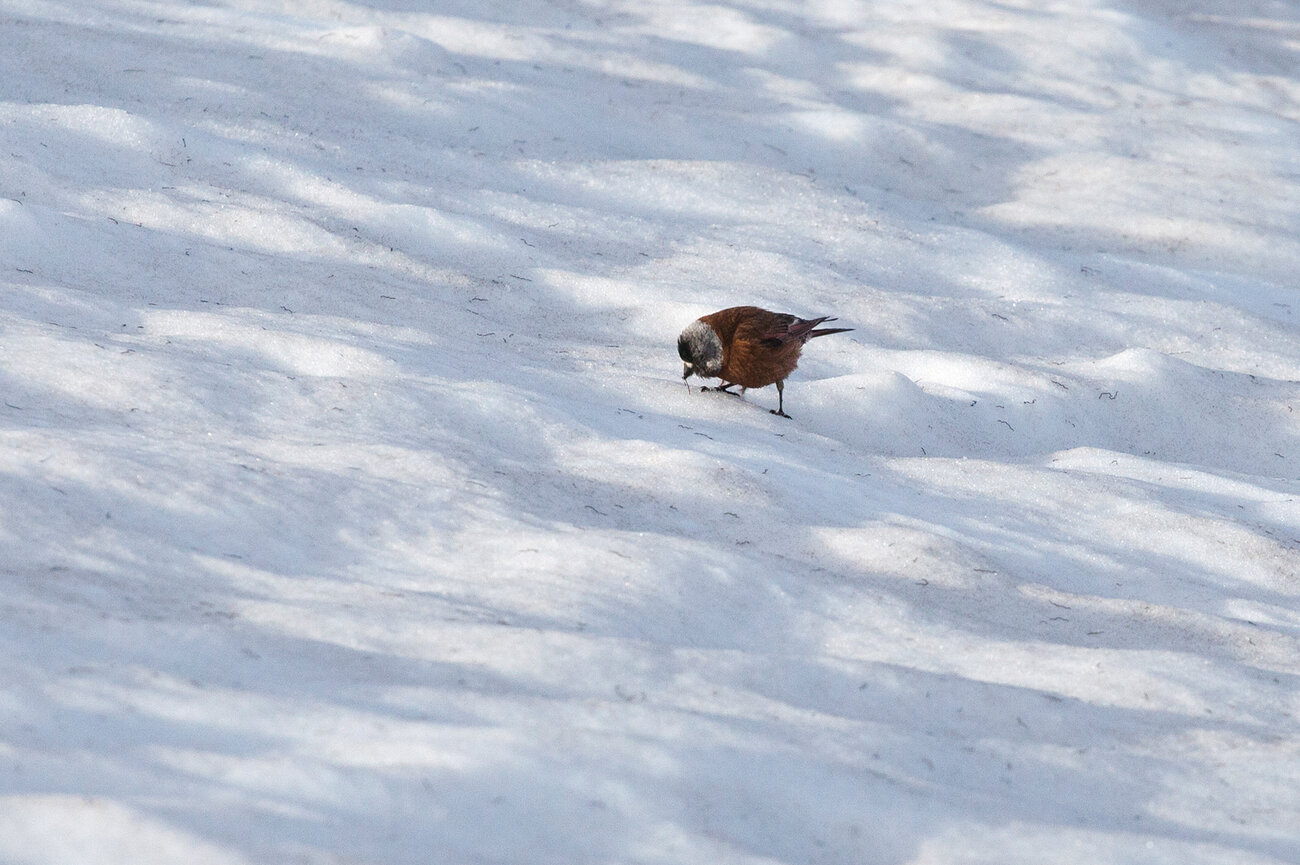
Already, the researchers have spotted birds chowing down on ice worms. Those known to peck at worms include gray-crowned rosy finches, American pipits, common ravens, horned larks, semipalmated plovers and snow buntings.
Boersma says they want to know “if alpine nesting birds use them to provision their nestlings and if that’s an essential part of their life history.”
The birds may have an impact on the ice worms’ natural history, too. Genetic research shows that ice worms may have traveled long distance from Alaska to Vancouver Island, perhaps by sticking onto the feet of migrating birds and hitching a ride.
A gray-crowned rosy finch catches an ice worm.Scott Hotaling
So many basic questions remain unanswered. “There are more mysteries than there are solved things with ice worms,” Hotaling says.
He even wonders if ice worms might affect how fast a glacier melts, because their black bodies must absorb heat. It’s known that the presence of dark-colored glacier algae can speed melting, and ice worms clearly change the surface of a glacier.
“What goes away when a mountain glacier is lost? I don’t think we have a good answer to that question,” Hotaling says. “Ice worms are an extraordinary example of a bit of biodiversity on our planet that most people don’t know about. And in this case, of Seattle and the Northwest, it’s in the backyard of millions of people.”


 The AZGF Commission says that hunter conflicts and questions of fair chase led the state to ban trail cameras entirely for hunters.Collage by Dave HurteauSHARE