DFO shuts most B.C. fisheries in desperate effort to save salmon

By Marc Fawcett-Atkinson | News, Food Insider | June 29th 2021#182 of 182 articles from the Special Report:Food Insider

Commercial salmon fishing — once the cultural and economic backbone of coastal B.C. — will be significantly diminished to protect the salmon, the federal government announced Tuesday. Photo by Marc Fawcett-AtkinsonListen to article

Commercial salmon fishing will be closed in most of coastal B.C. this year and into the foreseeable future to save the West Coast’s critically low fish stocks, the federal government announced Tuesday.

Nearly 60 per cent of the province’s commercial salmon fisheries, once the economic and cultural backbone of the B.C. coast, will be forced to shutter in 2021, Fisheries and Oceans Canada (DFO) said. Yukon salmon rivers will also be closed to all commercial fishing in 2021, while recreational fisheries in both Yukon and B.C. will be restricted. Many of B.C.’s coastal fisheries will likely not reopen to commercial harvesting for years in an attempt to revive the province’s dwindling salmon populations.

“No fisheries minister wants to make these kinds of decisions, because they’re very difficult and impact people’s livelihoods,” said federal Fisheries Minister Bernadette Jordan. “(But) no fisheries minister wants to be the minister when the stock collapses, and that’s where we are right now with Pacific salmon — it’s a stock on the verge of collapse. If we don’t do everything we can, we won’t have salmon.”

GET TOP STORIES IN YOUR INBOX.

Email *

Pacific salmon are in a long-term decline, with many runs verging on collapse as they struggle to survive climate change, habitat destruction and overfishing. Last year saw the lowest global salmon catch since 1982, according to the North Pacific Anadromous Fish Commission, an international organization protecting wild salmon and other fish.

The province’s salmon harvesters — many of them independent and nearing retirement — are also struggling after years of dangerously low catches, according to a report published by the United Fish and Allied Workers Union this spring.

To compensate harvesters for the loss, DFO is creating a program to buy back commercial fishing licences from fish harvesters in an effort to permanently decrease the size of the West Coast salmon fleet. In 2019, DFO issued 1,582 commercial fishing licences for West Coast salmon, according to Statistics Canada.

What people are reading
With the help of the Mounties, the priests piled the children into boats and floated away

By Karyn Pugliese aka Pabàmàdiz | Opinion | June 30th 2021

Under the program, fish harvesters will be able to sell their licences back to the government at market value. Financially depleted after years of bad harvests, these licence buybacks will be many harvesters’ main retirement income, noted Tasha Sutcliffe, senior adviser for community fisheries at Ecotrust Canada.

First Nations communities that hold one of 127 communal commercial licences will be able to shift to fishing techniques less-damaging to salmon or use the licences to catch other healthy commercial species, like halibut.

“Some First Nations do harvest commercially, but they’re coming to the realization that something needs to be done to preserve our stocks,” said Chief Dalton Silver, fisheries representative for the Union of B.C. Indian Chiefs. Salmon are key to food security and cultural well-being for many Indigenous people in the province. Preserving them is essential, even if it impacts First Nations’ commercial fisheries, he said.

“I think a lot of our people would feel better if there was a complete halt to the commercial aspect of the fishery (to) allow the stocks to rebuild,” he said, noting that while not all Indigenous people agree entirely with that position, it is becoming more commonplace.

“It’s incredibly sad,” said Aaron Hill, executive director of Watershed Watch, an organization working to bring back B.C.’s salmon. “When we see a fishery closure, it’s a collective failure of all of us to manage our salmon and fisheries better over the last decades (to) avoid such drastic measures and their social and economic consequences.”

Commercial salmon fishing will be closed in most of coastal B.C., the federal government announced Tuesday. #Salmon #BC

It is essential the licence buyback program adequately supports fish harvesters who have seen their livelihoods disappear, said Hill. Overfishing is only one of the factors driving the species’ decline, with climate change, open-pen fish farms and habitat destruction also to blame.

“The salmon crisis is not the fault of working fishermen,” he explained.

Looking ahead, he hopes this decision will make a profound shift in how salmon is managed and harvested in B.C. That means moving to fishing techniques that increase the market value of each fish while reducing the overall environmental impact of commercial fishing.

For example, fishing by troll — a technique that relies on hooks and line — or harvesting fish once they reach their spawning river can send higher-quality fish to market with less ecological impact. Techniques that help harvesters only retain fish from the healthiest runs, like genetic testing, could also help make any future fisheries more sustainable, he said.

Silver added that fisheries management also needs to be overhauled to better integrate Indigenous knowledge.

“I’ve always said that if (Indigenous people) were involved from the very beginning, upon contact, with the management of our resources, we’d all be in a lot better place today,” he said. It’s an approach that has gained significant attention recently thanks to several researchers and its adoption by global seafood ranking organization Ocean Wise this spring.

DFO has committed to working with First Nations to revive the salmon, said Jordan, Canada’s fisheries minister. The ministry will also work with fish harvesters, environmental groups and other organizations to bring the fish back.

“There’s no one thing that’s going to solve the problem, but if we don’t start taking these measures now, there’s going to be no salmon to protect,” she said. “I think we have a moment in time, and that window is closing. I think if we don’t do this now, it will be too late — but I still think we have the ability to make a difference.”


The connection between clearcut logging and Canada’s hottest day on record

With temperatures set to soar to 47 C in B.C., forests provide a cool, wet place for animals and people alike to seek shelter

Emma Gilchrist

By Emma GilchristJune 28, 2021  4 min. readPhotographer TJ Watt stands beside the stump of a giant old-growth cedar recently felled in the Caycuse watershed. Old-growth forests provide a refuge from extreme heat. Photo: TJ Watt / Ancient Forest Alliance

In a moment of weakness a couple of weeks ago, I agreed to run a 20-kilometre stretch of the Juan de Fuca trail on the southwest of Vancouver Island with a group from my gym. 

“It’ll be fine,” I thought, comforting myself with the thought (a.k.a. delusion) that it would be a fun, elongated walk in the woods.

But as the date rapidly approached, there was just one problem: our “fun walk in the woods” turned out to be smack dab in the middle of British Columbia’s worst heat wave on record. 

Yet the show went on. I left the parking lot at Sombrio Beach carrying nothing but three litres of water, four protein bars, a clean pair of socks and a moderately positive attitude. 

Within 30 minutes, I was coated with mud and drenched with sweat. The temperature in Victoria was on its way to hitting 35.6-degrees that afternoon, making it the third hottest day on record for the city (until the all-time record was smashed the next day). But on the trail, mostly under the shade of the forest, I quickly discovered the temperature was surprisingly manageable. 

I had a solid five hours to ponder the relationship between the forest and the heat as I traversed suspension bridges, fell in mud bogs and sweatily scampered along boardwalks. 

Our end point was Botanical Beach, just outside of the town of Port Renfrew in Pacheedaht First Nation territory, less than a 15-minute drive from the Fairy Creek logging blockades. Every time I emerged into a clearing and felt the sun glaring down, I found myself wondering how much hotter it would be in the middle of a clearcut — and what that would mean for all of the surrounding forests, animals and people. 

Get The Narwhal in your inbox!

People always tell us they love our newsletter. Find out yourself with a weekly dose of our ad‑free, independent journalismYour emailYour emailSUBSCRIBE

When I returned to internet service (and a normal body temperature), I started digging for research on this topic and came across a report written earlier this year by Peter Wood for Sierra Club BC on the connection between intact forests and climate risks.

“Just as climate change is expected to generate more extreme weather, intensive forest management, namely clearcutting, creates extreme conditions locally and at the landscape level,” Wood, who has a PhD in forestry from the University of Toronto, wrote. 

“Old intact forests act as a moderating influence on the landscape, creating their own microclimate that is cooler and wetter year-round. The shade they provide allows for the development of a rich understory and soil development, which acts as a sponge, absorbing and releasing water slowly throughout the year, mitigating against both drought and flood conditions.”

Thanks to the cooling effect provided by intact forest, these ecosystems also provide a refuge during forest fires. 

“Old growth provides almost like a Noah’s ark, where species will flee to more dense, cooler, wetter, old-growth forest,” Wood told me in an interview. “After a fire, what’s available there to regrow the forest comes from these species that were able to take shelter in these refuges.”

On the flipside, landscapes degraded by industrial logging increase local temperatures and make woody debris more flammable, according to the report. 

In other words: not only do clearcuts result in increased temperatures, but they also provide the perfect fuel for forest fires. “Approximately 50 per cent of the entire biomass that’s in a forest is left behind after a clearcut and that starts to dry out and becomes this readily available fuel,” Wood said. 

As if that weren’t bleak enough, clearcut logging also increases the risk of flooding, landslides and water turbidity. https://thenarwhal.ca/muddied-waters-how-clearcut-logging-is-driving-a-water-crisis-in-b-c-s-interior/embed/#?secret=cVUveWGUK0

B.C.’s 429-page Strategic Climate Risk Assessment identifies 15 climate risks, the majority of which are influenced by logging, according to Wood. The assessment flagged the greatest climate-related risks as severe wildfire, seasonal water shortage and — you got it — heat waves. 

But here’s the catch: nowhere in the assessment does the government examine how industrial logging contributes to those climate risks. “They actually did look at how climate change would impact the profitability of the logging sector and they have quite detailed consideration of how that might prevent harvesting operations and how flooding might hurt their mills,” Wood noted.

So here we are, on what is shaping up to be the hottest day ever recorded in Canada (the day after Lytton, B.C., smashed the Canadian heat record with a temperature of 46.6 Celsius), in a heat wave indicative of the patterns predicted by climate scientists for decades, and the B.C. government is still viewing forests primarily as a source for timber — not as stores of carbon, refuges for wildlife, flood prevention infrastructure or natural air conditioners.  

Calls for the B.C. government to undergo a paradigm shift in terms of how it views its forests are growing. 

“We’ve got to think about changing our priorities,” Wood said. “What kind of forest do we want that is best able to withstand the pressures of climate change and is going to keep our communities safe from fire, from flooding?”

“There’s no way we can be simultaneously logging our old-growth forests and talking about the best possible options in terms of management. If we wait too long, we’re just not going to have the options left to us.” 

The current heat wave makes it viscerally clear that climate change is not a distant future problem. 

Wood says he hopes the heat wave helps people realize that climate change and forest protection are not solely the concern of environmentalists.

“You don’t have to be an environmentalist to not want to burn in a climate-fuelled fire,” he said. “It strikes to the core of our very existence.” 

Trial starts for man accused of killing stepson in hunting incident

Exposing the Big Game's avatarCommittee to Abolish Sport Hunting Blog

https://www.thetimesherald.com/story/news/2021/06/29/jury-selection-begins-john-varndells-trial/7793520002/

Laura FitzgeraldBrian WellsPort Huron Times HeraldView Comments0:070:58https://imasdk.googleapis.com/js/core/bridge3.469.0_en.html#goog_2136286569

The prosecution and defense presented opposing views in the first day of a jury trial for a man charged with his killing his 11-year-old stepson during a hunting incident in Clay Township.

St. Clair County Assistant Prosecuting Attorney JoshuaSparling said John Varndell Jr. was with his stepson, Zachary Rock, on Sept. 13 in Clay Townshipfor a youth hunt organized by the Department of Natural Resources.

Safety precautions weren’t taken for the hunt, including the wearing of hunter’s orange. Varndell decided to go off on his own, not knowing where the rest of the group was.

In the dark, where the group could only see using flashlights and cell phones, Varndell fired eight shots, Sparling said.

St. Clair County Assistant Prosecuting Attorney Joshua Sparling makes his opening statement in the trial for John Varndell Jr. Tuesday, June 29, 2021, in Port Huron.

“You’re going to hear about eight shots that went ringing out through those woods,” Sparling said. “How one of those shots went right…

View original post 466 more words

Killing wolves is unnecessary. Wolves Naturally Limit Their Own Numbers

June 29, 2021 | Uncategorized

Trio Love Family Edit Logo Twitter

At the start of 2021, the Trump Administration removed the gray wolf from the federal endangered species list, ending longstanding federal safeguards for wolves across the lower 48 states, save for a small Mexican gray wolf population in Arizona and New Mexico.

Just weeks after the federal rule took effect, several states began enacting new policies to encourage the mass slaughter of their wolf population to bring numbers down to the bare minimum.

Killing wolves is unnecessary.

The concept that state-sanctioned killing of wolves is necessary to control wolf populations is one of the most widespread assumptions in large carnivore management. However, research demonstrates that wolves limit their own numbers.

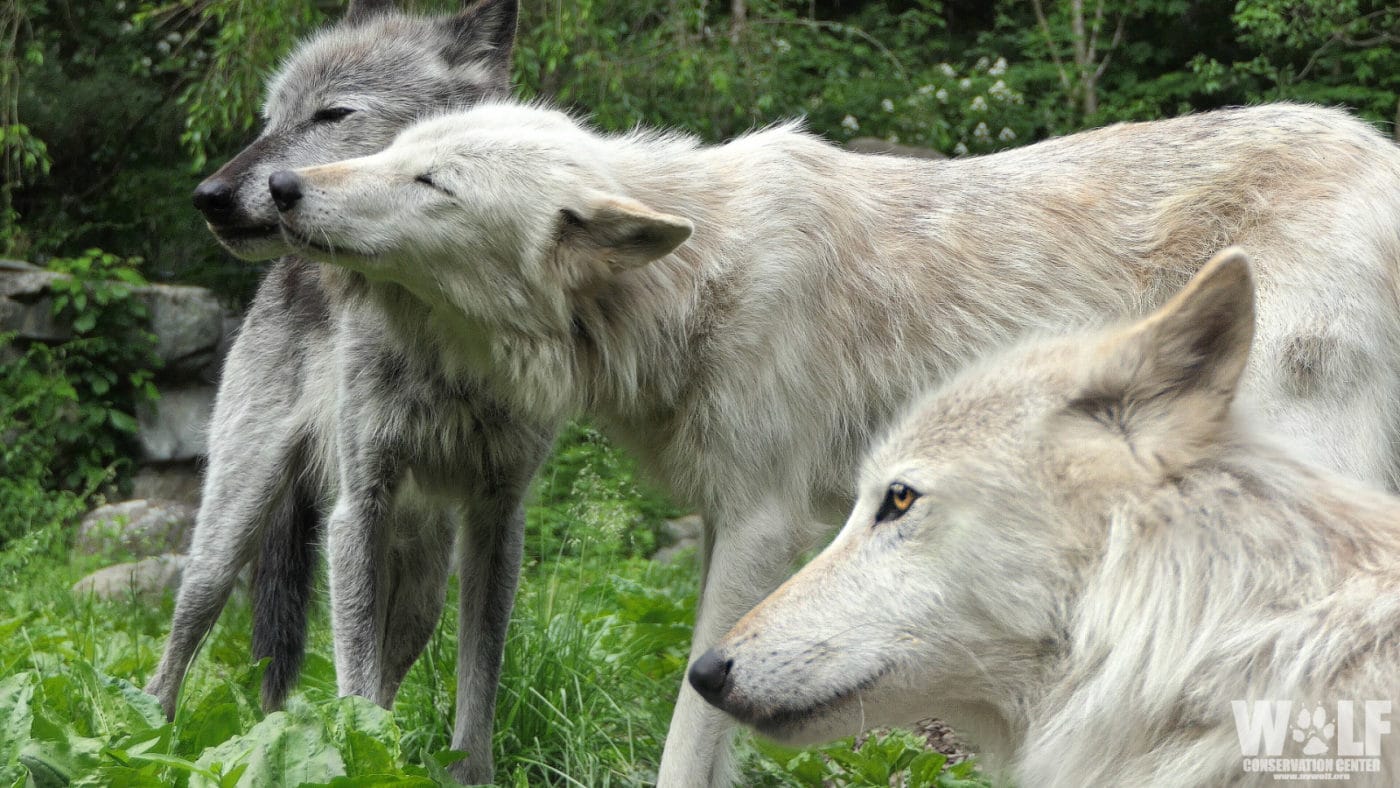
As apex predators, wolves keep their own numbers in check.

Self-regulation in large carnivores like wolves ensures that the largest and the fiercest do not overexploit their resources.

According to a recent work published in OIKOS, population control is what distinguishes wolves and other “apex predators” from the rest. Wolves are highly social animals that live in well-organized family units called packs. Cooperative living gives wolf families a number of benefits. In addition to facilitating successful hunting, pup-rearing, and defending pack territory, cooperative living allows wolves to limit their own population – for example, they control the numbers within their group by only letting certain members breed. By self-regulating— they also help to keep their ecosystems in balance.

Wolf populations stabilize when carrying capacity is reached.

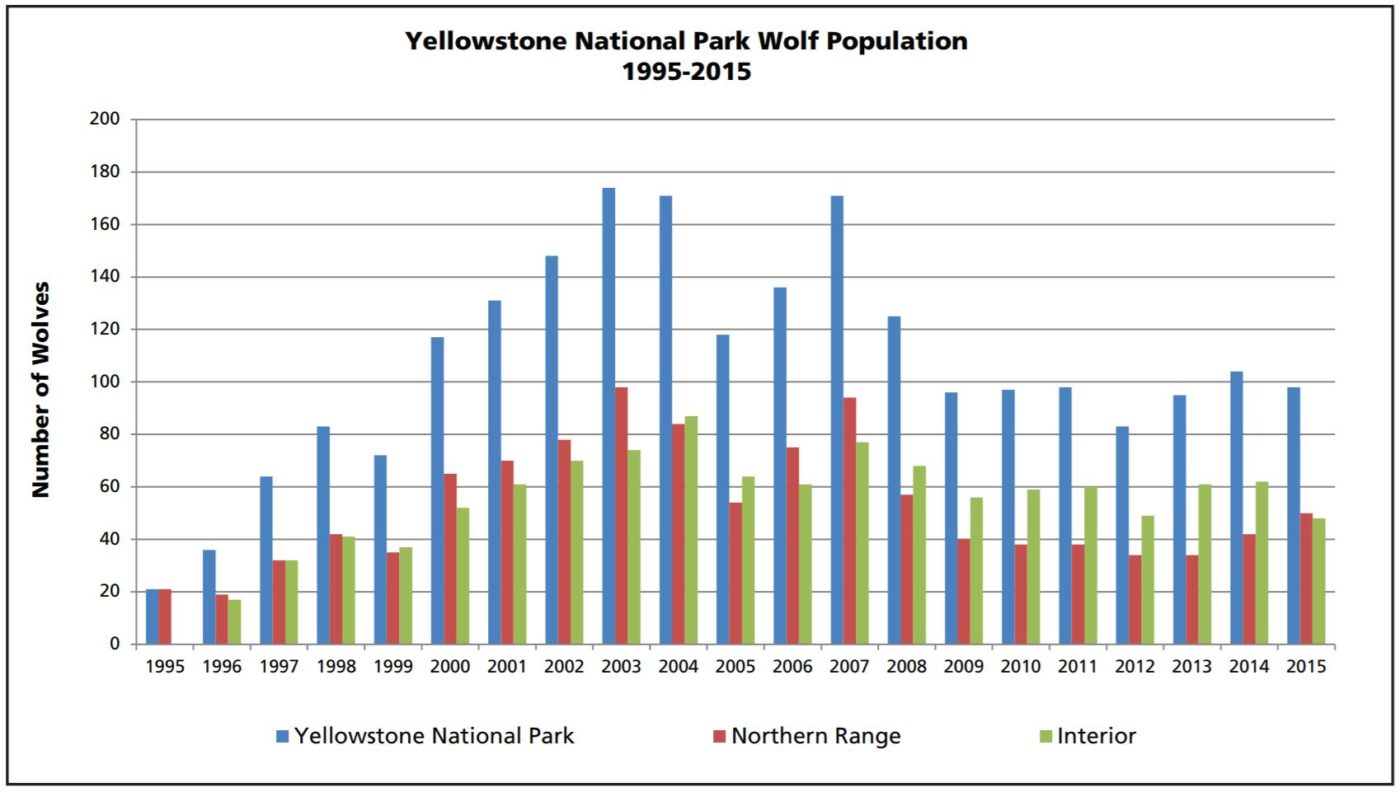
Since wolf reintroduction in Yellowstone over 20 years ago, the 2+ million-acre park has acted as a laboratory, offering scientists a deeper understanding of the complexity of that ecosystem, including the diverse pressures (beyond lethal control by humans) that manage wolf populations.

Because hunting wolves is not permitted within the Park boundaries, Yellowstone offers us a chance to see what happens to wolf populations when left undisturbed by humans.

YMP Wolf Population
National Park Service

In Yellowstone, wolf numbers have grown and generally stabilized. For the last decade, the wolf population has hovered around 100, which experts consider Yellowstone’s carrying capacity. Carrying capacity describes the maximum number of individuals or species that a specific environment’s resources can sustain for an indefinite period without degrading it. Once a species reaches its carrying capacity, population numbers stabilize.

Factors that affect the carrying capacity include:

  • Food Availability
  • Disease (canine distemper virus, mange, etc…)
  • Intra- pack strife
  • Competition with other predators (bears, mountain lions, coyotes)

Europe’s dark penchant for trophy hunting: EU found to be world’s second biggest importer

Exposing the Big Game's avatarCommittee to Abolish Sport Hunting Blog

Video screen grabs from an undercover investigation at Safari Club International's annual hunter's convention in Las Vegas

Video screen grabs from an undercover investigation at Safari Club International’s annual hunter’s convention in Las Vegas-CopyrightHSIByTim Gallagher•Updated:01/07/2021 -17:10

A shocking new report reveals that the EU imported an average of eight hunting trophies of internationally protected species between 2014 and 2018.

Over the five-year period nearly 15,000 so-called trophies were imported to the bloc, making it the world’s second largest importer.

The items come from species including African lions, African elephants, critically endangered black rhinos and even polar bears who are vulnerable to extinction.

The research, conducted byHumane Society International (HSI), found an average of 2,982 imports of protected species a year – with Spain, Germany and Denmark making up 52 per cent of imports.

During the period examined the rate of imports increased by almost half. Protected species imported also included African leopards, Hartmann’s mountain zebras and cheetahs, with the EU being…

View original post 511 more words

Wildfire amid record heat wave forces entire village in Canada to evacuate: “The whole town is on fire”

https://www.cbsnews.com/news/lytton-wildfire-british-columbia-evacuations/

A wildfire amid a record heat wave in western Canada has forced authorities to order residents to evacuate a village in British Columbia that smashed the country’s record for hottest temperature three days in a row this week. Mayor Jan Polderman of Lytton issued the evacuation order Wednesday, saying on Twitter that the fire was threatening structures and the safety of residents of the community, which is 95 miles northeast of Vancouver.

“All residents are advised to leave the community and go to a safe location,″ Polderman said.

In an interview with CBC News, the mayor said the situation was dire for the community of 250 people.  “The whole town is on fire,” he said. “It took, like, a whole 15 minutes from the first sign of smoke to, all of a sudden, there being fire everywhere.”https://www.cbsnews.com/newsletters/widget/e879?v=97c857691a654c9667377a5c9ab8410f&view=compact#tVNNT9wwEP0rlk%2BttGaTENhsblRUKpcKCXoiaDWxJ8TCsSPb2WiF%2BO8dQxYQEpdKvSVvPt7Me%2BMn7saonQ28fuIonUJec6w2W77ie40z%2FUk3jCAjAaMLOiUTeBECRvbDqQN%2FXvHoQT5q%2B5Ca6PDTQmtQ8Tr6CVccfNTS4MUUe%2BevCL7jp5kCqVopzqECkedYiK3KC5FledVhBVnWZvz%2BU%2BlvGDAVyzZYnAP71mul0LL2YLTF7x%2FyEwkvyrMyb%2BFclFXXiVJuQGwRpSDuVpXltivzU%2F5Wcj21lxDT8kVW5CLbiCxneVEXeZ2X72m3OpqUNGujOu2RwaAV8yScV6xHiGyGPbLOeYmBoY0pZ6%2BNgQdk2jIJFhSw6BjuQU7EWLOGxx7Z3DuDFJgt04E5y1L7hn%2BgPoz44oaN1He3oBRXuNfyGFYYHqMbCdbhEvdpn2Qc0S8JSbqdjjgQTG7iL40%2BqTo7b1TSMIE3KBefX%2BFXdOngMYx0MJr2nLGlGPFp%2BaL5ebY568qsEpuzSn3l61LwaucbwRTQLwRgiXrFjR505HX5psCNm0jWpEEbmjWkJVsPVl0biKT48DLCch27NPDuXY1AFlkF%2FnCbuOna7%2B4%2Fg1fqCFPpMt3SLc2MYPQ0pAsfveu0%2BRBOBZSCNulNUZXehExraAnmjzcE9zGOoW7WzXqe55Ol8ITeVrNOX83aHGJ0VhwvS7Se3lrohXRmGloNYrmY9Fib9WLq%2F%2By9SPCPPZ6f%2FwI%3D

A video posted to social media appears to show people driving out of the town with flames nearby and heavy smoke engulfing the road.https://platform.twitter.com/embed/Tweet.html?dnt=true&embedId=twitter-widget-0&features=eyJ0ZndfZXhwZXJpbWVudHNfY29va2llX2V4cGlyYXRpb24iOnsiYnVja2V0IjoxMjA5NjAwLCJ2ZXJzaW9uIjpudWxsfSwidGZ3X2hvcml6b25fdHdlZXRfZW1iZWRfOTU1NSI6eyJidWNrZXQiOiJodGUiLCJ2ZXJzaW9uIjpudWxsfSwidGZ3X3R3ZWV0X2VtYmVkX2NsaWNrYWJpbGl0eV8xMjEwMiI6eyJidWNrZXQiOiJjb250cm9sIiwidmVyc2lvbiI6bnVsbH19&frame=false&hideCard=false&hideThread=false&id=1410473307212718084&lang=en&origin=https%3A%2F%2Fwww.cbsnews.com%2Fnews%2Flytton-wildfire-british-columbia-evacuations%2F&sessionId=765d1d1b3dd549d0cc0db30a16ada1a81e69fbe4&siteScreenName=CBSNews&theme=light&widgetsVersion=82e1070%3A1619632193066&width=550px

Erica Berg, a provincial fire information officer, said the evacuation order was issued about an hour after the blaze began but she did not know the size of it.

Highways north and south of the village reported were closed as firefighters also dealt with two other wildfires in the area.

Trending News

What’s behind the push for a fourth stimulus checkRobinhood fined $70 million for misleading customersBodies of 2 children pulled from Florida condo collapse rubbleWhy some U.S. families got a bigger federal stimulus check

The BC Wildfire Service called the blaze an “evolving situation.”  

Lytton’s temperature hovered around 102 degrees Fahrenheit Wednesday. That was down from Tuesday, when the village recorded a new Canadian high of 121.2 F, breaking the previous highs of 118.2 F it reached Monday and 115 F on Sunday.

Roughly 10 miles to the south in the First Nations community of Kanaka Bar, Jean McKay said she and her 22-year-old daughter, Deirdre McKay, started to panic as the smell of smoke grew stronger.

“I was still sitting there and wondering what to pack, emotionally walking out my door but thinking ‘I’m leaving all this behind.’ It’s hard. Very hard. When my girlfriend told me her house was burning it really hit home,” McKay said.

https://imasdk.googleapis.com/js/core/bridge3.469.0_en.html#goog_1048948474https://imasdk.googleapis.com/js/core/bridge3.469.0_en.html#goog_1417818114https://imasdk.googleapis.com/js/core/bridge3.469.0_en.html#goog_349173497javascript:falsejavascript:falsejavascript:falsejavascript:falsejavascript:falsejavascript:falsejavascript:falsejavascript:falsejavascript:false

“My daughter phoned before we lost services and stuff, she’s telling us, ‘Get out of there, get out of there.'”

There was one memento her daughter couldn’t leave behind: “She grabbed my dad’s picture off the wall,” McKay said. “I’m telling her, ‘We’re walking out and this is the home we built forever and that you guys grew up in.’ It’s harsh.”

Climate activist Greta Thunberg tweeted about the crisis early Thursday.https://platform.twitter.com/embed/Tweet.html?dnt=true&embedId=twitter-widget-1&features=eyJ0ZndfZXhwZXJpbWVudHNfY29va2llX2V4cGlyYXRpb24iOnsiYnVja2V0IjoxMjA5NjAwLCJ2ZXJzaW9uIjpudWxsfSwidGZ3X2hvcml6b25fdHdlZXRfZW1iZWRfOTU1NSI6eyJidWNrZXQiOiJodGUiLCJ2ZXJzaW9uIjpudWxsfSwidGZ3X3R3ZWV0X2VtYmVkX2NsaWNrYWJpbGl0eV8xMjEwMiI6eyJidWNrZXQiOiJjb250cm9sIiwidmVyc2lvbiI6bnVsbH19&frame=false&hideCard=false&hideThread=false&id=1410492025108115460&lang=en&origin=https%3A%2F%2Fwww.cbsnews.com%2Fnews%2Flytton-wildfire-british-columbia-evacuations%2F&sessionId=765d1d1b3dd549d0cc0db30a16ada1a81e69fbe4&siteScreenName=CBSNews&theme=light&widgetsVersion=82e1070%3A1619632193066&width=550px

The BC Wildfire Service also confirmed it was responding to several other fires in the province on Wednesday, including two blazes north of Big White as well as the Sparks Lake wildfire.https://platform.twitter.com/embed/Tweet.html?dnt=true&embedId=twitter-widget-2&features=eyJ0ZndfZXhwZXJpbWVudHNfY29va2llX2V4cGlyYXRpb24iOnsiYnVja2V0IjoxMjA5NjAwLCJ2ZXJzaW9uIjpudWxsfSwidGZ3X2hvcml6b25fdHdlZXRfZW1iZWRfOTU1NSI6eyJidWNrZXQiOiJodGUiLCJ2ZXJzaW9uIjpudWxsfSwidGZ3X3R3ZWV0X2VtYmVkX2NsaWNrYWJpbGl0eV8xMjEwMiI6eyJidWNrZXQiOiJjb250cm9sIiwidmVyc2lvbiI6bnVsbH19&frame=false&hideCard=false&hideThread=false&id=1410394808716197888&lang=en&origin=https%3A%2F%2Fwww.cbsnews.com%2Fnews%2Flytton-wildfire-british-columbia-evacuations%2F&sessionId=765d1d1b3dd549d0cc0db30a16ada1a81e69fbe4&siteScreenName=CBSNews&theme=light&widgetsVersion=82e1070%3A1619632193066&width=550pxhttps://platform.twitter.com/embed/Tweet.html?dnt=true&embedId=twitter-widget-3&features=eyJ0ZndfZXhwZXJpbWVudHNfY29va2llX2V4cGlyYXRpb24iOnsiYnVja2V0IjoxMjA5NjAwLCJ2ZXJzaW9uIjpudWxsfSwidGZ3X2hvcml6b25fdHdlZXRfZW1iZWRfOTU1NSI6eyJidWNrZXQiOiJodGUiLCJ2ZXJzaW9uIjpudWxsfSwidGZ3X3R3ZWV0X2VtYmVkX2NsaWNrYWJpbGl0eV8xMjEwMiI6eyJidWNrZXQiOiJjb250cm9sIiwidmVyc2lvbiI6bnVsbH19&frame=false&hideCard=false&hideThread=false&id=1410117205610549248&lang=en&origin=https%3A%2F%2Fwww.cbsnews.com%2Fnews%2Flytton-wildfire-british-columbia-evacuations%2F&sessionId=765d1d1b3dd549d0cc0db30a16ada1a81e69fbe4&siteScreenName=CBSNews&theme=light&widgetsVersion=82e1070%3A1619632193066&width=550px

First published on July 1, 2021 / 8:21 AM

© 2021 CBS Interactive Inc. All Rights Reserved. This material may not be published, broadcast, rewritten, or redistributed. The Associated Press contributed to this report.

Police chief: Hunting practices of Varndell and others unsafe night boy was fatally shot

Exposing the Big Game's avatarCommittee to Abolish Sport Hunting Blog

https://www.thetimesherald.com/story/news/2021/06/30/police-body-cam-footage-played-second-day-john-varndell-jr-s-trial/7809514002/

Laura FitzgeraldPort Huron Times HeraldView Comments0:000:58https://imasdk.googleapis.com/js/core/bridge3.469.0_en.html#goog_2069626370

Clay Township’s chief of police saidthe manner in which John Varndell Jr. and others were hunting on the night 11-year-old Zachary Rock was killed was unsafe.

“If I was making a video on what notto do when youwent into the woods, this would have fit the bill perfectly,” said Clay Township Police Chief Michael Koach, who also teaches hunter safety courses to the public.

Varndell was inthe second day of a trial Wednesday for allegedly shooting and killing Zachary, his stepson, in a hunting incident on Sept. 13 in Clay Township. Varndell, Zachary and five other relatives wentout at dusk to searchfor a deer that had been injured earlier when the shooting occurred, witnesses have said.

Koach said there are many things the hunting party did wrong. Theywent out after legal hunting hours, adults should not have been carrying a…

View original post 244 more words

Has trophy hunting changed since the death of Cecil the lion?

By Kitty Block and Sara Amundson

July 1, 2021 0 Comments

Has trophy hunting changed since the death of Cecil the lion?

Cecil the lion pictured at sunset in Hwange National Park, Zimbabwe. Ed Hetherington/500px Prime

It has been six years since the death of Cecil, a male lion who was a popular individual for wildlife viewing tourists visiting Hwange National Park in Zimbabwe. The heartbreaking details of the hunt that killed Cecil made international headlines: Cecil was lured out of the protected area with elephant carcass bait and shot by the hunter with an arrow. After suffering for 10 agonizing hours, Cecil was killed with a gunshot.

We believe it is important to remember Cecil’s story. We owe it to him and to the thousands of animals killed by trophy hunters each year to expose the cruelty of the hunts that claim their lives. Commemorating the anniversary of Cecil’s death, a new report by Humane Society International/Europe released earlier this week in six languages gives new insight about the demand driving the deaths of these animals. “EU Trophy Hunting by the Numbers” reveals that the European Union is the second biggest importer of hunted wildlife trophies after the United States.

What the trophy numbers show

Trophies are the horns, tusks, teeth and other body parts that hunters bring home from their killing sprees abroad. In the five-year period we analyzed (2014 to 2018), the EU imported trophies taken from 889 African lions, 229 of whom were wild lions like Cecil. Following the listing of the African lion under the U.S. Endangered Species Act in 2016 which placed federal import restrictions on the species, EU has surpassed the U.S. as the largest importer of African lion hunting trophies.

We also found that trophy hunters from the EU imported nearly 15,000 trophies from 73 “internationally protected species,” including African lions, African elephants, leopards, giraffe, cheetahs, critically endangered black rhinos, zebras, dwindling Argali sheep and vulnerable polar bears. During the same time period, the EU stood as the largest importer of cheetah trophies in the world.

Imports of trophies into the EU is rising, according to trade data from the Convention on International Trade in Endangered Species of Wild Fauna and Flora (CITES): Between 2014 and 2018, imports of trophies have steadily increased by almost 40%. Despite these staggering statistics, opinion polls reveal that EU citizens deplore trophy hunting—over 80% of those surveyed oppose the practice.

Yet trophy hunting stubbornly continues. Germany, Spain and Denmark account for 52% of all EU imported trophies. Namibia, South Africa, Canada and the U.S. are among the largest exporters of trophies to the EU. European trophy hunters are also coming to the U.S. to kill animals. American black bears, brown bears, mountain lions and gray wolves are among the top trophies exported to the EU.

How to take action against trophy hunting

We have often called attention to the damage that American trophy hunters have done to wild animals, at home and abroad. With the new HSI/Europe report, the verdict is out: The collective carnage of globe-trotting European and American trophy hunters seeking out rare animals to kill for their collections is a global embarrassment.

Fortunately, several countries within the EU and beyond have taken actions or are considering measures to stamp out trophy imports. France and Australia have banned the import of lion trophies since 2015. The Netherlands banned trophy imports of over 200 species in 2016. Just last month the UK government reiterated its commitment to soon introduce the world’s toughest trophy import ban. Two political parties in Germany have included a trophy import ban in their party manifestos.

European policymakers are increasingly challenging the status quo of governments allowing trophy imports without robust scientific and conservation scrutiny and are demanding change. This week, HSI/Europe co-hosted a webinar on trophy hunting with the European Parliament’s interest group, Members of European Parliament for Wildlife and several other leading conservation and animal groups. The groups highlighted how trophy hunting is incompatible with preserving biodiversity and jointly called for a ban on trophy imports into the EU.

German MEP Manuela Ripa hosted the event and said: “[I]n the wake of the EU Biodiversity Strategy it is important to consider the impact that European citizens traveling to far-flung destinations solely to shoot and bring home animal body parts may be having on wild animal populations elsewhere around the world. Instead of having tightly regulated trophy hunting, I pledge for tightly regulated ‘photo hunting’ which would have a bigger benefit for species, support ecosystems and communities involved.”

The growing actions taken by policymakers around the globe make it more imperative that the U.S. catch up to the international momentum to end trophy hunting. We were encouraged this week when a United States House of Representatives appropriations subcommittee approved language prohibiting the U.S. Fish and Wildlife Service from issuing trophy hunting import permits for lions and elephants taken in Tanzania, Zimbabwe or Zambia. Among other steps, the U.S. Congress must reintroduce and pass the Prohibiting Threatened and Endangered Creature Trophies Act (ProTECT Act), which would help prevent the hunting of any species listed as endangered or threatened under the Endangered Species Act as soon as possible. And the Biden Administration must reform the trophy import permit process to protect animals and affirm the conservation goals supported by millions of Americans.

Join us in the fight to protect animals from trophy hunting by signing this pledge. You can also contact your lawmakers and urge them to introduce and pass the ProTECT Act.

Millions remain under heat warning as extreme heat grips Northwest

Exposing the Big Game's avatarThe Extinction Chronicles

By Aya Elamroussi, CNN

Updated 2:21 PM ET, Wed June 30, 2021

https://wordpress.com/post/theextinctionchronicles.wordpress.com/13692

The extreme heat wave in the Northwest is beginning to subside in Seattle and Portland, Oregon, but much of the West will continue to deal with baking temperatures as millions remain under heat alerts.Canada and US cities in the Northwest have reported their hottest temperatures on record. More than 52 million people are under a heat warning or advisory from coast to coast.Three potential deaths associated with heat-related illness were reported Sunday and Monday, according to Washington Department of Health spokesman Cory Portner.

    While temperatures are likely to let up in the Northeast by Wednesday’s end, the heat is expected to last in the Northwest well into mid-July, CNN’s meteorologist Michael Guy predicted.

      This forecast could extinguish your July 4th BBQ plans

      This forecast could extinguish your July 4th BBQ plans“The Northeast will continue to be hot (Wednesday), before a cold front drops temperatures, but…

      View original post 844 more words

      Hunting accident may have been passed off as death in wild boar attack, say Kodagu officials

      Exposing the Big Game's avatarCommittee to Abolish Sport Hunting Blog

      https://www.newindianexpress.com/states/karnataka/2021/jun/30/hunting-accident-may-have-been-passed-off-as-death-in-wild-boar-attack-say-kodagu-officials-2323576.html

      Investigations revealed that the body of the victim was shifted from inside the forest area to an estate property – to cover up the hunters’ footfalls

      https://t.me/share/embed?origin=https%3A%2F%2Fwww.newindianexpress.com&telegram-share-url=https%3A%2F%2Fwww.newindianexpress.com%2Fstates%2Fkarnataka%2F2021%2Fjun%2F30%2Fhunting-accident-may-have-been-passed-off-as-death-in-wild-boar-attack-say-kodagu-officials-2323576.html&size=large&text=notext

      Published:30th June 2021 04:34 PM| Last Updated:30th June 2021 04:37 PM|A+AA-

      ByExpress News Service

      MADIKERI: A filmy twist has emerged in a wildlife attack case reported in a village in Kodagu. While the relatives of a man claimed that he was killed in an unprovoked wild boar attack, preliminary investigations indicate he may have been involved in hunting, along with a few others. The investigations revealed that the body of the victim was shifted from inside the forest area to an estate property – to cover up the hunters’ footfalls.

      SP Kushalappa (43), an estate owner in Kiragundru village of Somwarpet taluk, died on June 28. His body was found lying inside his estate premises in the village…

      View original post 343 more words