GOP Fights Climate Proposals as the Northwest Roasts Under Record Temperatures

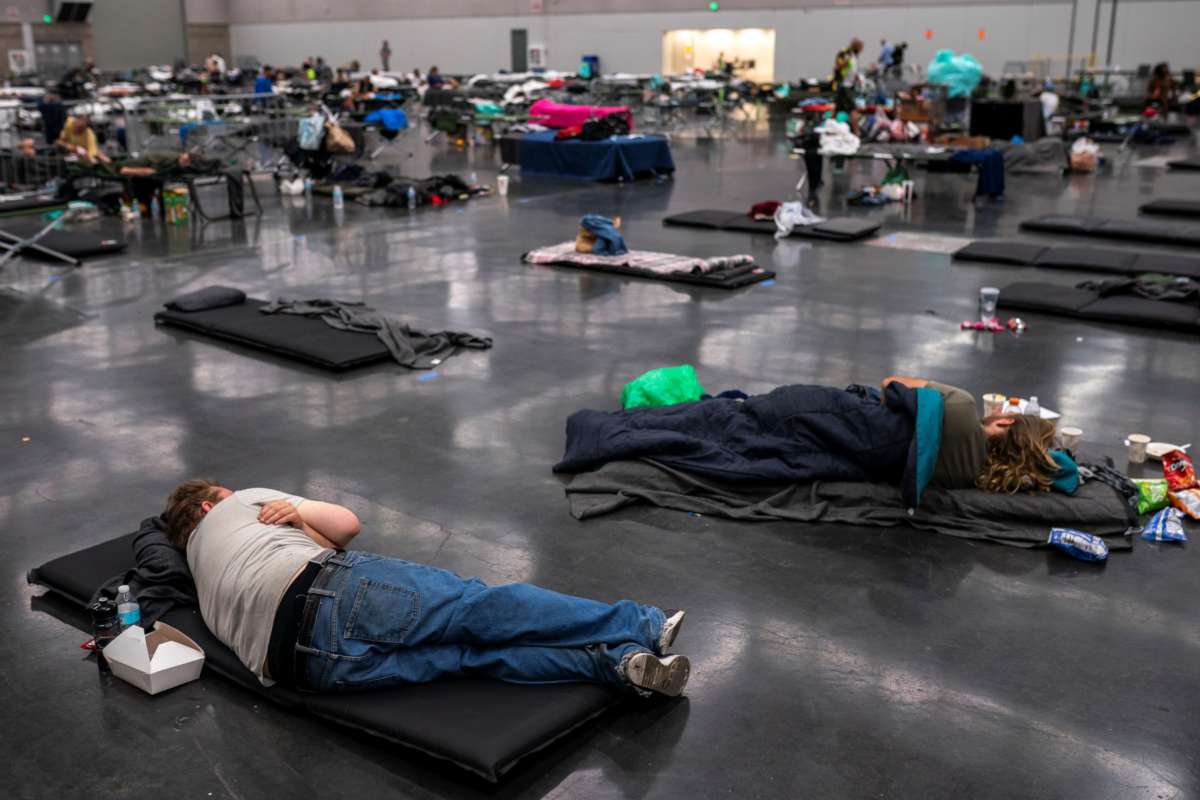
Portland residents fill a cooling center with a capacity of about 300 people at the Oregon Convention Center June 27, 2021 in Portland, Oregon. Record breaking temperatures lingered over the Northwest during a historic heat wave this weekend.
Portland residents fill a cooling center with a capacity of about 300 people at the Oregon Convention Center June 27, 2021, in Portland, Oregon. Record-breaking temperatures lingered over the Northwest during a historic heat wave this weekend.

BYSharon Zhang, TruthoutPUBLISHEDJune 28, 2021SHAREShare via FacebookShare via TwitterShare via Email

As the climate crisis fuels flooding in Michigan and record high temperatures in the Pacific Northwest, Republicans and centrist Democrats in Congress are fighting to exclude climate provisions and other vital measures from President Joe Biden’s infrastructure bill.

Oregon, Washington and Idaho roasted under oppressive heat over the weekend, with temperatures in Portland, reaching a record high of 108 degrees Fahrenheit on Saturday — and then another record high of 112 degrees Fahrenheit on Sunday. Experts have said that the region, which has a high proportion of housing without air conditioning, isn’t prepared for such abnormally high temperatures.

Meanwhile, in Michigan, a downpour of rain caused major flooding in Detroit, which is similarly unprepared for extreme weather, experts say. Gov. Gretchen Whitmer (D-Michigan) declared a state of emergency over the weekend for the state.

Get our free emails

  • Email

Both extreme weather events are almost certainly due to or intensified by the climate crisis, which is creating increasingly inhospitable conditions for people in the U.S. This is the second year in a row that Michigan has experienced abnormal flooding, and the National Weather Service has called the heat wave sweeping the Northwest unprecedented and dangerous.

They’re the sorts of weather events that climate scientists have been warning about for decades and continue to raise alarm about today as the climate crisis only worsens, largely unmitigated. As researchers have pointed out, the record high temperatures in the Northwest aren’t just the highest temperatures to date — they’re likely some of the lowest highs that the U.S. will experience in the years to come.

Climate advocates have been warning that Biden’s infrastructure bill could be the president’s last best hope to enact major climate-related proposals to hit his goal of 50 percent emissions reduction by 2030. But in May, Biden offered to cut his infrastructure bill from $2.25 trillion to $1.7 trillion, and, this past week, agreed to further reduce it to a paltry $579 billion, with many of its most ambitious climate measures cut out.

The elimination of climate proposals largely seems to be the product of a group of bipartisan senators who negotiated the most recent deal with Biden. A previous Republican-only proposal eliminated climate spending almost entirely; the centrists’ plan includes some money for energy grid updates, but still eliminates large swaths of climate spending for things like renewable energy tax credits.

Progressives like Senators Bernie Sanders (I-Vermont) and Ed Markey (D-Washington) have decried these cuts, with Markey calling the move “climate denial masquerading as bipartisanship.” Climate advocates like the Sunrise Movement, meanwhile, are fed up with politicians promising action, only to have those promises yanked out from under them when congressional Republicans — and other fossil-fuel-funded politicians — get involved.

Meanwhile, the GOP continues to be almost completely uninterested in mitigating the climate crisis. People like Sen. Mitt Romney (R-Utah), who is a member of the bipartisan group, said earlier this month that “the Democrats’ agenda on climate change is probably something they’re going to pursue, by and large, outside of an infrastructure bill.” But, as Romney undoubtedly knows full well, most legislation that Democrats pursue on their own will immediately be blocked by Republicans with the filibuster.

Sanders has recently taken up an effort to incorporate climate action into legislation in the form of a $6 trillion reconciliation bill that will include everything that’s been cut from Biden’s infrastructure proposal plus items like expanding Medicare.

Democratic leadership has vowed to block the watered down infrastructure bill without the concurrent passage of the reconciliation bill. But a scuffle between Republicans and the White House over the weekend has left the pairing’s future in limbo as Biden walked back a promise to veto the infrastructure bill without the $6 billion package.

Sanders made it clear on Sunday that separating the two bills wouldn’t be acceptable to him, saying on Twitter that “There will not be a bipartisan infrastructure deal without a reconciliation bill that substantially improves the lives of working families and combats the existential threat of climate change. No reconciliation bill, no deal.”

Indeed, without drastic and decisive action, researchers with the Intergovernmental Panel on Climate Change warned recently in a draft report that the climate crisis will only worsen flooding, heat waves, diseases and other climate events. They also warn that the world may be approaching — or have already hit — tipping points for the climate, after which the crisis will worsen even faster.

Preventing the worst of the climate crisis will require near-immediate social upheaval, which activists have been advocating for and some progressives have been fighting for in Congress. The political conversation around the climate has evolved rapidly over the past few years, but progress may not be coming soon enough.

You’re a Mean One, Mr. Fudd

Elmer Fudd hunter

You’re a mean one, Mr. Fudd.
You really are a heel,
You’re as cuddly as a cactus, you’re as charming as an eel, Mr. Fudd.
You’re a bad banana with a greasy black peel!

You’re a monster, Mr. Fudd.
Your heart’s an empty hole.
Your brain is full of spiders, you have garlic in your soul, Mr. Fudd.
I wouldn’t touch you with a thirty-nine-and-a-half foot pole!

You’re a vile one, Mr. Fudd.
You have termites in your smile.
You have all the tender sweetness of a seasick crocodile,
Mr. Fudd.
Given the choice between the two of you,
I’d take the seasick crocodile.

You’re a foul one, Mr. Fudd.
You’re a nasty wasty skunk.
Your heart is full of unwashed socks;
Your soul is full of gunk,
Mr. Fudd.

The three words that best describe you
Are as follows, and I quote:
Stink!
Stank!
Stunk!

You’re a rotter, Mr. Fudd.
You’re the king of sinful sots.
Your heart’s a dead tomato squashed with moldy purple spots,
Mr. Fudd.

Your soul is an appalling dump heap
Overflowing with the most disgraceful
Assortment of deplorable rubbish imaginable,
Mangled up in tangled up knots.

You nauseate me, Mr. Fudd,
With a noxious super naus.
You’re a crooked jerky jockey and
You drive a crooked horse,
Mr Fudd!

ELmer Fudd hunter

You’re a three-decker sauerkraut
And toadstool sandwich,
With arsenic sauce!

TURKEY WILL NO LONGER CLASSIFY ANIMALS AS COMMODITIES

Turkey Will No Longer Classify Animals as Commodities

The country’s proposed legislation is in response to public outcry regarding incidents that involved violence toward stray animals

https://vegnews.com/2021/6/turkey-will-no-longer-classify-animals-as-commodities.

by NICOLE AXWORTHY

JUNE 28, 2021


468 Shares

Turkey’s highly anticipated animal-rights bill is expected to be presented to the Turkish Parliament and enacted into law in the coming weeks. The new legislation will redefine animals as living beings instead of “commodities,” as is the case under current laws. It also seeks jail time for anyone who kills, abuses, or tortures animals. 

The legislation aims to curb incidents of violence toward animals in the country, following public outcry regarding the treatment of stray animals by government ministries. In addition, in recent years, incidents of violence toward animals have made headlines, including an incident in which seven dogs and seven cats died after consuming chicken laced with poison. This month, a man was fined for killing and eating stray kittens. Under current laws, any act of torture or killing of a stray animal is punishable under “damage to commodities” and comes with a lenient fine. In the past, courts have also handed down light sentences in a few exceptionally brutal cases.

The law’s new definition will automatically put crimes like these on equal footing as violence toward humans and carry a jail sentence. The jail sentence sought for crimes against animals will be from six months up to four years, which will avoid criminals getting out on bail or converting the prison sentence to a fine. 

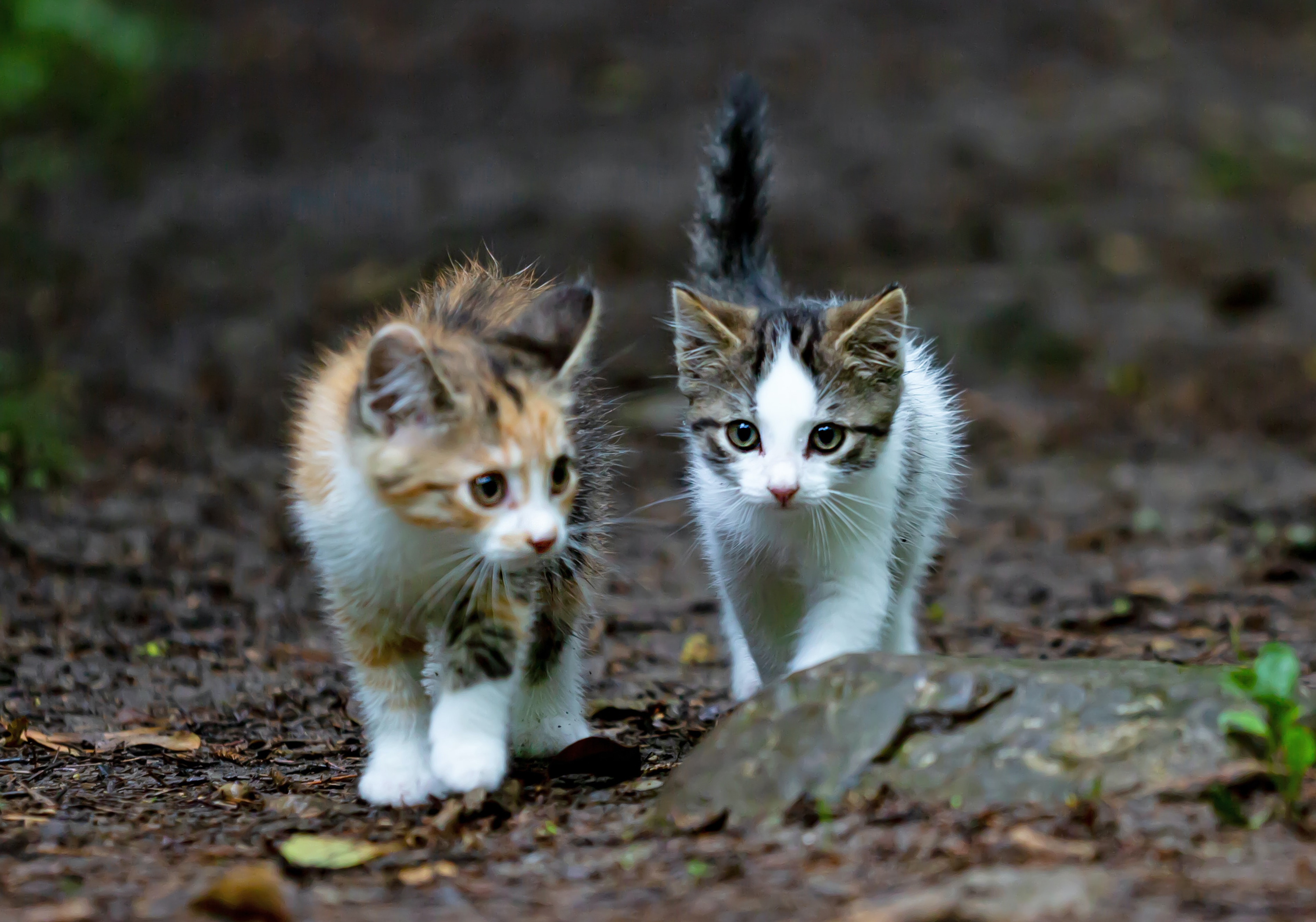
VegNews.Kittens3

Sweeping animal-rights legislation

The proposed legislation follows Parliament’s creation of an Animal Rights Legislative Commission in May 2019. The Turkish Grand National Assembly’s Animal Rights Investigation Committee spent several months meeting with animal-rights activists, nonprofit organizations, academics, experts, and other people involved in animal welfare and rights for a more comprehensive approach to the matter. The committee has since made its recommendations in the new legislation.

The recommendations also included banning zoos, circus animals, horse-drawn carriages, dolphin parks, fur farms, and pet stores, while restricting hunting and animal experimentation. However, the law deals largely with animal companions such as cats and dogs and does not address the cruelty to farmed animals, including fish. 

VegNews.Dog2

Improving companion animal laws

Countries around the world have different laws for animals who are considered companions. Last year, China’s Ministry of Agriculture announced it was removing dogs from the “livestock” category to instead consider them companion animals. However, this reclassification largely affects the global dog and cat meat trade, which animal-rights organizations have been working to ban for decades. According to the Humane Society International, approximately 10 million dogs are killed for food annually in China. Recognizing that dogs are companions instead of “livestock” is the first step toward eliminating the consumption and trade in dog meat.

Arizona Game and Fish Department hopes new camera ban will ensure fair chase

Exposing the Big Game's avatarCommittee to Abolish Sport Hunting Blog

https://www.azcentral.com/story/news/local/arizona-breaking/2021/06/26/arizona-game-fish-department-no-longer-allow-trail-cameras/5353679001/

Michael DonohueArizona RepublicView Comments0:000:45https://imasdk.googleapis.com/js/core/bridge3.469.0_en.html#goog_776179780

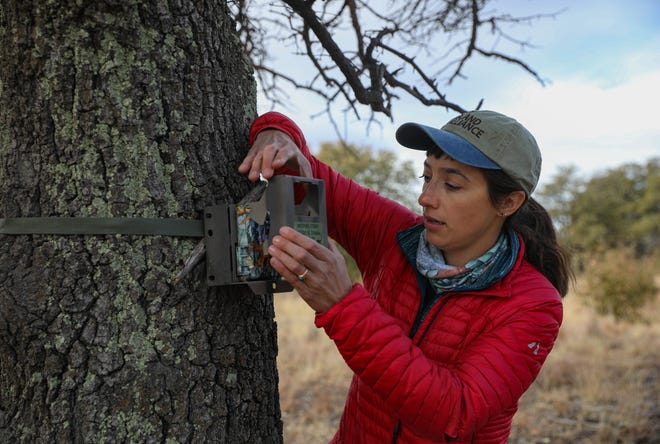
Zoe Fullem, community science manager for Sky Island Alliance, begins to remove a trail camera being used for the alliance's Border Wildlife study.

Arizonans have been placing trail cameras in hunting areas and watering holes for years, using the stored imagery to aid in their hunting activities.

Now, Arizonans will haveone last season to enjoy their trail cameras.

On June 11, 2021, the Arizona Game and Fish Department Commission voted unanimously to ban trail cameras “for the purpose of taking or aiding in the take of wildlife, or locating wildlife for the purpose of taking or aiding in the take of wildlife,” according to the bill.

A trail camera is a device that is placed in an area for the purpose of capturing photos or video wildlife while aperson is gone. The cameras are often triggered by motion and store pictures or videos to be viewed later.https://2b21d24486a222f396a7aea980ed1598.safeframe.googlesyndication.com/safeframe/1-0-38/html/container.html

Cameras for the purpose of property protection or wildlife viewing are not affected by this ban.

The ban…

View original post 774 more words

Letter: DWR should neither endorse nor promote animal cruelty

Exposing the Big Game's avatarCommittee to Abolish Sport Hunting Blog

https://www.sltrib.com/opinion/letters/2021/06/27/letter-dwr-should-neither/

FILE - In this June 11, 2009 file photo, a coyote watches from an enclosure as a cow walks past at the Millville Predator Research Facility in Millville, Utah. (AP Photo/Colin Braley, File)

FILE – In this June 11, 2009 file photo, a coyote watches from an enclosure as a cow walks past at the Millville Predator Research Facility in Millville, Utah. (AP Photo/Colin Braley, File)By Joni Wirts | The Public Forum| June 27, 2021, 5:00 a.m.

Dog fighting is illegal because it is widely recognized that canines deserve not to be subjected to such cruelty, yet it is perfectly legal to torture and kill coyotes in Utah. Animal cruelty is abominable to most, but many examples of unethical hunting (“trophy” hunting for bloodsport, not for food) are legal, or even endorsed, by wildlife agencies. The Utah Division of Wildlife Resources is holding a seminar on hunting predators that will teach participants skills like trapping, baiting, and hounding — all controversial practices that are illegal in many jurisdictions.

The problem with promoting the killing of carnivores like coyotes, wolves, bears or cougars…

View original post 201 more words

‘Zombie deer’ in Texas? Wildlife officials issue emergency order following positive tests at breeding sites

Exposing the Big Game's avatarExposing the Big Game

https://www.ksat.com/news/local/2021/06/25/zombie-deer-in-texas-wildlife-officials-issue-emergency-order-following-positive-tests-at-breeding-sites/?outputType=amp&utm_source=twitter&utm_medium=social&utm_campaign=snd&utm_content=ksat12&__twitter_impression=true

Health officials say there’s no evidence that suggests the disease is harmful to the public

A deer is seen in Liberty State Park on June 24, 2021 in Jersey City, New Jersey. (Photo by Angela Weiss / AFP) (Photo by ANGELA WEISS/AFP via Getty Images)(Getty Images)

AUSTIN– Are “zombie deer” real? The answer is yes, and they’ve been found in Texas.

Deer at six breeding sites in the state have recently tested positive for “zombie deer” disease, or Chronic Wasting Disease, prompting anemergency order from the Texas Parks and Wildlife Department.

Officials announced the order Tuesday and said they will secure the CWD-positive deer at the six facilities, enhance CWD testing at other breeding sites that have received deer from the positive sites, and they will not release any CWD-positive deer to help mitigate the spread.

“This is a terribly unfortunate development that we are committed to…

View original post 184 more words

‘Zombie deer’ in Texas? Wildlife officials issue emergency order following positive tests at breeding sites

https://www.ksat.com/news/local/2021/06/25/zombie-deer-in-texas-wildlife-officials-issue-emergency-order-following-positive-tests-at-breeding-sites/?outputType=amp&utm_source=twitter&utm_medium=social&utm_campaign=snd&utm_content=ksat12&__twitter_impression=true

Health officials say there’s no evidence that suggests the disease is harmful to the public

A deer is seen in Liberty State Park on June 24, 2021 in Jersey City, New Jersey. (Photo by Angela Weiss / AFP) (Photo by ANGELA WEISS/AFP via Getty Images) (Getty Images)

AUSTIN – Are “zombie deer” real? The answer is yes, and they’ve been found in Texas.

Deer at six breeding sites in the state have recently tested positive for “zombie deer” disease, or Chronic Wasting Disease, prompting an emergency order from the Texas Parks and Wildlife Department.

Officials announced the order Tuesday and said they will secure the CWD-positive deer at the six facilities, enhance CWD testing at other breeding sites that have received deer from the positive sites, and they will not release any CWD-positive deer to help mitigate the spread.

“This is a terribly unfortunate development that we are committed to addressing as proactively, comprehensively, and expeditiously as possible,” said Carter Smith, TPWD executive director, in a release.

“Zombie deer” disease is described by wildlife officials as a “slow and progressive” fatal disease that can be found in deer, elk, moose and other cervids, or members of the deer family.https://943b64ebcfe64825b44ba2f12149ba3e.safeframe.googlesyndication.com/safeframe/1-0-38/html/container.html?n=0

Although the disease may not be detected for several years, TPWD officials said, as it progresses, animals will show changes in behavior and appearance.

These may include progressive weight loss, stumbling or tremors, excessive thirst, salivation or urination, loss of appetite, teeth grinding, abnormal head posture, and/or drooping ears. There are no treatments or vaccines available for the disease, according to the CDC.

Health officials say there’s no evidence to suggest that it can be passed to humans, but it could pose a risk to non-human primates that eat meat from CWD-positive animals or “come in contact with brain or body fluids from infected deer or elk.”

The disease was first discovered in Texas in 2012 in free-ranging mule deer in the area of Hueco Mountains, near the Texas-New Mexico border, according to wildlife officials.

Antarctic lake suddenly disappears

Exposing the Big Game's avatarThe Extinction Chronicles

JUNE 25, 2021

by University of California – San Diego

https://phys.org/news/2021-06-antarctic-lake-suddenly.html?fbclid=IwAR1uyHwiwLFynLKtvVC-fLDUL2gUDcp6MHew7B9OHZ30oN0QnQpSN4oiu6Q

<img src=”https://scx1.b-cdn.net/csz/news/800a/2021/antarctic-lake-suddenl.jpg” alt=”Antarctic lake suddenly disappears” title=”Landsat 8 images over the Southern Amery Ice Shelf show the ice-covered lake before drainage and the resulting ice doline with summer meltwater. Credit: <i>Geophysical Research Letters
Landsat 8 images over the Southern Amery Ice Shelf show the ice-covered lake before drainage and the resulting ice doline with summer meltwater. Credit:Geophysical Research Letters

A global team of scientists including several from Scripps Institution of Oceanography at the University of California San Diego discovered the sudden demise of a large, deep, ice-covered lake on the surface of an Antarctic ice shelf.https://bce2d4334d30033b51e2fcf07a96fa6c.safeframe.googlesyndication.com/safeframe/1-0-38/html/container.html

This rare event, chronicled in a study published today in the journalGeophysical Research Letters, occurred during the 2019 Antarctic winter on Amery Ice Shelf in East Antarctica, and it is estimated that 600-750 million cubic meters (21-26 billion cubic feet)…

View original post 806 more words

Cause of worst mass extinction ever found

Exposing the Big Game's avatarThe Extinction Chronicles

A new study reveals what caused most life on Earth to die out during the end-Permian extinction, also known as the Great Dying.

https://bigthink.com/surprising-science/cause-of-worst-mass-extinction-ever-found

PAUL RATNER26 June, 2021

Cause of worst mass extinction ever found

Illustration showing the beginning of the Permian-Triassic mass extinction. 2020.Credit: PaleoFactory, Sapienza University of Rome forJurikova et al., Nature Geoscience 2020.

  • A new paper claims to identify the cause of the Great Dying that occured nearly 252 million years ago.
  • During the worst mass extinction event ever, most of Earth’s life perished.
  • The study suggests a volcanic eruption in Siberia spread aerosolized nickel particles that harmed organisms on the planet.

Dinosaurs are the most infamous victims of a mass extinction event 66 million years ago. But an even worse extinction happened 251.9 million years ago.

Called the end-Permian mass extinction or the Great Dying, this most severe of extinction events wiped out about 90 percent of the planet’s marine…

View original post 614 more words

Court rules Flathead plan fails grizzly, trout populations

  • ROB CHANEY rchaney@missoulian.com
  • Jun 25, 2021 Updated Jun 25, 2021
  •  0
Mount Aeneas mountain goat
A mountain goat leaps a gap near the summit of Mount Aeneas in the Flathead National Forest’s Jewel Basin. Courtesy Flathead National Forest

https://f4d3d4a1462421edf6e8184efb847da3.safeframe.googlesyndication.com/safeframe/1-0-38/html/container.htmlTownNews.com Content Exchange

A lawsuit pitting habitat needs for grizzly bears and bull trout against road access for loggers and motorized tourists has resolved in favor of the animals in the Flathead National Forest.

However, U.S. District Judge Don Molloy ruled on Thursday that most of a new forest management plan governing the 2.4-million-acre national forest west and south of Glacier National Park may stand while the U.S. Forest Service and Fish and Wildlife Service fix some violations of the Endangered Species Act.

“It’s a pretty thorough and nuanced opinion,” said Lawson Fite, an American Forest Resource Council attorney representing the Montana Logging Association. “The judge said we can have a robust timber program on the Flathead that supports rural communities, keeps a healthy forest, and provides for grizzly bears continuing their impressive recovery. We’re gratified that grizzlies are recovering, and I think we should be celebrating that, rather than just keeping restrictions for their own sake.”https://f4d3d4a1462421edf6e8184efb847da3.safeframe.googlesyndication.com/safeframe/1-0-38/html/container.html

The challenge came from WildEarth Guardians, Swan View Coalition and several other environmental groups that accused the Flathead Forest of violating National Environmental Policy Act and Travel Management Rule provisions in drafting its new forest plan without adequate research or public review.

Molloy rejected those arguments, writing “this does not appear to be a case in which the agencies cut corners. Rather, with limited exception, the record reflects that federal defendants met their statutory obligations in planning for and implementing the revised plan.”

Instead, Molloy found the agencies failed to follow the Endangered Species Act by getting rid of previous policies that helped grizzlies and bull trout. He quoted the late Supreme Court Justice Ruth Bader Ginsburg in noting that getting rid of those policies “is like throwing away your umbrella in a rainstorm because you are not getting wet.”

Earthjustice attorney Tim Preso, who represented the Swan View Coalition, said the ruling confirmed studies showing the federal agencies were not actually enforcing the policies, such as complete removal of unneeded roads in wildlife habitat.

“The government was changing the rules that led to progress on grizzly bear and bull trout conservation,” Preso said. “They have to go back and rethink that.”

The Flathead National Forest includes a large part of the Northern Continental Divide Ecosystem, which has the largest single population of grizzly bears in the Lower 48 states. An estimated 1,000 grizzlies live in the mountains of Glacier National Park, the Bob Marshall Wilderness Complex, Flathead and Blackfeet Indian reservations and other wildlands extending south to Missoula.https://f4d3d4a1462421edf6e8184efb847da3.safeframe.googlesyndication.com/safeframe/1-0-38/html/container.htmlWatch now: One-star Glacier Park reviews IIPlay Video

shift + ←→slower / faster

↑↓volume

mmute

←→seek

 . seek to previous

12… 6 seek to 10%, 20% … 60%

Sometimes the most amazing places on earth don’t impress everyone. Here are negative online reviews for Glacier National Park posted on TripAdvisor, Yelp and Google.

The environmental groups argued that Flathead Forest officials improperly abandoned old rules limiting forest road construction and requiring removal of unnecessary roads in places critical to grizzlies and bull trout. Road access frequently leads to bears getting killed in vehicle accidents or hunting incidents, and erosion from road surfaces can ruin streambeds bull trout need to spawn.

The groups also raised a number of other objections to the new forest plan, including the way it reviewed snowmobile and off-road vehicle routes, how it calculated harm to bears and fish for management purposes and how the overall plan was approved.

However, Molloy left the Flathead Forest’s forest plan in place, noting that both sides agreed the new plan was, on the whole, better for people and animals than the 1986 plan it replaces.

That means six forest projects currently in the works should stay active. They include the Taylor-Hellroaring, Hellroaring Basin Improvements, Crystal Cedar and March Madness blowdown salvage projects.

“If the revised plan were vacated, the economic impact on defendant-intervenors and on the local communities that depend on approved projects for employment could be severe,” Molloy wrote.

That included 575 wood industry jobs with an annual payroll of more than $40 million, along with at least eight other forest projects developing under the new forest plan. Instead, Molloy relied on the Forest Service’s testimony that “any project under the revised plan would have to be examined individually; if the project impacted roads, grizzly bears or bull trout, the project would require a site-specific consultation and a biological assessment with the Fish and Wildlife Service.”

Molloy rejected the environmental groups’ argument that the Flathead Plan unlawfully expanded snowmobile access in critical wildlife habitat. Instead, he ruled those snowmobile travel plans were already in place before the new forest plan got finalized, so it didn’t produce any changes. He also dismissed challenges to the Forest Service’s interpretation of travel-management rules for off-road vehicle use.

But he agreed the Fish and Wildlife Service failed to properly analyze how new forest management might hurt bears and trout, and that the Forest Service improperly relied on the FWS’ flawed analysis. For example, the groups showed that more than two-thirds of officially closed roads in the Swan Lake Ranger District showed signs of trespassing motor vehicles.