Tragedy during hunting trip: falls into a rocky canal and dies while retrieving the prey
Reply

September 27, 2025 | By Andy Phelan
Stowe residents are on the lookout for three orphaned bear cubs.
On Sept. 14, a hunter entered the Topnotch Condominiums area in Stowe and killed a mother bear. So far, Vermont Fish & Wildlife officials have only acknowledged that the bear was female. But residents had seen her in preceding weeks and months with several cubs. One resident saw and recognized the mother bear just 15 minutes before she heard two gunshots nearby and then saw the camo-clad hunter drive off in his pickup. The next day, the resident took a video of several cubs believed to be the orphans in a tree very near the killing, where they’d likely fled for safety. The property was not posted against hunting.

Fish and Wildlife was informed of this killing the next day and given the video. A bear-kill report (see below) confirms the female bear kill from Sept. 14 and the hunter has posted publicly on Facebook about it. Inquiries made by the public found that Fish & Wildlife officials did not contact the hunter about the kill in the condominium area or about the cubs (they noted that was unnecessary given that the action was lawful).
By the time Vermont’s bear-hunting season begins on Sept. 1, first-year bear cubs are traveling with their mothers in search of food. They are in hyperphagia, the state where they are trying constantly to gain weight in order to survive the upcoming winter. Yearling bears are about 18 months old and typically leave their mothers in June or July. They need that period with her for protection and to learn myriad survival skills.
It is unknown whether this hunter saw the bear cubs before he shot the mother or took any steps at all to determine whether she had cubs. According to Fish &Wildlife, it doesn’t matter because Vermont is one of a very small minority of states/provinces in the U.S. and Canada that still allow the killing of mother bears with cubs.
Folks from the Stowe Bear Project and from Protect Our Wildlife have been involved in the efforts to locate and rescue the orphaned Stowe cubs, which so far have been unsuccessful. They likely will starve and cannot survive the coming winter.
Such killings usually occur out in the woods with no witnesses to speak up. But in another instance in 2022, the deliberate killing of a mother bear in the presence of her two cubs was captured by my home security video camera in Fayston. One cub was found starved to death nearby, a month later, the other was never seen again. I filed a petition with the state seeking a regulation prohibiting such deliberate killings. In 2023, the Vermont Fish & Wildlife Board voted unanimously to continue to allow the deliberate killing of mother bears with cubs. The board made that call even though about 90% of U.S. states and Canadian provinces prohibit such killings. Vermont, New Hampshire, and Maine are among the only holdouts.
The increased hunter “education” that the Fish & Wildlife Department promised after the petition rejection is still insufficient and cannot escape the inherent contradiction in the department’s stance. The state tells hunters, in essence, “we’d rather you not kill mother bears with cubs because they will die, but we’ve made it legal for you to do so.”
The cruelty of leaving helpless bear cubs to starve is a primary reason to prohibit such killings. Another is that Vermont’s allowing hunters to kill mother bears with cubs violates Fish & Wildlife’s own one killed-bear per year limit (“bag limit”). Most orphaned cubs will die prolonged and painful deaths by starvation and exposure, which means the hunter exceeded the bag limit by indirectly killing the cubs. Yet another is that, without their mother, orphaned cubs will more likely resort to human sources of food in trash, dumpsters, birdfeeders, etc., leading to human-bear conflicts that rarely end well for the bear.
What would it take for the Vermont Fish & Wildlife Department to reconsider its position?
Perhaps in addition to hearing from the general public, it would help for the state to finally hear from ethical hunters who would not deliberately or recklessly kill a mother bear with cubs and who will not put up with unethical hunters who do.
Fayston resident Andy Phelan is a lawyer who took an interest in black bears after learning that it was legal for a mother bear with cubs to be shot near his home. Phelan filed a petition in 2023 with the Vermont Department of Fish and Wildlife, aiming to change that law. He also does community education about bears through the Mad River Valley Bear Initiative.
Below is the recent bear-kill report referenced in Phelan’s piece.
View fullsize
September 26, 2025 – 2:48 pm
The archery hunting season opens this weekend across all of West Virginia PHOTO: WVDNR
ROMNEY, W.Va. — A couple of key factors led West Virginia Division of Natural Resources wildlife staffers to predict the 2025 whitetail deer harvest will be down. As the archery hunting season opens this weekend statewide, the first pattern hunters will follow for deer will be food sources.
The 2025 Mast Survey produced by the DNR revealed, hard mast, which is a preferred staple of the whitetail diet, will be abundant.
“The oak did do really well, in fact all hard mast did really well overall. Combined all hard and soft mast, we’re about two percent above our long-term statewide average and about 16 percent above what we were seeing in 2024,” said Avery Korns who coordinates the annual mast survey for the agency.
The increased acorn production was dramatic. White oak was up 46 percent from 2024 and up 46 percent over the yearly average. Black oak acorns jumped up 41 percent, Scarlet oak was up 29 percent. Scrub Oak was up 100 percent and the chestnut oak acorns were elevated by 119 percent over 2024. Korns said weather probably played a key role in that jump in hard mast production.
“We had a lot of rain up until about August when it started to dry up and that helped them recover from last year’s drought,” she said.
But all of that early rain is believed to have been counter productive for soft mast species. All of the soft mast which is listed annually took a step dive from 2024.
“With all that rain, they didn’t do as well overall and then when the drought hit they started dropping their fruit a little early in August.,” she said.
The survey revealed all soft mast species had a significant drop from 2024. Apple was down 14 percent, wild black cherry dropped 63 percent. The rest of the soft mast species included in the annual survey were all negative as well including blackberry, crab apple, dogwood, grapes, greenbrier, Hawthorne, sassafras, and yellow poplar.
Conversely the hard mast species just like the oak mast soared. Beech production was up 268 percent from last year and 84 percent from the all-time average. Black walnut production jumped 161 percent from 2024 and 54 percent over the long term average. The squirrel favorite hickory nut also saw a tremendous jump from 2024 with a 76 percent improvement over last year’s crop. Those numbers will likely reflect a huge jump in squirrel numbers for next fall. A strong mast year will often provide enough nourishment for female squirrels to bare two sets of offspring in the coming year.
But the overall hunting success isn’t expected to be a big mover from last year. With so much mast on the ground, deer probably won’t have to move much and that will keep them relatively safe from hunters. Korns added the EHD outbreak in the western counties of the state will be a factor.
“For all of the deer seasons combined we expect to see a lower harvest, just because of how the oak species and all of the hard mast species produced. It’s going to be harder to find those deer because they’re not going to move as much,” she said.
Korns acknowledged the EHD could impact the harvest, but not because there are fewer deer. It’s more because hunters THINK there are NO deer.
“We know in those areas if they’ve been hit particularly hard, some of our hunters aren’t going to go out this year or they may self regulate how many deer they take. That can affect the harvest,” she said.
The overall hunting outlook in the publication anticipated a lower success rate not only for whitetails, but also for rabbits, racoons, and quail. Hunter success was predicted to be about the same as 2024 when hunting both fox squirrels and gray squirrels, wild turkey, and wild boar. The only species expected to see an increased harvest during the coming hunting season is black bear. Korns said the archery harvest may not be up, but they anticipate because of the high level of mast bears will go to the den far later and the gun season in December will feature a lot of bears still on the landscape for hunters to enjoy the pursuit.
SaveShare


https://www.mprnews.org/story/2025/09/26/as-minnesotas-duck-hunting-opens-waterfowl-populations-are-steady-but-concerns-remain
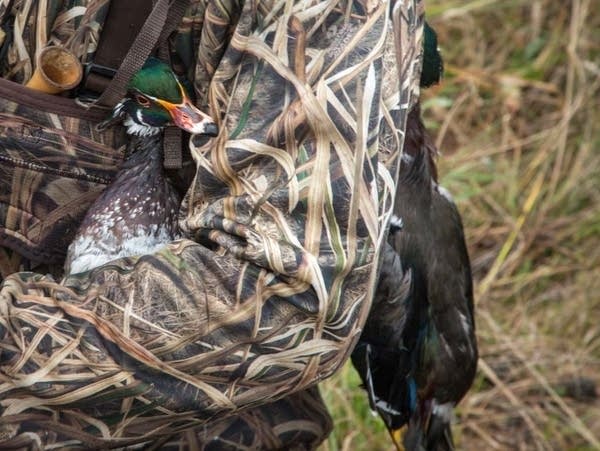
As the duck hunting season opens in Minnesota this weekend, the state Department of Natural Resources says waterfowl populations are slightly higher than they were a year ago. But the DNR says the populations are significantly lower than they were years ago as waterfowl habitat dries up.
Dry conditions across Minnesota this past year have reduced the amount of wetlands in the state, which waterfowl need to breed. Even with less of its vital habitat, bird populations remain steady from the previous year, thanks to last-minute rainfall during the nesting season.
The Minnesota Department of Natural Resources reports shallow wetlands decreased by 73 percent from last year. More than half of the state had been suffering in drought conditions up until April.
Losing that habitat could’ve been devastating for duck populations, Nate Huck, the migratory game bird specialist for Minnesota DNR, said. But the very wet late spring helped restore some of that habitat.
“Last year, we did get some rain, later in the nesting season that allowed birds nest successfully,” Huck said. “This year settling conditions weren’t as good. But again, we got rain late.”
Thanks to that rain, duck populations, excluding scaup, were about 8 percent higher than last year. However, they remain 32 percent below the long average.
“We’ve been trending drier and drier and drier since at least the last 10 years,” Huck said. “And so that’s going to drive those populations down quite a bit.”
Duck hunting season begins thirty minutes before sunrise on Saturday, Sept. 27th. Huck says if people want to continue enjoying the plentiful waterfowl, it’ll be crucial to advocate for Congress to continue funding protections for wetlands.
Protections like the Conservation Reserve Program, which allows landowners to set aside some of their property to convert into grasslands for wildlife use.
“We peaked in 2017 when CRP peaked and we’ve come down since then,” Huck said. “The availability of those grasslands is so important for so many species that hunters choose to pursue.”
The Department of Natural Resources utilizes banding programs to monitor waterfowl populations. However, to maintain the accuracy of other game population data, Huck encourages hunters to keep a log of their hunting locations and the number of animals they encounter.
Chandler Jackson V KAALTV
September 26, 2025 – 5:05 PMPlay Video
(ABC 6 News) – Hunting in Minnesota provides multiple different paths for those interested from pheasants and turkeys to white tail deer and even bear.
But there’s one that’s even more unique than the others: elk.
Hunting an elk in Minnesota is truly a once in a lifetime experience that draw thousands of Minnesotans every year, each vying for the chance to bag one.
The only elk hunting range available this year was all the way up in Kittson County on the Canadian border, about seven hours away from Rochester.
That’s where George Clements, a long time hunter and one of only four hunters who acquired a tag this year, found himself for a week.
To say he was excited when he got the news would be an understatement.
“You might ask my wife; she said I was literally jumping up and down,” he said. “She said I had the biggest smile she’d ever seen on my face.”
Elk, and many other types of big game, aren’t new to Clements.
“The other elk that I shot was a cow, I got that with a bow and arrow in Colorado,” he said. “And that’s when I got my first taste of elk and decided that I wanted to do this again.”
But elk hunting in Minnesota, even in a good year, is a rarity.
Over the last few years, the numbers of available licenses have dwindled.
In 2020, there were 44 up for grabs, but only the four in 2025.
That mostly has to do with the elk population, carefully managed by the state’s Department of Natural Resources.
“In the wintertime, we get up. We do an aerial survey and we count how many elk we have on the landscape,” said Kelsie LaSharr, Minnesota’s elk coordinator. “Based on that number, we are legislatively mandated to maintain certain population limits. And so that’s really where hunting comes into play. Elk harvest helps us maintain them if the populations are growing.”
Except those populations haven’t been growing, hence the lack of tags.
“While this does feel disappointing for hunters, it’s also an opportunity for us to apply less pressure to those elk herds so that they have the opportunity to grow and thrive,” LaSharr said.
It also makes getting a tag such a big deal for someone like Clements, who turned 69 during his hunting trip.
“Climbing to 8,000 or 10,000 feet in Colorado’s probably not in my recipe file any longer,” Clements said. “It is almost a spiritual experience for me. I spent a lot of time sitting there quietly. Many times I’ll pray. And it’s part of life.”
 Exposing the Big Game