Gray wolf population surges in Washington – and there’s a surprise for ranchers

https://www.tri-cityherald.com/news/state/washington/article250959444.html

BY BROOKE WOLFORDAPRIL 26, 2021 02:44 PM, UPDATED APRIL 26, 2021 02:55 PM

Washington’s gray wolf population grew substantially in 2020, but surprisingly, the number of livestock killed by wolves decreased, officials said.

The Department of Fish and Wildlife counted 132 gray wolves in 24 packs and the Confederated Tribes of the Colville Reservation reported 46 wolves in five packs over the course of 2020, according to the department’s report released Friday.

Those numbers are up from 2019, when the department counted 108 wolves in 21 packs and the CTCR reported a minimum count of 37 wolves in five packs, but “because these are minimum counts, the total number of wolves in Washington is likely higher.”TOP ARTICLEShttps://imasdk.googleapis.com/js/core/bridge3.453.0_en.html#goog_1337941304https://imasdk.googleapis.com/js/core/bridge3.453.0_en.html#goog_337707929https://imasdk.googleapis.com/js/core/bridge3.453.0_en.html#goog_814005581javascript:falseSKIP ADTri-City Dust Devils kick off 2021 season in new MLB league — and with new rules

The 2020 numbers also mark the 12th consecutive year the state’s gray wolf population has grown.

“Washington wolf recovery continues to make solid progress,” Kelly Susewind, WDFW’s director, said in a news release. “For the first time the North Cascades wolf recovery area has met the local recovery objective — four successful breeding pairs — during 2020.”

Get unlimited digital access

Subscribe now for only $1CLAIM OFFERhttps://19e587403aee5e0328603799920859cd.safeframe.googlesyndication.com/safeframe/1-0-38/html/container.html

A breeding pair is “defined as at least one adult male and one adult female wolf who raised at least two pups that survived until December 31 and is used to reflect reproductive success and recruitment.” Washington saw 13 successful breeding pairs in 2020, while 2019 had 10.

Wolves in the eastern third of Washington have not been classified under the Endangered Species Act since 2011, but state law does classify them as endangered. In the western two-thirds of the state, gray wolves were federally listed as endangered until Jan. 4, 2021.

Their status has been highly contentious among conservationists and ranchers, whose livestock can be threatened and sometimes killed by wolves in eastern Washington, KREM has reported.

However, while the number of wolves has risen, livestock fatalities have not followed suit.

In 2020, wolves were responsible for nine cattle deaths, 30 cattle injuries and one herding dog injury. In the year prior, gray wolves killed 14 cattle and injured 11, according to the 2019 report.

Today’s top headlines

Sign up for the Afternoon Update and get the day’s biggest stories in your inbox.SIGN UP

This site is protected by reCAPTCHA and the Google Privacy Policy and Terms of Service apply.https://19e587403aee5e0328603799920859cd.safeframe.googlesyndication.com/safeframe/1-0-38/html/container.html

Only seven of the 29 known packs in Washington in 2020 — or 24% — were involved in at least one confirmed livestock mortality or injury.

While the WDFW emphasizes using “nonlethal deterrence” in the state’s Wolf Conservation and Management Plan, there have been several instances of “lethal deterrence” over the years, according to National Geographic.

The department documented 16 wolf mortalities in 2020, three of which were “lethally removed in response to wolf-caused livestock deaths”

Wildlife officials will consider allowing lethal deterrence to control wolf populations if the following criteria are met:

  • It is documented that livestock have clearly been killed by wolves
  • Nonlethal methods have been tried but failed to resolve the conflict
  • Depredations are likely to continue
  • There is no evidence of intentional feeding or unnatural attraction of wolves by the livestock owner

“WDFW staff, and partnering producers, non-government organizations, and county officials worked hard last grazing season at reducing wolf-livestock conflict,” Donny Martorello, the WDFW wolf policy lead, said in the release. “This coming grazing season we will pilot some newly innovated non-lethal tools and are working with producers, range riders, and landowners on action plans for deploying them.”

The Washington Cattlemen’s Association did not immediately respond to a request for comment from McClatchy News.Play VideoDuration 1:28See adorable gray wolf pups and hear them howlA female adult gray wolf, yearling and three pups walked through the woods in Lassen County. BY CALIFORNIA DEPARTMENT OF FISH AND WILDLIFE

Video of NRA executive Wayne LaPierre hunting elephants sparks outrage

Exposing the Big Game's avatarCommittee to Abolish Sport Hunting Blog

https://abcnews.go.com/US/video-nra-executive-wayne-lapierre-hunting-elephants-sparks/story?id=77366693

The African savanna elephant was designated as endangered last month.ByJulia JacoboApril 28, 2021, 2:02 PM•7 min read

On Location: April 30, 2021

3:04

On Location: April 30, 2021Catch up on the developing stories making headlines.

A video that shows the National Rifle Association’s embattled executive hunting elephants has sparked outrage among animal activists.

The New Yorker — along with the nonprofit newsroom the Trace — on Tuesday published a video that appears to show NRA Executive Vice President Wayne LaPierre struggling to kill an African savanna elephant for the NRA-sponsored television series “Under Wild Skies.”Recent Stories from ABC NewsTop ArticlesREAD MOREArizona: 1 officer killed, 1 hurt by suspect instolen carhttps://imasdk.googleapis.com/js/core/bridge3.453.0_en.html#goog_618952376https://imasdk.googleapis.com/js/core/bridge3.453.0_en.html#goog_1086139810https://imasdk.googleapis.com/js/core/bridge3.453.0_en.html#goog_1150596298SKIP AD

“The dying animal rumbles in distress or to warn others — until someone else finally takes over to make the killing shot,” according to a statement from the People for the Ethical Treatment of Animals. “LaPierre’s wife stands by…

View original post 678 more words

Trapping is torture

By Annoula Wylderich -April 30, 2021 Facebook Twitter

Cover image from Born Free USA “Crushing Cruelty” report released in April.

Trapping is perhaps the most egregious abuse of our wildlife. The targeted animals (and often, untargeted creatures who get caught incidentally) can sit in a trap for up to 96 hours in the state of Nevada without the requirement for trappers to check on them. Don’t bet that every trapper will check after four days, if it isn’t convenient for them.

Reports from the Born Free USA wildlife advocacy organization have exposed the trapping industry and found that the few existing regulations that monitor trapping are often ignored by trappers who leave traps out after the close of the trapping season, continuing to capture animals. There are no authorities present when traps are set or an animal is killed.  

The animals who get caught in these barbaric, archaic devices (conibear, leghold, and snare traps) are helpless as they experience the elements, pain, hunger, thirst, fear and possible attacks by predators. Sometimes they leave behind cubs or pups who are too young to survive on their own.

Oftentimes, a mother will chew off her own limb in a desperate attempt to get back to her young. She will risk blood loss and infection in doing so; and she will be severely hindered for the remainder of her life by the loss of that limb if she does survive.

It’s not uncommon for an animal to become an incidental victim. A Born Free USA investigator speaking with a trapper reported the following:  “In one of [the foothold traps] we find a fox squirrel, caught by both front paws. [The trapper] released the fox squirrel from the trap. Both of its front legs are stripped down to the flesh by the trap. He doesn’t usually use fox squirrel, though others will use the fur, so he lets it go. At the same time he says it probably won’t survive and that seems the case as it limps off slowly.” One can imagine that animal’s agony.

The steel-jaw leghold trap is more commonly used by both commercial and recreational trappers. More than 85 foreign countries have banned the use of this trap, but only a few U.S. states have either banned or severely restricted its use. While a few states have reduced their trap check time to 24 hours, Nevada isn’t among them. The American Veterinary Medical Association, American Animal Hospital Association, World Veterinary Association and the National Animal Control Association have declared leghold traps to be inhumane.

Federal and state wildlife services also kill a staggering number of animals with various trapping devices, in addition to using poison and aerial shooting. These techniques are primarily random and non-selective, which result in the deaths of untargeted animals, as well. Those can include dogs, cats, birds, rabbits, turtles, bears, squirrels, and endangered species. 

In 2017, Nevadans who were polled indicated strong support for the reform of the state’s trapping regulations in order to reduce the suffering of wildlife, and to protect pets and public safety.

In 2019, the Nevada Assembly Committee on Natural Resources, Agriculture, and Mining introduced Assembly Bill 473, which would have banned the use of leghold traps and reduced trap check time to 24 hours. Sadly, there was little progress as it seems that the general public’s wishes are continually ignored in favor of sporting interests in spite of the fact that trappers comprise a minority of Nevada’s population (voters/constituents).

Our representatives should be urged to implement alternative humane methods of animal control; and where trapping is still permitted, to reduce the trap check time to 24 hours and ensure that regulations are enforced.

We should all be on the lookout for hidden traps when hiking with our dogs and report any incidents to local law enforcement and Nevada’s Department of Wildlife (be sure to document).

Those who reside in rural areas are encouraged to post signs and prosecute anyone who sets a trap on private property.

Letter to the editor: Reimbursement for wolf trapping not morally justifiable

Exposing the Big Game's avatarCommittee to Abolish Sport Hunting Blog

https://missoulian.com/opinion/letters/letter-to-the-editor-reimbursement-for-wolf-trapping-not-morally-justifiable/article_a8c3a461-06d9-5b68-ad3f-c8a7f0c3d586.html

  • 5 hrs ago

Unlimited digital access only $1/mo.!

Laws that would provide wolf trappers with “expense reimbursement” smack of payment for bounty hunting.

Wolf trapping is a barbaric, violent practice that is disrespectful to all sentient beings, including wolves and humans who reject such practice. Wolf trapping shows no mercy: using steel on the limbs of an intelligent, pack-oriented animal to hold it until a trapper shoots it or clubs it to death.

To argue that this is morally justified because it is a Montana tradition makes one guilty of the logical fallacy of the “argument by tradition.” Not only is this reasoning flawed, the value assumption in this worldview promotes a humanity that continues to perpetrate violence on itself and on other species.

To argue that it is one’s “right” to exercise his chosen, lawful vocation ignores the moral domain, exposing this witless…

View original post 70 more words

Dozens Crushed To Death, Scores Injured In Stampede At Israeli Religious Festival

Exposing the Big Game's avatarThe Extinction Chronicles

https://www.npr.org/2021/04/30/992320694/dozens-crushed-to-death-scores-injured-in-stampede-at-israeli-religious-festival

  • Facebook
  • Twitter
  • Flipboard
  • Email

Updated April 30, 20219:52 AM ET

DANIEL ESTRINInstagramTwitter

Ultra-Orthodox Jews look at the scene where dozens of people were killed and some 150 injured in a stampede during the Lag BaOmer festival at Mount Meron in northern Israel on Friday.Sebastian Scheiner/AP

JERUSALEM — At least 45 people were killed and some 150 more injured in a crush at a religious festival of ultra-Orthodox Jews in northern Israel, where tens of thousands of faithful had convened in one of the country’s largest events since the pandemic began.

The chaos at Mount Meron began early Friday at the festival of Lag BaOmer, which features bonfires and dancing around the Galilee tomb of a 2nd century rabbi.

According to witnesses, at around 1 a.m. local time, in an area of the complex where the ultra-Orthodox Hasidic community of Toldos Aharon was holding its celebration, participants…

View original post 561 more words

One incredible ocean crossing may have made human evolution possible

Exposing the Big Game's avatarThe Extinction Chronicles

https://theconversation.com/one-incredible-ocean-crossing-may-have-made-human-evolution-possible-157479


Yasni/Shutterstock

April 29, 2021 11.12am EDT

Author

  1. Nicholas R. LongrichSenior Lecturer in Evolutionary Biology and Paleontology, University of Bath

Disclosure statement

Nicholas R. Longrich does not work for, consult, own shares in or receive funding from any company or organization that would benefit from this article, and has disclosed no relevant affiliations beyond their academic appointment.

Partners

University of Bath

University of Bathprovides funding as a member of The Conversation UK.

View all partners

CC BY NDWe believe in the free flow of information

Republish our articles for free, online or in print, under a Creative Commons license.

Republish this article

Humans evolved in Africa, along with chimpanzees, gorillas and monkeys. But primates themselves appear to have evolved elsewhere –likely in Asia– before colonising Africa. At the time, around 50 million years ago, Africa was an island isolated from the rest of the world by…

View original post 1,168 more words

The math isn’t adding up on forests and CO2 reductions

https://www.theverge.com/2021/4/29/22410367/forest-offsets-trees-carbon-dioxide-accounting

Big polluters can hide behind forest offsetsBy Justine Calma@justcalma  Apr 29, 2021, 5:12pm EDT

Share this story

Upward view of giant sequoias in Sequoia National Park,...
SEQUOIA NATIONAL PARK, CALIFORNIA, UNITED STATES – 2018/09/01: Upward view of giant sequoias in Sequoia National Park, California, USA.

More evidence surfaced this week that shows that forests are struggling to do humans’ dirty work when it comes to climate change. Although companies and countries are increasingly relying on forests to draw down their planet-heating carbon dioxide emissions, the math isn’t adding up to show big benefits.

California might have oversold the success of carbon offsets used in its cap-and-trade system, which is often billed as one of the world’s most successful market-based mechanisms to tackle climate change. The system appears to be failing because California is actually overcounting how much carbon dioxide forests keep out of the atmosphere, according to a new study by nonprofit CarbonPlan, that’s still under peer review, and reporting by ProPublica and MIT Technology Review. (One of the authors, James Temple, was previously a senior director at The Verge.)

That finding follows research published earlier this week in the journal Nature Climate Change that found a giant discrepancy between how much climate pollution countries officially reported and how much pollution independent models calculated for them. In this case, forests mucked up the numbers because countries are attributing more carbon reductions to their forests than independent models do.THAT LETS THOSE POLLUTERS OFF THE HOOK

Trees do provide a crucial service for people and the planet by “breathing in” and storing carbon dioxide. So protecting forests is important for their health and ours. But schemes devised to sell forests’ carbon storage to polluters as a way to cancel out their emissions haven’t always resulted in the CO2 reductions they’re supposed to achieve. Ultimately, that lets those polluters off the hook instead of pushing them to do more in the race to prevent a deeper climate crisis.

In the US, forest owners can sell their land’s ability to store carbon as “credits” to polluters. Since California sets a cap for how much CO2 pollution industries generate, companies can purchase those credits to cancel out some of their emissions and stay below the cap (with each credit representing one metric ton of CO2). But up to 39 million credits, nearly a third in the state’s program, didn’t actually provide the climate benefits they were supposed to, according to the new analysis by CarbonPlan.

That’s because the state was using averages to estimate how much CO2 each parcel of forest could hold. In reality, some pieces of forest can store more than others based on what kinds of trees are there and how dense the forest is. Forest managers also “gamed the system” by selling credits from parcels that inflated how much carbon they stored, ProPublica and MIT Technology Review reported.FOREST MANAGERS ALSO “GAMED THE SYSTEM”

The California Air Resources Board disputes the study’s findings, which are still undergoing peer review. “We were not given sufficient time to fully analyze an unpublished study and are not commenting further on the authors’ alternative methodology,” a spokesperson for the Air Resources Board wrote to ProPublica and MIT Technology Review. (This isn’t the first time California’s cap-and-trade system has come under scrutiny. Previous research found that some “economically disadvantaged neighborhoods” near regulated facilities experienced higher rates of pollution after the carbon trading system began.)

Discrepancies in carbon accounting due to forests show up globally, too, according to the Nature Climate Change study. There was a 5.5 billion ton difference between the amount of carbon dioxide emissions nations report each year and what independent models calculated. That’s a big gap, nearly as much as the US’s net emissions in 2019. It boils down to the way the US and other countries count up carbon caught by their forests, which doesn’t match up with the methods other researchers use. The lack of standardized reporting across the board for countries and scientists could throw a wrench in global efforts to curb greenhouse gas emissions. It’s hard to make progress if everyone’s taking different measurements.

What’s more, countries that are big polluters and that have a lot of forests, like the US, can lean on that asset more than countries without as much forest cover, The Washington Post writes. Countries like the US use forests to subtract emissions, and they end up reporting a smaller “net” footprint as a result. That can make it look like they’ve made bigger environmental gains even if they’re still polluting a lot.“A FREEBIE FROM NATURE”

If the US didn’t count on forests and other land ecosystems to offset some 12 percent of its emissions, its carbon footprint would actually be much higher. “We are lucky to have those natural carbon sinks,” Christopher Williams, a professor at Clark University, told The Washington Post. “However, that carbon uptake is a freebie from nature for which we do not really get to take credit in our battle against climate change.”

Despite the risks that come with relying on those freebies, it’s getting trendier than ever to invest in forest-based climate solutions. YouTubers and the World Economic Forum have launched feel-good tree-planting initiatives. Tech companies like Microsoft that have made commitments to become carbon “neutral” or carbon “negative” say that they’ll draw down at least as many emissions as they release — and are relying heavily on trees to do that. But trees can only do so much — and, if the results of these studies hold up, perhaps much less than people previously thought they could.

HOW CARBON LABELS ARE GETTING PEOPLE TO EAT LESS MEAT

 By: Karen Asp    |    Reading time: 7 minutes
It’s no secret that the Western world needs a dietary intervention. Animal agriculture continues to be among the leading causes of greenhouse gas emissions, and without a major shift to a plant-based diet globally as well as at an individual level, the future looks bleak.
The question is, though, how do you make consumers aware of the carbon footprint of their food? Enter climate labels. Just as nutritional labels help consumers make the right purchase for their health, these labels, which are being added to restaurant menus and food products, are designed to help consumers make healthier choices for the planet. 

In 2020, the World Resources Institute launched the Cool Foods Meals badge to make it easier for consumers to choose climate-friendly meals when dining out. The launch was timely, as it followed on the tails of a survey conducted by the Yale Program on Climate Change Communication and Earth Day Network which found that 64 percent of individuals said they were either purchasing or eating plant-based foods to help reduce global warming.

Science, of course, shows that the best foods for planetary health are also the same ones that support human health: plants. So, could these climate labels inadvertently end up encouraging people to eat less meat? There is hope.
THE ENVIRONMENTAL COST OF ANIMAL AGRICULTURE

Every year, around 70 billion animals are raised and slaughtered for food. Our industrial, profit-driven food system benefits some while exploiting and harming animals, marginalized communities, public health, and the planet we all call home. If we are to fight climate change, we must act to change the food system now. 
 Animal Agriculture’s Negative Impact on Climate Change: Reporting on our large-scale industrial farming of animals, Laura Bridgeman writes, “Called humanity’s greatest mistake by some due to the resulting hard labor, diminished nutrition, and social inequality brought by agriculture, this system of food production now presents the world with a new quandary: environmental destruction on scales that can no longer be ignored.”

The environmental impacts of concentrated animal feeding operations [CAFOs], more widely known as factory farms, are many and devastating. “CAFOs produce enormous amounts of waste, which collect in vast open-air lagoons that can be breached by extreme weather events or gradually seep into groundwater. Water pollution from CAFOs can cause algal blooms which can devastate entire marine ecosystems. Air pollution is generated from CAFOs as manure is vaporized, sending toxic wafts through the air to surrounding communities,” writes Bridgeman.

Farmed animals generate well over 14 percent of all anthropogenic emissions. The bulk of these emissions are due to the raising of cattle for meat and dairy, which contribute 60 percent of total livestock emissions.
 Cattle Farming Is One of the Most Destructive Industries on the Planet: Animal agriculture is a leading cause of environmental degradation, and cattle farming is among the worst offenders.

“Farming is one of the largest contributors to greenhouse gases, thus being a major cause of climate change,” writes Nimisha Agarwal. “Cattle farming has also often displaced local communities who have ensured more regenerative and balanced uses of land in their environments. It causes air and water pollution.” Agarwal adds that cattle farming, which “also treats living beings as commodities and shows no consideration for their welfare,” is an industry that “depends on clearing the land of forests, which is the habitat of many animals, thus threatening biodiversity.” 

While grass-fed beef has been offered up as a more sustainable option, Jessica Scott-Reid writes that consumers are being duped. “Grass-fed beef production is often marketed as small-scale with wholesome images of family farms and small herds. But in most North American supermarkets, grass-fed beef is sold by some of the largest, most environmentally destructive meat producers on the planet, including Perdue, Hormel, and JBS.”
 Is Regenerative Agriculture Really a Climate Solution?: “Regenerative agriculture is an attempt to reconcile agriculture with a healthy environment, and therefore address the destructive nature of farming as it currently exists,” writes Matthew Chalmers. 

But as farmers are embracing regenerative grazing and other forms of regenerative agriculture, experts remain skeptical of the positive impacts of these methods. Chalmers writes that while regenerative agriculture could be a “vital component” in fighting climate change, it alone is not enough: “If corporate agriculture and opportunistic farmers adopt sustainable farming practices without introducing a comprehensive plan to overhaul the farming system, animal agriculture’s contribution to the climate crisis will continue to accelerate.”
 9 Boundaries We Must Respect to Keep the Planet Habitable: Our food system is one of many threats the planet faces, and experts are warning that we must take action to change it.

“Scientists note nine planetary boundaries beyond which we can’t push Earth Systems without putting our societies at risk: climate change, biodiversity loss, ocean acidification, ozone depletion, atmospheric aerosol pollution, freshwater use, biogeochemical flows of nitrogen and phosphorus, land-system change, and release of novel chemicals,” writes Claire Asher. “The best way to prevent overshoot, researchers say, is to revamp our energy and food systems.”
 POLITICO: White House Dances Around A Big Contributor to Climate Change: Agriculture: While President Biden announced this month his plans to reduce U.S. greenhouse gas emissions by 2030, Ryan McCrimmon writes that the administration is not taking enough action when it comes to the agriculture industry.

“President Joe Biden needs the help of the powerful farm industry to reach his sky-high climate goals. But his plans for cutting agricultural emissions might not have enough teeth to take a big bite out of global warming,” writes McCrimmon. “The White House hasn’t set any specific targets yet for agriculture.” Read more from Sentient Media.We are exposing the truth about Big Ag. Donate now.
The Cool Foods badge, which identifies dishes with a lower carbon footprint, was first embraced by Panera Bread, which became the first company to receive the Cool Food Meals certification. Today, when you look on Panera’s menu, you’ll see climate-friendly foods denoted with a bright green badge. As of October 2020, 55 percent of its menu was labeled as low-carbon Cool Food Meals. 

In 2020, Chipotle launched its Real Foodprint tracker, giving customers detailed information about five metrics behind the chain’s ingredients, including how much water an order saves, how many antibiotics it avoided, how much organic land it supported, how much less carbon it put into the atmosphere, and how much it improved soil health.

A new survey from Michigan State University indicates a disconnect between climate change and food. Only 44 percent of participants knew that eating more plant-based foods could have a significant impact on greenhouse gas emissions.  

Researchers in Sweden asked 803 individuals to answer questions online about their food-related habits and choices, finding that the majority of study participants either wanted the knowledge of the climate impact of food products, or at least weren’t against it—and after individuals who wanted the information digested it, their willingness to pay for meat substitutes increased.

While climate labels are still so new that long-term data doesn’t yet exist to understand their full impact, early data from some restaurants shows positive changes. For instance, after Just Salad introduced its Climatarian menu, sales of those items increased significantly.

Read the full story here.
Featured Image: Push Doctor/Flickr

NRA chief’s agonizing elephant hunt shows what’s wrong with trophy hunting

Exposing the Big Game's avatarCommittee to Abolish Sport Hunting Blog

By Kitty Block and Sara Amundson

April 28, 20217Comments

NRA chief’s agonizing elephant hunt shows what’s wrong with trophy hunting

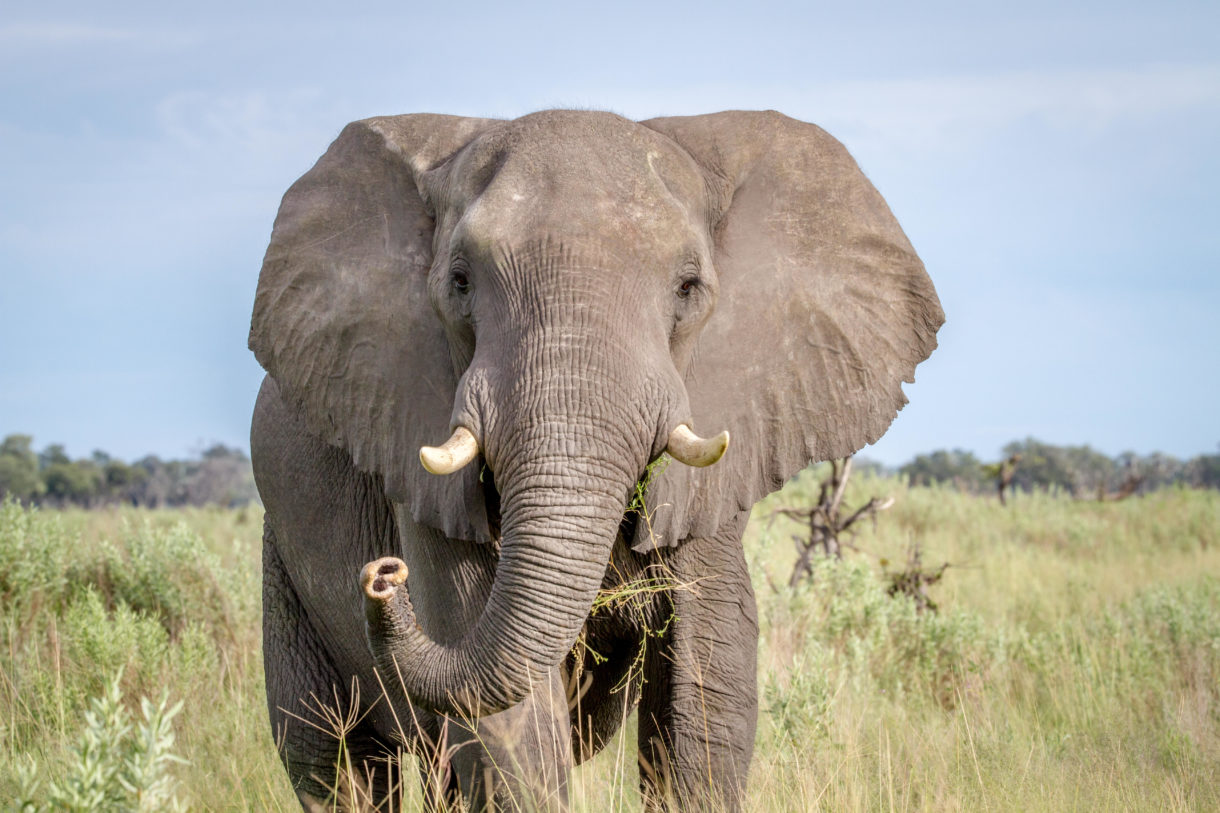
An African elephant in Botswana.Alamy Stock Photo4.2KSHARES

TheNew Yorkerbroke a story yesterday aboutthe head of the National Rifle Association, Wayne LaPierre, attempting to kill an endangered elephantin Botswana. The newly released footage exemplifies the blithe depravity of trophy hunting.

The video shows LaPierre’s botched attempt to kill an African elephant, then his struggling to follow a guide’s instructions for ending the animal’s pain. Multiple misplaced gunshots and the animal is still alive; over the course of nearly 10 minutes the elephant suffers an agonizingly slow and painful death.

The footage is hard to watch, and theNew Yorkerpiece captures some appalling details about the events, including LaPierre’s wife cutting off the tail of the elephant she killed as a trophy. But this one repulsive hunt is part of a much larger…

View original post 382 more words