The Iowa Department of Natural Resources advises spring turkey hunters to make sure you see an actual turkey before firing at it.
The second of five spring turkey hunting seasons for combination gun and bow licenses continues through Tuesday. DNR Conservation Officer for Washington and Keokuk counties Wes Gould says because turkey hunters are camouflaged while trying to lure the fowl closer with turkey calls, it can be misleading to other hunters, “Especially on public areas, but it can also happen on private property if more than one person has permission, is we’ll be sitting hunting turkeys and calling and we think we hear a turkey and get up and move towards that sound and unfortunately sometimes people get close enough, they think they’re right on top of that sound, but can’t see…
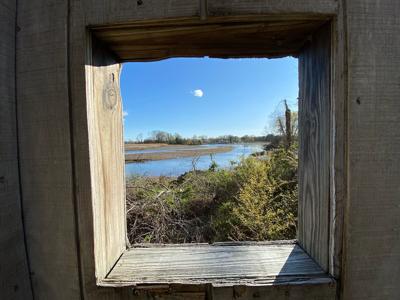
The complex includes the Elizabeth Hartwell Mason Neck, Occoquan Bay, and Featherstone National Wildlife Refuges. The USFW is inviting the public to review and comment on the draft plan for proposed hunts and fishing access.
The proposed plan includes:
Open fishing opportunities on non-motorized watercraft in designated areas of Occoquan Bay NWR, Mason Neck NWR and Featherstone NWR. Additionally, Featherstone NWR will also open fishing opportunities to motorized watercraft in designated areas.
Expanded deer hunting hours at Occoquan Bay NWR.
Open opportunities for mentored turkey hunting and mentored archery deer hunting on Occoquan Bay NWR.
Open fox and coyote hunting opportunities in conjunction with permitted deer hunt days at Occoquan Bay NWR.
Open waterfowl hunting opportunities in designated areas of Featherstone NWR.
A “hunt application/permit” (FWS Form 3-2439) will be required for hunting deer on E.H. Mason Neck NWR and Occoquan Bay NWR. No more than $10 application fee and $20 permit fee for deer and turkey hunts would be established to defray the costs of operation.
Deer hunt permit applications would most likely be administered by a contracted company that will feature online, mail, and telephone services to collect hunter information, required fees, and issue permits, the release said.
You can contact the refuge at 703-490-4979 to request more information. Submit your comments to the refuge by mail at 12638 Darby Brooke Court, Woodbridge, VA 22192 or by email at HuntFishRuleComments@fws.gov with the subject line of “Potomac River NWR Complex.”
The comment period will be open through the end of the 2021-2022 federal hunting and sport fishing regulations open comment period to be announced in the Federal Register, USFW said in a news release. Federal officials expect the comment period to be open through mid-June.
“Across the country, national wildlife refuges work closely with state agencies, tribes, and private partners to expand recreational hunting and fishing access,” the release said. “Hunting and fishing provide opportunities for communities, families, and individuals to enjoy the outdoors, support conservation efforts, and participate in a popular American tradition.”
UNION, SC (FOX Carolina) -On Saturday, dispatch said the Union County Sheriff’s Office responded to a hunting shooting accident that injured one person.
According to dispatch, a call came in at 9:27 a.m. for a shooting accident on Sardis Road and Hickory Nut Holler Road.
Dispatch said one person was injured and taken to to the hospital.
One of the options most ignored by respondents, as a possible way to reduce personal impact on the environment, was choosing to have fewer children. A commonly quoted estimate for annual emissions saved from having one less child dwarfs that of other actions, at 58.6 tonnes of CO2-equivalent emission, as featured in Environment Research Letters in 2017. Although some academics argue this is an overestimate, the Ipsos Mori survey responses suggest there is a lack of awareness around the potential impact having smaller families can have on the climate.
A generational knowledge divide was also highlighted in some of the results. Younger people were more aware of the environmental impact of having fewer children as well as the benefits of a plant-based diet, the results showed, while older populations placed more value in recycling. One of the most unexpected findings in the survey, considering the misperceptions, was that nearly 70 per cent of respondents believed they knew how to lessen their impact on the environment. People in Japan were least confident about how to lessen their carbon footprint, followed by Russia and also Saudi Arabia and South Korea, all countries with a relatively high dependence on fossil fuels. Chart has been updated to correct two countries’ responses. Follow @ftclimate on Instagram Climate Capital Where climate change meets business, markets and politics. Explore the FT’s coverage here
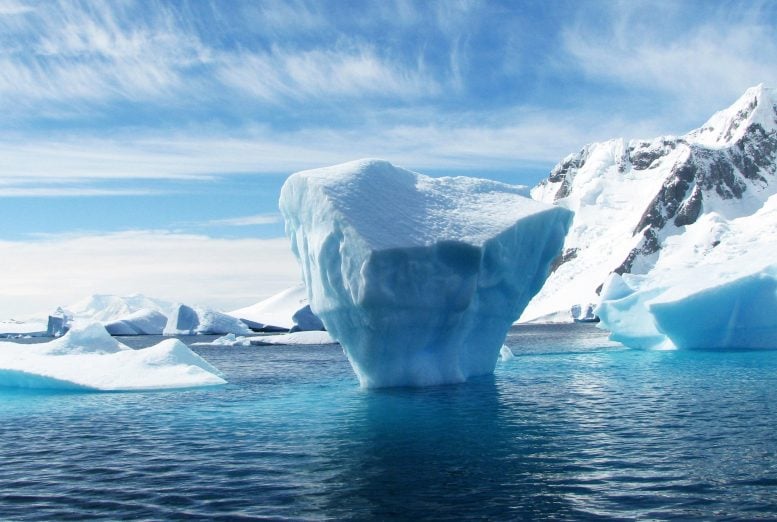
It is well known that climate-induced sea level rise is a major threat. New research has found that previous ice loss events could have caused sea-level rise at rates of around 3.6 meters per century, offering vital clues as to what lies ahead should climate change continue unabated.
A team of scientists, led by researchers from Durham University, used geological records of past sea levels to shed light on the ice sheets responsible for a rapid pulse of sea-level rise in Earth’s recent past.
Geological records tell us that, at the end of the last ice age around 14,600 years ago, sea levels rose at ten times the current rate due to Meltwater Pulse 1A (MWP-1A); a 500 year, ~18 meter sea-level rise…
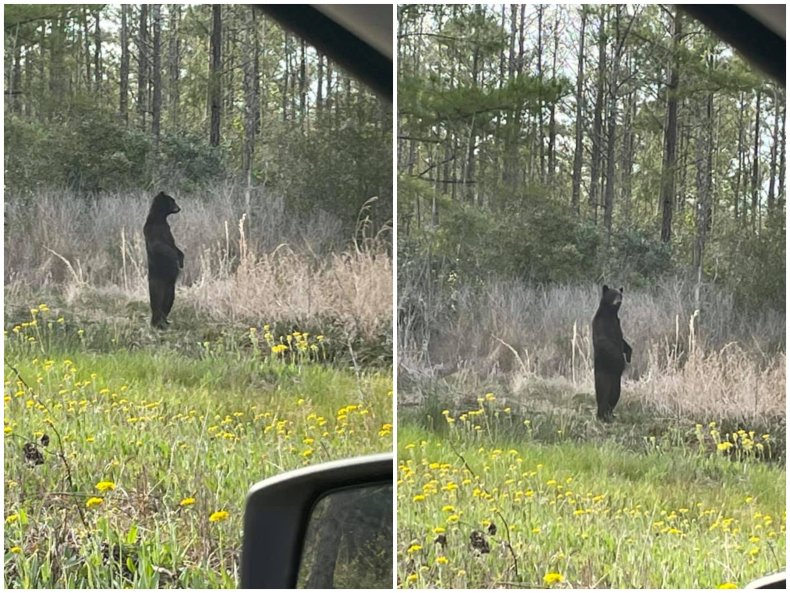
Two college students came across a black bear standing in a strangely human-like pose on Sunday in North Carolina.
Erin McAllister and her boyfriend Zachary Allen—both of whom are studying at East Carolina University—were exploring Pocosin Lakes National Wildlife Refuge in Hyde County in the hope of seeing some bears when the encounter occurred.
The couple were driving down a road in the refuge when they spotted the bear standing in the unusual position.READ MORE
While bears are known to stand on two legs, the couple said something seemed strange about its posture. Allen captured some eerie images of the bear, which McAllister then posted on Facebook.
“To be honest, when we both first saw it, we weren’t even sure it was real! It was standing so still and stoically,” McAllister told Newsweek.
“We had both never seen black bears in the wild before—but my boyfriend had seen some at the zoo in Grandfather Mountain, and could tell right away that the bear in that standing position seemed kind of unnatural and odd.”
The couple said they suspected the bear in question was relatively young, estimating that it stood at around five feet tall on its hind legs. According to McAllister, the animal stood “very still” as the couple slowly crept up towards it in their car on a dirt road.NEWSWEEK SUBSCRIPTION OFFERS >
“It was after a few minutes that I noticed a group of three similarly sized black bears run in front of our car, across from their side of the road, into the forest near the standing bear. Once this standing bear saw them—what we assume were friends, he quickly lowered himself back onto all fours, and ran off into the woods to meet them! We like to interpret this whole experience as the standing bear looking for his friends.”
McAllister said the bear stood in that position for close to 10 minutes, in total. She posted the strange images of the bear to a Facebook group called Carolina Critters, causing quite a reaction.
Several Facebook users commented that the animal looked like a man in a bear suit.
Meanwhile, one user, Brentley Norman, said: “Thought it was Bigfoot!”
Another user, Lisa Smoot Motley, said: “What great posture!! Some of the slouchy teenagers I’ve seen should take lessons!”
McAllister said the reaction to the pictures had been “overwhelming and exciting.”
“There are many people in this state who are passionate about wildlife, so it was no shock to me that they were as intrigued by the pictures as we were when we saw them in person.”
A black bear standing in the Pocosin Lakes National Wildlife Refuge, North Carolina.ZACHARY ALLEN/ERIN MCALLISTER
Independent Group Leader, Max Planck Institute for the Science of Human HistoryApril 17, 2021
Our species,Homosapiens, rose in Africa some300,000 years ago. The objects that early humans made and used, known as the Middle Stone Age material culture, are found throughout much of Africa and include a vast range of innovations.
A Utah man will serve three months in prison for the 2019 fatal shooting of a northern elephant seal in California.
Prosecutors said Jordan Gerbich, 30, was sentenced Monday for killing the animal while it rested on a San Simeon-area beach, NBC Newsreports.
He pleaded guilty in December to one count of illegally taking a marine mammal, according to areleasefrom the U.S. Attorney’s Office Central District of California.
Gerbich was living in The Golden State when he shot the seal in the head, using a handgun, on Sept. 28, 2019 after a drunken friend ordered him to kill an animal “as a kind of grotesque test,” his federal public defender…
The slander against the Netflix documentary Seaspiracy says a lot about fishing industry influence in marine science. We have somehow allowed the fisheries industry’s own scientists to define sustainable fishing goals — it’s a disgrace leading to an ecological nightmare.
The upwelling scrutiny around Seaspiracy deflects from the greater issues it raises. (Valery Sharifulin / TASS via Getty Images)
Our new issue, “Biden Our Time,” is out now. We discuss the last four chaotic years of US politics, what happened in November, and what to expect from the Biden administration. Get a $20 discounted print subscription today!
“Ocean QAnon,” “eco-fascism,” “self-indulgent vegan propaganda” — fishing industry scientists are angry about Seaspiracy, the new Netflix special topping charts around the world, which details the impact of industrial fishing on marine life and the complicity of certification labels and even some ocean conservation groups. The controversy swirling around Seaspiracy seems to center around statistics, but beneath the surface lurk deeper questions about industry influence in marine science.
Seaspiracy is not without its faults. Its interview style is abrasive. It has excessive animation. It makes a couple of statistical misinterpretations and several oversimplifications. Yet the film is mainly accurate and devastatingly detailed, provoking viewers around the world to question the industry values that have become integral to marine science orthodoxy: Why do we call fish populations “stocks”? What does it mean to call them “under-fished”? How do they calculate maximum sustainable yield? Is it really sustainable?
The academy’s response to Seaspiracy was swift, stern, and sloppy. Although allegedly leaked documents show that groups like the National Fisheries Institute were preparing a media response for weeks, the industry-funded Sustainable Fisheries, University of Washington’s fact-check page falsely claimed that one of the film’s source studies — estimating 20-32 percent of marine life imported to the United States was caught illegally — had been retracted. Ironically, they had to retract the claim. Sustainable Fisheries UW correctly questioned a sea turtle bycatch statistic, for which Seaspiracy repeated a mistake made on a Sea Turtle Conservancy white paper. Even though fisheries scientists tracked down the source study, they didn’t seem to read the abstract, which revealed that the near-global figure was misattributed to the United States. Instead, they attacked its credibility, revealing the modus operandi of fishing industry public relations.
It’s fair to say that Seaspiracy cited some studies that can be considered dated or disputed, but it also left out some of the most harrowing statistics published in recent years. The most current worldwide analysis estimated the bycatch of at least 8.5 million sea turtles in a seventeen-year period. Catch reconstructions show total fish hauls as peaking in 1996 and declining ever since, despite exponential industrialization and permeation of fishing fleets. A global investigation of navigation patterns estimated up to a quarter of fishing vessels may have forced labor on deck.
The most controversial statistic in the film is the projection of global crashes in commercially exploited fish populations by 2048. What the industry doesn’t mention is that they generated the controversy. Since the 2006 publication of “Impacts of Biodiversity Loss on Ocean Ecosystem Services” in Science magazine, industry groups have doggedly scoldedmediaoutlets for citing it. Professor Ray Hilborn, who founded Sustainable Fisheries UW, emerged as this study’s most prominent critic. A decade later, he would be exposed for not only receiving millions of dollars in seafood industry funding but failing to disclose it as a conflict of interest. While he did work with the author of the 2048 projection on a subsequent paper, this research didn’t correct or disprove its conclusions but rather cited them.
The lead author on both studies is a conservation biologist named Boris Worm, who said fisheries scientists’ cooperation on the second made him “somewhat more optimistic” but explicitly stated that the work “did not revisit the original projections.” When he finally did so in 2016, he clarified that updated models were less ominous but remained “sobering.” Hilborn nevertheless continues to crusade on behalf of industrial fishing, publicly advocating against marine reserves and providing testimony to lawmakers on the dangers of “under-fishing.” His foundation’s Seaspiracy response disputes four statistics out of more than one hundred, all of them by downplaying the degree of the problem and criticizing colleagues’ research, begging the question: Is the film full of errors, or does it just upset the industry?In essence, we have allowed fisheries industry scientists to define sustainable fishing goals, somewhat like allowing petroleum geologists to set emissions targets.
The enduring controversy over the 2048 projection is emblematic of a much deeper rift in marine science, between those who view fish as wildlife to be protected versus resources to be extracted — namely conservation biology versus fisheries science. While conservation biologists aim to restore fish populations, the explicit goal of fisheries science is to repress their recovery. The simplistic modeling formulae upon which modern fisheries science is founded defines the population level of maximum sustainable yield as half of a fish population’s carrying capacity. In theory, this strikes a balance between reproducing individuals and limiting factors where maximum population growth — and, conveniently, maximum profitability — will occur.
This means that when the UN Food and Agriculture Organization says that two-thirds of “fish stocks [are] within biologically sustainable levels” (disputed in itself), this means that most of these populations are at approximately half their historical levels, with the remaining third lower yet. Below 40 percent, populations are classified as overfished — in the United States, however, the threshold is 25 percent. Anything above 60 percent carrying capacity is defined as “under-fished.” This philosophy is not only markedly errant from fishing practices sustained for millennia by indigenous cultures but has become one of the greatest threats to their subsistence. In essence, we have allowed fisheries industry scientists to define sustainable fishing goals, somewhat like allowing petroleum geologists to set emissions targets.
However, fisheries scientists weren’t the only academics to decry Seaspiracy. While received rather differently by marine biologists around the world, these industry paradigms run deep in American academia. Sylvia Earle and Callum Roberts, the marine biologists Seaspiracy consults, represent marginalized ideologies and receive criticism for valuing fish as wildlife, as Dr Earle puts it, arguing that our goal should be to minimize, not maximize, their extraction. This advocacy got her locked out of meetings as the first female chief scientist at the National Oceanic and Atmospheric Administration, advising the regulatory body formerly called the National Marine Fisheries Service — now NOAA Fisheries — of which she says the “primary purpose is to serve the interest of commercial fishing.”
While the pointed message of the film has inspired a reflection on these values among average viewers, it seems that academic institutions, in fisheries science and marine biology alike, may be some of the last to consider them. At least that’s how I felt after a summer researching at UW.
“Looks like we’ll have another urchin-cracking party,” my principal investigator chuckled, planning another student’s study on urchin gonad contents. My eyes widened as I realized she was talking about “my” urchins, whose feeding behavior I was studying in tanks down the road. They were wild-captured giant red sea urchins — Strongylocentrotus franciscanus — the biggest species in the world. They can grow to twenty-one inches from spine to spine and live for perhaps two hundred years. Some of these urchins may have walked the seafloor below the bustling canoe fleets of the precolonial Salish nations. Many were likely older than me. I wanted to set them free but was hesitant to object, as this research project was a critical opportunity for me to build connections and obtain references for grad school.
As I loaded up the urchins near the dock, the marine lab’s program director approached me. I waved nervously. “Thank you,” she said, in her thick Senegalese accent. She told me of prestigious urchin researchers she’d seen in her career simply leave captured urchins in stagnating tanks to die in the sun. “Of course,” I replied. She must not have heard that there were other plans for them. As I reached the other side of the channel and cut the engine, I pulled out a plastic drum brush and began tickling the urchins’ tube feet until they let go. I leaned over the gunwale, placing them carefully in the water and finally came to my favorite — Houdini. I was never quite able to design an enclosure capable of containing that one.
Watching the little urchin slowly disappear into the depths of Puget Sound, I couldn’t help but smile, rediscovering what I had always known yet learned to forget: marine life is wildlife.
The upwelling scrutiny around Seaspiracy deflects from the greater issues it raises. Life on Earth began in the sea, and human life has always been bound to it. We must protect our ocean, using all strategies at our disposal, and collectively reclaim the authority to govern how it is treated from those who profit from its exploitation.