The Egg Industry Grapples With a Grim Practice: Chick Culling

NEWS & FEATURESPRINT

REPUBLISH

After the U.S. egg industry missed its own deadline to eliminate the practice, some wonder when change will ever come.

Visual: Edwin Remsburg / VW Pics via Getty ImagesBY JONATHAN MOENS03.15.20210 COMMENTS

EVERY YEAR, up to 7 billion day-old male chicks are tossed into shredding machines, gassed, or suffocated in plastic bags — a process known as chick culling. This grim ritual is underpinned by both biology and economics: Male chicks don’t lay eggs, and they fatten up too slowly to be sold as meat. Across the globe, culling has become the default strategy for the egg industry to eliminate the unwanted hatchlings.

“It is horrible. You see these puffy, newly hatched chicks on a conveyor belt,” headed toward a large blade that slices them “into a gazillion pieces,” said Leah Garcés, president of Mercy for Animals, an animal rights advocacy group in the United States. In recent years, local and international animal rights groups, particularly in France, Germany, and the U.S., have been ramping up pressure on governments and the egg industry to commit to ending the practice — particularly given technological innovations that allow producers to identify the sex of a developing chick before it hatches. The process is called in-ovo sexing, and such technologies, versions of which are already deployed in some countries, can obviate the need for live chick culling.herd of cows on grassland during daytime

RELATED

Can Biotechnology Transform the Cattle Industry?

Nearly five years ago, United Egg Producers, an agricultural co-operative whose members are responsible for producing more than 90 percent of all commercial eggs in the U.S., released a statement pledging to eliminate chick culling by 2020, or as soon as a “commercially available” and “economically feasible” technology became accessible. That pledge was negotiated with the Humane League, an animal rights nonprofit organization. But 2020 has come and gone, and while UEP’s pledge wasn’t legally binding, some egg industry leaders and scientists say there is little sign that the industry is anywhere near phasing in cull-free technologies that could still meet the colossal supply of more than 100 billion eggs produced every year in the U.S.

Part of the reason for the sluggish pace of change, critics say, is that the U.S. has been investing in and nurturing the development of sophisticated cull-free technologies that, while promising, remain expensive and could take several more years to develop, scale, and deploy across the nation — particularly given that the Covid-19 pandemic has shuttered labs and otherwise slowed the pace of innovation. Meanwhile, a method of in-ovo sexing of eggs is already being used in Europe — though some American stakeholders say that method, which involves creating a tiny hole in the eggshell with a laser, is sub-par, because it increases the risk of contamination. European developers dispute this, however, and as of this year, cull-free eggs are available in thousands of supermarkets in Germany, the Netherlands, Switzerland, and France with only modest additional costs to consumers and hatcheries.

What’s clear is that as the hunt for a solution drags on, the U.S.-based culling continues apace. “I don’t like false promises,” said Michael Sencer, executive vice president for Hidden Villa Ranch, a California-based food company that owns egg and dairy subsidiaries. Sencer expressed support for UEP’s pledge, but he acknowledged, “They’ve supported a number of groups that said they could come up with the technology and nothing has happened.”

UEP declined to be interviewed by Undark and instead provided a press statement highlighting its continued commitment to end culling. “We remain hopeful a breakthrough is on the horizon,” Chad Gregory, president and CEO of UEP, said in the statement.

Whether U.S.-based producers could be nudged by critics to explore existing technologies rather than pursue new ones remains unclear, but both animal rights groups and industry leaders agree that chick culling is not only cruel — it is wasteful. “I mean, name another industry where 50 percent of the finished product immediately goes to the garbage can,” said Jonathan Hoopes, president of Ovabrite, a Texas-based startup developing an in-ovo sexing technique. Incubating male eggs also takes up unnecessary space, energy, and money, making a solution to culling in the interest of both animal rights activists and egg producers.

“Forgetting the ethics of not killing all those birds, look at the money saving,” said Sencer, who estimated that the industry could save billions of dollars with the right technology. “It’s mind-boggling.”


SINCE THE 2016 statement, the largest funding initiative to eliminate chick culling has come from the Foundation for Food & Agriculture Research (FFAR), which launched the “Egg-Tech Prize” — a public-private research initiative that provides funding for scientists and startups seeking to develop in-ovo sexing technologies — with Open Philanthropy in 2019. Deploying such a technology would not only make chick culling obsolete, it would also allow the industry to repurpose unwanted male eggs for food, animal feed, or vaccine development.

In November of 2019, FFAR announced six finalists who received more than $2 million in total seed funding to develop sex identification technologies. Phase II of the competition will award up to $3.7 million for a single working prototype.

Animal rights groups and industry leaders agree that chick culling is not only cruel — it is wasteful.

According to Tim Kurt, FFAR’s scientific program director, the deadline for submissions has been pushed back due to Covid-19 delays and is now scheduled for spring 2022. However, the foundation could also decide not to fund any of the teams if they are not satisfied with the timeline. That’s a prospect Tom Turpen, a contender for the prize, says is a real possibility, especially given that at least some of the teams — his included — have experienced setbacks since the start of the pandemic. With travel restrictions and university laboratories shut down, access to data, equipment, and supplies has made it harder for teams to make progress on particular aspects of their projects, says Kurt.

Finalists, who were awarded between $396,000 and $1.1 million dollars each include startups and research laboratories with big, out-of-the-box ideas. This includes Orbem, a German startup that sexes chicks by combining high-speed scanning of eggs with AI technology, and SensIT Ventures, Inc., a California-based company, which Turpen heads, that uses a microchip to sex chicks by identifying gases emitted by eggs early in development. The selection team specifically funded projects that could potentially upend the egg industry, says Kurt.

The technologies that were selected have “the potential to really transform the industry,” said Kurt, who was involved in the selection. “They might be a bit higher risk, but if they were successful, and our funding could help them become successful, they would really be the most ideal solution.”

For all of Undark’s coverage of the global Covid-19 pandemic, please visit our extensive coronavirus archive.

Kurt and other industry leaders are optimistic that some of these technologies will help eliminate chick culling in the near future, but others are less hopeful. Changing current practices, Sencer said, would require “billions of dollars of investment in new equipment. And it’s just not going to happen [quickly], it’s happening slowly.” Sencer added that he predicts the technology may be scalable towards the end of the decade.

Even researchers competing in the Egg-Tech Prize themselves admit that, while a sexing technology may be on the horizon, cull-free eggs won’t be scalable for at least two more years. Turpen says the biggest obstacle lies in developing a technology that is not only capable of rapidly and accurately sexing chicks, but is also readily affordable to consumers and hatcheries across the nation.

“You could do a lot of things to identify the sex of the egg. That’s not the point. The point is: Can you do it and still have eggs people can afford to eat?”

To avoid a surge in costs that would inevitably arise from suddenly adopting a new mode of production, Turpen says a more likely and more reasonable path to scaling this nationally would be a slow and incremental process. “The adoption and replacement of existing equipment — that’s going to look more like making the coal industry go away.” That industry “is going away,” Turpen said, “but it’s going to be a long time.”

Other researchers in the Egg-Tech Prize have also made it clear that an all-encompassing solution to culling is not around the corner. Benjamin Schusser, whose research with colleagues at the Technical University of Munich turned into the spin-off company, Orbem, declined an interview, saying “we don’t want to awake[n] hope that there is a solution almost ready for market.” Pedro Gómez, the CEO and co-founder of Orbem said in a 2019 interview with Germany’s Federal Ministry for Economic Affairs and Energy, that they hope to “classify one billion eggs per year by 2025.”

While a sexing technology may be on the horizon, cull-free eggs won’t be scalable for at least two more years.

Given the mismatch in expectations, some are baffled by UEP’s ambitious commitments to stamping out culling. Hoopes says the industry has made similar pledges in the past and they failed to yield tangible results.

But David Coman-Hidy, president of the Humane League, considers the progress in research and development since 2016 a “major win,” and credits the UEP pledge with heightening awareness about a cruel and largely unheard-of practice while bolstering innovation in in-ovo sexing technologies. In fact, the Humane League saw the 2020 goal as somewhat flexible, says Coman-Hidy. “Back then, it was such early days, we didn’t know how quickly or how many companies would get involved or what the research would look like.”


MEANWHILE, COMMERCIALLY VIABLE, in-ovo sexing technologies already exist in Germany and France. And Germany is poised to become the first country to ban industrial culling of male chicks, after the government approved a draft law to end the practice from 2022 onwards.

Currently, a company based in Germany and the Netherlands called respeggt GmbH uses in-ovo sexing by creating a tiny hole into the egg using a laser, extracting fluids, and sexing the chick by testing for specific hormones, explains Kristin Hoeller, head of business development and public affairs for respeggt. The technique, known as Seleggt, is based on research by scientists at the University of Leipzig and further developed in collaboration with REWE, a German supermarket chain, and HatchTech, a Dutch technology company specializing in incubation and hatchery equipment.

The method can sort chicks on the ninth day of development, when it is “exceptionally unlikely” that chick embryos experience any sensations whatsoever, David Mellor, professor emeritus of animal welfare science and bioethics at Massey University in New Zealand, wrote in an email. This is a crucial detail given that chick embryos have the capacity to experience pain at later stages of development. A procedure that might cause harm, such as using the male egg for food or vaccine development, may simply be shifting the cruel practice to an earlier stage, says Peter Singer, an animal rights advocate and professor of bioethics at Princeton University.

“The adoption and replacement of existing equipment — that’s going to look more like making the coal industry go away,” said Turpen.

Using this method, respeggt now has cull-free eggs in more than 6,000 supermarkets across France, Germany, Switzerland, and the Netherlands, with hopes to expand further. They have also devised a ready-to-implement business strategy for producing commercial cull-free eggs. Hatcheries won’t have to invest anything, Hoeller said. Instead, costs will be passed onto centers where eggs are packed into cartons for commercial distribution. These packing stations will have to pay a license fee of around 2 Euro cents, about the same in U.S. currency, per egg. While respeggt plays no role in how supermarkets price eggs, the cost to consumers ranges between 2 and 5 Euro cents more per respeggt egg than regular ones.

Many U.S. experts, however, are concerned that creating a hole in the eggs could pose a serious food safety risk, given that it increases the chances of contamination from external sources. “It’s a risk that I think the industry would rather not take,” said Turpen. Kurt echoes this, saying that all finalists explicitly use non-invasive techniques to avoid this possibility. Focusing on non-invasive techniques also means they can be more easily repurposed for other scientific endeavors, such as vaccine development, he adds.

Hoeller disputes the suggestion that their technology poses an infection risk. “The perforation of the eggshell with the laser has no negative results at all,” she said, adding that the hole is so small it actually closes itself naturally within 30 minutes.

To be sure, some animal rights groups suggest that quibbling over a technological solution distracts from what they see as the real problem at hand: the egg industry itself. “Instead of putting a Band-Aid on a Band-Aid on a Band-Aid and trying to fix all these problems with more technology and more technology, here’s another idea: Why don’t we do plant-based eggs?” said Garcés. She and other animal rights activists point to food waste, animal suffering, and health-associated costs as reasons to divest money away from the egg industry to support companies that produce plant-based alternatives.

Short of that, though, other non-invasive egg sexing technologies have also been developed in Europe. Prior to the coronavirus pandemic, and amid pressure by the French government to ban culling by the end of 2021, Carrefoursupermarkets planned to launch their first round of cull-free eggs on May 1, 2020. However, experts note that this technology sexes chicks on the 13th day of development, a period where the chick fetus may experience pain. Anticipating these criticisms, the German company behind this technology, Agri Advanced Technologies GmbH, a subsidiary of EW Group, is currently developing another technology aimed at determining the sex of chicks on the fourth day of development.

While imperfect, Hoopes suggested that the existence of viable, up-and-running technologies in Europe raises questions about why the U.S. is taking a slower, more ambitious approach. But other experts speculate that the technologies being pursued in the U.S. may ultimately prove cheaper and more flexible in the long run. “You would think the simplest method of doing this would be the best,” said Singer. “But maybe for very large producers, the investment is worth it. Maybe it pays off in saving labor costs or other costs.”

At this point it’s not clear what the best strategy to eliminate culling is yet, says Singer, but he believes there is a moral imperative to at least try and stamp out the practice from hatcheries around the globe. It’s also important to continue to pressure the industry to change, he said, but change will require not only perseverance, but patience. “These things,” he said, “will take some time.”

Hubble Finds Earth-Sized Planet That May Be on Its Second Atmosphere

Exposing the Big Game's avatarThe Extinction Chronicles

TOPICS:AstronomyAstrophysicsExoplanetHubble Space TelescopeNASASpace Telescope Science Institute

By SPACE TELESCOPE SCIENCE INSTITUTE MARCH 13, 2021

Earth Sized, Rocky Exoplanet GJ 1132 b

The Earth-sized exoplanet may have lost its original atmosphere but gained a second one through volcanism.

Orbiting a red dwarf star 41 light-years away is an Earth-sized, rockyexoplanetcalled GJ 1132 b. In some ways, GJ 1132 b has intriguing parallels to Earth, but in other ways it is very different. One of the differences is that its smoggy, hazy atmosphere contains a toxic mix of hydrogen, methane and hydrogen cyanide. Scientists usingNASA’sHubble Space Telescopehave found evidence this is not the planet’s original atmosphere, and that the first one was blasted away by blistering radiation from GJ 1132 b’s nearby parent star. The so-called “secondary atmosphere” is thought to be formed as molten lava beneath the planet’s surface continually oozes up through…

View original post 1,415 more words

Biden’s meeting with “the Quad,” a new alliance to counter China, explained

A decade-old idea — a four-nation group to curb China’s aggression — is about to have a big moment.By Alex Ward@AlexWardVoxalex.ward@vox.com  Mar 12, 2021, 8:30am EST

Share this story

President Joe Biden at the White House on March 10. He’s set to meet with other leaders of the Quad — Japan, Australia, and India — on Friday.

When President Joe Biden meets virtually with the leaders of Japan, India, and Australia on Friday, he’ll be doing much more than joining a routine gathering of nations. He’ll be showcasing the growing importance of an informal alliance of those four countries to counter China, known as “the Quad.”

The Quadrilateral Security Dialogue, an idea formed in the aftermath of the devastating 2004 Indian Ocean tsunami, has never had its heads of government meet before. And despite 14 years of trying to making it an effective forum to coordinate policy in the Indo-Pacific, it rarely did much of substance.

But Friday’s session is set to change that.

Senior administration officials said the Quad will announce an “historic” and “unprecedented” financing agreement to help India, the world’s second-most-populous country, produce 1 billion vaccines by 2022. Nikkei Asia on Wednesday noted the group plans to build a supply chain of rare-earth minerals that could erode China’s dominance in the making of products such as smartphones and batteries for electric vehicles. And multiple sources say the four nations will, for the first time, release a joint statement about their shared vision for regional cooperation.

The presidential-level meeting and these moves, then, “is a declaration that the Quad is here to stay,” said Tanvi Madan, an expert on the group at the Brookings Institution.

But the group’s newfound prominence isn’t without controversy. Beijing views it (understandably) as expressly designed to thwart China’s economic and military aims.

While most experts see it that way, too, no member state — including the US — will outwardly say concerns about China animate the Quad. Instead, they claim it exists for like-minded democratic nations to improve the lives of millions in the region and maintain the geopolitical status quo.

State Department spokesperson Ned Price, for example, told reporters this week that the group deals with “urgent challenges” but wasn’t “about any single competitor.”

What happens on Friday will thus impact the future of both America’s engagement in the Indo-Pacific and US-China relations. The expectation is Biden and his counterparts will solidify the Quad’s place in those futures.

“For the United States, this is a big buy-in,” said Sheila Smith, a senior fellow for Japan studies at the Council on Foreign Relations (CFR) in Washington, DC. “This is a pretty significant statement of American intent to build with these countries a framework for the region going forward.”

Sign up for The Weeds newsletter

Vox’s German Lopez is here to guide you through the Biden administration’s unprecedented burst of policymaking. Sign up to receive our newsletter each Friday.

What is the Quad?

The Quad was born out of tragedy and necessity.

In December 2004, a 9.1-magnitude earthquake struck the Indian Ocean off the coast of Indonesia, unleashing the deadliest tsunami in recorded history. Around 230,000 people were killed by the earthquake and tsunami in a matter of hours. Its effects were felt mostly in Indonesia but also as far away as eastern Africa. The event caused an estimated $10 billion in damages worldwide, making it one of the worst-ever humanitarian catastrophes.

“Basic infrastructure like shelter, medical capacity, transportation routes, emergency services, power, communication, and sanitation were lost,” the Center for International Maritime Security noted in 2016.

Armed forces from the United States, India, Japan, and Australia all pitched in to help with the response and even worked together in what was known as the Tsunami Core Group. That coordination cell was effective and proved the concept of quadrilateral cooperation. But after all the ships and helicopters returned to their bases, there was no real follow-up to turn the four-way partnership into something longer lasting.

US Navy sailors fill jugs with purified water on January 4, 2005, to support the humanitarian response after the 2004 tsunami and earthquake.

Then, in 2007, Japanese Prime Minister Abe Shinzo was talking with aides about how to turn his more hawkish foreign policy views into actual policy. One way to do that, CFR’s Smith told me, was “to put values diplomacy at the center of [Japan’s] thinking about working with partners in the region.” Plus, it’d be good if strong democracies banded together to keep the Indo-Pacific free and open for trade, among other things.

The Japanese government recalled the success of the four-nation tsunami team and considered that a potential model for such a group.

A flurry of discussion led to some progress in 2007 as the nascent Quad held one military drill and round of dialogue. But after China sharply criticized the group’s formation, Australia (and also India, some say) got cold feet and withdrew from the four-nation team in order to maintain good relations with China.

Abe’s Quad dreams were thus crushed and remained so for 10 years.

“You have to remember that this was a different period in how these countries thought about relations with China,” Smith told me, noting they hoped to engage Beijing and thereby encourage it to become a more responsible player on the world stage. “Flash forward a decade, now we have very different thinking about Chinese power.”

Confrontation, not cooperation, with China became the preferred approach in Washington, ushered in partly over the last four years by former President Donald Trump.

In November 2017, the Trump administration revived the Quad idea with their foreign counterparts. The four nations said they’d work together to patrol regional waterways where China was acting aggressively, such as in the South China Sea. That led some commentators and Chinese officials to speculate they were witnessing the embryonic stages of an “Asian NATO,” a reference to the North Atlantic Treaty Organization, which began as a military alliance to counter the Soviet Union in Europe.

The Quad’s members shut down any talk of that nature, releasing public statements that never cited China’s rise for the Quad’s return. “The discussions focused on cooperation based on their converging vision and values for promotion of peace, stability and prosperity in an increasingly inter-connected region that they share with each other and with other partners,” a statement from India’s Ministry of External Affairs read at the time.

But experts are nearly unanimous that the Quad rides again because President Xi Jinping has turned China into an openly antagonistic power. Among other things, he’s solidified control over the supply chains of key industries, and harassed neighbors at sea for territorial and energy gains.

China has also gotten into a deadly fight over a disputed border with India, started a trade war with Australia, hacked the US government, and for years used its might to push Japan around on economic and military matters.

The animating idea behind the Quad, then, is that all four nations have a better chance of curbing China’s aggression together than apart. How exactly to confront Beijing, though, was the group’s long-unanswered question. “Quadrilateral cooperation was always a beautiful opportunity in search of a genuine agenda,” said Eric Sayers, an expert on US-China relations at the American Enterprise Institute.

Officials from the group have met at least seven times since 2017, but always below the presidential or prime ministerial level, to discuss concerns ranging from China’s trade practices to its growing military power. And last November, warships and warplanes from the four nations met for the Malabar military training exercise in the Indian Ocean, the greatest show of strength by the Quad members to date.

Then-Secretary of State Mike Pompeo during a meeting of the Quad in October 2020. 

But despite various meetings and statements supporting the Quad, it wasn’t really doing more than maritime training and expressing the need for broad cooperation, experts said. The best some could say was that the group brought the nations closer together and made the idea of a four-way framework in the Indo-Pacific more palatable.

The Quad, then, was a fine venue for the nations to interact, but mostly toothless.

Toothless, that is, until now.

The Quad’s Friday meeting is a major rollout for the group

A common thread in Biden’s foreign policy is the belief that solving big problems requires the US to work with allies and partners. Confronting China is one such challenge, and the Quad serves as a ready-made way to do just that.

The new administration isn’t “looking to Quad allies just for appearances,” said Sameer Lalwani, director of the South Asia program at the Stimson Center. “It’s about real burden sharing” among “the biggest countries, largest economies, maritime powers with real naval capabilities, and democracies.”

The two expected outcomes of Friday’s meeting are cases in point. India’s billion-plus population needs help to manufacture and distribute coronavirus vaccines. Instead of turning to China for that, the Quad’s three other nations are prepared to offer financial assistance.

“Something like the vaccine initiative will be the Quad’s most prominent, tangible outcome in some ways,” said Brookings’s Madan. It also has the “added benefit of saying to the region that this isn’t just about China.”

“It’s proof of concept for the Quad,” she added.

China also produces around 60 percent of the world’s rare-earth minerals, which has both Republicans and Democrats calling for the US to challenge Beijing on that front. If China continues to mine and refine most of the world’s rare earths, it will have a greater say in the future of telecommunications, green technology, and other important industries of the future that rely on these elements.

Part of Biden’s platform is to modernize America’s economy to compete with China in those sectors, which requires loosening Beijing’s grip on the rare-earths supply chain. That’s a massive challenge, but one made easier with big countries like India, Japan, and Australia willing to help, experts say.

In addition to potential movement on climate-related matters, there’s also an expectation that the four nations will release a joint statement, the first such statement of its kind for the Quad. Stimson’s Lalwani said such a united effort, while pro forma, would show the Quad is seen now as an important multilateral group, not just some side project.

“The Quad’s trajectory is clearly upward,” he said.

Chinese Foreign Minister Wang Yi during a press conference on March 7. He’s been critical of the Quad.

That portends potential trouble with China, and Beijing has already made its displeasure with the group’s rise known.

Last October, Chinese Foreign Minister Wang Yi said, “What [the Quad] pursues is to trumpet the Cold War mentality and to stir up confrontation among different groups and blocs and to stoke geopolitical competition.” That’s more heated rhetoric than he used back in 2018, when he called the concept of the Quad “sea foam” because it would soon dissipate.

But the Biden administration isn’t cowed and has stated emphatically that the Quad is a central part of its plans. The group is “fundamental, a foundation upon which to build substantial American policy in the Indo-Pacific region,” National Security Adviser Jake Sullivan said during a January event at the US Institute of Peace.

That’s the right outlook, most experts told me. “If China was behaving fine, you wouldn’t see these countries engage on these things,” said Madan.

After Friday’s meeting, then, it’s likely the Quad will have officially moved from a fringe idea into a centerpiece of four nations’ designs for the region, one that could bring China to heel.

“The goal here is basically to introduce the Quad as a new feature of regular diplomacy in the Indo-Pacific,” a senior administration official told Reuters this week.

Montana considering series of new bills to expand trapping and killing of wolves, bears

Exposing the Big Game's avatarCommittee to Abolish Sport Hunting Blog


by Vanessa Perez KECIFriday, March 12th 2021AA

https://local12.com/news/nation-world/montana-considering-series-of-new-bills-to-expand-trapping-and-killing-of-wolves-bears-endangered-wildlife?fbclid=IwAR2gcbkOJl2PhIZL1z2Dc2QppVrWcu4IG3f6_bkNdmfXDHQ6LFxpWW5EZPM

Montana considering series of new bills to expand trapping and killing of wolves, bears (KECI)https://imasdk.googleapis.com/js/core/bridge3.446.1_en.html#goog_2027329204Volume 90% Montana considering series of new bills to expand trapping and killing of wolves, bears (KECI)

Facebook Share Icon

Twitter Share Icon

Email Share Icon

KALISPELL, Mont. (KECI/WKRC/CBS) – Activists say populations of endangered wildlife in Montana may be at risk as the state considers a series of legislative bills that set out to expand trapping and hunting regulations.

Wildlife officials say there are approximately 900 to 1,100 wolves roaming in Montana. The state Senate recently passed two bills that would change how wolves are managed.

Senate Bill 314, introduced by State Sen. Bob Brown (R-Thompson Falls), aims to change laws related to hunting wolves.

“The opposition keeps going to I’m authorizing hunting at night and unlimited tags and everything else. If you look in the bill it says the commission may do that,” Brown said.

The bill aims to reduce the wolf population to a sustainable level, which translates to eliminating…

View original post 471 more words

Police seize hundreds of roosters in illegal cockfighting investigation

By 9News Staff8:44am Mar 12, 2021https://imasdk.googleapis.com/js/core/bridge3.446.1_en.html#goog_392972310Play VideoPolice seize hundreds of roosters in illegal cockfighting investigation

https://www.9news.com.au/national/police-seize-hundreds-of-roosters-cockfighting-investigation/34bf69a8-a4a6-4194-adb8-f5d7e49b7f55

Police and RSPCA inspectors have seized 540 roosters in Sydney as part of an investigation into an illegal cockfighting ring.The birds were confiscated after a raid on a property at at Horsley Park in the city’s west yesterday.Authorities found more than 540 fighting cockerels, roosters and chickens, as well as cockfighting paraphernalia.READ MORE:Koala survives attack that left her with horrific injuries

NSW Police and RSPCA inspectors seized hundreds of roosters during the raid. (NSW Police)

A crime scene was set up and will be maintained at the property today while RSPCA inspectors safely remove the animals.A man was detained by police and spoken to at the property before being released.The operation was part of an extensive police investigation into animal cruelty offences in Sydney’s south-west.

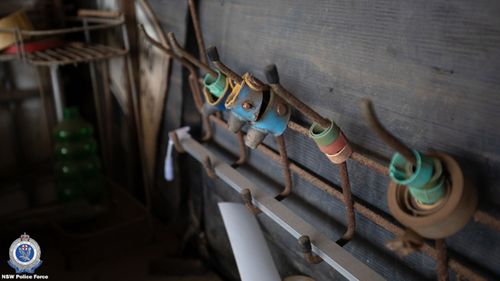
Illegal cockfighting equipment was found during the raid in western Sydney. (NSW Police)

YOU MAY ALSO LIKERecommended by4 Steps to Government Security: Investigate, Monitor, Analyze, Act.SPONSORED | SplunkLimited Time Offer – Bloomberg.com For Just $1.99SPONSORED | Bloomberg.com[Pics] Ancient Infant’s DNA Changes What We Know About North American HistorySPONSORED | EliteHeraldOn December 13 last year a police found a designated cockfighting area and several large sheds used to house 71 fighting cockerels, as well as metal spikes, spurs and other cockfighting paraphernalia at a property in Catherine Field.Police also seized $107,170 cash and several electronic devices from the premises.The animals were taken by RSPCA inspectors, with several requiring veterinary care for serious injuries.

Illegal cockfighting equipment was found during the raid in western Sydney. (NSW Police)

A 56-year-old man was taken into the custody of the Department of Home Affairs over his visa status, while 34 men were detained at the scene.The 34 men are next due to appear in court on April 1 over animal cruelty charges.Anyone with information should contact CrimeStoppers on 1800 333 000 or at CrimeStoppers.com.au

5 people share their Pfizer and Moderna vaccine side effects, from arm pain to aches and fevers

Exposing the Big Game's avatarThe Extinction Chronicles


https://www.businessinsider.com/covid-19-vaccine-side-effects-moderna-pfizer-2021-2

    Hilary BrueckMar 11, 2021, 1:14 PM

    Haydon_first_dose
    Ian Haydon was one of the first people to try out Moderna’s COVID-19 vaccine, as part of the company’s phase-one trial, with first and second doses administered in April and May.

    • COVID-19 vaccines may come with some temporary and uncomfortable side effects.
    • Some of the most common include arm pain, flu-like symptoms, and a red rash.
    • Most of these symptoms fade away after a day or so, but the rash can linger for about a week.
    • Visit the Business section of Insider for more stories.

    https://b5447ae417477ba1cf3ce92ce0a96ae4.safeframe.googlesyndication.com/safeframe/1-0-37/html/container.html

    After receiving her second shot of Moderna’s COVID-19 vaccine, Susan Ladov hardly slept a wink.

    “I spent the night waking up about every hour, hour and a half,” the 74-year-old from New Jersey said. “When I got up out of bed, I just felt very shaky and chilled.”

    Her 75-year-old husband, who had gotten the…

    View original post 1,385 more words

    Letter: “Ban traps on public lands.”

    Exposing the Big Game's avatarCommittee to Abolish Sport Hunting Blog

    3/12/21

    No matter how much pro-wildlife people plead with politicians to ban the tortuous, barbaric steel trap, nothing will change until we get serious about stopping Public Lands Ranching.

    Since the 1800’s , the livestock industry has opposed wildlife preservation & ecosystem protection– it also contributes to Climate Change and water depletion.

    This environmentally-destructive industry is responsible for the slaughter of millions of coyotes, bobcats, mountain lions , prairie dogs, wolves, hawks, native wild horses & other animals . They have an arsenal of weaponry at their disposal: steel traps, snares, M-44’s, Compound 1080, on National Forests, wilderness, state lands. Grazing could not survive without these weapons against Nature. They receive millions of federal subsidy dollars to do it!

    Wildlife groups: it is time to take this industry on—wildlife, ecosystems don’t have much time.

    Rosemary Lowe

    Santa Fe, NM

    View original post

    No evidence Covid leaked from a lab but probably emerged from wildlife trade, say WHO scientists

    Pandemics threat must be treated with same seriousness as terrorism, warn experts

    Jane Dalton@JournoJane1 day ago 5 comments

    https://www.independent.co.uk/news/world/asia/covid-cause-lab-evidence-wildlife-trade-b1815915.html?fbclid=IwAR0wLd5AygEnM06vxA8m9GLeVig5zlyQ6ZrIWoDmIcHsKb5c-XpbozNZaCA

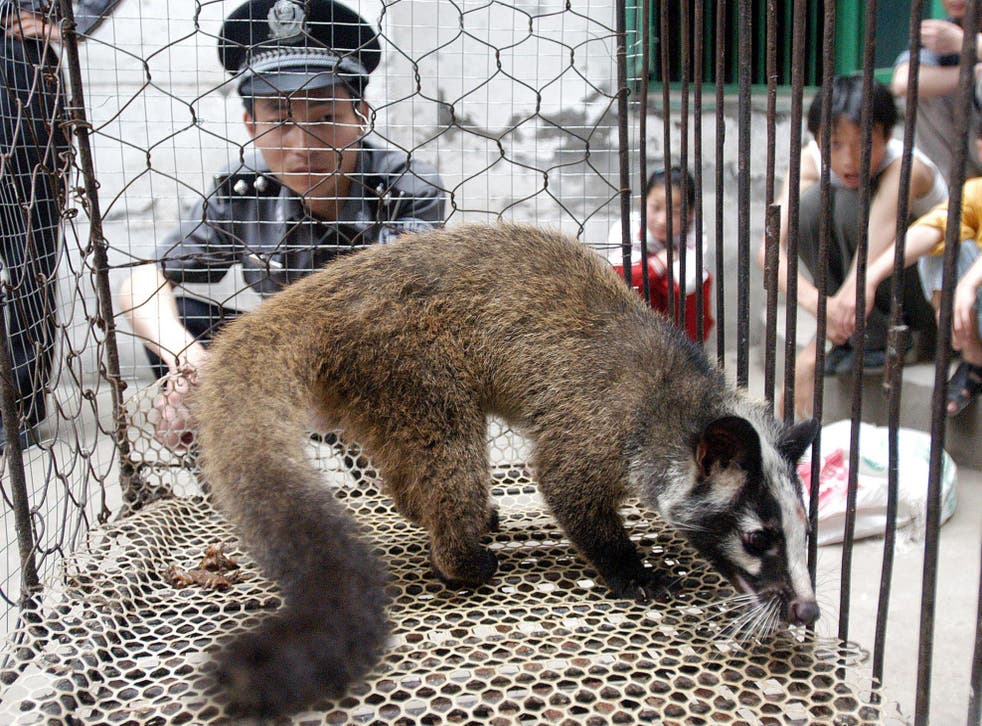
    The experts believe the virus probably crossed from wildlife into farmed or domesticated animals in the Wuhan market, and from there to people
    The experts believe the virus probably crossed from wildlife into farmed or domesticated animals in the Wuhan market, and from there to people (AFP via Getty Images)

    https://buy.tinypass.com/checkout/template/show?displayMode=inline&containerSelector=.above-article-prompt-donations&templateId=OT5K0SE6GQ3U&offerId=fakeOfferId&showCloseButton=false&trackingId=%7Bjcx%7DH4sIAAAAAAAAAFWQy26DMBBF_8VrggDz3qEWtU0rkSopSrpzyATMwyBjA03Vf69BSavMbubcM4v7jQg9oRBt44vzECWHrzXSUEdySCmMLzOpGu_SMBMHtBldUWeKw9QBp8AyWBLxPt6vcfr2_BildzSeIJOCtmyJmb7hDRxLWa0MNZY0M3qWsgRxzMuyoGcOQXvnR9mf3BftuIOmq4mAz8BPsBcd4s3GdbEyCtLfGAoFl6Ahcd0XOdk5r8Y2dp_e8Qf6ZynhlDAxR5isaw1lpOkIzVl_Owy0pwtHw-raw7G0uT1ZY6Ue0U4RF-umbemW4enYVkfZA49yYEKx0zjXJUSNQtM1HQ_7OAh-fgGiOFSqdAEAAA&experienceId=EXEXJ3VLHDAV&widget=offer&tbc=%7Bjzx%7D0hRl93QRmnQWEMayU4HVECNTirPe62qePhDM8ZA03-tKIBO2aJ-CUudwgTb8BGWxDznyWfY0j_DZOiWsb9e3Xg&iframeId=offer-0-aIrrr&url=https%3A%2F%2Fwww.independent.co.uk%2Fnews%2Fworld%2Fasia%2Fcovid-cause-lab-evidence-wildlife-trade-b1815915.html%3Ffbclid%3DIwAR0wLd5AygEnM06vxA8m9GLeVig5zlyQ6ZrIWoDmIcHsKb5c-XpbozNZaCA&parentDualScreenLeft=0&parentDualScreenTop=0&parentWidth=1139&parentHeight=537&parentOuterHeight=607&aid=SEz5CAOYyJ&tags=article&contentSection=News&contentAuthor=Jane+Dalton&contentCreated=2021-03-12T00%3A22%3A03Z&pageViewId=km7zmn139imw6tlc&visitId=v-km7zmn1bj4r4x2wk&userProvider=publisher_user_ref&userToken=&customCookies=%7B%22_pc_show_register_prompt%22%3A%22true%22%7D&hasLoginRequiredCallback=true&width=624&_qh=182fb92b9c

    World Health Organisation (WHO) scientists say they have found no evidence that Covid-19 leaked from a Chinese laboratory, and instead it was probably caused by the wildlife trade.

    The four WHO experts who carried out a month-long investigation in China insisted there was nothing that proved the disease was deliberately developed.

    And they called for the threat of pandemics to be treated with the same seriousness as terrorism after the 11 September 2001 attacks.

    Read more

    The scientists said in a Chatham House briefing that they found links between the live-animal market in Wuhan, where people first fell ill, and regions where bats had viruses.Apes At San Diego Zoo Receive COVID-19 Vaccinehttps://imasdk.googleapis.com/js/core/bridge3.446.1_en.html#goog_1418780697

    Peter Daszak, a zoologist and president of EcoHealth Alliance, which works to prevent pandemics, said: “There was a conduit from Wuhan to the provinces in South China, where the closest relative viruses to [the coronavirus] are found in bats.”

    Dr Daszak said the wildlife trade was the most likely explanation of how Covid-19 arrived in Wuhan.

    The WHO scientists and their Chinese counterparts considered the most likely explanation was that the virus crossed into domesticated or farmed animals, he added.Please enter your email addressPlease enter a valid email addressPlease enter a valid email addressSIGN UPI would like to be emailed about offers, events and updates from The Independent.Read our privacy notice

    The world will find out “fairly soon, within the next few years” what started the pandemic, he predicted. It typically takes many years to pinpoint the animal reservoir of outbreaks.

    The team are due to release a report next week on the initial conclusions of their mission to Wuhan.

    Read more

    Marion Koopmans, head of viroscience at University Medical Centre Rotterdam, said they visited the three laboratories closest to the Huanan market in Wuhan, and scrutinised their protocols and research, among other issues.about:blankabout:blankhttps://bd45e420140dbb8b103b0796f2feb7dd.safeframe.googlesyndication.com/safeframe/1-0-37/html/container.htmlhttps://bd45e420140dbb8b103b0796f2feb7dd.safeframe.googlesyndication.com/safeframe/1-0-37/html/container.htmlSkip in 5about:blank✕Skip in 5about:blank

    “We concluded that it’s extremely unlikely there was a lab incident,” she said.

    China has faced claims that the Wuhan Institute of Virology could be the suspected source of the Covid-19 virus.

    Dr Daszak called for the threat of pandemics to be treated with the same seriousness as terrorism after the 9/11 attacks. and working out where the next ones are going to come from and what it might be, whereas we do that with hurricanes and typhoons and all the rest of it,” hesaid.

    He added: “After 9/11, we put in place a mechanism to track every single phone call into the US, and the minute there’s a rumour on the web or on these phone calls of an attack, the network is disrupted prior to the attack.

    “That’s the kind of change or shift in thinking we need for pandemics, I believe.”

    Dr Daszak said: “Let’s look at where wildlife are interacting with livestock and people, and see what is out there and try and find out what threats could emerge in future.”

    Test drilling for oil in Namibia’s Okavango region poses toxic risk

    Test drilling for oil in Namibia’s Okavango region poses toxic risk (msn.com)

    Jeffrey Barbee  4 hrs ago


    Colorado and Wyoming brace for severe snowstorm and potential blizzard conditions this weekendBrazil plunges into crisis as a second wave and deadly new variant overwhelm hospitals

    The Canadian oil and gas company ReconAfrica began exploratory drilling in Namibia upstream of the wildlife-rich Okavango Delta in January. According to the company’s aerial imagery and an independent review, they don’t appear to have taken what experts say is an environmentally responsible measure to protect the local water supply from contamination.a group of giraffe standing on top of a grass covered field: Botswana. Okavango Delta. Khwai concession. Pack of African wild dogs (Lycaon pictus) looking out for prey.© Photograph by Danita Delimont, Alamy Stock Photo Botswana. Okavango Delta. Khwai concession. Pack of African wild dogs (Lycaon pictus) looking out for prey.

    Namibia is a water-scarce country, and when news of the company’s project became more widespread, communities expressed concern that contaminants from drilling would seep into shallow aquifers that supply drinking water and irrigation for crops.https://www.msn.com/en-us/news/us/test-drilling-for-oil-in-namibia-s-okavango-region-poses-toxic-risk/ar-BB1ewtEC?ocid=msedgdhp

    Conservationists also worry that contamination from the test drilling could affect wildlife in the vicinity—elephants, Temminck’s ground pangolins, African wild dogs, martial eagles—and in the UNESCO-recognized Okavango Delta some 160 miles downstream.

    A large waste, or reserve, pit next to the first test well appears in a video that ReconAfrica posted on its website on January 10. Such pits are for storing the mud, fluids, and other materials—which may contain dangerous chemicals or be hypersaline—that come up when drilling for oil or natural gas. In British Columbia, Canada, where ReconAfrica is based, it’s standard industry practice to line these pits with an impermeable barrier that prevents chemicals from seeping into the earth and groundwater.a train is parked on the side of a dirt field: tktk© Photograph by John Grobler tktk

    ReconAfrica spokesperson Claire Preece told National Geographic in October 2020 that drill cuttings would “be managed in lined pits.” She also said that “ReconAfrica follows Namibian regulations and policies as well as international best practices.” According to Namibian law, the company must “control the flow and prevent the waste, escape or spilling” of petroleum, drilling fluid, water or any other substance from the well.

    In the company’s video, no lining is visible.

    Namibian journalist John Grobler, who visited the site on January 23, confirmed to National Geographic that the reserve pit was unlined and had liquid pooling in it.

    “From an environmental aspect this is grossly unacceptable, and from a social aspect [it] is reckless and disgraceful,” says Jan Arkert, a consulting engineering geologist based in Uniondale, South Africa, who has worked for decades on drilling-related projects. “The communities are totally dependent on groundwater for domestic and agricultural purposes, and any contamination to the aquifer will be all but impossible to contain and clean up.”

    Video: Radioactive contamination (AFP)

    a man and a woman looking at the camera: WH: Microsoft Exchange hack 'significant'
    Associated Press Logo
    a man wearing a suit and tie
    FOX News Logo
    Andrew Cuomo looking at the camera
    FOX News Logo

    Arkert says that if the company chose to line the pit now, after drilling has started, it would be complicated. It would involve multiple steps, including removing the waste already there and disposing of it at a suitable facility, preparing the underlying gravel layer to ensure it won’t puncture the liner, and then installing the liner itself, which might have to be imported. Each step, Arkert says, is time consuming and likely would take at least three to four weeks.

    “It looks to me like drilling fluids from the rig are being discharged into the unlined reserve pit,” says Matt Totten, Jr., a former exploration geologist for the oil and gas industry who has worked on projects in the United States, after he examined ReconAfrica’s video and still images. “Notice the dark brown discolored areas in the pond next to the rig where drilling fluids would be discharged.”

    After reviewing another aerial video from drill site published by the German news program VOX on March 4, Totten confirmed that the now very full pit still “appears unlined and likely filled with a mixture of rainwater and drilling fluids.”

    ReconAfrica did not respond to multiple requests for comment about its reserve pit.

    To get permission from the Namibian government to drill exploratory wells, ReconAfrica had to do an assessment of their environmental impacts. The company’s resulting report referred to a waste “pond” and noted that it would “scrape all waste that has collected in the pond and dispose of these and the pond lining at a suitable site.”

    Arkert, who joined a Zoom conference on oil and gas development in Africa on February 17 hosted by the European Association of Geoscientists and Engineers, asked Scot Evans, the CEO of ReconAfrica, why the company didn’t line the pit.

    Evans didn’t answer the question directly but said that in Canada the fluid “is used as fertilizer.” He added, “We are going to have a little experiment when we are done with the local [agriculture] people to introduce fertilizers to the community.”

    According to Arkert, that answer “can only be described as bizarre,” because Evans is referring only to the drill fluid. But what’s particularly dangerous are naturally occurring compounds such as benzene, ethylene, toluene, and zylene, as well as radioactive water, which come to the surface if petroleum is discovered. The “brew that is stored in the unlined containment pond will be a cocktail of toxic liquid waste, fit only for disposal in a hazardous landfill site,” Arkert says.

    Other experts agree. Water coming up the well when drilling into oil and gas formations “is typically saline, contains oil and grease, and can contain toxic organic and inorganic compounds, and naturally occurring radioactive materials,” says Surina Esterhuyse, a geohydrologist with the University of the Free State, in Bloemfontein, South Africa. Some of those chemicals have been proven to cause cancer, birth defects, and reproductive disorders in people, according to a 2016 study in the journal Environmental Health Perspectives.

    According to a 2009 U.S. Fish and Wildlife Service report, reserve pits can contaminate farmland, streams, and drinking water sources and “can entrap and kill migratory birds and other wildlife.”

    It is unclear what protocols ReconAfrica has followed for its first Namibian test well reserve pit to protect the area’s fragile ecosystem.

    Wildlife Watch is an investigative reporting project between National Geographic Society and National Geographic Partners focusing on wildlife crime and exploitation. Read more Wildlife Watch stories here, and learn more about National Geographic Society’s nonprofit mission at nationalgeographic.org. Send tips, feedback, and story ideas to NGP.WildlifeWatch@natgeo.com.