We can coexist with cougars
Reply

Montana Public Radio | By Nick MottPublished January 20, 2021 at 5:55 PM MST
Former Montana Fish, Wildlife and Parks Director Martha Williams was appointed on Wednesday as second-in-command at the U.S. Fish and Wildlife Service in the Biden Administration. William’s replacement within Montana Gov. Greg Gianforte’s cabinet was also named today.
As principal deputy director of FWS, Williams will oversee a federal agency tasked with managing wildlife and habitat across the country, and in charge of more than 150 million acres of land in the National Wildlife Refuge System. The agency also administers the Endangered Species Act.
At FWP, Williams was at the helm of fishing and hunting policy in Montana. That agency also guides how the state deals with federally-protected species like grizzly bears, bull trout and Canada lynx, andother thorny wildlife issues such as managing the spread of chronic wasting disease and brucellosis.
Williams was the first female director of Montana FWP. She was appointed to that position in 2017 by former governor Steve Bullock. On Wednesday, Gov. Greg Gianforte nominated the agency’s new director — Hank Worsech, a 17-year FWP employee who most recently served as license bureau chief.
STEPHEN JOHNSON18 February, 2021

Credit: Philip via Adobe Stock
https://bigthink.com/surprising-science/texas-snowstorm-arctic?rebelltitem=1#rebelltitem1
Winter Storm Uri battered the southern U.S. this week with frigid temperatures and unusually high snowfall. In Texas, the cold weather brought widespread power outages and damage to infrastructure, contributing to at leastseveral dozen deaths.
But while the consequences of the storm are evidence, its causes are more of a mystery. In the context of climate change, the recent weather…
View original post 438 more words
https://www.cbsnews.com/news/climate-change-texas-winter-storms-arctic-cold/
BY JEFF BERARDELLI
FEBRUARY 20, 2021 / 7:20 AM/ CBS NEWS
For many, especially folks who live in the South, the arctic outbreak that has gripped the nation’s heartland for the past week is the kind of cold that only happens once in a century. Countless record cold temperatures were set. Conditions overwhelmed the Texas power grid, cutting off electricity to millions and bursting water pipes, creating a humanitarian crisis.
But withclimate changemaking for generally warmer winters and causing heat records to outnumber cold recordsby 2 to 1globally over the past decade, this historic cold snap may seem counterintuitive. It’s not. In fact, paradoxically, a warmer climate may have actually contributed to the extreme cold.
The science of meteorology has come a long way in the past few decades, so much so that meteorologistssaw this extreme winter weather comingmany weeks…
View original post 943 more words

Court won’t hear appeal to stop Wisconsin wolf hunt (wsaw.com)
By Associated PressPublished: Feb. 19, 2021 at 3:51 PM PST|Updated: 18 hours ago
MADISON, Wis. (AP) – The Wisconsin Court of Appeals has dismissed a Department of Natural Resources request to stop the wolf hunt, which is scheduled to begin next week.
The DNR was appealing a court order that requires a hunt this month. Although the Natural Resources Board authorized the wolf hunt on the judge’s orders, the DNR was nevertheless appealing the Jefferson County judge’s order which said the agency violated hunters’ constitutional rights (see related story).
But the appeals court says that the order was not a final judgment, so the appellate court has no jurisdiction over the appeal.
The weeklong wolf hunt will run from Feb. 22 through Feb. 28, and the permit application period closes at midnight Saturday. The state will issue 4,000 hunting licenses. Up to 200 animals will be allowed to be harvested.

February 19, 2021 1Comment

The use of neck snares for wolves is particularly cruel. Wolves have extremely well-muscled necks and suffer greatly when trapped in these devices. Photo by John Pitcher/iStock.com
Strangling neck snares are among the cruelest methods of trapping animals. These devices, made of cable wire looped through a locking device, are designed to tighten around the animal’s neck as he thrashes around and struggles to free himself, cutting his mouth and breaking his teeth in his desperation. Eventually, sometimes over a period of hours or days, the animal dies, his head swollen and bleeding because of the snare—a grotesque death trappers have dubbed “jelly head”.
These devices not only endanger the animals they target but have also been known totrap and kill dogs, as well as other wildlife, including endangered, threatened and imperiled species like grizzly bears, lynx and wolverine.
Organizations like the American…
View original post 658 more words
Published2 days agoShare
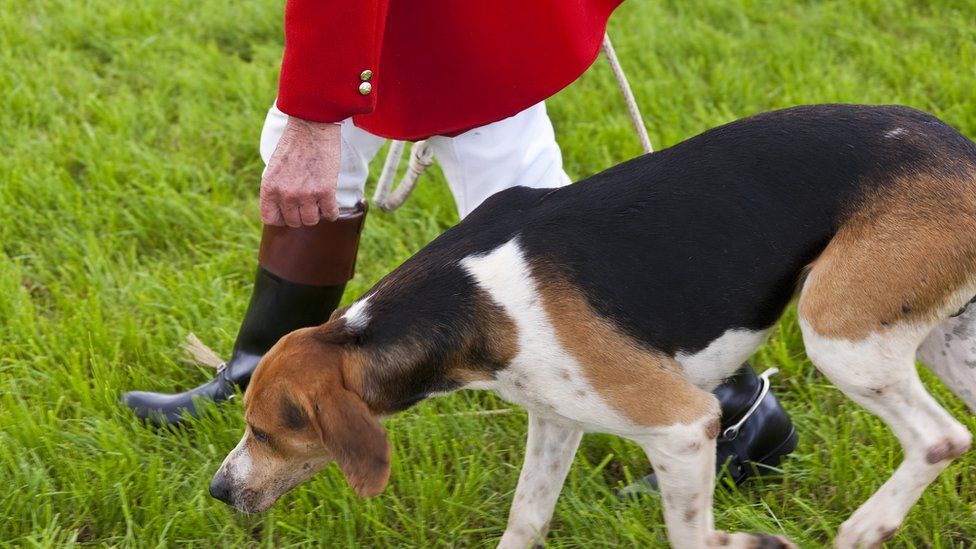
Two men have denied illegally hunting a fox with hounds on Dartmoor.
David Lewis, 50, and Gareth Frain, 25, are accused of hunting the wild animal with dogs at Lake Down in Devon on 14 December 2019.
Mr Lewis told Exeter Crown Court they were not drag hunting or hunting a fox, but were trail hunting when he lost sight of the dogs.
Prosecutors said the defendants always intended to hunt the fox, which ultimately escaped.
Mr Lewis had been employed as a huntsman with the Lamerton Hunt for 14 years, the court was told.
He said he and Mr Frain were trail hunting, which involves hunters following a scent along a pre-determined route with hounds, without a fox being killed.
He said he could not see or hear the hounds as they chased a fox, which managed to escape the 20 or 30 dogs.
“I could not see them and I could not hear them,” Mr Lewis said.
Chairman of the Lamerton Hunt Roger Jennings said they had gone out trail hunting when the “hounds went wrong” and he “became aware of a commotion”.
He said he did not see a fox and said the incident was “accidental not deliberate” and the hounds had been impossible to stop.
He said within 10 minutes the whole incident was over.
Three witnesses claim they heard Mr Lewis encouraging the hounds, shouting “on, on, on”.
He told the court: “I do not use those words. I did not hear anyone shout ‘on, on, on’.”
Under the 2004 Hunting Act, foxes cannot be killed by dogs as part of a hunt.
One or two dogs can be used to “flush out” – remove from cover – a fox, which should then be shot.
The district judge said he will make a judgement on the case in March.


If you’re barreling down the road safely behind the wheel of your carbon-spewing steel-cage-contraption and “clip,” “wing” or “sideswipe” a soft-bodied deer trying to cross one of the ubiquitous roadways, even if it hobbles away looking “okay” you killed the poor creature. Maybe not outright and maybe not today, but you can bet that he or she won’t make it through too many cold nights without succumbing to his or her injuries.
The fact is, there are just far too many cars, driving far too fast for conditions (which include marked or unmarked deer crossings) for any semblance of sanity.
Just this morning, I had the displeasure of having to “put down” a wounded deer who had been staying in our hay shed for the past two nights. I knew he (one of his antlers was lost when the car or truck hit him) was wounded, but it wasn’t until he limped off yesterday morning dragging his broken and mangled hind leg that I knew for certain he had no hope of any natural recovery. The bone was protruding from the compound fracture which would never heal right on its own—and no vet around here would treat an injured deer since this county fancies itself a “trophy” mule deer area and deer are just a “resource.”
As much as I hate to take the life of any animal, I was forced to do what the deer ultimately wanted of me and end his suffering as quickly and humanely as possible. After the deed (I shot using a high-powered rifle with a scope through the open bathroom window), my wife and I rolled his lifeless body onto a tarp and slid it across the snow to a safe spot for scavengers to feed.
“Roadkill” is so prevalent in this valley that signs have been placed at either end of the highways leading into what should just be a deer wintering range warning motorists that the annual tally of deer deaths are 150+ (that figure updated yearly). But more ominous to most drivers is the estimated cost repairing their precious vehicles. Still, no dollar-value or loss of non-human life would convince most drivers they should change the speed limit to 25 or 35 miles-per-hour (as it’s marked and enforced through the towns).
I’m sure it would be considered heresy these days to demand an enforced 45 mph daytime speed limit on any highway bisecting any deer winter range, but that’s the kind of “extreme” step we’ll have to take if we want to go on using the name homo sapiens, meaning “intelligent ape,” and not be demoted to something reflecting recklessness or self-centered-ness—something like homo erraticus, homo psychopathicus, homo drive-too-fasticus or whatever type of homo scientists deem appropriate.

The recent guest opinion by Rusty Kramer, president of the Idaho Trapper’s Association (“Trapping is a safe and effective wildlife management tool,” Feb. 10), is an offense to wildlife management professionals everywhere. I am a wildlife biologist with peer-reviewed studies published in the scientific literature, and to hear trapping being promoted as “a safe and effective wildlife management tool” struck me as completely dishonest.
Kramer’s secondary organization, cynically named the Foundation for Wildlife Management, has nothing at all to do with wildlife management. This organization’s chief claim to fame is as a front group for the Rocky Mountain Elk Foundation to fund thousand-dollar bounties on wolves.
Trapping has never played a meaningful or ecologically useful role in wildlife management. Do we need to “manage” pine marten populations with trapping to prevent the decimation of pine squirrels? Is trapping of lynx a legitimate…
View original post 488 more words


