Impossible Foods’ plant-based meat just got closer to the price of regular meat

The 20 percent price cut is part of a strategy to take plant-based meat mainstream.By Kelsey Piper  Feb 2, 2021, 11:35am EST0

https://www.vox.com/future-perfect/2021/2/2/22260454/impossible-foods-burger-plant-based-meat

Impossible Foods announced they’re cutting retail prices by 20 percent in a bid to compete with animal meat.

This story is part of a group of stories called

Finding the best ways to do good.

In the past few years, meatless meat products have taken off among consumers. But the meatless meat market is still only about 1 percent of the meat market. One of the biggest reasons: Plant-based meat products are considerably more expensive.

There are signs, though, that that’s changing. Impossible Foods products on grocery store shelves should get about 20 percent cheaper in upcoming weeks, the company announced Tuesday morning. The company will suggest to retailers that prices drop to $5.49 (from $6.99) for a two-patty package and $6.99 (from $8.99) for a 12-oz. package of ground Impossible beef in the US (actual prices will vary by location and by retailer).

The announcement follows a similar price cut Impossible Foods made for restaurant distributors at the start of the year, and it’s the latest attempt by plant-based meat makers to cut into meat’s big price advantage.

The pandemic has only underscored the importance of cutting into that price advantage and making meatless meat a mainstream alternative to factory-farmed meat. Slaughterhouses, long notorious for their terrible working conditions, have been coronavirus hotspots, in some cases because they responded to the coronavirus crisis by telling employees not to take any sick leave for any reason. And then there are the larger-scale problems that the pandemic reminded the world of: It is a public health hazard to raise animals for food in crowded conditions that can incubate and rapidly spread disease, and our farming practices risk starting the next global pandemic.

In light of those problems, consumers have shown greater interest in plant-based offerings. More and more traditional food companies have launched plant-based meat brands, more and more fast food and casual dining restaurants have added menu options, and major players in the field have raised a lot of money.

Having won the first battle — getting consumers interested enough to try plant-based foods, and investors interested enough to fund them — plant-based meat companies are setting their sights on a bigger challenge: getting plant-based meat products as cheap as animal meat products are. The plant-based meat industry has to be bigger to compete with animal products on price — and competing on price is a key component of getting bigger as an industry.

One pound of factory-farmed beef burgers at the Walmart near me costs just $2.80/pound. To give every person access to plant-based alternatives and to meaningfully transition away from factory farming, plant-based alternatives have to get just as cheap — without cutting any of the same corners.

Plant-based meat is still a long way away from the rock-bottom prices of animal meat. But Impossible Food’s 20 percent price cut is one more step toward making plant-based meat a reliable alternative to factory-farmed animal meat.

Why is meat so cheap anyway?

Meat in America is shockingly, unprecedentedly cheap.

The average price for a meat alternative sold in a grocers’ meat department in the US last year was $9.87/pound. The average price for beef? $4.82/pound. Chicken is even cheaper, at $2.33/pound.

That’s a big difference, and might go a long way toward explaining why even as consumer interest increases and the flavor profile of plant-based meats gets closer and closer to the flavor profile of animal meats, plant-based meats still make up only a very small share of sales.

“The animal industry has optimized its processes for a century,” Dennis Woodside, the president of Impossible Foods, told me.

“The most processed cheap forms of chicken are just insanely cheap, relative to historical standards and relative to other food products on the market,” Lewis Bollard, who researches farm animal welfare at the Open Philanthropy Project, told me last summer. “The chicken industry has managed to cut all their corners, they don’t pay their environmental bills, they don’t pay for a lot of the public health hazards they cause. They have managed to produce a product that is just artificially cheap and hard to compete with.”

But optimization is just one part of the story. The other is that the meat industry has accrued a lot of political power that they’ve leveraged to make meat cheap — and to make Americans eat a lot of it.

Animal agriculture is heavily subsidized by the federal government. That said, neither Bollard nor Zak Weston, a researcher at the Good Food Institute, thinks direct monetary subsidies were the main reason meat was so cheap.

More important are invisible forms of subsidization like not enforcing worker’s rights, exempting factory farms from animal cruelty laws, not requiring companies to engage in environmental cleanup, and not restricting risky practices — like antibiotic overuse — that impose costs on the whole world.

“It’s not the case that plant-based meat is weirdly expensive or labor intensive or something,” Weston previously told me. “The animal protein industry has spent decades wringing incredible efficiencies out of every part of the program. Animal meat gets to externalize a lot of its negatives — externalities like health care, ecological, worker welfare, animal welfare.”

In other words, if the animal meat industry were held accountable for the costs their products and their workings inflict on society, meat would be much more expensive.

Plant-based meat is getting cheaper, but it still doesn’t beat animal meat

Impossible’s 20 percent price cut is large in absolute terms, but price parity is still a long way away.

Nevertheless, industry experts are optimistic.

“We were thinking about cost reductions and getting to the cost structure of commodity ground beef from the very beginning,” David Lee, chief financial officer of Impossible Foods, previously told me. “We knew that if we had the best product at the same cost, then consumers would vote with their stomachs.”

In the past few years, they’ve already made progress. Last year, Impossible Foods slashed prices for restaurants by 15 percent. Now, they’re cutting recommended retail prices by 20 percent. Companies were wary of sharing with me specific figures on their costs, but based on Securities and Exchange Commission filings, Bollard estimates that Beyond’s cost of production has fallen from $4.50/pound in mid-2019 to $3.50/pound in mid-2020.

At a few outlets, such as Dunkin’, Beyond Meat’s Sausage Sandwich sells for the exact same price as the meat sausage sandwich. Beyond Meat executive Charles Muth says that Beyond’s products do much better when they’re listed at the same price as meat.

“The thing we like to say here,” Muth said last year, “is we’re changing the way consumers and shoppers think about what they eat. We don’t want pricing to be a barrier when they’re considering that. We’d like to take pricing out of that conversation as best as we can.”

There’s no single brilliant secret to making a mass-manufactured product cheaper. Instead, experts told me, it’s a matter of relentlessly making every element of the supply chain, the manufacturing process, and the distribution process work slightly better.

When a company is big enough, it can make ingredient purchases at scale, get expensive equipment that’s only worthwhile if it’ll be used to make an enormous number of products, have distribution centers in lots of different parts of the world to minimize transportation costs, and negotiate better deals for its supplies. There’s the potential for a virtuous cycle where lower costs recruit more consumers, who make further cost savings possible.

It’s those savings from scale that drove Impossible Foods’ latest price cuts. “Over the last year, we’ve more than doubled our production,” Woodside said. “The more that we are selling, the better utilization we have of our manufacturing lines, the better prices we get from our supplies, the more suppliers we can bring into the plant-based ecosystem.”

And while the ultimate goal of every plant-based foods expert I’ve spoken to is price parity with animal meat, price cuts make a big difference even before they reach that point. Cheaper plant-based meat means options for more consumers and more restaurants. It also means less demand for animal products at a time when prices are high, animal welfare is ignored, and Congress is investigating coronavirus outbreaks at slaughterhouses. There’s a long road ahead, but a 20 percent price cut is a substantial step forward.


Op-Ed: Collapseologists are warning humanity that business-as-usual will make the Earth uninhabitable

Exposing the Big Game's avatarThe Extinction Chronicles

Smoke from wildfires darkens the sky over the mountains and freeway.

ByCHRISTOPHER KETCHAM AND JEFF GIBBSJAN. 31, 20213 AM PT

Hundreds of scientists, writers and academics from 30 countries sounded a warning to humanity in an openletterpublished in the Guardian in December: Policymakers and the rest of us must “engage openly with the risk of disruption and even collapse of our societies.” “Damage to the climate and environment” will be the overarching cause, and “researchers in many areas” have projected widespread social collapse as “a credible scenario this century.”

It’s not hard to find the “collapseology” studies they are talking about. In areportfor the sustainability group Future Earth, a survey of scientists found that extreme weather events, food insecurity, freshwater shortages and the broad degradation of life-sustaining ecosystems “have the potential to impact and amplify one another in ways that might cascade to create global systemic collapse.” A 2019reportfrom the Breakthrough National Center for…

View original post 846 more words

Excruciating Experience of Rescuing a Coyote Caught in a Trap

Project Coyote
 
For Immediate Release: February 2, 2021Contact: Michelle Lute, Project Coyote, 406-848-4910, mlute@projectcoyote.org
Chris Smith, WildEarth Guardians, 505-395-6177, csmith@wildearthguardians.orgVideo Released Showing the Excruciating Experience of Rescuing a Coyote Caught in a Trap Santa Fe, NM — An anonymous good samaritan shared with Project Coyote a video showing the first-hand experience of encountering and rescuing a coyote ensnared in a leghold trap. This video comes at the same time the New Mexico legislature is considering Roxy’s Law, a bill that would ban cruel traps across the state’s public lands. Today, Dr. Michelle Lute will testify before the New Mexico Senate Conservation Committee to explain that trapping has no basis in science and cannot be justified as serving any legitimate wildlife management purpose.We share this video from New York because animals in New Mexico experience the exact same torture when caught in the same cruel traps that are legal in both states and many others. The good samaritan encountered the coyote while hiking on public lands and discovered the unfortunate animal had both front legs caught in a trap. Fortunately, the hiker was able to free the animal from the leghold trap. During New Mexico’s current trapping season, this same traumatic experience has occurred at least seven times to animals and people hiking on public lands. In six cases, the hikers’ own dogs were cruelly trapped. In another incident, hikers encountered a lone dog struggling in a leghold trap.“No one—neither residents nor visitors to the Land of Enchantment—should have to encounter the excruciating experience of a wild or companion animal maimed or killed by traps, snares or poisons,” said Michelle Lute, National Carnivore Conservation Manager for Project Coyote. “It’s 2021 and well past time to finally end the egregious and cruel practice of trapping.”“There’s disconnect, for many people, about what large-scale private trapping means,” said Chris Smith, Southern Rockies Wildlife Advocate for WildEarth Guardians. “For every one of the 150,000 animals killed since 2008, there is a story like this one. A story of a desperate or maimed living being on its way to a cruel death.”The good samaritan remains anonymous because, despite the clearly heroic act, rescuing a trapped animal and tampering with a trap is technically against the law in many states. Other laws governing trapping regulations, such as trap check durations and distance from roads and trails, are rarely if ever enforced.Roxy’s Law has been introduced as Senate Bill 32. If the proposed legislation does not become law, the video will continue to be illustrative of how to save your dog or a wild animal from archaic and cruel traps. If successful, this important legislation will prevent future residents and visitors from the traumatic experience of encountering traps on New Mexico’s public lands and save countless animal lives.To read more about SB 32, click here.To view and share the video, click here.To listen to the NM Senate Conservation Hearing on Tuesday, February 2, at 9am Mountain Time, click here. Roxy’s Law is listed first on the tentative agenda.To read a recently published Las Cruces Sun News opinion piece from Dr. Lute explaining the evidence base against trapping and why it is not science-based management as trappers argue, click here.# # #Project Coyote, a national non-profit organization, is a North American coalition of scientists, educators, ranchers, and citizen leaders promoting compassionate conservation and coexistence between people and wildlife through education, science and advocacy. Visit ProjectCoyote.org for more information.WildEarth Guardians protects and restores the wild life, wild places, wild rivers, and health of the American West.
 
Having trouble viewing this email? View it in your web browser.

P.E.I. woman caught in coyote snare warns trappers to double-check for permission

Exposing the Big Game's avatarCommittee to Abolish Sport Hunting Blog

Social Sharing

Woman worried for her children

Tony Davis·CBC News·Posted: Jan 29, 2021 7:00 AM AT | Last Updated: January 2944 comments

Tina Richard was able to slip off her boot and get out of the snare.(Tina Richard/Facebook)

A woman who got caught in a coyote snare on her own property in western P.E.I. is warning trappers to be more careful about where they set their traps.

Tina Richard has a large property just outside of Tignish, where she is the recreation manager for the town. Her field is separated from her neighbour’s by a line of trees. Normally, she said, the property line would run through the middle of that line of trees, but for some historical reason the trees in this case all belong to her family’s property.

Richard was in those trees when she got caught in the snare. Fortunately, she was able to slip…

View original post 543 more words

Bird flu suspected in Himachal as 1,800 migratory birds die

Exposing the Big Game's avatarThe Extinction Chronicles

The local administration has already sounded an alert by banning all the human activities within 10-km radius of the Pong wetlands in Kangra district

IANS Photo
IANS Photo

IANS

IANS

Published: 04 Jan 2021, 5:00 PMEngagement:340

With the toll of migratory water birds rising to over 1,800, and almost half of them being endangered bar-headed goose visiting the Pong wetlands, the Himachal Pradesh wildlife authorities on Monday suspected avian influenza as the cause.

Chief Conservator Wildlife of Pong wetlands — one of the largest in northern India, Upasna Patyal said the reason for the deaths is still a mystery. Their carcasses have been sent to different laboratories to determine the cause of death.

“The death of birds could be attributed to bird flu. We are expecting to get results by Tuesday evening. As a protocol, we have imposed prohibitory orders,” she said.

The local administration has already sounded an alert by banning all…

View original post 513 more words

Lake Lowell female duck found with blow dart through her face


by Ariana PyperSaturday, January 30th

https://komonews.com/news/local/lake-lowell-female-duck-found-with-blow-dart-through-her-face

2021AAhttps://imasdk.googleapis.com/js/core/bridge3.437.0_en.html#goog_270600488Volume 90% 8VIEW ALL PHOTOSLake Lowell female duck found with blow dart through her face ( Lake Lowell Animal Rescue)

Facebook Share Icon
Twitter Share Icon
Email Share Icon

NAMPA, Idaho (CBS2) — A female duck from Lake Lowell is in recovery after she was found with a blow dart through her face on Jan. 24.

Lake Lowell Animal Rescue was called about a month ago about a report of a duck swimming around with a blow dart in its face.

After trying to catch the duck for weeks, the rescue was able to catch the female duck with the help of a BSU grad student’s net gun.

Matthew Gillikin, a BSU grad student, said he built the net gun for a senior capstone project. The goal of the project was to either do something to help the community or help solve a problem.

“Matthew has helped build us a net gun and we were able to take that out and use it to catch her,” Melissa Blackmer, Lake Lowell Animal Rescue Director said.

The duck was taken in and treated by Dr. Karlee Hondo-Rust, a veterinarian at Treasure Valley Veterinary Hospital.

“The dart actually entered just below her eye, so had it been a few millimeters back she would have lost her eye,” Dr. Hondo-Rust said.Lake Lowell female duck found with blow dart through her face (Lake Lowell Animal Rescue)

Dr. Hondo- Rust said the duck is doing well and responding to the pain medicine and antibiotics. She is hopeful that they can release her in a few weeks.

Blackmer said, unfortunately, this isn’t an isolated incident. Over the years, there have been reports around the valley about birds and cats being blow darted like this, but not all of them were as lucky as this duck.

“I do think there is someone or more than one person going around doing this and it’s incredibly unfortunate and very very cruel. It’s a recurring thing, so every few years or so we will get a run of ducks or geese come in because they have been blow darted and haven’t succumbed to their injuries,” Blackmer said.

Blackmer said she wants to raise awareness about animal cruelty in the valley, and the importance of reporting animal cruelty cases.

“We just want to raise awareness about some of the animal cruelty that happens because I think a lot of times people don’t realize what can happen to your pet who is outside or in this case, ducks or roosters, or other animals,” Blackmer said.

Blackmer said you can report an injured animal by calling Lake Lowell Animal Rescue, Ruth Melichar Bird Center (Animals In Distress Association), or the police.

You can also join the Facebook group The Life Outdoors for updates on animal cruelty cases in the area.https://imasdk.googleapis.com/js/core/bridge3.437.0_en.html#goog_270600489Volume 90% Lake Lowell female duck found with blow dart through her face{ }(Lake Lowell Animal Rescue)

Greenland is careening toward a critical tipping point for ice loss

Exposing the Big Game's avatarThe Extinction Chronicles

ByMindy Weisberger-Senior Writer4 hours ago

The Greenland Ice Sheet is one of the largest ice sheets in the world.

https://www.livescience.com/greenland-ice-loss-threshold-2055.html

The Greenland ice sheet is a vast body of ice covering 660,000 square miles (1,710,000 square kilometres), roughly 80% of the surface of Greenland.The Greenland ice sheet is a vast body of ice covering 660,000 square miles (1,710,000 square kilometres), roughly 80% of the surface of Greenland.(Image: © Danita Delimont/Getty Images)

FrozenGreenlandis on track to become significantly less frozen before the 21st century is over. By 2055, winter snowfall on the Greenland Ice Sheet will no longer be enough to replenish the ice that Greenland loses each summer, new research finds.

Rising global temperatures are driving this dramatic change. If Earth continues to heat up at its present pace, average global temperatures should climb by nearly 5 degrees Fahrenheit (2.7 degrees Celsius) by 2055. Regional averages in Greenland become even hotter, rising by about 8 F (4.5 C), scientists reported in a new study.

Under those conditions, Greenland’s annual…

View original post 751 more words

Bills loosen laws on trapping wolves

Exposing the Big Game's avatarCommittee to Abolish Sport Hunting Blog

  • Jan 31, 2021

Editor`s Special! 1 year only $26

Iam writing in opposition toHouse bills 224and225, which relax the current Montana trapping laws specifically in relation to wolves.

HB224 adds wolf snares to the list of trapping methods. A snare is a length of wire that encircles the wolfs neck and, as the animal struggles, tightens until it kills. It is an inhumane way to die.

HB225 increases wolf trapping season by a month, and forbids the Fish and Wildlife Commission from regulating wolf trapping and hunting around national parks. This enables traps and snares to be set around Glacier and Yellowstone parks with no buffer zone, a bit like shooting fish in a barrel as well as dangerous for other animals and humans.

Some people consider trapping and snaring a legitimate pastime. There are many reasons suggested for controlling the number of wolves allowed…

View original post 66 more words

Rural New Mexicans oppose trapping, too

Las Cruces Sun-News

https://www.lcsun-news.com/story/opinion/2021/01/31/rural-new-mexicans-oppose-trapping-too/4325386001/

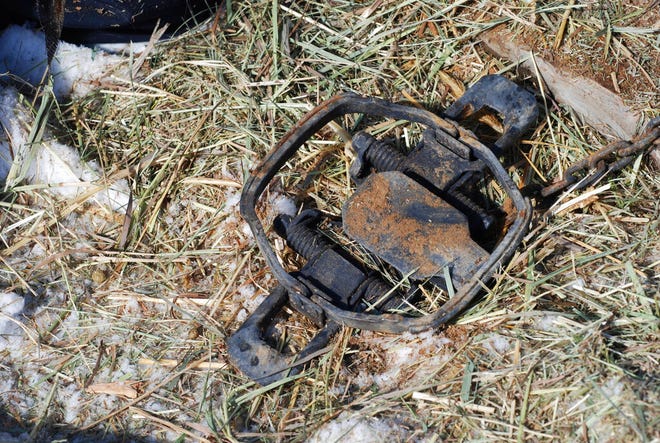
This Feb. 20, 2019, file photo, shows a foothold trap intended for bobcats, set by licensed trapper Tom Fisher, on the outskirts of Tierra Amarilla, N.M.

It’s come to our attention that a few prominent voices from the trapping community feel like they can speak for all rural New Mexicans in their quest to continue their grip on safe public lands. We are rural New Mexicans from across the state and we oppose the use of cruel, dangerous traps on public lands.

We have all chosen to live more rural lifestyles for a variety of reasons. Some of us want to be more connected to the land and nature. Some of us want a quieter, slower routine. Some of us want wide open spaces, including safe access to public lands. Some of us are in the country for our livelihood. Among us are educators, artists, authors, farmers and veterans. We come from all walks of life. Some of us are relatively new to New Mexico, some of us have been here for decades, raised our families here and some of us were born here. All of us revere and respect wildlife. And setting indiscriminate leghold traps to kill native animals for fun or money is just as foreign to us as it is to the nearly 70% of New Mexican voters who oppose trapping across the board.

The idea that we support trapping because we live in rural areas is like saying city-dwellers don’t drive trucks. It is preposterous.

One thing that does set us apart from a lot of urban and suburban residents is that we have the unfortunate fate of encountering traps more frequently. Traps are often closer to home for us, quite literally. They lie in wait for unsuspecting paws on state and federal lands that are sometimes adjacent to our homes. Many of us have had awful experiences encountering traps, from our own dogs being caught to finding brutally injured wildlife. If you look at a map of where people like us have had these experiences, the majority are away from the big cities. Rural residents face greater risk of being harmed and traumatized by a trap because we live closer to public lands. We want safe access to those lands, and traps put that safety at risk.https://1991c441286826fe16e9dfbea563a362.safeframe.googlesyndication.com/safeframe/1-0-37/html/container.html

And, most traps aren’t even necessarily set by rural New Mexicans. The New Mexico Department of Game and Fish sells more trapping licenses to urban New Mexicans than to those who live in rural areas. The notion that trapping is done by rural people and opposed by urban people is laughable.

Rural New Mexicans are a diverse set of folks. And there are plenty of us who do not trap, don’t want anything to do with trapping, and want traps off of public lands. Just like some city-dwellers support trapping (though probably not many since only 22% of voters approve of traps at all), some rural people do too. But don’t let trappers fool you by claiming to speak for all of us.

Should California ban bear hunting?

https://imasdk.googleapis.com/js/core/bridge3.437.0_en.html#goog_1340166893 PauseMuteLoaded: 0% Fullscreen

By Megan Goldsby KCBS Radio

a day agohttps://omny.fm/shows/kcbsam-on-demand/should-bear-hunting-be-banned/embed?style=cover

A Bay Area state senator is trying to ban bear hunting in California, but the hunting and wildlife lobby is pushing back.

San Francisco State Senator Scott Wiener said the ban on hunting black bears would stop the animal from going the way of the brown bear.

“Brown bears are extinct in California due to being hunted to extinction,” he told KCBS Radio.

Wiener said the ban would follow bans on hunting bobcats in the state, and the use of hounds to track bears while hunting.

“I’m not criticizing anyone for hunting,” the state senator noted. “A lot of people do want to hunt. But, we also have the obligation to take a step back as Californians and look at what our values are. A lot of people are, frankly, surprised to hear that we still allow recreational black bear hunting.”https://246cbe00e86fb69bfa10c02104a82a9d.safeframe.googlesyndication.com/safeframe/1-0-37/html/container.html

Bill Gaines is not one of them. He’s the principal at Gaines and Associates, which lobbies for wildlife-related issues.

Gaines told KCBS Radio that of the 40 senate districts in California, only one of them does not have a bear in it.

“But the other 39 senate districts do have problems with bears, and eliminating the ability to hunt them is going to eliminate the ability to manage them,” he said.https://246cbe00e86fb69bfa10c02104a82a9d.safeframe.googlesyndication.com/safeframe/1-0-37/html/container.html

Gaines said bears have been breaking into cabins in Tahoe and ruining beekeepers’ livings by knocking over their hives.

Plus, he added, money raised by bear hunting supports conservation efforts.

“You have to buy a bear tag,” Gaines said. “They’re roughly about $50, and those monies go into what we call the big game management account, which is administered by the Department of Fish and Wildlife.”https://246cbe00e86fb69bfa10c02104a82a9d.safeframe.googlesyndication.com/safeframe/1-0-37/html/container.html

Wiener doesn’t think that justifies hunting bears.

“We definitely should be funding conservation efforts, but to suggest that the only way we can fund it is by allowing hunting of bears – I just don’t agree with that argument,” he said. “We could also take the position, ‘well, we want more conservation money so let’s quadruple the number of bear tags that we issue

https://www.radio.com/kcbsradio/news/local/should-california-ban-bear-hunting