Bird flu strain can go airborne, say experts
Reply


Daily Voice Northampton County, PA
4K Followers
Story by Jillian Pikora
• 7mo •
2 min read
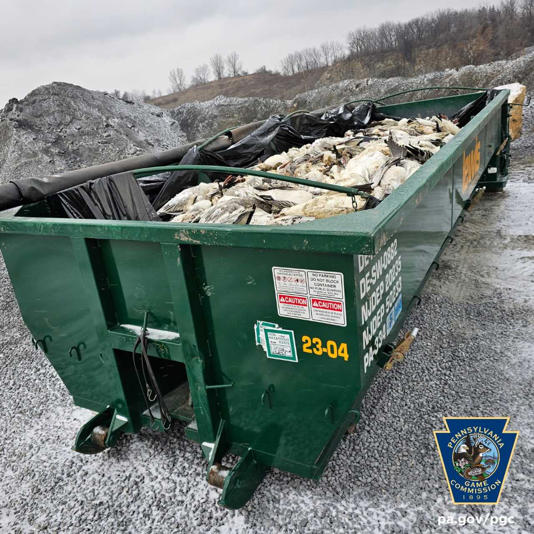
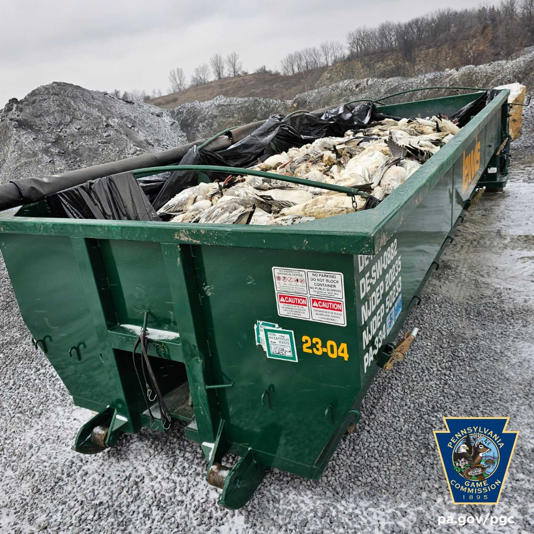
A dumpster filled with thousands of snow geese impacted by avian influenza in southeastern Pennsylvania.© PA Game Commission
Shocking images show a dumpster filled with thousands of dead snow geese, as the Pennsylvania Game Commission races to contain a devastating avian influenza (AI) outbreak across southeastern Pennsylvania.
The Pennsylvania Game Commission released the photos on Wednesday, Jan. 24, highlighting the grim reality of the highly pathogenic avian influenza (HPAI) resurgence among wild birds. Snow geese have been particularly hard-hit by the disease.
Walking shoes for elderly people with poor balance

Partnering with the Pennsylvania Department of Health, U.S. Department of Agriculture, and the University of Pennsylvania School of Veterinary Medicine’s Wildlife Futures Program, teams have been working to remove and safely dispose of infected birds.
One of the images shows a dumpster filled to the brim with carcasses, a stark reminder of the outbreak’s impact.
A dumpster filled with thousands of snow geese impacted by avian influenza in southeastern Pennsylvania.© PA Game Commission
The disposal process follows strict biosecurity protocols designed to prevent the disease from spreading to humans, domestic animals, and other wildlife.
Reports of sick and dead birds have overwhelmed the Game Commission’s dispatch center. Priority is being given to cases involving large numbers of birds or those posing significant risks to public and animal health.
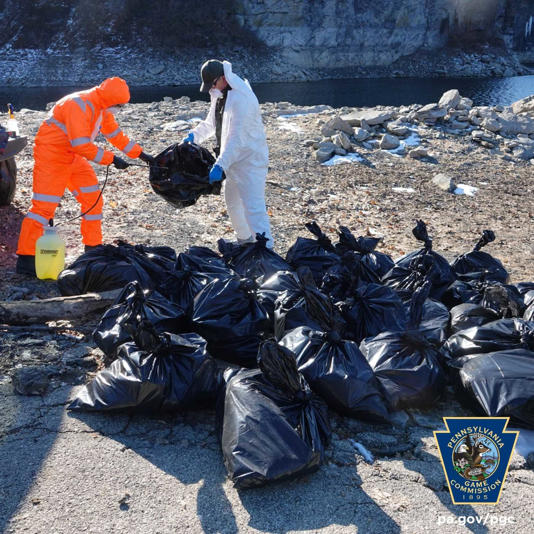
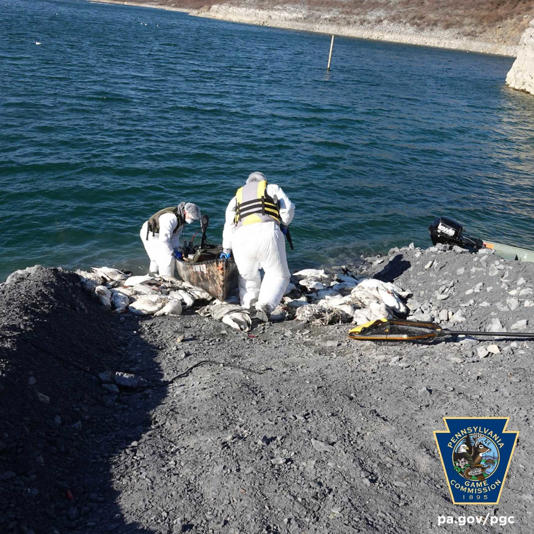
Another photo highlights the challenging conditions faced by trained personnel as they work to contain the outbreak.
Trained personnel safely disposing of carcasses under biosecurity protocols to curb the spread of avian flu.© PA Game Commission
Trained personnel safely disposing of carcasses under biosecurity protocols to curb the spread of avian flu.© PA Game Commission
Trained personnel safely disposing of carcasses under biosecurity protocols to curb the spread of avian flu.© PA Game Commission
The Game Commission continues to monitor and test susceptible bird species in areas beyond the current epicenter to track the spread of the disease as geese migrate throughout the tristate area.
Residents are urged to report sick or dead wild birds to the Game Commission by calling 1-833-PGC-WILD (742-9453), emailing pgc-wildlifehealth@pa.gov, or submitting information online here.
🔸 Watch wildlife from a distance.
🔸 Avoid contact with bird feces.
🔸 Do not feed or handle wildlife.
For more information, visit here.
Published 2025-09-20 by Cory Allen Heidelberger
South Dakota’s bird flu outbreak is getting worse. Since two outbreaks at commercial farms around Labor Day, six more instances of avian flu in South Dakota factory turkey facilities have been reported, leading to the snuffing out of 419,650 turkeys:
The bird flu depopulation process is federally mandated and involves killing all birds at affected sites to prevent the virus from spreading to nearby farms. [State Veterinarian Beth] Thompson said “foaming” is the most common method in turkey barns, where foam is sprayed atop turkeys inside the barn to suffocate them [Joshua Haiar, “Over 400,000 Turkeys Killed in Response to SD’s Bird Flu Outbreak; Ducks Identified as Carriers,” South Dakota Searchlight, 2025.09.20].
The prime culprit: blue-winged teal!
…South Dakota State Veterinarian Beth Thompson said blue-winged teal, a species of duck, have been identified as carriers of this season’s virus. John Cooper, a former U.S. Fish and Wildlife Service agent and former state Game, Fish and Parks secretary, said it makes sense that the state would find itself combating bird flu early this year if teal are carrying it.
“Teal are traditionally our first migrators,” Cooper said [Haiar, 2025.09.20].
Better call Homeland Security and send ICE to round up ducks. Or instead of storming D.C., Memphis, and Chicago, maybe we need to deploy the National Guard along Highway 12 to shoot down all those migrating teal before they come fraternizing with our good wholesome turkeys.
The teal connection fits research from the United States Geological Survey and partners including Environment and Climate Change Canada:
Research finds that facilities in northern states may be at higher risk for potential transmission during the ducks’ fall migration from mid-September through mid-November, as that is when blue-winged teal are in the closest proximity to domestic poultry facilities. Research also finds that commercial chicken operations in southern states may be at higher risk of disease transmission during the duck’s spring migration from March through April. In contrast to chicken operations, contact probabilities with commercial turkey facilities were found to be relatively low in the spring [USGS: Easter Ecological Science Center, press release, 2021.09.21].
Whether USGS and other American scientists can continue to collaborate with Canadian researchers and other international partners to research bird flu is uncertain: in February, the American autocrat ordered NOAA scientists to seek permission to communicate with Canadian researchers.
Nature18 September 2025
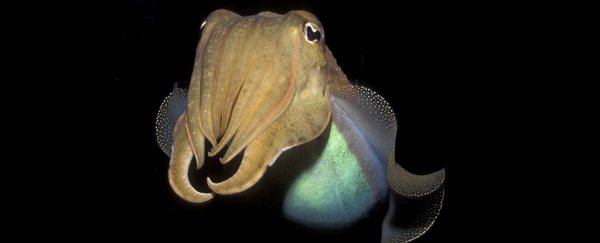 Sepia officinalis. (Schafer & Hill/The Image Bank/Getty Images)
An eye-opening experiment on cephalopods reinforces why it is so important for us not to underestimate animal intelligence.
A study published in 2021 presented cuttlefish with a new version of the “marshmallow test”, and the results showed there’s more going on in their strange little brains than we ever suspected.
Watch the video below for a summary of the amazing research:
Their ability to learn, anticipate future rewards, and adapt their behavior, the researchers said, may have evolved to give cuttlefish an edge in the cutthroat eat-or-be-eaten marine world they live in.
Related: Cuttlefish Wave at Each Other, And It Could Be a Mysterious Form of Sign Language
The marshmallow test, or Stanford marshmallow experiment, is pretty straightforward.
A child is placed in a room with a marshmallow. They are told if they can manage to not eat the marshmallow for 15 minutes, they’ll get a second one and be allowed to eat both.
This ability to delay gratification demonstrates cognitive abilities such as future planning, and it was originally conducted to study how human cognition develops, specifically, at what age a human is smart enough to delay gratification if it means a better outcome later.
Because it’s so simple, it can be adjusted for animals. Obviously, you can’t tell an animal they’ll receive a better reward if they wait, but you can train them to understand that better food is coming if they don’t eat the food in front of them straight away.
Some primates can delay gratification, along with dogs, albeit inconsistently. Corvids, too, have passed the marshmallow test.
In 2020, cuttlefish also passed a version of the marshmallow test. Scientists showed that common cuttlefish (Sepia officinalis) can refrain from eating a meal of crab meat in the morning once they have learned dinner will be something they like much better – shrimp.
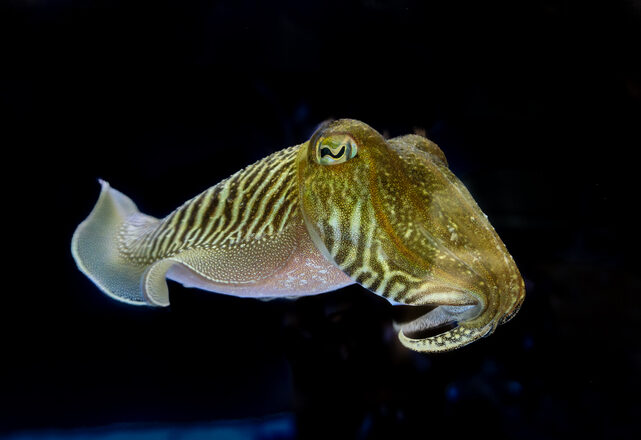
However, as a team of researchers led by behavioral ecologist Alexandra Schnell of the University of Cambridge pointed out, in this case it was difficult to determine whether this change in foraging behavior in response to prey availability was also being governed by an ability to exert self-control.
So they designed another test for six common cuttlefish. The cuttlefish were placed in a special tank with two enclosed chambers that had transparent doors so the animals could see inside. In the chambers were snacks – a less-preferred piece of raw king prawn in one, and a much more enticing live grass shrimp in the other.
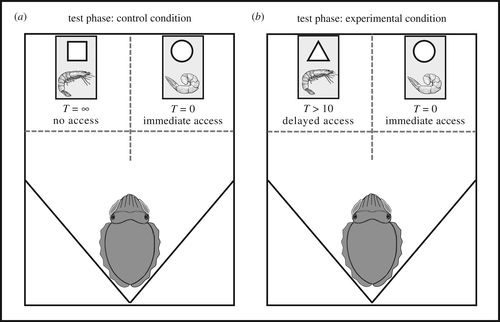
The doors also had symbols on them that the cuttlefish had been trained to recognize. A circle meant the door would open straight away. A triangle meant the door would open after a time interval between 10 and 130 seconds. And a square, used only in the control condition, meant the door stayed closed indefinitely.
In the test condition, the prawn was placed behind the open door, while the live shrimp was only accessible after a delay. If the cuttlefish went for the prawn, the shrimp was immediately removed.
Meanwhile, in the control group, the shrimp remained inaccessible behind the square-symbol door that wouldn’t open.
The researchers found that all of the cuttlefish in the test condition decided to wait for their preferred food (the live shrimp), but didn’t bother to do so in the control group, where they couldn’t access it.
“Cuttlefish in the present study were all able to wait for the better reward and tolerated delays for up to 50-130 seconds, which is comparable to what we see in large-brained vertebrates such as chimpanzees, crows, and parrots,” Schnell explained in 2021.
The other part of the experiment was to test how efficient the six cuttlefish were at learning. They were shown two different visual cues, a grey square and a white one.
When they approached one, the other would be removed from the tank; if they made the “correct” choice, they would be rewarded with a snack.
Once they had learned to associate a square with a reward, the researchers switched the cues, so that the other square now became the reward cue.
Interestingly, the cuttlefish that learned to adapt to this change the quickest were also the cuttlefish that were able to wait longer for the shrimp reward.
That seems like cuttlefish can exert self-control, all right, but what’s not clear is why.
In species such as parrots, primates, and corvids, delayed gratification has been linked to factors such as tool use (because it requires planning ahead), food caching (for obvious reasons), and social competence (because prosocial behavior – such as making sure everyone has food – benefits social species).
Cuttlefish, as far as we know, don’t use tools or cache food, nor are they especially social. The researchers think this ability to delay gratification may instead have something to do with the way cuttlefish forage for their food.
“Cuttlefish spend most of their time camouflaging, sitting, and waiting, punctuated by brief periods of foraging,” Schnell said at the time.
“They break camouflage when they forage, so they are exposed to every predator in the ocean that wants to eat them. We speculate that delayed gratification may have evolved as a byproduct of this, so the cuttlefish can optimize foraging by waiting to choose better quality food.”
It’s a fascinating example of how different lifestyles in very different species can result in similar behaviors and cognitive abilities.
Evidence of “episodic-like memory” has been found in cuttlefish, and in 2024 scientists reported the first observation of the creature forming false memories.
The team noted that further research should focus on determining whether cuttlefish are indeed capable of planning for the future.
The team’s research was published in Proceedings of the Royal Society B.
A version of this article was first published in March 2021.

 Exposing the Big Game